


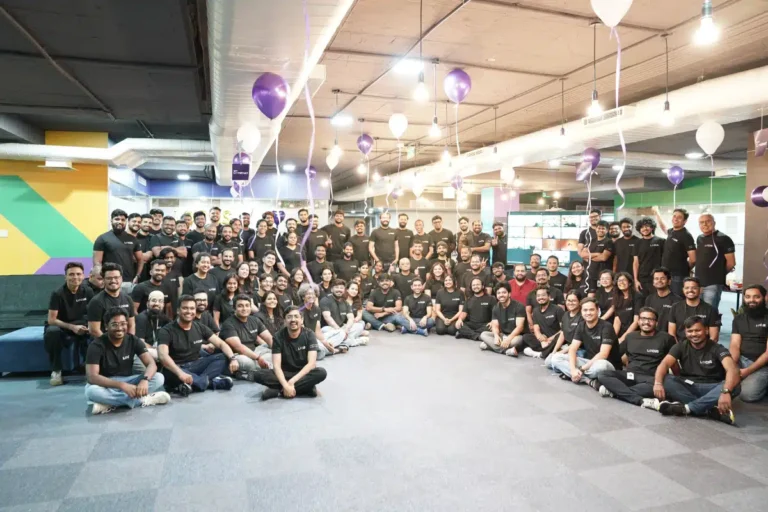
Our First Steps to Perpetuity

Last updated:
Locus is joining Ingka (IKEA Retail) while remaining independent: same team and roadmap, more resources to build an agentic TMS for all miles, all channels.
Read moreLocus latest blogs
How AI Can Help Returned Products Reach Their Next Destination Faster
Most US returns cost concentrates at dispositioning. AI decision engines route returns to the next destination faster, recovering up to 75% of value vs. 50%.

Last updated:

How Poor System Connectivity Drains Last-Mile Productivity in 2026
A connectivity gap does not just cost data quality, it consumes planner time. Modeling a dispatch team as a queue found the tipping point into runaway backlog falling from 44% to under 6% as baseline staffing tightens.

Last updated:

Last-Mile Delivery Efficiency and Cost in 2026: What a First-Attempt-Rate Improvement is Actually Worth, by Density
A one-point gain in first-attempt delivery rate is worth 2.2 times more in a sparse regional network than in a dense urban one. Applying one improvement target network-wide misallocates the investment behind it.

Last updated:

Last-Mile Delivery Efficiency in 2026: How a Network-Wide Number Can Rise While Every Segment Gets Worse
Two delivery segments both improved utilization, one by 12%, one by 15%, yet the network-wide average fell 6.5% once volume mix shifted between them. The aggregate number and the underlying performance told opposite stories.
Last updated:

Last-Mile Delivery Cost in 2026: What a Density Benchmark Actually Transfers
A 20-fold drop in stop density raised cost per delivery by only 1.69 times in this model, not the multiples often quoted. Importing a benchmark from a denser network still misprices work, just not in the direction usually assumed.
Last updated:

Last-Mile Delivery Efficiency in 2026: When Raising Utilization Starts Costing You On-Time Rate
Shrinking the fleet to raise stops-per-vehicle-hour is standard efficiency advice. Modeling the tradeoff found utilization rising only 12% while missed delivery windows rose 8.6 times over the same range.
Last updated:

Last-Mile Delivery Cost in 2026: Why the Number You Price New Business With is Eight Times Too Low
The incremental cost of a new account measured against today's routes came out at $0.70 a stop. Measured against the fleet you actually end up running, the same account cost $5.51. The accounting treatment moves the answer more than geography does.
Last updated:

Integration Event Loss in 2026: What 10% Missing Events Costs Your Exception Data
A uniform 10% event loss rate does not land uniformly. Modeling shipment event sequences puts 10% of deliveries in a wrong final state and 27% of exception records permanently incomplete, with every derived metric biased in the flattering direction.
Last updated:
Insights Worth Your Time

















