


General
Top 10 e2open Competitors to Consider in 2026

Key Takeaways
- As logistics networks scale, enterprise teams often reassess e2open’s fit based on visibility depth, configurability, integration flexibility, and UI maturity.
- Locus is the only AI-powered logistics orchestration platform purpose-built for enterprise complexity, delivering measurable cost savings and SLA improvements at global scale.
- e2open competitors fall into three categories: enterprise orchestration platforms (Locus, Blue Yonder), execution-focused routing tools (Bringg, Shipsy), and visibility or post-shipment layers (FourKites, AfterShip, Narvar).
- Enterprise operators prioritize unified planning-to-execution workflows, while lighter tools serve SMBs and local operators with simpler needs.
- The right alternative depends on network complexity, the number of modes and carriers, how tightly planning must connect to execution, and whether the platform can scale across regions without performance degradation.
- Evaluate by pain point: choose Locus for end-to-end orchestration, Blue Yonder for supply chain planning, FourKites for multimodal visibility, and Shipsy for carrier management.
Who Should Read This
This guide is written for enterprise logistics leaders, supply chain executives, and operations directors at organizations with $150M+ revenue managing complex, multi-region delivery networks. If your team operates high-volume fleets across first, mid, and last mile — and you are evaluating whether e2open still fits your execution needs — this comparison will help you shortlist the right alternative.
e2open is used by large enterprises to manage transportation, visibility, and logistics coordination across multiple modes. Its core strength is consolidating carriers, shipments, and partners into a single platform.
As delivery volumes increase and networks span more regions and carriers, enterprise logistics leaders often reassess whether the platform supports fast, day-to-day execution. Common triggers include:
- Visibility that does not translate quickly into operational action
- Manual effort as workflows expand across modes or partners
- Friction in daily workflows during peak-volume periods
- Slower changes that require support involvement
These limitations push supply chain executives to evaluate alternatives that offer tighter execution control, simpler operational workflows, and AI-powered orchestration. In this article, we compare the top e2open competitors for 2026 — focusing on orchestration depth, routing, real-time visibility, scalability, and pricing — to help enterprise logistics leaders, supply chain executives, and operations directors in retail, FMCG, e-commerce, 3PL, and CPG find the best operational fit. focusing on orchestration depth, routing, real-time visibility, scalability, and pricing, to help teams find a better operational fit.
Common Triggers That Push Teams to Evaluate e2open Competitors
Users cite day-to-day execution friction as a key reason for switching from e2open to competitors, according to recent G2 feedback and Reddit discussions.
Below are the most common triggers:
1. Limited Integration and Tool-to-Tool Communication
Several users highlight challenges in connecting e2open smoothly with other systems they rely on. Users mention that “Lack of ability to communicate with all other software working in” is an issue.
As stacks grow more complex, these gaps can increase manual handoffs and slow coordination between planning, execution, and reporting tools.

2. Workload Visibility and UI Constraints at Scale
While the platform consolidates data well, some enterprise users report difficulty visualizing large workloads.
When dispatchers and planners cannot easily distinguish or prioritize workloads, response times and decision accuracy suffer.

3. Support Responsiveness During Operational Changes
Support quality is generally rated positively, but response speed becomes more critical as volumes and dependencies increase.
For teams making frequent routing, carrier, or rule changes, delays here directly affect execution velocity.

4. Functional but Minimal Execution Experience
Some users describe the platform as stable but limited when deeper operational control is required.
This often leads teams to explore tools that provide more hands-on control over execution rather than broad system coverage alone.

5. Perception Outside Formal Reviews
While not a decision driver on its own, Reddit commentary frequently points to outdated UI and portal-style workflows, reinforcing the same execution-first concerns seen in G2 feedback.

Taken together, these signals indicate a mismatch between evolving execution needs and the platform’s focus. As networks become faster, denser, and more dynamic, teams start shortlisting competitors that prioritize real-time control, simpler workflows, and quicker operational feedback loops.
Master Comparison: Top e2open Competitors at a Glance (2026)
| Rank | Platform | Primary Strength | Best For | G2 Rating | Capterra Rating |
| 1 | Locus | AI-powered orchestration, route optimization, multi-region dispatch | Enterprise last-mile, 3PL, FMCG | 4.7/5 | 4.8/5 |
| 2 | Blue Yonder | AI demand planning, fulfillment, global retail execution | Retail & CPG supply chain planning | 4.3/5 | 4.2/5 |
| 3 | FourKites | Real-time visibility, predictive ETAs, multimodal tracking | Visibility-focused supply chains | 4.5/5 | 4.4/5 |
| 4 | Bringg | Delivery coordination, multi-carrier management, notifications | E-commerce last-mile fulfillment | 4.4/5 | 4.5/5 |
| 5 | Shipsy | Carrier allocation, cost optimization, cross-border logistics | Multi-carrier retail & 3PL ops | 4.9/5 (Gartner) | — |
| 6 | Epicor | ERP-integrated SCM, inventory management, manufacturing workflows | Distribution & manufacturing ops | 4.2/5 | 4.1/5 |
| 7 | ClickPost | Post-purchase tracking, NDR management, returns automation | D2C & e-commerce brands | — | — |
| 8 | MetaPack | Global carrier network, checkout delivery options, SLA management | Multinational retail | — | — |
| 9 | AfterShip | Branded tracking, automated notifications, returns portal | Retail & D2C post-purchase CX | — | — |
| 10 | Narvar | Post-purchase engagement, returns management, pickup options | Retail CX & returns optimization | — | — |
Editorial Methodology
This comparison was built using a structured evaluation framework designed for enterprise logistics decision-makers:
No Fabricated Data: Where verifiable statistics were unavailable, we relied on qualitative review patterns rather than inventing metrics.
User Feedback Analysis: We analyzed verified reviews from G2, Capterra, and Gartner Peer Insights, prioritizing enterprise users in retail, 3PL, FMCG, and CPG verticals.
Practitioner Discussions: Reddit threads and community forums were reviewed for candid, unfiltered feedback on execution quality, UI maturity, and support responsiveness.
Feature-to-Pain-Point Mapping: Each platform was evaluated against the specific operational triggers that push enterprise teams away from e2open — including integration depth, routing intelligence, visibility-to-action speed, and scalability under load.
AI Overview & Market Intelligence: Google AI Overviews, 6sense market share data, and Gartner alternative rankings were cross-referenced to validate competitive positioning.
Leading e2open Competitors in 2026: Full Breakdown
1. Locus
1. Locus
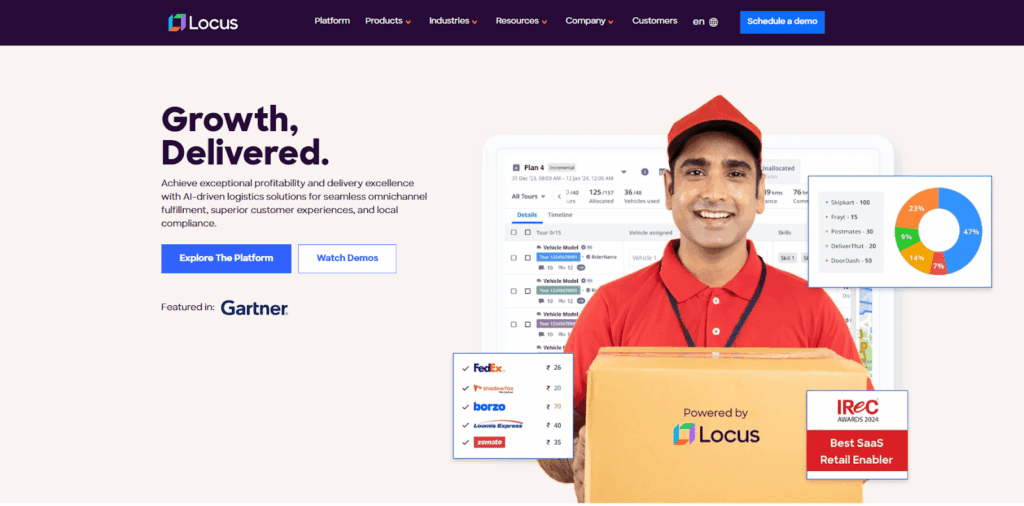
Locus is the only AI-powered logistics orchestration platform purpose-built for enterprise complexity, connecting planning, routing, dispatch, and execution in a single operational layer. While e2open offers broad transportation coverage, enterprise logistics leaders shortlist Locus when visibility must translate directly into action — without manual coordination or support delays.
Locus allows enterprise teams to adjust routes, priorities, and constraints in real time, even during peak volumes. It is adopted by multi-region, high-density operations across retail, FMCG, 3PL, and CPG that require stable performance as complexity increases.
G2 Rating: 4.7/5 · Capterra Rating: 4.8/5
Common Challenges Locus Resolves
System Slowness During Key Tasks Locus is built for execution speed during live operations. G2 reviewers consistently highlight fast task assignment and responsive Control Tower views, even during peak volumes. This directly contrasts with platforms where large workloads become harder to manage visually or operationally as scale increases.
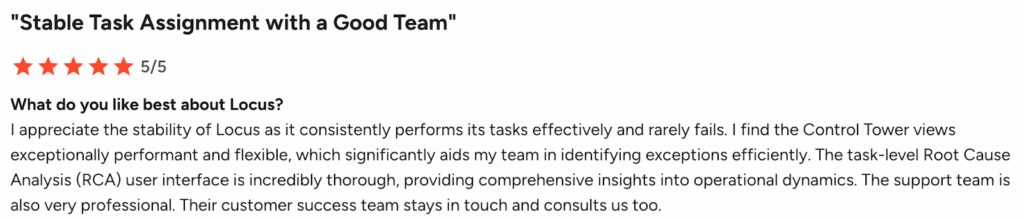
Stability Issues and Glitches During Key Tasks Users note that Locus maintains stable performance during routing, tracking, and dispatch, even with complex workflows. This reliability reduces operational risk in multi-region or multi-carrier environments where execution failures cause cascading delays.
Limited Editing and Workflow Rigidity Locus allows real-world adjustments during planning and execution without locking workflows. Dispatchers intervene when conditions change — without waiting for support teams or backend updates.

Slow Reporting and Analytics Response Locus provides exception-led dashboards, RCA tools, and operational views designed for immediate decision-making. Enterprise users highlight faster diagnostics and clearer issue visibility compared to platforms where insights arrive after delays.

Locus Pros
- Reliable and Adaptive AI Routing: Adapts routes based on traffic, density, and real-world constraints to maintain consistent ETAs. Reduces dispatcher overrides and manual corrections in dense, high-stop environments. “Exceptional route optimization reduced our planning time by 40% across 5 regions.“
- End-to-End Orchestration: Connects routing, dispatch, and execution within a shared operational context. Planning decisions flow directly into execution, reducing mismatches and manual reconciliation across tools. “Seamless integration with our ERP; real-time ETAs improved OTIF by 25%.“
- Enterprise-Grade Scalability: Scales across fleets, regions, and delivery models while maintaining performance. “AI-driven orchestration handles peak volumes without manual intervention.“
- Dedicated Implementation Support: “Enterprise-grade support with dedicated implementation teams.“
Locus Cons
- Locus is intentionally designed for enterprise operations; smaller teams and SMBs may find the platform more robust than needed.
- Initial implementation requires workflow and data alignment, especially for organizations automating logistics operations for the first time.
- “Customization requires engineering resources” for highly specific workflow configurations.
Locus Is Ideal For
- Retail, e-commerce, and e-grocery brands managing dense, high-volume routes
- FMCG/CPG and 3PL providers operating multi-region or multi-client logistics networks
- Big & bulky delivery operators requiring precise scheduling and specialized routing
- Enterprises running hybrid or multi-fleet operations across first, mid, and last mile
Locus Pricing
Custom pricing based on delivery volume, operating regions, fleet composition, and specific modules required (dispatch planning, orchestration, Track & Trace, carrier management). Pricing scales with usage and automation depth.
Locus User Testimonial
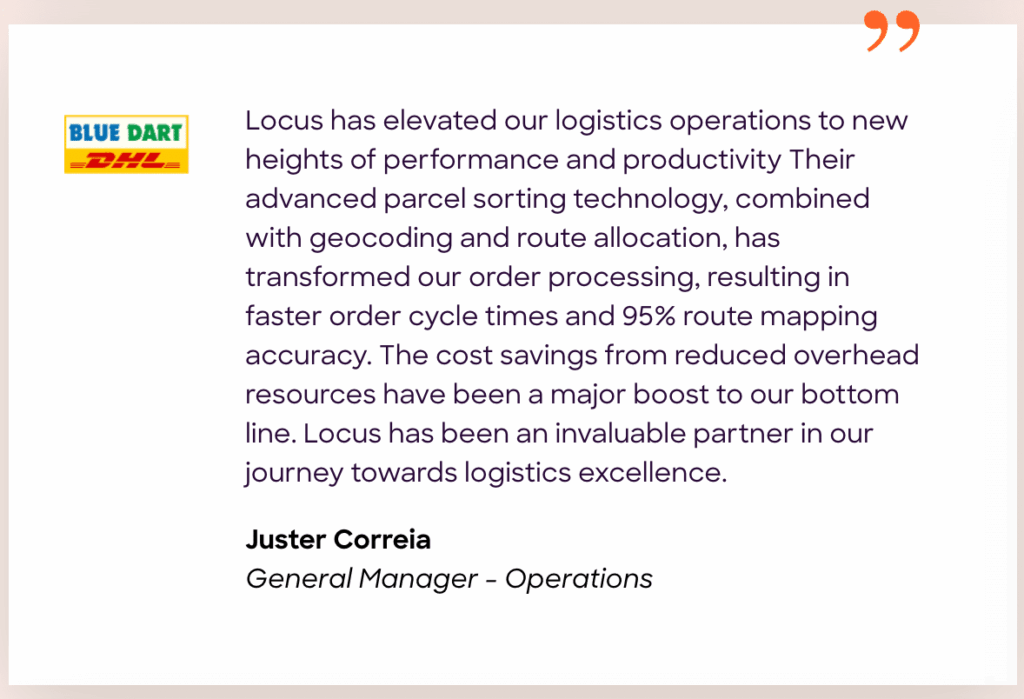
“The cost savings from reduced overhead resources have been a major boost to our bottom line. Locus has been an invaluable partner in our journey towards logistics excellence.” — General Manager of Operations, Blue Dart DHL“Locus transformed our global last-mile operations from reactive to predictive.” — Logistics Director, Fortune 500 Retailer (G2, 2026)
Why Enterprises Choose Locus Over e2open
| Capability | e2open | Locus |
| Visibility-to-action speed | Visibility layer requires manual follow-up | Visibility triggers automated routing and dispatch actions |
| Workflow flexibility | Changes often require support involvement | Self-serve edits and real-time overrides |
| Routing intelligence | Broad carrier coverage, limited adaptive routing | AI-powered, constraint-aware route optimization |
| Scalability under load | UI strain during peak workloads | Stable performance during high-volume execution |
| Planning-to-execution continuity | Fragmented across modules | End-to-end orchestration in one system |
2. Blue Yonder
Blue Yonder (formerly JDA) provides end-to-end supply chain planning and execution software with AI for demand sensing, inventory optimization, and fulfillment. It serves retail and CPG enterprises with warehouse, transportation, and store execution capabilities, emphasizing predictive analytics for global operations.
Unlike Locus, which prioritizes execution-first orchestration with real-time routing control, Blue Yonder focuses primarily on upstream planning and demand intelligence. Enterprise teams that need stronger day-to-day dispatch control and adaptive routing often find Blue Yonder’s planning depth valuable but insufficient for operational agility.
G2 Rating: 4.3/5 · Capterra Rating: 4.2/5
Common Challenges Blue Yonder Resolves
- Demand planning inaccuracy: AI-powered demand sensing helps enterprises reduce overstock and stockouts across global retail networks.
- Disconnected planning and fulfillment: Bridges the gap between demand forecasts, inventory positioning, and warehouse execution.
- Lack of supply chain-wide analytics: Provides predictive analytics that help enterprises anticipate disruptions before they hit execution.
Blue Yonder Pros
- “Advanced AI planning reduces overstock by 20–30%.“
- “Comprehensive from planning to execution.“
- “Scales for global retail networks.“
Blue Yonder Cons
- “Very expensive with long ROI timelines.“
- “Steep learning curve and rigid workflows.“
- “Implementation often exceeds 12 months.“
Locus vs Blue Yonder
While Blue Yonder dominates in supply chain planning and demand intelligence for global retail, only Locus delivers the real-time execution control, adaptive AI routing, and dispatch agility that enterprise logistics leaders need for day-to-day operational performance. Choose Blue Yonder for upstream planning; choose Locus when planning must connect seamlessly to live execution.
Blue Yonder Is Ideal For
Large retail and CPG enterprises that need AI-driven demand planning, inventory optimization, and fulfillment coordination at global scale — particularly those whose primary pain point is planning accuracy rather than last-mile execution speed.
Blue Yonder Pricing
Enterprise-tier custom pricing. Costs depend on modules deployed, user count, and operational scope. Implementation budgets are typically significant.
Blue Yonder User Testimonial
“Powerful planning tool, but execution layer needs more real-time agility.” — VP Supply Chain, Retail (G2, 2026)volume and feature access. Advanced analytics, API access, and higher delivery limits are available in upper-tier plans.
3. FourKites
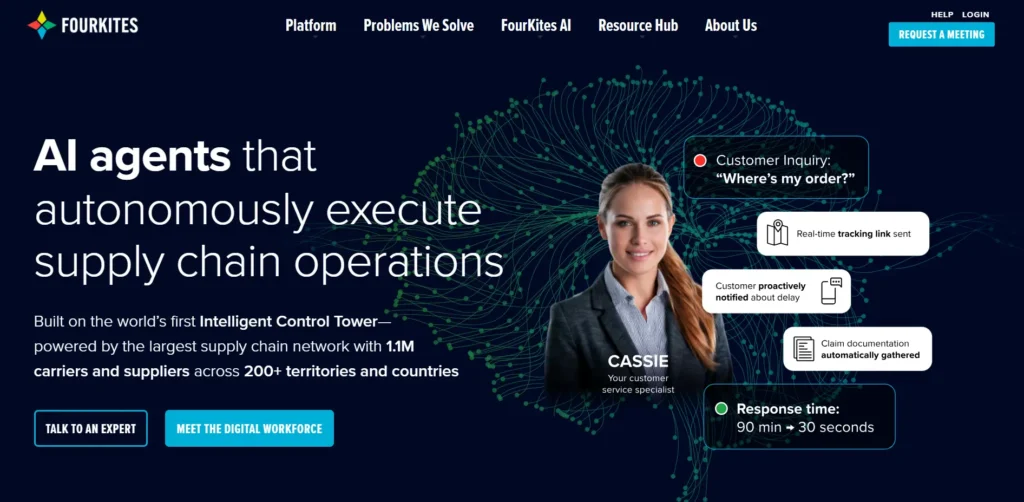
FourKites offers real-time supply chain visibility, tracking multimodal shipments across road, rail, ocean, and air. It provides predictive ETAs, risk alerts, and analytics for inbound logistics optimization — serving industries like food, retail, and manufacturing with a focus on execution insights rather than execution control.
Unlike Locus, which turns visibility into automated routing and dispatch decisions, FourKites provides a visibility layer that still requires separate tools for operational action. Enterprise teams that need end-to-end orchestration rather than monitoring alone often pair FourKites with execution platforms or evaluate Locus as a more integrated alternative.
G2 Rating: 4.5/5 · Capterra Rating: 4.4/5
Common Challenges FourKites Resolves
- Blind spots in multimodal shipments: Tracks across road, rail, ocean, and air in a single dashboard with predictive ETAs.
- Reactive exception management: Risk alerts enable proactive intervention before delays cascade through the supply chain.
- Inventory and yard visibility gaps: Analytics tools support inbound logistics optimization and yard management.
FourKites Pros
- “Real-time visibility across our entire supply chain cut delays by 30%.“
- “Excellent multimodal tracking and ETA accuracy.“
- “Strong analytics for inventory and yard management.“
- “Reliable alerts prevent stockouts effectively.“
FourKites Cons
- “Limited orchestration beyond visibility; needs third-party routing.“
- “High cost for full feature access.“
- “Integration setup took longer than expected.“
Locus vs FourKites
FourKites excels in real-time visibility and predictive ETAs across complex, multimodal supply chains. However, it stops at the monitoring layer — it does not provide automated routing, dispatch, or execution control. For enterprise logistics leaders who need visibility that directly triggers operational action, Locus delivers end-to-end orchestration where FourKites requires additional tools.
FourKites Is Ideal For
Enterprise supply chain teams focused on inbound logistics visibility, multimodal tracking, and predictive exception management — particularly those already using a separate TMS or dispatch system and needing a dedicated visibility layer.
FourKites Pricing
Custom enterprise pricing based on shipment volume, modes tracked, and analytics modules deployed.
FourKites User Testimonial
“FourKites gives us visibility we never had, but we still need better execution tools.” — Supply Chain Manager, CPG (G2, 2026)
4. Bringg
Bringg is a fulfillment and delivery orchestration platform built for enterprises managing multiple fleets, carriers, and delivery models. Unlike Locus, which delivers AI-powered routing intelligence alongside orchestration, Bringg focuses on coordinating carrier handoffs and customer-facing delivery workflows. Enterprise teams evaluating e2open competitors often consider Bringg when they need stronger coordination across internal operations and outsourced delivery partners — but may still require a separate routing engine.
G2 Rating: 4.4/5 · Capterra Rating: 4.5/5
Common Challenges Bringg Resolves
- Fragmented multi-carrier workflows: Unifies carrier selection, handoffs, and exception handling, reducing operational fragmentation for teams working with multiple delivery partners.
- Limited visibility across regions or fleets: Centralized dashboards give operations teams a clearer view of SLA risks, delays, and carrier performance in real time.
- Manual customer communication: Automated notifications and branded tracking pages standardize the customer experience across delivery types and partners.
Bringg Pros
- “Great for coordinating multiple carriers in real-time.“
- “Customer-facing tracking boosts satisfaction scores.“
- “Scales well for high-volume e-commerce peaks.“
- Supports a wide range of fulfillment models, including curbside pickup, same-day, and scheduled deliveries.
Bringg Cons
- “Weak on upstream supply chain planning.“
- “UI can be overwhelming for large dashboards.“
- “Reporting lacks deep AI insights.“
- Implementation can be lengthy for organizations with complex system dependencies.
Locus vs Bringg
While Bringg offers solid multi-carrier coordination for enterprises using hybrid fleets, only Locus delivers the AI-powered routing intelligence, constraint-aware optimization, and planning-to-execution continuity that enterprise logistics leaders need for dense, high-stop delivery networks. Bringg coordinates carriers; Locus orchestrates the entire delivery operation.
Bringg Is Ideal For
Enterprise retailers, grocery chains, and logistics providers managing multiple delivery partners or fleets that need a unified coordination layer — particularly those optimizing multi-carrier operations rather than requiring advanced routing automation.
Bringg Pricing
Custom enterprise pricing based on delivery volume, integration needs, carrier mix, and operational complexity.
Bringg User Testimonial
“Bringg excels in last-mile but falls short on full orchestration for enterprises.” — Operations Director, Retail (G2, 2026)ased on delivery volume, integration needs, carrier mix, and operational complexity.
5. Shipsy
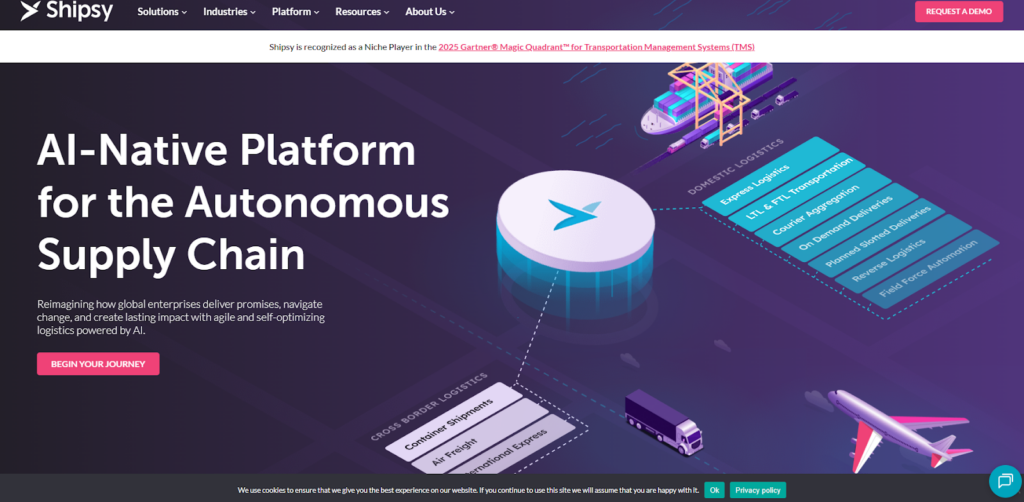
Shipsy is a logistics management and visibility platform widely used across retail, e-commerce, 3PL, CEP, and cross-border dShipsy is a logistics management and visibility platform widely used across retail, e-commerce, 3PL, CEP, and cross-border delivery networks. It focuses on improving cost efficiency and providing operational visibility across first-, mid-, and last-mile workflows. Gartner rates Shipsy at 4.9/5 as an e2open transportation alternative — reflecting strong user satisfaction in carrier management scenarios.
Unlike Locus, which provides end-to-end AI orchestration from planning through execution, Shipsy excels specifically in carrier allocation and cost optimization for outsourced delivery networks. Enterprise teams with heavy third-party fleet dependencies often evaluate Shipsy alongside Locus.
Common Challenges Shipsy Resolves
- Visibility gaps across carriers or transport legs: Provides a unified operations dashboard that reduces back-and-forth between tools.
- High dependence on multiple third-party fleets: Offers automated carrier allocation and cost-optimized selection.
- Manual SLA monitoring: Delivers real-time performance insights, alerts, and automated exception flagging.
Shipsy Pros
- Extensive integrations with couriers, transporters, and 3PL partners — strong fit for brands handling outsourced delivery at scale.
- Rate comparison, SLA tracking, and performance data help enterprises choose the most efficient transporter for each shipment.
- End-to-end tracking and exception management across multiple delivery legs, particularly in cross-border or multi-carrier environments.
Shipsy Cons
- Best suited for organizations already using multiple carriers; smaller or centralized operations may find parts of the platform more than they need.
- Advanced configuration takes time, especially for teams requiring deep workflow customization.
Locus vs Shipsy
Shipsy delivers strong carrier allocation and cost optimization for enterprises managing many third-party fleets. However, for enterprise logistics leaders who need AI-powered routing, real-time dispatch orchestration, and stable performance across hybrid fleet models, Locus provides the execution depth and automation that Shipsy’s carrier-management focus does not cover.
Shipsy Is Ideal For
Retail, e-commerce, 3PL, and CEP teams whose operations span several regions and transport partners — and who want a unified view of routing, allocation, and tracking without adopting a full end-to-end automation stack.
Shipsy Pricing
Custom pricing based on shipment volume, number of carriers, module selection (last-mile, cross-border, control tower), and deployment scale.
6. Epicor
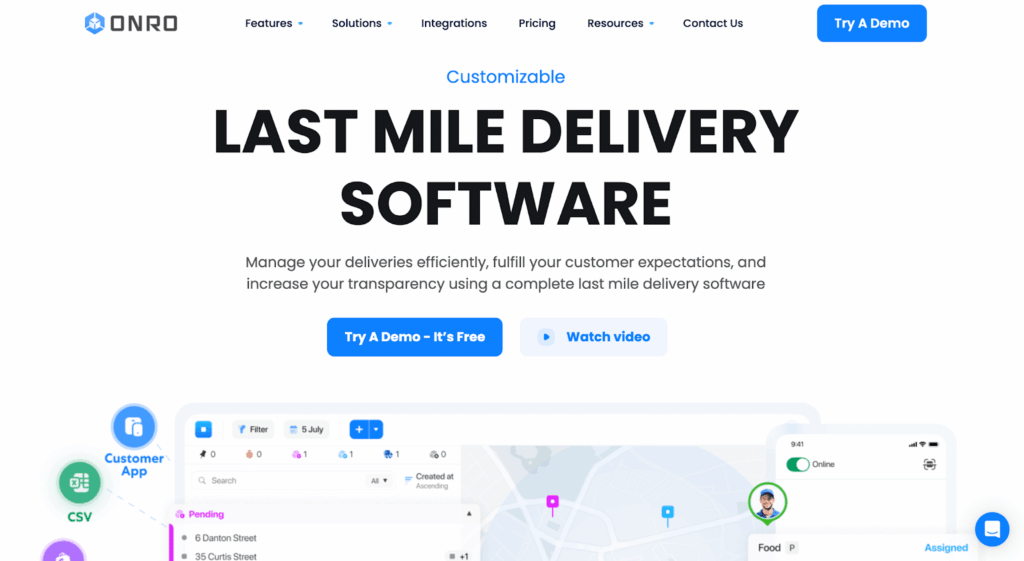
Epicor delivers ERP software with integrated SCM modules for manufacturing, distribution, and retail — including inventory management, procurement, and order management. It supports on-premise and cloud deployments with industry-specific workflows. Epicor’s strength is operational efficiency through integrated planning and execution within its ERP ecosystem.
Unlike Locus, which is purpose-built for logistics orchestration and real-time delivery optimization, Epicor approaches supply chain management as an extension of its ERP core. Enterprise teams that need deep delivery-level routing and dispatch control typically find Epicor insufficient for logistics-specific execution, even though its ERP integration is strong.
G2 Rating: 4.2/5 · Capterra Rating: 4.1/5
Common Challenges Epicor Resolves
- Disconnected ERP and supply chain data: Integrates inventory, procurement, and order management within a single ERP environment.
- Demand forecasting inaccuracy in manufacturing: Provides strong inventory accuracy and manufacturing-specific demand planning.
- Lack of industry-specific workflows: Customizable for verticals like distribution and manufacturing with pre-built templates.
Epicor Pros
- “Robust ERP integration for manufacturing supply chains.“
- “Strong for inventory accuracy and demand forecasting.“
- “Customizable for verticals like distribution.“
Epicor Cons
- “Complex implementation for non-ERP teams.“
- “Less agile for real-time logistics visibility.“
- “Higher TCO due to customization needs.“
Locus vs Epicor
Epicor provides solid ERP-integrated supply chain management for manufacturing and distribution. However, for enterprise logistics leaders who need real-time routing optimization, adaptive dispatch, and execution-grade orchestration, Epicor’s ERP-first architecture is not designed for the speed and granularity that Locus delivers. Choose Epicor for ERP-driven SCM; choose Locus for logistics execution.
Epicor Is Ideal For
Manufacturing and distribution enterprises that need ERP-integrated supply chain management — particularly those whose primary pain point is inventory accuracy and procurement coordination rather than delivery-level routing and execution.
Epicor Pricing
Custom pricing based on modules, user count, deployment type (cloud or on-premise), and industry vertical. Higher TCO typical due to customization requirements.
Epicor User Testimonial
“Epicor is solid ERP but not optimized for dynamic supply chain orchestration.” — IT Manager, Manufacturing (G2, 2026)
7. ClickPost
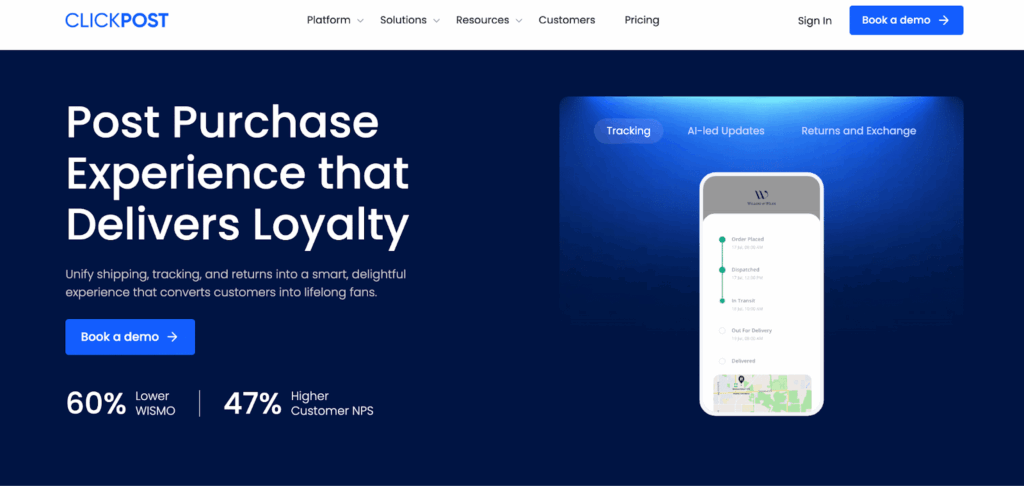
ClickPost is a post-purchase and delivery experience platform widely used by e-commerce brands to improve tracking, NDR (non-delivery reports), carrier allocation, and returns workflows. Unlike full orchestration tools like Locus, ClickPost focuses on the customer-facing side of delivery — helping reduce RTO and improve visibility across multiple carriers.
Common Challenges ClickPost Resolves
- Reduces RTO with automated NDR journeys and improved communication.
- Improves shipment tracking by unifying updates across carriers.
- Simplifies returns with a branded returns portal.
ClickPost Pros
- Strong multi-carrier integrations and unified tracking.
- Excellent NDR and returns workflows for D2C and marketplaces.
- Quick implementation with minimal operational disruption.
ClickPost Cons
- Not a full routing or dispatch automation platform.
- Limited value for enterprise teams needing sophisticated planning or operational AI.
Locus vs ClickPost
ClickPost excels at post-purchase experience management for D2C and marketplace brands. However, it does not provide routing, dispatch, or execution automation. For enterprise logistics leaders who need the delivery operation to run efficiently — not just the customer communication layer — Locus delivers the end-to-end orchestration that ClickPost is not designed to provide.
ClickPost Is Ideal For
E-commerce and D2C brands that need cleaner tracking, reduced delivery failures, and a better post-purchase customer experience — especially those shipping through multiple carriers. Not suited for enterprise-scale logistics orchestration.
ClickPost Pricing
Custom pricing based on shipment volume, integrated carriers, and enabled modules (tracking, NDR, returns). Typically mid-range for D2C platforms.volume, integrated carriers, and enabled modules (tracking, NDR, returns). Typically mid-range for D2C platforms.
8. Metapack
MetaPack is a delivery management platform designed primarily for large retailers and global e-commerce brands that need a vast carrier network and reliable international delivery options. Its strength lies in checkout delivery choices, multi-carrier routing, and post-purchase visibility across thousands of carrier services worldwide.
Unlike Locus, which delivers AI-powered execution orchestration for enterprise logistics, MetaPack focuses on carrier selection and delivery promise presentation at checkout — making it complementary rather than competitive for teams with execution-first needs.
Common Challenges MetaPack Resolves
- Limited carrier choice in existing systems — offers 350+ carrier integrations.
- Delivery uncertainty — accurate delivery-date presentation at checkout.
- Fragmented tracking across regions — consolidates status updates globally.
MetaPack Pros
- Extensive global carrier network with strong international delivery support.
- Checkout delivery options that help reduce cart abandonment.
- Stable, enterprise-grade tracking and SLA management.
MetaPack Cons
- More complex than needed for smaller teams.
- Lacks deep operational routing or fleet-level execution functionality.
Locus vs MetaPack
MetaPack provides a strong carrier network and checkout delivery promise for multinational retailers. However, it does not offer the routing intelligence, dispatch automation, or real-time execution control that enterprise logistics leaders need for dense delivery operations. For teams whose primary gap is execution — not carrier selection — Locus is the more complete solution.
MetaPack Is Ideal For
Large and multinational retailers that need dependable international carrier coverage, standardized delivery promises at checkout, and consistent global tracking. Not designed for operational routing or fleet-level dispatch.
MetaPack Pricing
Enterprise-tier custom pricing, typically dependent on shipment volume, carrier mix, and regional coverage requirements. mix, and regional coverage requirements.
9. Aftership
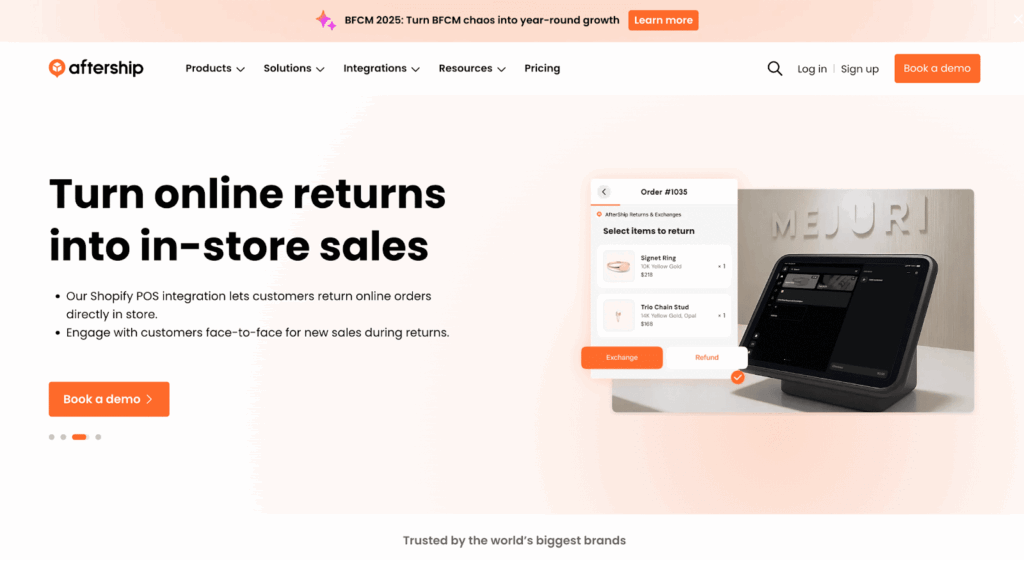
AfterShip is a post-purchase and shipment-visibility platform that helps eCommerce brands centralize tracking, notifications, and returns across hundreds of global carriers. It is evaluated by enterprise teams that want stronger customer communication and visibility layers without changing their underlying delivery operations.
Unlike Locus, which provides execution-ready orchestration, AfterShip operates exclusively in the post-purchase layer — tracking, notifications, and returns. Enterprise logistics leaders should evaluate AfterShip when the gap is customer communication, not operational execution.
Common Challenges AfterShip Resolves
- Limited visibility into delivery status — unifies tracking from 1,000+ carriers.
- High support load from “Where is my order?” queries — automated notifications across email, SMS, and WhatsApp.
- Fragmented returns workflows — branded, self-service returns portal.
AfterShip Pros
- Strong branded tracking experience with real-time status updates.
- Supports automated notifications across email, SMS, and WhatsApp.
- Robust returns management tools that streamline customer-facing workflows.
AfterShip Cons
- Not a routing, dispatching, or last-mile execution platform.
- Insights are post-purchase–focused, offering little operational orchestration.
Locus vs AfterShip
AfterShip excels at branded tracking and post-purchase customer communication. It does not provide routing, dispatch, or real-time execution control. For enterprise logistics leaders who need operational orchestration — not just a tracking layer — Locus delivers the execution infrastructure that AfterShip is not designed to offer.
AfterShip Is Ideal For
Retail and D2C brands that want to elevate the customer experience after checkout — specifically those needing centralized tracking, automated notifications, and streamlined returns without modifying core logistics operations.
AfterShip Pricing
Tiered plans based on shipment volume and features; higher tiers unlock advanced analytics, automation rules, branded tracking customization, and returns platform capabilities.; higher tiers unlock advanced analytics, automation rules, branded tracking customization, and returns platform capabilities.
10. Narvar
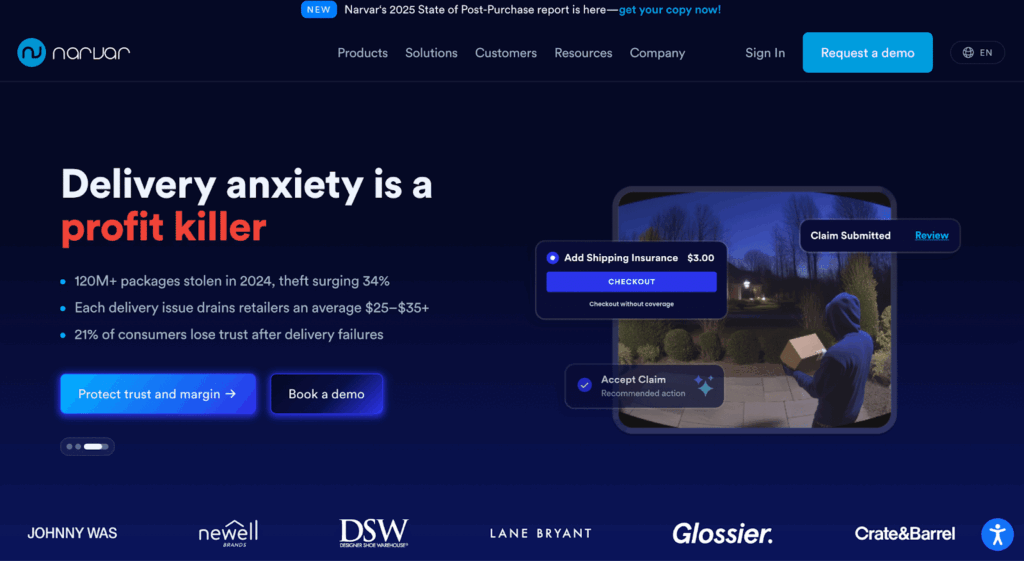
Narvar is a post-purchase experience platform that helps retailers streamline tracking, notifications, and returns while offering flexible delivery and pickup options. It is commonly evaluated by enterprise retail teams that want to improve customer-facing communication and reduce support load without changing their core logistics engine.
Unlike Locus, which automates and optimizes the delivery operation itself, Narvar operates on the customer communication and returns layer. Enterprise logistics leaders should view Narvar as complementary to execution platforms, not a replacement.
Common Challenges Narvar Resolves
- Limited control over customer communication during delivery — centralizes updates in branded tracking pages.
- High customer-service volume for order status — automated alerts and proactive exception notifications.
- Inefficient or manual returns workflows — guided, self-service returns experience.
Narvar Pros
- Highly polished branded tracking and messaging experiences.
- Multiple delivery and pickup options (store pickup, concierge points) that enhance convenience.
- Strong returns management capabilities with configurable rules and workflows.
Narvar Cons
- Not designed for routing, dispatch, or real-time operations.
- Requires integration with existing systems for full context.
Locus vs Narvar
Narvar provides best-in-class post-purchase engagement for retail brands. However, it does not address the operational execution layer — routing, dispatch, fleet management, or real-time orchestration. For enterprise logistics leaders whose challenge is operational performance (not customer communication), Locus provides the execution foundation that Narvar cannot replace.
Narvar Is Ideal For
Retailers and D2C brands aiming to strengthen post-purchase engagement — primarily by reducing support tickets, improving customer satisfaction, and offering a modern returns experience.
Narvar Pricing
Custom pricing based on shipment volume, communication channels (SMS, WhatsApp, email), and the number of activated return management features.sed on shipment volume, communication channels (SMS, WhatsApp, email), and the number of activated return management features.
Benefits of Switching from e2open to a Purpose-Built Alternative
Enterprise logistics leaders evaluating e2open competitors typically realize the following benefits after switching to a platform better aligned with their execution needs:
1. Faster Visibility-to-Action Speed
Platforms like Locus translate real-time visibility directly into routing and dispatch decisions — eliminating the manual coordination that slows e2open workflows during peak volumes.
2. Reduced Dispatcher Overrides
AI-powered route optimization engines reduce the need for manual corrections, especially in dense, high-stop delivery environments where e2open’s routing depth falls short.
3. Self-Serve Operational Flexibility
Enterprise teams gain the ability to edit workflows, adjust routing rules, and modify carrier priorities in real time — without waiting for support teams or backend updates. Choosing the right route planning software is essential to unlocking this benefit.
4. Stable Performance Under Scale
Modern orchestration platforms maintain consistent system responsiveness as delivery volumes, regions, and fleet types expand — directly addressing the UI and workload visibility constraints reported by e2open users.
5. Unified Planning-to-Execution Continuity
Instead of fragmented modules that lose context between planning and dispatch, enterprise-grade alternatives like Locus connect the entire delivery lifecycle in a single operational layer — reducing error rates and manual reconciliation.
6. Lower Total Cost of Ownership
By automating more of the execution workflow and reducing manual handoffs, enterprise teams achieve measurable cost savings across labor, carrier spend, and SLA penalties. Understanding why your business needs route optimization is a critical starting point.
Key Features to Evaluate When Comparing e2open Competitors
When enterprise supply chain executives evaluate alternatives to e2open, these feature categories determine operational fit:
| Feature Category | What Enterprise Teams Need | Where Locus Leads |
| AI-Powered Routing | Constraint-aware, adaptive route optimization that reduces manual corrections | ? AI routing adjusts for traffic, density, capacity, and real-world constraints |
| Real-Time Dispatch | Live dispatch management with override capability during exceptions | ? Dispatchers intervene in real time without support involvement |
| End-to-End Orchestration | Unified planning ? routing ? dispatch ? execution in a single platform | ? Only platform connecting all four layers for enterprise logistics |
| Multi-Region Scalability | Stable performance across geographies, fleet types, and volume peaks | ? Proven at scale across multi-country, multi-fleet operations |
| Carrier Management | Automated carrier allocation, SLA tracking, and cost optimization | ? Supports hybrid fleets with internal and third-party carriers |
| Integration Flexibility | Open APIs for connecting to ERP, WMS, OMS, and adjacent systems | ? Seamless integration with enterprise ERP and existing tech stacks |
| Exception Management | Real-time alerts, RCA dashboards, and automated exception handling | ? Exception-led dashboards for immediate operational diagnostics |
| Post-Purchase Visibility | Branded tracking, notifications, and returns for customer experience | Complementary — pair with AfterShip or Narvar for post-purchase CX |
Why Enterprise Logistics Leaders Choose Locus
e2open continues to serve enterprises that need broad transportation coverage and global carrier connectivity. However, as delivery networks grow denser and execution windows tighten, many enterprise teams find that visibility alone is no longer enough.
Day-to-day performance increasingly depends on how quickly insights can be turned into routing, dispatch, and execution decisions. The alternatives covered in this guide address different parts of that gap:
- Post-purchase platforms (AfterShip, Narvar, ClickPost) focus on customer communication and tracking.
- Carrier management tools (Shipsy, MetaPack) improve coverage and cost optimization.
- Visibility platforms (FourKites) provide predictive monitoring without execution control.
- Planning-first platforms (Blue Yonder, Epicor) deliver strong upstream intelligence but limited real-time dispatch agility.
- Coordination tools (Bringg) handle multi-carrier handoffs but lack deep routing intelligence.
Fewer solutions connect planning, dispatch, and execution in a way that holds up under enterprise scale. Locus stands out in this context by linking real-time visibility directly to action — helping enterprise logistics leaders maintain performance as complexity increases. It is the only AI-powered logistics orchestration platform purpose-built for the execution demands of retail, FMCG, 3PL, and CPG enterprises operating across multiple regions and fleet types.
For organizations facing growing volumes, multi-region operations, or frequent operational changes, Locus offers the most practical path from visibility to execution at scale.
Frequently Asked Questions (FAQs)
What are the top e2open competitors in 2026?
Top e2open competitors include Locus (AI-powered logistics orchestration), Blue Yonder (supply chain planning and fulfillment), FourKites (real-time multimodal visibility), Bringg (multi-carrier delivery coordination), Shipsy (carrier allocation and cost optimization), Epicor (ERP-integrated SCM), and post-purchase platforms like AfterShip and Narvar. Gartner, 6sense, and G2 consistently rank these as leading alternatives based on category strength.
How do I know if my enterprise operations have outgrown e2open?
For enterprise logistics leaders, when manual coordination increases, exception response slows, and UI performance degrades during peak volumes, it signals that existing platforms no longer meet enterprise execution demands. Heavy reliance on support teams for routine workflow changes is another strong indicator.
How does Kinaxis compare to e2open?
Kinaxis RapidResponse competes directly with e2open in concurrent planning and supply chain agility, offering faster scenario modeling per user reviews. It is favored for flexibility in volatile markets over e2open’s multi-enterprise focus. Gartner lists it as a top alternative for real-time supply chain orchestration.
Is SAP a direct competitor to e2open?
Yes. SAP IBP and SAP Ariba directly rival e2open in demand planning and global trade, holding significant market share in supply chain management according to 6sense data. SAP offers stronger procurement networks, making it well-suited for enterprises needing integrated ERP-SCM. However, for logistics-specific execution and routing, platforms like Locus are purpose-built.
Can we move away from e2open without disrupting live operations?
Yes. Most enterprise teams follow a phased approach that includes parallel runs, controlled rollouts, and API syncing to keep dispatching and tracking active during the transition. Locus, for example, supports phased migrations with dedicated implementation teams to ensure zero operational disruption.
How long does it typically take to switch from e2open to another platform?
Timelines vary by integration depth and workflow complexity. In practice, initial rollouts can take as little as 8–14 weeks, with lighter pilots going live sooner, and larger multi-country programs taking a few months from design through stabilization.
What data should be prepared before migrating off e2open?
Enterprise teams usually prepare fleet details, service regions, carrier information, historical shipment data, and operational rules to map into the new platform. Integration specifications for ERP, WMS, and OMS systems should also be documented upfront.
Do e2open alternatives support hybrid or multi-fleet operations?
Many modern platforms support internal fleets, third-party carriers, and mixed fulfillment models. Locus, for example, is specifically designed for hybrid fleet orchestration — allowing enterprise teams to manage cost, capacity, and SLAs more effectively across diverse fleet types and operating regions.
Who are e2open’s main rivals in transportation management?
Key TMS competitors to e2open include Blue Yonder TMS, Oracle Transportation Management, Shipsy, and Alpega TMS. Shipsy leads with 4.9/5 on Gartner for last-mile execution, while Blue Yonder focuses on fulfillment integration. For enterprise teams needing adaptive routing alongside TMS capabilities, Locus provides the strongest execution layer.
What e2open alternatives focus on supply chain visibility?
FourKites and project44 lead as visibility-focused alternatives, with FourKites providing predictive ETAs and multimodal tracking rated 4.5/5 on G2. For enterprise logistics leaders who need visibility that directly triggers operational action — not just monitoring — Locus connects visibility to automated routing and dispatch in a single platform.


General
Cloud Fleet Management System: Your Secret Weapon to Lower Operating Costs

Jan 30, 2026
Learn how a cloud fleet management system cuts operating costs and improves control. See how Locus enables real-time, execution-ready fleet management.
Read more
General
7 Best Middle-Mile Logistics Companies in 2026
Feb 11, 2026
Middle-mile logistics companies ranked for 2026. Review the top 7 providers and see why Locus fits complex, high-volume enterprise operations.
Read moreInsights Worth Your Time




















Top 10 e2open Competitors to Consider in 2026