


General
Big and Bulky Delivery Management: Solving the Last Mile Delivery for Oversized Goods in 2026

Key Takeaways
- A missed big and bulky delivery is not a rescheduled parcel. It means re-booking a two-person crew, repositioning a specialist vehicle, and absorbing a return-to-warehouse cost with damage risk attached.
- Access constraints decide route viability before a vehicle leaves the hub. Narrow roads, weight-limited bridges, restricted parking, and buildings without lifts are planning inputs rather than field surprises, and treating them as the latter is the single most common cause of failure in this category.
- Vehicle and crew matching is a pre-dispatch problem. Solving it on the day is already too late, because the wrong vehicle arriving at the right address is still a failed delivery.
- Published first-attempt and utilization benchmarks for this category are not reliable. Set targets from your own best-performing depot and track failure reasons by category, since each cause needs a different fix.
What Makes Big and Bulky Delivery Different
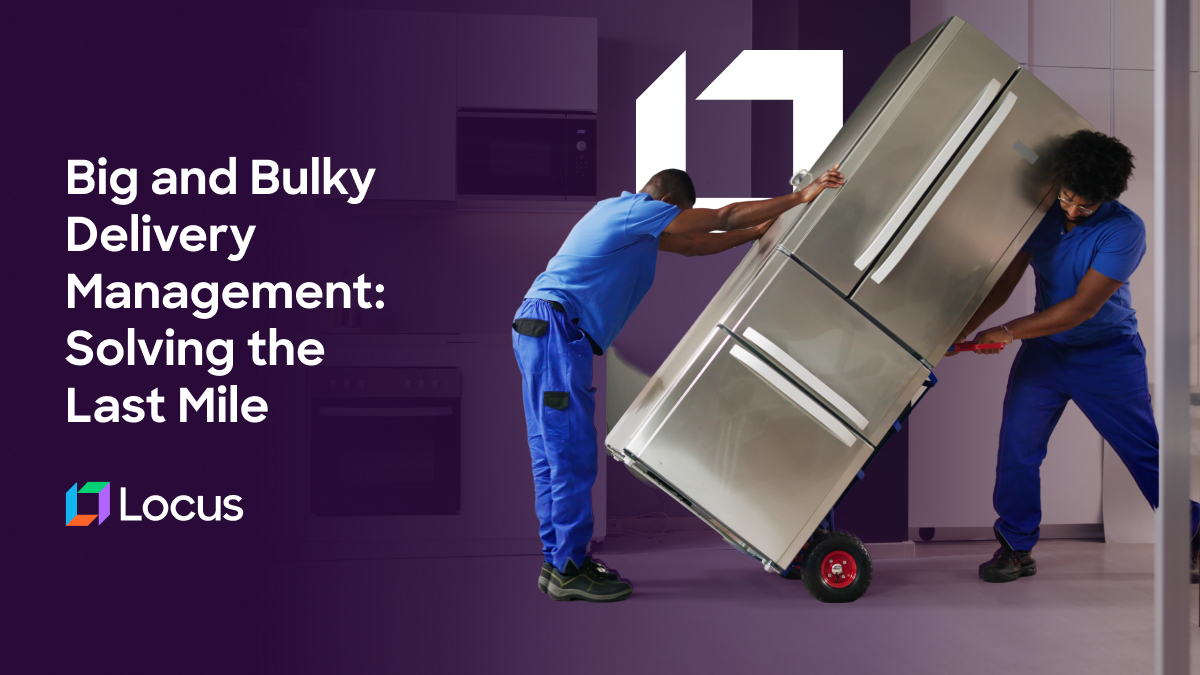
Big and bulky delivery covers oversized, heavy, or high-value items that standard parcel networks cannot handle: furniture, appliances, fitness equipment, mattresses, large electronics. The category is defined less by product type than by what it demands operationally.
Four differences from standard parcel matter:
- Weight and size require specialist vehicles, often with tail-lifts, and frequently two-person crews
- Customer presence is almost always required, which creates narrow scheduling windows rather than delivery attempts
- Access constraints at the delivery address affect route viability before dispatch rather than after arrival
- Value per shipment is high, so each failure carries a proportionally larger penalty
Standard last-mile software is built around parcel density and speed. Big and bulky delivery needs a different constraint set resolved before a route is dispatched, and that is a planning architecture difference rather than a configuration difference.
The Real Cost of a Failed Big and Bulky Delivery
A failed first attempt here is not a recoverable inconvenience. It triggers a chain: re-booking a crew and specialist vehicle, warehouse storage for the returned item, customer dissatisfaction on a high-consideration purchase, and damage risk from handling the item more times than necessary.
One honest note on quantifying it. No research firm publishes a credible cost per failed delivery attempt, and none publishes one for oversized goods specifically. The figures that circulate trace to vendors, and for this category they are particularly misleading because the cost base differs so much by product type, crew model, and geography. Calculate your own from crew hours, vehicle cost, warehouse handling, and depreciation on goods that cannot be resold as new. It is straightforward arithmetic and it will hold up in a review.
What is well established is where the leverage sits: last-mile carries 41 to 53% of total logistics cost, per Capgemini last-mile research, and in big and bulky the concentration is sharper still because the cost per stop is higher to begin with.
First Attempt Delivery Rate is the most direct lever on cost per delivery in this category. Every point of first-attempt success converts into crew time, fuel, and warehouse handling you do not spend.
Core Operational Challenges
Vehicle and Capacity Constraints
Every order has to be matched to the right vehicle and crew before dispatch. A large sectional cannot share a run with standard parcels. An appliance install requires a crew carrying the right equipment.
Manual fleet mix planning fails here consistently. Dispatchers working from spreadsheets either under-use vehicle capacity or assign the wrong vehicle type, and the second failure only becomes visible when the crew arrives.
Automated capacity management resolves it by factoring vehicle dimensions, payload limits, compartment configuration, and crew requirements at the planning stage. The available gain on the utilization side is substantial: optimized consolidation can raise vehicle fill rates from approximately 45% to approximately 74%, per Chalmers University research. Fill rate improvement removes trips rather than shortening them, which matters more in a category where each trip carries a crew.
Scheduling and Access Complexity
Big and bulky deliveries require pre-agreed windows because the customer has to be present, and in many cases an installation crew has to be coordinated separately.
Narrow windows raise route complexity sharply. A route that looks efficient on a map can be operationally unworkable if two deliveries in the same zone have conflicting windows, or if the vehicle that can access one address cannot efficiently serve the next.
Access constraints are the part most systems miss, and they are the most consequential. Restricted delivery zones, low bridges, weight-limited roads, doorway and stairwell dimensions, lift availability and booking requirements, and parking restrictions all determine whether a delivery can be completed as planned. If those are not planning inputs, crews arrive at addresses where the delivery was never physically possible, and the plan was wrong before anyone left the hub.
This is also why address validation alone is insufficient in this category. A correctly validated address tells you where the building is. It does not tell you the lift is out of service or the doorway is 30 inches.
Returns and Failed Delivery Handling
When a big and bulky delivery fails, the return leg carries its own cost. The item goes back to a hub, gets logged, and is rescheduled, and each additional handling event adds damage risk on goods that cannot be sold as new once marked.
Without visibility into why deliveries fail, operations cannot tell whether the cause was scheduling, access, crew capability, or customer unavailability, and each of those requires a different fix. Capturing failure reasons as structured codes rather than free text is the starting point, because coded failures aggregated over a month tell you what to fix structurally rather than what to handle individually.
What Good Looks Like, and How to Set Your Own Targets
A note before any numbers. Published first-attempt and fleet utilization benchmarks for big and bulky are not reliable. First-attempt rate ranges and utilization percentages by vertical both trace to vendors rather than research firms, and this category varies more than most by product mix, crew model, urban density, and building stock. A target borrowed from someone else’s operation will either flatter you or alarm you without telling you anything.
Set targets internally instead, from your own best-performing depot running comparable product and geography, and track the spread between your best and worst. Closing that spread is a more actionable goal than chasing an external figure.
The measures worth tracking:
- First Attempt Delivery Rate, segmented by product category and by urban versus suburban geography, since a sectional into a third-floor walkup and an appliance into a driveway are different problems
- Re-attempt rate by failure reason code, which is the single most useful diagnostic in this category
- Vehicle fill rate and utilization, measured against your own best depot rather than a published percentage
- Actual versus planned service time by stop type, where assembly and access assumptions get validated or falsified
- On-time performance against agreed windows, tracked by window width rather than blended
- Cost per successful delivery, not per attempt, since attempt-based costing systematically understates failure cost here
- Damage and claims rate per hundred deliveries, by product category and crew
Alongside the metrics, two operational practices separate well-run operations: confirmed windows communicated in advance with a live ETA on the day, and structured post-delivery capture including proof of delivery, installation confirmation where applicable, and customer sign-off.
How Technology Closes the Gap
Route Optimization Built for Oversized Loads
Standard optimization sequences stops for speed. Big and bulky optimization has to also resolve vehicle type and payload at each stop, per-delivery window constraints, access restrictions by road type and bridge height and zone, and crew requirements including single versus two-person.
Routes must be built around what is physically executable rather than what is geographically efficient, and those two produce different answers often enough to matter. The documented gain from constraint-aware routing is 10 to 25% cost reduction versus a static daily plan, per McKinsey routing analysis, and in this category the larger share of that comes from avoided failures rather than from shorter routes.
Capacity Management and Fleet Mix Planning
Matching vehicle to shipment is pre-dispatch work. Capacity management automates it, factoring dimensions, weight limits, compartments, and crew requirements when orders are assigned rather than when they are loaded. It also surfaces consolidation opportunities across the specialist fleet, which is where fill rate improvement comes from.
Real-Time Visibility and Customer Communication
Customers awaiting a big and bulky delivery are not passive. They have cleared space, taken time off, and often booked an installer. A late or missed delivery without communication produces a service failure disproportionate to its operational cause.
The gap in most operations is not seeing but acting: 95% of supply chains must react quickly to change while only 7% can execute decisions in real time, per Gartner supply chain research. A control tower that surfaces an access issue but cannot trigger a reschedule has moved the delay rather than removed it. Exceptions should rank by remaining recovery window and be resolvable from the same surface.
Customer-side, a live ETA on the day and proactive notification when a window changes is what keeps the customer present, and customer presence is the binding constraint on first-attempt success in this category.
Analytics That Reduce Repeat Failures
Improving first-attempt rate requires knowing why deliveries fail. Customer unavailability, access at specific postcodes, crew scheduling, vehicle mis-assignment: each points to a different fix, and only coded failure data separates them.
Analytics at the route, zone, and crew level lets managers address systemic causes rather than working exceptions one at a time. The recurring pattern worth looking for: a small number of buildings or postcodes generating a disproportionate share of failures, which is usually an access-data problem rather than an execution problem.
How Locus Enhances Big and Bulky Last Mile Operations
Locus is the world’s first Decision-Intelligent, Agentic Transportation Management System, and the property that matters most for big and bulky is constraint depth. The platform decides against 250+ real-world constraints simultaneously, covering vehicle dimensions and compartments, payload limits, crew size and skills, access restrictions, service time by stop type, and time windows. In this category those are not preferences the optimizer weighs; they determine whether a stop is physically complete, and modeling them natively is what removes avoidable failures before dispatch.
Because planning, dispatch, crew execution, control tower visibility, and customer communication share one operational record, an access issue found in the field becomes data that improves the next plan rather than a note in someone’s inbox. Mixed operations are handled in one dispatch plan, so big and bulky and standard parcel can run different constraint rules without separate systems.
At scale: 1.5B+ deliveries orchestrated for 360+ enterprise customers across 30+ countries at 99.99% uptime, with carrier reach through ShipFlex connecting a 1,000+ carrier network and 160+ pre-integrated carriers. Locus is ranked #1 in Route Planning on G2.
Bring one month of failure reason codes and your access data. We will show you how many were avoidable at planning.
FAQs
What is big and bulky delivery? The logistics of transporting oversized, heavy, or high-value items that standard parcel networks cannot handle: furniture, appliances, fitness equipment, mattresses, large electronics. These shipments typically require specialist vehicles, often two-person crews, and pre-agreed customer time windows.
Why is big and bulky delivery harder than standard parcel delivery? Because vehicle type and crew must be matched per shipment before dispatch, windows are narrow because the customer must be present, access constraints determine whether a delivery is physically possible, and each failure costs proportionally more. Standard last-mile software does not model those constraints by default.
What is a good First Attempt Delivery Rate for big and bulky? There is no reliable cross-industry benchmark, because published first-attempt ranges trace to vendors rather than research and this category varies sharply by product mix, crew model, and building stock. Set your target from your own best-performing comparable depot and work to close the spread between your best and worst.
How does route optimization help with oversized deliveries? By resolving payload limits, window constraints, access restrictions, and crew requirements at the planning stage, so routes are executable before dispatch. McKinsey research puts constraint-aware routing at 10 to 25% cost reduction versus a static daily plan, and in this category most of that comes from avoided failures rather than shorter routes.
What data should operations managers track for big and bulky performance? First-attempt rate segmented by product category and geography, re-attempt rate by failure reason code, vehicle fill rate against your own best depot, actual versus planned service time by stop type, on-time performance by window width, cost per successful delivery, and damage rate per hundred deliveries.
Can one platform manage both big and bulky and standard parcel deliveries? Yes, provided it applies different vehicle and constraint rules to different shipment types within the same dispatch plan. That removes the need for separate systems and gives one view across delivery types, which matters most where the same depot serves both.
How does customer communication affect big and bulky success rates? Directly, because customer presence is the binding constraint. Confirmed windows communicated in advance, combined with a live ETA on the day and proactive notification when the window changes, is what keeps the customer available for the attempt.


General
How to Reduce WISMO Calls: A Practical Guide for Retail Logistics Teams

Aug 10, 2026
WISMO calls are a visibility deficit, not a communication problem. The four points where visibility breaks, five tactics that close them, and how to measure your own baseline instead of trusting published benchmarks.
Read more
General
Rider Management at Scale: How Logistics Companies Run Large Fleets Without Losing Control

Aug 10, 2026
Rider management changes fundamentally above 200 riders. The scale thresholds that determine what software you need, five challenges unique to large fleets, the metrics to track, and how to evaluate platforms.
Read moreInsights Worth Your Time


















Big and Bulky Delivery Management: Solving the Last Mile Delivery for Oversized Goods in 2026