


General
Complete Guide to Electronic Proof of Delivery (ePOD) and Its Importance

Key Takeaways
- Electronic Proof of Delivery (ePOD) replaces paper receipts with digital confirmations captured via photos, electronic signatures, GPS timestamps, QR codes, and PINs — eliminating manual documentation errors in last-mile operations.
- Real-time visibility transforms delivery management. ePOD systems sync instantly with central dashboards, enabling operations teams to monitor every delivery, generate productivity reports, and resolve disputes before they escalate.
- 85% of insurance providers now require delivery photos from couriers, making ePOD a compliance necessity — not just an efficiency tool.
- Contactless delivery verification — through digital signature links, OTP validation, and photo capture — meets modern customer safety expectations while maintaining a tamper-proof audit trail.
- Locus’s Driver Companion App with ePOD capabilities enables real-time shipment tracking, multi-method verification (photo, signature, PIN), and seamless ERP integration, helping enterprise retailers and 3PLs improve delivery accuracy and strengthen customer trust at scale.
We live in an age of instant deliveries. Businesses rely on seamless digital logistics management systems and understand the power of efficient route, order, and transport management systems. As e-commerce volumes accelerate into 2026, the final confirmation step — proof that a package actually reached the right person, at the right place, at the right time — has become a strategic differentiator rather than an afterthought.
Speed alone no longer wins in last-mile delivery. Shipping fees must stay low, fulfillment options must offer flexibility, delivery forecasts must be accurate, and return processes must be frictionless for both the business and the customer. Within this complex chain, electronic proof of delivery (ePOD) may appear to be a small piece of the puzzle — yet it is one of the most critical. For enterprise retailers, 3PL providers, and CEP (Courier, Express, and Parcel) businesses managing high-volume operations, ePOD is the digital backbone that validates every delivery, prevents disputes, and builds measurable customer trust.
This guide covers everything you need to know about electronic proof of delivery: what it is, how it works, the data it captures, its benefits, and how to leverage it for operational excellence in 2026 and beyond.
Editorial Methodology
This article was updated for 2026 to reflect changes in contactless delivery maturity, customer visibility expectations, proof-photo usage, offline mobile workflows, integration architecture, privacy considerations, and claims-response processes.
How this guide was reviewed
- Terminology review: ePOD, POD, digital proof of delivery, delivery receipt, bill of lading, eBOL, proof of pickup, and delivery confirmation were checked for operational accuracy.
- Workflow review: the five-step process was reviewed from order import through proof capture, synchronisation, customer notification, invoicing, and analytics.
- Evidence review: proof methods were assessed by delivery context, including signatures, photo proof, OTP/PIN, barcode scans, serial number checks, and exception handling.
- Commercial review: product language was kept proof-oriented and tied to practical operating outcomes rather than generic transformation claims.
- Citation standard: external numerical claims are cited inline with source links.
What is Electronic Proof of Delivery (ePOD)?
We live in an age of instant deliveries. Businesses rely on seamless digital logistics management systems and understand the power of efficient route, order, and transport management systems. As e-commerce volumes accelerate into 2026, the final confirmation step — proof that a package actually reached the right person, at the right place, at the right time — has become a strategic differentiator rather than an afterthought.
Speed alone no longer wins in last-mile delivery. Shipping fees must stay low, fulfillment options must offer flexibility, delivery forecasts must be accurate, and return processes must be frictionless for both the business and the customer. Within this complex chain, electronic proof of delivery (ePOD) may appear to be a small piece of the puzzle — yet it is one of the most critical. For enterprise retailers, 3PL providers, and CEP (Courier, Express, and Parcel) businesses managing high-volume operations, ePOD is the digital backbone that validates every delivery, prevents disputes, and builds measurable customer trust.
This guide covers everything you need to know about electronic proof of delivery: what it is, how it works, the data it captures, its benefits, and how to leverage it for operational excellence in 2026 and beyond.
Proof of Delivery, Delivery Receipt, Bill of Lading, and eBOL Compared
The terms around delivery documentation are often used loosely. They should not be treated as interchangeable.
| Document | Primary purpose | When it is used | Typical information captured | Who uses it most | Dispute role | Billing role | Does it replace another document? |
| Bill of lading (BOL) | Documents carriage and shipment handoff | Before and during transport | Shipper, carrier, consignee, freight details, quantity, terms | Freight shippers, carriers, warehouses | Supports shipment documentation | Often linked to freight billing and carriage records | No |
| Electronic bill of lading (eBOL) | Digital version of a BOL workflow where permitted | Before and during transport | Similar to BOL, but digitised | Freight and transport operations | Similar to BOL | Similar to BOL | No |
| Proof of delivery (POD) | Confirms the delivery was completed | At the final handoff | Signature, notes, date/time, receipt acknowledgement | Delivery fleets, couriers, distributors | Used in disputes about completion | Can support invoice release | Can replace paper POD |
| Electronic proof of delivery (ePOD) | Digital POD with linked evidence and searchable records | At the final handoff or unattended drop | Signature, photo, GPS, timestamp, scan, OTP/PIN, notes, exception codes, driver/device data | Last-mile fleets, 3PLs, retail, CEP, healthcare, field service | Stronger, searchable, time-linked evidence for investigations | Can support invoice and settlement workflows | Usually replaces paper POD, not BOL |
| Delivery receipt | A general acknowledgement that goods were received | At or after delivery | Basic delivery details, recipient acknowledgement | Retail, wholesale, field delivery | Limited unless combined with evidence | May support reconciliation | Usually complements other records |
| Electronic proof of pickup | Confirms customer handback or collection | At pickup or returns collection | Customer handback, barcode scan, condition photos, timestamp | Returns, reverse logistics, field pickup teams | Useful for chain of custody | Supports return authorisation and reverse settlement | No |
Important: proof and document requirements vary by shipment type, jurisdiction, contract, customer, and industry. In most operations, ePOD complements rather than replaces the bill of lading.
Electronic Proof of Delivery vs. Bill of Lading
Electronic proof of delivery and a bill of lading are both delivery documents, but they serve different purposes in the shipment lifecycle.
A bill of lading is typically used earlier in the logistics flow. It records the freight being transported, the shipper and carrier details, shipment terms, item quantities, and the handoff of goods to the carrier. It functions as a transport document and, depending on the shipment type, may also act as a receipt of goods and evidence of the carriage agreement.
Electronic proof of delivery confirms what happens at the final delivery point. It validates that the order reached the right location, was received by the right person or accepted under the agreed delivery conditions, and was completed with the required proof — such as a signature, photo, GPS timestamp, barcode scan, or OTP.
In practical terms:
- Bill of lading: documents shipment handoff, freight details, and carrier responsibility during transport.
- Electronic proof of delivery: documents final delivery completion, customer acceptance, and evidence required for dispute resolution.
- Together: they create a stronger documentation trail from origin to final mile, especially for high-value, regulated, or multi-party shipments.
For enterprise delivery operations, ePOD complements the bill of lading by closing the documentation gap at the point where most customer disputes arise — the last mile.
Why Is Electronic Proof of Delivery Important?
Without proof of delivery, businesses face significant risks: lost or damaged goods disputes go unresolved, customers question delivery completion, and operations teams lack the data needed to optimize performance. The stakes are higher than ever — 85% of insurance providers now require delivery photos from couriers, making digital proof capture a compliance mandate for logistics fleets in 2026.
Here is why ePOD is essential for enterprise retailers, 3PLs, and delivery-intensive businesses:
Transparency and Accountability
ePOD provides a clear, real-time record of each delivery. Businesses can verify completion, track goods through the final mile, and hold delivery personnel accountable with GPS-stamped, time-stamped records. AI-powered systems enhance this with instant status updates and anomaly detection, reducing errors in tracking.
Improved Customer Experience
Without ePOD, customers lack verification of their delivery status. ePOD offers instant confirmation through digital signatures, photos, and real-time notifications — reducing disputes and improving satisfaction. In a Salesforce survey of 15,000 consumers, 89% of customers stated that a positive experience makes them more likely to purchase again.
Efficiency and Cost Reduction
Paper-based documentation is slow, error-prone, and expensive to manage. ePOD eliminates paperwork entirely, automates data entry, and accelerates invoicing workflows. For high-volume operations, this translates directly into lower administrative costs and faster order-to-cash cycles.
Fraud Prevention and Security
ePOD creates tamper-proof records — GPS coordinates, time-stamped photos, and verified signatures — that serve as reliable evidence in case of disputes. AI-powered analytics can flag suspicious patterns, strengthening fraud detection across delivery networks.
How ePOD Reduces Chargebacks and Delivery-Not-Received Claims
Chargebacks and delivery-not-received claims often stem from a lack of verifiable evidence. When a customer, marketplace, retailer, or financial intermediary challenges a delivery, operations teams need more than a status update marked “delivered”. They need a complete, time-bound record that proves what was delivered, where, when, and under what conditions.
ePOD reduces claim exposure by creating a structured evidence pack for every stop:
- Location proof: GPS coordinates confirm that the driver was at the correct delivery address.
- Time proof: timestamps show when the delivery event occurred.
- Visual proof: photos show the parcel, doorstep, reception desk, loading bay, or other approved drop-off point.
- Recipient proof: signatures, OTPs, PINs, or ID checks validate customer acceptance where required.
- Item proof: barcode or QR scans confirm that the correct order was handed over.
For customer service teams, this reduces the time spent investigating claims. For finance teams, it supports faster chargeback response. For logistics leaders, it creates a measurable control layer that reduces revenue leakage from false or poorly evidenced delivery disputes.
Legal Protection
Without documented proof, there is no evidence of delivery completion or ownership transfer. ePOD serves as a legal document that protects both the business and the customer in case of claims, chargebacks, or regulatory audits.
Compliance
With insurance providers, regulatory bodies, and enterprise customers increasingly requiring digital delivery verification, ePOD ensures businesses meet evolving compliance standards without operational overhead.
What Types of Data Does Electronic Proof of Delivery Collect?
Electronic Proof of Delivery captures data tailored to the operational needs of your organization. The primary data types include:
- Electronic signature capture — customer signs on a mobile device screen (“sign-on-glass”)
- Photographs — images of the delivered package at the customer location
- GPS geotags — precise latitude/longitude coordinates with timestamps
- Barcode scans — validates the correct package was delivered
- QR codes — enables quick item verification and tracking
- Alpha-numeric fields — custom notes, delivery instructions, condition remarks
- PIN/OTP validation — numeric codes sent to customer for contactless verification
- ID verification — validates the recipient’s identity for restricted, regulated, or high-value deliveries
- Custom formats — configurable fields based on industry or company requirements
These data points also help create a digital chain of custody. Timestamps, driver IDs, device IDs, barcode scans, signatures, geotags, and exception notes collectively show who handled the order, when each event occurred, and how the delivery moved through the final mile. For regulated products, high-value goods, and multi-party logistics networks, this traceable custody trail is critical for audit readiness and dispute resolution.
The flexibility of ePOD data collection is a key advantage over paper-based systems. Businesses can configure which proof methods are required per delivery type. For example, a pharmaceutical delivery may require both a signature and photo, while a parcel drop-off may only need a GPS-stamped photo. This configurability ensures compliance without slowing down drivers.
What Makes Photo Proof Valid?
Photo proof is only valuable when it clearly demonstrates that the right item was delivered to the right location under the right conditions. A blurred image of a package corner or an unidentifiable doorway may not be enough to resolve a claim or support an audit.
Strong photo proof should meet clear photo quality standards:
- Package visibility: the parcel, tote, crate, carton, or item should be visible enough to identify the delivery.
- Location context: the image should include an approved drop-off point such as a doorstep, reception area, store room, loading bay, or customer-designated location.
- Timestamp and GPS metadata: the photo should be linked to the delivery event with time and location data captured by the ePOD app.
- Damage visibility: if goods are damaged, wet, opened, or rejected, the image should clearly show the condition.
- No excessive cropping: the image should not cut off key details such as labels, packaging, or delivery surroundings.
- No blur or obstruction: drivers should retake images that are dark, shaky, blocked, or too close to verify context.
- Consistent capture rules: operations teams should define when to photograph the package, where to stand, and which angles are acceptable.
For legally stronger photo evidence, businesses should pair images with other proof layers: barcode scans, GPS stamps, driver identity, route sequence, customer notes, and recipient confirmation. The more complete the evidence bundle, the faster customer service, claims, and compliance teams can validate what happened at the delivery point.
Security, Privacy, and Governance for ePOD Data
Because ePOD records can include names, signatures, photos, geolocation, and sometimes ID details, businesses should treat proof-of-delivery data as governed operational data rather than simple driver notes.
A practical governance model should cover:
- Role-based access control: restrict who can view, edit, export, or delete proof records.
- Encryption and secure storage: protect records in transit and at rest.
- Audit logs: record access, edits, status changes, and exports.
- Device security: mobile authentication, device management, and session controls for driver apps.
- Retention rules: define how long photos, signatures, and exception records must be stored.
- Data residency and export controls: align storage and transfer rules with customer and regional requirements.
- Consent and notice: where required, inform customers about signature, photo, location, or ID capture.
- Deletion and access requests: especially important where privacy laws require data access or deletion workflows.
- Customer visibility permissions: decide which proof elements customers can see in notifications or portals.
- Sensitive-field handling: age checks, ID information, medical-delivery details, or regulated-product evidence should be stored and shared carefully.
Requirements vary by jurisdiction, customer contract, and industry. ePOD software should make governance configurable, not assumed.
What Are the Components of a Successful ePOD System?
A well-designed ePOD system provides delivery agents with all the information they need at the point of delivery, while feeding real-time data back to the operations center. When a driver or delivery agent accesses an ePOD solution upon arrival at a customer’s location, they can find:
- Vehicle information — assigned vehicle, capacity, and load details
- Driver information — assigned driver ID and credentials
- Delivery time slot — the customer’s expected delivery window
- Expected Time of Arrival (ETA) — dynamically updated based on route conditions
- Geographical location — GPS-validated delivery address
- Order details and specifications — itemized list, quantities, special handling instructions
- Customer information — contact details, delivery preferences, access notes
These components ensure the driver has full context for every stop, reducing failed deliveries caused by incomplete information. For enterprises managing hundreds or thousands of daily deliveries, this structured data flow is what separates efficient operations from chaotic ones.
How ePOD Data Integrates Across ERP, TMS, WMS, OMS, Billing, and Claims
For enterprise teams, the value of electronic proof of delivery depends on where the data goes next.
Typical integration flow
- OMS/ERP/WMS/TMS import: order, shipment, customer, SKU, and stop data enters the ePOD workflow.
- Dispatch and route assignment: the system assigns the task to a driver, vehicle, route, and SLA.
- Proof capture in the driver app: the delivery event is recorded at the stop.
- Real-time synchronisation or batch sync: the proof data flows back through API, webhook, connector, or integration middleware.
- Downstream business actions: customer service, finance, billing, claims, and analytics systems receive the updated delivery outcome.
Business value by function
- Customer service: searchable evidence packs reduce time spent investigating “where is my order?” or delivery-not-received complaints.
- Finance and AR: confirmed proof can support invoice release, settlement, and chargeback response.
- Dispatch and control tower: live exception alerts make it easier to intervene before SLA failures cascade.
- Analytics teams: route, customer, hub, driver, and proof-quality trends become measurable over time.
A useful ePOD platform should support data validation, field mapping, and flexible synchronisation methods so proof records do not become another manual reconciliation problem.
How Does ePOD Software Work?
Electronic Proof of Delivery software operates through two integrated components:
- A mobile application that delivery agents use to collect proof at the point of delivery
- A central management system that monitors, stores, and analyzes all delivery data in real time
The Step-by-Step ePOD Workflow
Step 1 — Data Import: Order details, customer information, and delivery instructions are loaded into the system — either manually or via automated ERP/TMS integration.
Step 2 — Synchronization: Delivery data is pushed to the driver’s mobile device (smartphone or tablet), including optimized route sequences and customer-specific instructions.
Step 3 — Delivery Confirmation: Upon arrival, the driver captures the required proof — a photo of the package at the doorstep, a customer signature on the device screen, a scanned barcode, or an OTP/PIN confirmation.
Step 4 — Real-Time Sync: The captured data — including GPS coordinates and timestamps — is instantly transmitted to the central management system. Dispatch teams, fleet managers, and customers receive immediate updates.
Step 5 — Analytics and Reporting: Completed delivery data feeds into dashboards and reports, enabling operations teams to track KPIs like first-attempt delivery rates, average delivery times, and exception rates.
This closed-loop system eliminates manual data entry, prevents information loss, and gives businesses end-to-end traceability for every delivery. Integration with existing ERP and route optimization platforms means ePOD data flows seamlessly into broader logistics workflows.
ePOD vs. Traditional Paper Proof of Delivery
Understanding the gap between electronic and paper-based proof of delivery helps quantify the operational case for ePOD adoption.
| Criteria | Paper POD | Electronic POD (ePOD) |
| Accuracy | Prone to illegible handwriting, missing fields, and transcription errors | Digital capture eliminates handwriting issues; required fields enforce completeness |
| Speed | Receipts must be physically returned and manually entered into systems — often days later | Data syncs in real time; operations teams see updates instantly |
| Cost | Printing, storage, manual filing, and administrative labor add up at scale | Eliminates paper, reduces admin hours, and accelerates invoicing |
| Dispute Resolution | Difficult to verify; paper can be lost or damaged | GPS-stamped, time-stamped digital records provide irrefutable evidence |
| Contactless Capability | Requires physical interaction for signatures | Supports OTP, photo-only, and remote signature options |
| Environmental Impact | Paper consumption contributes to waste | Paperless approach supports green logistics initiatives |
| Scalability | Unmanageable at high delivery volumes | Cloud-based systems scale with delivery growth |
| Insurance Compliance | May not meet modern documentation requirements | Meets the 85% of insurers now requiring photo-based proof |
For businesses managing more than a few dozen deliveries per day, the operational gap between paper and electronic proof of delivery is not marginal — it is transformational.
Types of ePOD Software: Standalone Apps vs. Enterprise Logistics Platforms
Not every electronic proof of delivery tool is designed for the same operating model. The right choice depends on delivery volume, network complexity, integration requirements, customer experience expectations, and the level of control required across dispatch, routing, and fulfilment.
| Software category | Best suited for | Typical strengths | Limitations to assess |
| Standalone ePOD apps | Small fleets or simple delivery operations | Fast deployment, basic photo/signature capture, limited workflow configuration | May lack deep ERP/TMS integration, route optimisation, analytics, and enterprise controls |
| Courier or parcel delivery apps | Courier, express, and parcel networks with standardised parcel workflows | Barcode scanning, status updates, customer notifications, driver task lists | May be less flexible for industry-specific proof rules or complex multi-leg fulfilment |
| Transport management system add-ons | Businesses already operating inside a TMS | Better integration with transport planning and carrier execution | ePOD capabilities may be narrower than purpose-built proof capture workflows |
| Enterprise logistics orchestration platforms | Retail, FMCG, e-commerce, 3PL, CPG, and large multi-region delivery networks | ePOD, dispatch management, route optimisation, fleet visibility, analytics, exception management, and integrations in one operating layer | Requires structured implementation, workflow alignment, and stakeholder adoption |
For enterprise delivery operations, ePOD should rarely be evaluated in isolation. A delivery confirmation is most valuable when it is connected to the route plan, customer promise, driver task, order record, billing workflow, and post-delivery analytics. This is why many large organisations prefer ePOD embedded within a broader logistics orchestration platform rather than a standalone proof capture tool.
Benefits of Electronic Proof of Delivery (ePOD) Software
A sophisticated and intuitive ePOD solution benefits your customers, your on-ground delivery staff, and the decision-makers across your supply chain. For enterprise retailers and 3PL providers managing complex, high-volume delivery networks, these benefits compound at scale.
1. Boosts Workforce Productivity
Electronic Proof of Delivery transforms the on-site delivery experience for on-ground personnel. With ePOD on their mobile devices, delivery agents no longer carry stacks of paper receipts alongside parcels. They capture delivery confirmation directly in the ePOD application, which automatically updates delivery status with supervisors instantly.
This establishes a standardized last-mile delivery process for the on-ground team, speeding up each delivery stop, eliminating unnecessary paperwork, and enhancing workforce productivity both on and off the field. When drivers spend less time on administrative tasks, they complete more deliveries per shift.
2. Enhances Customer Satisfaction
Forward-thinking businesses know that elevating the delivery experience is the key to building loyalty and driving repeat purchases. In a Salesforce survey of 15,000 consumers, 89% of customers said a positive experience makes them more likely to buy again.
Real-time interaction through alerts and timely notifications is the most critical aspect of a positive delivery experience. ePOD keeps customers informed about their order status throughout the journey. After delivering the parcel, the agent sends digital confirmation — including a photo and signature — to both the office staff and the customer instantly.
Since ePOD is both secure and automated, it eliminates miscommunication about deliveries and prevents false delivery confirmations. Replacing manual paperwork with digital proof also builds a professional, consistent buying experience that strengthens brand confidence.
Read more about elevating your last-mile customer experience: How leading brands are reaching people, not just destinations
3. Improves Visibility in the Supply Chain
3. Improves Visibility in the Supply Chain
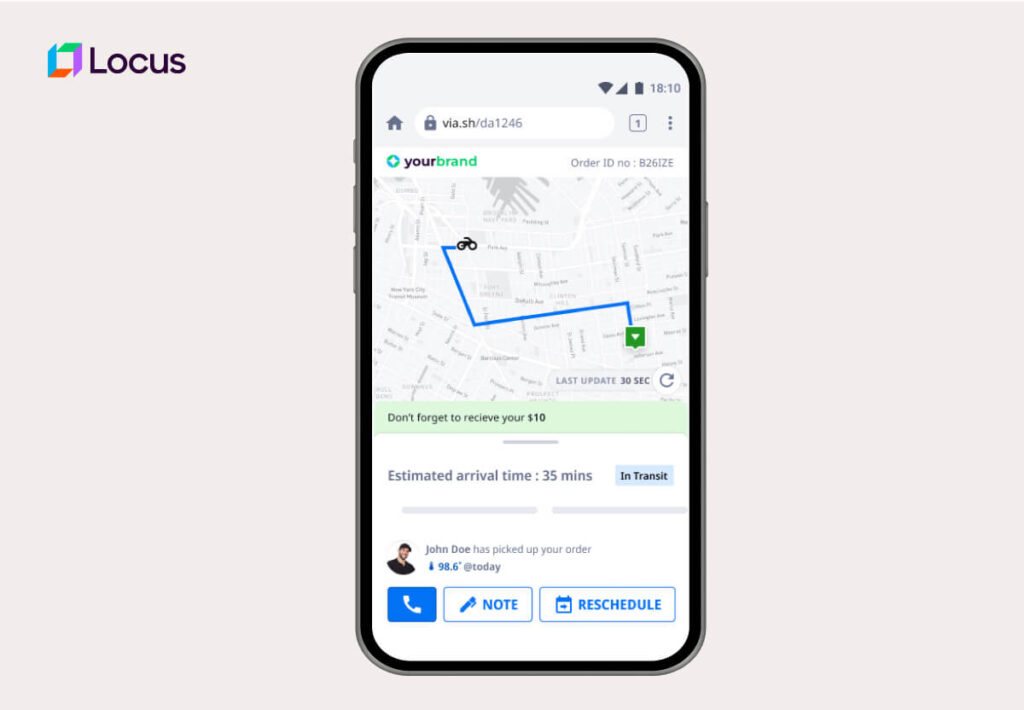
Visibility is fundamental for any organization that wants to improve operational efficiency and elevate customer experience in the final mile. An APQC (American Productivity and Quality Center) survey found that more than 47% of customers want visibility into last-mile delivery — yet this visibility is available to only 3% of customers.
ePOD is an essential tool for closing that gap. It simplifies data collection from field workers while sending real-time status updates to office staff and triggering alerts for any disputes or delivery exceptions.
This enables timely actions like renegotiating delivery windows or rearranging routes. Real-time data helps improve fleet utilization, generate daily productivity reports, analyze performance trends, and identify areas in the delivery process that need improvement.
4. Reduces Paperwork and Human Error
With ePOD, businesses eliminate manual hours and remove the administrative burden of documenting, storing, and retrieving paper delivery notes. These mobile applications are designed to be user-friendly, making daily tasks faster and removing the frustrations of delivery paperwork.
Drivers are less likely to make errors when the application enforces required fields and validates data at the point of capture. The result is greater accuracy in last-mile logistics operations.
Paperless proof of delivery is also a sustainable initiative toward green logistics and reducing the carbon footprint of delivery operations.
5. Enables Contactless Deliveries
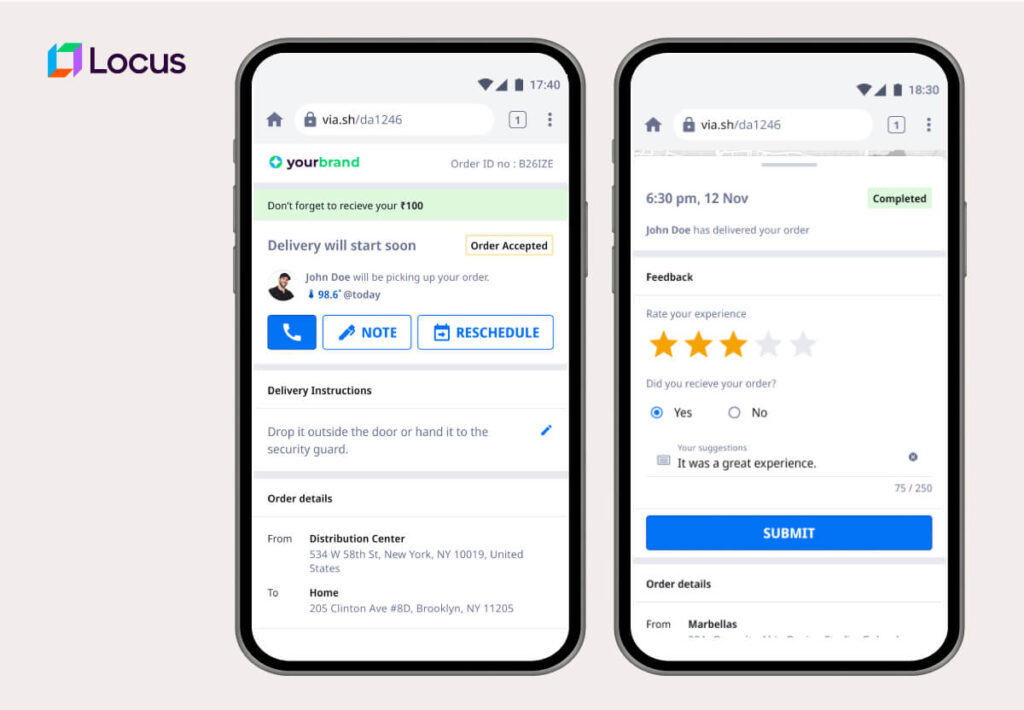
Contactless deliveries have become a permanent fixture in logistics operations. As customers increasingly value safety and convenience, delivery service providers, 3PLs, e-commerce companies, and CEP businesses maintain contactless options as a standard offering.
Electronic Proof of Delivery facilitates contactless verification in several ways:
- Digital signature links sent to the customer’s phone
- OTP/PIN validation after dropping off an order
- Photo documentation of the package at the delivery location
- GPS timestamp confirming the delivery was made at the correct address
These methods allow delivery businesses to validate completed deliveries and ensure no packages are lost or stolen — all without requiring physical contact.Read also: Ensuring Contactless Food and Grocery Delivery in Times of Social Distancing
Read Also: Ensuring Contactless Food and Grocery Delivery in times of Social Distancing
6. Combats Failed Delivery Costs
A survey conducted with 304 retail executives in Germany, the United States, and the United Kingdom found that the average cost per failed delivery in the United States was $17.20.
Failed delivery costs have become one of the biggest concerns for the logistics industry. They affect on-time delivery rates and directly impact last-mile customer experience.ePOD helps delivery agents validate customers at the point of delivery and immediately inform fleet managers of delivery status. Real-time notifications and alerts on failed deliveries enable fleet managers to identify root causes — incorrect addresses, absent recipients, access issues — and address them proactively. Over time, this data drives measurable reductions in redelivery costs and route waste.
Industry-Specific ePOD Use Cases
Electronic proof of delivery becomes more valuable when proof requirements are matched to the industry, product risk, customer promise, and compliance environment.
- Pharmacy deliveries: signature capture, OTP validation, ID verification, and chain of custody records help validate handover for restricted or sensitive products.
- Medical supply deliveries: barcode scans, timestamps, and recipient confirmation help hospitals, clinics, and field teams verify that critical supplies reached the correct facility or department.
- Food and grocery deliveries: photo proof, temperature or condition notes, and customer notifications support freshness expectations, unattended delivery, and rapid dispute handling.
- Furniture deliveries: photos before and after placement, damage notes, customer signatures, and delivery condition fields help reduce claims linked to scratches, missing parts, or installation issues.
- Appliance deliveries: serial number scans, installation confirmation, photos, and customer acceptance records create a stronger audit trail for high-value goods.
- Retail deliveries: GPS-stamped photos and automated customer alerts help retailers prove fulfilment accuracy while protecting brand experience.
- FMCG deliveries: store-level confirmation, delivery condition notes, item scans, and exception reporting help manage high-frequency replenishment operations.
- E-commerce deliveries: doorstep photos, OTPs, and real-time notifications reduce delivery-not-received claims and improve post-purchase confidence.
- 3PL deliveries: configurable proof workflows help third-party logistics providers meet different customer SLAs from a single driver application.
- CPG deliveries: store receiving signatures, pallet or case scans, and exception documentation improve visibility across distributor, retail, and direct-store-delivery networks.
The underlying principle is simple: low-risk deliveries may need lightweight proof, while regulated, high-value, or customer-sensitive deliveries require multi-layer evidence.
Key Features of an Effective ePOD Solution
Not all ePOD software is created equal. When evaluating solutions — whether you are a regional 3PL or a global enterprise retailer — look for these critical features:
Multi-Method Proof Capture
The best ePOD systems support multiple verification methods: electronic signatures, photos, barcode/QR code scanning, GPS geotags, and PIN/OTP codes. Configurable proof requirements per delivery type ensure compliance without slowing down drivers.
Real-Time Data Synchronization
Delivery data must sync instantly to a central dashboard. Any delay between the point of capture and the operations center undermines the core value of ePOD — real-time visibility. Look for solutions that operate reliably even in low-connectivity environments, queuing data for upload when signal returns.
ERP and TMS Integration
ePOD should not exist in a silo. Seamless integration with existing ERP, TMS, and WMS platforms ensures delivery data flows directly into invoicing, inventory, and customer service systems. This eliminates duplicate data entry and accelerates the order-to-cash cycle. Understanding why your business needs route optimization helps contextualize where ePOD fits in the broader logistics tech stack.
Analytics and Reporting Dashboards
Raw delivery data becomes actionable when paired with analytics. Effective ePOD systems provide KPI dashboards covering first-attempt delivery rates, average delivery times, exception categories, and driver performance — enabling continuous operational improvement.
Offline Functionality
Delivery agents frequently work in areas with poor connectivity. ePOD apps must function offline, capturing all required proof data locally and syncing automatically once connectivity is restored.
Driver-Friendly Mobile Interface
Adoption hinges on usability. If the app is cumbersome, drivers will resist using it — or use it poorly. The interface should be intuitive, with minimal taps required to complete proof capture at each stop.
Configurable Workflows
Different industries, customers, and delivery types require different proof configurations. A flexible ePOD system allows operations teams to choose the right route planning software and configure proof requirements without developer involvement.
KPI Framework: How to Measure ePOD Performance
A proof-of-delivery rollout should be measured like any other operating process. Useful KPIs include:
| KPI | What it measures | Why it matters |
| Proof completion rate | Percentage of deliveries with all required proof captured | Shows workflow compliance |
| Proof rejection rate | Percentage of records rejected for missing or weak evidence | Indicates quality issues |
| Photo-quality failure rate | Poor, blurred, dark, or context-free photos | Helps target retraining |
| First-attempt delivery rate | Deliveries completed successfully on the first visit | Measures route and proof effectiveness |
| Delivery-not-received claim rate | Claims raised after a recorded delivery | Shows evidence and customer-communication gaps |
| Average claim resolution time | Time taken to resolve delivery disputes | Important for customer service and finance |
| Invoice release time | Time between completed delivery and invoice readiness | Shows order-to-cash improvement |
| Redelivery rate | Share of orders requiring another attempt | Highlights preventable execution costs |
| Exception rate by reason | Recipient absent, refusal, damage, shortage, access issue | Helps root-cause analysis |
| Driver adoption rate | Percentage of drivers actively using the workflow correctly | Critical for rollout success |
| Offline sync failure rate | Records not uploading correctly after offline capture | Indicates mobile reliability issues |
| Deliveries with complete evidence | Percentage with all required proof layers present | Measures defensibility |
| Customer notification/access rate | Whether customers received or viewed delivery confirmation | Improves experience tracking |
| Average time to sync | Delay between stop completion and central visibility | Affects response speed |
Common Challenges When Collecting ePOD
Implementing electronic proof of delivery is not only a technology project. It is an operating model change that affects drivers, dispatchers, customer service teams, finance teams, and customers. The most common challenges include:
- Driver resistance and adoption barriers: drivers may see ePOD as extra work if the app adds too many taps, slows down completion, or duplicates existing processes. Adoption improves when workflows are simple, training is practical, and drivers understand how proof capture protects them from false claims.
- Connectivity issues: low-signal delivery zones can delay sync. Offline capture and automatic upload are essential for maintaining proof continuity.
- Poor photo quality: blurred, cropped, dark, or context-free images weaken evidence. Clear photo quality standards and in-app prompts help improve consistency.
- Integration gaps: if ePOD data does not flow into ERP, TMS, WMS, billing, and customer service tools, teams still need manual reconciliation.
- Incomplete proof capture: optional fields can lead to missing signatures, absent photos, or unscanned items. Mandatory proof rules reduce gaps.
- Exception ambiguity: drivers need structured reason codes for failed deliveries, partial deliveries, damaged items, refused orders, and inaccessible locations.
- Customer-side friction: if OTPs, signatures, or ID checks are not communicated clearly, customers may be unprepared at the point of delivery.
The solution is to design ePOD workflows around operational reality: fewer manual steps for drivers, automated validation for proof completeness, offline capability for field conditions, and integrated data flows for back-office teams.
ePOD Implementation Steps
Implementing electronic proof of delivery is straightforward when approached systematically. Follow these steps to ensure a successful rollout:
Step 1 — Define Proof Requirements. Determine which proof methods are needed for each delivery type. Pharmaceutical deliveries may require signatures and photos; parcel drops may only need a GPS-stamped photo. Align these requirements with insurance and regulatory standards.
Step 2 — Select and Integrate the ePOD Platform. Choose a solution that integrates with your existing ERP, TMS, or logistics platform. Prioritize real-time sync, offline functionality, and configurable workflows. Evaluate whether the platform scales with your delivery volume growth.
Step 3 — Configure Workflows and Roles. Set up user roles (drivers, dispatchers, fleet managers), define required fields per delivery type, and configure notification triggers for exceptions like failed deliveries or partial orders.
Step 4 — Train Delivery Agents. Conduct hands-on training sessions focused on the mobile app interface. Emphasize the speed benefits — fewer paper forms, faster delivery stops — to drive adoption. Provide quick-reference guides for field use.
Step 5 — Pilot and Iterate. Launch with a subset of routes or a single delivery hub. Collect driver feedback, review data quality, and refine configurations before scaling company-wide.
Step 6 — Scale and Optimize. Roll out across all routes and hubs. Use analytics dashboards to monitor KPIs, identify underperforming areas, and continuously optimize proof workflows. Businesses operating across regions like last-mile delivery in SEA will benefit from region-specific configurations.
How to Build an ePOD ROI Model
There is no universal ROI figure for electronic proof of delivery, because economics vary by fleet size, route density, claim rate, and systems landscape. A better approach is to build a simple baseline model using your current operating data.
Inputs to include
- Paper handling and storage cost per delivery
- Admin time spent chasing, scanning, filing, or retrieving PODs
- Driver time spent on manual proof tasks
- Current proof completion rate
- Delivery-not-received claim volume
- Average claim or chargeback value
- Redelivery cost per failed stop
- Days of invoice delay caused by missing proof
- Cost of customer service investigations
- Number of deliveries requiring manual reconciliation
Outcomes to measure after rollout
- Reduction in paperwork and retrieval time
- Faster invoice release or settlement readiness
- Lower claim investigation time
- Lower redelivery rate
- Better proof completion and evidence quality
- Higher driver adoption and fewer proof exceptions
Illustrative method only
For example, if a business currently spends several minutes retrieving POD records for every claim and shortens that retrieval to seconds with a searchable ePOD record, the savings show up in labour time, dispute response speed, and customer-service productivity. The exact value should be calculated using your own volumes and internal cost assumptions.
Best Practices for ePOD Collection
Once ePOD is live, consistent operating discipline determines whether proof data is reliable enough for customer experience, claims, finance, and compliance use cases.
- Make proof capture mandatory where risk is high: signatures, photos, OTPs, ID verification, or barcode scans should be required based on product value, delivery type, customer SLA, or regulatory need.
- Use multi-layer proof for high-value deliveries: combine GPS, timestamp, photo, barcode scan, signature, ID verification, or OTP validation to create stronger evidence.
- Automate customer confirmation: use customer SMS confirmation, OTP links, post-delivery notifications, and digital delivery receipts to close the communication loop immediately after delivery.
- Standardise photo quality: train drivers on acceptable images and configure prompts for retakes when proof is unclear.
- Keep driver workflows short: minimise unnecessary taps, avoid duplicate data entry, and pre-fill information wherever possible.
- Track POD completion rates: monitor whether required proof is captured at every stop and identify drivers, routes, hubs, or customer segments with recurring gaps.
- Review exception trends weekly: analyse failed deliveries, partial deliveries, refused orders, inaccessible addresses, and damaged goods to identify preventable causes.
- Align proof rules with customer SLAs: different customers may require different proof types, especially in 3PL and enterprise retail operations.
- Validate integrations regularly: ensure ePOD records are flowing into customer service, billing, claims, inventory, and transport systems without manual intervention.
The goal is not to collect more data for its own sake. The goal is to capture the right proof, at the right moment, with the least friction for drivers and the strongest evidence value for the business.
POD Data Audit and Quality Monitoring Workflow
A structured audit workflow turns ePOD from a passive record into an active quality control system. Operations teams should review proof data regularly to identify missing evidence, weak documentation, driver training needs, customer-side issues, and process gaps.
A practical POD audit workflow includes:
- Define audit criteria: specify what qualifies as complete proof for each delivery type, such as photo, signature, OTP, barcode scan, ID verification, or exception note.
- Monitor POD completion rates: track the percentage of deliveries with all required proof fields captured successfully.
- Review evidence quality: sample photos, signatures, timestamps, and GPS points to check whether they meet internal standards.
- Flag exceptions: identify deliveries with missing proof, low-quality photos, mismatched geolocation, late sync, skipped scans, or incomplete recipient data.
- Analyse by driver, route, hub, and customer: compare performance to detect training gaps or location-specific challenges.
- Export records for stakeholders: provide data export for audits, customer service investigations, insurance claims, finance reconciliation, and compliance reviews.
- Coach and correct: use findings to improve driver training, workflow configuration, proof rules, and customer communication.
- Report weekly trends: review exception categories, POD completion rates, claim outcomes, and recurring delivery-not-received patterns.
For enterprise logistics leaders, this workflow creates a feedback loop between field execution and strategic performance management. It ensures ePOD data remains accurate, actionable, and defensible when disputes arise.
Reverse Logistics, Proof of Pickup, and Returns Visibility
Electronic proof of delivery is not limited to outbound shipments. The same workflow logic also matters in reverse logistics.
A reverse-logistics proof workflow can include:
- Pickup proof at the customer location
- Return-authorisation matching
- Barcode or serial-number validation
- Condition photos at handback
- Customer confirmation that the return was collected
- Timestamp and GPS location for the pickup event
- Reverse chain-of-custody records across hubs and carriers
This matters because returns often create their own disputes: was the right item collected, was it damaged before pickup, did the customer hand it back, and when did custody transfer? A digital proof-of-pickup record can answer those questions more reliably than a paper collection note.
Why Choose Locus for Electronic Proof of Delivery
The Locus Driver Companion App
In a survey of 3,006 consumers worldwide, 60% stated that trustworthiness and transparency are the most important traits of a brand. For supply chain and logistics leaders, transparency is the foundation of a loyal customer base — and the most effective way to deliver it is through a purpose-built driver companion app.
The Locus Driver Companion App includes a full-featured Electronic Proof of Delivery system that is both user-friendly for drivers and powerful for operations teams. Key capabilities include:
- Multi-method proof capture — photos, electronic signatures, PINs, and configurable fields
- Real-time shipment status updates — every delivery status change is visible to dispatchers and customers instantly
- GPS-stamped delivery records — irrefutable location and time verification for every stop
- Seamless ERP and TMS integration — ePOD data flows directly into existing business systems without process overhauls
- AI-driven route optimization — the ePOD system works alongside Locus’s intelligent routing engine, ensuring drivers follow the most efficient sequences
Smarter Delivery Confirmations with Locus
Locus’s AI-driven ePOD solution brings precision to last-mile delivery. Real-time tracking, digital proof of delivery, and automated record-keeping cut down on paperwork, reduce errors, and shorten delivery cycles. Companies using the platform consistently see lower operating costs and sharper fleet productivity.
The impact extends beyond efficiency. Faster, more reliable deliveries raise first-attempt success rates and limit the cost of redeliveries. Operations teams gain immediate visibility into delays or exceptions, enabling them to act quickly and maintain service commitments. Customers benefit from accurate updates and smoother interactions.
Because the system integrates directly with existing ERP and transport platforms, scaling does not require process overhauls. Businesses can increase delivery volumes with confidence, treating ePOD not as a compliance checkbox but as a strategic asset that strengthens growth and customer trust.
How Locus ePOD Stands Out
Unlike point solutions that only capture proof data, Locus embeds ePOD within a comprehensive logistics optimization platform. This means:
- Integrated AI route optimization reduces delivery time and cost before the driver even reaches the customer
- Enterprise-scale architecture supports hundreds of thousands of daily deliveries across multiple regions
- End-to-end visibility — from dispatch to proof of delivery — in a single platform, eliminating data silos
- Proven at scale — trusted by 360+ global brands for reliability, security, and measurable impact on delivery costs
Innovative delivery models — supports emerging fulfillment strategies like the dark stores business model alongside traditional routing
Conclusion
Electronic proof of delivery has evolved from a simple digital receipt into a strategic operations tool. For logistics-intensive businesses, the case for ePOD is clear:
- Efficiency gains are immediate. ePOD eliminates 100% of paper-based documentation, accelerates invoicing, and reduces delivery disputes through real-time digital capture.
- Traceability is non-negotiable. GPS-stamped photos, signatures, and timestamps create verifiable records essential for insurance compliance, customer trust, and regulatory audits.
- Scalable tools make adoption straightforward. Modern ePOD platforms integrate seamlessly with existing ERP and TMS systems, meaning businesses can scale delivery volumes without overhauling their tech stack.
- Contactless verification is now standard. Photo-based and OTP-based proof methods position ePOD as a permanent fixture in logistics operations, not a pandemic-era stopgap.
- ROI is measurable. Immediate visibility into delivery performance translates to lower redelivery costs, higher first-attempt success rates, and stronger customer retention.
For enterprise retailers, 3PLs, and CEP businesses navigating the demands of 2026 and beyond, investing in a robust ePOD solution is one of the highest-impact decisions available.
Schedule a Demo to see how Locus ePOD transforms last-mile operations for businesses like yours.
FAQs
What is electronic proof of delivery (ePOD)?
Electronic proof of delivery (ePOD) is a digital system that replaces traditional paper receipts with mobile-captured delivery records. Using a smartphone or tablet app, delivery agents capture signatures, photos, GPS timestamps, barcode scans, and notes at the point of delivery. This data syncs instantly to a central management system, giving businesses and customers real-time verification that a delivery was completed accurately and at the correct location.
How does ePOD work step by step?
The ePOD workflow follows five core steps: (1) Order details are imported into the system via ERP/TMS integration; (2) Delivery data syncs to the driver’s mobile device with optimized route sequences; (3) At the delivery location, the driver captures required proof — a signature, photo, barcode scan, or OTP confirmation; (4) Data including GPS coordinates and timestamps syncs instantly to the central dashboard; (5) Analytics dashboards process the data for KPI tracking, exception management, and reporting.
What are the main benefits of ePOD for logistics?
ePOD delivers six core benefits: increased workforce productivity by eliminating paperwork, improved customer satisfaction through real-time updates, enhanced supply chain visibility, reduced human error via digital data capture, contactless delivery verification, and lower failed delivery costs through real-time exception management. Together, these benefits drive measurable improvements in delivery accuracy, operational efficiency, and customer retention.
What features should I look for in ePOD software?
Key features include multi-method proof capture (signatures, photos, GPS, barcodes, PINs), real-time data synchronization, ERP/TMS integration, analytics and reporting dashboards, offline functionality for low-connectivity areas, a driver-friendly mobile interface, and configurable workflows that adapt to different delivery types and compliance requirements.
How is ePOD different from traditional paper proof of delivery?
ePOD eliminates the core weaknesses of paper-based POD: lost or illegible documents, manual data entry delays, and inability to verify delivery details after the fact. Digital records with GPS stamps and timestamps provide irrefutable evidence of delivery. ePOD also supports contactless options (photo, OTP) that paper cannot, and scales efficiently for high-volume operations where managing physical receipts would be impractical.
Is ePOD required for insurance compliance?
Increasingly, yes. 85% of insurance providers now require delivery photos from couriers as part of their coverage terms. ePOD’s photo documentation, GPS verification, and tamper-proof digital records satisfy these requirements automatically, reducing compliance risk for logistics businesses.
Can ePOD work without internet connectivity?
Yes. Well-designed ePOD applications include offline functionality that allows drivers to capture all required proof data — signatures, photos, GPS coordinates — even without an active internet connection. The data is stored locally on the device and syncs automatically to the central system once connectivity is restored.
How does Locus’s ePOD solution differ from other providers?
Locus embeds ePOD within a comprehensive logistics optimization platform rather than offering it as a standalone tool. This means businesses get AI-driven route optimization, real-time fleet visibility, multi-method proof capture, and seamless ERP integration in a single platform. Trusted by 360+ global brands, Locus is built for enterprise-scale operations managing hundreds of thousands of daily deliveries across multiple regions.
References:
- https://c1.sfdcstatic.com/content/dam/web/en_us/www/documents/research/salesforce-state-of-the-connected-customer-4th-ed.pdf
- https://www.forbes.com/sites/stevebanker/2023/02/26/last-mile-delivery-visibility-and-vehicle-capacity/?sh=3d89dd3f7f3c
- https://www.apqc.org/resource-library/resource-listing/last-mile-delivery-cross-industry-logistics-practices-report
- https://www.statista.com/statistics/973182/last-mile-delivery-average-cost/#:~:text=During%20a%202020%20survey%2C%20the,UK%20cost%2011.6%20British%20pounds
- https://www.statista.com/statistics/1332294/trustworthiness-transparency-in-marketing/


General
Last-Mile Fulfilment: What It Is & How It Works [2026]

Sep 23, 2026
Strategic guide to last-mile fulfillment decisions: build vs buy vs partner, automation ROI, vendor evaluation, and scaling insights for enterprise executives.
Read more
Retail & CPG
What is Retail Visibility? Importance, Types & Challenges
Sep 23, 2026
See how retail visibility drives smarter decisions across sales, inventory, and merchandising. Learn key types and barriers to success.
Read moreInsights Worth Your Time




















Complete Guide to Electronic Proof of Delivery (ePOD) and Its Importance