


General
Top 10 Best Truck Dispatch Software Providers in 2026

Key Takeaways
- The best truck dispatch software is determined by fleet scale, operating model, freight type, route density, integration requirements, and compliance complexity.
- Small carriers often prioritize dispatch, invoicing, IFTA reporting, driver communication, and load tracking. Enterprise delivery networks typically require route optimization, multi-depot orchestration, real-time visibility, customer portals, and API integrations.
- Commercial truck routing must account for vehicle dimensions, weight limits, bridge restrictions, hazardous-material rules, delivery windows, HOS availability, driver qualifications, and equipment compatibility.
- Integration quality is a major ROI driver. Connecting a dispatch platform with TMS, ERP, WMS, OMS, ELD, telematics, EDI, and accounting systems reduces manual rekeying and improves data reliability.
- GPS and fleet-tracking technology can support measurable operational improvements. Verizon Connect reports an average 16% decrease in fuel costs, a 19% decrease in accident costs, and a 15% decrease in maintenance costs among surveyed GPS fleet-tracking users.
- Enterprise buyers should evaluate total cost of ownership, including implementation, integrations, data migration, driver onboarding, support, configuration, and change management—not just monthly subscription pricing.
- The truck dispatch software market is projected to grow at a 9.35% CAGR from 2026 to 2032, driven by demand for automation, compliance workflows, route optimization, and real-time operational visibility.
Disclosure: Locus publishes this guide and is included in the comparison. Product capabilities, pricing, ratings, integrations, and availability can change. Confirm current commercial terms, feature availability, implementation requirements, and supported integrations directly with each provider before purchasing.
The best truck dispatch software depends on your fleet size, freight type, route complexity, compliance exposure, and existing technology stack. A five-truck owner-operator business needs a different platform from a multi-depot retailer, 3PL, or carrier managing hundreds of daily routes.
Dispatch teams must balance service windows, driver availability, vehicle capacity, Hours of Service (HOS), equipment requirements, traffic, road restrictions, and customer expectations. The cost of getting those decisions wrong is rising. According to the American Transportation Research Institute (ATRI), the average cost of operating a truck reached $2.336 per mile in 2025, while non-fuel operating costs rose 4.2% to $1.854 per mile.
This guide compares 10 leading truck dispatch software platforms across enterprise delivery orchestration, carrier TMS capabilities, telematics, compliance, route optimization, brokerage workflows, and small-carrier administration.
Master Comparison Table
| Software | Best For | Key Capabilities | Pricing Approach | Review Rating* |
| Locus | Enterprise retailers, 3PLs, CPG, e-commerce, and delivery networks | Route optimization, dispatch automation, control tower, customer visibility, multi-depot orchestration | Custom | G2: 4.6/5 |
| McLeod LoadMaster | Large carriers and freight brokers | Load planning, dispatch, settlements, accounting, brokerage workflows | Quote-based | G2: 4.2/5 |
| TMW Suite (Trimble) | Large and specialized carriers | Modular carrier TMS, multi-terminal dispatch, integrations, specialized hauling workflows | Quote-based | G2: 3.7/5 |
| Truckbase | Growing asset-based carriers | Dispatch, EDI, ELD integrations, invoicing, settlements, profitability reporting | Quote-based | G2: 5.0/5 |
| Samsara | Safety-focused connected fleets | Telematics, GPS tracking, AI dash cams, ELD, HOS, driver safety | Quote-based | G2: 4.5/5 |
| Motive | Compliance-focused fleets | ELD, HOS, GPS tracking, safety monitoring, fleet reporting | Quote-based | G2: 4.4/5 |
| ProTransport | Mixed carrier and brokerage operations | Dispatch, brokerage workflows, accounting connections, reporting | Quote-based | Unavailable |
| TruckingOffice | Owner-operators and small carriers | Basic dispatch, invoicing, profitability, IFTA support | From $29.95/month | Unavailable |
| Upper | Lightweight last-mile delivery teams | Multi-stop route planning, POD, tracking, customer notifications | From $40/user/month | Unavailable |
| ITS Dispatch | Small carriers and brokerages | Dispatch, brokerage tools, load-board connectivity, reporting | Around $30/month | G2: 4.1/5 |
*Ratings and review counts change over time. Validate current ratings and review samples directly on the relevant review platform.
Editorial Methodology
This comparison evaluates each provider against the operational needs of its intended customer segment. A lightweight dispatch tool is not inherently inferior to an enterprise TMS or orchestration platform; it may simply be designed for a smaller or less complex operation.
We assessed platforms using four primary criteria:
- Dispatch and execution depth
Load assignment, driver and vehicle scheduling, dispatch boards, communications, route execution, proof of delivery, and exception management. - Truck-specific functionality
Commercial-vehicle routing constraints, ELD and HOS workflows, equipment requirements, compliance-related features, driver mobile tools, and fleet visibility. - Integration and scalability
API availability, compatibility with TMS, ERP, WMS, OMS, EDI, telematics, accounting, and customer systems, plus suitability for multi-depot or multi-client operations. - Commercial fit and total cost of ownership
Published pricing where available, implementation complexity, configuration requirements, expected training needs, and likely fit by fleet type and size.
Ratings and review observations are included only where public review-platform data was available in the supplied research. Product capability descriptions should be validated directly with vendors during the buying process.
Top 10 Best Truck Dispatch Software Providers
1. Locus
Locus is For
- Enterprise retailers and FMCG companies with revenue over $150M
- E-commerce platforms requiring scalable last-mile delivery solutions
- 3PLs managing complex multi-client operations across global markets
- Operations spanning North America, Europe, Southeast Asia, India, and the Middle East & Africa
Locus – Key Features
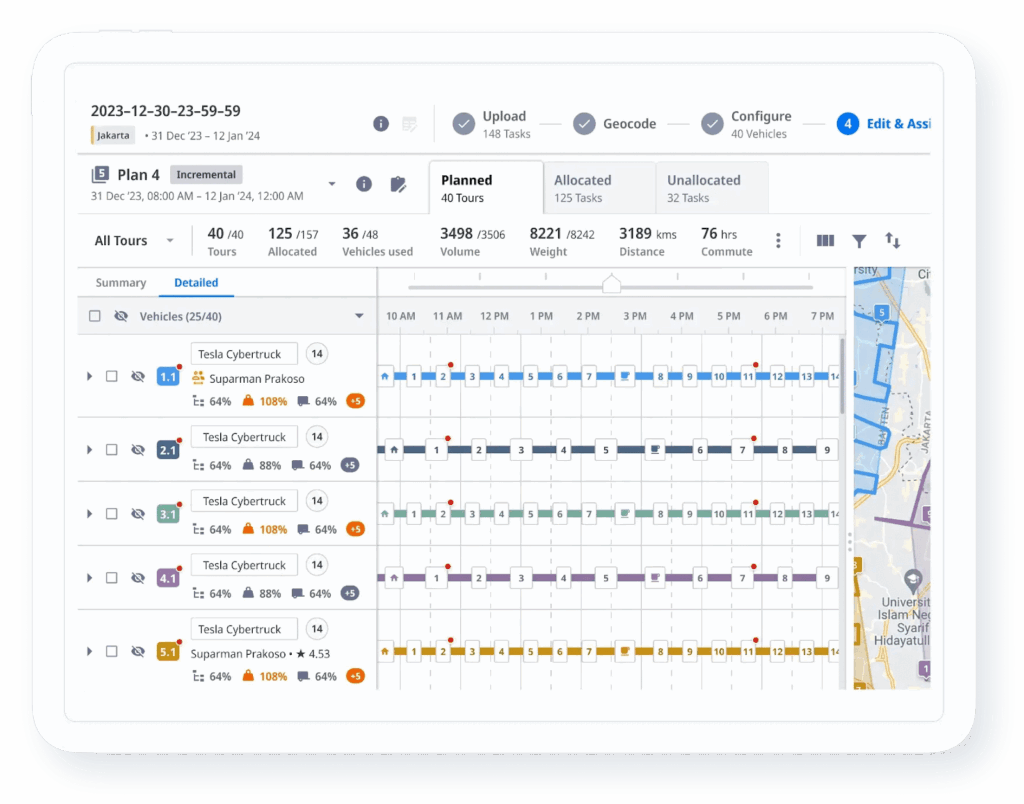
- Locus’s intelligent route optimization for trucking processes over 200 variables, including traffic patterns, vehicle constraints, driver preferences, and customer requirements. The AI dispatch engine continuously learns from route performance and driver behavior to improve future recommendations.

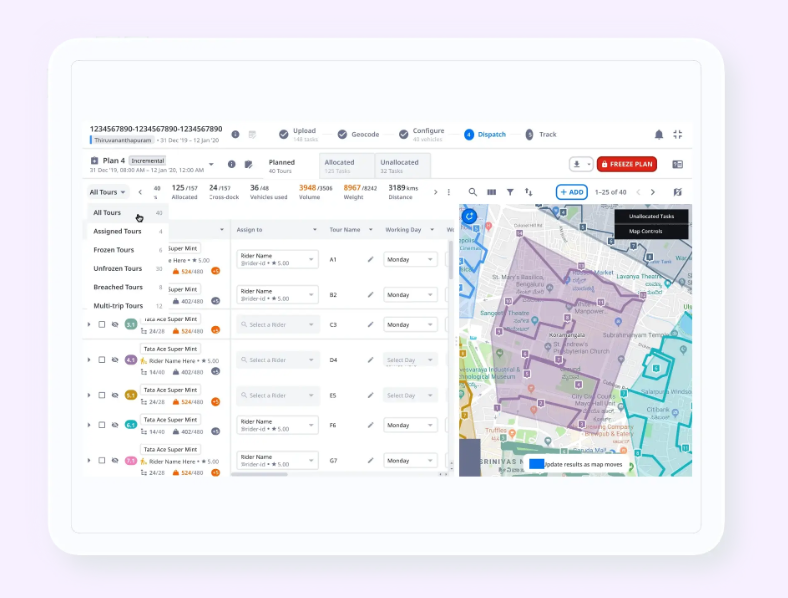
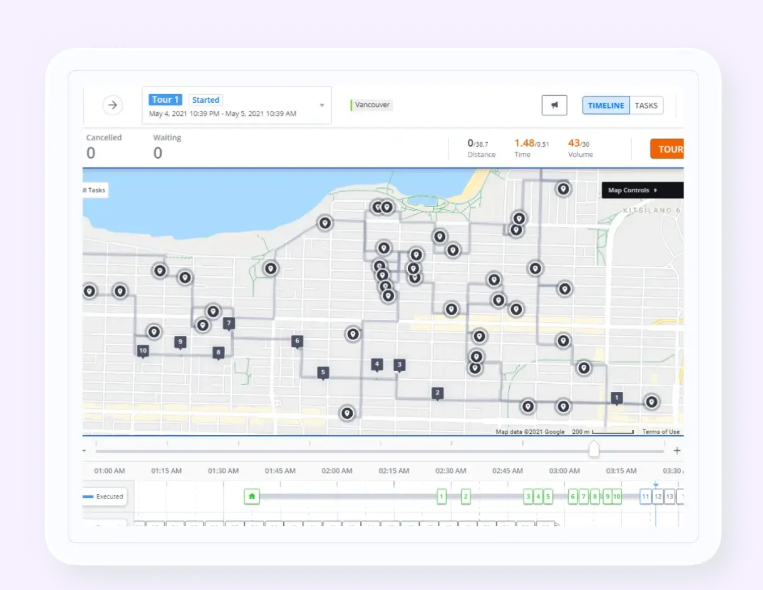
- The Control Tower provides end-to-end visibility across multi-location operations with real-time updates, allowing dispatchers to monitor active routes, identify delays, and communicate with drivers from a centralized dashboard. This becomes essential when coordinating complex operations across different time zones and regulatory environments.

- Automated logistics optimization eliminates manual coordination between systems and departments. The platform automatically assigns loads based on vehicle capacity, driver skills, HOS compliance, and delivery windows while respecting truck-specific constraints like weight limits and height restrictions.
- The driver companion mobile app provides turn-by-turn navigation with electronic proof of delivery capabilities. Drivers receive optimized routes with clear instructions, which reduces confusion and improves compliance rates. Route management features help maintain consistent service quality across different driver teams.
- Sustainability tracking capabilities can reduce fleet emissions by up to 30% through intelligent route scheduling and vehicle utilization optimization. This helps enterprises meet environmental goals while reducing fuel costs.
Locus – Pros
- Comprehensive machine learning algorithms that improve performance over time
- Strong integration capabilities with major ERP and TMS platforms
- Measurable ROI delivery with detailed cost reduction analytics
- Dedicated implementation support for complex enterprise deployments
- Full truck routing constraint handling, including HOS compliance
Locus – Pricing
Custom enterprise pricing based on fleet size, operational complexity, and required integrations. Contact Locus for detailed ROI analysis and implementation planning.
2. McLeod LoadMaster
Best for: Complex carrier and freight-brokerage operations
McLeod LoadMaster is a transportation management platform designed for carriers, brokers, and logistics providers that need dispatch, load planning, financial workflows, driver administration, documentation, and reporting in one system.
Key Features
- Load planning and dispatch management.
- Driver communications and document workflows.
- Carrier, brokerage, settlement, and accounting functionality.
- Maintenance and compliance-related operational tools.
- Configurable workflows for established transportation businesses.
Strengths
- Broad trucking and brokerage functionality.
- Strong fit where dispatch must connect to settlements, accounting, and back-office reporting.
- Suitable for established carriers with complex operational processes.
- Public review data lists LoadMaster at 4.2/5 on G2.
Limitations
- Broad functionality can require significant configuration, training, and implementation effort.
- May be excessive for small fleets needing only basic dispatch, invoicing, and GPS visibility.
- Buyers should evaluate the exact modules, implementation services, and integration scope included in a proposal.
Pricing
Contact McLeod Software for pricing based on fleet size, required modules, and customization requirements.
3. TMW Suite (Trimble)
Best for: Large carriers and specialized trucking operations
TMW Suite is part of Trimble’s transportation software portfolio and is designed for larger carriers, multi-terminal operators, and specialized trucking businesses. It is most relevant to organizations that need a broad carrier TMS footprint across dispatch, planning, maintenance, finance, and integrations.
Key Features
- Multi-terminal dispatch coordination.
- Modular transportation-management capabilities.
- Specialized workflow support for complex carrier operations.
- Integration framework for enterprise business systems.
- Fuel, maintenance, and financial workflows depending on selected modules.
Strengths
- Suitable for large, complex, and specialized carrier operations.
- Broad functionality across transportation planning, dispatch, and back-office processes.
- Supports organizations with mature IT teams and detailed operational requirements.
- Listed at 3.7/5 on G2 in the supplied review data.
Limitations
- Full deployment can involve extended implementation, configuration, and training cycles.
- Total cost of ownership may be substantial when multiple modules and custom integrations are required.
- Can be more complex than necessary for straightforward dispatch operations.
Pricing
Contact Trimble for pricing based on modules, operational scope, user counts, and integration needs.
4. Truckbase
Best for: Growing asset-based carriers
Truckbase targets carriers that have outgrown spreadsheets and disconnected point tools but do not necessarily require a large legacy TMS deployment. It combines carrier dispatch with EDI, ELD connectivity, invoicing, settlements, load management, and profitability reporting.
Key Features
- Dispatch and load-management workflows.
- EDI and ELD connectivity.
- Invoicing and driver-settlement tools.
- Truck-level profitability reporting.
- Driver-focused load and dispatch workflows.
- Integrations that can include QuickBooks, Motive, Samsara, and other ELD providers, subject to current vendor availability.
Strengths
- Combines dispatch and carrier back-office processes.
- Designed for growing carriers seeking a practical alternative to spreadsheets.
- Strong public satisfaction signal in the supplied research, with 5.0/5 on G2.
- Good fit for carriers that need a connected dispatch-to-cash process.
Limitations
- May not provide the multi-depot orchestration and customer-visibility depth required by complex enterprise delivery networks.
- Organizations planning rapid expansion should validate API coverage, analytics depth, and scalability.
- Buyers should confirm current ELD, accounting, and EDI integrations directly with Truckbase.
Pricing
Contact Truckbase for current pricing, feature tiers, billing terms, and implementation requirements.
5. Samsara
Best for: Safety-focused connected fleets
Samsara is primarily a connected-operations platform focused on telematics, fleet tracking, AI dash cameras, driver safety, and compliance workflows. It is a relevant option for fleets prioritizing vehicle visibility, safety outcomes, driver coaching, and connected vehicle data.
Key Features
- GPS fleet tracking and location visibility.
- AI dash cameras and safety-event detection.
- Driver coaching tools.
- ELD and HOS-related workflows.
- Fleet reports, alerts, and operational dashboards.
Strengths
- Strong telematics and safety capabilities.
- Useful for fleets prioritizing safety monitoring and connected-fleet data.
- Can complement an existing TMS, route planning, or dispatch platform.
- Review data lists Samsara at 4.5/5 on G2 and 4.5/5 on Capterra.
Limitations
- Telematics and safety functionality should not be confused with full carrier TMS or enterprise route-optimization functionality.
- Complex dispatch, multi-stop route planning, freight settlement, and customer-portal needs may require additional software.
- Buyers should validate commercial-vehicle routing capabilities against their fleet and route requirements.
Pricing
Contact Samsara for pricing based on hardware, fleet size, safety products, and selected software modules.
? Improve multi-depot and store-delivery execution
Coordinate complex direct-to-store delivery operations with route planning, dispatch visibility, and scalable execution workflows.
Explore Direct-to-Store Delivery ?
6. Motive
Best for: Compliance-focused fleet operations
Motive, formerly KeepTruckin, is widely used for ELD, HOS, GPS tracking, driver safety, and fleet management. It is especially relevant to fleets that need connected compliance data and operational visibility across drivers and vehicles.
Key Features
- ELD and HOS workflows.
- GPS tracking and geofencing.
- Driver safety monitoring.
- Compliance reporting.
- Fleet-performance reporting and alerts.
Strengths
- Strong fit for fleets where HOS, ELD, DOT, and driver-safety workflows are central.
- Provides operational data that can inform dispatch decisions.
- Suitable for regulated fleet environments such as construction, waste, public-sector operations, and long-haul trucking.
- Listed at 4.4/5 on G2 and 4.5/5 on Capterra.
Limitations
- Primarily a fleet-management and compliance platform, rather than a specialist multi-stop route-optimization tool.
- Complex delivery orchestration, carrier accounting, and multi-depot planning may require an additional TMS or route-planning platform.
- Buyers should confirm integration coverage for their existing accounting, dispatch, and telematics stack.
Pricing
Contact Motive for pricing based on selected products, hardware, user counts, and compliance requirements.
7. ProTransport
Best for: Mixed carrier and brokerage operations
ProTransport is designed for transportation businesses that operate both asset-based carrier and freight-brokerage models. Its value proposition is connecting dispatch, financial processes, documents, expenses, and reporting in a single operational environment.
Key Features
- Carrier and brokerage dispatch workflows.
- Financial and accounting-system integrations.
- Fuel-card and expense-management connectivity.
- Driver communication and document management.
- Profitability reporting by service line.
Strengths
- Supports blended carrier and brokerage business models.
- Connects dispatch workflows with financial reporting.
- Useful for companies that want an integrated operational and accounting view.
- May suit transport operators with more complex internal cost-allocation requirements.
Limitations
- Buyers should evaluate the user interface, mobile functionality, reporting depth, and API availability against newer cloud platforms.
- May not be the strongest fit for advanced last-mile route optimization or enterprise customer-delivery orchestration.
- Public G2 and Capterra rating data was unavailable in the supplied research.
Pricing
Contact ProTransport for current pricing and module availability.
8. TruckingOffice
Best for: Owner-operators and small carriers
TruckingOffice is a small-carrier and owner-operator platform centered on basic dispatch, record keeping, invoicing, profitability analysis, and IFTA-related administration.
Key Features
- Basic dispatch and load tracking.
- Invoicing and record keeping.
- Per-load cost and profitability tracking.
- IFTA and tax-reporting support.
- Small-business back-office workflows.
Strengths
- Accessible pricing for owner-operators and small fleets.
- Straightforward workflows for users handling dispatch and administration themselves.
- Supports cost tracking and profitability analysis.
- Appropriate for smaller operations that do not need enterprise-level routing or integrations.
Limitations
- Limited fit for multi-depot operations, large dispatch teams, or high-volume route optimization.
- Organizations needing advanced driver applications, control-tower visibility, or deep API integrations should evaluate more specialized platforms.
- Public G2 and Capterra rating data was unavailable in the supplied research.
Pricing
Plans start at approximately $29.95 per month for basic functionality. Confirm current vehicle limits, plan features, and billing terms directly with TruckingOffice.
9. Upper
Best for: Lightweight last-mile delivery operations
Upper is a route-planning and delivery-management platform for teams that need to sequence multi-stop routes, track deliveries, notify customers, and capture proof of delivery without implementing enterprise-scale delivery orchestration software.
Key Features
- Multi-stop route planning.
- Real-time delivery tracking.
- Proof of delivery, including signatures and photos.
- Customer notifications.
- E-commerce and order-management integrations.
Strengths
- Suitable for growing local and regional delivery teams.
- Supports proof-of-delivery and customer-notification workflows.
- Offers transparent published pricing.
- Useful for organizations moving beyond manual route planning.
Limitations
- Commercial-truck routing and enterprise integration depth may be more limited than purpose-built trucking and enterprise dispatch systems.
- Buyers should validate support for vehicle dimensions, weight restrictions, HOS data, and multi-depot planning.
- Public G2 and Capterra rating data was unavailable in the supplied research.
Pricing
Published pricing starts at approximately $40 per user per month. Confirm current feature availability and billing terms with Upper.
10. ITS Dispatch
Best for: Small carriers and brokerage operations
ITS Dispatch combines basic carrier-dispatch capabilities with brokerage workflows and load-board connectivity. It is intended for small transportation businesses that manage their own freight while also brokering loads or sourcing capacity.
Key Features
- Basic dispatch and load tracking.
- Brokerage functionality.
- Load-board connectivity.
- Reporting and financial tracking.
- Carrier and broker workflow support.
Strengths
- Supports both carrier and brokerage operating models.
- Accessible price point for smaller operators.
- Load-board access can help smaller carriers source additional freight.
- Listed at 4.1/5 on G2 and 4.4/5 on Capterra.
Limitations
- Advanced route optimization and truck-specific constraint handling are less central than in specialized enterprise platforms.
- Buyers planning growth should validate mobile capabilities, analytics, API access, and integration depth.
- May be less suitable for complex, customer-facing multi-stop delivery networks.
Pricing
Basic plans are commonly listed at around $30 per month. Confirm current plan details, brokerage features, and load-board integrations directly with ITS Dispatch.
Benefits of Modern Truck Dispatch Software
Reduced Fuel and Operating Costs
Dispatch platforms can reduce inefficient mileage, manual planning work, vehicle idling, overtime, and underutilized capacity. Verizon Connect reports that GPS fleet-tracking users experienced an average 16% reduction in fuel costs, though individual results vary by route density, fleet model, driver behavior, and operational adoption.
Improved Fleet Utilization
Constraint-based planning helps match load requirements with vehicle capacity, equipment type, driver availability, and service windows. Better utilization can reduce unnecessary routes and reveal where new capacity is genuinely needed.
Faster Dispatch Planning
Automated planning can replace manual spreadsheet work with configurable routing, assignment, and exception workflows. Dispatchers can spend less time building routes and more time handling customer commitments, disruptions, and capacity decisions.
Better Customer Communication
Live vehicle status, ETA updates, proof of delivery, and exception notifications improve transparency for shippers, consignees, and customer-service teams. These capabilities also reduce routine “Where is my shipment?” requests.
Improved Safety and Compliance Context
Integrated ELD, telematics, HOS, and safety data can help dispatchers identify potentially infeasible assignments before routes are released. Software supports better decisions, but fleets remain responsible for complying with FMCSA requirements, internal operating procedures, and applicable regulations.
Lower Maintenance and Accident Exposure
Fleet tracking data can support preventive maintenance, safer driving behaviors, and more informed operational decisions. Verizon Connect reports surveyed GPS fleet-tracking users saw average decreases of 15% in maintenance costs and 19% in accident costs.
Essential Features to Look for in Truck Dispatch Software
Route Optimization With Truck Constraints
Truck dispatch software should model more than distance. It should support capacity, equipment type, vehicle dimensions, commercial road restrictions, delivery windows, loading and service times, driver availability, and applicable compliance rules.
For enterprise delivery operations, route optimization software should also support multi-depot planning, territory balancing, delivery waves, and dynamic reassignment when disruptions occur.
ELD, HOS, and Telematics Integration
ELD and telematics integrations provide dispatch teams with critical operational context, including driver hours, vehicle location, route progress, and safety events. These integrations do not replace formal compliance processes, but they can reduce the risk of dispatching infeasible work.
Real-Time Fleet Visibility and Exception Management
Operational control requires more than a static dispatch board. Teams need real-time fleet tracking, planned-versus-actual route progress, ETA updates, route deviation alerts, customer-impact prioritization, and structured exception workflows.
For complex networks, supply chain control towers centralize visibility across depots, territories, drivers, and delivery partners.
Dispatch-to-Cash Workflows
Carrier-focused operations should assess whether the platform supports rate confirmations, bills of lading (BOL), proof of delivery (POD), invoicing, accessorials, driver settlements, fuel-card data, and accounting integrations such as QuickBooks.
IFTA and Reporting Capabilities
Owner-operators and interstate fleets may require mileage by jurisdiction, IFTA reporting support, IRP administration, tax records, maintenance tracking, and profitability reporting. These features are especially important where dispatch and back-office administration are handled by the same person or small team.
Analytics and Cost-to-Serve Reporting
Dispatch software should help teams measure cost-to-serve at the route, stop, customer, depot, driver, and territory levels. Useful operational metrics include cost per mile, cost per stop, empty-mile percentage, capacity utilization, on-time delivery, failed-delivery rate, route adherence, driver overtime, and invoice turnaround time.
Why Enterprise Fleets Choose Locus
Locus is designed for enterprise fleets and delivery networks that need to coordinate planning and execution across multiple depots, territories, fleet types, customer promises, and service partners.
Route Optimization Built Around Real Constraints
Locus supports route optimization that considers capacity, delivery windows, vehicle attributes, customer rules, driver preferences, and operational constraints. The objective is not merely shorter routes; it is more feasible and executable routes.
Centralized Delivery Visibility
The Locus control tower provides a consolidated view of route progress, ETAs, delivery exceptions, and operational performance. This supports faster intervention when service windows, customer commitments, or driver schedules are at risk.
Enterprise Integration Capabilities
Enterprise dispatch does not operate in isolation. Locus is built to connect with the systems that supply orders, fleet data, inventory signals, customer information, and delivery updates.
Customer and Driver Execution Workflows
Planning creates value only when routes are executed effectively. Locus supports driver workflows, proof of delivery, customer visibility, and exception management across the order-to-doorstep journey.
Best-Fit Use Cases
Locus is a strong fit for:
- Enterprise retailers and distributors.
- CPG and FMCG delivery operations.
- Complex e-commerce fulfillment networks.
- Multi-client 3PL operations.
- Direct-to-store delivery programs.
- Dedicated fleets managing large multi-stop delivery volumes.
- Organizations seeking to improve SLA performance, utilization, and cost-to-serve across their network.
Choosing the Right Truck Dispatch Software
There is no universal best truck dispatch software. The right fit depends on the complexity of your operation.
- Owner-operators and small fleets: Prioritize affordability, invoicing, load tracking, maintenance records, driver administration, and IFTA reporting. TruckingOffice and ITS Dispatch are relevant starting points.
- Growing asset-based carriers: Look for dispatch, ELD connectivity, EDI, settlements, invoicing, and accounting integration. Truckbase is positioned for this segment.
- Safety- and compliance-led fleets: Evaluate Samsara or Motive where telematics, AI dash cams, HOS, ELD, driver coaching, and fleet visibility are primary needs.
- Large carriers and freight brokers: Consider McLeod LoadMaster or TMW Suite when broad carrier-TMS, financial, settlement, specialized hauling, and multi-terminal functionality are essential.
- Enterprise delivery networks: Assess Locus when route optimization, dispatch automation, multi-depot planning, customer visibility, and enterprise integration are the core requirements.
Fleet size is important, but it is not the only selection factor. A 20-vehicle network handling dense regional deliveries may have more planning complexity than a larger fleet operating fixed lanes. Review your short-haul vs. long-haul trucking operations, freight types, daily route volume, customer SLA commitments, systems landscape, and expected growth before selecting a platform.
? Build a practical dispatch transformation roadmap
Assess your network, systems, and delivery constraints to identify the right route-optimization and dispatch strategy for your operation.
Talk to a Supply Chain Expert ?
Frequently Asked Questions
What is truck dispatch software?
Truck dispatch software helps transportation teams assign loads, schedule drivers and vehicles, plan routes, monitor progress, communicate with drivers, and manage delivery exceptions. Depending on the platform, it may also support ELD integration, proof of delivery, invoicing, settlements, customer notifications, and reporting.
What is the best truck dispatch software for a small fleet?
Small fleets often benefit from simple, cost-effective tools with dispatch, invoicing, record keeping, load tracking, profitability reporting, and IFTA support. TruckingOffice is aimed at owner-operators and small carriers, while ITS Dispatch supports smaller carrier and brokerage workflows.
TruckLogics is another option worth evaluating for owner-operators and small fleets that need dispatching, invoicing, maintenance tracking, driver management, and IFTA-related workflows.
What is the best dispatch software for a growing trucking company?
Truckbase is positioned for growing asset-based carriers that need dispatch, document capture, ELD connectivity, invoicing, settlements, EDI, and profitability reporting. It is most relevant for businesses moving beyond spreadsheets and disconnected point tools.
What is the best enterprise trucking dispatch software?
For enterprise delivery networks, Locus is designed for route optimization, dispatch automation, multi-depot coordination, control-tower visibility, customer delivery tracking, and enterprise integrations.
For large for-hire carriers with broad TMS, financial, settlement, and specialized transportation requirements, McLeod LoadMaster and TMW Suite are relevant options to evaluate.
What features should truck dispatch software include?
Core features include load assignment, driver and vehicle scheduling, commercial-vehicle route constraints, GPS tracking, ETA updates, exception management, driver mobile workflows, proof of delivery, and reporting.
Carrier-focused buyers should also evaluate ELD, HOS, IFTA, QuickBooks, EDI, settlements, BOL, POD, and rate-confirmation workflows. Enterprise buyers should assess APIs, multi-depot planning, customer portals, and cost-to-serve analytics.
How does AI improve truck dispatch software?
AI can help dispatch teams process more variables than manual planning, including traffic, route history, customer delivery windows, capacity, service time, driver preferences, and vehicle constraints. In practice, this can improve route feasibility, reduce planning time, and help teams respond more effectively to operating disruptions.
Results depend on data quality, operational processes, integration coverage, and user adoption.
What is the difference between truck dispatch software and a TMS?
Truck dispatch software generally focuses on daily execution: assigning loads, scheduling drivers, planning routes, tracking vehicles, and handling exceptions.
A transportation management system, or TMS, typically includes broader carrier and financial capabilities such as rate management, carrier management, settlements, freight audit, procurement, and strategic transportation planning. The categories increasingly overlap.
Is ELD integration necessary for truck dispatch software?
ELD integration is highly valuable for fleets subject to HOS rules because it helps dispatchers understand driver availability and avoid assignments that may not be operationally feasible. However, a dispatch platform does not independently guarantee regulatory compliance. Compliance also depends on approved devices, accurate data, proper configuration, and disciplined operating processes.
What integrations should truck dispatch software have?
The right integrations depend on your operating model, but many fleets should assess compatibility with:
- ELD and GPS telematics providers.
- TMS, ERP, WMS, and OMS systems.
- Accounting software such as QuickBooks.
- EDI providers.
- Fuel-card systems.
- Load boards.
- Driver mobile apps.
- Proof-of-delivery tools.
- Customer-service and shipper-portal platforms.


General
Last Mile Delivery Analytics: Key Metrics, Benefits and Implementation in 2026

Sep 21, 2026
Learn the 10 essential last mile delivery analytics metrics that cut costs by 30%. Discover how predictive analytics and AI optimize routes and boost satisfaction.
Read more
General
How 3PL Providers Can Enhance Routing for D2C Fashion Brands in 2026

Sep 21, 2026
A fashion van runs 10% full and returns are a fifth of the stops. Both facts change what a 3PL should optimize for on a D2C apparel account.
Read moreInsights Worth Your Time



















Top 10 Best Truck Dispatch Software Providers in 2026