


General
Best Restaurant Delivery Management Software for 2026: Features, Pricing, and Use Cases

Key Takeaways
- Delivery delays often stem from disconnected systems, not drivers — unified delivery management software helps prevent these coordination gaps.
- Real-time tracking, AI-based routing, and automation are now essential for speed, visibility, and customer satisfaction in restaurant deliveries.
- Each platform offers unique strengths, from POS syncing to white-label apps, catering to restaurants of different sizes and needs.
- Choosing scalable, integration-ready software helps restaurants manage growing delivery volumes without increasing costs.
- Locus delivers full control with AI-driven dispatch, Control Tower visibility, and real-time optimization for precise, efficient restaurant delivery operations.
When deliveries run late, customers don’t blame traffic or system errors. They assume the restaurant can’t manage its orders. A 2025 study found that diners feel more dissatisfied when delays seem to come from the restaurant’s side.
In reality, most issues start within the logistics chain. Orders pass through POS systems, delivery apps, and driver dashboards that don’t always update together. When data lags or systems fail to sync, drivers get outdated routes, customers see wrong ETAs, and teams lose track of active deliveries.
Delivery management software fixes this by connecting every step in real time. It brings orders, routing, and tracking into one platform, reducing errors and delays.
This guide reviews the 10 best restaurant delivery management software in 2025: Locus, Fareye, Onfleet, Deliverect, ShipDay, Uber Eats, Vromo, Enatega, Tookan, and Shipsy.
Each tool approaches delivery differently, offering features for dispatch automation, order coordination, route planning, and real-time visibility. By the end, you’ll know which software best supports your restaurant’s delivery performance and growth.
Quick Answer: Which Platform Fits Which Restaurant Use Case?
If you need a short answer before reviewing the full comparison:
- Best for enterprise restaurant delivery orchestration: Locus
- Best for direct delivery in smaller restaurant operations: Shipday
- Best for accessible last-mile dispatch and tracking: Onfleet
- Best for POS and channel order aggregation: Deliverect
- Best for marketplace reach and outsourced courier access: Uber Eats
- Best for mixed provider coordination across locations: VROMO
- Best for configurable white-label workflows: Tookan
- Best for self-hosted delivery infrastructure: Enatega
Category disclaimer: not every tool in this guide serves the same job. Some help generate customer demand, some sync orders into the POS, and some optimise fulfilment after the order exists. If your main issue is dispatch speed, driver utilisation, cost per delivery, SLA adherence, or hybrid fleet control, prioritise delivery execution features over storefront or marketplace features.
What Is Restaurant Delivery Management Software?
Restaurant delivery management software is the operational system that coordinates orders, dispatch, drivers, customer notifications, tracking, proof of delivery, and performance reporting in one workflow. It sits between order creation and doorstep fulfilment.
That makes it different from other restaurant technology categories:
| Software Category | Primary Role | Typical Users | Where It Stops |
| Online ordering software | Receives direct web or app orders | Independent restaurants, chains, virtual brands | Usually does not optimise delivery execution |
| POS/order aggregation | Consolidates orders and syncs menus across channels | Multi-outlet operators | Usually does not handle deep routing, batching, or fleet orchestration |
| Marketplace platform | Generates demand and may provide couriers | Restaurants seeking reach | Limited control over commissions, customer ownership, and courier logic |
| Delivery management software | Dispatches, routes, tracks, and analyses deliveries | Restaurants with direct or mixed delivery operations | May be lighter on broader fleet governance |
| Fleet management software | Manages drivers, vehicles, utilisation, sometimes compliance | Own-fleet operators | Often not restaurant-specific on kitchen timing or short hot-food windows |
| Last-mile orchestration platform | Coordinates owned, outsourced, gig, and overflow capacity across complex networks | Enterprise restaurant groups, foodservice operators | Typically more than smaller operators need |
For restaurant chains, QSRs, fast-casual brands, pizzerias, cloud kitchens, and multi-brand kitchens, the core question is not only how to accept orders. It is how to fulfil them profitably and consistently.
Top 10 Restaurant Delivery Management Software – Overview
Restaurant delivery management software now defines how efficiently kitchens, drivers, and customers stay connected.
Here’s a quick look at 10 leading platforms shaping how restaurants manage orders and deliveries in 2025.
| Software | Best For | Key Features | Pricing | Ideal Users |
|---|---|---|---|---|
| Locus | Enterprise chains | AI dispatch, route planning, visibility | Custom | Multi-location restaurants |
| FarEye | High-volume logistics | Predictive routing, live tracking | Custom | Large delivery teams |
| Onfleet | Last-mile delivery | Route optimization, proof of delivery | From $599/mo | Food & beverage brands |
| Shipday | Small restaurants | Tracking, route planning, delivery proof | Free–$299/mo | Local eateries, pizzerias |
| Uber Eats | Marketplace delivery | Courier network, real-time tracking | 6–30% commission | Restaurants using aggregators |
| Vromo | Fleet coordination | Auto-dispatch, driver chat, ETAs | From $99/location | Restaurant chains |
| Deliverect | POS integration | Order syncing, menu updates | From $199/mo | Multi-outlet operators |
| Enatega | Self-hosted delivery | Admin, rider, customer apps | One-time fee | Cloud kitchens, startups |
| Tookan | White-label setup | Auto-allocation, geo-tracking | From $99/mo | SMEs, delivery teams |
| Shipsy | Enterprise logistics | Route planning, shipment tracking | Custom | Distributors, 3PLs |
Restaurant Delivery Software by Use Case
| Use Case | Best-Fit Platforms | Why |
| Multi-location restaurant chains | Locus, FarEye, Shipsy | Better for centralised visibility, governance, and broader network optimisation |
| Small restaurants and pizzerias doing direct delivery | Shipday, Onfleet | Faster deployment, simpler dispatch, and easier day-to-day operation |
| Cloud kitchens and virtual brands | Locus, Deliverect, Enatega | Useful when order sources, brands, and delivery zones are complex |
| Marketplace-heavy operators | Uber Eats, Deliverect, VROMO | Helpful for marketplace demand, order consolidation, and courier access |
| Hybrid fleet management | Locus, VROMO, FarEye | Better suited to mixing in-house drivers with third-party or overflow capacity |
| White-label or self-hosted delivery programmes | Tookan, Enatega | Better for configurable or owned delivery infrastructure |
| High-density hyperlocal delivery | Locus, Onfleet, Shipday | Useful where short delivery radii, tight ETAs, and fast dispatch matter most |
10 Best Restaurant Delivery Management Software – Detailed Comparison
Now that you’ve seen a quick overview of the top tools, let’s look at each restaurant delivery management software in detail. We’ll cover what it offers, who it suits, and how it’s priced.
1. Locus
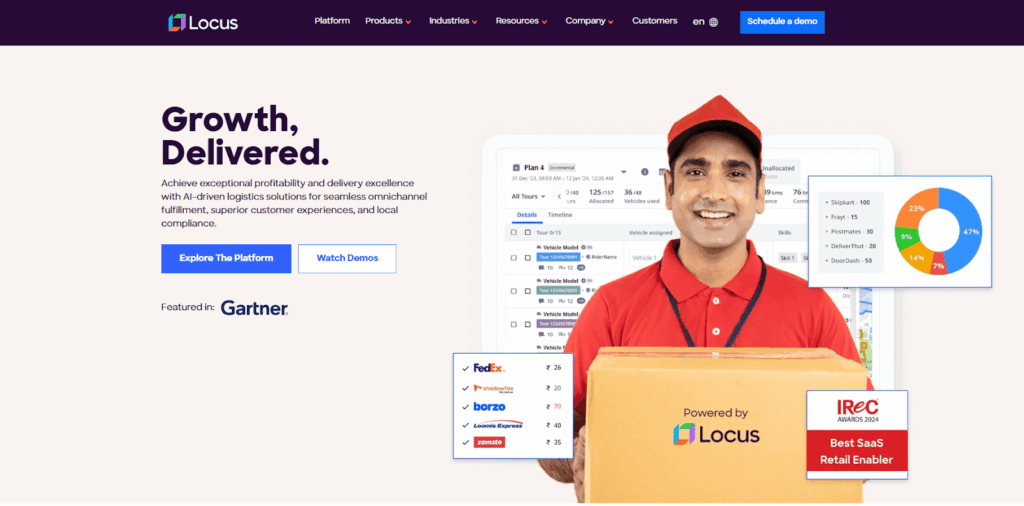
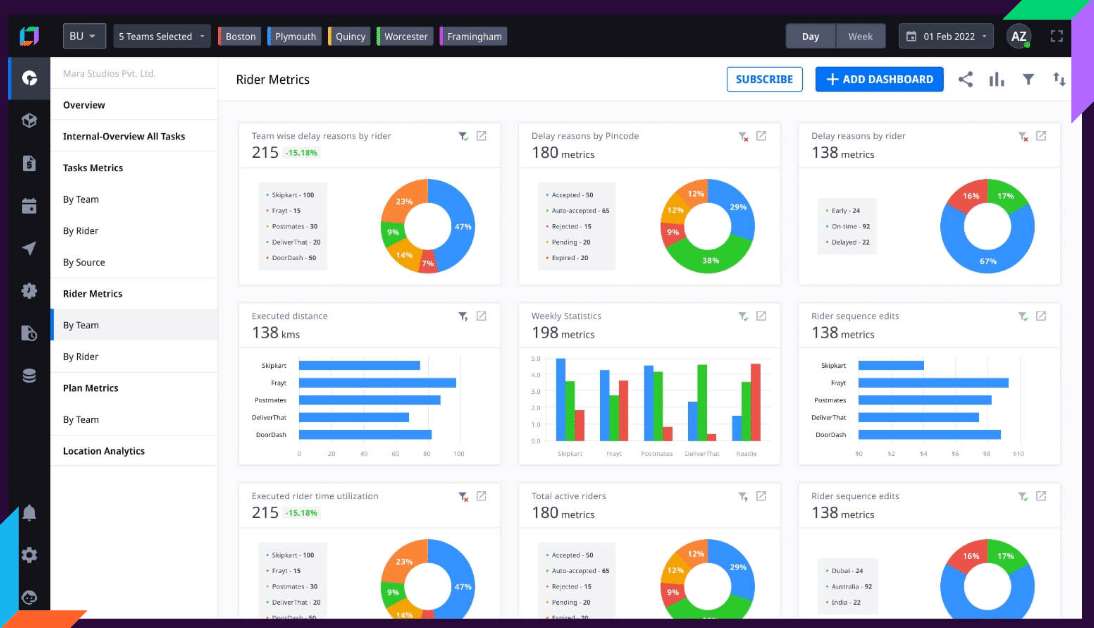
Locus is an AI-based logistics platform that helps restaurants run deliveries faster and with greater accuracy. It combines automation, route planning, and real-time visibility to coordinate orders across outlets, cut costs, and improve the customer experience.
Locus’s Key Features:
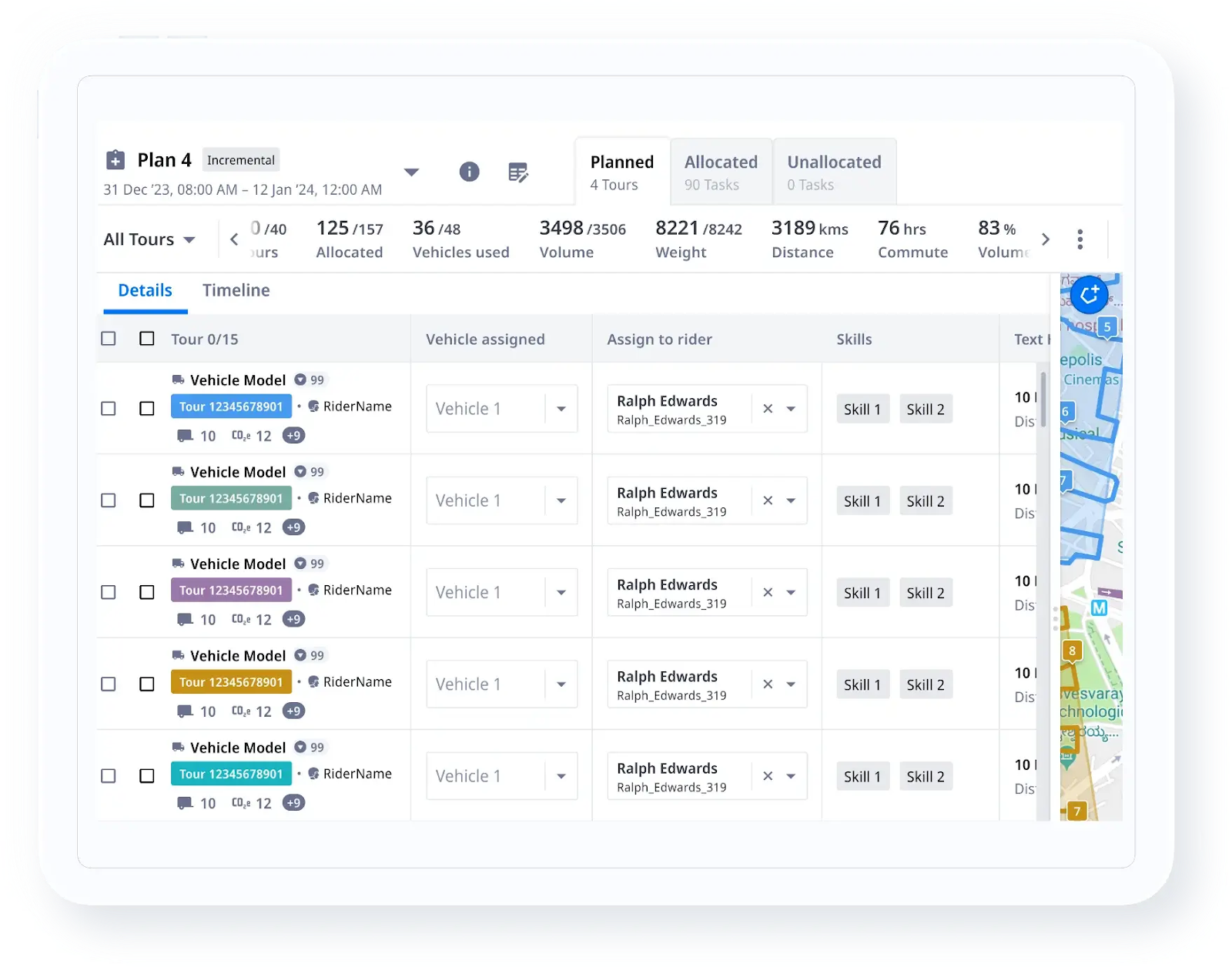
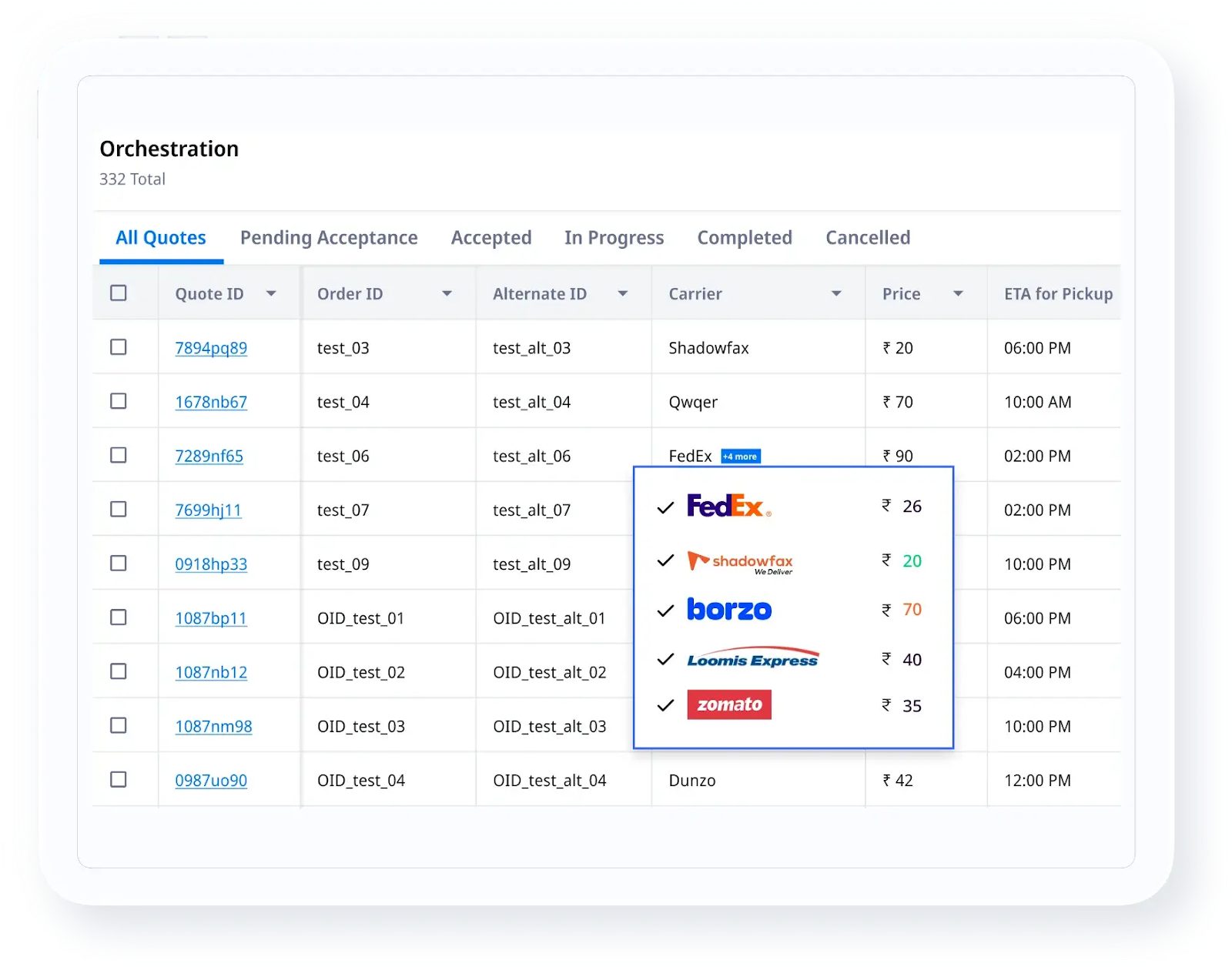
- AI-Driven Automation: Locus automatically assigns delivery orders to the best-suited drivers based on proximity, vehicle type, and delivery priority. This reduces idle time and helps restaurants improve fleet utilization.

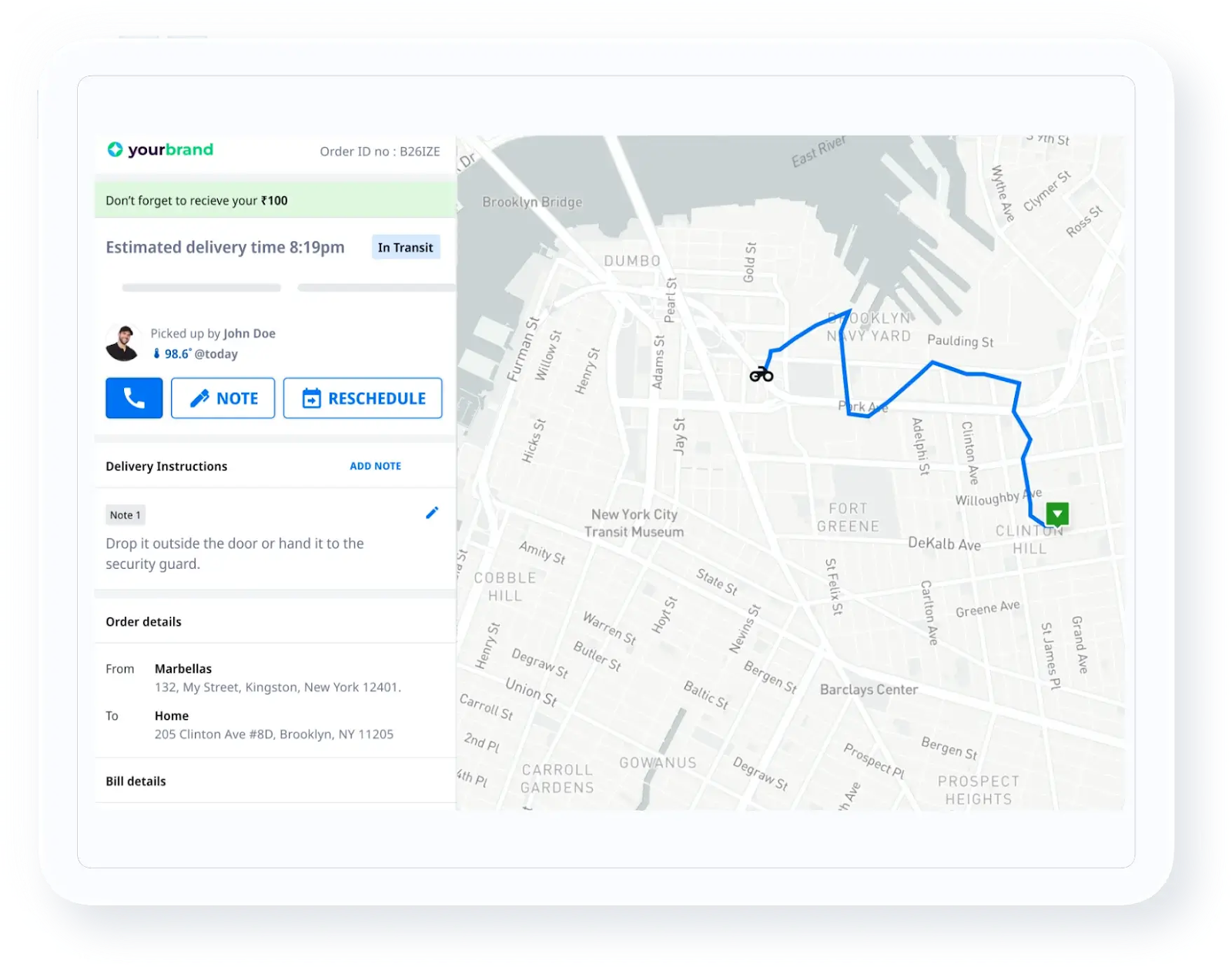
- Complete Visibility: The Control Tower module gives managers a live view of every order, vehicle, and route. It enables proactive alerts for delays, helping restaurants maintain delivery accuracy and meet SLAs.
- Dynamic Route Planning: Locus’s route engine analyzes real-time traffic, order volume, and delivery windows to plan efficient routes automatically. This shortens delivery times and reduces fuel costs.
- Analytics and Reporting: Locus provides performance dashboards to analyze delivery metrics, driver efficiency, and customer satisfaction scores. This helps restaurants identify improvement areas and manage operations based on data, not assumptions.

Locus is Ideal for:
- Multi-location restaurant chains: Manage large delivery networks with unified visibility and intelligent routing.
- Cloud kitchens: Automate order assignments and reduce coordination time between kitchen and driver.
- Food delivery aggregators: Optimize third-party and in-house fleet performance from one dashboard.
Locus’s Pricing:
Locus follows a custom pricing model based on fleet size, delivery volume, and integration complexity. Pricing is designed for scalability, allowing restaurants to expand delivery capacity without increasing fixed operational costs. Interested users can schedule a demo to explore features and receive a tailored quote.
2. FarEye
FarEye is a restaurant delivery platform that helps businesses improve delivery accuracy and manage returns efficiently. It combines predictive tracking, dynamic rescheduling, and customer communication tools to make logistics smoother and more transparent.
FarEye’s Key Features:
- Real-time tracking: Provides full delivery visibility to reduce delays and improve coordination.
- Predictive routing: Uses AI to forecast delivery times and adjust routes automatically.
- Dynamic rescheduling: Updates schedules instantly for order or address changes.
- Customer communication: Sends real-time updates throughout the delivery and return process.
FarEye Is Ideal For:
- E-commerce and retail: Teams needing reliable last-mile and returns management.
- Large enterprises: Operations handling high delivery volumes across regions.
FarEye’s Pricing:
Subscription-based pricing depending on delivery volumes and selected features.
3. Onfleet
Onfleet provides an intuitive restaurant delivery management platform that simplifies last-mile operations and improves delivery speed. It uses AI-based route optimization, real-time tracking, and automated communication to help restaurants deliver orders faster and maintain consistency across outlets.
Onfleet’s Key Features:
- Route Optimization: AI-driven route planning for faster deliveries and lower fuel costs.
- Real-Time Tracking & Visibility: Live tracking, accurate ETAs, and transparent order updates.
- Proof of Delivery: Capture photos or signatures for verified order completion.
- Customer Engagement: Send automated SMS updates and collect post-delivery feedback.
Onfleet Is Ideal For:
- Restaurant chains: Managing high daily delivery volumes across multiple outlets.
- Food delivery operators: Ensuring fast, accurate deliveries for perishable and high-priority orders.
Onfleet’s Pricing:
Subscription-based pricing starts at $599/month, depending on order volume and feature selection.
4. Shipday
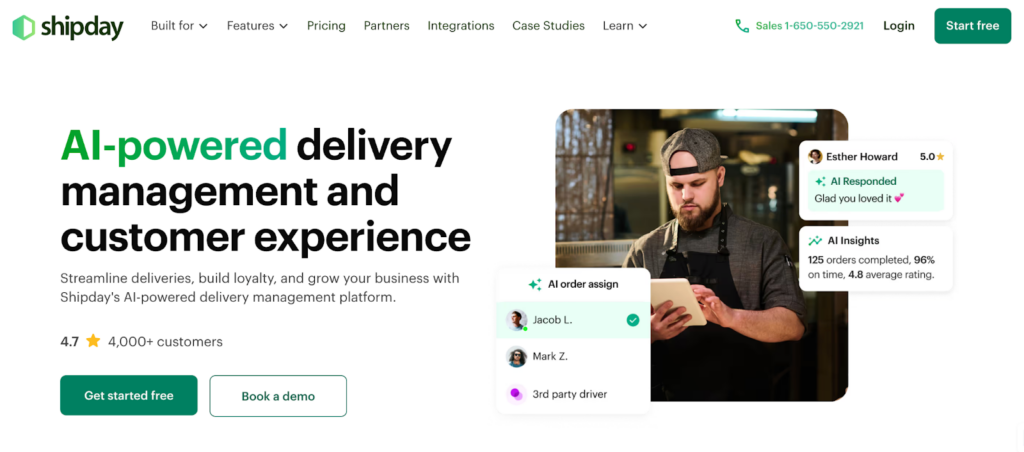
Shipday is an AI-powered delivery management platform built for restaurants and pizzerias. It connects POS systems, drivers, and customers on a single platform to simplify order handling, improve delivery speed, and increase customer satisfaction.
Shipday’s Key Features:
- Route Optimization: Plans efficient routes to deliver up to 30% faster.
- Real-Time Tracking: Provides live order and driver tracking for managers and customers.
- Proof of Delivery: Captures photos, signatures, and timestamps for completed orders.
- Customer Feedback & Reviews: Automates review collection and boosts 5-star ratings.
- AI Insights & Reporting: Tracks sales, delivery performance, and driver efficiency.
Shipday Is Ideal For:
- Restaurants and Pizzerias: Managing daily deliveries and expanding delivery coverage.
- Franchise Chains: Coordinating multi-location delivery operations with branded tracking.
Shipday’s Pricing:
Shipday offers tiered plans starting with a free basic plan for up to 10 drivers.
- Professional: From $39/month for 750 orders plus $0.04 per extra order.
- Elite: From $99/month, adds branded apps and marketing tools.
- Business Advanced: From $299/month, includes automation, geo-fencing, and 24/7 support.
Custom enterprise pricing is available for larger restaurant groups.
5. Uber Eats

Uber Eats connects restaurants with a large delivery network to manage orders, reach more customers, and track deliveries in real time through its merchant dashboard.
Uber Eats Key Features:
- Order Management: Centralized dashboard for orders, menus, and customer details.
- Flexible Fulfillment: Use Uber couriers or your own delivery staff.
- Customer Experience: Real-time tracking, order notifications, and ratings.
- Analytics: Reports on order trends and performance.
Uber Eats Is Ideal For:
- Restaurants and Cloud Kitchens: Expanding delivery reach without extra logistics setup.
- Franchise Chains: Managing high order volumes across outlets.
Uber Eats Pricing:
Uber Eats offers multiple plans: 30% for Uber Delivery, 16% for Self-Delivery, and 6% for Pick-Up. Uber Direct uses fixed and distance-based fees, while Webshop enables commission-free online orders with delivery fees of 25% or 6%.
6. Vromo

VROMO is a delivery management platform built for restaurants and foodservice brands. It helps reduce last-mile costs, expand delivery zones, and improve the customer experience through automation and third-party fleet partnerships.
VROMO’s Key Features:
- Order overflow: Sends extra orders to partner fleets like DoorDash at discounted rates.
- Auto-dispatch: Assigns the best delivery provider using custom business rules.
- Real-time tracking: Shares live order tracking links with customers.
- Order stacking: Groups multiple deliveries in one trip to lower costs.
- POS integration: Connects directly to order systems without extra hardware.
- Driver chat: Enables two-way messaging with drivers in real time.
- Analytics: Tracks delivery performance and provider data with exportable reports.
VROMO Is Ideal For:
- Restaurants and QSRs: Teams aiming to make delivery a profitable channel.
- Multi-location operators: Brands using both in-house and third-party fleets.
VROMO’s Pricing:
VROMO offers a monthly plan starting at $99 per location, plus $0.25 per order after 400 orders. It includes all core features, integrations, access to external fleets, and unlimited dispatchers and drivers, with no hidden fees.
7. Deliverect

Deliverect is a delivery and order integration platform that connects online orders, menus, and delivery channels in one system. It helps restaurants cut manual entry, reduce errors, and deliver consistent service across in-house and third-party platforms.
Deliverect’s Key Features:
- Centralized orders: Combines all delivery apps and POS data in one dashboard.
- Menu management: Updates menus and prices across delivery channels in real time.
- Dispatch module: Aggregates last-mile fleets to reduce delivery time and costs.
- Analytics: Tracks sales, delivery times, and performance metrics.
- Integrations: Works with 1,000+ tools, including Uber Eats, DoorDash, Square, and Toast.
Deliverect Is Ideal For:
- Restaurants and cloud kitchens: Managing high online order volumes across platforms.
- Enterprise chains: Running multiple outlets with unified menus and data control.
Deliverect’s Pricing:
Deliverect offers flexible plans based on business size:
- Restaurants: From $199/month for 350 orders, with POS and menu management.
- Dispatch: From $34/month, covering fleet aggregation and courier coordination.
- Direct: From $99/month, including website ordering and loyalty programs.
Custom enterprise pricing is available for large chains needing full integrations.
8. Enatega

Enatega is a self-hosted delivery management system that lets restaurants fully own and customize their platform. It includes customer, rider, restaurant, and admin apps for iOS and Android, helping businesses manage deliveries in-house, cut third-party costs, and scale quickly.
Enatega’s Key Features:
- Full ownership: Host on your own server with full source code access.
- Complete suite: Includes admin, restaurant, rider, and customer apps.
- Fast deployment: Set up a complete delivery system in under a week.
- POS integration: Manage menus, orders, and deliveries from one dashboard.
- Lifetime updates: Get free updates and documentation.
- Customization: Access setup and modification support through Ninjas Code partners.
Enatega Is Ideal For:
- Restaurants and food startups: Teams building their own delivery infrastructure.
- Multi-vendor operators: Groups managing multiple outlets or franchises.
Enatega’s Pricing:
Enatega uses a one-time payment model with no recurring or per-delivery fees.
- Premium Plan: Full suite with source code, lifetime updates, and two hours of technical consultation.
- Enterprise Plan: Includes all Premium features plus custom development, deployment, and ongoing support.
Custom pricing is available based on setup and customization needs.
9. Tookan
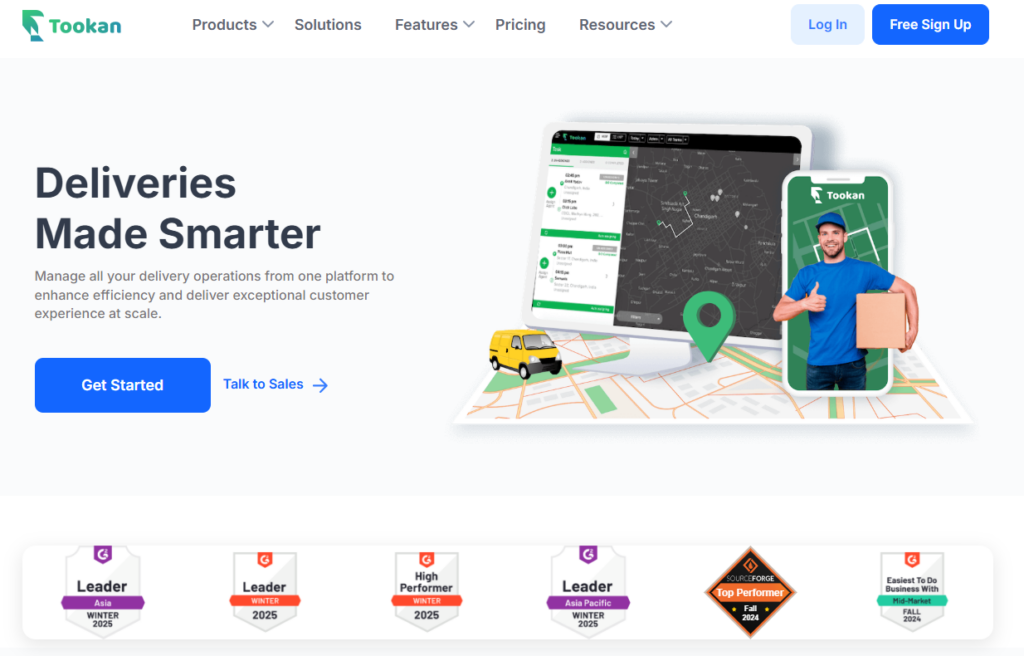
Tookan, by Jungleworks, is a delivery management platform that offers route optimization, dispatching, and real-time tracking for on-demand and scheduled deliveries. It is built for teams that want a configurable, white-label stack with add-ons and integrations.
Features of Tookan:
- Route optimization & auto-allocation: Plans multi-stop routes and auto-assigns tasks by capacity and proximity.
- Real-time tracking & ETAs: Shows live driver locations, tracking links, and customer notifications.
- Proof of delivery: Supports photos, signatures, barcodes, and configurable forms.
- Extensions & integrations: Provides APIs and a marketplace for payments, SMS/WhatsApp, POS, and e-commerce.
- Admin & agent apps: Includes a dispatcher dashboard and Android/iOS driver app with offline sync and geofencing.
Tookan Is Ideal For:
- SMBs and mid-market teams running last-mile use cases such as food, grocery, courier, and pickup and delivery, needing quick deployment, white-label options, and task-based pricing.
Tookan Pricing:
Tookan’s pricing starts at $99 per month for 1,000 tasks and scales with usage. Higher-tier Growth and Standard plans offer larger task volumes at lower per-task costs. Enterprise and lifetime packages are available on request.
10. Shipsy
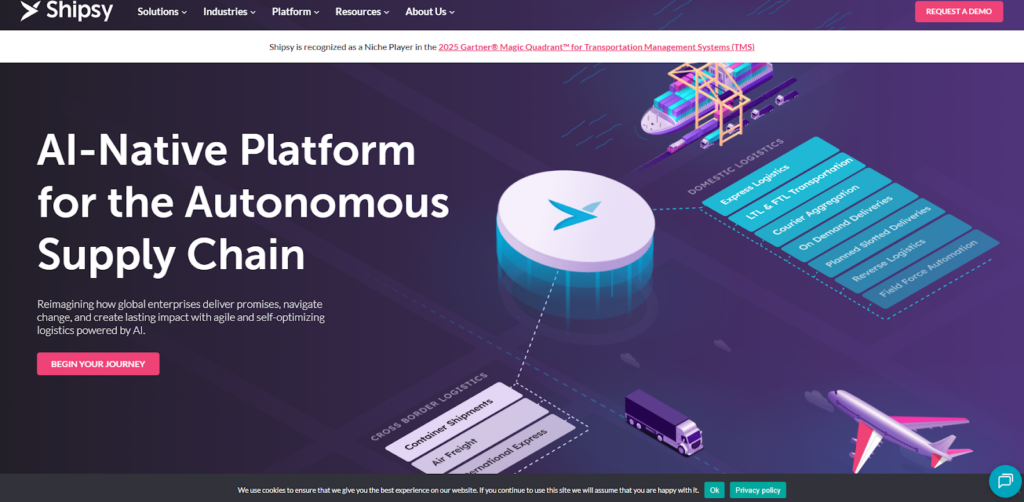
Shipsy is an AI-based logistics platform that automates and improves delivery operations. It supports route planning, shipment tracking, and communication management to help businesses increase delivery speed, reduce costs, and gain full visibility across logistics workflows.
Shipsy’s Key Features:
- Route planning: Uses AI to improve fleet efficiency and reduce delivery delays.
- Shipment tracking: Offers real-time tracking across carriers with proactive delay alerts.
- Freight management: Optimizes vendor selection and freight costs using AI insights.
- Notifications: Sends real-time updates to improve delivery success rates.
Shipsy Is Ideal For:
- Restaurants and food distributors: Managing large-scale delivery and supply operations.
- 3PLs and couriers: Requiring end-to-end visibility and multi-carrier management.
Shipsy’s Pricing:
Shipsy offers custom pricing based on business size, integrations, and operational needs. Interested users can request a demo for a tailored quote.
Who Needs Restaurant Delivery Management Software?
Restaurant delivery management software is most valuable for operators that already feel coordination pain, not just order volume.
Best-fit teams include:
- Multi-location restaurant groups
- National or regional chains
- QSR and fast-casual brands
- Cloud kitchens and virtual brands
- Pizzerias and local direct-delivery operators
- Franchise networks needing standardised reporting
- Operators balancing in-house drivers and third-party couriers
- Delivery-heavy stores facing peak-hour surges and delayed handoffs
- Teams trying to reduce marketplace dependence and improve first-party margin
Lower-fit teams include:
- Single low-volume restaurants using only a marketplace
- Operators who only need a website ordering widget
- Restaurants whose main need is basic POS-to-marketplace aggregation
- Teams without direct-delivery complexity or dispatch ownership
Benefits of Restaurant Delivery Management Software
For restaurants, the benefit is not “having delivery software.” It is improving operational control after the order enters fulfilment.
Key benefits include:
- Lower dispatch labour: Automated assignment rules reduce manual decision-making and rework.
- Better on-time performance: Routing, sequencing, and exception handling improve delivery consistency.
- Improved ETA accuracy: Stronger ETA logic reduces inbound status calls and customer frustration.
- Higher driver utilisation: Better batching, order stacking, and route density help drivers complete more drops per hour.
- Reduced pickup wait time: Tighter coordination between kitchen readiness and driver arrival lowers idle time.
- Fewer failed deliveries and reassignments: Real-time visibility helps teams intervene before orders breach SLAs.
- Stronger channel economics: Better first-party execution can reduce overreliance on marketplaces.
- More consistent franchise operations: Centralised reporting helps regional teams compare store-level performance.
- Better customer ownership: First-party delivery models keep more of the customer relationship inside the brand.
This matters financially. In a May 2026 filing, the National Restaurant Association reported that 47% of full-service restaurant operators and 43% of limited-service operators said they do not make a profit on third-party delivery orders. That is why delivery software selection should be tied directly to cost-to-serve, commission exposure, and contribution margin by channel.
Essential Features to Compare
When reviewing restaurant delivery management software, compare capabilities in the order the operation actually runs:
1. Order ingestion and validation
The platform should ingest orders from direct ordering, POS systems, marketplaces, or order aggregators and validate address quality, delivery radius, and store readiness.
2. Kitchen readiness and pickup timing
Restaurants need timing logic that accounts for prep time, hot-food delivery windows, and pickup handoff coordination. Sending a driver too early increases wait time; sending too late increases cold food risk.
3. Dispatch rules
Look for automatic dispatch based on location, zone, driver availability, order priority, vehicle type, promised time, and business rules by store or brand.
4. Driver allocation and availability
The software should show available drivers, capacity constraints, active tasks, and reassignment options when delays occur.
5. Route optimisation and delivery sequencing
This is where multi-stop routing, batching, and stack logic matter. The goal is not only shortest distance, but best trade-off between freshness, promised times, and delivery density.
6. Scheduled orders and peak-hour handling
Restaurants need support for scheduled orders, order throttling, and peak-period demand surges so that dispatch does not overwhelm store capacity.
7. Delivery zones and SLA logic
Stronger tools let teams set delivery radius, zone rules, service windows, and location-based SLA thresholds.
8. Customer tracking and communications
The customer should receive live tracking, ETA updates, and exception notifications without forcing store staff to answer status calls.
9. Proof of delivery
Photo, signature, timestamp, or geofence-based confirmation is useful for dispute handling and quality assurance.
10. Analytics and reporting
At minimum, measure on-time delivery, pickup wait time, average delivery duration, cost per delivery, delivery per driver hour, cancellation rate, and failed delivery rate.
11. APIs, webhooks, and governance
Enterprise buyers should also verify multi-location administration, role-based permissions, auditability, security, uptime expectations, and regional configuration control.
How Much Does Restaurant Delivery Management Software Cost?
Pricing varies widely because these tools span several product categories.
| Pricing Model | Common In | What Restaurants Should Watch |
| Free tier | Smaller delivery platforms | Often limited by orders, drivers, or features |
| Monthly subscription | Dispatch and delivery management tools | Check order caps, user limits, and add-ons |
| Per-location pricing | Restaurant-focused delivery tools | Useful for chains, but compare against order volume |
| Per-order or per-task pricing | Delivery platforms and white-label tools | Can rise quickly at peak volume |
| Commission-based pricing | Marketplaces | Margin impact can exceed software cost |
| One-time licence | Self-hosted stacks | Lower recurring fees, higher technical overhead |
| Custom enterprise quote | Orchestration and large logistics platforms | Validate implementation, support, and integration scope |
A realistic total cost of ownership should include:
- Software subscription or licence
- Implementation and onboarding
- POS and order-source integrations
- Maps, geocoding, and messaging costs
- Support and account management
- Driver devices and operational hardware
- Internal training and change management
- Reporting or admin overhead
- Third-party courier fees and marketplace commissions where applicable
If you depend heavily on marketplaces, compare more than sticker price. Comparison sources cited in this guide commonly report marketplace commissions in the 6%–30% range depending on the service arrangement, which can materially change the economics of outsourced delivery.
How to Calculate ROI
A practical ROI model for restaurant delivery management software should use your own baseline data.
ROI components
Return can include:
- Labour savings from reduced manual dispatch
- Fuel or mileage savings from better routing
- Fewer refunds or remakes from missed or failed deliveries
- Lower customer support volume from better ETA visibility
- Higher contribution margin from shifting orders toward first-party delivery
- Better driver utilisation and delivery density
- Improved SLA adherence for enterprise accounts or franchise operations
Investment should include:
- Software fees
- Setup and integration costs
- Training and rollout costs
- Ongoing support or service fees
- Internal change-management effort
KPIs to track before and after launch
- Cost per delivery / cost per drop
- Deliveries per driver hour
- On-time delivery rate
- Average delivery duration
- Dispatch-to-pickup time
- Pickup wait time
- ETA accuracy
- Failed delivery rate
- Cancellation rate
- Dispatcher hours
- Customer support contacts per 100 deliveries
- Customer satisfaction or rating trends
- Direct-order contribution margin
The strongest ROI cases usually come from reducing manual coordination, late orders, and underutilised delivery capacity rather than from a single headline metric.
How to Choose the Right Platform
Use these decision rules when shortlisting restaurant delivery management software:
Choose marketplace-led delivery when:
- You need immediate demand generation
- You do not want to manage drivers
- You accept lower control over customer ownership and margin
Choose direct-delivery software when:
- You operate your own drivers
- You want stronger brand control and customer data ownership
- Delivery radius and local routing are core parts of your business
Choose a hybrid model when:
- You want to use in-house drivers during normal demand
- You need third-party couriers for overflow or low-density zones
- You want rules by location, daypart, vehicle, or order type
Choose enterprise orchestration when:
- You run multi-location or franchise networks
- You need centralised visibility and SLA monitoring
- You manage multiple brands, regions, or courier partners
- You care about governance, APIs, security, and role-based control
Questions to ask during a software demo
- How does driver assignment logic work?
- Can dispatch rules vary by location, zone, vehicle, or order type?
- How does the platform handle kitchen delays and pickup wait time?
- Can it re-optimise routes in real time?
- How are ETAs calculated and how should we measure ETA accuracy?
- Does it support batching and stacking without hurting freshness?
- Which POS, online ordering, and marketplace systems connect natively?
- What happens if an integration fails during peak service?
- How are in-house drivers and third-party couriers coordinated together?
- What multi-location dashboards, regional views, and franchise permissions are available?
- Which APIs and webhooks are available?
- What is included in implementation, training, and support?
- Are customer references available for a restaurant operation similar to ours?
Why Choose Locus for Enterprise Restaurant Delivery Management?
Locus stands out when restaurant delivery becomes a network-operations problem rather than a single-store dispatch problem.
It is best suited to brands that need:
- Multi-location visibility across stores, brands, and regions
- AI-driven dispatch based on business rules, capacity, and SLAs
- Dynamic route optimisation for dense urban delivery and scheduled windows
- Hybrid fleet management across owned, outsourced, and overflow capacity
- Predictive ETAs and exception management
- Franchise-level and regional reporting
- API-led integration architecture instead of isolated point tools
For enterprise restaurant operations, the difference is less about basic dispatch and more about control. Locus helps teams decide which order should go to which driver or provider, when, and under what service-level rules. That matters when delivery economics, brand consistency, and customer experience vary by outlet, zone, and time of day.
Redefining Restaurant Delivery Efficiency with Locus
Restaurant delivery has become a vital part of how modern kitchens operate. The right software helps teams coordinate orders, drivers, and customers with consistency and speed. Each platform featured here contributes to better delivery performance, yet Locus brings every element together in one connected system.
With AI-driven dispatching, Control Tower visibility, and real-time route management, Locus helps restaurants improve delivery accuracy, reduce costs, and maintain service reliability at scale. For restaurants ready to modernize their delivery operations, Locus provides the intelligence and structure needed to deliver every order on time and with confidence.
Schedule a demo to see how Locus enhances restaurant delivery management.
Frequently Asked Questions (FAQs)
1. What is restaurant delivery management software?
It’s a platform that automates delivery operations (from order assignment and route planning to tracking and analytics) helping restaurants improve speed, accuracy, and customer experience across delivery channels.
2. How does delivery management software improve restaurant efficiency?
It reduces manual dispatching, minimizes idle time, and optimizes routes using AI and live data, allowing restaurants to complete more deliveries per hour with lower fuel and labor costs.
3. Which features are essential in restaurant delivery management tools?
Key features include real-time tracking, automated order assignment, route optimization, analytics, and integration with POS systems for a unified view of operations.
4. Can restaurant delivery management software integrate with third-party apps?
Yes. Most solutions connect with popular POS, CRM, and aggregator platforms like Uber Eats or DoorDash for smooth order flow and centralized monitoring.
5. Why do restaurants choose Locus for delivery management?
Because Locus combines AI-driven dispatch, real-time route optimization, and Control Tower visibility, offering restaurants full control over deliveries and cost efficiency across all outlets and delivery zones.


General
Dispatch Planning Software: How It Works, Key Features, and the Best Platforms in 2026

Sep 23, 2026
Compare the top 10 dispatch planning software solutions in 2025 with AI-powered optimization, real-time tracking, and enterprise features to reduce logistics costs.
Read more
General
Routing and Scheduling Software Compared: 10 Platforms for Enterprise Logistics Teams (2026)
Sep 23, 2026
Best Routing and Scheduling Software for Enterprise Logistics in 2026: Side-by-Side Comparison of the Top 10 Platforms
Read moreInsights Worth Your Time
















Best Restaurant Delivery Management Software for 2026: Features, Pricing, and Use Cases