


General
10 Best Dispatch Software Platforms for 2026: Features, Pricing & Fit
Key Takeaways
- Automation maturity drives financial performance: 51% of industry-leading companies have fully automated dispatch processes, versus just 5% of below-average performers—making the business case for advanced dispatch planning software undeniable.
- AI optimization is now table stakes: Static route planning based on distance alone can’t handle enterprise-scale complexity. AI-powered dispatch systems model 250+ real-world constraints—traffic, weather, vehicle capacity, driver skills, delivery windows—and re-optimize in real time.
- Locus leads for enterprise logistics: Among the ten platforms evaluated, Locus stands out for AI-driven constraint optimization, real-time control tower visibility, seamless 3PL/ERP integration, and proven results including up to 20% logistics cost reduction and 99.5% on-time SLA performance.
- Real-time visibility is non-negotiable: Over 80% of logistics companies now prioritize supply chain visibility when selecting software—because you can’t optimize what you can’t see.
- Integration depth separates enterprise tools from SMB tools: Platforms like Route4Me and Routific excel for small fleets, but lack the ERP, WMS, and OMS integrations that enterprise logistics networks demand.
- 80% of organizations plan to increase TMS IT spending, with AI adoption and performance gains as top investment drivers heading into 2026.
Introduction
This guide is designed for enterprise logistics leaders and operations executives seeking the most advanced dispatch planning software built for complex, high-volume delivery networks.
Managing delivery operations at enterprise scale means corralling hundreds of vehicles, coordinating with an army of stakeholders, and ensuring every link in the supply chain performs like a well-oiled machine. With that level of complexity, relying on manual processes costs enterprises a significant chunk of logistics expenses—and the pressure only intensifies when customers expect delivery windows measured in hours, not days.
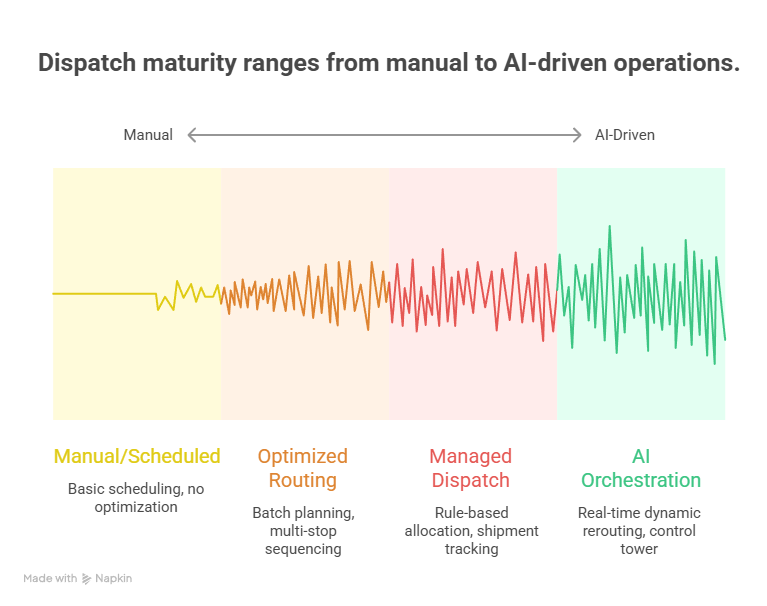
Here’s the reality: only 17% of organizations report being fully automated in transportation management, with over one-third still heavily or mostly reliant on manual processes. Yet 51% of companies with industry-leading financial performance have fully automated their processes, compared to just 5% of those with below-average performance. The correlation between automation maturity and financial outcomes is no longer debatable.
The global transportation management system market will reach $41.57 billion by 2030, growing at 17.5% annually. Meanwhile, the dispatch management systems market—valued at USD 2.7 billion in 2025—is anticipated to reach USD 5.8 billion by 2034, driven by cloud-based solutions, real-time analytics, and mobile integration. This growth trajectory underscores how rapidly enterprises are moving away from spreadsheet-based dispatch planning toward intelligent automation.
For operations leaders managing large-scale delivery networks, the challenge isn’t finding a dispatch planning system—it’s finding the right one. One that delivers measurable ROI through AI-powered route optimization that adapts on the fly, real-time control tower visibility, and seamless enterprise system integration. No more spreadsheet chaos.
This guide evaluates ten leading dispatch planning software solutions—examining the capabilities that matter most for complex delivery operations, including AI-driven optimization, real-time tracking, dynamic dispatch, and deep enterprise integration. If you’re still wondering what is route optimization and why your business needs route optimization, start there before diving in.
Best Dispatch Planning Software for Enterprises: Direct Answer
The best dispatch planning software for enterprises is Locus when the requirement is high-volume, multi-modal dispatch orchestration with AI route optimization, real-time control tower visibility, 3PL integration, and enterprise system connectivity. The article’s comparison also identifies FarEye and LogiNext as strong enterprise options, with Shipsy fitting cross-border logistics and compliance-heavy networks.
| Enterprise requirement | Best-fit platform from this review | Why it fits |
| High-volume multi-modal logistics | Locus | Locus is described as handling retail fulfillment, FMCG distribution, e-commerce delivery, and 3PL coordination from a unified interface. |
| Post-purchase customer experience | FarEye | FarEye is described as serving enterprises focused on predictive visibility, delivery rescheduling, and customer communication. |
| Cross-border freight and compliance | Shipsy | Shipsy is described as strong for international supply chains, freight operations, and compliance automation. |
| Omnichannel fulfillment | LogiNext | LogiNext is described as serving mid-market to enterprise businesses that need omnichannel fulfillment and flexible deployment. |
For enterprise teams comparing a shortlist, the main separation is not whether a product can plan routes. It is whether the software can model real-world constraints, integrate with OMS, WMS, ERP, and carrier systems, and re-optimize during live execution.
Why Enterprises Need More Than Basic Dispatching Software
Master Comparison: Top 10 Dispatch Planning Software
| Software | Best For | Key Features | Starting Price (as of Aug 2025) | Free Trial | G2 Rating |
|---|---|---|---|---|---|
| Locus | Enterprise Multi-Modal Logistics | AI constraint optimization (250+ variables), real-time control tower, 3PL integration hub, predictive analytics | Contact Sales | Yes | 4.8/5 |
| FarEye | Last-Mile Delivery Optimization | Predictive visibility, dynamic delivery rescheduling, customer engagement tools | Contact Sales | Demo Available | — |
| LogiNext | Omnichannel Fulfillment | AI route planning, real-time fleet tracking, deep analytics integration | Custom Pricing | 14 Days | — |
| Shipsy | Cross-Border Logistics | Freight management, multimodal visibility, compliance automation | Contact Sales | Demo Available | — |
| Route4Me | Small-Medium Fleets | Multi-stop route planning, GPS tracking, driver mobile app | $39/month | 7 Days | 4.5/5 |
| Onfleet | Last-Mile Delivery | Driver mobile app, customer notifications, delivery analytics | $550/month | 14 Days | — |
| WorkWave | Field Service Operations | Appointment scheduling, customer portal, performance reporting | $45/month | 14 Days | — |
| Routific | Local Delivery Services | Route optimization, proof of delivery, API access | $59/month | 7 Days | 4.7/5 |
| Track-POD | Freight & Logistics | Document management, electronic signatures, fleet management | Custom Pricing | 14 Days | — |
| Tookan | On-Demand Delivery | White-label solutions, multi-platform support, webhook integration | $99/month | 14 Days | — |
Locus, FarEye, and LogiNext emerge as the top solutions for enterprises seeking advanced logistics optimization. Platforms such as Route4Me, Routific, and Onfleet bring strong capabilities for smaller operations—but they lack the AI depth, integration breadth, and scalability that enterprise logistics networks demand. The following section breaks down each platform’s strengths, limitations, and ideal applications.
Editorial Methodology
Our evaluation process examined dozens of dispatch planning solutions across six weighted criteria:
- AI & Optimization Depth (25%): We assessed whether the platform models real-world constraints—vehicle capacity, driver shift windows, delivery time windows, traffic, weather—simultaneously, and whether it re-optimizes dynamically during live execution.
- Enterprise Scalability (20%): We tested whether platforms could handle thousands to millions of daily orders across multiple geographies and delivery modes without performance degradation.
- Integration Architecture (20%): We evaluated native connectors for ERP, WMS, OMS, and 3PL systems, along with API quality and the ability to maintain data synchronization without constant vendor support.
- Real-Time Visibility & Execution Management (15%): We looked for end-to-end tracking, predictive ETAs, exception alerting, and proactive disruption handling—not just GPS dots on a map.
- User Feedback & Proven Results (10%): We analyzed verified reviews from G2, Capterra, and direct logistics professional feedback, weighting enterprise-scale testimonials more heavily.
- Total Cost of Ownership (10%): We considered implementation complexity, training requirements, ongoing support costs, and ROI timelines—not just sticker price.
Every platform was assessed against the needs of enterprise logistics leaders managing complex, high-volume delivery networks. SMB-focused tools were included for context but flagged where they fall short of enterprise requirements.
Top 10 Dispatch Planning Software: Detailed Reviews
1. Locus – AI-Powered Logistics Orchestration Platform
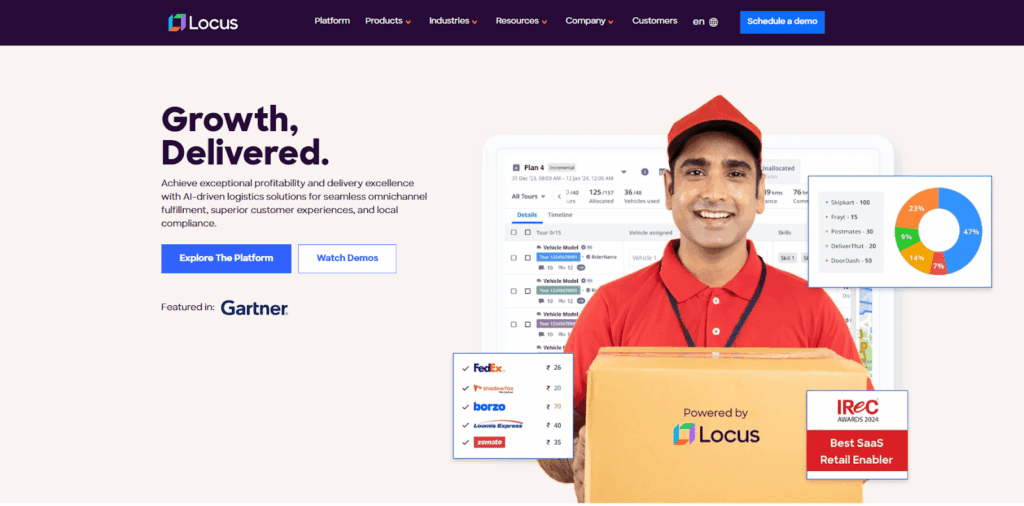
Locus platform displaying real-time vehicle scheduling and route optimization for a particular fleet operation.
Locus builds dispatch planning software specifically for enterprises managing complex, multi-modal delivery networks. The platform handles operations spanning retail fulfillment, FMCG distribution, e-commerce delivery, and third-party logistics coordination through a unified interface. As a Decision-Intelligent TMS, Locus manages the full dispatch chain—from constraint-based optimization through automated carrier tendering, live execution management, and post-delivery settlement.
G2 Rating: 4.8/5 | Capterra Rating: 4.9/5“Transformed our 5,000-daily-delivery chaos into predictable operations—AI allocation is a game-changer for enterprises.” — Verified G2 Reviewer, VP Logistics
Locus Is Ideal For
- Enterprises with revenue above $150 million
- Multi-location operations requiring centralized visibility
- Companies managing diverse delivery types (B2B, B2C, same-day, scheduled)
- Organizations seeking a 15–25% reduction in logistics costs
Key Features
- Fireworks Routing Engine: Processes over 100,000 routes simultaneously while modeling 250+ real-world constraints—traffic conditions, vehicle capacities, driver skills, delivery windows, and customer preferences. This AI-powered optimization continuously adapts to changing conditions throughout the day, not just at dispatch.
- Control Tower: Provides end-to-end visibility across all delivery operations, whether orders are fulfilled by internal fleets or third-party logistics partners. Operations managers monitor performance metrics, identify bottlenecks, and make data-driven decisions from a single dashboard.
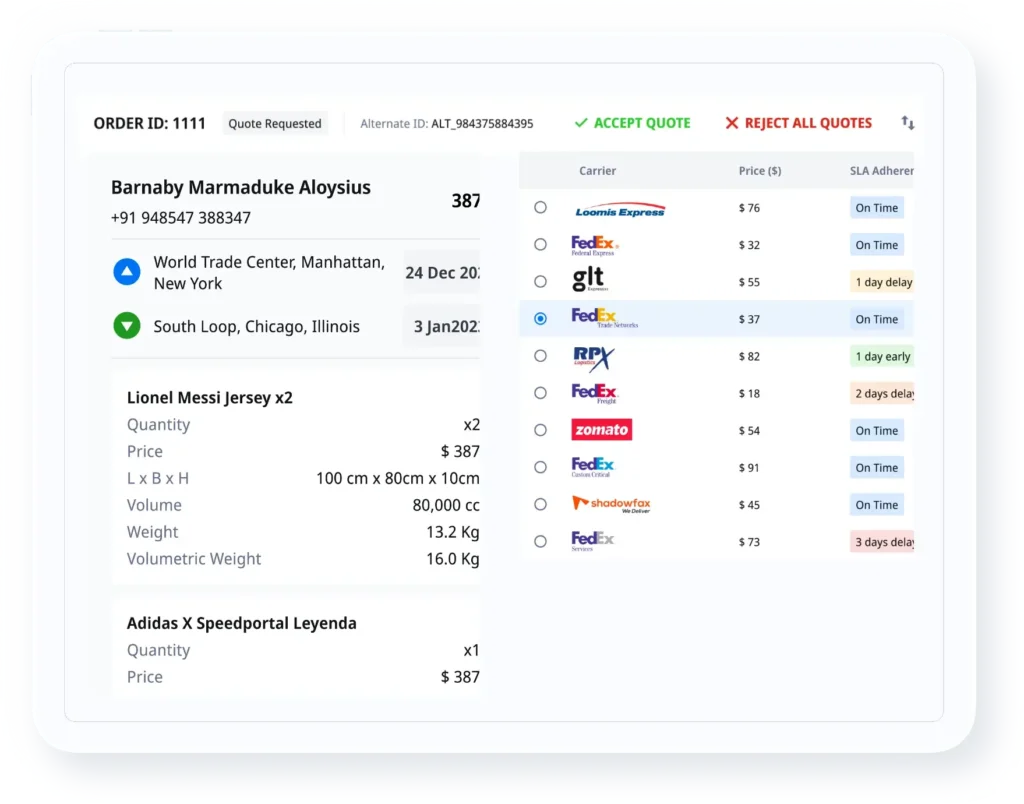
- 3PL Integration Hub: Connects with 1,000+ carriers through standardized APIs, enabling seamless order distribution and consolidated tracking. No more managing separate systems for different service providers.
- Driver Companion App: Delivers turn-by-turn navigation, proof-of-delivery capture, and real-time communication with dispatch teams through an intuitive mobile interface.
- Predictive Analytics: Machine learning forecasts demand patterns, identifies potential delivery failures, and recommends capacity adjustments. The system learns from historical performance to improve future planning accuracy. Explore the full Locus Dispatcher solution for details.
Pros
- Enterprise-grade scalability handling millions of daily orders with AI optimization achieving 99% SLA compliance
- Advanced AI algorithms modeling 250+ real-world constraints with continuous learning
- Comprehensive 3PL ecosystem integration reducing manual data entry by up to 80%
- Strong implementation support and ongoing account management
- Proven success in high-growth emerging markets across retail, FMCG, 3PL, and CEP
Cons
- Implementation complexity requires dedicated project management
- Pricing designed for enterprise scale—may exceed budgets for smaller operations
- Advanced features require staff training and change management
- Occasional delays in custom API development requests
Pricing
Custom enterprise pricing based on order volume, geographic coverage, and feature requirements. Schedule your enterprise demo for detailed pricing information and ROI analysis.
Learn more about implementing effective dispatch management processes for enterprise operations.managing large daily order volumes across multiple carriers, depots, and delivery networks operating across multiple countries.
2. FarEye
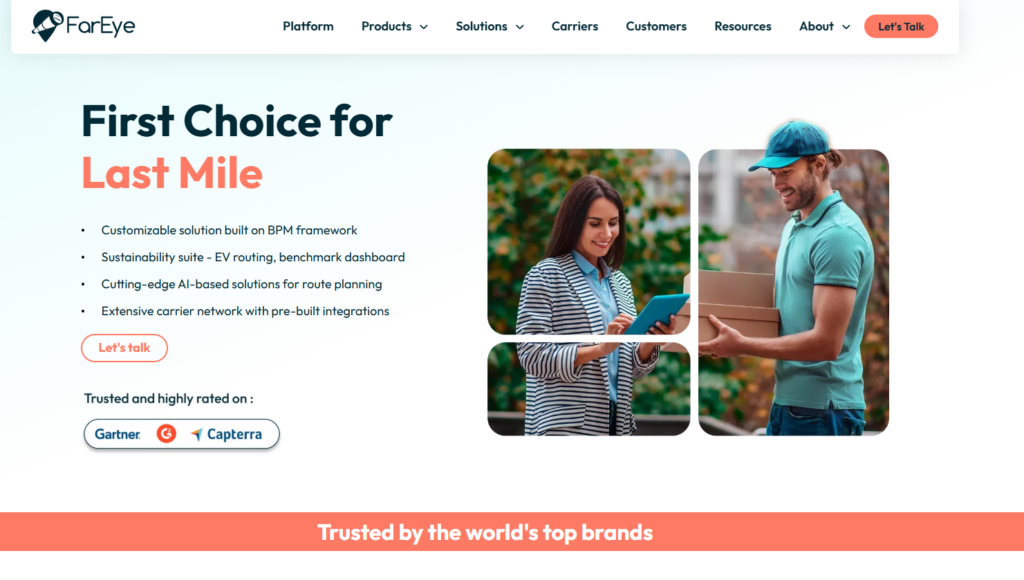
FarEye targets enterprise last-mile delivery with a strong focus on post-purchase customer experience. The platform connects FarEye serves enterprises focused on enhancing the post-purchase customer experience. This dispatch planning software is ideal for businesses with high-value deliveries requiring extensive customer communication. Companies that need strong predictive visibility capabilities often choose this last-mile delivery platform. FarEye is particularly known among retail operations that prioritize customer satisfaction over pure operational optimization.
Key Features
- Predictive delivery visibility with real-time ETA updates and exception alerts
- Dynamic delivery rescheduling and customer self-service portal options
- Comprehensive carrier management and performance tracking across multiple partners
- Customer engagement tools including SMS, email, and WhatsApp notifications
- Analytics dashboard focused on customer experience metrics and satisfaction scores
Pros
- Strong customer experience focus with proven satisfaction improvements
- Predictive analytics capabilities for proactive issue resolution before delivery failures
- Comprehensive carrier network management across multiple logistics partners
- Good integration options with popular e-commerce platforms and marketplaces
Cons
- Limited advanced AI route optimization compared to specialized dispatch planning software
- Complex pricing structure with unclear cost scaling for growing operations
- Integration challenges with legacy ERP systems require custom development
- Less focus on operational cost optimization versus customer experience enhancement
Pricing
Custom enterprise pricing starts around $2,000/month for basic plans, with additional costs for advanced features.
Locus vs. FarEye: FarEye excels at post-purchase customer communication but lacks the constraint-depth AI optimization and 3PL integration breadth that enterprise logistics leaders need. Locus models 250+ real-world variables simultaneously, manages automated carrier tendering across 1,000+ carriers, and delivers end-to-end dispatch orchestration—not just last-mile visibility.
Also read: Locus vs. FarEye: An Enterprise Logistics Platform Comparison
3. Shipsy
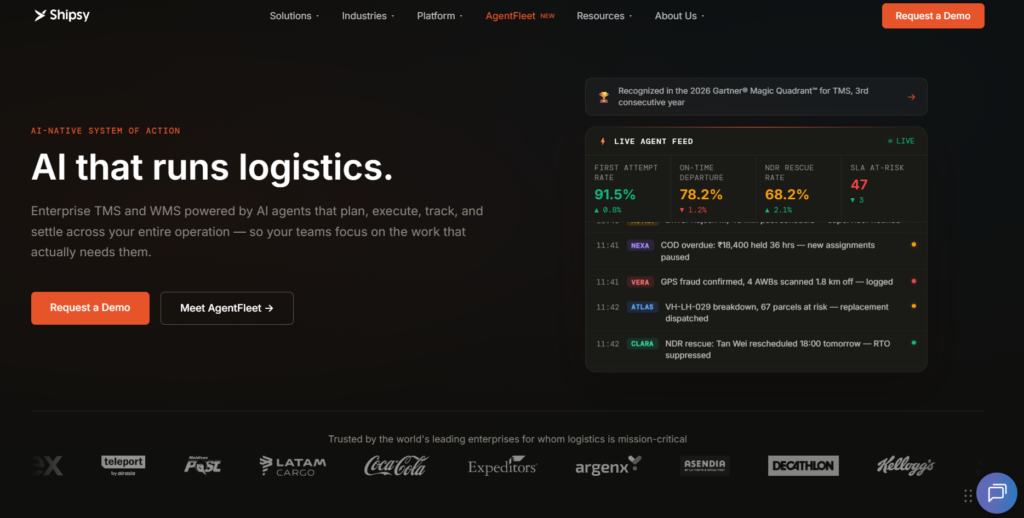
Shipsy focuses on cross-border logistics management with particular strength in freight operations and compliance automation. This dispatch planning software excels for companies managing international supply chains requiring extensive documentation and regulatory compliance. Businesses operating across multiple countries often choose Shipsy for its comprehensive global logistics capabilities.
Key Features
- Multimodal shipment visibility across air, sea, and ground transportation
- Automated freight management with carrier selection and rate optimization
- Compliance automation for customs documentation and regulatory requirements
- Invoice automation and freight audit capabilities with cost allocation
- Global carrier network integration with real-time tracking capabilities
Pros
- Excellent compliance management for international shipping requirements
- Strong freight audit and payment automation reduces administrative overhead
- Comprehensive global carrier network with standardized integration
- Robust documentation management for complex regulatory environments
Cons
- Limited last-mile delivery optimization compared to specialized dispatch planning software
- Complex setup process for domestic-only operations requiring simpler solutions
- Higher costs for businesses not utilizing international shipping features
- Steep learning curve for teams familiar with domestic dispatch planning systems
Pricing
Custom enterprise pricing starts around $3,000/month with additional fees for compliance modules and carrier integrations.
Locus vs. Shipsy: Shipsy is purpose-built for cross-border freight and compliance—strong in its niche, but limited for domestic last-mile orchestration. Locus covers the full dispatch chain from constraint-based route optimization through execution and settlement, making it the better fit for enterprises needing both domestic and international delivery management from one platform.
4. Onfleet
Onfleet provides dispatch planning software emphasizing driver mobile applications and customer communication. This platform suits businesses prioritizing delivery experience and customer notifications over complex route optimization. Food delivery services and pharmacy operations commonly select Onfleet for its specialized last-mile focus. That said, enterprises with multi-modal logistics networks will find Onfleet’s feature set insufficient for high-volume orchestration.
Key Features
- Driver mobile application with an intuitive interface and offline capabilities
- Automated customer notifications with real-time delivery tracking
- Delivery analytics and performance reporting with driver scorecards
- Route optimization with basic constraint handling and time windows
- API access for custom integrations and white-label implementations
Pros
- Excellent driver mobile app with high user satisfaction ratings
- Strong customer communication features reduce support inquiries
- Quick deployment suitable for businesses needing immediate dispatch solutions
- Good API documentation supporting custom development requirements
Cons
- Limited enterprise-scale features compared to comprehensive dispatch planning software
- Basic route optimization lacks advanced AI algorithms
- Higher per-task pricing can become expensive for high-volume operations
- Limited multi-modal delivery support for complex logistics networks
Pricing
Starting at $550/month for up to 2,000 delivery tasks with additional charges for higher volumes.
Locus vs. Onfleet: Onfleet delivers a polished driver experience and solid customer notifications for small last-mile operations. But at enterprise scale—where you need AI-driven constraint optimization, 3PL orchestration, and real-time control tower visibility—Onfleet’s basic routing engine and per-task pricing model become limiting factors.
5. Route4Me
Route4Me targets businesses needing straightforward multi-stop route planning without enterprise complexity. This dispatch planning software focuses on simplicity and ease of use for teams managing local delivery routes. Small to medium-sized courier services and field sales organizations frequently choose Route4Me for its accessible interface. However, Route4Me lacks the advanced integration, real-time optimization, and scalability required by enterprise logistics teams managing thousands of daily deliveries.
G2 Rating: 4.5/5 | Capterra Rating: 4.6/5
“Great for small delivery businesses, but when we scaled to 500+ stops daily, the lack of real-time collaboration killed our efficiency.” — Verified G2 Reviewer, Logistics Manager
Key Features
- Multi-stop route optimization with drag-and-drop route editing capabilities
- GPS tracking and real-time driver location monitoring
- Mobile driver app with turn-by-turn navigation and delivery confirmation
- Customer notification system with automated status updates
- Basic reporting and analytics for route performance monitoring
Pros
- Intuitive interface speeds up route creation for small teams
- Quick implementation with immediate route optimization benefits
- Affordable pricing structure suitable for smaller operations with unlimited stops per route
- Mobile app supports offline navigation and proof-of-delivery capture
Cons
- Lacks robust API integrations for ERP systems in large operations
- Customer support response times can be slow during peak usage
- Optimization engine doesn’t handle dynamic rerouting well for 1,000+ stops
- Scalability constraints for rapidly growing operations
Pricing
Starting at $39/month per user with volume discounts for larger teams.
Locus vs. Route4Me: For enterprise-scale logistics, Locus delivers advanced AI optimization modeling 250+ real-world constraints, seamless ERP integration, and proven cost reduction across millions of daily orders—capabilities that Route4Me’s SMB-focused platform simply does not offer. If you’re managing more than a few hundred stops daily, Route4Me will hit its ceiling.
6. WorkWave
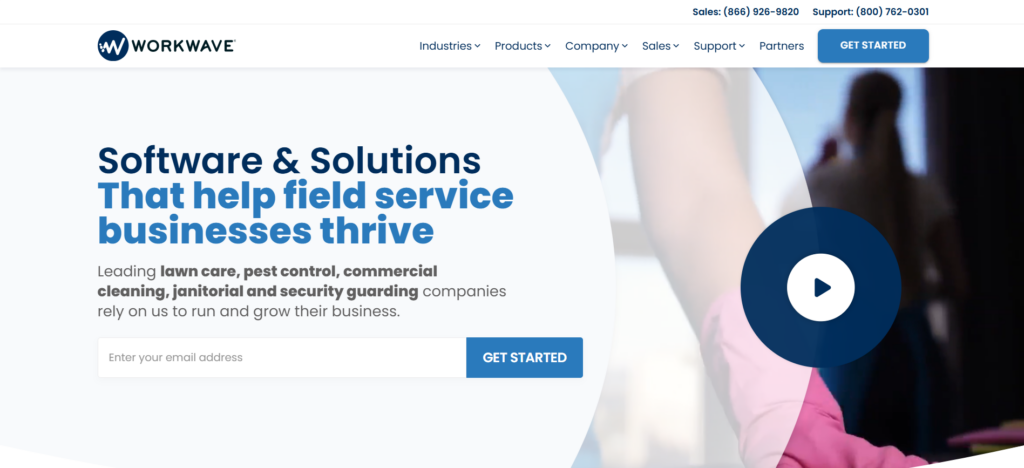
WorkWave combines dispatch planning with comprehensive field service management, making it suitable for service-oriented businesses requiring appointment scheduling alongside delivery operations. HVAC companies, maintenance providers, and technical service organizations frequently choose WorkWave for its dual functionality. Pure logistics operations seeking advanced route optimization will find its service-centric features add unnecessary complexity.
Key Features
- Appointment scheduling with customer portal and automated confirmations
- Technician tracking and job management with skill-based assignment
- Customer portal allowing self-service scheduling and service history access
- Performance reporting with technician productivity and customer satisfaction metrics
- Mobile app supporting both service calls and delivery operations
Pros
- Comprehensive field service features beyond basic dispatch planning software capabilities
- Good customer portal functionality reduces administrative overhead
- Integrated billing and invoicing streamlines financial processes
- Strong reporting suite for service business analytics
Cons
- Service-focused features may be unnecessary for pure delivery operations
- Limited advanced routing optimization compared to specialized dispatch planning software
- Higher complexity requires more extensive staff training
- Pricing structure may not suit businesses needing only delivery dispatch capabilities
Pricing
Starting at $45/month per user with additional costs for advanced service management features.
Locus vs. WorkWave: WorkWave is built for field service—appointment scheduling, technician management, and service calls. For enterprise logistics operations focused on delivery orchestration, Locus provides purpose-built AI optimization, 3PL management, and predictive analytics without the overhead of field service features you don’t need.tive parts and B2B distribution.
7. Track-POD – Freight and Logistics Documentation
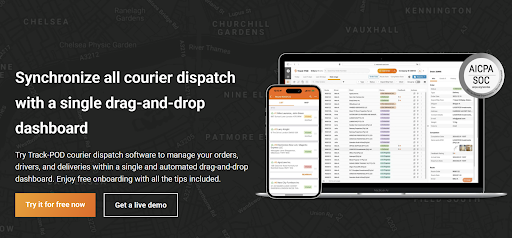
Track-POD emphasizes document management and electronic signatures alongside route planning, making it particularly suitable for freight operations requiring extensive compliance documentation. LTL carriers, freight companies, and operations requiring detailed audit trails frequently choose Track-POD for its comprehensive documentation capabilities. Organizations primarily focused on delivery orchestration (rather than documentation) will find the document-heavy interface adds complexity without proportional routing benefit.
Key Features
- Document management system with electronic signature capture
- Fleet tracking and route optimization with compliance reporting
- Driver mobile app supporting complex delivery workflows and documentation
- Integration capabilities with existing freight management systems
- Customizable forms and workflows for industry-specific requirements
Pros
- Excellent documentation and compliance features for regulated industries
- Strong electronic signature capabilities reduce paperwork overhead
- Good integration options with freight management and ERP systems
- Customizable workflows supporting complex operational requirements
Cons
- Document-heavy interface may complicate simple delivery operations
- Limited advanced route optimization compared to specialized dispatch planning software
- Complex feature set requiring extensive training for effective utilization
- Higher costs for businesses not requiring extensive documentation capabilities
Pricing
Custom pricing based on fleet size and documentation requirements, typically starting around $40/month per vehicle.
Locus vs. Track-POD: Track-POD’s strength is documentation and compliance—not dispatch optimization. Locus provides built-in transportation document management and driver certification tracking within its Governance & Compliance module, while simultaneously delivering enterprise-grade AI route optimization that Track-POD cannot match.g carriers with 25-1,000+ trucks, particularly those needing accounting integration and HOS/ELD compliance in a single system.
8. Routific
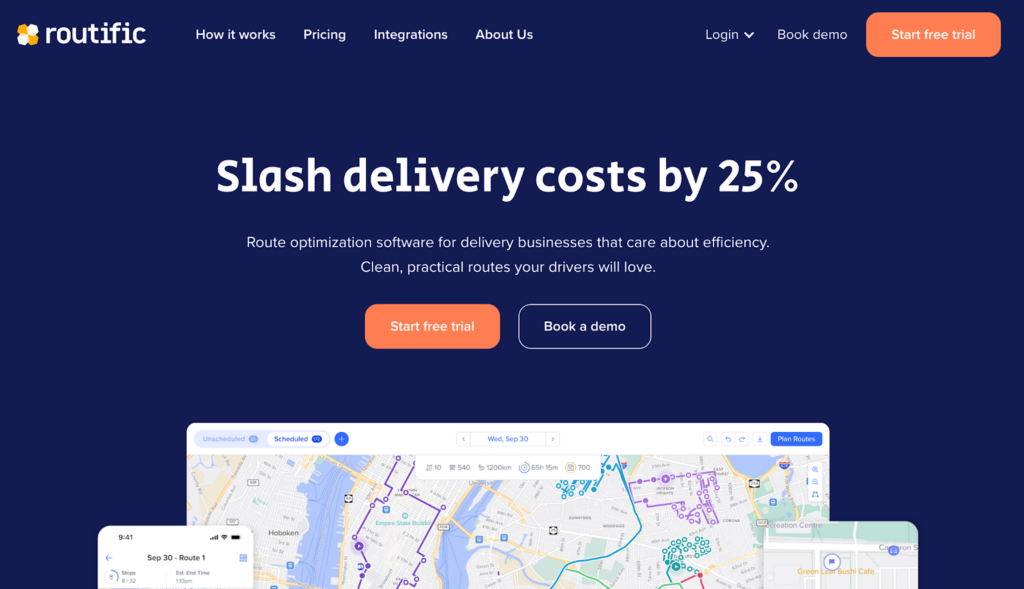
Routific provides straightforward dispatch planning software emphasizing route optimization and proof-of-delivery capabilities for local delivery services. Local courier services, restaurant delivery operations, and retail delivery teams often select Routific for its simplicity. However, enterprises scaling beyond local fleets will quickly outgrow Routific’s feature set.
G2 Rating: 4.7/5 | Capterra Rating: 4.8/5
“Perfect for our 50-driver local fleet, but it chokes on national-scale planning without enterprise features.” — Verified Capterra Reviewer, Operations Lead
Key Features
- Route optimization designed specifically for local delivery operations
- Proof of delivery capture with photo and signature functionality
- API access enabling custom integrations with existing business systems
- Seamless Shopify integration auto-pulls orders for quick planning
- Basic analytics reporting delivery performance and route efficiency
Pros
- Simple interface ideal for small delivery teams
- Generates optimized routes reducing mileage by 20–30% on average
- Affordable pricing suitable for smaller operations
- Driver app includes navigation and ETA sharing with customers
Cons
- No support for bulk uploads over 500 orders without errors
- Limited customization for complex constraints like driver skills
- UI feels dated and lacks advanced dashboards
- No advanced AI optimization or predictive analytics capabilities
Pricing
Starting at $59/month per vehicle with volume discounts available for larger fleets.
Locus vs. Routific: Routific handles local delivery routes efficiently at small scale. But its 500-order upload ceiling, lack of AI-driven constraint optimization, and absence of predictive analytics make it unsuitable for enterprise operations. Locus processes 100,000+ routes simultaneously with real-time re-optimization—a fundamentally different class of platform.cal businesses managing under 200 daily stops with simple routing needs.
9. Tookan – On-Demand Delivery Solutions
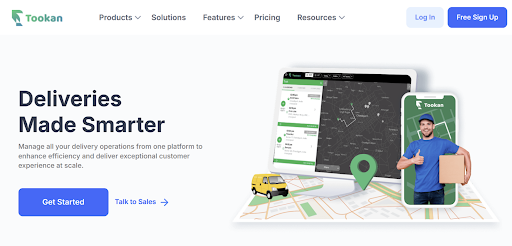
Tookan offers white-label delivery solutions with multi-platform support, targeting businesses building custom delivery applications rather than using standard dispatch planning software interfaces. On-demand service providers and businesses developing proprietary delivery solutions often select Tookan for its customization capabilities. Enterprises seeking ready-to-deploy dispatch orchestration—rather than building custom applications—will find Tookan’s development-heavy approach slow and resource-intensive.
Key Features
- White-label platform enabling branded delivery applications
- Multi-platform support including web, iOS, and Android applications
- Webhook integration supporting real-time data synchronization
- Real-time tracking with customizable customer notification systems
- API-first architecture enabling extensive customization and integration
Pros
- Extensive customization options for businesses requiring branded solutions
- Good API documentation supporting complex integration requirements
- Multi-platform support reducing development overhead
- Flexible pricing structure accommodating different business models
Cons
- Requires significant development resources compared to ready-to-deploy dispatch planning software
- Limited out-of-the-box functionality requiring custom development for basic features
- Complex implementation process needing technical expertise
- May not suit businesses seeking immediate deployment
Pricing
Starting at $99/month with additional costs for customization and development support.
Locus vs. Tookan: Tookan is a white-label toolkit—you build the solution yourself. Locus delivers a production-ready, enterprise-grade dispatch orchestration platform with AI optimization, control tower visibility, and 3PL integration out of the box, dramatically reducing time-to-value compared to building custom delivery applications from scratch.
10. LogiNext
LogiNext serves mid-market to enterprise businesses that need omnichannel fulfillment. The platform provides comprehensive delivery route optimization through its dispatch planning system software. Businesses that require flexible deployment options (cloud, on-premise, hybrid) frequently select LogiNext. Companies with complex logistics workflows and multiple delivery models find LogiNext’s dispatch planning software features particularly suitable.
Key Features
- AI-powered route planning and optimization algorithms with real-time adjustments
- Real-time fleet tracking and comprehensive driver management capabilities
- Advanced analytics and reporting suite with customizable business intelligence dashboards
- Multi-modal delivery support including bike, car, truck, and drone integration
- Workforce management and productivity tracking tools for operational efficiency
Pros
- Strong analytics and reporting capabilities with a business intelligence focus
- Flexible integration options supported by an extensive API library
- Support for various delivery models and vehicle types across different industries
- Comprehensive workforce management features for large-scale operations
Cons
- User interface complexity can challenge non-technical dispatch planning staff
- Implementation timeline often extends beyond expectations (12–16 weeks typical)
- Limited advanced AI automation compared to newer dispatch planning software solutions
- Higher total cost of ownership due to system complexity and customization needs
Pricing
Starting at $50 per driver per month for basic plans. Enterprise dispatch planning software pricing varies significantly based on features and scale.
Locus vs. LogiNext: LogiNext offers solid BI reporting and flexible deployment, but its implementation timelines and interface complexity can slow time-to-value. Locus’s phased rollout approach targets the highest-cost, highest-frequency route segments first—accelerating early ROI and reducing the 12–16 week typical deployment window.
Enterprise Shortlist by Operational Fit
Enterprises should shortlist Locus, FarEye, Shipsy, and LogiNext first because the review identifies them as the strongest fits for high-complexity logistics use cases. Route4Me, Routific, Onfleet, WorkWave, Track-POD, and Tookan can be useful in narrower contexts, but the article flags limitations around enterprise scalability, optimization depth, development requirements, or operational fit.
| Platform | Enterprise fit in this review | Limitation to check |
| Locus | Best fit for enterprise multi-modal logistics, AI constraint optimization, real-time control tower visibility, and 3PL integration. | Implementation requires dedicated project management and staff training. |
| FarEye | Strong fit for last-mile delivery operations where customer experience and predictive visibility are priorities. | The review notes less focus on operational cost optimization than customer experience. |
| Shipsy | Strong fit for cross-border logistics, freight documentation, and compliance automation. | The review notes limited last-mile delivery optimization compared with specialized dispatch planning software. |
| LogiNext | Fit for omnichannel fulfillment and businesses needing flexible deployment options. | The review notes interface complexity and implementation timelines that can extend beyond expectations. |
| Route4Me and Routific | Fit for small or local delivery fleets with simpler route planning needs. | The review flags scalability constraints and limited advanced AI optimization for enterprise operations. |
This shortlist gives enterprise buyers a faster starting point: evaluate Locus for full dispatch orchestration, FarEye for customer-experience-led last mile, Shipsy for cross-border compliance, and LogiNext for omnichannel fulfillment.
Benefits of Dispatch Planning Software
Enterprise logistics is no longer about moving boxes—it’s about building a defensible operational advantage. The right dispatch planning software transforms logistics from a cost center into a strategic weapon. Here’s how.
Dramatic Cost Reduction Across the Delivery Network
AI-powered dispatch planning eliminates the fuel waste, idle time, and inefficient routing that plague manual operations. According to a McKinsey study, AI-powered logistics operations see lower operating costs by up to 15%, improved inventory management by 35%, and increased service levels by 65%. For enterprises processing thousands of daily deliveries, even single-digit percentage improvements translate to millions in annual savings.
Real-Time Operational Control
Over 80% of logistics companies now prioritize supply chain visibility when selecting software—because you cannot optimize what you cannot see. Dispatch planning systems provide live fleet tracking, predictive ETAs, exception alerting, and proactive disruption handling. Teams identify delivery problems hours before they impact service levels and adjust routes accordingly.
Scalable Fleet Utilization
Automated dispatch assignment balances workloads across your entire fleet, preventing driver fatigue while maximizing vehicle utilization. Enterprise platforms like Locus have helped clients improve fleet utilization by up to 90%—a transformative gain when fleet costs represent a major line item. Learn more about how delivery logistics software improves fleet utilization.
Competitive Advantage Through Automation
81% of shippers and logistics services providers now view transportation as a competitive weapon, with AI adoption driving new investments. The data is clear: companies with fully automated dispatch processes are 10× more likely to achieve industry-leading financial performance than those still relying on manual methods.
Proactive Decision-Making with Predictive Analytics
Machine learning algorithms analyze delivery performance, customer behavior, and operational constraints to predict future challenges before they occur. AI-driven forecasting reduces demand prediction errors significantly compared to traditional statistical methods, enabling better capacity planning during seasonal peaks or market fluctuations. The result: operations managers make proactive decisions rather than constantly reacting to problems.
Discover the route optimization benefits across different business segments to understand how these advantages apply to your industry.
Key Features Your Dispatch Planning Software Must Have
Before separating enterprise-grade solutions from basic tools, enterprise leaders need to understand the capabilities that define a modern dispatch planning system. Here’s the feature hierarchy that matters most.
AI-Powered Route Optimization
Basic route planning creates static paths based on distance calculations. AI-powered dispatch planning software uses machine learning algorithms to analyze multiple factors simultaneously—traffic patterns, weather conditions, delivery time windows, vehicle capacities, driver skills, and stop sequencing dependencies—in real time.
The constraint count matters: platforms modeling 250+ real-world constraints generate routes that hold up in execution, while platforms optimizing for fewer variables produce routes that fail at the edges where actual logistics complexity lives.
According to a McKinsey study, AI-powered logistics operations see lower operating costs by up to 15%, improved inventory management by 35%, and increased service levels by 65%.
Your dispatch planning software should continuously recalculate routes as new orders arrive, delivery requirements change, or unexpected delays occur. Static routing systems create bottlenecks during peak periods when flexibility matters most. Learn how to choose the right route planning software for your specific needs.
Real-Time Tracking and Visibility
Over 80% of logistics companies now prioritize supply chain visibility when selecting software solutions. Supply chain executives need immediate visibility into delivery status, driver locations, and potential delays.
- Effective dispatch planning software integrates GPS tracking with predictive analytics to estimate arrival times accurately.
- This capability enables proactive customer communication and exception management before delays impact service levels.
- Teams identify delivery problems hours before they occur and adjust routes accordingly.
Real-time tracking also supports compliance reporting and driver safety monitoring. Your operations team needs data on driving hours, route adherence, and vehicle performance for every delivery and every order—data that dispatch systems directly surface for analysis.
Dynamic Dispatch Management
Juggling multiple systems manually to get updates and change dispatch decisions costs hours of business, time, and money. Vehicles sit idle longer. Fuel costs spike. Advanced dispatch planning software eliminates this waste:
- Automatically assigns new orders to the best-positioned drivers based on location, vehicle capacity, delivery skills, and customer preferences.
- Handles urgent orders by evaluating current routes and determining the most efficient insertion points—no manual schedule reorganization needed.
- Balances workloads across your fleet to prevent driver fatigue and ensure consistent service quality.
- Typically increases fleet utilization significantly compared to manual assignment processes.
For logistics tech driving last-mile efficiency, dynamic dispatch is the foundation.
Enterprise Integration Capabilities
Your dispatch planning software must connect seamlessly with existing systems:
- ERP systems
- Warehouse management platforms (WMS)
- Order management systems (OMS)
- E-commerce channels
Poor integration creates data silos that require manual intervention and increase error rates. Look for pre-built connectors to major enterprise software providers and APIs that support custom integrations. Your IT team needs the ability to maintain data synchronization without constant technical support from the software vendor.
Integration extends beyond order data—it must include customer information, inventory levels, and billing systems. Complete integration eliminates duplicate data entry and ensures consistent information across all business operations.
Predictive Analytics and Machine Learning
The most valuable dispatch planning software learns from historical patterns to predict future challenges. ML algorithms analyze delivery performance, customer behavior, and operational constraints to recommend optimization opportunities.
These insights help operations managers identify maintenance requirements, driver performance trends, and customer satisfaction patterns. Predictive analytics transforms dispatch Predictive analytics transforms dispatch planning from reactive firefighting into proactive strategic management.
Why Choose Locus
For enterprise logistics leaders, only platforms built for high-volume, high-complexity operations deliver the scale and reliability needed. Locus stands out through proven AI algorithms, comprehensive 3PL integrations, and a track record of delivering measurable cost reductions for enterprise clients across retail, FMCG, and e-commerce sectors.
The numbers speak for themselves: Enterprises using Locus have reduced logistics costs by up to 20%, improved fleet utilization by 90%, cut planning cycle time by 66%, and achieved 99.5% on-time SLA performance.
The platform’s ability to handle millions of daily orders while maintaining real-time optimization sets it apart from competitors focused on smaller-scale operations. Unlike point solutions that optimize routing or visibility separately, Locus operates as a continuous decision loop—Sense ? Decide ? Execute ? Learn—with dispatcher governance built into every automated decision.
Combined with extensive implementation support, a phased rollout approach that prioritizes the highest-cost route segments first, and ongoing account management, Locus enables enterprises to treat logistics as a strategic advantage rather than an operational cost center.
Key Evaluation Criteria for Your Selection:
- Focus on platforms offering real-time optimization, predictive analytics, and comprehensive integration capabilities—not basic route planning tools.
- The most successful implementations combine advanced AI algorithms with enterprise-grade scalability and extensive third-party logistics integration.
- Consider total cost of ownership—implementation services, training, ongoing support—rather than monthly subscription fees alone.
- The hidden costs of manual dispatch planning typically exceed software investments within the first year of operation.
If you manage a complex logistics network, you need more than incremental gains—you need a strategic leap.
Frequently Asked Questions (FAQs)
1. What is a dispatch planning system and how does it differ from basic route planning?
A dispatch planning system uses AI and machine learning to optimize routes in real time by analyzing traffic patterns, weather, delivery windows, vehicle capacity, driver skills, and stop sequencing dependencies—not just distance calculations. Unlike static route planning, dispatch systems dynamically re-optimize during live execution, automatically reassigning orders to the best-positioned drivers and handling urgent requests by finding efficient insertion points. The constraint count matters: enterprise platforms modeling 250+ real-world constraints generate routes that hold up in execution, while platforms optimizing for fewer variables produce routes that fail where actual logistics complexity lives.
2. What key features should I look for in dispatch planning software?
When evaluating dispatch software, enterprise leaders should demand constraint-based route and load optimization that models real-world operational variables—not just distance. Essential features include: dynamic re-optimization during live execution (not just at dispatch), automated carrier management across multi-carrier networks with tendering, human-in-the-loop governance with dispatcher override and audit trails, real-time visibility with exception alerting, and native integration with OMS, WMS, and ERP systems. Advanced systems add predictive analytics, machine learning forecasting, and configurable decision rules.
3. How does AI-powered route optimization differ from basic route planning?
The operational difference is constraint depth. Basic route planning optimizes for distance between stops. AI-powered dispatch planning models the full constraint set simultaneously—vehicle capacity, driver shift windows, delivery time windows, stop sequencing dependencies, transporter availability, and traffic conditions—and re-plans as any of those variables change. Platforms modeling 250+ real-world constraints generate routes that hold up in execution, while platforms optimizing for fewer variables produce routes that fail at the edges.
4. How does dispatch planning software reduce delivery costs?
Dispatch planning software reduces costs through multiple mechanisms: AI-powered route optimization significantly reduces route distances, automated assignment prevents vehicle idle time, dynamic workload balancing minimizes fuel consumption, and real-time tracking enables proactive exception management hours before delays impact service. According to a McKinsey study, AI-powered logistics operations see operating costs reduced by up to 15% and service levels increased by 65%.
5. What is the typical ROI timeframe for implementing dispatch planning software?
Most enterprises see initial ROI within the first few months through reduced fuel costs and improved route efficiency, with full benefits materializing as teams optimize workflows and leverage advanced features. Enterprises using Locus have reduced logistics costs by up to 20% and improved fleet utilization by 90%—the speed of value realization depends on deployment scope and the route types targeted first. Locus’s phased rollout approach prioritizes the highest-cost, highest-frequency route segments to accelerate early ROI.
6. How do I calculate the total cost of ownership for dispatch planning software?
Include software licensing, implementation services, staff training, ongoing support, internal resource allocation, integration costs with existing systems, and potential customization requirements. Factor in the opportunity cost of maintaining manual dispatch processes—including fuel waste, vehicle idle time, and customer service overhead from delivery delays. When calculating TCO, offset input costs against quantified operational improvements. Enterprises using Locus have reduced logistics costs by up to 20%; applied to high-frequency route operations, this reduction often offsets platform cost within the first year of deployment.
7. What security and compliance considerations should I evaluate?
Ensure SOC 2 compliance, end-to-end data encryption, role-based access controls, and comprehensive audit trails. Verify that the vendor’s data residency policies align with your regulatory requirements and evaluate backup and disaster recovery procedures, uptime guarantees, and incident response protocols. Locus’s Governance & Compliance module provides role-based access controls, transportation document management, driver and vehicle certification tracking, and comprehensive audit trails for every automated dispatch decision.
8. How do I ensure successful integration with existing enterprise systems?
Choose platforms with pre-built connectors for your specific ERP and WMS systems, request proof-of-concept demonstrations during evaluation, and validate data synchronization capabilities, error handling procedures, and fallback mechanisms for system outages. Locus provides native connectors for OMS, WMS, and ERP systems and pre-integrated access to 1,000+ carriers—reducing the custom API development that typically extends enterprise TMS deployment timelines. The BPMN-based workflow engine allows operations teams to configure data flows and decision rules without hard-coded customization.
9. How do dispatch planning systems handle unexpected changes like vehicle breakdowns or urgent orders?
Modern dispatch systems use real-time tracking and communication features to respond to disruptions by rerouting vehicles or reassessing schedules while minimizing disruption. For urgent orders, dynamic dispatch management evaluates current routes and determines the most efficient insertion points automatically—eliminating the need for manual reorganization of entire schedules. Advanced platforms continuously monitor exceptions and trigger automated re-optimization, keeping dispatchers in the loop for governance while handling the computational complexity at machine speed.
10. What makes Locus different from other dispatch planning software solutions?
Locus is a Decision-Intelligent TMS that manages the full dispatch chain—from constraint-based route and load optimization across 250+ real-world variables, through automated carrier tendering across 1,000+ carriers, live execution management with automated exception handling, and post-delivery settlement. Unlike point solutions that optimize routing or visibility separately, Locus operates as a continuous decision loop: Sense ? Decide ? Execute ? Learn—with dispatcher governance built into every automated decision. Enterprises using Locus have reduced logistics costs by up to 20%, improved fleet utilization by 90%, cut planning cycle time by 66%, and achieved 99.5% on-time SLA performance across retail, FMCG, 3PL, and CEP operations.
Ready to see how Locus can handle your specific operational requirements and delivery network complexity? Schedule your enterprise demo for a personalized ROI analysis.

General
Best Dispatch Management Platforms for Small and Mid-Sized Logistics Providers in 2026

Aug 24, 2026
Comparing dispatch management platforms for small to mid-size logistics providers? This guide covers 10 tools by fleet size, complexity, and AI capability.
Read more
General
Top 10 Last Mile Routing Software for Enterprise Logistics Teams in 2026
Aug 24, 2026
Compare the top 10 last mile routing software tools built for enterprise fleets, from AI-powered dispatch automation to real-time re-routing and deep ERP integration.
Read moreInsights Worth Your Time




















10 Best Dispatch Software Platforms for 2026: Features, Pricing & Fit