


General
10 Best Appliance Repair Scheduling Software in 2026
Key Takeaways
- Appliance repair scheduling challenges at scale are driven by coordination across technicians, depots, spare parts, routes, and service commitments.
- Scheduling software built for single-region operations often struggles when networks expand across cities, depots, and technician pools.
- Execution-first capabilities such as parts-aware scheduling, multi-depot routing, live re-optimization, and SLA prioritization are critical for consistent service delivery.
- Visibility into real-time execution and performance metrics enables faster issue resolution and more informed operational decisions.
- Enterprise appliance repair teams benefit most from platforms that combine scheduling with execution control, scalability, and long-term operational stability.
Running a large appliance repair network is similar to managing service routes at scale. While creating schedules is easy, execution becomes challenging when technicians, spare parts, routes, and customer commitments must remain aligned in real time.
In most appliance repair operations, the real challenge lies in coordinating technicians, inventory, depots, and service routes across regions while also handling day-to-day disruptions such as technician delays, spare part shortages, urgent service requests, and route changes.
Appliance repair scheduling software, therefore, needs to plan and manage service jobs across technicians and territories while supporting real-time execution and network-wide visibility.
This blog reviews leading appliance repair scheduling software, outlines the capabilities required for scaled operations, and compares platforms from an enterprise perspective. It also explains how execution-first platforms like Locus help teams move from planned schedules to consistent service outcomes.
What Appliance Repair Operations Actually Need From Scheduling Software
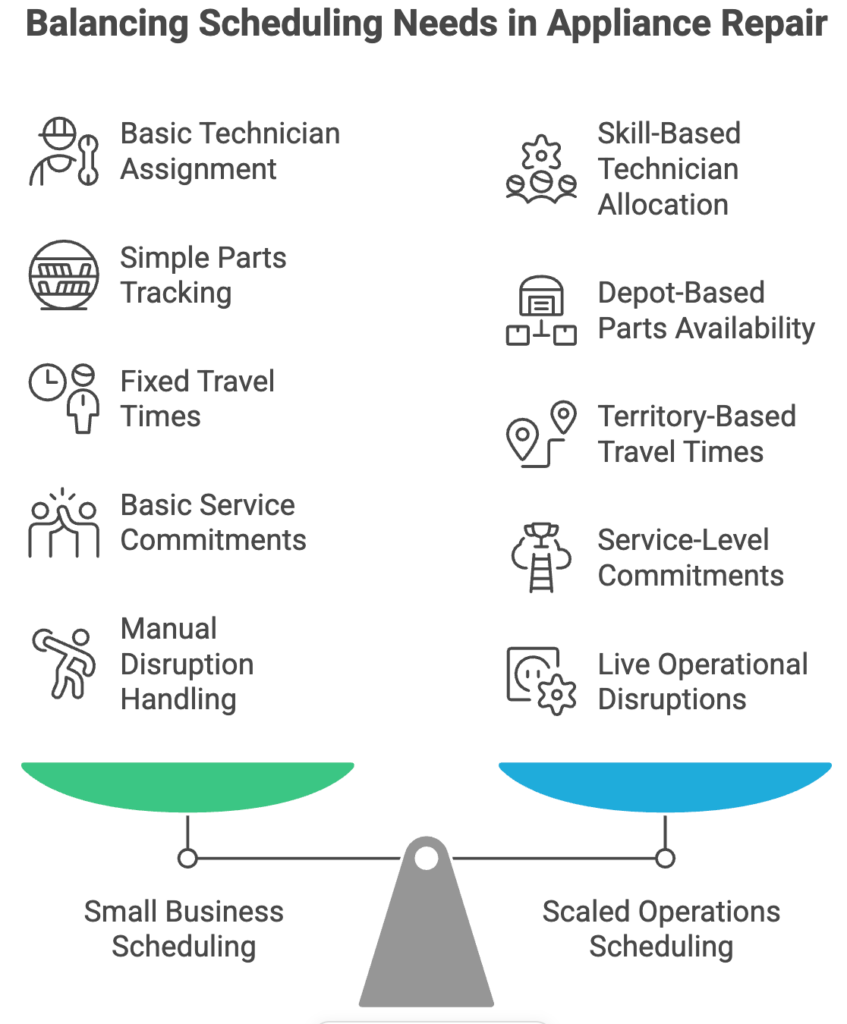
For small, single-city appliance repair businesses, basic scheduling is often enough. Here, a technician is assigned, a time window is set, and the job is completed.
But when operations expand across cities and depots, this approach no longer works because parts can be in different locations, travel times vary, service commitments differ, and delays or urgent jobs can affect multiple schedules.
For scaled appliance repair operations, effective scheduling software must support coordination across the following areas:
| Coordination Area | Why It Matters at Scale |
|---|---|
| Technician availability and skill matching | Ensures the right technician is assigned without manual overrides |
| Spare parts availability by depot | Prevents failed visits and repeat jobs |
| Territory-based travel time | Keeps routes efficient across regions |
| Service-level commitments | Maintains consistent customer experience |
| Live operational disruptions | Allows schedules to adapt during execution |
Traditional scheduling tools typically assume these factors remain unchanged once a plan is created. But in real-world operations, conditions evolve throughout the day, which creates execution gaps that require manual intervention.
This execution complexity is especially visible in large field service environments, where intelligent dispatching, parts readiness, and skill-based technician allocation are required to operate reliably at scale.
Appliance Repair Software by Business Size
The best appliance repair scheduling software depends less on headline features and more on operating model, service area complexity, and coordination burden.
Solo Technicians and Small Shops
Small businesses usually need speed of adoption more than orchestration depth. Key priorities include:
- Easy appointment booking and calendar management
- A mobile app for job updates in the field
- Quotes, invoices, and payment collection
- Customer records and service history
- Transparent pricing and low setup effort
For this segment, platforms such as Jobber or ServiceM8 are often a stronger fit than enterprise orchestration tools.
Regional Repair Companies
As teams add more technicians and a wider service footprint, the software needs to do more than fill a diary. Regional operations should prioritise:
- Dispatcher visibility across technicians and territories
- Technician skill and appliance-type matching
- Route optimisation and travel-time awareness
- Inventory or parts tracking
- Customer reminders, ETA updates, and reporting
This is where ServiceTitan, FieldEdge, Workiz, or similar FSM platforms may fit, depending on process maturity and back-office needs.
Manufacturer, Retailer, and Warranty Networks
Appliance repair networks serving brands, retailers, insurers, or warranty providers typically need:
- Warranty and authorised-service workflows
- Multi-region technician or partner coordination
- SLA prioritisation by contract or service promise
- Depot and spare-parts visibility
- API connectivity into CRM, ERP, contact-centre, and inventory systems
In these environments, the dispatch problem is often broader than technician scheduling alone.
Enterprise Multi-Depot Operations
Large distributed networks need execution control, not just appointment management. Priority capabilities usually include:
- Live re-optimisation during the day
- Control-tower visibility across depots and regions
- Governance for owned technicians, contractors, and partner networks
- Auditability of dispatch changes
- Scalable integration architecture across ERP, FSM, WMS, CRM, and identity systems
This is where Locus is best suited: high-volume, multi-region networks with complex dispatch and execution requirements rather than independent technicians or micro-teams.
Key Features to Look for in Appliance Repair Scheduling Software
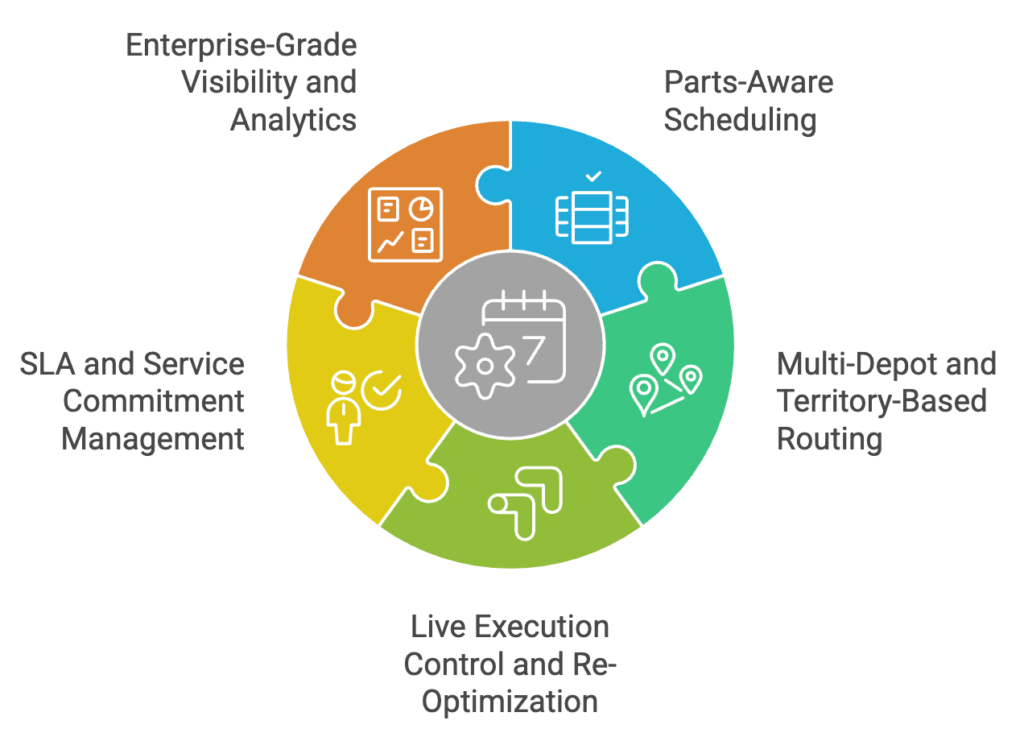
Enterprise appliance repair teams should evaluate scheduling software based on parts awareness, depot-led routing, execution control, SLA management, and performance visibility.
Each of them is covered in detail below:
1. Parts-Aware Scheduling
Take an example where a technician is scheduled for a same-day washing machine repair. The appointment is confirmed, the route is planned, and the technician arrives on time. Only then does it become clear that the required replacement part is stocked at a different depot.
The schedule was technically correct, but the job still fails, turning a completed visit into a repeat one.
With parts-aware scheduling, this situation is avoided because:
- Jobs are assigned only when required parts are available
- Inventory locations are aligned with technician routes
- Repeat visits caused by missing parts are reduced
This helps high-volume appliance repair operations complete more jobs in a single visit while protecting service commitments.
2. Multi-Depot and Territory-Based Routing
Take an example where a city has two service depots. A technician is assigned a repair job across town, even though the same job could have been handled by another technician starting closer to the customer. The schedule is valid, but the technician spends extra time traveling, while nearby capacity goes unused.
With multi-depot and territory-based routing:
- Jobs are assigned based on proximity to the right depot
- Technician workloads are balanced across territories
- Depot capacity and technician skills are factored into routing decisions
This reduces unnecessary travel and helps large appliance repair operations deliver services more consistently across regions.
3. Live Execution Control and Re-Optimization
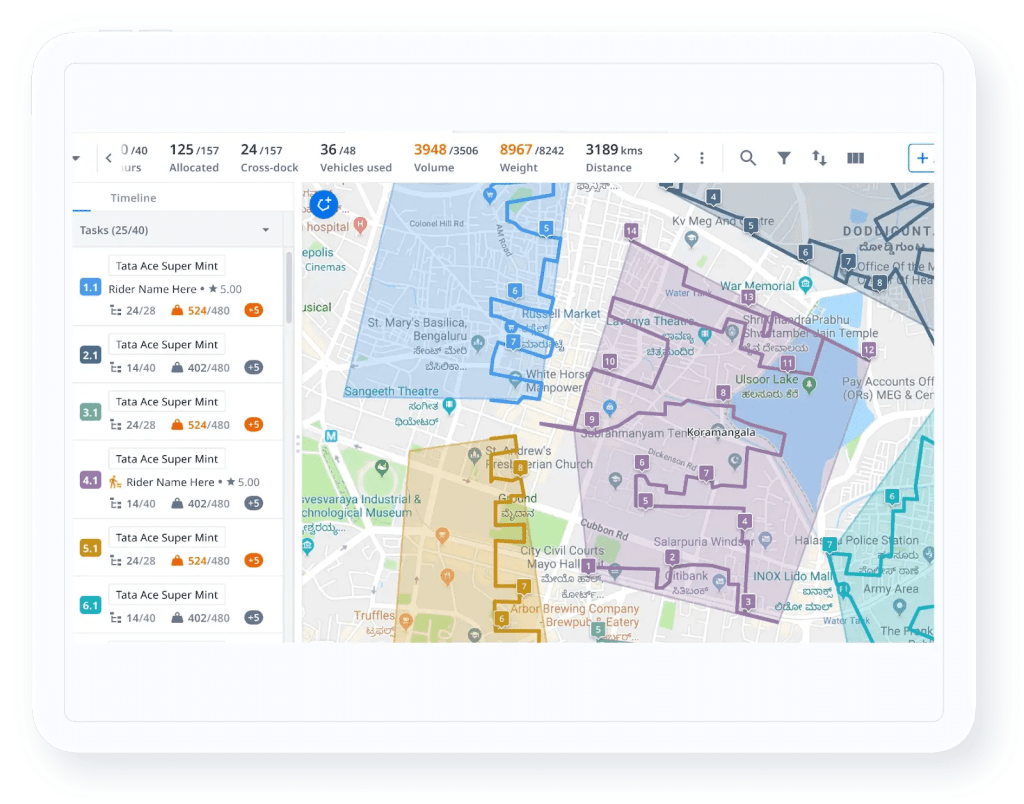
Consider a situation where a technician finishes a repair later than planned because the issue turns out to be a bit complicated. Though he still has the next two appointments on his schedule, reaching the customer on time may no longer be realistic. Now, with the delays being carried forward, multiple service windows are affected.
Live execution control and re-optimization keep schedules aligned with what is actually happening on the ground so that:
- Job sequences are updated as delays or cancellations occur
- Technicians are reassigned when urgent repairs come in
- Routes are adjusted during the day based on current conditions
This allows appliance repair operations to respond to disruptions while maintaining control over daily execution.
4. SLA and Service Commitment Management
In a situation where two appliance repair jobs are scheduled on the same day, one customer is promised service by noon while the other has a flexible window later in the week. When delays occur and both jobs are treated equally, the committed noon appointment could be missed.
SLA and service commitment management help teams:
- Prioritize jobs based on promised service windows
- Apply customer commitments consistently across regions
- Make informed trade-offs when schedules need to change
This ensures critical service promises are met, even when daily execution does not go exactly as planned.
5. Enterprise-Grade Visibility and Analytics
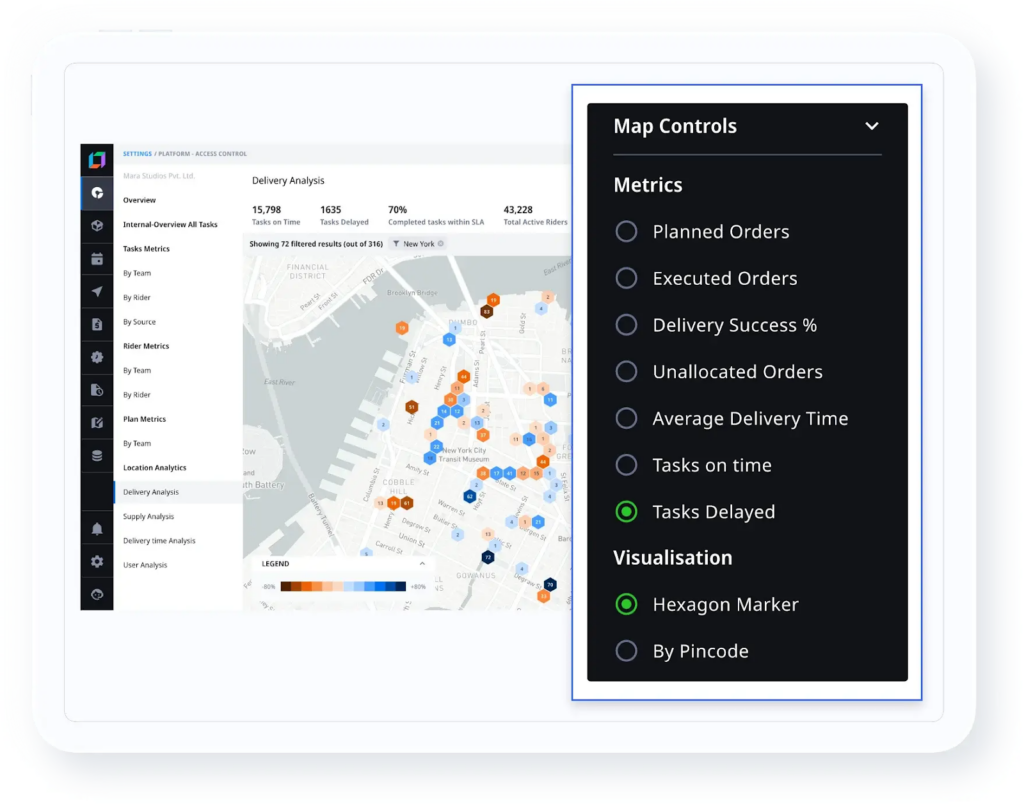
Across a multi-region appliance repair operation, teams complete hundreds of jobs each day. Without shared visibility, delays, repeat visits, or missed commitments often surface only after customers escalate or reports are reviewed later.
Enterprise-grade visibility and analytics provide:
- Real-time tracking of technician execution across regions
- Performance insights at depot, territory, and team levels
- Data-driven inputs to identify coordination issues early
This allows operational leaders to spot issues as they develop and make informed adjustments before service performance is impacted.
Additional Appliance-Repair Workflows to Validate During Demos
Many scheduling tools look similar in a feature checklist but perform very differently in real operations. For appliance repair, ask vendors to show how they handle:
- Appliance make, model, and serial-number capture
- Warranty and manufacturer-authorised repairs
- Installation jobs versus repair jobs
- Multi-visit jobs and return visits
- Repair-versus-replace workflows
- Technician van stock versus depot stock
- Parts transfer between depots
- Photo capture, signatures, and proof of service
- Customer unavailability or no-access appointments
- Same-day emergency insertion without breaking existing SLA commitments
- Contractor or partner technician allocation
- Recurring maintenance or service agreement scheduling
If a vendor can only describe these workflows in generic terms, validate carefully during the buying process.
How We Evaluated Appliance Repair Scheduling Software
This comparison is designed for commercial investigation, not casual browsing. The aim is to help buyers shortlist platforms based on operating complexity, dispatch requirements, and scale.
Evaluation date and evidence base
- Last verified: 23 September 2026
- Sources checked: reviewed public product pages, solution pages, category pages, and publicly accessible vendor materials referenced in this article
- Testing status: this is a methodology-led editorial comparison based primarily on public information; it is not a claim that every product was hands-on tested in a live appliance repair environment
- Verification approach: where public evidence was clear, capabilities are described as “publicly documented” or “available”; where evidence was incomplete, this article uses “requires configuration”, “not publicly confirmed”, or “validate during demo”
What we weighted most
| Evaluation factor | Weight | What we looked for |
| Execution depth | 35% | Live re-optimisation, dispatch control, SLA handling, exception management |
| Appliance-repair operational fit | 20% | Parts-aware scheduling, return visits, service-window handling, territory logic |
| Scale and network complexity | 20% | Multi-region support, depot coordination, contractor/partner suitability |
| Integration and governance | 15% | APIs, integration flexibility, auditability, operational visibility |
| Usability and commercial fit | 10% | Mobile workflows, simplicity for target user, pricing model clarity |
Rating language used in this guide
- Publicly documented: clearly described in reviewed vendor materials
- Available: capability appears present, though exact depth may vary by plan or setup
- Requires configuration: capability may be possible but is not clearly packaged as a native out-of-the-box workflow
- Not publicly confirmed: we did not find clear evidence in reviewed public materials
- Validate during demo: buyers should ask for a workflow demonstration rather than rely on checklist language
Vendor inclusion criteria
The list prioritises tools commonly considered for appliance repair scheduling, field service management, or execution-led dispatch. The set includes enterprise orchestration platforms, regional FSM tools, and small-business service scheduling software so buyers can compare fit by business size.
Locus disclosure
Locus publishes this page and is included as a vendor. Locus is positioned here as strongest for enterprise, multi-region, execution-heavy service networks. That does not mean it is the best fit for every buyer, especially independent technicians or small local teams.
Correction and update policy
If a vendor materially changes a feature, pricing approach, or positioning, this guide should be updated. Buyers should always confirm current plan details, implementation scope, and integration requirements directly with the vendor before purchasing.
Top Appliance Repair Scheduling Software in 2026 – A High-Level Comparison
Many tools perform well for single-region or small service teams. However, once operations span multiple cities, depots, and technician pools, the system may break down.
The comparison below evaluates tools through the lens of scaled appliance repair operations, focusing on coordination, execution depth, and multi-region readiness.
| Capability | Locus | Housecall Pro | Workiz | ServiceTitan | Fieldproxy | Jobber | FieldEdge | mHelpDesk | ServiceM8 | Synchroteam |
|---|---|---|---|---|---|---|---|---|---|---|
| Multi-region operations | Advanced | Basic | Basic | Moderate | Moderate | Basic | Moderate | Basic | Basic | Moderate |
| Multi-depot routing | Advanced | Not supported | Not supported | Moderate | Limited | Not supported | Limited | Not supported | Not supported | Limited |
| Parts-aware scheduling | Advanced | Not supported | Not supported | Limited | Not supported | Not supported | Limited | Not supported | Not supported | Not supported |
| Territory-based routing | Advanced | Limited | Limited | Moderate | Limited | Limited | Moderate | Limited | Limited | Moderate |
| Live execution re-optimization | Advanced | Not supported | Limited | Limited | Not supported | Not supported | Not supported | Not supported | Not supported | Limited |
| SLA & service commitment management | Advanced | Limited | Limited | Moderate | Limited | Limited | Moderate | Limited | Limited | Limited |
| Real-time execution visibility | Advanced | Basic | Basic | Moderate | Moderate | Basic | Moderate | Basic | Basic | Moderate |
| Enterprise scalability | Advanced | Basic | Basic | Moderate | Moderate | Basic | Moderate | Basic | Basic | Moderate |
This comparison shows that while many platforms handle job assignment well, execution-first systems are better equipped to coordinate technicians, depots, parts, and service commitments across regions in real time
Top Appliance Repair Scheduling Software in 2026 – A Detailed Comparison
1. Locus
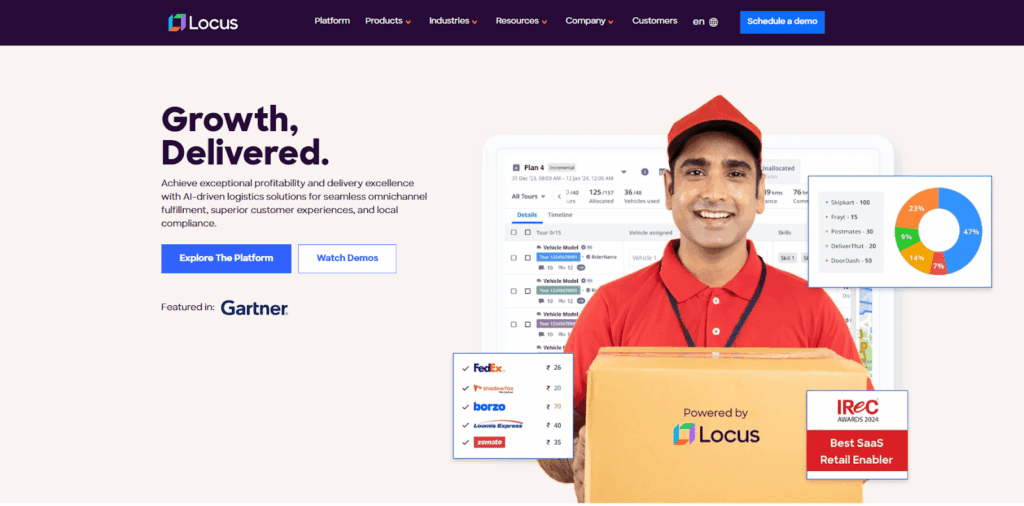
Locus is an execution-first logistics platform built for enterprises managing large, distributed service and delivery networks. It helps teams coordinate dispatch, routing, and live execution across technicians, depots, inventory, and service commitments.
This makes it well suited for appliance repair operations that operate across regions and adaptable to real-world disruptions throughout the day.
Locus Is Ideal for
- Multi-region appliance repair networks
- Operations managing technicians, depots, and spare parts at scale
- Teams with strict service-level commitments and high daily job volumes
Key Capabilities of Locus
- Execution-first dispatch orchestration: Automates technician and partner assignment using cost, capacity, and service constraints, enabling optimized dispatch decisions across regions in real time.
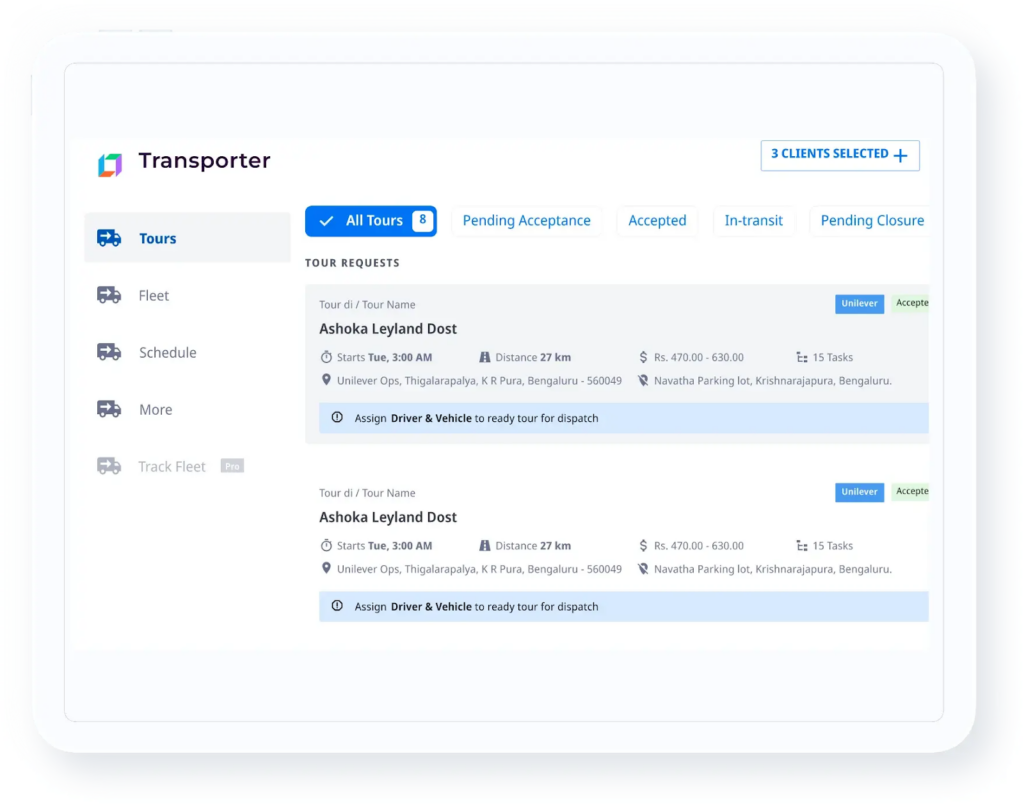
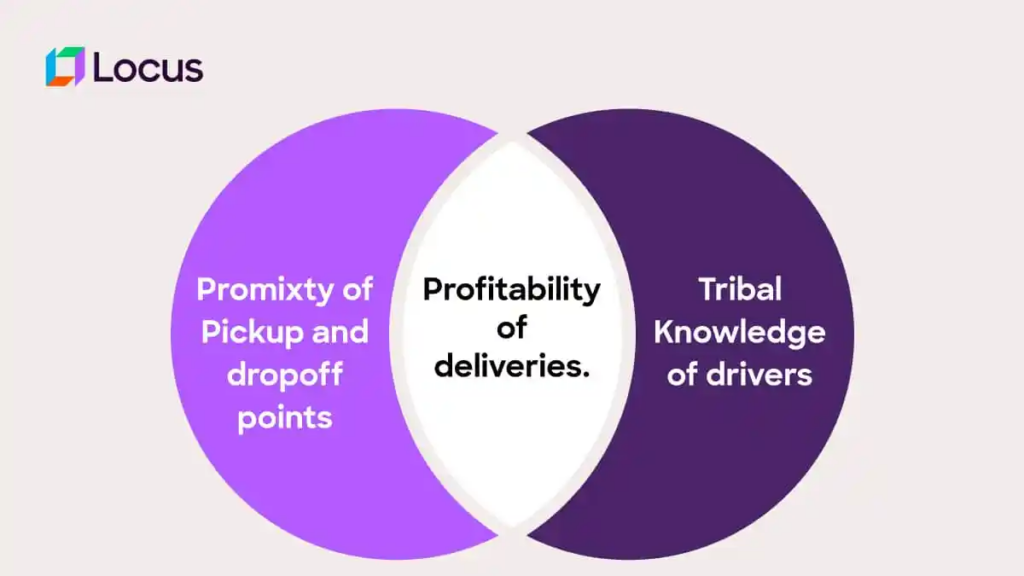
- Parts- and depot-aware routing: Builds routes based on spare part availability and depot proximity, improving first-time job completion and reducing repeat service visits.
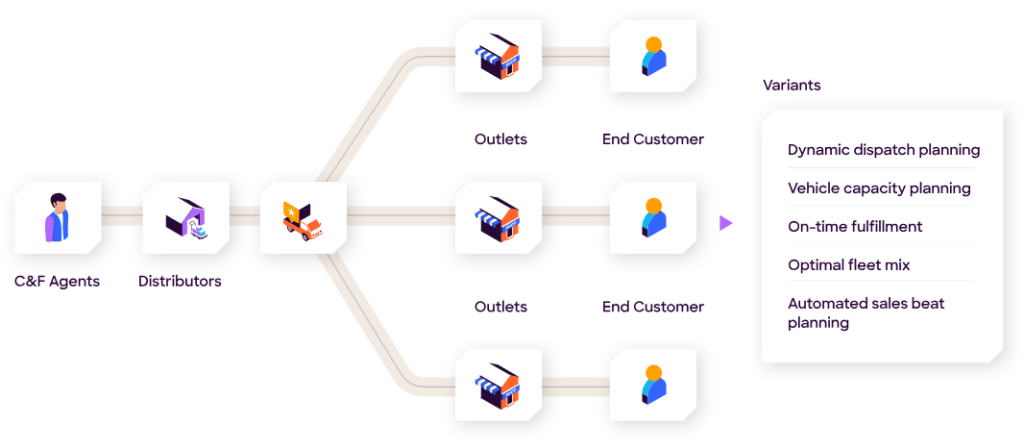
- Live re-optimization: Continuously adjusts routes and job sequences as delays, cancellations, or urgent requests occur, without manual rescheduling.
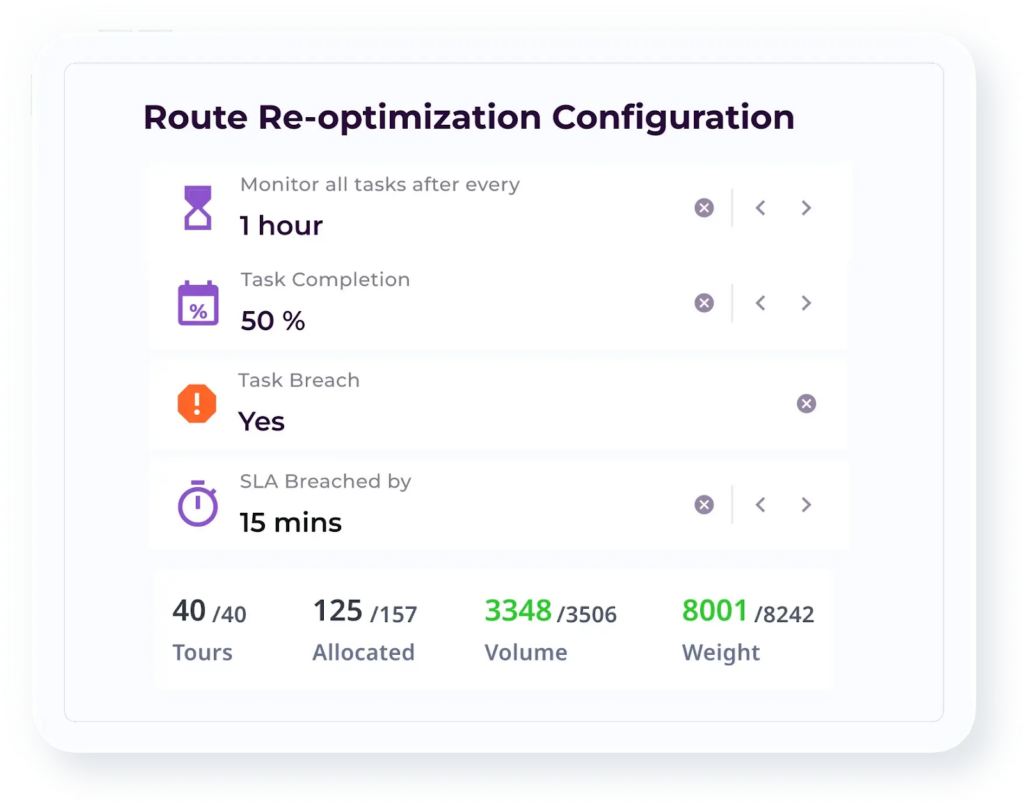
- SLA-driven service prioritization: Prioritizes jobs based on promised service windows and customer commitments to maintain consistent service levels during peak operations.
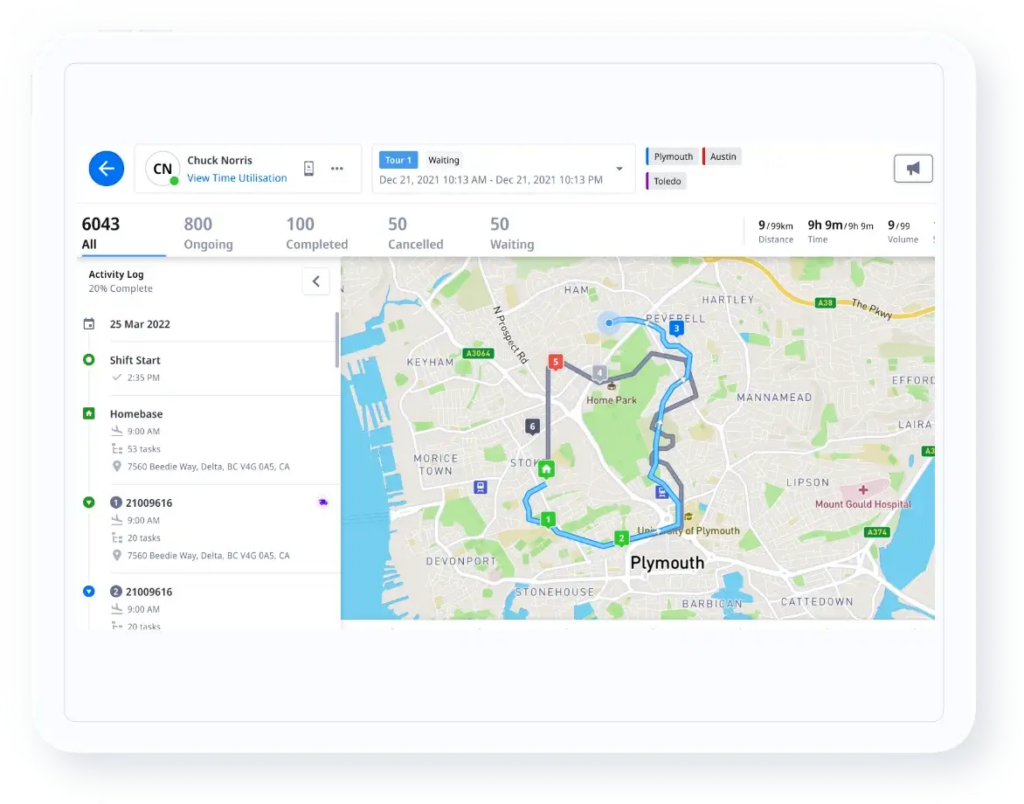
- Control-tower visibility: Provides real-time visibility into technician execution, depot performance, and regional operations, enabling faster issue detection and informed decision-making.
Where Locus Works Well
- Designed to scale across complex, multi-depot operations
- Handles real-world execution changes without manual rescheduling
- Strong visibility and analytics for operational decision-making
Locus’s Cons
- Enterprise-level pricing makes it less suitable for small teams
- Implementation effort is higher but aligned with large-scale operations
Pricing
Locus follows a custom enterprise pricing model based on scale, regions, and capabilities required. Pricing is best suited for large appliance repair organizations with complex coordination needs.
2. Housecall Pro
Housecall Pro is a field service management platform designed to help service businesses manage scheduling, customer communication, and payments from a single system. It focuses on ease of use and fast setup rather than deep execution coordination, making it suitable for simpler operating models.
Housecall Pro Is Ideal for
- Single-region or city-level appliance repair businesses
- Small to mid-size teams with limited daily job volumes
- Operations prioritizing ease of scheduling and invoicing
Key Capabilities of Housecall Pro
- Calendar-based job scheduling and technician assignment
- Automated customer notifications and appointment reminders
- Invoicing, payments, and basic operational reporting
Where Housecall Pro Works Well
- Quick to deploy with minimal configuration
- Simple interface for dispatchers and technicians
- Suitable for straightforward service workflows
Housecall Pro’s Cons
- Limited support for multi-region or multi-depot operations
- Does not support parts-aware scheduling or live re-optimization
Pricing
Housecall Pro follows a subscription-based pricing model with tiered plans, making it accessible for small and growing appliance repair teams.
3. Workiz
Workiz is a service business management platform focused on scheduling, call handling, and customer communication for field service teams. It is built to help growing service businesses organize daily operations and manage technician workloads efficiently within limited geographic footprints.
Workiz Is Ideal for
- Appliance repair businesses operating in a single city or region
- Small to mid-size teams handling moderate daily job volumes
- Operations prioritizing call management alongside scheduling
Key Capabilities of Workiz
- Technician scheduling and job assignment
- Call tracking and customer communication tools
- Workflow automation for service requests and follow-ups
Where Workiz Works Well
- Strong support for inbound call handling and booking
- Easy-to-use interface for dispatchers and technicians
- Suitable for growing teams with straightforward routing needs
Workiz’s Cons
- Limited support for multi-depot or multi-region operations
- Does not support parts-aware scheduling or advanced execution re-optimization
Pricing
Workiz follows a subscription-based pricing model with tiered plans, typically priced for small and growing service businesses.
4. ServiceTitan
ServiceTitan is a service management platform built for trade and home service businesses that need structured workflows across scheduling, customer management, and financial operations. It combines dispatch capabilities with CRM and reporting features, making it suitable for organizations that want operational and business data in one system.
ServiceTitan Is Ideal for
- Mid-size to large appliance repair businesses
- Teams managing higher job volumes within defined regions
- Operations that need scheduling integrated with CRM and financial reporting
Key Capabilities of ServiceTitan
- Job scheduling and dispatch with technician availability
- Customer management and service history tracking
- Operational and financial reporting across service teams
Where ServiceTitan Works Well
- Strong reporting and business visibility
- Integrates service operations with billing and performance metrics
- Suitable for structured, process-driven service organizations
ServiceTitan’s Cons
- Limited depth in live execution re-optimization for complex field conditions
- Multi-depot and parts-aware coordination can require additional configuration
Pricing
ServiceTitan follows a custom pricing model based on company size and feature requirements, typically positioned for mid-market and enterprise service organizations.
5. Fieldproxy
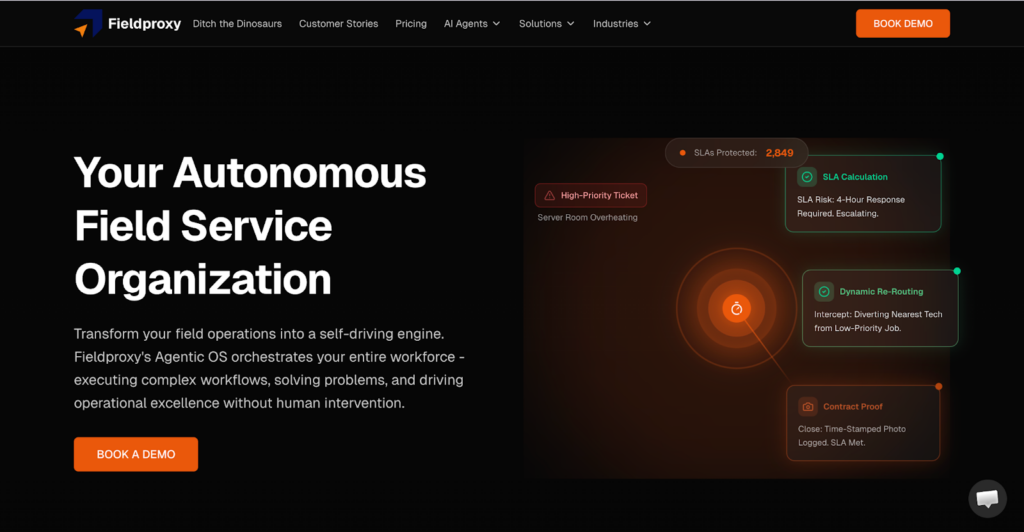
Fieldproxy is a field service management platform focused on digitizing workflows and tracking field execution for service teams. It is designed to replace manual processes with structured task flows, making day-to-day operations more visible and standardized.
Fieldproxy Is Ideal for
- Appliance repair businesses transitioning from manual or spreadsheet-based processes
- Teams operating within limited regions
- Operations focused on workflow compliance and task tracking
Key Capabilities of Fieldproxy
- Job assignment and technician tracking
- Form-based workflows and task checklists
- Basic reporting on job completion and field activity
Where Fieldproxy Works Well
- Improves visibility into technician activity
- Helps standardize service workflows
- Useful for organizations early in their digital transformation journey
Fieldproxy’s Cons
- Limited support for multi-depot and multi-region coordination
- Does not support parts-aware scheduling or live execution re-optimization
Pricing
Fieldproxy follows a subscription-based pricing model, typically positioned for small to mid-size service teams.
6. Jobber
Jobber is a service management and scheduling platform designed for small service businesses that need a simple way to organize jobs, dispatch technicians, and manage customer communication. It emphasizes usability and day-to-day scheduling efficiency over complex execution coordination.
Jobber Is Ideal for
- Small, single-region appliance repair businesses
- Teams with a limited number of technicians
- Operations prioritizing simplicity and ease of adoption
Key Capabilities of Jobber
- Job scheduling and technician assignment
- Customer notifications and appointment reminders
- Invoicing, payments, and basic reporting
Where Jobber Works Well
- Easy to set up and use with minimal training
- Suitable for straightforward service routes
- Helps small teams manage daily schedules efficiently
Jobber’s Cons
- Not designed for multi-depot or multi-region operations
- Does not support parts-aware scheduling or live execution re-optimization
Pricing
Jobber follows a subscription-based pricing model with tiered plans, typically suited for small appliance repair teams.
7. FieldEdge
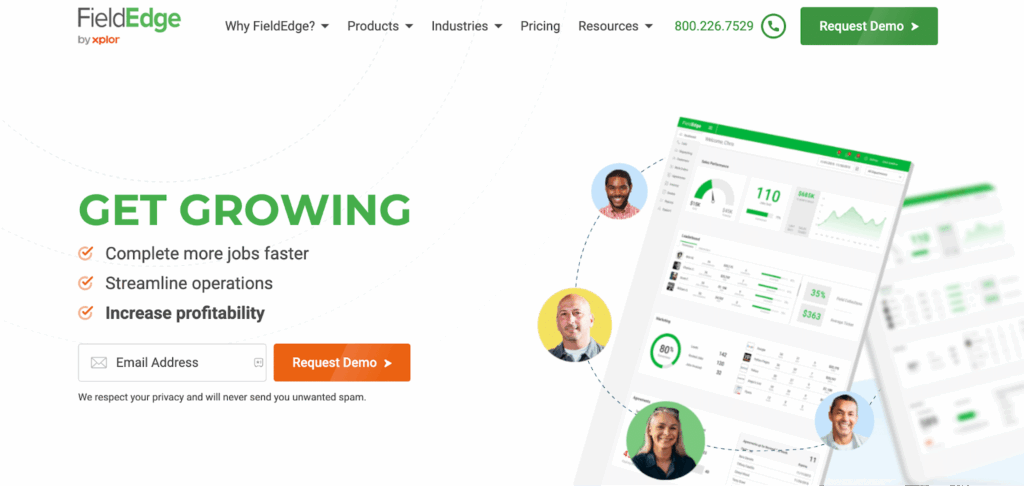
FieldEdge is a service management platform designed to support scheduling, dispatch, and back-office integration for service businesses. It places strong emphasis on connecting field operations with accounting and customer records, making it suitable for organizations that need tighter operational and financial alignment.
FieldEdge Is Ideal for
- Mid-size appliance repair businesses
- Teams operating across multiple territories within a region
- Operations that require scheduling tied closely to accounting systems
Key Capabilities of FieldEdge
- Job scheduling and technician dispatch
- Inventory tracking and service history management
- Reporting across service and financial operations
Where FieldEdge Works Well
- Strong integration with accounting and ERP systems
- Suitable for teams with structured service processes
- Provides operational visibility alongside financial data
FieldEdge’s Cons
- Limited support for live execution re-optimization
- Multi-depot and parts-aware coordination can require manual effort
Pricing
FieldEdge follows a custom pricing model based on company size and feature requirements, typically positioned for mid-market service organizations.
8. mHelpDesk
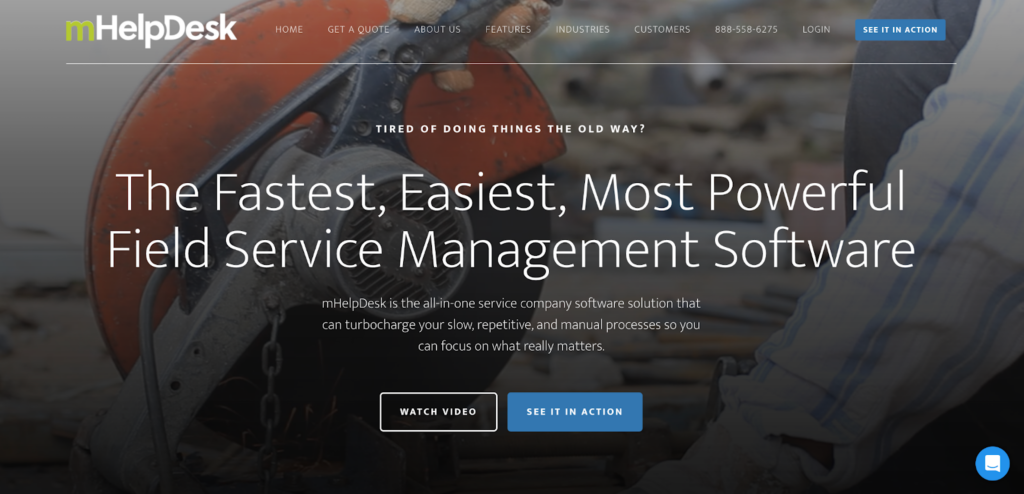
mHelpDesk is a field service automation platform designed to help service businesses manage work orders, scheduling, and customer communication. It focuses on organizing service requests and tracking job completion rather than coordinating complex execution across distributed operations.
mHelpDesk Is Ideal for
- Small to mid-size appliance repair businesses
- Teams operating within a single city or limited region
- Operations looking to move from manual tracking to digital work orders
Key Capabilities of mHelpDesk
- Work order creation and job scheduling
- Technician assignment and status tracking
- Customer portals and basic reporting
Where mHelpDesk Works Well
- Simple setup for managing service requests
- Helps digitize basic scheduling and work order workflows
- Suitable for teams with straightforward operational needs
mHelpDesk’s Cons
- Not designed for multi-depot or multi-region coordination
- Does not support parts-aware scheduling or live execution re-optimization
Pricing
mHelpDesk follows a subscription-based pricing model, generally positioned for small and growing service teams.
9. ServiceM8
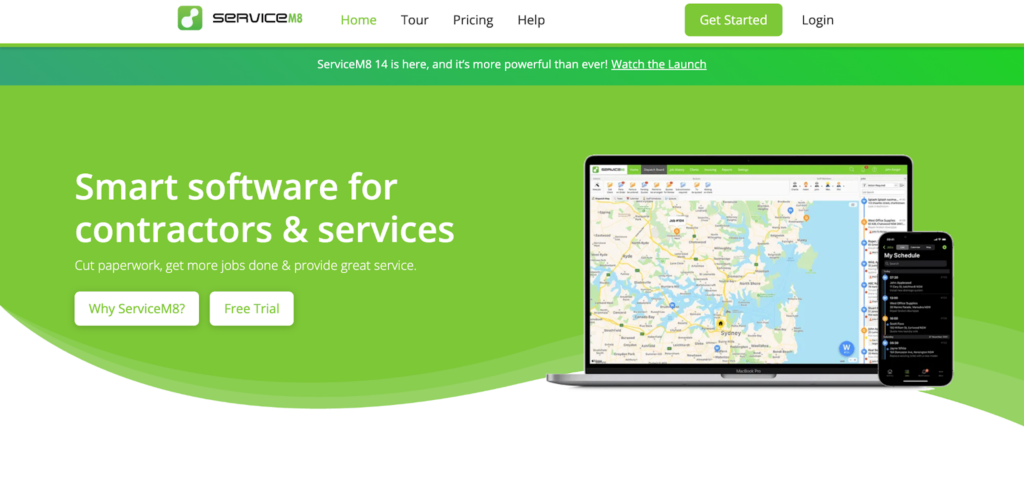
ServiceM8 is a mobile-first field service management platform built for technicians and small service teams that operate primarily from smartphones or tablets. It focuses on simplifying job scheduling, on-site task management, and customer communication for day-to-day service operations.
ServiceM8 Is Ideal for
- Small appliance repair businesses and independent technicians
- Teams operating within a single city or limited service area
- Mobile-first operations with straightforward service workflows
Key Capabilities of ServiceM8
- Mobile-based job scheduling and dispatch
- On-site job checklists, photos, and documentation
- Customer notifications, quotes, and invoicing
Where ServiceM8 Works Well
- Easy adoption for technicians working primarily on mobile devices
- Simple workflows for managing on-site service tasks
- Useful for teams with minimal routing and coordination needs
ServiceM8’s Cons
- Limited support for multi-depot or multi-region operations
- Does not support parts-aware scheduling or live execution re-optimization
Pricing
ServiceM8 follows a subscription-based pricing model with tiered plans, typically suited for small, mobile service teams.
10. Synchroteam

Synchroteam is a field service management and scheduling platform designed to help service teams plan jobs, assign technicians, and track field activity. It focuses on improving visibility into technician schedules and job status for organizations managing recurring or location-based service work.
Synchroteam Is Ideal for
- Appliance repair businesses operating across a few regions
- Teams managing recurring service visits and technician schedules
- Operations seeking basic visibility into field execution
Key Capabilities of Synchroteam
- Job scheduling and technician assignment
- Field activity tracking and status updates
- Reporting on job progress and technician performance
Where Synchroteam Works Well
- Supports structured scheduling across multiple locations
- Provides visibility into technician execution
- Suitable for teams with predictable service patterns
Synchroteam’s Cons
- Limited support for parts-aware scheduling and depot-level coordination
- Live execution re-optimization capabilities are basic
Pricing
Synchroteam follows a subscription-based pricing model, generally positioned for small to mid-size service organizations.
Benefits of Using the Right Appliance Repair Scheduling Software
The strongest operational gains usually come from reducing coordination failure, not from adding more calendar views. A good-fit platform can help repair organisations:
Increase first-time fix rate
When technician skills, appliance type, service history, and part availability are considered before dispatch, fewer visits fail for avoidable reasons.
Reduce repeat visits
Parts-aware scheduling, better diagnostics data, and tighter dispatch logic reduce the number of return trips caused by preventable mismatches.
Improve on-time arrival and SLA adherence
Travel-aware assignment and live re-optimisation help protect customer promises when traffic, delays, or urgent requests disrupt the original plan.
Raise technician utilisation
A well-built dispatch model reduces deadhead travel, balances workloads across territories, and helps technicians complete more productive work per day.
Lower cost-to-serve
Better route density, fewer failed visits, and reduced manual intervention all contribute to a lower cost per completed job.
Strengthen customer experience
Appointment reminders, ETA communication, and more reliable arrival windows improve the customer’s experience without requiring constant call-centre follow-up.
Improve operational control
Shared visibility across depots, teams, and regions helps managers identify where service reliability is slipping before the problem shows up in customer escalations or end-of-day reporting.
Why Execution-First Platforms Outperform Traditional Scheduling Tools
As appliance repair operations grow across regions, daily execution involves continuously aligning technicians, spare parts, depots, routes, and service commitments. Schedules provide a starting plan, but maintaining service reliability requires systems that can adapt as conditions evolve throughout the day.
Execution-first platforms are designed to support this ongoing coordination by bringing together:
- Technician availability and skill requirements
- Parts readiness and depot constraints
- Route capacity and territory coverage
- Active service-level commitments
By updating plans in real time as jobs progress, these platforms help operations teams respond to delays, urgent requests, and capacity changes without manual intervention. This enables appliance repair organizations to maintain consistent service outcomes, improve first-time job completion, and operate confidently at scale.
Implementation and Rollout Guidance
Even strong software will underperform if the operating model is not prepared. Before launch, appliance repair teams should plan for the following:
Data readiness
Validate the core data needed for effective scheduling and dispatch:
- Technician skills, certifications, and appliance-type coverage
- Service territories and depot relationships
- Part numbers, stock locations, and van inventory logic
- Standard job durations and exception rules
- Customer addresses and service windows
- Existing SLA or warranty rules
Pilot-region approach
Start with one region, depot, or contractor group where the workflow is representative but manageable. This makes it easier to refine dispatch rules, mobile adoption, and escalation processes before expanding.
Integration dependencies
Map the systems that must exchange data with the scheduling layer:
- ERP
- CRM or customer service platform
- FSM or work-order system
- WMS or inventory system
- Parts catalogue and depot systems
- Workforce or HR systems
- Identity / SSO providers
Dispatcher and technician adoption
Training should cover not only the interface, but also exception-handling rules, override authority, proof-of-service steps, and what to do when parts or time windows change during the day.
Governance and ownership
Assign clear owners for data quality, dispatch policy, exception design, integration support, and KPI reporting. Enterprise rollouts fail when no team owns the operating model after go-live.
Peak-season planning
If appliance repair demand spikes seasonally, test how the system will behave with contractor capacity, urgent jobs, and overloaded service windows before the busy period starts.
Questions to Ask Vendors During a Demo
Use these questions to separate basic scheduling tools from platforms that can handle real appliance repair complexity:
- Can the system assign jobs by technician skill, appliance type, certification, and warranty eligibility?
- Can a job be blocked from scheduling if the required part is unavailable at the relevant depot or van?
- What happens when a technician is delayed and the next two appointments are at risk?
- Can routes re-optimise during the day, or must a dispatcher manually rebuild the plan?
- How are urgent same-day repairs inserted without breaking existing SLA commitments?
- Can dispatchers override recommendations, and are those overrides auditable?
- How does the system support multiple depots, territories, or partner technician networks?
- Does the platform integrate with existing FSM, ERP, CRM, WMS, and parts systems?
- What mobile workflows are available for technicians in the field?
- Which KPIs can be reported by region, depot, technician, contractor, or appliance category?
- What implementation data is required before launch?
- What security, uptime, audit trail, and data-governance controls are available?
- Which features are native, which require configuration, and which depend on higher plans or add-ons?
- What are the expected implementation services, support costs, and rollout timeline?
Turning Appliance Repair Scheduling Into Execution Advantage
Built for real-world logistics and now backed by Ingka Group, Locus brings long-term stability to enterprise appliance repair scheduling and dispatch operations, alongside deep execution capability. Its modular, API-first platform enables organizations to evolve workflows across technician scheduling, depot coordination, parts availability, and service analytics without rebuilding core systems, supporting continuous optimization as repair networks expand.
With six consecutive years of recognition from Gartner, adoption by 360+ brands across 30+ countries, and proven impact including $320M+ in cost savings, sustainability improvements, and large-scale execution outcomes, Locus combines operational maturity with enterprise-grade reliability.
This foundation helps appliance repair leaders standardize execution across regions and service teams while remaining adaptable to new service models, partners, and regulatory requirements.
For organizations investing in appliance repair scheduling as a strategic capability, Locus offers the execution depth and long-term platform stability required to support growth with confidence.
Schedule a demo to explore how Locus supports scalable, future-ready appliance repair scheduling and execution.
Frequently Asked Questions (FAQs)
1. What is appliance repair scheduling software used for at scale?
Appliance repair scheduling software helps enterprises plan, assign, and manage service jobs across technicians, depots, and regions. At scale, it also supports execution coordination, ensuring parts availability, route efficiency, SLA adherence, and real-time adjustments as conditions change.
2. How is enterprise appliance repair scheduling different from basic scheduling tools?
Enterprise-grade solutions support coordination across multiple depots, technician skill sets, spare parts, and service commitments. They are designed to handle live execution changes and provide operational visibility, which becomes essential as repair networks expand across regions.
3. Why is parts-aware scheduling important for appliance repair operations?
Parts-aware scheduling ensures service visits are planned only when required spare parts are available at the right depot. This improves first-time job completion, reduces repeat visits, and helps operations teams maintain service commitments while managing high job volumes.
4. How does real-time execution control improve service reliability?
Real-time execution control allows schedules, routes, and assignments to adjust as jobs progress during the day. This helps appliance repair teams respond to delays, urgent requests, or capacity changes while maintaining consistent service outcomes and operational stability.
5. What should enterprises prioritize when selecting appliance repair scheduling software?
Enterprises should prioritize execution-first capabilities such as depot-aware routing, SLA-driven prioritization, live re-optimization, and enterprise-grade visibility. These capabilities help maintain service reliability, support growth across regions, and enable data-driven operational decisions.


General
Carrier Management Platform: Dispatch, Visibility, Exception Handling, and Analytics

Sep 23, 2026
A carrier operation management platform centralizes dispatch, real-time visibility, exception handling, and carrier analytics in one place. Here's how it works and why it matters.
Read more
General
Seven Things to Know About Locus Delivery Promise Management in 2026

Sep 23, 2026
Locus Delivery Promise Management checks every leg behind a slot before checkout offers it. What it does, what the testing showed, and how it fits your stack.
Read moreInsights Worth Your Time




















10 Best Appliance Repair Scheduling Software in 2026