


General
What Is Locus Dispatch Management and How Does It Work?

Key Takeaways
- Dispatch is where last-mile cost is created — and where it can be controlled. Misroutes, inefficient route sequencing, idle capacity, missed delivery windows, and under-utilised drivers all originate in dispatch decisions and flow directly into cost-to-serve.
- Locus dispatch management operates across three integrated pillars. Hub Operations, Capacity Management, and Route Planning work as one dispatch decision layer — not as disconnected route optimisation, rostering, and hub tools.
- Cost reduction comes from four operational levers. Lower cost per drop, higher first-attempt delivery rates, stronger driver and vehicle utilisation, and reduced exception handling compound into the page’s headline outcomes: $303M+ in savings across 1.22B+ deliveries at 99.5% on-time delivery performance.
- ROI is driven by operational metrics, not abstract platform value. Locus improves the economics of dispatch through better route density, automated allocation, real-time re-dispatch, SLA adherence, and capacity-aware planning. Most enterprise customers see measurable payback within 9–18 months.
- The CFO case is structural. Dispatch automation is not a short-term cost reduction exercise. It is an operating model shift that helps protect margin against fuel volatility, labour variability, demand spikes, and tightening customer SLAs.
Locus Dispatch Planning Software is the dispatch and execution layer of Locus’s Decision-Intelligent TMS. It automates hub operations, driver and vehicle allocation, route optimisation, and real-time re-dispatch so enterprise logistics teams can improve delivery throughput, SLA adherence, and cost per drop.
Locus Dispatch Planning Software is where transportation plans become physical execution: parcels are sorted to the right vehicle, drivers are assigned to the right routes, and capacity is matched to demand at the point of dispatch. It is a form of auto dispatch logistics software built for enterprise-scale last-mile and all-mile logistics networks.
For CFOs and CXOs in retail, CPG, and CEP operations, dispatch is one of the most direct levers on logistics cost. Every misloaded parcel, sub-optimal route, idle vehicle, missed delivery window, and under-utilised driver appears on the P&L as higher cost-to-serve. Locus Dispatch is designed to reduce that cost structurally. Locus deployment data shows 1.22B+ deliveries optimised, $303M+ in cumulative logistics cost savings, and 99.5% on-time delivery performance across enterprise customers.
This article explains what Locus Dispatch does, how it works across its three core pillars, where the cost-reduction mechanics come from, and why the technology investment ROI typically materialises faster than with fragmented dispatch platforms.

See how modern dispatch management cuts cost per drop
Explore how an integrated dispatch platform connects hub operations, capacity planning, and route execution to improve SLA adherence and fleet utilization.
Why dispatch management matters in 2026
Enterprise dispatch is no longer just a daily planning function. It is a cost, service, and customer-experience control layer.
Industry research reinforces the point. 41% of total last-mile delivery cost is determined by dispatch-time routing and scheduling decisions, according to Capgemini Research Institute. McKinsey reports that dynamic route optimization and automated dispatch can reduce last-mile cost per delivery by 15–25% in mature networks.
That is why the dispatch layer has become a board-level operating concern. If routing, capacity planning, hub execution, carrier allocation, and exception response are fragmented, enterprises pay for that fragmentation through higher cost per drop, missed delivery windows, under-utilised capacity, and customer support overhead.
What Locus Dispatch Planning Software actually does
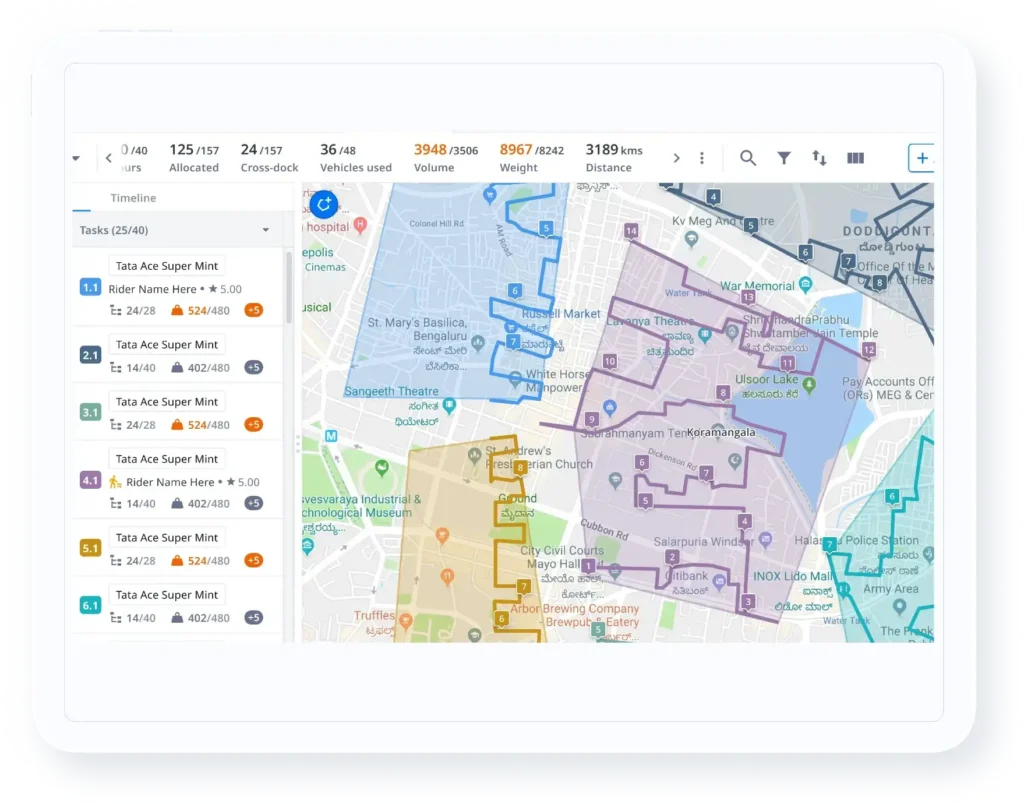
Locus Dispatch brings execution control to all-mile fulfilment by reducing manual dependency across the three processes that drive most dispatch cost: parcel sorting, route planning, and capacity management.
It helps drivers complete more deliveries per shift by reducing order-processing errors, improving route sequencing, automating assignment logic, and ensuring capacity is available where and when demand appears.
The platform is structured around three integrated pillars — Hub Operations, Capacity Management, and Route Planning — operating as a single dispatch decision system. That integration is where much of the value is created. For a deeper view of how this applies to last-mile execution, see this guide to a dispatch management platform for last-mile operations.
A route plan is only useful if the right parcel is loaded onto the right vehicle and the required capacity is available at dispatch cut-off.
| Capability area | Traditional dispatch approach | Locus dispatch management approach |
| Hub execution | Manual sorting, static manifests, higher misload risk | Automated shipment allocation, label-level route information, reduced sorting errors |
| Capacity planning | Planner-led shift adjustments and manual absence handling | Integrated roster management, holiday and sick-day handling, demand-aware capacity planning |
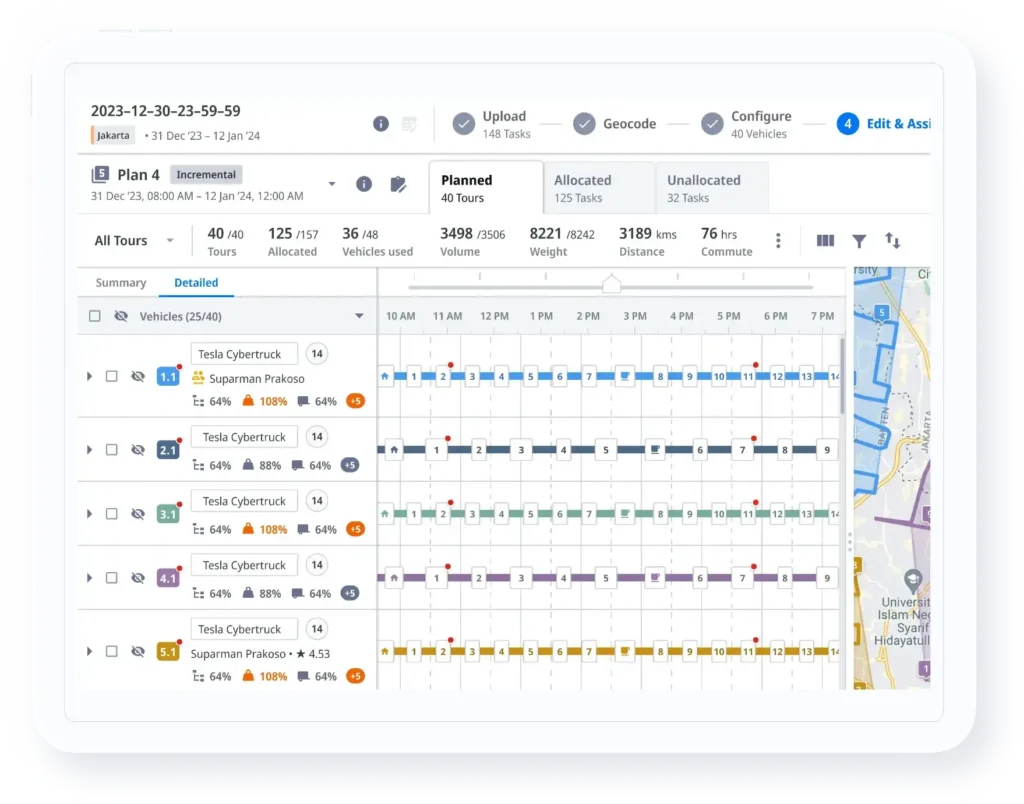
| Route planning | Static start-of-day routes with limited rework | Route optimisation using service locality, drop density, traffic patterns, and real-time re-optimisation |
| Exception handling | Manual escalation and dispatcher intervention | Real-time visibility and re-dispatch to reduce SLA breaches and rework |
| Performance economics | Cost reviewed after execution | Cost-to-serve managed at dispatch through allocation, routing, utilisation, and first-attempt delivery controls |
Locus vs traditional dispatch software
Traditional dispatch systems usually help planners create routes, assign drivers, and monitor deliveries. But many still depend on human dispatchers to make each major decision when operations change — for example, when a vehicle breaks down, traffic shifts, a driver is delayed, or a high-priority order enters the network late.
Locus dispatch management is designed as an AI-driven order-to-delivery orchestration layer. Its dispatch engine can evaluate constraints, allocate orders, optimise routes, monitor execution, and trigger re-dispatch actions when ground conditions change. According to Locus’s dispatch management software comparison, the platform’s optimisation engine can account for 250+ constraints across operational, geographic, SLA, driver, vehicle, and customer variables.
| Decision area | Traditional dispatch software | Locus dispatch management |
| Order allocation | Dispatcher assigns manually or from fixed rules | AI-assisted allocation based on order attributes, route logic, vehicle fit, and service commitments |
| Route changes | Manual re-routing after disruption | Real-time route re-optimisation based on live execution conditions |
| Fleet mix | Often planned separately by fleet type | Captive, contracted, outsourced, and carrier capacity can be orchestrated through one operating view |
| Exceptions | Dispatcher identifies and escalates | Platform supports automated exception visibility and re-dispatch workflows |
| KPI control | Reviewed after the shift or delivery cycle | Measured and acted on during dispatch and execution |
Pillar 1: Hub Operations — speed to dispatch through automation
Hub operations are where dispatch cost leakage often starts. Manual sorting errors, misloads, delayed shipment processing, and poor dock-to-route sequencing create downstream failures: missed delivery windows, reattempts, customer service contacts, and SLA penalties.
Locus Dispatch addresses hub operations through two core capabilities:
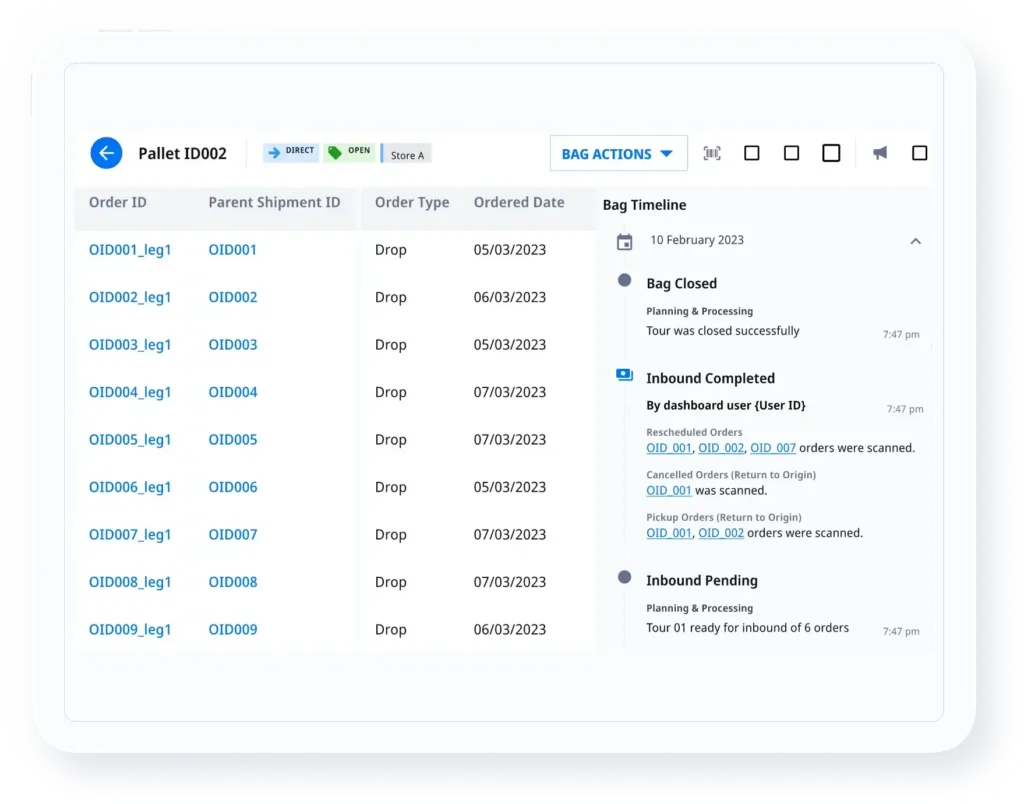
Intelligent resource allocation. The platform uses on-ground execution data and the attributes of each order — size, service zone, time window, promised SLA, special handling requirements, and vehicle suitability — to assign shipments to the best-suited driver and vehicle automatically. Combined with accurate delivery-address mapping and route printing directly on shipping labels, this reduces hub sorting errors. The operational goal is straightforward: the right parcel, on the right route, in the right vehicle, before dispatch cut-off.
Speed-to-dispatch automation. Automation across shipment processing reduces the time between order arrival at the hub and vehicle departure. For high-volume retail and CEP operations, even small reductions in processing time can improve delivery throughput per shift and reduce fixed-cost absorption per delivered order. This is why improved hub operations reduce time under the roof and strengthen downstream delivery performance.
The cost mechanic is direct: fewer misroutes mean fewer redeliveries, fewer SLA exceptions, and fewer customer service escalations. Faster hub throughput means more completed deliveries from the same labour, dock, and fleet base.
Also Read: Automated Dispatch Software: Complete 2026 Guide
Pillar 2: Capacity Management — the right capacity at the right time
Most dispatch operations lose margin in one of two ways: they over-provision and pay for idle capacity, or they under-provision and pay for missed SLAs, failed deliveries, and premium recovery capacity. Both are expensive. Both are avoidable with better dispatch planning.
Locus Dispatch matches capacity to demand through:
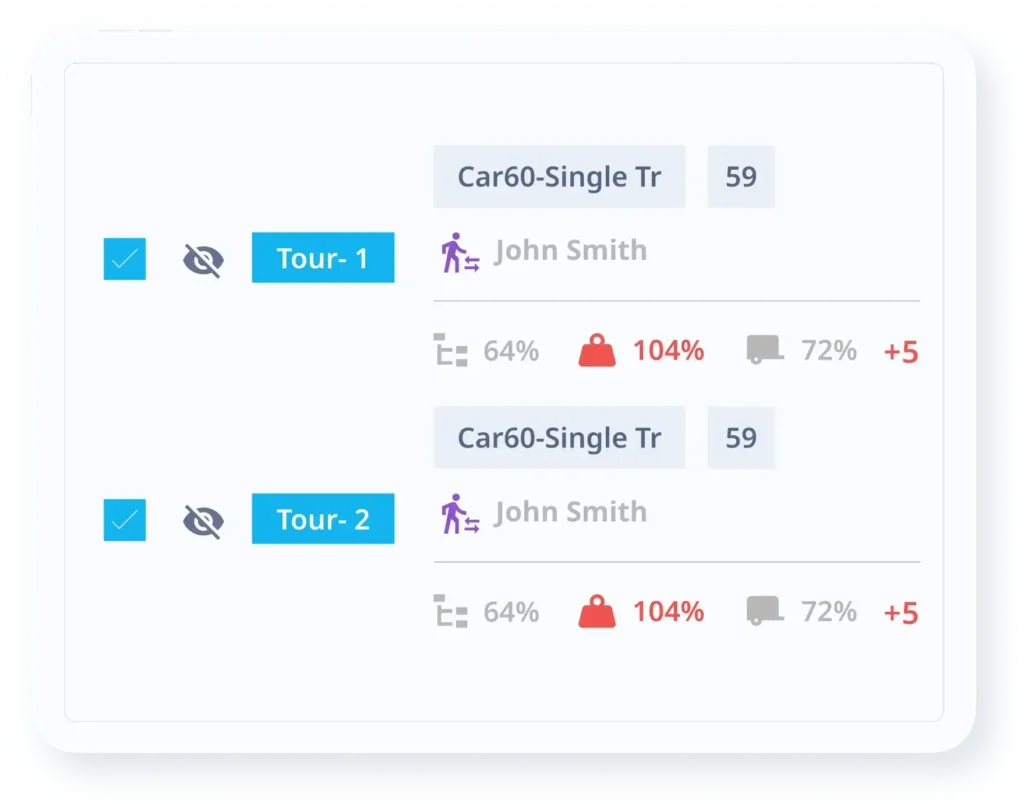
- Integrated roster management — planning driver shifts and vehicle availability in advance, then allocating capacity against what the network actually needs by hub, service zone, route type, and delivery window.
- Holiday, day-off, and sick-day handling — accounting for planned and unplanned absences in daily schedules without relying on manual spreadsheet reshuffling.
- Demand-aware capacity planning — identifying capacity gaps before they become SLA breaches or force expensive last-minute carrier allocation.
For omnichannel networks, this is closely tied to capacity planning for omnichannel retailers, where delivery slots, store fulfilment, carrier availability, and promised service windows must be aligned before dispatch.
For CFOs, this layer addresses one of dispatch’s largest hidden costs: paid capacity that was not needed and needed capacity that was not available. Locus’s point of view is that this should not be solved by adding more planner headcount. It should be designed into the dispatch architecture.
Carriers that align capacity planning with demand using integrated dispatch tools can reduce idle fleet time by 15–30%, according to Boston Consulting Group.
Pillar 3: Route Planning — maximizing first-attempt delivery rates
Route planning is one of the largest cost levers in dispatch. Distance travelled, drop density, vehicle utilisation, driver productivity, delivery window adherence, and first-attempt delivery rates all depend on routing quality.
Locus Dispatch optimises routes through proprietary intelligence built around:
- Service locality and drop density — clustering deliveries by zone to reduce route overlap and unnecessary kilometres.
- Distance and daily traffic patterns — accounting for geography as well as time-of-day operating conditions.
- Real-time re-optimization — adjusting existing route plans as ground conditions shift, including delays, late orders, failed attempts, and capacity changes.
- Best-suited resource matching — assigning the right driver and vehicle to the route based on order profile, geography, vehicle constraints, and service commitments.
For a deeper technical explanation, see how AI route optimization works across traffic patterns, delivery constraints, service zones, and real-time execution signals.
The compounding outcome is higher first-attempt delivery performance. This matters because every failed first attempt creates additional cost: re-routing, re-dispatch, customer support, redelivery labour, vehicle time, and potential refund or churn risk. Enterprises can also reduce failed deliveries with better TMS workflows by improving the connection between route planning, delivery execution, and exception management.
For enterprise networks, route optimisation is not just about minimising distance. It is about improving delivery promise reliability while controlling cost-to-serve at scale.
Automate dispatch decisions across your delivery network
Learn how auto-dispatch software reduces manual planning, improves driver allocation, and enables faster response to real-time delivery exceptions.
Key features of Locus dispatch management
Locus dispatch management combines planning, allocation, routing, execution visibility, and performance control into one dispatch operating layer.
1. Order-to-delivery orchestration
Locus supports order orchestration across the delivery lifecycle: intake, allocation, route planning, dispatch, tracking, exception management, and performance analytics. This allows enterprise teams to move from fragmented task planning to unified delivery orchestration.
2. Dynamic route optimisation
The platform optimises routes using delivery geography, service locality, drop density, driver and vehicle constraints, time windows, and changing ground conditions. It supports real-time re-optimisation when delays, failed attempts, late orders, or capacity changes occur.
3. Intelligent driver and vehicle allocation
Locus matches orders to drivers and vehicles based on service commitments, vehicle suitability, zone logic, route structure, and operational constraints. This reduces manual dispatcher dependency and improves execution consistency.
4. Capacity-aware dispatch planning
Integrated roster management, shift planning, absence handling, and demand-aware capacity planning help dispatch teams align available resources with expected demand before cut-off.
5. Multi-fleet and carrier orchestration
Locus can support operations using owned fleets, contracted fleets, outsourced fleets, and carrier partners. This matters for enterprises that need to balance cost, service levels, and capacity across multiple fulfilment models.
6. Real-time visibility and exception management
Dispatch teams can monitor execution status, identify risks, and trigger re-dispatch workflows when conditions change. Real-time exception automation can reduce last-mile exception-handling costs by 20–40%, according to Accenture.
7. Analytics and performance reporting
Locus helps logistics leaders monitor KPIs such as cost per drop, on-time delivery, first-attempt delivery performance, fleet utilisation, route efficiency, driver productivity, and exception frequency.
Where the cost reduction actually comes from
For CFOs evaluating dispatch software, the business case should be tied to operating metrics. Locus Dispatch reduces cost across four mechanics:
- Lower cost per drop through optimised routing, stronger drop density, reduced empty miles, and better route sequencing.
- Higher first-attempt delivery rates by improving delivery window adherence and reducing failed attempts, redelivery costs, and customer service overhead.
- Higher driver and vehicle utilisation through capacity-aware planning, integrated rostering, and better allocation of available fleet resources.
- Reduced exception and rework cost through hub automation, real-time visibility, and automated re-dispatch when conditions change. Teams can also manage delivery exceptions more effectively by connecting dispatch visibility with real-time corrective action.
The aggregate impact: $303M+ in cumulative logistics cost savings, across 1.22B+ optimised deliveries, with 99.5% on-time delivery performance — the cumulative outcome of operational decisions automated across enterprise dispatch networks.
Gartner has reported that enterprise shippers consolidating hub operations, routing, and capacity planning into a single dispatch platform can cut failed first-attempt deliveries by up to 30%. Deloitte also reports that improved route density and dispatch automation can lift driver and vehicle utilisation by 10–20% without adding headcount.
Benefits of Locus dispatch management
For CFOs
Locus helps shift dispatch from a reactive operating cost to a controllable margin lever. The value comes from lower cost per drop, better capacity utilisation, fewer failed attempts, reduced rework, and more predictable SLA performance.
For operations leaders
Operations teams gain a single view of hub readiness, fleet availability, dispatch allocation, route performance, and exceptions. That reduces manual coordination across spreadsheets, point tools, phone calls, and disconnected route planning systems.
For dispatchers
Dispatchers can move from manual route building and constant intervention to exception-led control. The platform automates allocation and re-routing logic while still giving teams visibility into execution risk.
For carrier and fleet managers
Locus helps balance owned, contracted, outsourced, and carrier capacity through one operating layer. This improves carrier selection, fleet utilisation, and delivery performance monitoring.
For customer experience teams
Better dispatch planning improves delivery window adherence, ETA reliability, first-attempt delivery performance, and exception communication — all of which reduce customer support load and improve delivery confidence.
IDC reports that retailers using AI-driven dispatch and capacity-aware routing see 5–10 percentage point higher on-time delivery performance versus peers.
Why tech investment ROI is faster than typical dispatch platforms
Dispatch platform deployments often disappoint because value is delayed by integration debt, incomplete data, disconnected workflows, and manual workarounds. Locus Dispatch is engineered to reduce that risk.
Integrated dispatch layer, not stitched modules. Hub operations, capacity management, and routing operate on a single platform with a single operating logic. That reduces reconciliation overhead between systems and helps dispatch teams act from one version of operational truth.
Native to the broader Decision-Intelligent TMS. Dispatch decisions feed into and benefit from predictive ETAs, exception management, multi-carrier orchestration, and the platform’s learning architecture. The result is a closed operational loop: plan, dispatch, execute, monitor, re-dispatch, and learn.
Production scale reduces deployment risk. With 1.22B+ deliveries optimised, the architecture and edge-case handling have been hardened across large-scale enterprise operations. Buyers are not funding a platform’s learning curve; they are deploying software already operating across complex last-mile networks.
Also Read: 10 Best Vehicle Dispatch Software Platforms for Enterprise Fleets in 2026
Fast payback through unit-economic mechanics. ROI flows through cost per drop, first-attempt delivery rate, SLA adherence, fleet utilisation, and exception-cost reduction — metrics that begin moving once dispatch decisions are automated and measured consistently. Most enterprise customers see measurable payback within 9–18 months, with structural margin improvement compounding from there.
Forrester reports that digitally mature CEP and retail logistics organisations typically achieve payback on dispatch and routing platforms within 12–18 months.
How enterprises use Locus for dispatch management
A typical Locus dispatch management workflow includes five operating steps:
- Connect order and operational systems. Locus can sit across order, transportation, warehouse, carrier, and delivery execution systems so dispatch decisions are made from current operational data.
- Configure business rules and constraints. Teams define service windows, delivery zones, vehicle constraints, capacity rules, SLA priorities, driver availability, and fleet mix.
- Plan routes and allocate resources. The platform assigns orders to the best-suited drivers, vehicles, routes, and carriers based on operational logic and delivery commitments.
- Dispatch and monitor execution. Dispatch teams track route progress, SLA risk, exceptions, driver status, and delivery completion from a central operating layer.
- Re-dispatch and improve. When conditions change, the system supports re-optimisation and exception workflows. Performance data then feeds back into future planning.
This closed-loop approach is what makes Locus dispatch management different from static route planning. It connects planning, dispatch, execution, exception response, and learning.
What this means for retail, CPG, and CEP CFOs
Retail. Dispatch performance directly shapes the economics of same-day, next-day, and slot-based delivery. If dispatch cannot align capacity, route density, and promised delivery windows, customer-facing delivery promises become margin leakage. Locus Dispatch’s hub automation and route optimisation help retailers scale slot-based delivery while protecting cost-to-serve.
CPG. OTIF compliance with retail customers depends on dispatch accuracy. Orders must move through hub processing, vehicle allocation, route sequencing, and delivery execution without manual leakage. Locus Dispatch’s resource allocation and capacity management help protect retail-customer SLAs and trade margins at the same time.
CEP operations. Cost per drop is the operating line CEP providers manage every day. Locus Dispatch combines hub, capacity, and routing intelligence to reduce that cost structurally — helping protect margin against fuel volatility, capacity shocks, labour variability, and tighter SLA expectations.
Why choose Locus dispatch management?
Choose Locus dispatch management when dispatch complexity has outgrown manual planning, static routing, or disconnected logistics tools.
Locus is designed for enterprises that need:
- A unified order-to-delivery dispatch layer across planning, execution, tracking, and analytics.
- AI-driven route optimisation and re-dispatch for real-world disruptions.
- Hub, routing, and capacity planning integration instead of stitched point solutions.
- Multi-fleet orchestration across owned, contracted, outsourced, and carrier capacity.
- Operational KPI improvement across cost per drop, on-time delivery, first-attempt delivery, SLA adherence, and utilisation.
- Enterprise-scale deployment confidence, supported by 1.22B+ optimised deliveries, $303M+ in savings, and 99.5% on-time delivery performance.
Locus Dispatch Planning Software automates hub operations, capacity management, and route planning as a single integrated system. It helps compress cost per drop, improve first-attempt delivery rates, increase driver and vehicle utilisation, and reduce exception cost. Locus deployment data shows 1.22B+ deliveries optimised, $303M+ in cumulative cost savings, and 99.5% on-time delivery performance.
For CFOs and CXOs evaluating dispatch platforms in 2026, the question is no longer whether dispatch automation can deliver ROI. The question is whether the platform is engineered to deliver it quickly, durably, and at the scale your network operates.
Improve first-attempt delivery rates with smarter route planning
See how automated route planning increases route density, reduces empty miles, and helps enterprise teams scale dispatch with better unit economics.
Frequently Asked Questions (FAQs)
1. What is Locus Dispatch Planning Software?
Locus Dispatch Planning Software is the dispatch and execution layer of Locus’s Decision-Intelligent TMS. It automates hub operations, driver and vehicle allocation, route optimisation, and real-time re-dispatch to help enterprise logistics teams improve delivery throughput while reducing cost per drop.
It operates across three integrated pillars — Hub Operations, Capacity Management, and Route Planning — as a single dispatch decision system. Locus has optimised 1.22B+ deliveries globally, delivered $303M+ in cumulative cost savings, and supports 99.5% on-time delivery performance for enterprise retail, CPG, and CEP customers.
2. What is the Locus Dispatch Management Platform?
Locus Dispatch Management Platform is an AI-driven order-to-delivery dispatch solution that unifies order orchestration, transportation planning and optimization, carrier and rate management, execution control, tracking, settlement, and analytics on a single platform.
It is designed for last-mile and all-mile logistics operations, acting as a single source of truth across the fulfilment chain.
3. How does Locus Dispatch Planning Software reduce delivery costs?
Locus Dispatch reduces delivery costs through four mechanics: lower cost per drop from optimised routing and higher drop density; higher first-attempt delivery rates that reduce redelivery and customer service overhead; better driver and vehicle utilisation through capacity-aware planning and integrated rostering; and lower exception and rework cost through hub automation and real-time re-dispatch.
Across enterprise deployments, the aggregate impact is $303M+ in cumulative logistics cost savings.
4. How does Locus’s agentic dispatch engine differ from traditional dispatch software?
Traditional dispatch software can generate routes and assign drivers, but it often requires human dispatchers to initiate changes when disruptions occur. For example, if a vehicle breaks down or traffic conditions change, a dispatcher may need to manually re-route deliveries, update ETAs, and coordinate customer notifications.
Locus uses an AI-driven dispatch engine that can evaluate operational constraints, continuously recalculate routes as conditions change, and support automated exception workflows. Locus’s dispatch optimisation logic can account for 250+ constraints across routing, capacity, SLA, geography, driver, vehicle, and customer variables.
5. Which logistics operations can Locus dispatch management handle?
Locus supports all-mile logistics, including last-mile delivery and broader transportation execution. It is built for intelligent task assignment, dynamic routing, SLA compliance, capacity planning, and real-time visibility.
The platform can help orchestrate captive, contracted, outsourced, and carrier fleets through a unified dispatch operating layer, making it relevant for retail, e-commerce, CPG, CEP, and other high-volume delivery networks.
6. What industries typically use Locus Dispatch Management?
Locus dispatch solutions are used by enterprises managing complex retail, e-commerce, CPG, CEP, and last-mile logistics operations. These industries typically face high order volumes, tight delivery SLAs, volatile demand, and complex fleet or carrier networks.
Locus helps these organisations improve capacity utilisation, dispatch accuracy, delivery visibility, and customer experience while controlling cost-to-serve.
7. What are the key features of Locus dispatch management software?
Key features include dynamic routing and dispatch planning, intelligent driver and vehicle allocation, multi-fleet and carrier orchestration, capacity-aware planning, SLA monitoring, real-time tracking, analytics, and exception management.
The platform also supports hub operations workflows such as automated shipment allocation and route information on shipping labels, helping reduce misloads and improve speed to dispatch.
8. How does Locus Dispatch Planning Software handle real-time route optimization?
Locus Dispatch optimises routes in real time using intelligence built around service locality, drop density, distance, daily traffic patterns, driver and vehicle constraints, and live ground conditions. The platform analyses and re-optimises route plans to account for delays, exceptions, capacity changes, and shifting delivery conditions.
This helps cluster deliveries efficiently by zone, reduce route redundancy, match the best-suited driver and vehicle to each delivery area, and improve first-attempt delivery rates. The outcome is lower cost per delivered order and stronger SLA adherence.
9. How does Locus improve dispatch performance and logistics KPIs?
Locus improves dispatch performance by using optimisation logic and operational data to improve order allocation, route sequencing, capacity utilisation, and exception response. The platform helps logistics teams monitor and improve KPIs such as cost per drop, on-time delivery, first-attempt delivery performance, route efficiency, fleet utilisation, driver productivity, and SLA adherence.
The business impact is strongest when hub operations, routing, capacity planning, and execution visibility are managed as one connected dispatch system rather than separate tools.
10. What ROI does Locus Dispatch Planning Software deliver and how fast?
Locus Dispatch Planning Software typically delivers measurable payback within 9–18 months for enterprise customers, with structural margin improvement compounding from there.
ROI comes from unit-economic improvements: lower cost per drop, higher first-attempt delivery performance, better driver and vehicle utilisation, and reduced exception cost. The platform’s production scale — 1.22B+ deliveries optimised, 99.5% on-time delivery performance, and $303M+ in cumulative savings — reduces deployment risk because the architecture has already been hardened across enterprise dispatch operations.


General
Locus TMS Comparison: How Locus Compares to Enterprise TMS Platforms in 2026

Apr 30, 2026
A 9-dimension architectural comparison of enterprise TMS platforms — contrasting legacy execution-era TMS with decision-intelligent, agentic, human-governed TMS, and how Locus is engineered against each dimension.
Read more
General
10 Best Supply Chain Logistics Software Platforms for Enterprises in 2026

May 1, 2026
Compare 10 supply chain logistics software platforms across planning, execution, and AI orchestration. Evaluate enterprise fit by vertical, implementation, and ROI.
Read moreInsights Worth Your Time


















What Is Locus Dispatch Management and How Does It Work?