


News
Vietnam Economic Growth: 8.02% GDP Surge Positions Southeast Asia’s Fastest-Growing Economy
Key Takeaways
- For logistics leaders in Vietnam’s manufacturing and retail sectors: Vietnam’s GDP grew 8.02% in 2025, with GDP reaching US$514 billion — up US$38 billion from 2024.
- Manufacturing hit a six-year high: The manufacturing sector achieved 9.97% growth in 2025, the highest rate since 2019, driving massive demand for efficient logistics operations.
- Trade volumes demand supply chain scale: Total trade exceeded US$930 billion, with a 170% trade-to-GDP ratio making Vietnam one of the world’s most trade-open economies.
- FDI diversification accelerates: 4,054 new FDI projects were licensed in 2025, though average project size declined 12.2% — creating fragmented logistics demand across more locations.
- Infrastructure remains the bottleneck: High logistics costs from underdeveloped transport networks continue to erode profitability, making AI-powered logistics automation essential for supply chain directors and enterprise fleet operators competing in this market.
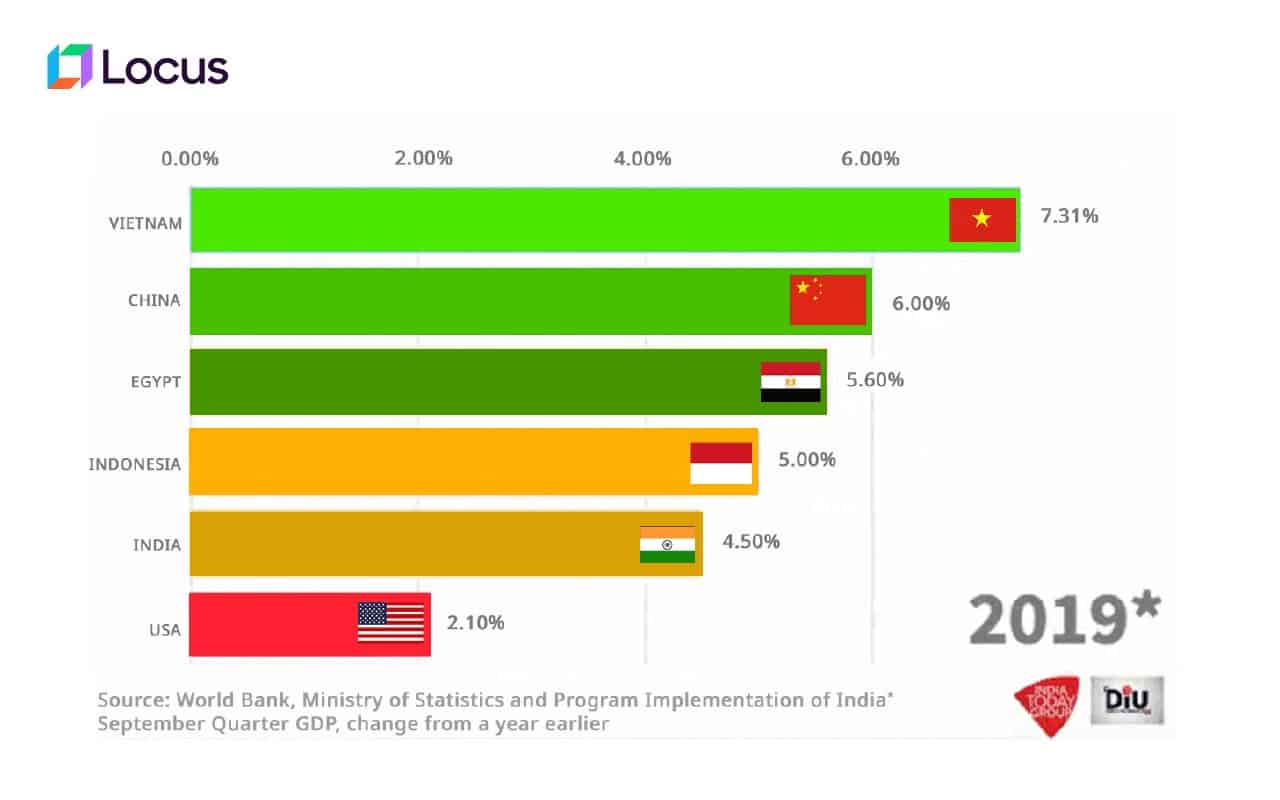
Vietnam’s economic growth story has accelerated far beyond the 7.31% rate that first turned global heads in 2019. In 2025, Vietnam’s GDP surged 8.02%, reaching approximately US$514 billion — cementing the country’s position as Southeast Asia’s fastest-growing economy and a magnet for global investment. For logistics leaders, supply chain directors, and enterprise fleet operators in manufacturing, retail, and e-commerce, this trajectory creates both unprecedented opportunity and urgent operational challenges.
Vietnam’s quarterly GDP growth accelerated throughout 2025 — from 7.05% in Q1 to 8.46% in Q4 — signaling structural momentum rather than a one-off spike. With total trade exceeding US$930 billion (an 18.2% year-on-year increase) and FDI inflows reaching US$27.62 billion, Vietnam’s economy is no longer an emerging story — it’s a dominant force reshaping supply chains across Asia. Yet high logistics costs and underdeveloped transport infrastructure remain the critical bottleneck standing between growth potential and sustained profitability.
Vietnam’s Growth Drivers: From ??i M?i to Global Manufacturing Powerhouse
Vietnam’s economic transformation didn’t happen overnight. The ??i M?i reforms launched in 1986 systematically dismantled a centrally planned economy and replaced it with an open, market-based system. Nearly four decades later, the results speak for themselves: GDP per capita reached US$5,026 in 2025 — up US$326 from 2024 — transforming what was once one of the world’s poorest nations into a lower-middle-income powerhouse with sights set on high-income status by 2045.
Foreign Direct Investment as a Catalyst
FDI has been the backbone of Vietnam’s industrial rise. In 2019, the Republic of Korea, Japan, and Singapore led investment flows, with 68% of total FDI capital directed to manufacturing and 10.4% to real estate. By 2025, the picture had evolved dramatically: FDI inflows reached US$27.62 billion (a 9.0% year-on-year increase), with 4,054 new projects licensed carrying US$17.3 billion in registered capital.
Global giants like Samsung, Intel, and Apple have established significant manufacturing footprints in Vietnam, leveraging the country’s competitive labor costs and strategic geographic position to reduce dependency on Chinese manufacturing. This shift has created vast, complex supply chain networks that demand sophisticated logistics management.
Free Trade Agreements Expand Market Access
Vietnam’s aggressive pursuit of free trade agreements has been another accelerant. The Comprehensive and Progressive Agreement for Trans-Pacific Partnership (CPTPP) with Canada and the EU-Vietnam FTA with European countries have significantly expanded market access. With a trade-to-GDP ratio of approximately 170%, Vietnam is one of the world’s most trade-open economies — a strength that also introduces vulnerability to global fluctuations.
The Demographic Dividend
A young, well-educated workforce with high labor participation rates — especially among women — continues to fuel Vietnam’s industrialization. This demographic advantage powers not just factory floors but the rapidly expanding services sector, which in 2025 grew 8.62% and accounted for 51.08% of total value-added growth.
Sector-by-Sector Breakdown: Where Vietnam’s Growth Is Concentrated
Understanding where growth is concentrated helps logistics operators allocate resources and infrastructure strategically. Here’s how Vietnam’s key sectors performed in 2025:
| Sector | Growth Rate (2025) | Contribution to Total GDP Growth |
|---|---|---|
| Services | 8.62% | 51.08% |
| Industry & Construction | 8.95% | 43.62% |
| Manufacturing (sub-sector) | 9.97% | Highest growth contribution since 2019 |
| Agriculture, Forestry & Fishing | 3.78% | 5.30% |
Quarterly GDP Growth Acceleration (2025):
| Quarter | GDP Growth |
|---|---|
| Q1 | 7.05% |
| Q2 | 8.16% |
| Q3 | 8.25% |
| Q4 | 8.46% |
This accelerating quarterly trajectory underscores that Vietnam’s growth is building momentum — not plateauing. For supply chain operators, this translates directly to increasing freight volumes, more complex distribution requirements, and intensifying last-mile delivery pressure.
Trade Performance: Record Volumes Create Logistics Demand
Vietnam’s trade engine is running at full capacity. Total trade exceeded US$930 billion in 2025, an 18.2% year-on-year surge. Exports of goods and services grew 19.34% in Q4 2025 alone. The country recorded a US$20 billion trade surplus — reinforcing its role as a net exporter and global manufacturing hub.
For logistics operators, these numbers aren’t abstract. Every billion dollars in trade requires physical movement — container handling, warehousing, trucking, last-mile delivery. When trade volume jumps 18.2% in a single year, supply chains that were already strained buckle under the pressure without intelligent automation.
Tourism, too, continues to play a significant role. Vietnam attracted record international visitor numbers in 2025, making it one of the most favorable tourist destinations in Southeast Asia and adding substantial demand to hospitality logistics, on-demand food logistics, and urban delivery networks.
The Logistics Challenge: Why Infrastructure Gaps Threaten Profitability
Despite Vietnam’s headline-grabbing growth, a structural problem persists: high logistics costs driven by underdeveloped transport infrastructure and inadequate logistics facilities. This was true when Vietnam first surpassed India and China in growth rate back in 2019, and it remains the single largest drag on competitiveness in 2026.
Higher logistics costs erode profitability across import, export, transportation, and delivery services. For enterprises managing hundreds or thousands of daily deliveries — from electronics manufacturers fulfilling B2B orders to retail chains running last-mile operations — the cost differential between optimized and unoptimized logistics operations can determine market viability.
The challenge is compounded by the fragmentation trend in FDI. With registered capital per project declining 12.2% in 2025 even as the number of projects grew, logistics networks now serve more locations with smaller, more frequent shipments. Traditional route planning and manual vehicle allocation simply cannot keep pace.
Key Infrastructure Pain Points
- Road network limitations: Insufficient highway connectivity between manufacturing clusters and port cities increases transit times and fuel costs.
- Warehousing gaps: Modern, temperature-controlled, and strategically located warehousing facilities remain scarce relative to demand — particularly outside Ho Chi Minh City and Hanoi.
- Last-mile complexity: Rapid urbanization means dense, congested delivery zones where traditional routing fails. Vietnam needs what the hub and spoke distribution model offers: centralized sorting with decentralized execution.
- Port congestion: With US$930 billion in trade flowing through Vietnamese ports, throughput bottlenecks create cascading delays across the entire supply chain.
AI-Powered Logistics: The Solution for Vietnam’s Growth-Stage Economy
AI-enabled solutions are transforming supply chains across Southeast Asia — and Vietnam’s 8.02% growth rate makes adoption not optional but essential. The gap between infrastructure reality and economic ambition can only be bridged through intelligent logistics automation.
Here’s what’s changing the game:
- Geocoding algorithms convert imprecise Vietnamese addresses into precise delivery coordinates, reducing failed deliveries and wasted fuel.
- AI-based forward and reverse logistics optimize both outbound delivery and returns processing — critical for e-commerce and retail operations scaling rapidly with Vietnam’s consumer spending growth.
- Automated vehicle allocation matches fleet capacity to delivery demand in real time, eliminating the inefficiency of manual dispatch that improves fleet utilization by double-digit percentages.
- Shipment sorting and batching uses machine learning to cluster orders into optimal delivery sequences.
- Route optimization software factors in real-world constraints — traffic patterns, delivery windows, vehicle capacity, driver hours — to minimize cost per delivery.
For enterprises operating in Vietnam’s manufacturing, retail, and e-commerce sectors, choosing the right route planning software is the difference between absorbing logistics cost inflation and converting it into competitive advantage.
Benefits of AI-Driven Logistics in Vietnam’s High-Growth Economy
1. Dramatic Cost Reduction
With logistics costs consuming a disproportionate share of Vietnamese business revenue, AI-powered route optimization and automated dispatch can reduce transportation costs by up to 20%. When your trade volume grows 18.2% year-on-year, holding per-unit logistics costs flat is a strategic imperative.
2. Scalability Without Linear Headcount Growth
As Vietnam licenses thousands of new FDI projects annually, logistics operations must scale without proportionally scaling manual planning teams. Automated vehicle allocation and intelligent order batching enable this.
3. Improved Delivery Reliability
In a market where manufacturing output grew 9.97% in a single year, delivery reliability directly impacts production schedules, customer satisfaction, and contract retention. AI planning eliminates the variability of human-dependent logistics.
4. Sustainability and Compliance
Vietnam’s growth trajectory must contend with environmental commitments. Green logistics solutions — including optimized routing that reduces fuel consumption and carbon emissions — help enterprises meet both regulatory requirements and ESG expectations. Companies considering the EV route for last-mile logistics can further accelerate this transition.
5. Data-Driven Decision Making
AI logistics platforms generate actionable intelligence — delivery performance metrics, cost-per-stop trends, fleet utilization rates — that enable supply chain directors to make investment and operational decisions grounded in data rather than intuition.
Why Locus for Vietnam’s Logistics Challenge
At Locus, we believe logistics should empower, not encumber. Our AI-driven logistics automation solutions let enterprise teams take control, reduce costs, and scale with confidence — every mile, every time.
Why Locus? Unlike generic route planners, Locus leverages 250+ real-world constraints, proprietary geocoding algorithms, and deep industry expertise across Southeast Asia. Trusted by global leaders like Nestlé and Unilever, Locus delivers measurable results:
- 20% lower logistics costs through intelligent route optimization
- 66% faster planning cycles with automated dispatch and allocation
- Seamless scalability for enterprise operations handling thousands of daily deliveries
- Expert consulting tailored to Vietnam’s unique infrastructure landscape and growth dynamics
For supply chain directors and enterprise fleet operators navigating Vietnam’s explosive growth, Locus provides not just technology but a strategic logistics partner with proven results in the region.
Vietnam Economic Growth Outlook: What 2026 Holds
Looking ahead, Vietnam’s economic growth in 2026 is forecast to range between 6.3% and 7.2%, representing a moderation from 2025’s exceptional 8.02% performance. This deceleration reflects global uncertainties, tighter financial conditions, and the reality that assembly-oriented manufacturing — while generating impressive volume growth — does not always translate to high value-added domestic production.
The government maintains ambitious double-digit growth targets for the 2026–2030 period. Achieving Vietnam’s long-term goal of becoming a high-income nation by 2045 requires sustaining an average annual growth rate of 6% over the next two decades — a target that demands accelerated investment in infrastructure, human capital, and productivity improvements.
For logistics operators, the implication is clear: volume will continue growing, but margins will tighten. The Consumer Price Index increased 3.31% in 2025, meeting the government’s inflation control target but signaling persistent cost pressures in housing, food services, healthcare, and education that ripple through labor and operational costs.
The enterprises that thrive in 2026 and beyond won’t simply be those with the most vehicles on the road. They’ll be the ones with the most intelligent logistics systems — platforms that optimize every route, automate every allocation decision, and convert infrastructure constraints into operational efficiency.
Frequently Asked Questions
What was Vietnam’s GDP growth rate in 2025?
Vietnam’s economy grew by 8.02% in 2025, reaching approximately US$514 billion in total GDP — up US$38 billion from 2024. This was the second-highest growth rate in 15 years, trailing only the 2022 post-pandemic rebound, and made Vietnam the fastest-growing economy in Southeast Asia.
Which sectors drove Vietnam’s economic growth in 2025?
The services sector led with 51.08% contribution to total value-added growth at 8.62%, while industry and construction contributed 43.62% at 8.95% growth. Manufacturing achieved its highest growth since 2019 at 9.97%. Agriculture, forestry, and fishing contributed 5.30% with 3.78% growth.
How much foreign direct investment did Vietnam receive in 2025?
Vietnam attracted US$27.62 billion in disbursed FDI in 2025, a 9.0% year-on-year increase. The country licensed 4,054 new FDI projects with US$17.3 billion in registered capital. However, average registered capital per project declined 12.2%, reflecting a trend toward smaller, more distributed investments.
What is Vietnam’s economic growth forecast for 2026?
Forecasts for 2026 range from 6.3% to 7.2%, representing a moderation from 2025’s exceptional performance. Global uncertainties, potential US tariff impacts, and tighter financial conditions contribute to this outlook. The government maintains ambitious targets for the broader 2026–2030 period.
Why are logistics costs so high in Vietnam despite strong economic growth?
Vietnam’s transport infrastructure has not kept pace with its explosive economic expansion. Road network limitations between manufacturing clusters and ports, insufficient modern warehousing, urban congestion in delivery zones, and port throughput bottlenecks collectively inflate logistics costs. With trade volumes growing 18.2% year-on-year, these infrastructure gaps become increasingly costly without AI-driven optimization.
How can AI logistics solutions help businesses in Vietnam?
AI-powered logistics platforms reduce transportation costs through intelligent route optimization, automate vehicle allocation and dispatch planning, and improve delivery reliability through real-time constraint management. For manufacturers, retailers, and distributors in Vietnam, these solutions bridge the gap between rapid growth in order volumes and the infrastructure limitations that constrain traditional logistics operations.
What makes Locus different from other logistics automation providers?
Locus leverages proprietary algorithms incorporating 250+ real-world constraints, purpose-built geocoding for Southeast Asian address systems, and deep regional expertise. Trusted by 360+ global enterprises including Nestlé and Unilever, Locus delivers measurable outcomes: 20% lower logistics costs, 66% faster planning cycles, and enterprise-grade scalability for operations managing thousands of daily deliveries across Vietnam’s complex logistics landscape.
How does Vietnam’s trade performance impact logistics demand?
Vietnam’s total trade exceeded US$930 billion in 2025, marking an 18.2% year-on-year increase with a US$20 billion trade surplus. Every dollar of trade requires physical movement — container handling, warehousing, trucking, and last-mile delivery. This volume growth directly translates to escalating logistics demand that requires intelligent automation to manage profitably.


General
Last Mile Grocery Delivery: Best Practices, Challenges, and Key Benefits for Enterprise Retailers

Dec 4, 2019
Explore key trends, customer preferences, and best practices in last-mile grocery delivery. Discover benefits and how innovation is shaping the industry.
Read more
News
Indonesian Retailers Must Now Seek a Permit to Sell Online

Dec 20, 2019
Indonesian e-commerce vendors flustered as the law now requires sellers to seek a permit to sell goods online. Read to know more!
Read moreInsights Worth Your Time




















Vietnam Economic Growth: 8.02% GDP Surge Positions Southeast Asia’s Fastest-Growing Economy