


General
10 Hilarious Logistics Memes That Resonate with the Supply Chain Industry


Key Takeaways
- Customers prioritize predictable delivery windows over speed, preferring specific time slots that allow them to plan rather than vague same-day promises.
- Poor First Attempt Delivery Rates significantly impact brand reputation and increase operational costs through redelivery attempts and customer service issues.
- Accurate address validation and geocoding are crucial for delivery success, as incorrect or ambiguous addresses directly affect driver productivity and delivery timing.
- Locus’s logistics optimization software addresses these challenges by combining route optimization, real-time tracking, and delivery window management to improve both efficiency and customer experience.
Which came first, the chicken or the egg?
Don’t know the answer? Perhaps you know when the first meme was found?
Both of these questions are known as ‘causality dilemmas’ and both still remain unanswered.
What we do know is when the term ‘meme’ was first coined, however and we have biologist Richard Dawkins to thank for introducing us to it in his book The Selfish Gene. He was unaware though, that this self-replicating chunk of information would dominate the internet world one day.
Memes bring people together as a community and build an understanding of information while keeping it fun. In the spirit of this lightheartedness, here are the top ten logistics memes to lighten up your day.
1. Customers hate waiting for deliveries
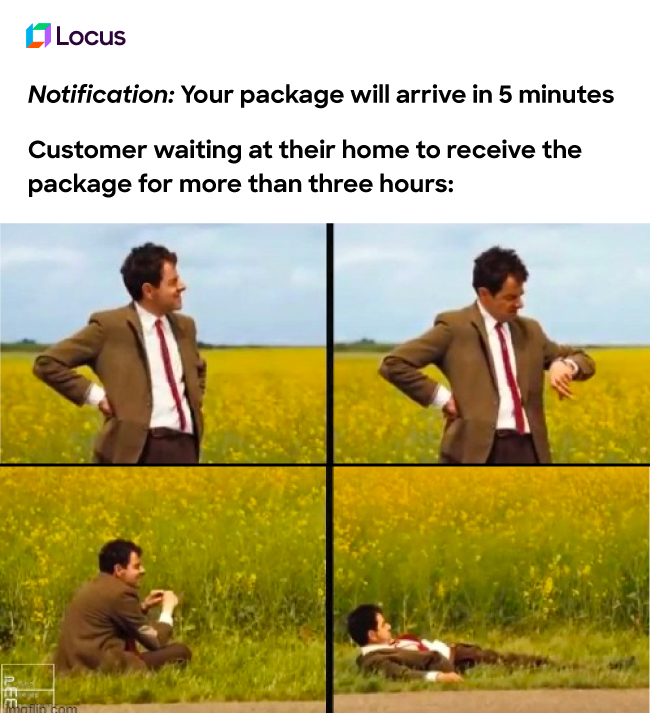
This meme is supposed to be funny, but good luck making someone who’s waiting for their package laugh at it. Nothing frustrates a customer more than a delivery delay beyond the time window that a business promises. A disgruntled customer doesn’t just switch to your competitor, but also spreads their dissatisfaction through word of mouth, potentially taking others with them.
2. Customers want predictability than speed
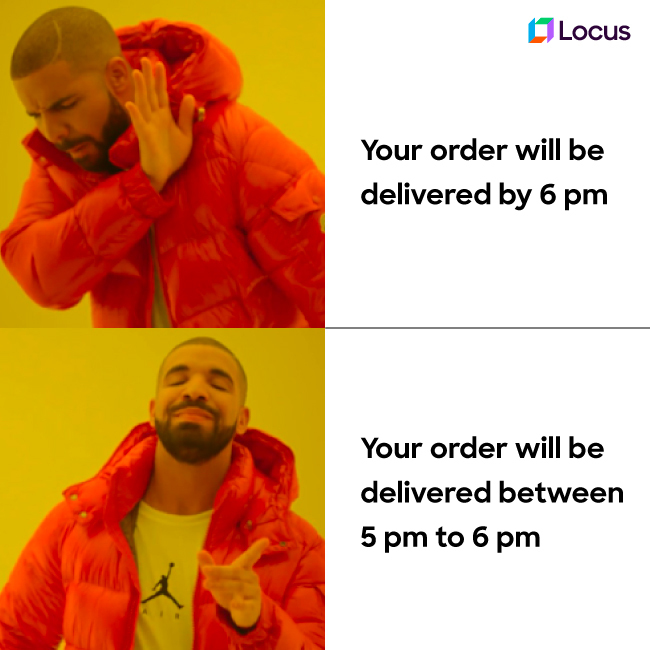
Businesses are seriously focusing on delivering orders to customers as quickly as possible. But more than speedy deliveries, customers want predictable deliveries. If your business says that the product will be delivered before 6 pm, it can be 10 am, 11 am, or even 3 pm. This ambiguity makes the delivery unpredictable for the customer.
By mentioning that the product would be delivered between 5 pm and 6 pm, customers find those deliveries more predictable. This would reduce the chances of failed or missed deliveries.
Want to find out key strategies to meet customer expectations in deliveries? Read!
3. Poor First Attempt Delivery Rate hits brand reputation
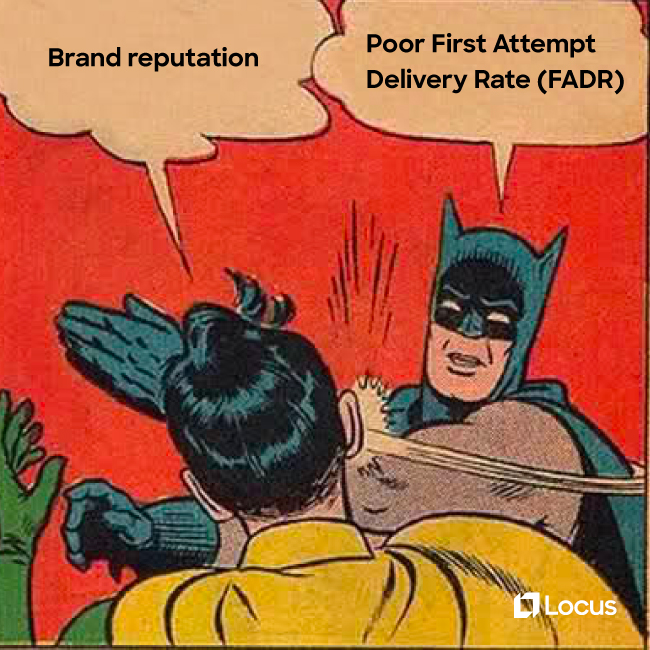
A poor First Attempt Delivery Rate (FADR) slows the supply chain, increases order processing costs, and damages the customer relationship. This can damage the brand reputation of the company. So, businesses must focus on getting their FADR right.
4. Improve customer experience without compromising on profitability
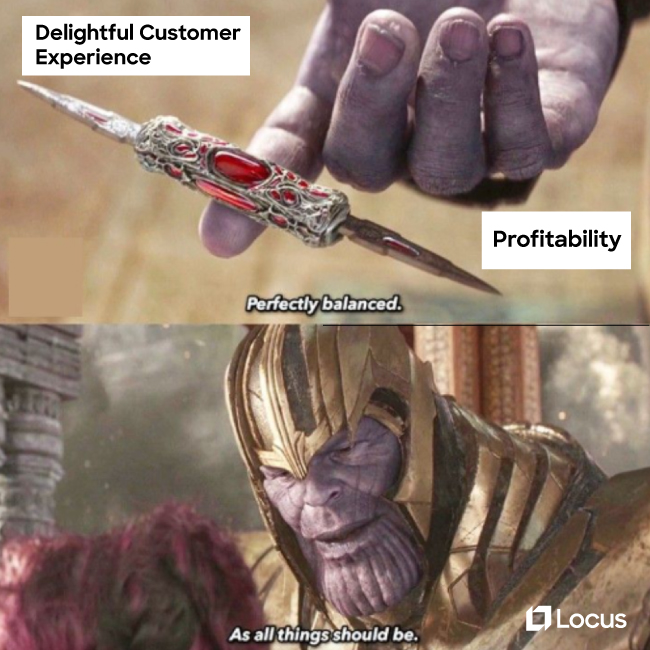
How do I improve my customer experience without compromising on profitability? It is a critical question that all delivery businesses have. By delivering the products to customers on time at their preferred time windows, companies can balance customer experience and profitability. This is why many businesses invest in a logistics solution with a delivery-linked checkout.
Want to know more about delivery-linked checkout? Read!
5. Inaccurate or ambiguous address
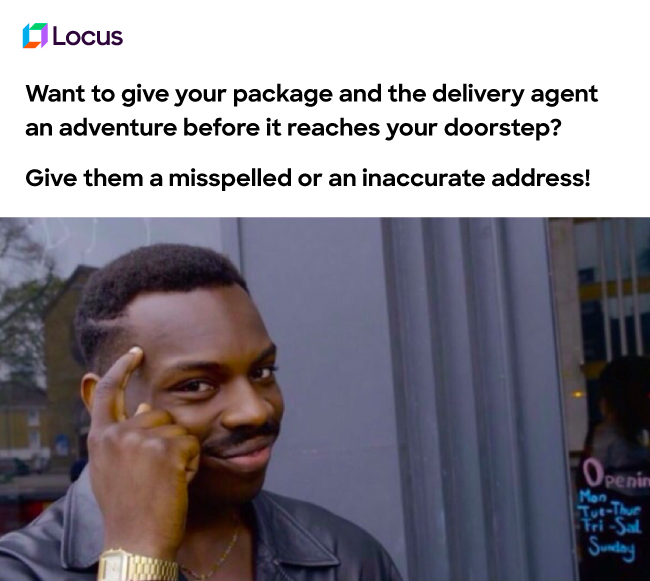
The intention behind this meme is not to suggest that customers intentionally provide inaccurate addresses. It simply highlights the reality that such inaccuracies can occur. Dispatch managers are faced with the challenge of handling misspelled, ambiguous, or incorrect addresses. Failing to address these issues could put a significant burden on drivers, potentially causing delays in deliveries and impacting their overall productivity.
The best way for dispatchers to deal with these inaccurate addresses is by investing in a proper geocoding engine. A geocoding engine converts ambiguous and imprecise address details into accurate geographical coordinates. This helps drivers reach their destination and make deliveries at the right time.
6. Inefficient routes
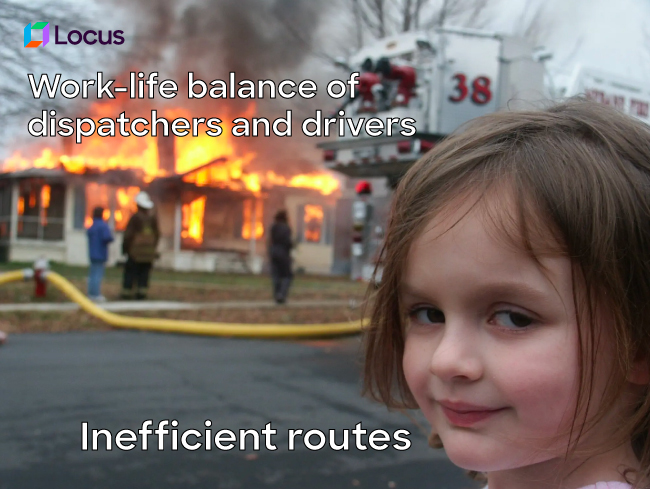
Inefficient routes do not account for real-world constraints in making deliveries like traffic, loading and unloading time, driver breaks, Hours of Service (HoS), and road restrictions. When delivery routes are inefficient, dispatchers and drivers spend additional time working.
By investing in route optimization software, dispatchers can set up efficient delivery routes for drivers. This lets drivers and dispatchers complete their tasks much before the planned time and spend enough time with their loved ones.
Want to know why businesses need route optimization software?
7. Never give your customers a tracking anxiety
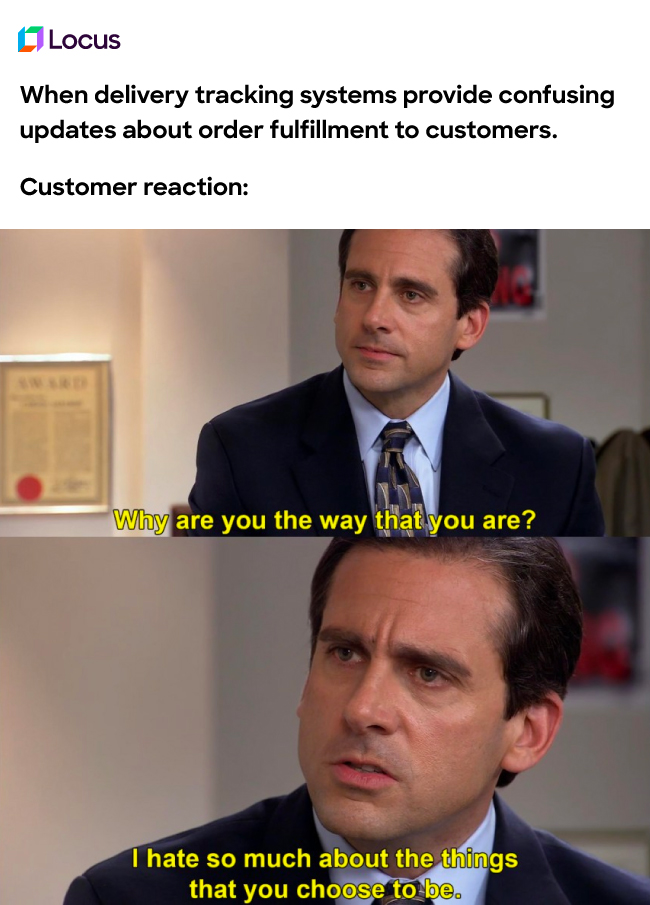
Customers need timely notifications on the progress of their orders. Most importantly, it needs to be precise. If there are some delivery exceptions, the fleet tracking software should clearly update the customers about the reason for those exceptions. Customers get frustrated when the business leaves them uncertain about tracking updates.
8. Delivery instructions matter
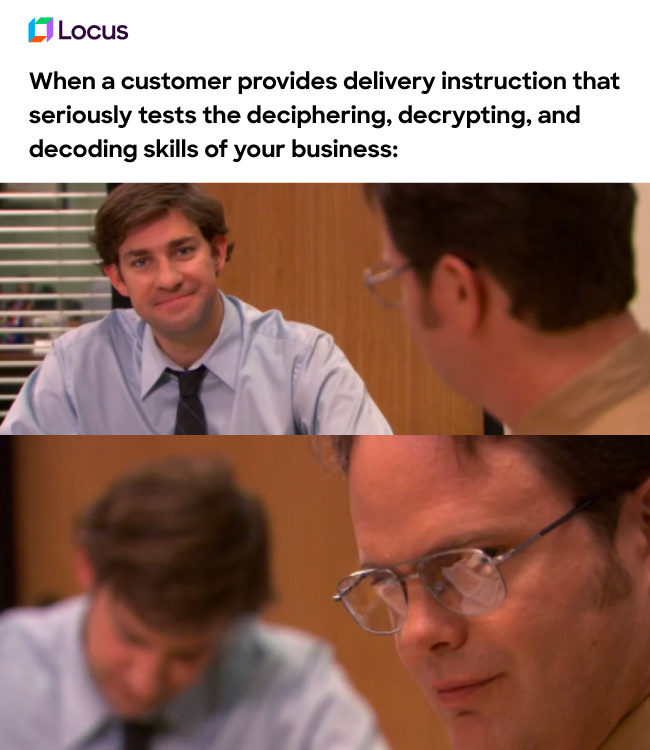
Businesses must enable customers to share special delivery instructions like ringing the doorbell thrice, knocking door twice, contactless deliveries, and so on. It is critical aspects like these that build customer trust in business.
But what if the customer tests the decrypting skills of a business with hidden codes like, “Leave the package under the doormat on Tuesday when the moon is full”? No company wants to refer to a lunar calendar to deliver orders. In this case, the business can prompt the customer to provide simple delivery instructions.
9. Omnichannel retailing gaining momentum
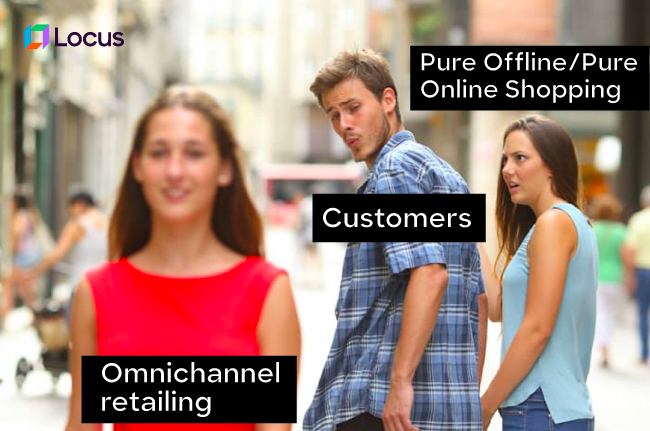
Customers have started valuing brands based on the convenience they offer in shopping. They want a mix of comfort from online shopping and a physical shopping experience from in-store shopping. This has led to phygital (physical + digital) shopping growth, pushing businesses to build their omnichannel presence.
Say Brenda is in the office and orders some groceries online. With omnichannel retailing, she need not go home and wait for the delivery. All she needs to do is schedule the pickup in a nearby retail outlet, visit the nearby store, pick up those items, and go home. Omnichannel retailing helps businesses save their shipping costs and widen their customer base.
Are you willing to explore more about America’s Omnichannel retail landscape?
10. Hold a clear communication
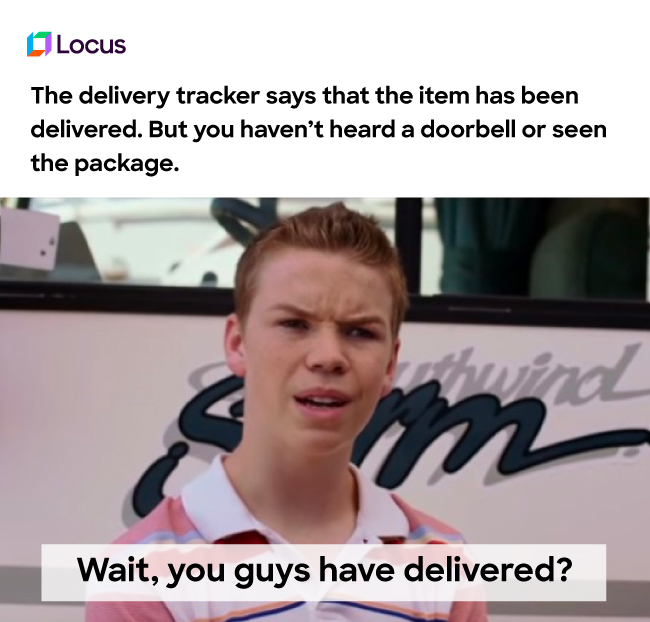
Your business receives WISMO (Where Is My Order) calls when the delivery is not completed successfully. Whether your company makes contactless deliveries or in person, it is necessary to communicate the delivery updates and clearly validate completed deliveries. This confusion might occur even if the orders have been stolen after delivery. It is crucial to authenticate customers about the completed delivery through timely alerts.
Everyone who manages logistics operations knows that it is a never-ending puzzle. Managing logistics operations with manual planning makes it more inefficient. That’s why businesses are investing in logistics optimization software. It’s a cost-efficient solution that boosts revenues and makes the puzzle-solving process much smoother. Embracing this technology unlocks the full potential of logistics management, paving the way for a more prosperous future.
Want to know how Locus’ logistics software adds value to your business?

Last Mile Delivery Optimization
Optimize Delivery Routes for Maximum Efficiency With an Intelligent Last Mile Solution

May 18, 2023
Optimizing delivery routes by adopting tech strategies for route optimization, analytics and tracking, slot and carrier managements can enhance the efficiency.
Read more
In Focus Webinars
In Focus: 2023 SCM Strategies for Industry Leaders
Jun 15, 2023
Key Takeaways Supply chain leaders face dual pressure to reduce costs due to inflation while expanding operations to meet growing consumer demands. Labor productivity in supply chains has hit decade-low levels despite technological advances, highlighting the critical need for effective technology implementation and adoption. The 3PL market is projected to reach $2.3 trillion by 2030, […]
Read moreInsights Worth Your Time




















10 Hilarious Logistics Memes That Resonate with the Supply Chain Industry