


General
10 Best Logistics Software Companies in Mexico

Key Takeaways
- Mexico’s logistics industry is experiencing significant growth with a projected 4.9% CAGR through 2029, driving increased demand for advanced logistics management solutions.
- Traditional manual logistics processes using spreadsheets are being replaced by AI-driven solutions that offer automated routing, real-time tracking, and advanced analytics capabilities.
- Integration challenges and customer support limitations are common issues among logistics software providers in Mexico, affecting platform adoption and user satisfaction.
- Locus’s AI-powered dispatch management platform addresses key industry pain points through dynamic routing, automated sorting, and unified delivery orchestration across multiple carriers.
In a recent study, the Mexican logistics industry is projected to achieve a CAGR of 4.9% from 2017-2029. It’s crucial for retailers, e-commerce platforms, 3PLs, FMCGs, and other logistics players in Mexico to embrace state-of-the-art logistics software to overcome the challenges of this rapidly growing sector.
But what exactly defines state-of-the-art logistics software?
Welcome to the age of AI-driven logistics solutions, where we bid adieu to old-fashioned, cumbersome approaches like managing supply chains on Excel spreadsheets, burdened with manual data input and restricted routing capabilities. It’s time for a new era of efficiency and innovation.
Now, let’s explore the top logistics software companies in Mexico that are leading the way:
Top 10 Logistics Companies in Mexico
Each logistics software serves different operational priorities and scales of business. In Mexico, where logistics networks range from urban deliveries to cross-border distribution, these tools adapt to varying needs. Below is a breakdown of leading solutions and how they align with distinct business goals.
1. Locus
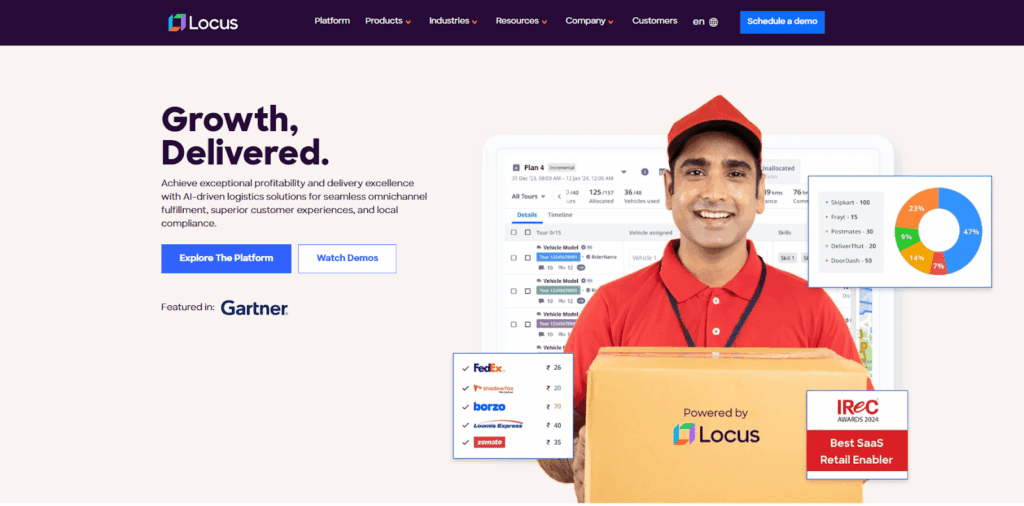
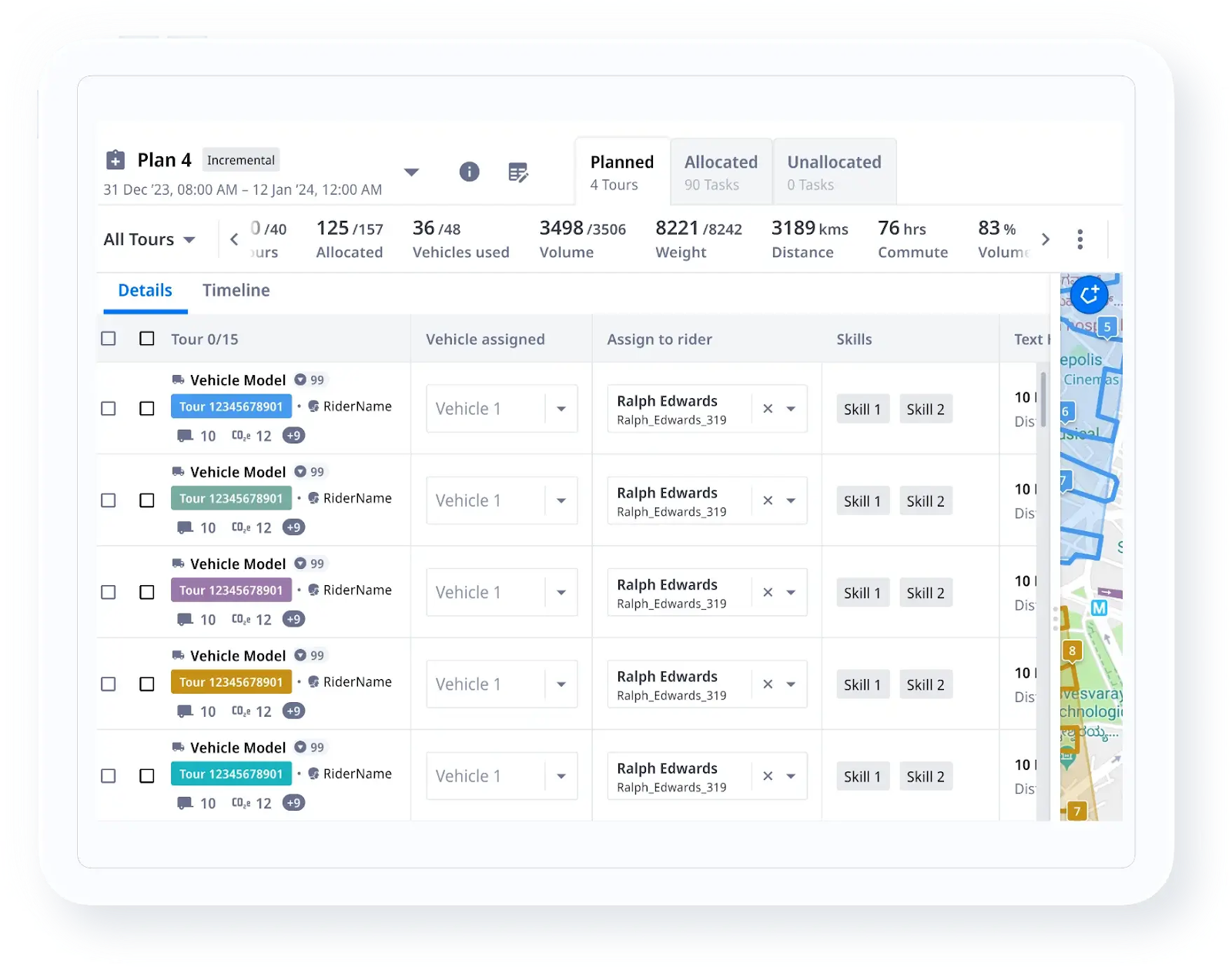
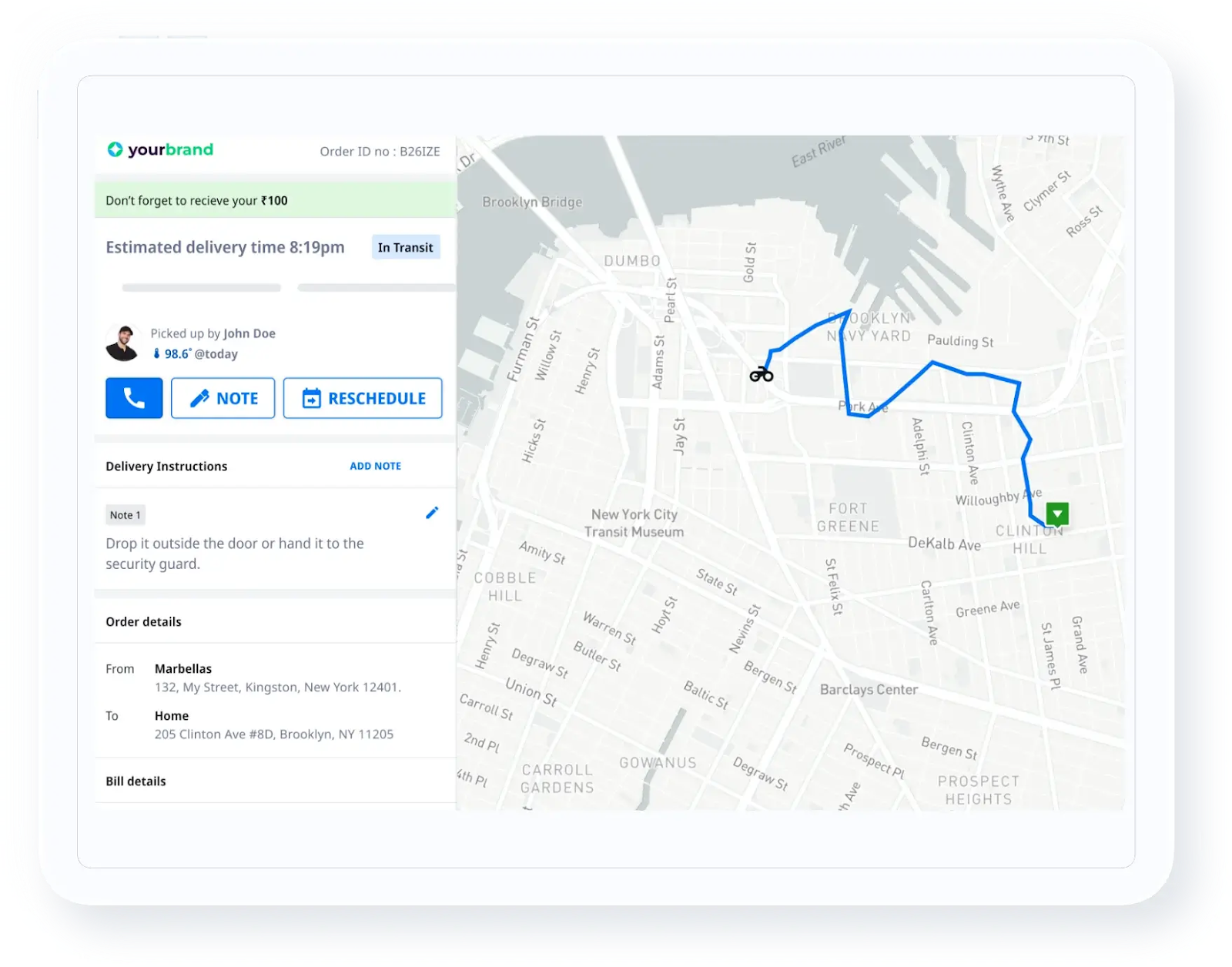
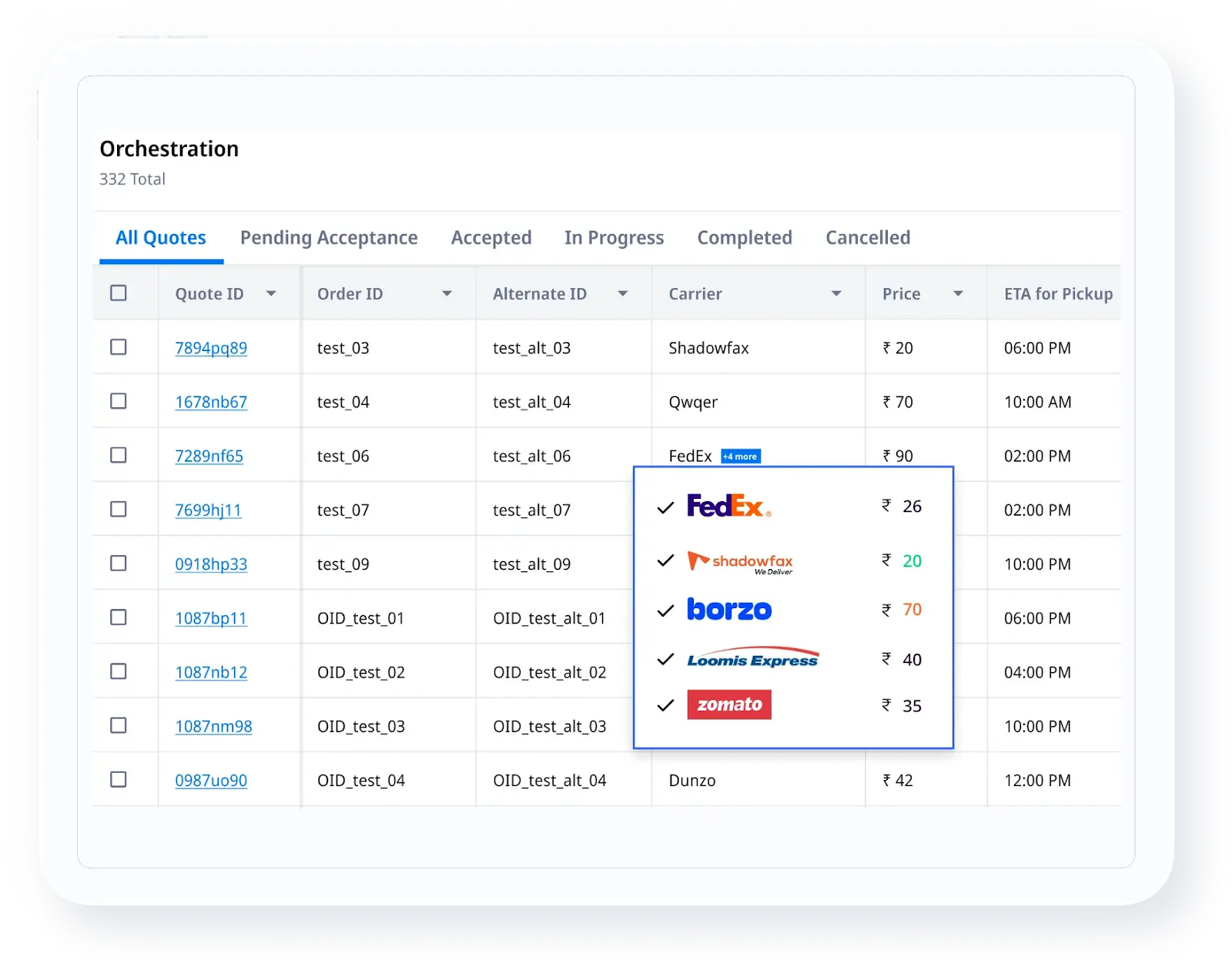
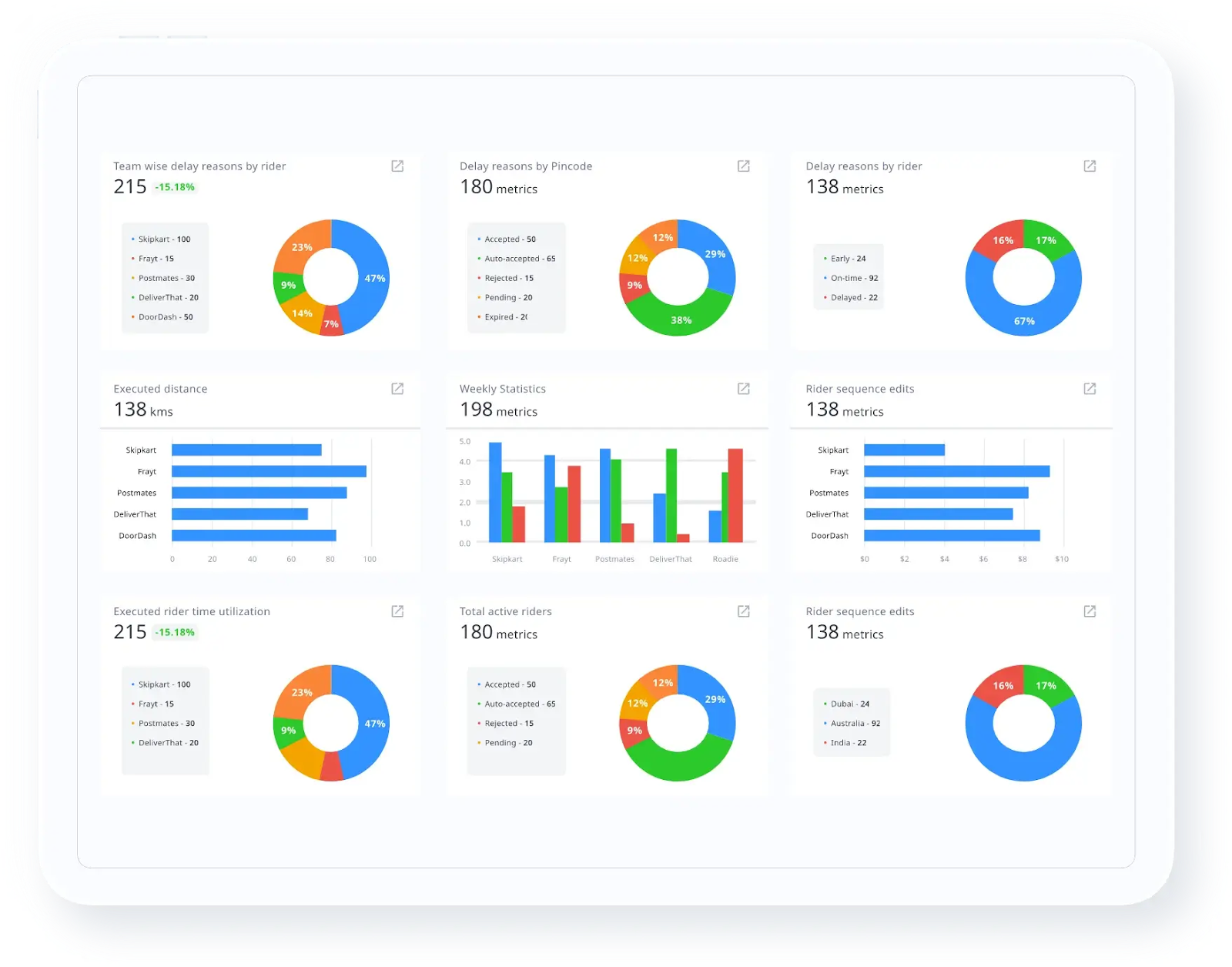
Locus is a leading AI-powered platform that offers comprehensive automation to optimize logistics processes. By integrating end-to-end visibility and real-time decision-making, Locus helps businesses streamline returns management, reduce operational costs, and enhance efficiency across the entire logistics chain.
Locus’s Key Features:
- AI-Driven Automation: Locus automates key logistics tasks such as returns authorization, inspection, repackaging, and restocking. By reducing manual intervention, businesses can process returns faster and more accurately.

- Complete Visibility: The platform offers full transparency into every step of the logistics process, from returns initiation to product disposition. This visibility helps companies make more informed decisions and identify areas for improvement.
- Scalability: Designed to scale with growing business needs, Locus handles increasing return volumes without a proportional increase in operational costs. This makes it an ideal solution for companies aiming to grow their logistics operations.
- Real-Time Decision-Making: Locus provides real-time insights that enable businesses to make data-driven decisions on returns management, such as optimizing routes and minimizing delays. This accelerates turnaround times and improves customer satisfaction.
- Sustainability Focus: By optimizing return processes, Locus reduces waste and enhances sustainability efforts. The platform helps companies manage returned products efficiently, minimizing their environmental impact.
Locus is Ideal for:
- Large Enterprises: Locus is tailored for businesses in industries like retail, FMCG, e-commerce, and 3PLs that manage high volumes of returns and require scalable solutions to handle complex logistics operations.
- Global Supply Chain Operators: Companies involved in cross-border logistics will benefit from Locus’ capability to manage international returns while maintaining operational efficiency and consistency.
Locus’s Pricing:
Locus offers a custom pricing model based on the size of the business and specific operational needs. Pricing is determined by factors such as return volumes, the complexity of integrations, and the scope of desired features. Businesses interested in a detailed pricing structure can contact Locus to schedule a demo and discuss their requirements.
2. LogiNext
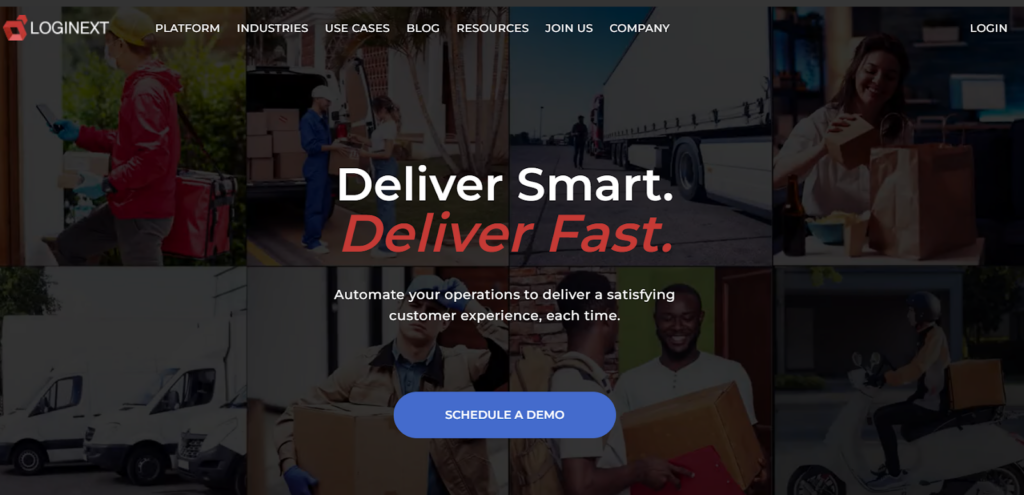
LogiNext is an AI-powered platform designed to optimize and automate delivery processes across various stages of the supply chain. With a focus on route planning, last-mile delivery optimization, and real-time tracking, LogiNext helps businesses improve operational efficiency and deliver superior customer experiences.
LogiNext’s Key Features:
- Route Planning & Optimization: AI-driven algorithms optimize delivery routes, considering factors like traffic and time windows, reducing fuel costs and enhancing delivery efficiency.
- Real-Time Tracking: Provides live tracking of deliveries, offering full transparency and better communication between drivers, dispatchers, and customers.
- Delivery Validation: Ensures accurate deliveries through features like photo proof of delivery, e-signatures, and barcode scanning.
- Automated Pickups & Delivery Scheduling: Automates scheduling and pickup processes, ensuring that deliveries are made on time and within the planned windows.
LogiNext is Ideal for:
- E-commerce & Retail: Companies that need to streamline their last-mile delivery process and improve the overall delivery experience for customers.
- Food & Beverage & Logistics: Businesses in the food sector or logistics industry requiring time-sensitive, high-volume deliveries with optimized route planning.
LogiNext’s Pricing:
LogiNext offers a custom pricing model based on business size, delivery volume, and required features. For detailed pricing, businesses can contact LogiNext to discuss their specific needs and schedule a demo.
3. FarEye
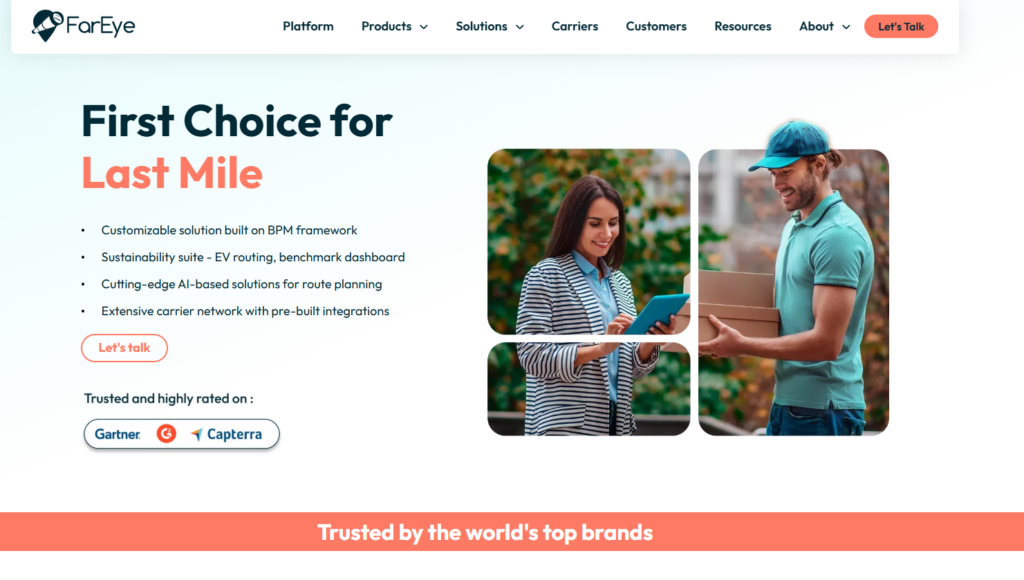
FarEye specializes in last-mile delivery optimization, offering a platform designed to improve delivery accuracy and enhance the returns experience. The solution integrates predictive tracking, dynamic rescheduling, and advanced customer engagement tools, all of which streamline logistics processes for businesses.
FarEye’s Key Features:
- Real-Time Tracking: Provides visibility into the entire delivery process, helping optimize operations and reduce delays.
- Predictive Delivery Optimization: Uses AI to predict and adjust delivery routes for faster and more accurate deliveries.
- Dynamic Rescheduling: Automatically adjusts delivery schedules to accommodate changes, ensuring timely returns management.
- Enhanced Customer Engagement: Tools to improve communication and satisfaction during the returns process.
FarEye is Ideal for:
- E-commerce and Retailers: Businesses aiming to enhance last-mile delivery efficiency and improve the returns experience for customers.
- Large Enterprises: Companies seeking scalable solutions for managing complex, high-volume returns processes.
FarEye’s Pricing:
FarEye offers a subscription-based pricing model, with costs tailored to business needs, including factors like return volumes and required features.
4. SAP Transportation Management (SAP TM)
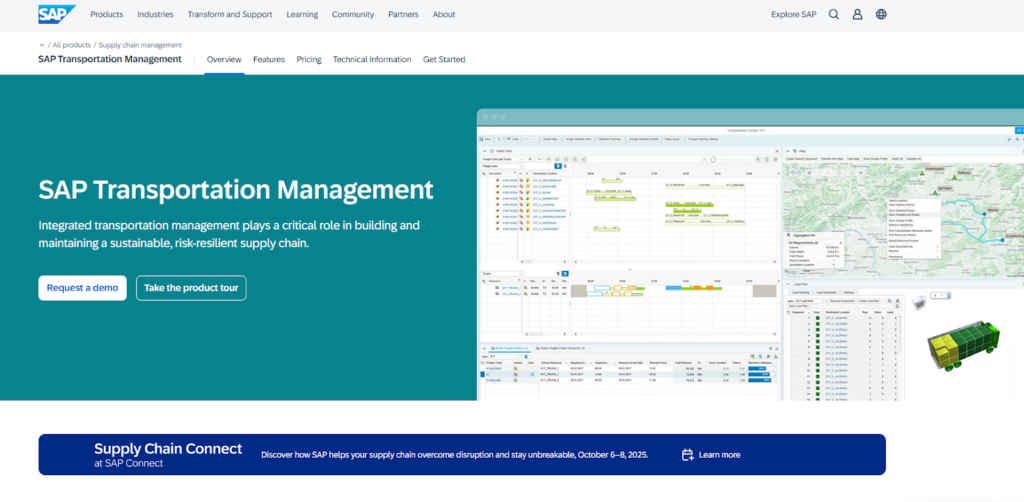
SAP TM is part of the SAP S/4HANA suite and enables integrated transportation planning, execution, and settlement for organizations already operating within the SAP ecosystem. It centralizes transport-related workflows while maintaining alignment with upstream procurement, warehousing, and finance processes.
Features of SAP TM:
- Embedded freight planning: Plans full truckload, less-than-truckload, and multi-leg shipments.
- Freight charge calculation and settlement: Automates cost allocation and invoice validation.
- Order and delivery integration: Links transport plans with customer orders and warehouse execution.
- Carrier selection and tendering: Supports spot bidding and contracted rate use.
- Control Tower and tracking: Provides real-time visibility across lanes and shipments.
SAP TM is ideal for:
Global enterprises using SAP S/4HANA that require transport functionality tightly linked to finance, procurement, and warehouse operations.
SAP TM pricing:
Available as an add-on license within SAP’s modular pricing model. Total cost depends on transaction volume and integration complexity.
5. Alpega/ E2open (formerly BluJay)
Alpega and E2open offer modular logistics software platforms tailored to shippers, freight forwarders, and carriers operating in Europe and other regulated markets. The system emphasizes freight procurement, tendering, and invoice reconciliation across diverse partner networks.
Features of Alpega / E2open:
- Freight tendering tools: Digitizes bid management across contracted and spot carriers.
- Carrier collaboration portal: Enables real-time updates, status sharing, and document exchange.
- Invoicing and audit automation: Matches invoices with delivery data for reconciliation.
- Modular deployment: Allows companies to adopt only the features they need.
- Load planning and execution: Optimizes shipments across multiple orders and destinations.
Alpega / E2open is ideal for:
European freight shippers, forwarders, and carriers seeking control over procurement and invoicing across large carrier networks.
Alpega / E2open pricing:
Subscription-based pricing varies by module and deployment size. Entry-level and enterprise packages available.
6. Oracle Transportation Management (OTM)
Oracle Transportation Management is a cloud-based solution integrated with Oracle’s broader supply chain suite. It supports complex, high-volume shipping operations across global and domestic networks, offering deep planning, execution, and analytics functionality.
Features of Oracle OTM:
- Multi-leg shipment planning: Optimizes long-haul and last-mile routes within the same workflow.
- Freight cost management: Tracks, predicts, and reconciles transportation spend across carriers.
- Carrier contract and rate control: Manages rate agreements and automates comparisons.
- Shipment visibility and tracking: Monitors transport events, ETA deviations, and delivery status.
- ERP integration: Connects natively with Oracle Fusion and other SCM modules.
Oracle OTM is ideal for:
Enterprises using Oracle ERP or managing high-throughput, global logistics operations across multiple transport modes.
Oracle OTM pricing:
Enterprise-level pricing, typically packaged with Oracle Cloud Supply Chain modules. Licensing varies based on shipment volume and features activated.
7. Blue Yonder (formerly JDA)
Blue Yonder provides an integrated logistics software that includes planning with inventory, demand, and warehouse operations. It supports predictive planning and real-time transportation optimization across global networks.
Features of Blue Yonder:
- Multimodal optimization: Plans and consolidates shipments across air, ocean, and ground.
- Demand-driven transportation planning: Aligns transport operations with forecasted inventory needs.
- WMS-TMS integration: Seamlessly connects warehouse and transport systems for unified execution.
- Network modeling tools: Simulates cost, route, and carrier scenarios for long-term planning.
- Freight settlement automation: Validates invoices and reconciles carrier payments.
Blue Yonder is ideal for:
Manufacturers, large retailers, and distribution networks require synchronized planning across warehousing, transportation, and demand forecasting.
Blue Yonder pricing:
Offered through enterprise licensing. Pricing varies based on solution scope, deployment model (cloud/on-premise), and user volume.
8. Tookan
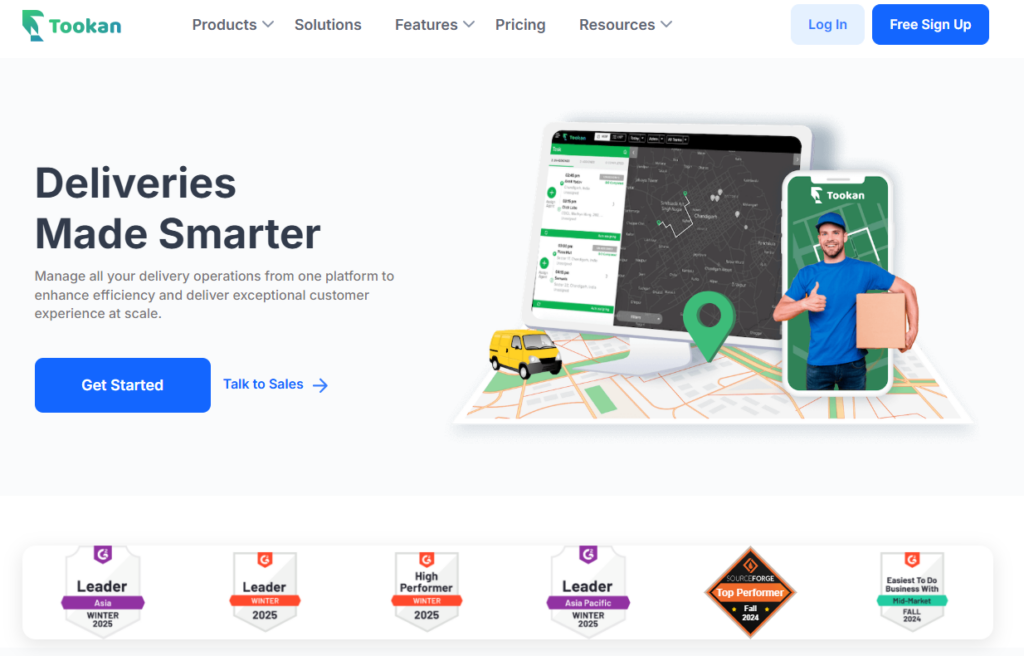
Tookan (by Jungleworks) is a delivery management platform with route optimization, dispatch, and real-time tracking for on-demand and scheduled deliveries. It targets businesses that want a configurable, white-label stack with add-ons and integrations.
Features of Tookan
- Route Optimization & Auto-Allocation: Plan multi-stop routes and auto-assign tasks based on capacity and proximity.
- Real-Time Tracking & ETAs: Live driver locations, tracking links, and customer notifications.
- Proof of Delivery: Photos, signatures, barcodes; configurable forms.
- Extensions & Integrations: APIs plus marketplaces for payments, SMS/WhatsApp, POS/e-commerce.
- Admin & Agent Apps: Dispatcher dashboard; Android/iOS driver app with offline sync and geofencing.
Tookan Is Ideal For
SMBs and mid-market teams running last-mile use cases (food, grocery, courier, pickup & delivery) that need quick deployment, white-label options, and task-based pricing.
Tookan Pricing
Tookan’s pricing starts at $99 per month for 1,000 tasks and scales with usage, with higher-tier plans (Growth and Standard) offering larger task volumes at reduced per-task costs, while enterprise and lifetime packages are available on request.
9. WorkWave Route Manager
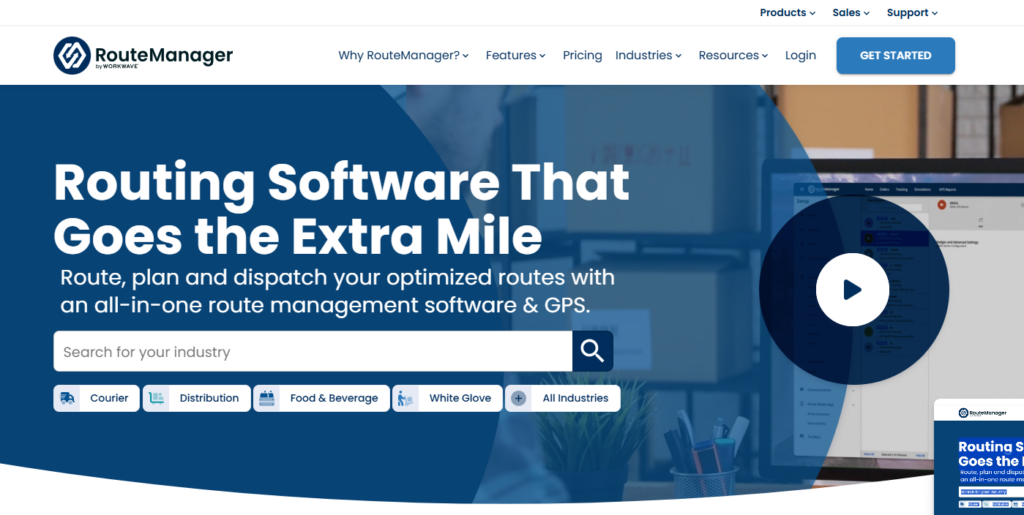
RouteManager is WorkWave’s routing and dispatch platform for delivery and field-service operations, combining automated route planning, live tracking, customer notifications, and reporting in a single system.
Features of RouteManager
- Route Planning & Dispatch: Build optimized multi-stop routes and assign drivers quickly.
- Mobile App & Live Tracking: Driver apps with GPS visibility and real-time progress.
- Customer Notifications: Email/SMS updates with ETAs to reduce failed deliveries.
- Reporting & Analytics: KPIs and dashboards for performance and capacity planning.
- API & Simulations: Connect to existing systems and test scenarios before go-live.
RouteManager Is Ideal For
SMBs and mid-market teams in courier, distribution, food & beverage, white-glove, and field service seeking fast setup and a straightforward routing stack.
RouteManager Pricing
Pricing for RouteManager starts as low as $54 per vehicle per month (minimum four vehicles), with RouteManager360 bundling additional capabilities like enhanced driver app features and customer notifications, and custom packages available through sales.
10. Motive
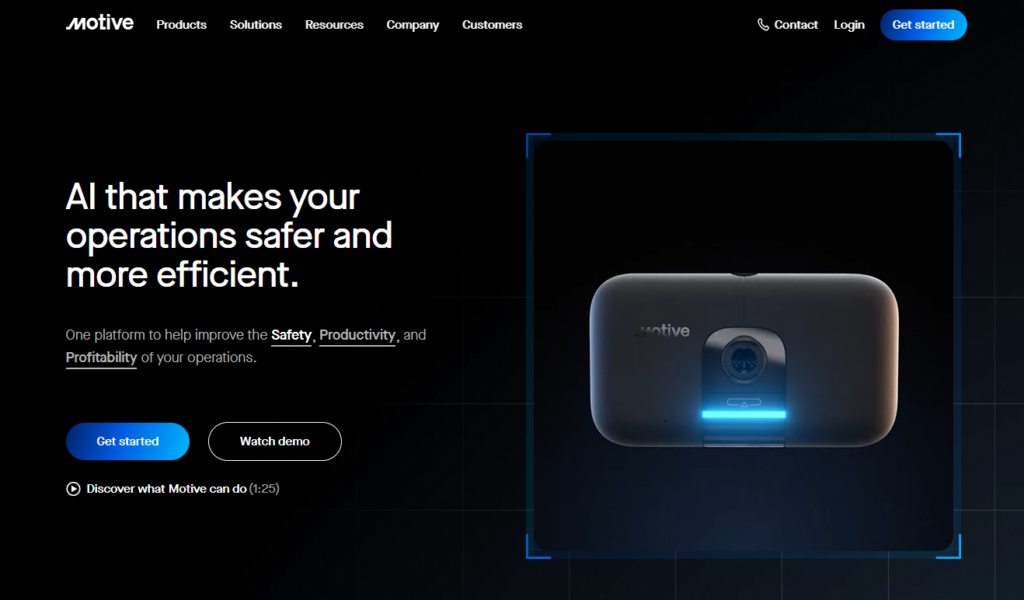
Motive (formerly KeepTruckin) is a logistics management software company founded in 2013 and headquartered in San Francisco, California. The platform combines driver safety, fleet management, asset monitoring, spend controls, and workforce management in a single AI-powered suite. Motive is built to help fleets reduce accidents, improve compliance, and optimize operational efficiency while offering integrated hardware such as AI dashcams and telematics devices.
Motive’s Key Features:
- Driver Safety: AI dashcams, 360° risk detection, automated driver coaching, and accident management
- Fleet Management: GPS fleet tracking, vehicle diagnostics, maintenance scheduling, and fleet telematics
- Equipment & Asset Monitoring: Trailer tracking, reefer monitoring, and theft prevention tools
- Spend Management: AI-powered Motive Card with fraud detection, spend analytics, and savings insights
- Workforce Management: Employee qualifications, time tracking, training, and coaching modules
- Compliance: ELD mandate coverage, IFTA fuel tax reporting, and audit support
- AI Vision: Customizable AI models for industry-specific operational needs
Motive Is Ideal For:
Trucking and logistics companies, public sector fleets, utilities, construction, agriculture, and delivery operators seeking a consolidated platform for safety, compliance, and asset visibility with hardware-backed AI solutions.
Motive’s Pricing:
Not publicly disclosed. Pricing is custom and based on fleet size, hardware, and service scope.
From Complexity to Control in Logistics Software
Mexican enterprises in managing logistics across retail, FMCG, e-commerce, or 3PL sectors face challenges that go far beyond basic routing. They need a system that can manage dispatch intelligently, adapt to changing on-ground realities, and give a clear view of every delivery in motion.
While many logistics tools perform well in narrow areas, small-business routing, telematics, or field operations, Locus brings them together in one powerful platform. Its DispatchIQ engine, real-time Control Tower, and rich analytics help teams cut empty miles, lower fuel spend, and deliver on time, every time. Cross-fleet coordination and the Carrier Management Platform make it easier to manage multi-region networks without added complexity.
In markets like Mexico, where supply chains often span dense urban centers and remote regions, Locus enables businesses to orchestrate every delivery, route, and carrier on a single intelligent system, creating a more connected, efficient, and scalable logistics network.Explore how Locus can optimize your logistics operations. Schedule your demo now.
Frequently Asked Questions (FAQs)
What is the significance of logistics software for businesses in Mexico?
The Mexican logistics industry is projected to achieve a CAGR of 4.9% from 2017-2029, making it crucial for retailers, e-commerce platforms, 3PLs, FMCGs, and other logistics players to embrace state-of-the-art logistics software. Advanced logistics solutions powered by AI and machine learning can help overcome challenges in this rapidly growing sector by streamlining operations, minimizing costs, and enhancing efficiency.
What are the key features of Locus’ dispatch management solution?
Locus’ AI-powered dispatch management software offers several key features: route optimization using dynamic routing with 180+ real-world constraints, automated package sorting for faster deliveries, real-time tracking with turn-by-turn navigation and notifications, advanced analytics for data-driven insights, delivery orchestration through ShipFlex for seamless third-party integration, and delivery-linked checkout for customer-preferred time slots.
How does Locus’ solution differ from traditional logistics management approaches?
Locus’ dispatch management system represents a departure from outdated, cumbersome methods like managing supply chains on Excel spreadsheets with manual data input and restricted routing capabilities. Locus ushers in a new era of efficiency and innovation through AI-driven automation, machine learning-based optimization, and advanced features tailored for modern logistics operations.
What are some potential drawbacks of other logistics software companies mentioned?
While Nowports offers real-time tracking, some users have reported challenges integrating with existing systems and limited carrier options. Uber Freight’s customer support has been criticized for being unresponsive at times. Estafeta’s user interface may not be as intuitive as competing solutions. Skydropx has faced server issues and poor customer service, according to user reviews.
How can Locus’ solutions help optimize logistics operations in Mexico?
Locus’ AI-powered dispatch management system can revolutionize logistics operations in Mexico by streamlining last-mile deliveries, minimizing expenses, and eliminating complications like manual routing, package sorting, real-time tracking, and delivery customization. With features like route optimization, automated sorting, advanced analytics, and delivery orchestration through ShipFlex, Locus empowers businesses to achieve new levels of efficiency and customer satisfaction in the rapidly growing Mexican logistics market.


General
From Warehouse To World Fame: 12 Famous Celebrities That Worked In Logistics

Apr 24, 2023
Many celebrities were a part of the logistics industry, like Liam Neeson, James Cameron, Jennifer Aniston, etc., as truck drivers and bike messengers.
Read more
In Focus Webinars
How to Ensure Effective Third-Party Deliveries and Excellence in Your E-commerce Logistics Operations
May 2, 2023
Third-party delivery solutions like ShipFlex makes carrier selection more effective and provides visibility, flexibility, and intelligence to automate carrier selection.
Read moreInsights Worth Your Time




















10 Best Logistics Software Companies in Mexico