


General
Routing Software for Deliveries: Enterprise Buyer’s Guide (2026)
Key Takeaways
- Routing software differs in how decisions extend beyond route creation into allocation, dispatch, and execution across depots, fleets, and delivery constraints at scale.
- Many platforms generate routes but rely on manual coordination for order assignment, capacity balancing, and adjustments during execution, increasing operational effort as volumes grow.
- Multi-depot and mixed-fleet delivery operations require routing systems that account for inventory position, capacity, and delivery commitments together during planning and execution.
- Real-time updates, visibility, and control over routing decisions determine how effectively delivery plans hold during execution without requiring continuous manual intervention from dispatch teams.
- Locus connects routing, allocation, and execution decisions within one system, applying 250+ real-world constraints to maintain consistency across planning, dispatch, and delivery operations.
Every delivery network is shaped long before the first vehicle leaves the depot.
Decisions made during planning determine how orders are grouped, how capacity is allocated, and how efficiently the fleet operates throughout the day. By the time dispatch begins, most of the operational outcome is already set in motion.
As delivery volumes grow, these decisions become more complex. Multiple depots, mixed fleets, carrier SLAs, and shifting demand patterns all influence how routes need to be built and adjusted. What starts as route planning quickly becomes a system-wide coordination effort.
This is where delivery routing software plays a defining role. Some platforms focus on generating efficient routes for smaller operations. Others support scheduling and tracking across growing networks. A smaller category of systems connects planning, dispatch, and execution, allowing logistics teams to manage large-scale operations with consistency.
This guide evaluates nine platforms through that lens, focusing on how each system supports optimization depth, dispatch automation, carrier coordination, and integration with enterprise logistics systems, so teams can identify what aligns with their operational model before moving forward.
How To Evaluate Routing Software For Deliveries At Enterprise Scale
Before comparing platforms, define what impacts execution across your network. At enterprise scale, routing decisions influence how orders move across depots, fleets, and delivery windows throughout the day.
Constraint Depth
Routing systems should account for the actual inputs your planners work with daily.
This includes delivery time windows committed at checkout, vehicle-wise capacity limits, driver shift timings, depot dispatch capacity per hour, and carrier-specific SLAs. In many operations, these constraints overlap.
For example, a late-loading depot directly affects route feasibility for time-bound deliveries.
Platforms that process these constraints together generate routes that match ground conditions. This reduces the need for planners to adjust routes manually before dispatch.
Planning And Allocation In One Flow
Route sequencing and order allocation need to happen together.
For each order, the system should decide:
- Which depot fulfills it
- Which vehicle or carrier handles it
- How it fits into an existing route without exceeding capacity or time limits
When allocation is handled separately, planners often rework assignments to match fleet availability. Platforms that combine both steps assign orders correctly the first time, reducing planning cycles.
Network-Level Planning
When multiple depots serve the same delivery zone, the system needs to decide where each order should originate from.
In practice, this depends on inventory availability, outbound capacity at each depot, and how the assignment affects route feasibility and delivery timelines.
This allows teams to:
- Shift load away from congested depots
- Utilize idle fleet capacity in nearby locations
- Reduce overall travel distance for deliveries
Without this, planning happens depot by depot, and opportunities to optimize across the network are missed.
System Connectivity
Routing decisions should reflect data from upstream and downstream systems.
For example:
- Order priorities from OMS
- Inventory availability from WMS
- Carrier rates and SLAs from TMS
If these inputs are not connected, planners rely on manual updates to align systems. Platforms with strong integrations keep routing aligned with actual operational data across systems.
Decision Visibility And Control
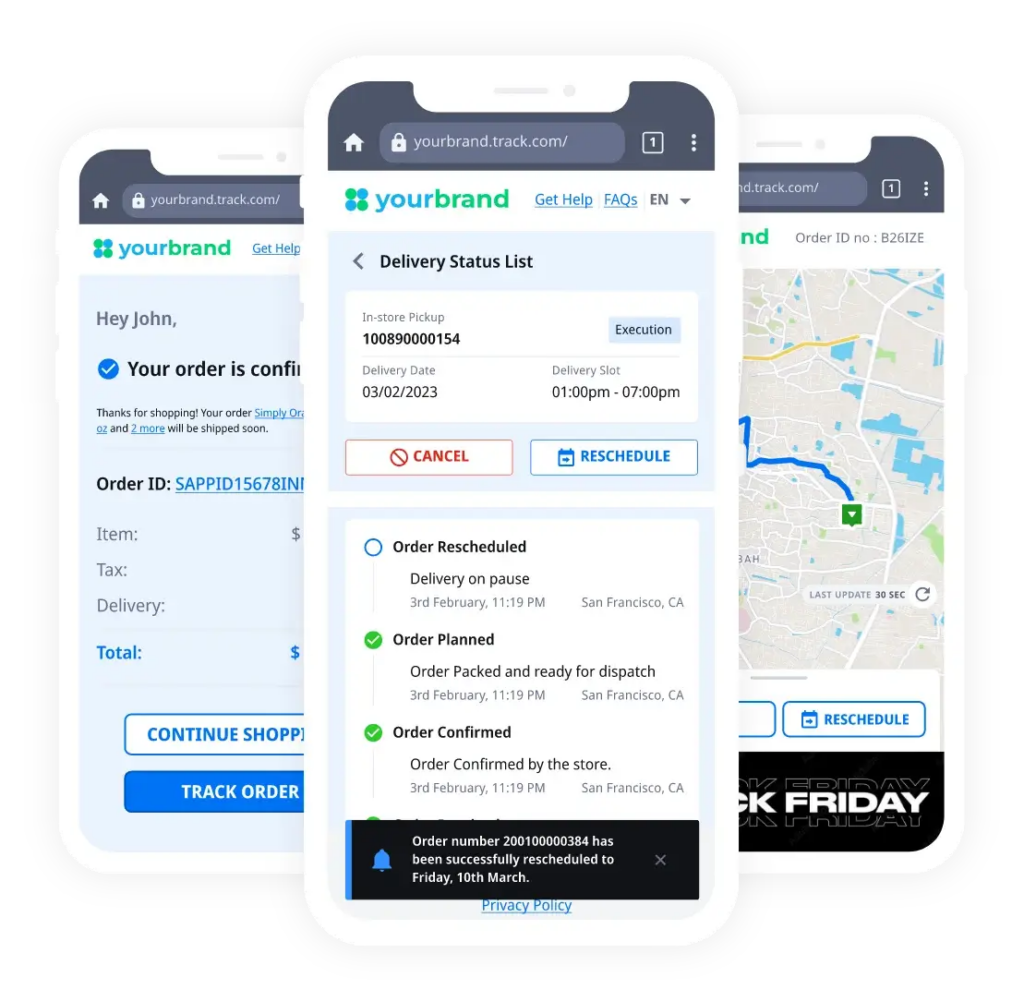
Routing decisions should be transparent and reviewable.
Planners need to see:
- Why was an order assigned to a specific vehicle or carrier
- How delivery commitments influenced routing decisions
- What changes were made during re-optimization
They should also be able to adjust assignments before execution when required. This ensures routing decisions stay aligned with operational priorities while still benefiting from automation.
Top 9 Routing Software For Deliveries (2026)
Routing software for deliveries in 2026 supports different levels of operational complexity. Some platforms are built for multi-depot delivery planning, carrier allocation, and real-time route adjustments, while others focus on route creation, scheduling, and driver-level execution.
Each platform fits a specific delivery setup, which makes it important to evaluate how routing decisions are handled across planning, dispatch, and execution before selecting a tool.
1. Locus
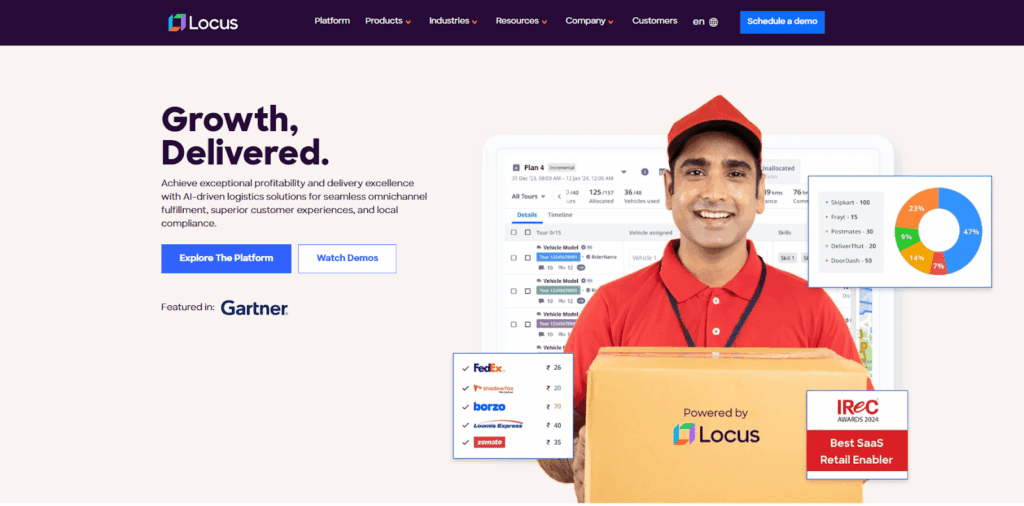
Locus is a routing and delivery orchestration platform that uses AI-powered route optimization as part of a broader system connecting routing decisions with dispatch and execution.
Fireworks routing engine plans against 250+ real-world constraints, including delivery time windows, vehicle capacity, driver shift hours, hub throughput, road restrictions, and live traffic conditions. This approach uses constraint-based planning to generate routes that remain practical during real-world execution.
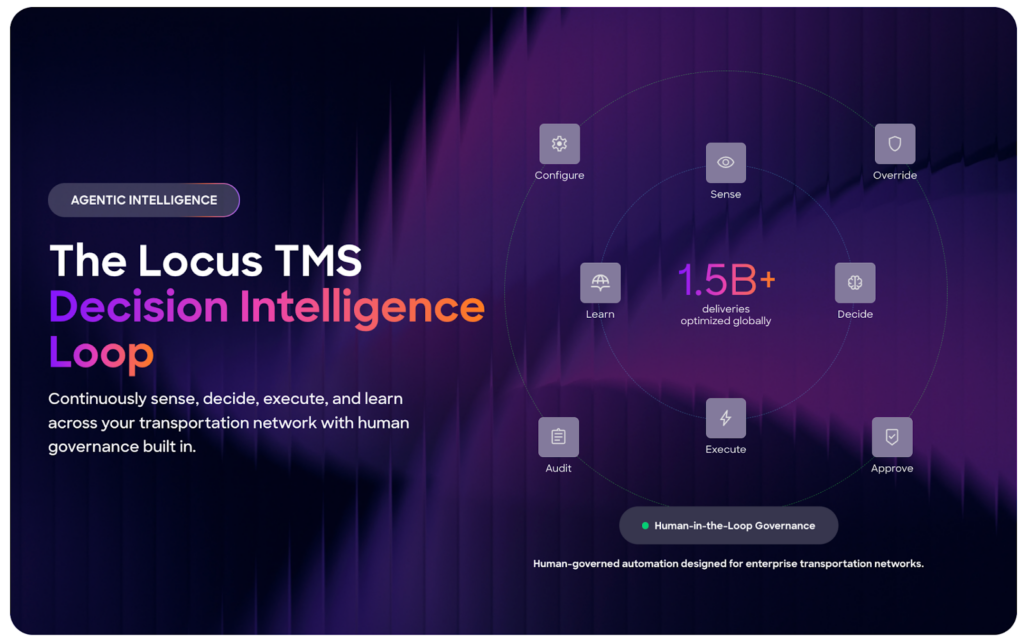
The decision intelligence loop continuously evaluates routing plans based on live operational inputs, updates assignments during execution, and provides dispatchers with visibility into every decision along with override controls.
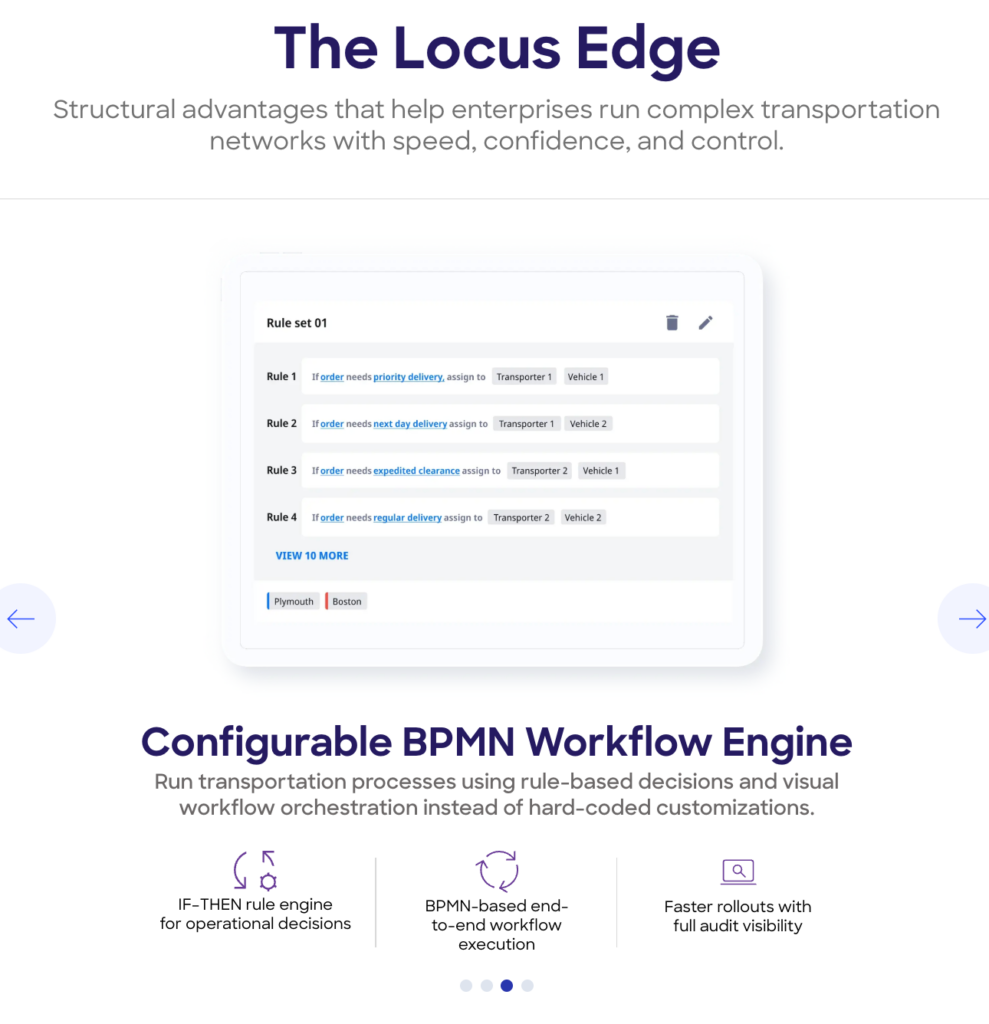
Along with this, Locus’s configurable BPMN Workflow Engine allows operators to configure routing rules, dispatch logic, and allocation workflows without engineering dependencies
Locus integrates carrier selection directly into routing and dispatch decisions, assigning deliveries to the most suitable carrier based on cost, service commitments, and capacity. For operations with significant in-house and outsourced fleet complexity, this removes the manual layer that typically sits between a routing decision and actual carrier assignment.
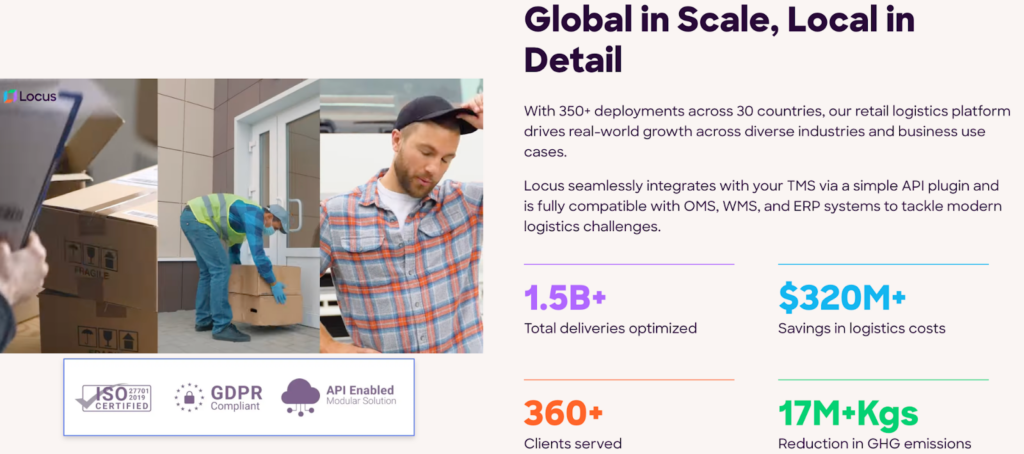
The platform has optimized 1.5 billion deliveries across 30+ countries for 350+ enterprise customers, delivering $320M+ in logistics cost savings at a platform average of 20% cost reduction.
Unilever achieved 99.5% on-time deliveries across Southeast Asia, Floranow improved on-time delivery from 70% to 99%, and BigBasket achieved 99.5% SLA adherence alongside a 34% reduction in distance traveled.
Locus also addresses one of the most persistent challenges in emerging market logistics, which is address accuracy. Its proprietary geocoding engine converts incomplete or ambiguous addresses into precise coordinates, directly reducing failed deliveries and improving SLA adherence in markets where standardized addressing does not exist.
Key Features of Locus
- Fireworks routing engine optimizing against 250+ real-world constraints
- Decision Intelligence Loop with full dispatcher override and audit capability
- Configurable BPMN Workflow Engine for rule-setting without hard-coded customization
- Automated carrier selection and tendering across 1,000+ pre-integrated carriers
- Proprietary geocoding engine for accurate addressing in emerging markets
- Real-time control tower with exception management and live visibility
- Mycroft AI Co-Pilot for next-best-action recommendations across dispatch decisions
- Routing, dispatch, and delivery execution within a single system
Locus Is Best For
Enterprises running multi-depot, multi-carrier delivery operations that need routing, dispatch, and execution decisions managed within a single system.
Locus’s Pros
- Enables deep constraint-based route optimization, supporting complex delivery scenarios across multiple depots, fleets, and operational conditions
- Automates dispatch and order allocation, allowing routing decisions to flow directly into execution without manual intervention
- Provides real-time visibility and dynamic re-optimization, helping teams adjust plans continuously as conditions change
- Supports multi-depot and multi-carrier orchestration, enabling coordinated planning and execution across distributed delivery networks
- Integrates seamlessly with ERP, WMS, OMS, and TMS systems, ensuring routing decisions stay aligned across the entire logistics ecosystem
Locus’s Pricing
Locus operates on a custom pricing model. There is no publicly listed starting price, free plan, or free trial. Pricing is scoped based on order volumes, operational complexity, and the specific modules required. You can get a scoped estimate by scheduling a demo directly with the Locus team.
2. Route4Me
Route4Me is a widely used routing platform across small and mid-sized delivery operations, with over 30 million routes optimized and 3 billion miles of delivery data processed.
Its strength lies in multi-stop route planning where the primary need is efficient stop sequencing. Routes can be generated quickly, shared with drivers through the mobile app, and executed with basic tracking and proof of delivery, making it easy to operate for single-depot or geographically limited deliveries.
As delivery volumes grow, routing decisions begin to include order allocation, capacity balancing, and alignment with delivery commitments. Route4Me focuses on route creation, while these coordination workflows are typically handled alongside it.
Integration is supported through APIs, though aligning routing with ERP, WMS, and TMS systems may require additional setup depending on the operational environment.
Route4Me fits delivery operations where the priority is fast, reliable route generation without deeper coordination across multiple depots, fleets, or carrier networks.
Key Features of Route4Me
- Multi-stop route planning and optimisation
- Mobile driver app with turn-by-turn navigation
- GPS tracking and real-time driver location visibility
- Proof of delivery and customer notification capabilities
- Route history and basic delivery analytics
Route4Me Is Best For
Small-to-mid-sized delivery operations where routing primarily involves stop sequencing, driver navigation, and basic delivery tracking within a single depot or limited service area.
Route4Me’s Cons
- Routing does not include automated order allocation across vehicles or depots
- Limited support for multi-depot or multi-carrier delivery networks
- Requires additional integration effort for enterprise system alignment
- Routing decisions remain separated from dispatch workflows
Route4Me’s Pricing
Route4Me offers subscription-based pricing starting from approximately $60 per vehicle per month. Enterprise pricing is available on request, and a free trial is offered for evaluation.
3. WorkWave
WorkWave is a routing and scheduling platform designed for field service operations. Its primary use case is planning technician visits across industries such as pest control, lawn care, and HVAC, where routing is tied to appointments and recurring service schedules rather than parcel deliveries.
Additionally, WorkWave supports daily route planning, job assignment, and technician tracking. Routes are built around scheduled service visits, and the platform provides visibility into technician availability, location, and task completion through its mobile application. For teams managing service routes within a city or region, this setup aligns with how field operations are structured.
Routing requirements differ in delivery operations, where routes need to account for order volumes, delivery windows, and capacity constraints across vehicles and locations. WorkWave’s routing is structured around technician schedules, which limits how routing decisions can be extended to delivery-specific scenarios such as load balancing, order allocation, or multi-depot planning.
Integration also reflects this focus. The platform connects well with field service management systems, supporting workflows like appointment scheduling and customer communication. For delivery operations that rely on OMS, WMS, and TMS systems, additional integration effort is required to align routing with order and fulfillment data.
WorkWave fits routing use cases where deliveries are structured as scheduled service visits. For delivery operations managing shipments, fleets, and multiple fulfillment points, routing requirements extend beyond technician scheduling.
Key Features of WorkWave
- Route optimization and scheduling for field service teams
- GPS tracking and real-time technician location visibility
- Job scheduling and recurring service visit management
- Mobile driver and technician application
- Customer notification and appointment management
WorkWave Is Best For
Field service businesses managing technician routing across industries such as pest control, lawn care, and HVAC, where job scheduling, recurring visits, and technician dispatch are the primary operational challenges.
WorkWave’s Pros
- Designed around appointment-based workflows, making it effective for managing recurring service visits and technician schedules.
- Combines routing with job assignment and scheduling, allowing teams to manage daily operations within a single system.
- Provides live location tracking and job status updates, helping teams monitor field activity throughout the day.
- Enables technicians to access routes, update job status, and manage tasks directly from a mobile interface.
WorkWave’s Cons
- Routing is structured around appointments rather than delivery volumes
- Limited support for multi-depot delivery planning
- Does not include automated allocation across vehicles or carriers
- Integration is focused on field service systems rather than logistics platforms
WorkWave’s Pricing
WorkWave offers pricing starting from approximately $54 per vehicle per month. Enterprise pricing is available on request, based on fleet size and operational requirements.
4. OptimoRoute
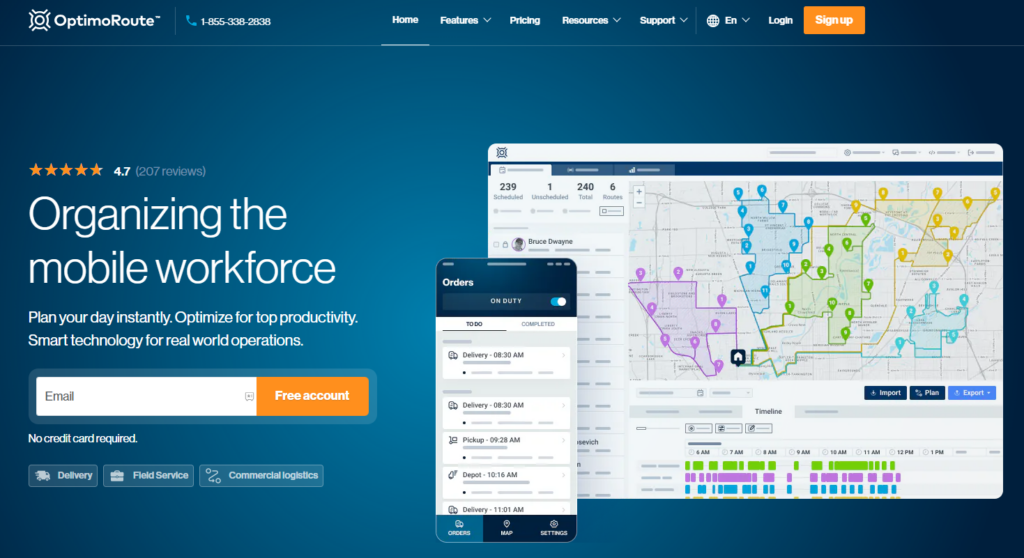
OptimoRoute is a routing and scheduling platform used by delivery operations that require structured multi-stop planning. It is widely adopted in the mid-market for building clean, well-sequenced routes and managing delivery schedules across multiple days.
The platform supports route creation, driver assignment, and schedule planning within a single interface. It is particularly useful for operations that need to plan deliveries or service visits across multiple days, balance workload across drivers, and maintain recurring delivery schedules. Routes can be generated quickly, shared with drivers, and executed with tracking and proof of delivery.
As delivery operations scale, routing decisions extend beyond sequencing and scheduling. Assigning orders across vehicles, balancing capacity across depots, and responding to changes during execution become part of the routing workflow. OptimoRoute focuses on route planning and scheduling, with allocation and adjustment decisions typically handled outside the system.
Real-time updates are supported, but route adjustments during execution often require manual changes. For teams managing a growing number of deliveries, this can increase coordination effort during the day, especially when plans need to be updated based on new orders or operational changes.
OptimoRoute fits delivery operations where routing involves multi-stop planning, workload balancing, and scheduled execution. For operations that require routing decisions to stay connected with dispatch, allocation, and real-time execution across a network, additional systems are typically used alongside it.
Key Features of OptimoRoute
- Multi-stop route optimization and scheduling
- Multi-day planning and workload balancing across drivers
- Real-time driver tracking and live order status visibility
- Proof of delivery with photo and signature capture
OptimoRoute Is Best For
Mid-sized delivery and field service companies that need reliable multi-stop route optimization, multi-day scheduling, and workload balancing without the complexity requirements of enterprise dispatch orchestration or carrier management.
OptimoRoute’s Pros
- Supports route creation along with scheduling, allowing teams to plan deliveries across days while maintaining organized execution workflows.
- Distributes deliveries across drivers to maintain balanced workloads, improving route consistency and operational predictability.
- Offers a straightforward interface that enables teams to generate routes and start operations without extensive onboarding or configuration.
- Allows planning across multiple days, making it suitable for operations managing recurring deliveries or scheduled service visits.
OptimoRoute’s Cons
- Does not support automated dispatch orchestration, requiring manual order assignment across vehicles and routes
- Does not include AI-driven carrier assignment, limiting how routing decisions extend into execution
- Requires manual intervention for real-time rerouting, increasing coordination effort during live operations
- Lacks supply chain visibility and enterprise-grade integration depth, making it less suitable for high-volume, multi-depot logistics networks
OptimoRoute’s Pricing
OptimoRoute offers subscription-based pricing starting from $35 per user per month, with higher tiers available based on feature access. A free trial is available for evaluation.
5. FarEye
FarEye is a delivery management platform with a strong focus on last-mile visibility and customer communication. It is commonly used by retail and e-commerce brands that prioritize the delivery experience, including tracking, notifications, and customer-facing updates.
The platform includes route planning along with real-time tracking and delivery execution visibility. Routes can be created and assigned to drivers, while customers receive updates through branded tracking pages and notifications. For operations where visibility after dispatch is a key requirement, this layer is well supported.
In delivery operations, routing decisions also determine how orders are grouped, assigned, and executed before dispatch begins. FarEye provides route planning capabilities, but routing is one part of a broader delivery experience workflow. Allocation, capacity balancing, and planning depth depend on how routing is configured within the system.
Dispatch workflows are supported, with visibility into delivery progress and the ability to manage updates as execution progresses. For teams managing delivery communication and tracking at scale, this helps maintain consistency across the last-mile experience.
FarEye fits delivery operations where routing is combined with customer communication and real-time visibility. For use cases where routing decisions need to be tightly connected with allocation, multi-depot planning, and execution logic, routing is typically part of a larger delivery management setup.
Key Features of FarEye
- Last-mile delivery visibility and real-time tracking
- Branded customer tracking pages and delivery notifications
- Route planning with basic optimization capabilities
- Proof of delivery and driver mobile application
- Delivery experience management for retail and e-commerce workflows
FarEye Is Best For
Mid-to-large retail and e-commerce brands where the customer delivery experience is the primary focus and post-dispatch communication, visibility, and branded tracking are the core requirements.
FarEye’s Pros
- Provides strong delivery visibility with real-time tracking and branded notifications, helping teams keep customers informed throughout the delivery lifecycle
- Connects routing with execution visibility, allowing teams to monitor how planned routes perform during actual delivery operations
- Supports retail and e-commerce workflows where delivery experience and customer communication are closely tied to routing
- Offers a centralized control tower view that enables teams to track deliveries and manage operations across shipments
FarEye’s Cons
- Lacks deep constraint-based optimization required for complex, large-scale delivery planning
- Requires manual intervention in dispatch workflows, limiting automation in order assignment
- Does not fully support pre-dispatch intelligence, affecting planning quality before execution
- Does not provide complete carrier orchestration capabilities, requiring additional systems for full logistics coordination
FarEye’s Pricing
FarEye operates on a custom pricing model based on operational scope and requirements. Contact FarEye directly for a detailed quote.
6. LogiNext

LogiNext is a logistics platform that includes routing, fleet tracking, and delivery management across multiple operational modules. It is used by enterprises that want routing as part of a broader system covering first mile, middle mile, and last mile operations.
The platform supports route planning along with real-time tracking and delivery execution. Routes can be generated based on standard constraints, assigned to drivers, and monitored through a central dashboard. For operations that require visibility across multiple delivery stages, this setup provides a unified view of movement across the network.
Routing in LogiNext is part of a wider logistics workflow. Along with route creation, the platform includes modules for reverse logistics, tracking, and delivery management. This makes it suitable for teams looking to manage different legs of delivery operations within one system.
As routing requirements expand, decisions may involve allocation across depots, alignment with inventory systems, and adjustments during execution. These workflows depend on how routing is configured and integrated within the platform, particularly when connecting with ERP and WMS systems.
LogiNext fits delivery operations where routing is combined with tracking and multi-leg logistics visibility. For use cases where routing decisions need to be tightly connected with allocation, carrier selection, and real-time execution, routing is part of a broader system setup.
Key Features of LogiNext
- Route optimization across first mile, middle mile, and last mile
- Real-time fleet tracking and delivery management
- Reverse logistics and returns management module
- Driver mobile application with proof of delivery
LogiNext Is Best For
Enterprises looking for routing combined with tracking and multi-leg delivery visibility within a single platform, especially across first mile, mid mile, and last mile operations.
LogiNext’s Pros
- Supports route planning across multiple delivery stages, helping teams manage first mile, mid mile, and last mile operations within a single system
- Provides real-time fleet tracking and visibility, allowing teams to monitor delivery execution and stay updated on route progress
- Connects routing with broader logistics workflows, enabling coordination across delivery tracking, reverse logistics, and operational processes
- Offers integration capabilities that allow routing workflows to align with existing enterprise systems and logistics operations
LogiNext’s Cons
- Presents integration challenges within complex enterprise technology stacks, requiring additional effort to align systems
- Introduces UX complexity at scale, which can slow down dispatcher workflows during daily operations
- Provides route optimization with limited constraint depth compared to specialized optimization platforms
- Offers limited carrier orchestration capabilities, requiring additional systems for end-to-end logistics coordination
LogiNext’s Pricing
LogiNext operates on a custom pricing model based on operational scope and requirements. Contact LogiNext directly for a detailed quote.
7. Shipsy
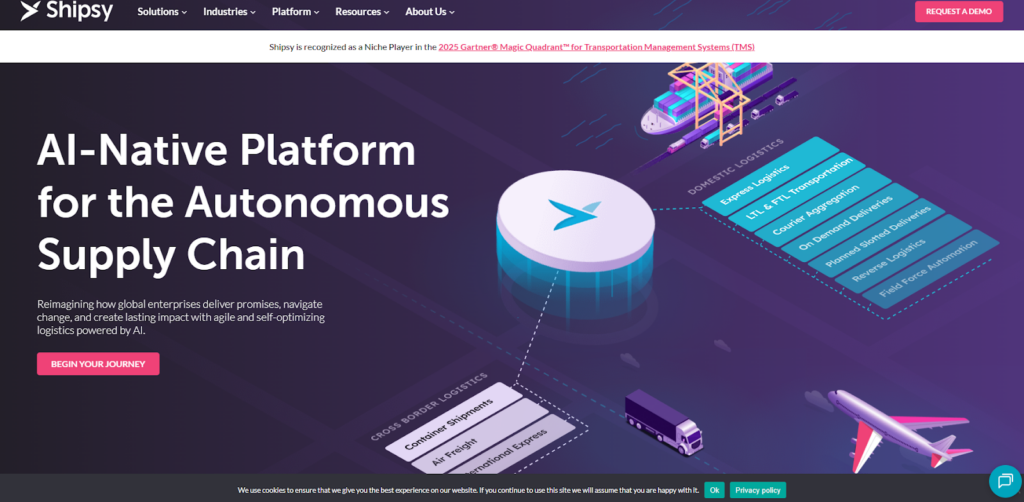
Shipsy is a logistics platform that includes routing, carrier management, and freight visibility. It is primarily used in operations where routing decisions are connected with carrier selection and shipment movement across regions.
The platform supports route planning along with shipment tracking and carrier coordination. Routes can be created for deliveries, while carrier selection and tracking provide visibility into how shipments move across different transport stages. For operations that involve both domestic delivery and cross-border movement, this creates a combined workflow.
Routing in Shipsy is integrated with carrier management. Delivery assignments can be aligned with carrier availability, performance, and shipment requirements. This makes routing part of a broader logistics process that includes freight movement and documentation.
For delivery operations, routing requirements may include multi-depot planning, capacity balancing, and continuous updates during execution. These workflows depend on how routing is configured within the platform and how it connects with delivery-specific systems.
Shipsy fits operations where routing is closely tied to carrier management and freight workflows. For use cases focused on high-volume domestic delivery routing across multiple depots and fleets, routing is part of a wider logistics setup.
Key Features of Shipsy
- Route planning with carrier management capabilities
- Cross-border freight visibility and documentation workflows
- Carrier selection and performance tracking across international lanes
- Real-time shipment tracking for freight operations
- Last-mile delivery management for domestic operations
- Analytics and reporting across freight and carrier performance
Shipsy Is Best For
Enterprises with significant cross-border freight and international shipping needs where carrier management across borders, customs documentation, and freight visibility are the primary operational challenges.
Shipsy’s Pros
- Connects route planning with carrier management, allowing teams to align delivery assignments with carrier availability and service requirements
- Supports cross-border logistics workflows, enabling visibility into shipment movement across regions and transport stages
- Provides carrier performance insights, helping teams make informed routing and allocation decisions across partners
- Tracks shipments in real time across delivery operations, offering visibility into both domestic and international movements
Shipsy’s Cons
- Offers last-mile capabilities that are less established for high-volume enterprise delivery operations
- Provides limited constraint-based route optimization for complex multi-depot and multi-carrier planning
- Does not deliver automated dispatch at the depth required for large-scale last-mile execution
- Fits cross-border logistics well, but requires stronger capabilities for domestic last-mile orchestration at enterprise scale
Shipsy’s Pricing
Shipsy operates on a custom pricing model based on shipment volume and operational scope. Contact Shipsy directly for a detailed quote.
8. Routific
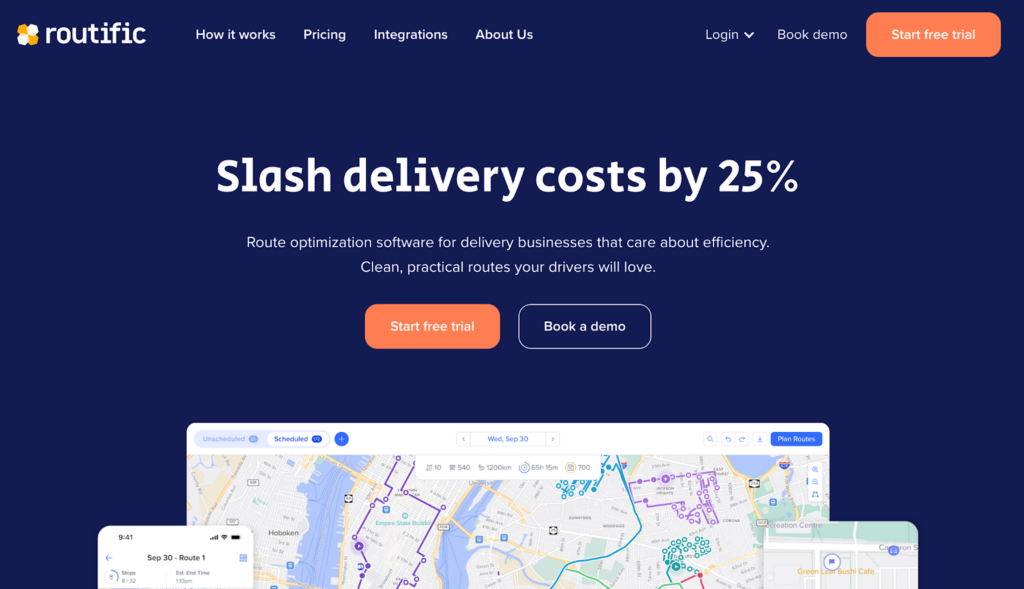
Routific is a routing tool designed for small delivery operations that need simple multi-stop planning. It focuses on helping teams build routes quickly without requiring complex setup or configuration.
The platform supports route creation, stop sequencing, and basic driver scheduling through a clean, drag-and-drop interface. Routes can be generated and shared with drivers, who can then execute deliveries using the mobile application with navigation and tracking support. For teams managing deliveries within a limited geographic area, this workflow is easy to adopt and operate.
Routing in Routific is centered on building and executing daily routes. As delivery requirements expand to include allocation across vehicles, adjustments during execution, or coordination across multiple locations, these workflows typically sit outside the platform.
The system provides delivery tracking and notifications, giving basic visibility into route execution. For operations that require routing decisions to connect with order systems, inventory data, or dispatch workflows, additional tools are generally used alongside Routific.
Routific fits delivery operations where routing is focused on stop sequencing and daily execution within a small fleet. For larger operations with multiple depots, higher volumes, or more complex routing requirements, routing becomes part of a broader system setup.
Key Features of Routific
- Drag-and-drop route planning and stop sequencing
- Driver scheduling and shift management
- Basic delivery notifications and customer communication
Routific Is Best For
Small local delivery operations with basic multi-stop planning needs, where simplicity of setup and ease of use matter more than optimization depth, dispatch automation, or enterprise integration capability.
Routific’s Pros
- Enables quick route creation through a drag-and-drop interface, making route planning simple and easy to adopt for small teams
- Supports driver scheduling and daily route execution, helping teams organize delivery operations with minimal setup
- Provides customer notifications with estimated arrival times, improving communication during deliveries
- Offers a lightweight mobile app for drivers, allowing them to follow routes and manage deliveries efficiently
Routific’s Cons
- Does not support real-time rerouting, limiting the ability to adjust routes during live delivery operations
- Does not include automated dispatch or carrier management capabilities within the routing workflow
- Lacks integration depth with enterprise ERP, WMS, and TMS systems, requiring additional effort for system alignment
- Shows limited evidence of performance at higher delivery volumes, making scalability beyond smaller operations uncertain
- Reaches operational limits quickly as delivery volumes and network complexity increase
Routific’s Pricing
Routific offers subscription-based pricing with plans available on its website. Pricing varies based on team size and usage. Contact Routific for enterprise-level requirements if applicable.
9. Onfleet
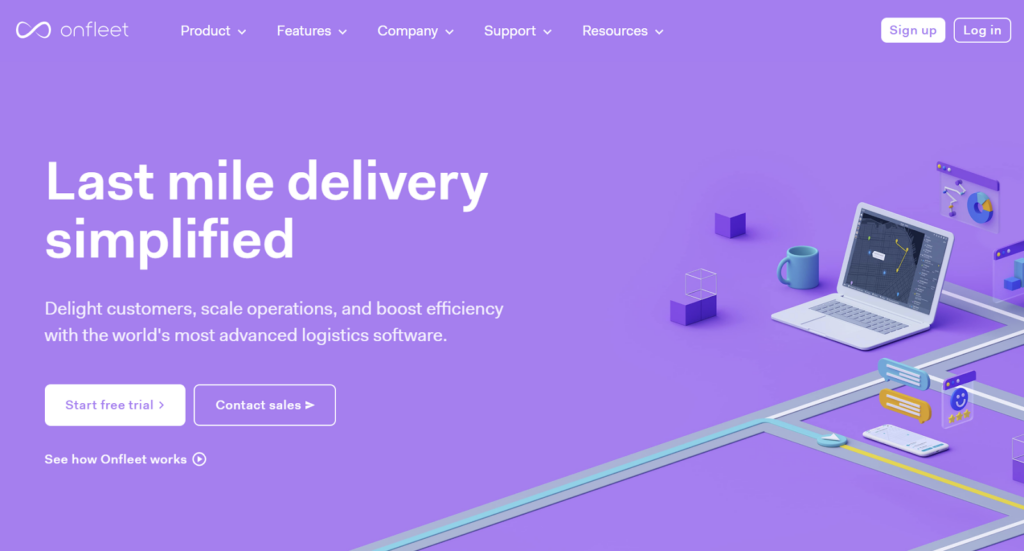
Onfleet is a routing and delivery management platform widely used by small-to-mid-sized delivery operations and D2C brands. It is known for its ease of use, with a clean interface that allows teams to plan routes, assign tasks, and track deliveries without complex setup.
The platform supports multi-stop route planning, driver assignment, and real-time tracking within a single system. Routes can be created quickly, shared with drivers through the mobile app, and monitored through a dispatcher dashboard that provides visibility into delivery progress. Customer notifications and proof of delivery are built into the workflow, making it suitable for operations where communication and execution visibility are important.
Routing in Onfleet is focused on planning and executing daily deliveries within a defined operational setup. As delivery requirements expand to include allocation across multiple depots, coordination with carriers, or adjustments based on changing conditions, these workflows typically require additional systems or manual intervention.
The platform provides delivery analytics and reporting, giving teams visibility into route execution and performance. For operations that require routing decisions to connect with broader supply chain data, reporting is generally used alongside other systems.
Onfleet fits delivery operations where routing is combined with execution tracking and customer communication. For use cases that involve higher volumes, multiple fulfillment points, or extended coordination across fleets and partners, routing becomes part of a larger operational setup.
Key Features of Onfleet
- Route optimization and multi-stop delivery planning
- Real-time driver tracking and live delivery status visibility
- Proof of delivery with photo and signature capture
- Customer notifications and live tracking page
Onfleet Is Best For
Small-to-mid-sized last-mile delivery operations and D2C brands running manageable daily volumes from a single location, where ease of use, driver tracking, and customer communication are the primary requirements.
Onfleet’s Pros
- Provides a clean and intuitive interface, allowing teams to plan routes and manage deliveries with minimal onboarding
- Enables real-time driver tracking and delivery visibility, helping teams monitor operations and stay updated on delivery progress
- Supports customer notifications and live tracking pages, improving communication and transparency during deliveries
- Offers a reliable mobile driver app, allowing drivers to manage tasks, capture proof of delivery, and execute routes efficiently
Onfleet’s Cons
- Does not support AI-powered dispatch automation, requiring manual effort in order assignment workflows
- Does not include carrier orchestration capabilities, limiting its use in multi-carrier delivery networks
- Provides limited analytics depth, making enterprise-level SLA tracking and network performance analysis difficult
- Reaches scalability limits as delivery volumes increase, particularly in multi-depot or high-volume operations
Onfleet’s Pricing
Onfleet offers subscription-based pricing with plans available on its website. Enterprise pricing is available on request based on delivery volumes and operational requirements.
Choosing the right fleet routing software comes down to understanding which category of platform your operation actually needs. The tools in this list fall into three distinct tiers based on their capability depth, the complexity they were built to handle, and the scale at which they perform reliably.
Use the breakdowns below to identify where each platform fits before committing to a shortlist or a demo.
Enterprise Tier
| Tool | Best For | Constraints | Dispatch | Visibility | Multi-Depot | Scale | Pricing |
|---|---|---|---|---|---|---|---|
| Locus | Enterprise retail, FMCG, 3PL | 250+ real-world | Yes | Yes | Yes | High | Contact Sales |
| FarEye | Retail, e-commerce | Standard | Partial | Yes | Partial | Medium | Contact Sales |
| LogiNext | Enterprises (Asia, MEA) | Standard | Partial | Yes | Yes | Medium | Contact Sales |
| Shipsy | Cross-border freight operations | Standard | Partial | Yes | Partial | Medium | Contact Sales |
Key Takeaway:
Locus is the only platform in this tier that connects routing, dispatch, and execution within a single system, combining 250+ constraint-based optimizations with automated allocation and carrier orchestration.
Mid-Market
| Tool | Best For | Constraints | Dispatch | Visibility | Multi-Depot | Scale | Pricing |
|---|---|---|---|---|---|---|---|
| Route4Me | Small-mid delivery fleets | Limited | No | Yes | No | Low | From $60/vehicle |
| OptimoRoute | Mid-sized delivery operations | Limited | No | Yes | Partial | Low | From $35/user |
| Onfleet | D2C and last-mile delivery | Limited | No | Yes | No | Low | Contact Sales |
Key Takeaway:
These platforms focus on route planning and execution. They support stop sequencing and tracking, but routing decisions are not connected with dispatch or multi-depot coordination.
SMB And Niche
| Tool | Best For | Constraints | Dispatch | Visibility | Multi-Depot | Scale | Pricing |
|---|---|---|---|---|---|---|---|
| WorkWave | Field service routing | Limited | No | Yes | No | Low | From $54/vehicle |
| Sygic | Truck navigation | Navigation | No | Partial | No | Low | Contact Sales |
| Routific | Local delivery operations | Limited | No | No | No | Low | Contact Sales |
Key Takeaway:
These tools support specific routing use cases such as technician scheduling, navigation, or small-scale delivery planning. Routing is limited to execution-level needs within a defined scope.
From Route Planning to Execution Control in Delivery Operations
As delivery operations scale, routing plans are created more frequently, cover more constraints, and involve more moving parts across depots, fleets, and delivery windows. Even when routes are generated on time, execution often requires continuous adjustments to keep deliveries aligned with commitments.
This happens when routing is treated as a standalone step. Routes are built in one system, assignments are handled separately, and execution is tracked elsewhere. As conditions change during the day, teams step in to realign plans, update assignments, and manage exceptions manually.
Routing software for deliveries needs to carry decisions beyond route creation. How orders are assigned, how capacity is balanced, and how routes adapt during execution all influence whether a plan works in practice.
Locus is designed to connect these decisions within a single system. Routing outputs flow directly into dispatch, assignments adjust based on real-time inputs, and execution stays aligned with the original plan without requiring constant manual coordination.
This allows teams to focus on operational exceptions and service priorities, while the system handles routing, allocation, and execution decisions together.
If your delivery operations still require manual coordination between routing and execution, it is worth evaluating how a connected routing system changes day-to-day operations. Schedule a demo with Locus to see how routing decisions translate into execution at scale.
Frequently Asked Questions (FAQs)
1. How is routing software for deliveries different from delivery management software?
Routing software focuses on building efficient routes and assigning stops, while delivery management software includes tracking, communication, and execution workflows across the delivery lifecycle.
2. Can routing software handle both owned fleets and third-party carriers?
Some platforms support mixed fleets, but many require manual coordination. Systems that integrate routing with carrier allocation allow deliveries to be assigned across fleets and partners within the same workflow.
3. What role does real-time data play in delivery routing?
Real-time inputs such as traffic, order changes, and delays help update routes during execution. This ensures delivery plans stay aligned with actual conditions instead of relying only on pre-planned routes.
4. How do I know if my routing software will scale with my operations?
Evaluate how the system performs with increasing order volumes, multiple depots, and overlapping delivery zones. Consistent route quality and planning speed at higher loads indicate scalability.
5. Can routing software reduce manual intervention in dispatch operations?
Yes. Platforms that connect routing with dispatch and execution can automate order allocation and adjustments, reducing the need for manual coordination across systems, as seen in solutions like Locus.

General
Routing and Scheduling Software Compared: 10 Platforms for Enterprise Logistics Teams (2026)

Mar 30, 2026
Best Routing and Scheduling Software for Enterprise Logistics in 2026: Side-by-Side Comparison of the Top 10 Platforms
Read more
General
Top 12 Route Planning Software for Enterprise Teams (2026)
Mar 31, 2026
A side-by-side breakdown of 12 route planning platforms across constraint depth, dispatch support, and scalability for enterprise delivery operations.
Read moreInsights Worth Your Time




















Routing Software for Deliveries: Enterprise Buyer’s Guide (2026)