


General
Real-Time Supply Chain Analytics: Transform Operations with Data-Driven Insights
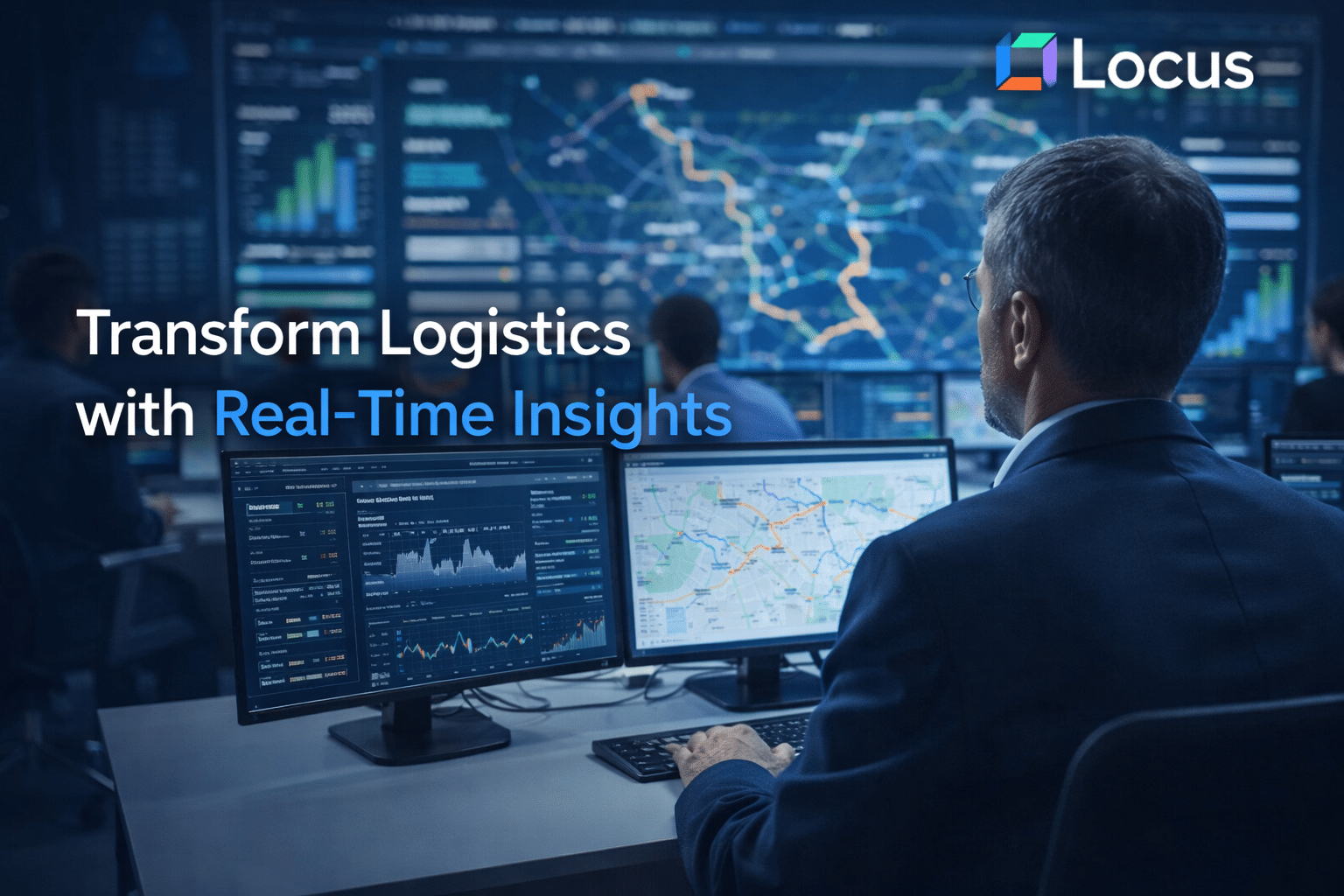
For supply chain leaders at large European retailers and manufacturers navigating complex logistics networks.
Real-time supply chain analytics monitors metrics like inventory levels, shipment locations, and disruption signals continuously—using IoT sensors, cloud dashboards, and machine learning—to deliver instant, actionable insights rather than retrospective batch reports. It is the operational backbone that enables supply chain leaders to detect disruptions as they form, reroute resources on the fly, and maintain service-level commitments even when conditions shift without warning.
In today’s fast-moving and disruption-prone environment, supply chain analytics has evolved from a reporting function into a real-time decision engine. For European retailers and manufacturers navigating complex networks, rising customer expectations, and shrinking margins, the ability to act on live data is no longer optional.
With 70.07% of companies marking advanced analytics—predictive and prescriptive—as their top priority in 2026, the shift from historical reporting to live, data-driven execution is accelerating across every industry vertical. Real-time supply chain analytics enables organizations to move beyond reactive operations and toward proactive, data-driven execution. With real-time visibility, businesses can monitor every node of their supply chain, detect risks early, and respond instantly—before disruptions escalate into costly failures.
Key Takeaways
- From reactive to real-time: Real-time supply chain analytics shifts operations from batch-based reporting to instant, data-driven decision-making—critical for fleet managers and logistics directors handling high-volume operations.
- End-to-end visibility is foundational: True visibility across warehouses, transportation, and last-mile operations is the prerequisite for improving agility, performance, and customer experience.
- Insight without action is wasted data: The biggest value comes from connecting analytics to execution—through dynamic route optimization, automated exception handling, and real-time task reassignment.
- Quantifiable ROI is proven: AI reduces logistics costs by 15%, inventory levels by 35%, and improves service efficiency by 65%, validating the business case for data-driven logistics.
- Retailers and manufacturers lead adoption: Organizations using analytics to improve delivery reliability, inventory decisions, and network efficiency are building resilient, future-ready supply chains.
- Locus delivers the only logistics analytics platform designed for complex, high-volume enterprise operations—connecting real-time visibility to automated execution at scale.

Optimize Your Supply Chain with Expert Consulting
Leverage our expertise to streamline your logistics operations and enhance efficiency.
Why Real-Time Supply Chain Analytics Is Critical Today
Traditional supply chains relied heavily on historical data. Decisions were made based on yesterday’s reports, often too late to influence outcomes. In contrast, modern supply chains demand instant awareness and rapid response.
In a 2025 Gartner survey, 89% of supply chain leaders identified a lack of real-time visibility as their primary operational challenge (a massive jump from 67% in 2021).
Disruptions today are continuous—ranging from transportation delays and inventory imbalances to last-mile inefficiencies. In this environment, data-driven logistics becomes the backbone of operational resilience.
The urgency is backed by market scale: the global supply chain analytics market reached USD 12.07 billion in 2025, and it continues to accelerate as organizations prioritize real-time capabilities for 2026 and beyond. Meanwhile, 63% of organizations now use digital tools to monitor and assess supply-chain efficiency—signalling that the industry baseline has shifted permanently.
Research highlights that supply chain agility—the ability to respond quickly to volatility—is more critical than cost efficiency alone for sustained competitive advantage. Real-time analytics is what enables this agility.
By providing a live view of operations, it allows organizations to shift from delayed reactions to immediate action. For fleet managers at high-volume retailers and logistics directors at manufacturing enterprises, this capability is the difference between absorbing a disruption and being derailed by one.
What Is Real-Time Supply Chain Analytics?
Real-time supply chain analytics refers to the continuous collection, processing, and analysis of supply chain data to support instant decision-making.
Real-Time Analytics vs. Traditional Batch Reporting
| Dimension | Traditional Batch Reporting | Real-Time Supply Chain Analytics |
| Data freshness | Hours to days old | Seconds to minutes old |
| Decision speed | Retrospective; react after the fact | Proactive; act as events unfold |
| Disruption detection | Manual review of dashboards | Automated alerts and exception flags |
| Optimization approach | Static plans updated periodically | Dynamic, continuous re-optimization |
| Forecasting method | Historical trend extrapolation | ML-driven, incorporating live signals |
| Stakeholder alignment | Siloed reports per department | Unified, shared real-time view |
This comparison illustrates why 46.9% of companies already operating on Big Data are actively seeking real-time and predictive capabilities—batch reporting simply cannot keep pace with modern supply chain volatility.
Unlike traditional analytics, which focuses on historical trends, the Locus platform integrates with your entire logistics stack for true end-to-end visibility. Real-time analytics enables organizations to:
- Monitor shipments, inventory, and resources live using IoT sensors that track location, temperature, humidity, and shock conditions in transit
- Identify disruptions as they occur through automated exception detection and severity-based prioritization
- Trigger automated or assisted decision-making via AI-driven optimization engines that reroute, reallocate, and reschedule without manual intervention
This transforms analytics from a passive reporting tool into an active operational system—the live nerve centre of your supply chain.
From Visibility to Execution: The Real Shift
Many organizations invest in dashboards but fail to translate insights into action. The true value of a logistics analytics platform lies in its ability to connect visibility with execution.
Modern supply chain systems do three things simultaneously. They detect issues, predict potential disruptions, and recommend or execute corrective actions.
According to Tive’s State of Visibility 2025 report, 37% of companies completely lose track of their shipments once they are in transit.
This blind spot is staggering—and it persists even as 79% of companies with Big Data actively seek predictive capacity to close it. The gap between having data and acting on data is where most supply chains underperform.
For example, when a delivery is at risk of delay, systems can identify the deviation in real time and trigger route adjustments or task reassignment to maintain service levels. Organizations that understand why your business needs route optimization can connect this insight loop to tangible cost savings and SLA improvements.
This shift—from insight to immediate intervention—is what defines next-generation supply chain optimization.
Four Core Capabilities of a Modern Logistics Analytics Platform
1. End-to-End Real-Time Visibility
True visibility goes beyond tracking shipments. It provides a unified, real-time view of the entire supply chain—across warehouses, transportation, and last-mile operations.
This includes live tracking, dynamic ETAs, and automated alerts. More importantly, this data is accessible to all stakeholders, ensuring alignment across teams. IoT sensors play a critical role here, monitoring factors like temperature, humidity, shock, and location for in-transit goods—triggering alerts for issues like spoilage or damage before they become customer-facing failures.
Technology like RFID is already proving its impact: RFID tags can push inventory accuracy to roughly 95%, up from the 65% typical with manual counts. When combined with real-time dashboards, these technologies create a single source of truth for every stakeholder—from warehouse floor supervisors to C-suite executives.
Real-time shipment visibility combined with proactive notifications ensures that both internal teams and customers remain informed at every stage.
2. Intelligent Exception Management
Disruptions are inevitable, but delayed responses are not.
Real-time analytics enables instant detection of anomalies such as delays, route deviations, or SLA risks. Systems can automatically flag these issues and prioritize them based on severity—distinguishing between a 10-minute delay and a missed delivery window that triggers contractual penalties.
How intelligent exception management works in practice:
- Detect: IoT sensors and GPS data flag a deviation—a truck is 30 minutes behind schedule due to a traffic incident.
- Assess: The system evaluates downstream impact: three deliveries at risk, one with a hard SLA window.
- Act: The platform automatically reassigns the SLA-critical delivery to a nearby vehicle, recalculates routes for remaining stops, and sends proactive ETA updates to affected customers.
- Learn: The exception is logged, enriching the predictive model so future scheduling accounts for this corridor’s disruption frequency.
This allows operations teams to focus on resolving critical problems rather than manually identifying them.
3. Dynamic Optimization in Real Time
One of the most impactful applications of real-time analytics is dynamic optimization—and it is where organizations see the fastest ROI.
Instead of relying on static plans, organizations can continuously adjust routes, schedules, and resource allocation based on real-world conditions. Understanding what is route optimization at a foundational level is essential, but the real power emerges when optimization happens dynamically, second by second.
When delays occur, tasks can be reassigned to nearby resources, routes recalculated, and schedules updated instantly. This ensures higher SLA adherence and improved delivery performance. The route optimization benefits extend across retail, manufacturing, and 3PL segments alike.
4. Seamless Communication and Coordination
Execution requires coordination across multiple stakeholders—drivers, warehouse teams, customer service representatives, and partner carriers.
Real-time analytics platforms integrate communication capabilities that allow teams to share updates instantly, resolve issues faster, and coordinate decisions without delays. Instant messaging, automated status broadcasts, and shared dashboards eliminate the information silos that cause most operational friction.
This improves responsiveness and reduces operational friction across the supply chain, enabling organizations to improve fleet utilization while maintaining service quality.
Revolutionize Your Logistics with Route Optimization
Discover how our advanced route optimization solutions can transform your delivery operations.
How Retailers Use Real-Time Supply Chain Analytics
Retailers are leveraging supply chain analytics to gain a competitive edge in an increasingly demanding market. For operations directors managing hundreds of daily routes and thousands of SKUs, the value is immediate and measurable.
Last-Mile Delivery Optimization
In last-mile delivery operations, real-time analytics helps improve delivery reliability and reduce failed attempts. By continuously optimizing routes and monitoring execution, retailers can ensure more predictable and efficient deliveries—critical in markets where same-day and next-day promises are table stakes.
Inventory Intelligence
Inventory management is another area of transformation. With real-time insights into demand and stock levels, retailers can dynamically allocate inventory, reducing both stockouts and excess inventory. The data backs this up: AI-enabled forecasting alone can reduce stockouts by up to 50% while lowering overall supply chain costs by up to 10%. Given that 52.9% of leaders identify demand forecasting error as one of their biggest headaches, real-time analytics directly addresses the core pain point.
Omnichannel Fulfillment
Omnichannel operations also benefit significantly. Real-time data enables accurate delivery promises, seamless order fulfillment, and better coordination across online and offline channels. When a customer places an order via mobile and expects two-hour delivery, only real-time analytics can orchestrate the inventory check, picker dispatch, route assignment, and live tracking required to deliver on that promise.
How Manufacturers Are Leveraging Data-Driven Logistics
Manufacturers operate within complex supply networks that require constant monitoring and coordination. For supply chain directors managing multi-tier supplier ecosystems, real-time analytics is the difference between proactive management and firefighting.
Supplier Performance Monitoring
Real-time analytics allows manufacturers to track supplier performance, identify bottlenecks, and respond quickly to disruptions. This ensures continuity in production and distribution—especially critical when a delayed component can halt an entire production line.
Transportation Efficiency
Transportation efficiency is another major benefit. By analyzing live data, manufacturers can optimize routes, improve load utilization, and reduce costs. The impact is substantial: AI reduces logistics costs by 15%, inventory by 35%, and service efficiency improves by 65%. For high-volume manufacturers shipping thousands of pallets daily, even single-digit percentage improvements translate to millions in annual savings.
Proactive Risk Management
More importantly, real-time analytics enables proactive decision-making. Instead of reacting to disruptions, manufacturers can anticipate risks—weather events, port congestion, carrier capacity constraints—and take preventive action before impact reaches the production floor. Organizations looking to automate logistics operations find that real-time analytics is the prerequisite for meaningful automation.
Business Benefits of Real-Time Supply Chain Analytics
The impact of real-time analytics is both operational and strategic. Here are the measurable benefits enterprise organizations are realizing:
Operational Benefits
- Faster disruption response: Automated alerts and exception management reduce response time from hours to minutes, preventing cascading failures across the network.
- Higher delivery success rates: Dynamic route optimization and real-time task reassignment minimize failed deliveries and missed SLA windows.
- Improved resource utilization: Live data on fleet position, driver availability, and load capacity enables tighter scheduling and fewer empty miles.
- Reduced inventory carrying costs: Real-time demand signals enable just-in-time replenishment, cutting excess stock without increasing stockout risk.
Strategic Benefits
- Enhanced customer experience: Proactive ETA updates, live tracking, and reliable delivery promises build customer trust and reduce WISMO (Where Is My Order) inquiries.
- Supply chain resilience: Early warning systems and scenario modelling allow organizations to absorb shocks—from weather events to supplier failures—without service degradation.
- Competitive differentiation: Organizations that respond faster, deliver more reliably, and operate more transparently outperform competitors still reliant on batch reporting.
- Sustainability gains: Optimized routes and better load utilization directly reduce fuel consumption and carbon emissions, supporting green logistics goals.
At the same time, real-time analytics creates a compounding advantage. Each disruption detected and resolved feeds back into the predictive model, making the system smarter over time.
How Locus Powers Real-Time Supply Chain Analytics
Unlike generic analytics tools, the Locus platform is purpose-built for complex, high-volume logistics operations. Here is what sets it apart:
- End-to-end integration: Locus connects with your existing TMS, WMS, ERP, and carrier systems to create a unified real-time view—no data silos, no blind spots.
- AI-driven dynamic optimization: The platform continuously recalculates routes, reassigns tasks, and adjusts schedules based on live conditions—not static plans created the night before.
- Intelligent exception handling: Automated severity-based alerting ensures operations teams focus on what matters most, while low-priority deviations are resolved autonomously.
- Scalable architecture: Whether you manage 500 deliveries a day or 50,000, the Locus platform scales without performance degradation—trusted by 360+ enterprises worldwide, including leading 3PLs, CPG brands, and retailers.
- Actionable dashboards: Beyond visualization, Locus dashboards are execution tools—every metric links to an action, every alert connects to a resolution workflow.
How Locus Outperforms Legacy Solutions
| Capability | Legacy TMS / Manual Systems | Locus Analytics Platform |
| Data integration | Manual, siloed, delayed | Automated, unified, real-time |
| Route optimization | Static, plan-once | Dynamic, continuous re-optimization |
| Disruption response | Reactive, hours | Proactive, minutes |
| Scalability | Degrades at volume | Enterprise-grade, 50K+ deliveries/day |
| Stakeholder alignment | Department-specific reports | Shared real-time dashboards |
At Locus, we are obsessed with making logistics smarter, faster, and more human. Our team lives and breathes supply chain innovation so you don’t have to.
How to Implement Real-Time Supply Chain Analytics
Adopting real-time analytics requires a structured approach. For enterprise organizations, rushing to deploy dashboards without foundational readiness leads to expensive underperformance.
Phase 1: Digitize Operations
Ensure data is captured consistently across systems—GPS trackers on vehicles, barcode/RFID scanning at warehouses, and digital proof of delivery at the doorstep. Without clean, structured data inputs, no analytics platform can deliver reliable outputs.
Phase 2: Integrate Systems
Connect your TMS, WMS, ERP, and carrier platforms into a single data layer. This eliminates silos and ensures that inventory, transportation, and order data flow into one real-time view. Platforms like Locus are designed for rapid API-based integration with existing enterprise stacks.
Phase 3: Establish Real-Time Visibility
Deploy unified dashboards that surface live KPIs—on-time delivery rates, vehicle utilization, exception counts, and dynamic ETAs. Ensure all stakeholders, from dispatch teams to executive leadership, access the same source of truth.
Phase 4: Activate Predictive and Prescriptive Analytics
Introduce machine learning models that forecast demand spikes, predict disruption likelihood, and prescribe optimal responses. This is where the highest ROI emerges—and where the compounding intelligence advantage begins.
Phase 5: Automate Execution
Close the loop by connecting analytics outputs to automated actions: dynamic re-routing, automatic carrier reassignment, proactive customer notifications, and exception-based escalation workflows.
This progression—digitization, integration, visibility, prediction, and automation—is essential for building an agile and resilient supply chain.
Find the Perfect Route Optimization Software
Explore our comprehensive guide to selecting the best route optimization tools for your business.
The Future: Autonomous Supply Chains
Real-time analytics is the foundation for autonomous supply chains—and the trajectory toward autonomy is accelerating in 2026.
In this model, systems continuously analyze data, make decisions, and execute actions with minimal human intervention. Technologies such as AI-driven optimization and automated exception handling are already enabling this transition. The signals are clear: 70.07% of companies have marked advanced analytics as their top priority, and 79% of those already leveraging Big Data are actively seeking predictive capacity.
Organizations that invest in data-driven logistics today are positioning themselves to lead this next phase of supply chain transformation. The near-term future is not fully autonomous—but it is highly augmented, where human judgment is amplified by machine intelligence at every decision point.
Real-time supply chain analytics is no longer just a technological upgrade—it is a strategic imperative.
For European retailers and manufacturers, the ability to combine real-time visibility, advanced analytics, and rapid execution determines success in an increasingly competitive market.
The future of supply chains belongs to organizations who move from data to action—instantly. That’s precision logistics, powered by Locus.
Frequently Asked Questions (FAQs)
What is real-time supply chain analytics?
Real-time supply chain analytics provides live monitoring of metrics like inventory levels, shipment locations, and disruption signals using IoT sensors, cloud dashboards, and machine learning models. Unlike batch reports that reflect yesterday’s reality, real-time analytics delivers instant insights—enabling decisions in seconds rather than hours. Platforms like Locus unify data pipelines across warehouses, carriers, and last-mile operations to create a single, continuously updated source of truth.
What are the key benefits of real-time supply chain analytics?
The core benefits include faster disruption response, reduced stockouts, improved delivery success rates, and lower logistics costs. AI-driven analytics reduces logistics costs by 15%, inventory levels by 35%, and improves service efficiency by 65%. Beyond operational gains, real-time analytics builds customer trust through proactive communication and reliable delivery promises—reducing WISMO tickets and strengthening brand loyalty.
How does real-time supply chain analytics differ from traditional visibility tools?
Traditional visibility tools show you where a shipment is. Real-time analytics tells you where it is, predicts when it will arrive, flags whether it’s at risk, and triggers corrective action automatically. The distinction is between passive monitoring and active, intelligence-driven execution. With Locus, you are never simply watching your supply chain—you are steering it in real time.
How does IoT support real-time supply chain analytics?
IoT sensors track factors like temperature, humidity, shock, and location for in-transit goods, triggering alerts for issues like spoilage, damage, or route deviation. This sensor data feeds directly into analytics platforms for real-time predictions on transit times, condition compliance, and delivery risk. RFID tags alone can push inventory accuracy to roughly 95%, compared to 65% with manual counts.
What role does real-time analytics play in demand forecasting?
Real-time analytics integrates live sales trends, market signals, and inventory data for continuous demand forecasting—detecting spikes and drops far earlier than historical models. AI-enabled forecasting can reduce stockouts by up to 50% while lowering overall supply chain costs by up to 10%. This is particularly valuable for retailers managing seasonal volatility and manufacturers coordinating multi-tier production schedules.
How does real-time supply chain analytics detect and manage disruptions?
Platforms monitor supplier performance, weather data, traffic conditions, and carrier telemetry with automated early-warning alerts and exception-based reporting. When an anomaly is detected—a delayed shipment, a missed pickup window, a temperature excursion—the system assesses severity, flags the issue, and either resolves it autonomously or escalates it to the appropriate team member with full context and recommended actions.
What tools and platforms provide real-time supply chain analytics?
Several platforms address different aspects of the real-time analytics stack. Locus provides end-to-end logistics analytics with dynamic optimization for enterprise operations. Other tools in the ecosystem include Estuary for real-time data integration, Striim for streaming data pipelines, and specialized sensors from providers like Sensitech for in-transit condition monitoring. The right platform choice depends on your operational complexity, integration requirements, and scale.
How can companies implement supply chain analytics effectively?
Implementation follows a five-phase approach: digitize operations to capture clean data, integrate systems to eliminate silos, establish real-time visibility through unified dashboards, activate predictive and prescriptive analytics using machine learning, and finally automate execution by connecting insights to actions. A phased approach ensures smoother adoption, faster ROI, and sustainable competitive advantage. 63% of organizations already use digital tools for supply chain monitoring—the question is no longer whether to adopt, but how fast you can move.
What is the difference between near real-time and real-time supply chain insights?
Near real-time typically refers to data latency of minutes to an hour—adequate for strategic dashboards and trend analysis. True real-time means data latency of seconds, required for operational decisions like dynamic rerouting, automated exception handling, and live customer notifications. Most enterprise supply chains need both: near real-time for planning visibility and true real-time for execution-layer decisions.
How does real-time supply chain analytics support sustainability?
By optimizing routes, improving load utilization, and reducing empty miles, real-time analytics directly lowers fuel consumption and carbon emissions. Organizations pursuing green logistics goals find that the same data-driven decisions that cut costs also reduce environmental impact—making sustainability and profitability mutually reinforcing rather than competing priorities.


General
Quick Commerce Fulfillment: How Leaders Scale Sub-2-Hour Delivery Without Losing Control

Apr 8, 2026
Leading quick commerce players have moved beyond incremental improvements. They have restructured fulfillment as a real-time, intelligence-driven system.
Read more
General
The Hidden Cost of Failed Deliveries: How AI Route Optimization Cuts WISMO Tickets by 40%
Apr 8, 2026
Discover the true cost of failed deliveries and how AI route optimization reduces WISMO tickets, improves delivery success, and cuts logistics costs.
Read moreInsights Worth Your Time




















Real-Time Supply Chain Analytics: Transform Operations with Data-Driven Insights