


General
10 Non-Negotiable Features in Enterprise Package Delivery Management Software

Key Takeaways
- Enterprise delivery software must go beyond routing to handle scale, variability, and operational complexity without manual intervention.
- The Delivery Orchestration Stack (planning, execution, visibility, intelligence) is the clearest way to evaluate whether a platform will scale with your business.
- Static planning and rule-based dispatch break quickly at enterprise volumes; real-time optimization and ML-driven decisions are essential.
- Visibility alone is not enough; operations need control towers, predictive insights, and automated intervention to maintain SLAs.
- Platforms like Locus unify dispatch, routing, tracking, and analytics into a single orchestration layer built for enterprise-scale delivery operations.
Choosing package delivery management software at the enterprise level means evaluating whether the system can handle scale, variability, and operational complexity without breaking.
As delivery volumes grow, most tools start to show their limits. Planning slows down, visibility fragments, and teams fall back on manual intervention to keep operations running.
The 10 capabilities below form the Delivery Orchestration Stack: four layers that separate enterprise-grade platforms from tools that stop scaling when the business doesn’t.
Delivery Orchestration Stack: Essential Features for Package Delivery Management Software
For operations navigating the complexity of last mile management at enterprise volumes, these are the features that determine whether logistics grows with the business or constrains it.
| Layer | Function | Features |
|---|---|---|
| Planning | How orders get assigned and routed | 1. ML Dispatch, 2. Route Optimization, 4. Order Batching |
| Execution | How deliveries happen on the ground | 5. ePOD, 6. Customer Communication, 7. Multi-Fleet Orchestration |
| Visibility | How your team monitors and intervenes | 3. Control Tower |
| Intelligence | How the system learns and integrates | 8. Predictive Analytics, 9. Rules Engine, 10. Integration Architecture |
A full capability comparison between enterprise orchestration platforms and standard delivery tools is included at the end of this guide. It maps every feature below against what most tools deliver.
1. ML-Powered Dispatch and Driver-Order Allocation
Automated dispatch is table stakes. What the automation evaluates is the differentiator.
Why rule-based dispatch fails at enterprise scale
Rule-based dispatch management software assigns the nearest available driver. At 500 daily orders across a single fleet type, the logic holds. At 15,000 orders across owned vehicles, contracted carriers, and gig drivers, nearest-driver assignment leaves vehicle capacity underutilized, mismatches vehicle types to order requirements, and ignores SLA tiers entirely.
The dispatch driver receiving the assignment may be closest in proximity, but wrong on every other variable, like vehicle capacity, skill certification, delivery-window alignment, and route efficiency.
What ML dispatch evaluates
ML-powered dispatch evaluates thousands of order-driver permutations simultaneously: driver proximity, remaining capacity, skill sets, vehicle type, delivery windows, and SLA priority. The assignment is “optimal driver for this specific order given the current system state.”
Locus’s AI-powered dispatch planning engine (DispatchIQ) processes these permutations across 180+ operational variables in seconds, supporting owned, contracted, and 3PL fleet types.
2. AI-Driven Route Optimization With Real-Time Recalculation
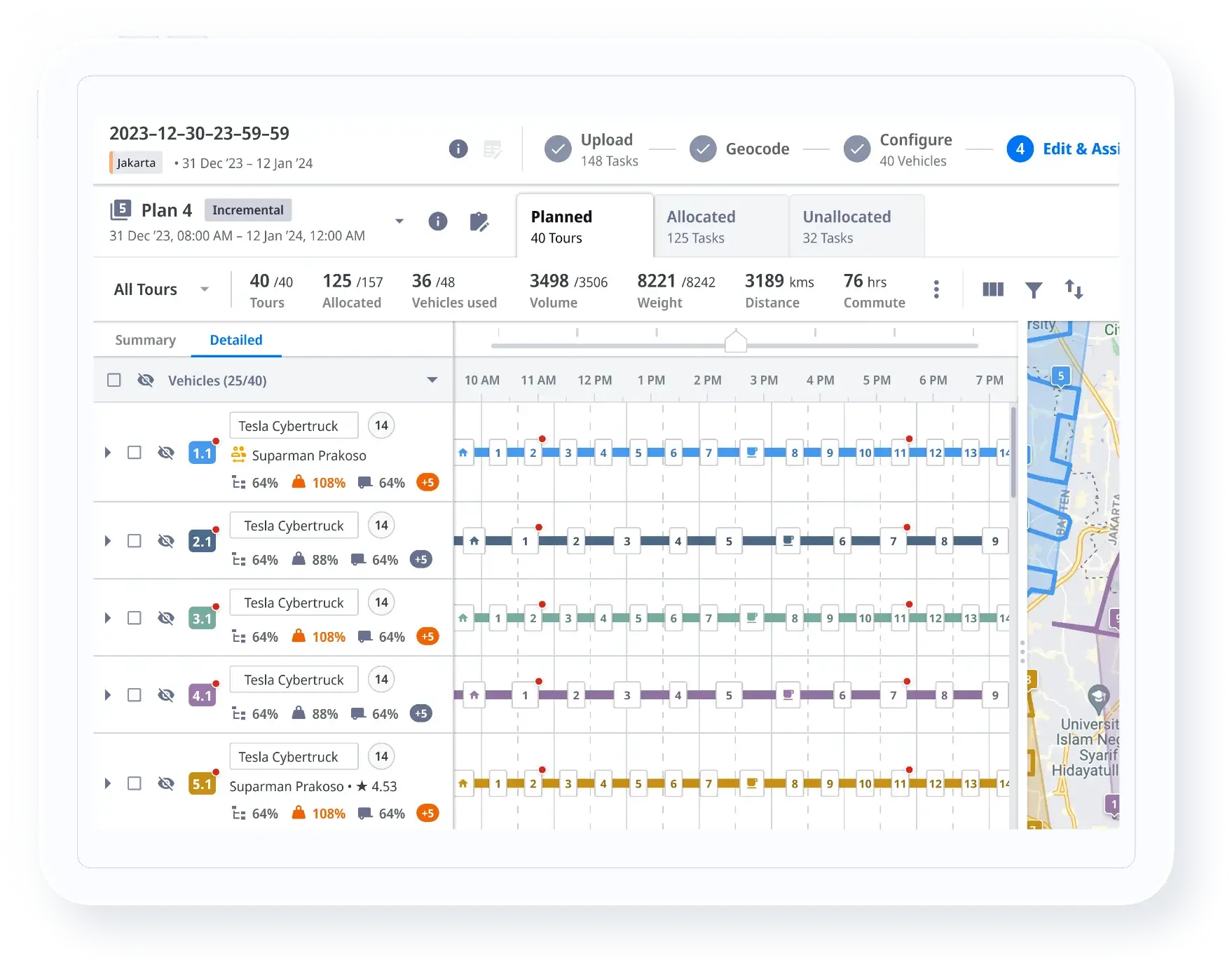
Static route optimization—overnight batch planning producing a fixed morning plan—is insufficient for enterprise operations. You need route optimization software that recalculates mid-execution.
The real-time recalculation requirement
During a live shift, a cancellation frees capacity on one vehicle. A priority order needs injection into an active route. A road closure cascades into three downstream stops. A platform that cannot recalculate in transit forces your dispatchers to manage these exceptions manually, which consumes time, phone calls, and SLA compliance.
Dynamic route planning must incorporate live traffic, weather, delivery windows, vehicle load constraints, and driver hours-of-service simultaneously, then adapt continuously as any variable changes.
Why real-time re-optimization wins
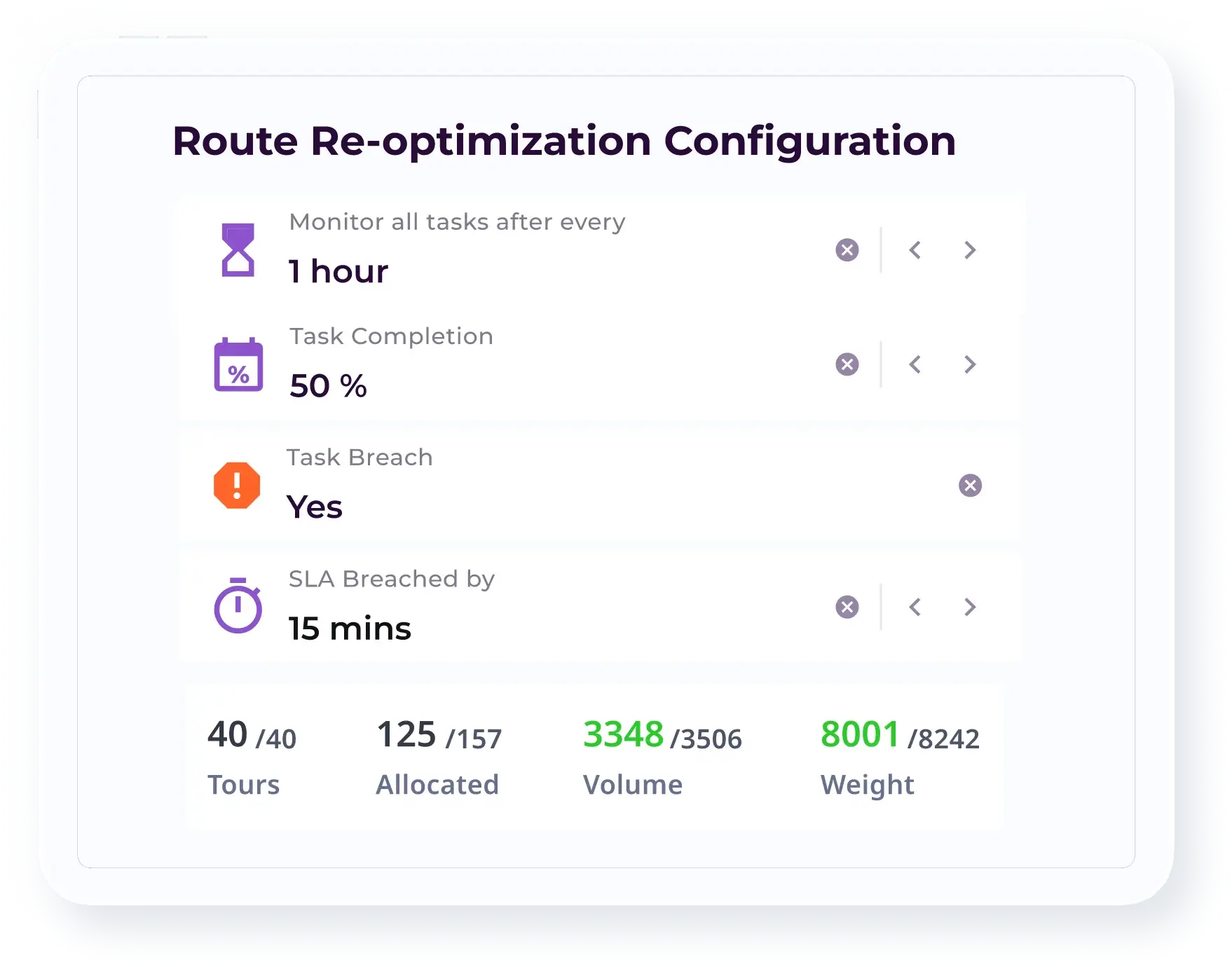
Locus’s route optimization engine uses historical delivery patterns and real-time signals to recalculate continuously during execution.
The distinction matters: automated route planning that adapts mid-shift prevents cascading delays that static plans guarantee. When evaluating AI route optimization, the diagnostic test is straightforward: does the platform recalculate in transit, or only at the start of the day?
3. Real-Time Supply Chain Visibility and Control Tower
Most enterprise logistics teams have GPS tracking. The gap is the analytical overlay that turns visibility into actionable intervention.
The visibility gap in practice
Your operations dashboard shows Vehicle 47 is 35 minutes behind schedule. What it does not show: that delay will cascade into three SLA breaches downstream. A nearby driver finishing early could absorb two of those stops. The customer at stop 12 already called support twice.
Standard delivery software shows you positions. Enterprise-grade logistics management software shows you which positions require intervention right now and calculates the intervention options before you ask.
What enterprise control towers provide
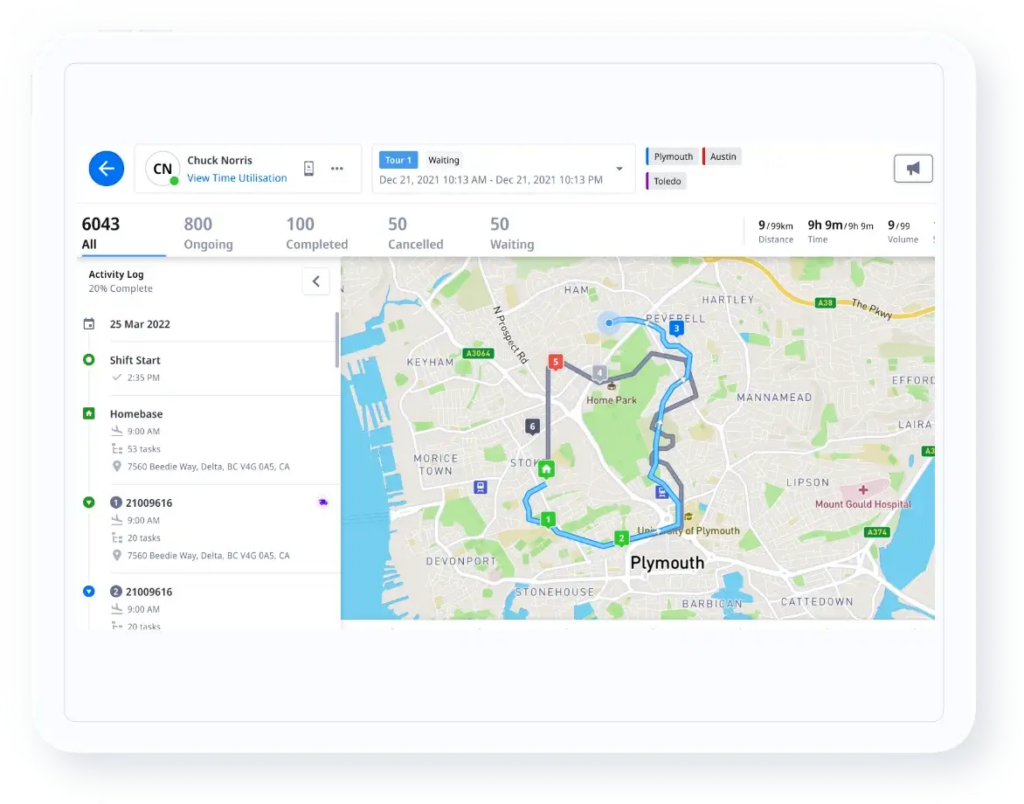
Enterprise-grade control towers deliver exception flagging with severity scoring, SLA breach prediction before breaches occur, geocoded delivery status across geographies, and cross-fleet performance monitoring that identifies patterns.
Locus’s Control Tower calculates reassignment options and routes them to your dispatchers for approval. The system handles computation. Your team handles decisions.
That is the difference between operations that manage delivery exceptions proactively and operations that discover problems after the customer has already escalated.
4. Intelligent Order Ingestion and Batching
This capability is almost entirely absent from competitive evaluations of package delivery management software. It is also the one that determines whether everything downstream operates on clean inputs or suboptimal ones.
What intelligent batching requires
Your software must capture high-volume orders from multiple channels: ERP, OMS, e-commerce platforms, EDI feeds, manual uploads, and batch them intelligently. That means accounting for delivery zones, time windows, package dimensions, weight constraints, priority tiers, and vehicle-type requirements simultaneously.
The batching failure pattern
An e-commerce operation processing 18,000 daily orders batches hourly by geography alone. An order arriving at 10:58 AM with a two-hour delivery window gets swept into the 11:00 batch, already routed and assigned. It rolls to the 12:00 batch. It arrives late.
The batching logic does not distinguish between standard and priority SLA tiers. There is no mechanism to inject an urgent order into an active route.
Without intelligent batching that re-evaluates continuously as new orders arrive, every downstream capability: routing, dispatch, fleet allocation, operates on suboptimal inputs from the start.
5. Electronic Proof of Delivery (ePOD) With Multi-Format Capture
Enterprise ePOD extends beyond a signature on a screen. The value depends on whether captured data feeds back into the analytics layer or sits in isolation.
| Format | Operational purpose |
|---|---|
| Photo capture | Resolves “never received” disputes before escalation |
| Barcode/QR scanning | Confirms correct package at correct stop |
| OTP verification | Ensures handoff to intended recipient |
| Timestamped geolocation | Proves driver was at the verified address |
| Customer rating | Feeds real-time service quality metrics |
When every delivery generates a structured data point, your operations team gains inputs for dispute resolution, compliance audits, carrier scoring, and customer experience measurement.
Platforms treating ePOD as a checkbox miss its value as an automated tracking system that turns every delivery into a data point for operational improvement.
Locus handles ePOD with AI-validated capture, automatically flagging incomplete or inconsistent submissions (missing geolocation, unreadable photo, incorrect barcode) before they leave the driver’s device. It prevents dispute backlogs from accumulating downstream.
6. Branded, Real-Time Customer Communication and Tracking
Branded, real-time communication is no longer a nice-to-have in delivery operations. Customers expect accurate ETAs, live tracking, and proactive updates without having to reach out.
How enterprise platforms cater to this
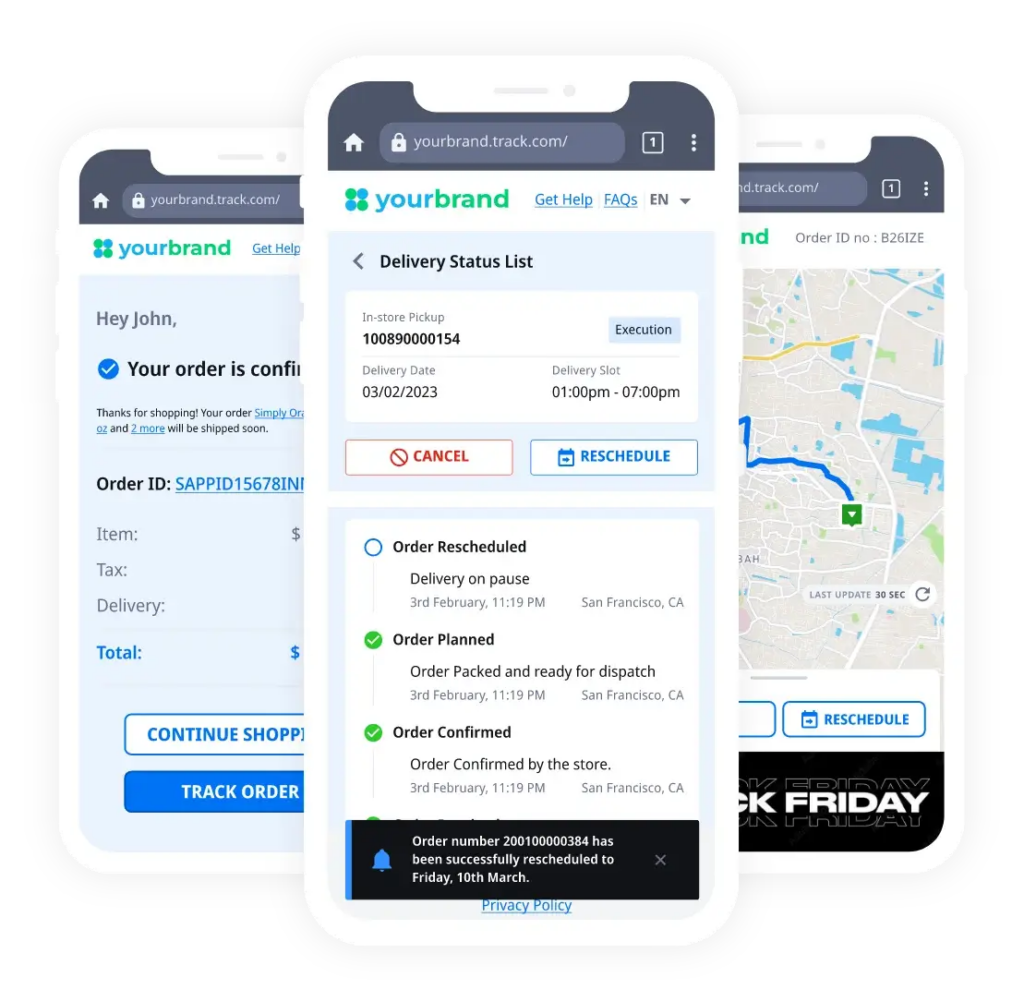
Locus provides white-labeled tracking pages that give customers a consistent, branded post-purchase experience with real-time order visibility. The platform automatically sends status updates through channels like SMS and email, keeping customers informed at every stage without manual intervention.
It also uses predictive ETAs that update dynamically during transit, along with live driver tracking and detailed order status visibility, so customers always know where their delivery stands.
7. Multi-Fleet and 3PL Orchestration
This is the capability most consistently missing from delivery software evaluations, and the one that matters most for enterprises operating hybrid fleets at scale.
The allocation problem
A national FMCG distributor runs 320 owned vehicles for scheduled replenishment, contracts with four regional carriers for overflow, and activates gig drivers for same-day e-commerce orders. Every morning, a dispatcher manually decides which orders go to which fleet type.
That process takes 90 minutes and still results in owned vehicles running at 65% capacity while the contracted carrier charges surge rates for loads the in-house fleet could have absorbed.
The allocation decision involves cost, SLA, geography, vehicle type, and perishability simultaneously. When that evaluation happens in a dispatcher’s head using yesterday’s spreadsheet, the enterprise leaves money on every route.
What orchestration looks like
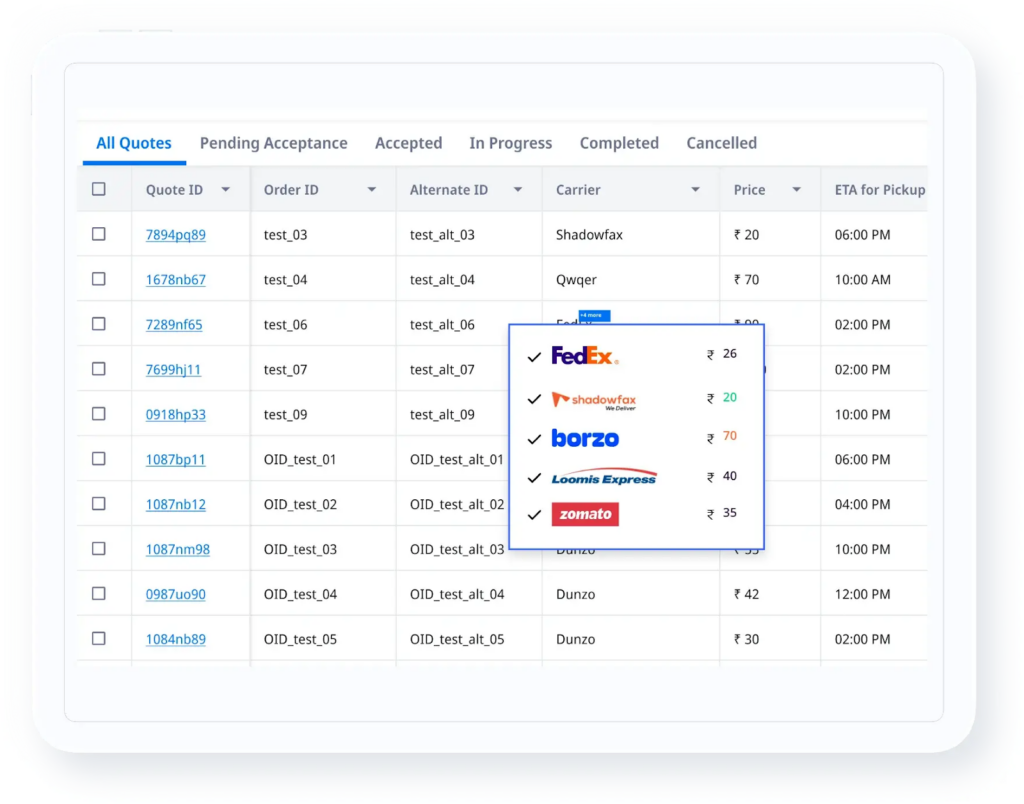
Enterprise fleet management software must allocate across fleet types automatically. Locus’s delivery orchestration layer manages owned, contracted, and 3PL fleets under a single platform, automating carrier selection across 1,000+ carriers with unified control-tower visibility. Enterprises report fleet utilization improvements of up to 90%.
Most dispatch software handles single-fleet assignment. Orchestration across hybrid fleets is where platforms separate from point solutions.
8. Predictive Analytics and Post-Delivery Intelligence
Dashboards that show what happened yesterday are useful. Analytics that show what will happen tomorrow are what enterprise operations require.
What prediction must cover
Enterprise-grade software should forecast demand surges by zone and time period, predict delay-prone areas by time of day and season, flag underperforming carriers before SLA compliance drops, and recommend capacity adjustments before problems surface in operational reviews.
Forward-looking intelligence vs. retrospective reporting
Locus’s analytics layer draws on 1.5 billion+ deliveries optimized globally to deliver forward-looking operational intelligence: trend forecasting, exception-pattern recognition, and SLA compliance prediction.
The system does not report that Zone 4 had late deliveries last week. It flags that Zone 4 will have capacity shortfalls next Tuesday and recommends a specific adjustment.
9. Configurable Workflow Automation and Business Rules Engine
Enterprises have operational logic that cannot be hardcoded into a platform: priority routing for perishables, time-fence restrictions for residential zones, auto-escalation for delayed shipments, mandatory photo ePOD for high-value items, carrier capacity caps during peak season.
The configuration problem
When these rules live in a dispatcher’s head, they are applied inconsistently across shifts. When they are hardcoded by the vendor, every adjustment requires a development cycle that lags behind operational reality by weeks.
The requirement is a configurable rules engine your operations team can modify without IT dependency: defining auto-reassignment triggers, geofenced delivery compliance, SLA-tiered prioritization, and automatic carrier switching.
The right last mile technology adapts to your operational workflow and evolves without a support ticket for every rule change. If modifying a routing rule requires three weeks and a development sprint, the software is dictating the workflow instead of supporting it.
10. Enterprise Integration Architecture (ERP, OMS, WMS, TMS)
Package delivery management software cannot operate in a silo. “API available” does not mean enterprise integration readiness. The distinction matters for every system your logistics data touches.
The integration tax
An enterprise deploys delivery software. Six months later, delivery confirmations are not flowing back to the OMS in real time. The ERP shows “in transit” for orders delivered four hours ago. Customer service works off stale data. Finance cannot reconcile delivery charges because the transportation management software and the delivery platform use different shipment ID schemas.
What enterprise integration requires
| Requirement | Why It Matters |
|---|---|
| Bidirectional data flow | Delivery status > OMS, cost data > ERP |
| Webhook-based event triggers | Real-time propagation, not batch syncs |
| Standardized shipment identifiers | IDs match across all systems |
| Enterprise security | SSO, role-based access, audit trails |
Locus provides API-first architecture with pre-built connectors for major ERP and OMS platforms, designed for enterprise integration timelines and security requirements. Integration is not an API checkbox.
It is the connective tissue that determines whether your delivery platform operates as part of the technology stack or as an expensive island generating data no other system can consume.
Enterprise Orchestration vs. Standard Delivery Tools
Before shortlisting vendors, map their capabilities against the Delivery Orchestration Stack.
| Capability | Standard Delivery Tools | Enterprise Orchestration Platforms |
|---|---|---|
| Dispatch | Nearest-driver auto-assign | ML-powered optimization across fleet types |
| Routing | Static overnight planning | Dynamic recalculation during execution |
| Control Tower | Basic GPS tracking | Exception flagging, SLA prediction, intervention |
| Order Batching | Geography-only grouping | SLA-tiered priority batching, multi-channel |
| ePOD | Digital signature | Photo, barcode, OTP, geolocation, ratings |
| Communication | Generic tracking link | Branded pages, multi-channel alerts, live ETA |
| Fleet Orchestration | Single-fleet dispatch | Owned + contracted + gig + 3PL allocation |
| Analytics | Historical dashboards | Predictive forecasting, carrier scoring |
| Automation | Hardcoded logic | Configurable rules engine, no IT dependency |
| Integration | Basic API | API-first, bidirectional webhooks |
Build Your Delivery Orchestration Stack Before the Next Peak Season
The Delivery Orchestration Stack structures evaluation across four layers:
- Planning (dispatch, routing, batching),
- Execution (ePOD, communication, fleet orchestration),
- Visibility (control tower), and
- Intelligence (analytics, automation, integration).
An enterprise platform must deliver across all four.
Locus is an agentic TMS deployed across 30+ countries, with 350+ enterprise customers, 1.5B + deliveries optimized, and $320M+ in logistics cost savings delivered.
Acquired by Ingka Group (IKEA) in October 2025 after an extensive global evaluation of logistics software, Locus remains operationally independent and continues to serve customers across retail, FMCG, e-commerce, and 3PL.
To evaluate how the Delivery Orchestration Stack maps to your operational requirements, schedule a demo with Locus today.
Frequently Asked Questions (FAQs)
1. What is the difference between package delivery management software and a TMS?
A TMS manages long-haul freight planning, carrier procurement, and freight audit across the supply chain. Package delivery management software focuses on last-mile and all-mile execution: dispatch, routing, real-time tracking, and proof of delivery. Enterprise platforms increasingly unify both, providing planning-to-delivery orchestration under a single decisioning system.
2. How does AI-powered dispatch differ from rule-based auto-assignment?
Rule-based systems assign the nearest available driver, ignoring vehicle type, remaining capacity, SLA tiers, and driver skill sets. AI-powered dispatch evaluates thousands of order-driver permutations simultaneously, optimizing across cost, time, and service quality.
The practical difference shows up in time-window accuracy. An AI dispatch system learns from historical delivery data by zone; if deliveries to a dense urban corridor consistently take 18 minutes longer than the scheduled window during the 11 AM-2 PM slot, the system adjusts future time-window estimates for that zone automatically. Dispatchers stop over-promising ETAs they cannot keep, and rule-based systems repeat the same logic without adapting.
3. What integrations should enterprise delivery software support?
At minimum: ERP (SAP, Oracle), OMS, WMS, and TMS via RESTful APIs and pre-built connectors. Critical requirements include bidirectional data flow — delivery confirmation back to OMS, cost data to ERP — and webhook-based event triggers for real-time status propagation, with enterprise-grade security and authentication.
4. Can delivery software manage both owned fleets and 3PLs simultaneously?
Enterprise-grade platforms can. This capability is called multi-fleet orchestration. The software allocates orders across fleet types based on cost, capacity, SLA requirements, and geography automatically, maintaining a single operational view. Most SMB-focused tools handle single-fleet dispatch only and cannot orchestrate across hybrid fleet structures.
5. How does enterprise delivery software differ from courier dispatch apps?
Courier dispatch apps manage point-to-point pickups for small fleets, typically under 50 vehicles. Enterprise delivery software orchestrates 10,000+ daily orders across multiple fleet types, integrates with ERP, OMS, and WMS systems, provides predictive analytics, and supports configurable business rules. The operational scope, integration depth, and scale requirements are fundamentally different.
6. What does a typical deployment look like?
Enterprise deployments typically run 8-12 weeks: systems integration (ERP, OMS, WMS) first, followed by fleet and carrier onboarding, then go-live with dispatcher training. Timeline compresses significantly with platforms that offer pre-built connectors and a documented implementation methodology.


General
From 48 Hours to 4 Hours: How AI-Powered Order Orchestration Transforms Fulfillment Speed

Apr 21, 2026
Warehouses can pick and pack in under an hour. So why does order-to-door still take 48 hours? The bottleneck has shifted to delivery orchestration. Learn how AI compresses fulfillment from days to hours.
Read more
General
How AI-Powered Dynamic Slot Pricing Turns Delivery Into a Revenue Engine

Apr 22, 2026
Flat-rate shipping subsidises expensive deliveries with profitable ones. Learn how AI-powered dynamic slot pricing aligns delivery prices with actual costs — improving margins, conversion, and CX.
Read moreInsights Worth Your Time



















10 Non-Negotiable Features in Enterprise Package Delivery Management Software