


General
Top Optimoroute Competitors to Consider in 2026

Key Takeaways
- Teams typically look for Optimoroute alternatives when static routing, manual re-optimization, or limited flexibility starts slowing daily execution.
- Most alternatives fall into three categories: routing-first tools, execution-focused delivery platforms, and end-to-end orchestration systems.
- Smaller or localized teams often prioritize ease of use and quick setup, while scaling operations need real-time control, automation, and stability.
- The right platform depends on route density, fleet size, delivery frequency, and how often plans must change during the day.
- Locus stands out for teams that have outgrown basic route planning and need routing tightly connected to live dispatch and execution at scale.
OptimoRoute is widely used by delivery teams for route planning and basic dispatch coordination. It works well for structured, repeatable routes where plans are created in advance and execution remains largely predictable.
As delivery operations scale, however, some teams begin to reassess whether a routing-first tool can support faster decision-making and live operational changes. Common reasons teams start evaluating Optimoroute alternatives include:
- Limited flexibility during live operations when routes need to be adjusted after dispatch
- Manual re-optimization as delivery density or order volatility increases
- Issues in planning and execution, especially when dispatchers rely on external tools
- Difficulty managing larger fleets or multi-region operations with varying constraints
These challenges don’t indicate that Optimoroute has failed. They signal that operational needs are evolving beyond static route optimization.
In the sections below, we compare leading Optimoroute alternatives for 2026, focusing on routing intelligence, execution control, scalability, and real-world operational fit to help teams identify the right next step.
Where Teams Begin to Outgrow Basic Route Optimization
G2 users generally describe Optimoroute as a reliable and easy-to-use routing platform, especially for teams with structured delivery plans and predictable daily volumes. Reviews consistently highlight fast setup, intuitive routing, and strong navigation, making it a solid choice for small- and mid-sized operations.
That said, G2 feedback also points to specific operational frictions that tend to surface as delivery volumes, route density, or workflow complexity increase. Some common issues are mentioned below. These issues typically appear only after teams reach a certain scale:
- Re-optimization friction during live operations: When orders change mid-day or drivers need multiple runs, teams often need manual intervention or workaround workflows to keep routes aligned with reality.

- Execution visibility gaps at higher volumes: Some users mention needing secondary tools for tracking or analytics, especially when managing larger fleets or monitoring driver progress closely throughout the day. Additionally, a few reviewers note lag or data overload during peak hours, which makes prioritization harder as workloads expand.

- Workflow limitations as complexity grows: Scenarios such as assigning multiple routes per driver, managing varied service rules, or handling dense delivery clusters may require additional configuration or a higher-tier plan.

- Cost sensitivity tied to advanced needs: Several users mention price increases or premium features being gated, which becomes more noticeable as teams rely on deeper analytics or flexibility.

Taken together, these issues don’t suggest dissatisfaction with Optimoroute’s core routing capabilities. Instead, they reflect a natural ceiling of routing-first platforms. As operations become less predictable, teams start needing tighter coordination between planning, dispatch, and real-time execution, rather than repeated route recalculation.
This is typically the point where teams begin evaluating Optimoroute alternatives to support live operational control, faster decision-making, and scalability across regions, fleets, and delivery models.
Leading Optimoroute Alternatives to Evaluate in 2026
Teams evaluating Optimoroute alternatives look out for platforms that solve execution gaps, scalability limits, or operational visibility issues that surface as delivery volumes grow.
Based on common evaluation patterns, the platforms teams most often shortlist are present below:
| Operational Need | What Teams Are Solving | Best-Fit Platforms |
|---|---|---|
| Live execution control beyond static routing | Routes change after dispatch; teams need real-time adjustments without re-planning | Locus, Onfleet |
| Affordable, fast route planning for stable schedules | Reduce manual planning time for predictable, repeatable routes | Routific, Route4Me |
| Technician-led service workflows | Routing tied to appointments, skills, billing, and CRM | ServiceTitan |
| Mid-level execution with basic tracking | Planning plus simple dispatch and driver communication | Elogii |
| Fleet visibility, safety, and compliance | Telematics, ELDs, vehicle health over delivery optimization | Samsara, Trackobit |
| Hyperlocal, on-demand dispatch | Quick setup, POS integrations, basic tracking | Shipday |
| Budget-friendly delivery tracking | Core POD, basic routing, small fleets | Track-POD |
1. Locus
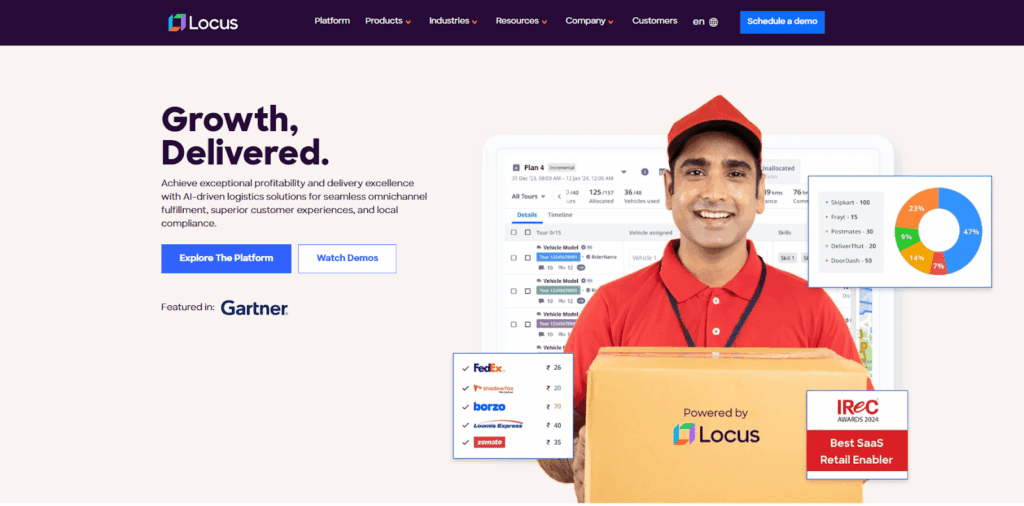
Locus is typically shortlisted by teams that have moved beyond static route optimization and now need live execution control across planning, dispatch, and delivery operations.
While Optimoroute focuses primarily on creating efficient routes upfront, Locus is built for environments where routes, priorities, and constraints change throughout the day. It connects routing directly to dispatch and execution, allowing teams to respond to real-world conditions without breaking operational flow.
Common Challenges Locus Resolves
Teams usually evaluate Locus when execution, routing, and delivery become difficult to manage. Manual coordination increases dispatcher workload, causes more delays, and leads to missed SLAs.
Locus is typically evaluated when these hidden costs begin to impact margins. Common gaps Locus addresses include:
- Real-time execution control: Locus allows dispatchers to adjust routes, priorities, and constraints during live operations without restarting plans or relying on external coordination.
- Planning is tightly connected to dispatch: Routing decisions flow directly into execution. Changes made during the day are reflected immediately across the system, reducing manual handoffs.
- Support for dense and complex operations: Locus is designed to handle high stop density, multi-region setups, hybrid fleets, and varied delivery models without performance degradation.
- Operational visibility that drives action: Instead of static views, teams get exception-led dashboards that highlight what needs attention now, not just what happened earlier.
Where Locus Delivers the Most Value
Locus is well-suited for teams that:
- High-volume, dynamic routing: Teams handling dense delivery zones, overlapping routes, or high daily volumes often see plans change after dispatch. Locus supports continuous adjustments without forcing full re-planning or manual coordination.
- Multi-region and multi-fleet operations: As operations expand geographically, teams need consistent execution logic across regions while still accommodating local fleet constraints, SLAs, and service rules. Locus helps maintain that balance without fragmenting workflows.
- Peak-period execution alignment: During high-volume windows, even small disconnects between planning and execution can cause cascading delays. Locus keeps routing decisions aligned with live dispatch and on-ground execution in real time.
- Rising manual operational effort: When teams rely on spreadsheets, reassignments, or secondary tools to manage exceptions, it signals growing complexity. Locus reduces this rework by centralizing execution decisions in one operational layer.
Locus’ Cons
Locus may feel more comprehensive than necessary for very small teams with simple, predictable routes. Initial setup typically involves aligning workflows, data, and operating rules, especially for organizations moving toward higher levels of automation.
Locus Is Ideal for
Locus is well-suited for enterprise teams that need reliable, scalable delivery orchestration, particularly:
- Retail, e-commerce, and e-grocery brands that manage dense, high-volume routes.
- Teams need real-time visibility and stable performance as order volumes grow.
- FMCG/CPG and 3PL providers operating multi-region or multi-client logistics networks.
- Big & bulky delivery operators require precise scheduling and specialized routing.
- Enterprises running hybrid or multi-fleet operations across the first, mid, and last mile.
Locus’ Pricing
Locus uses a custom pricing model that factors in delivery volume, the number of operating regions, fleet composition, and the specific modules required (like dispatch planning, orchestration, Track & Trace, or carrier management)
Pricing typically scales with usage and the depth of automation deployed.
Locus’ User Testimonial
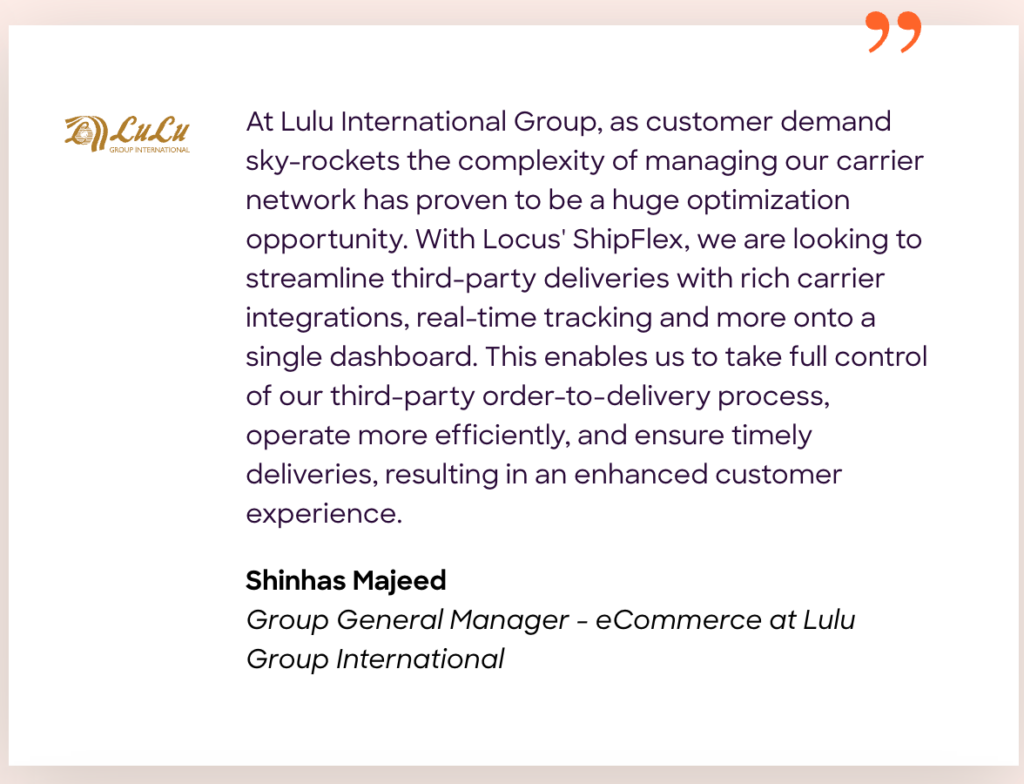
“At Lulu International Group, as customer demand skyrockets, the complexity of managing our carrier network has proven to be a huge optimization opportunity. With Locus’ ShipFlex, we are streamlining third-party deliveries with rich carrier integrations and real-time tracking on a single dashboard.
This helps us take full control of our order-to-delivery process, operate more efficiently, and ensure timely deliveries, resulting in an enhanced customer experience,” says Group General Manager – eCommerce at Lulu International Group
2. Onfleet
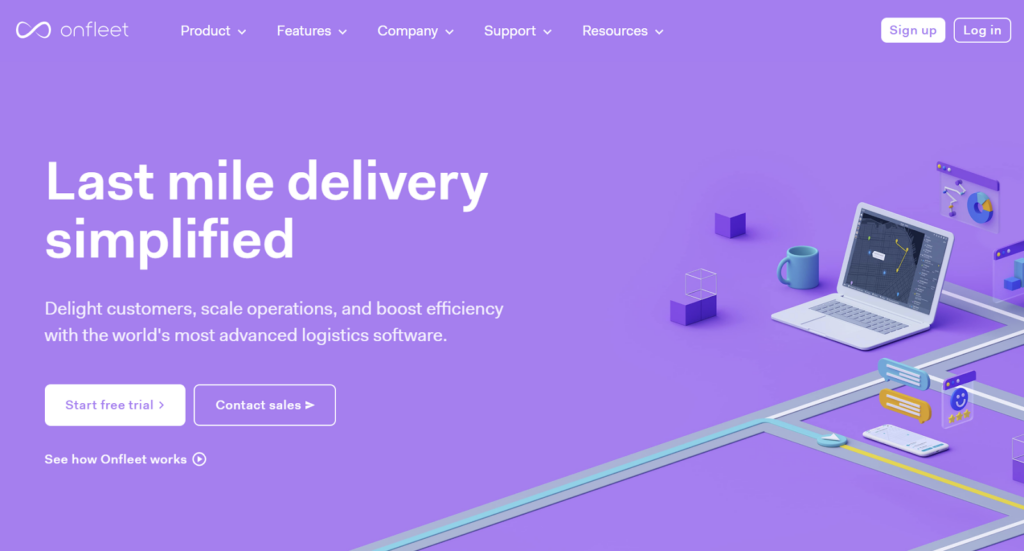
Onfleet is often evaluated by teams looking for a lightweight, execution-focused alternative to routing-first platforms like Optimoroute. It is especially popular among businesses that prioritize ease of use, fast onboarding, and clean last-mile coordination over deep optimization or orchestration.
Where Onfleet Fits Well
Onfleet is commonly shortlisted by teams that:
- Need quick deployment with minimal setup: Teams can begin dispatching and tracking deliveries quickly without heavy configuration or long onboarding cycles.
- Run local or regional last-mile operations: It works well for same-day, on-demand, or scheduled deliveries within limited geographic areas.
- Prioritize dispatcher and driver usability: A clean interface and intuitive driver app reduce training time and daily operational friction.
- Focus primarily on last-mile execution: For teams that don’t need multi-mile orchestration or complex planning logic, Onfleet provides a straightforward execution layer.
Considerations
Onfleet is less suited for operations that require advanced routing intelligence, dense multi-run planning, or coordination across multiple hubs and fleet types. As delivery complexity grows, teams may find their orchestration depth limiting compared to more execution-centric platforms.
Onfleet Is Ideal For
Onfleet is best suited for:
- Local and regional retailers
- Food, grocery, and pharmacy delivery businesses
- Service-based companies running same-day or scheduled routes
- Teams that value speed, simplicity, and ease of use over deep optimization
Onfleet Pricing
Onfleet follows a tiered pricing model based on monthly task volume and feature access. Higher plans unlock advanced analytics, automation, and API capabilities. Costs typically increase as delivery volumes scale, making it predictable but volume-sensitive.
3. Routific
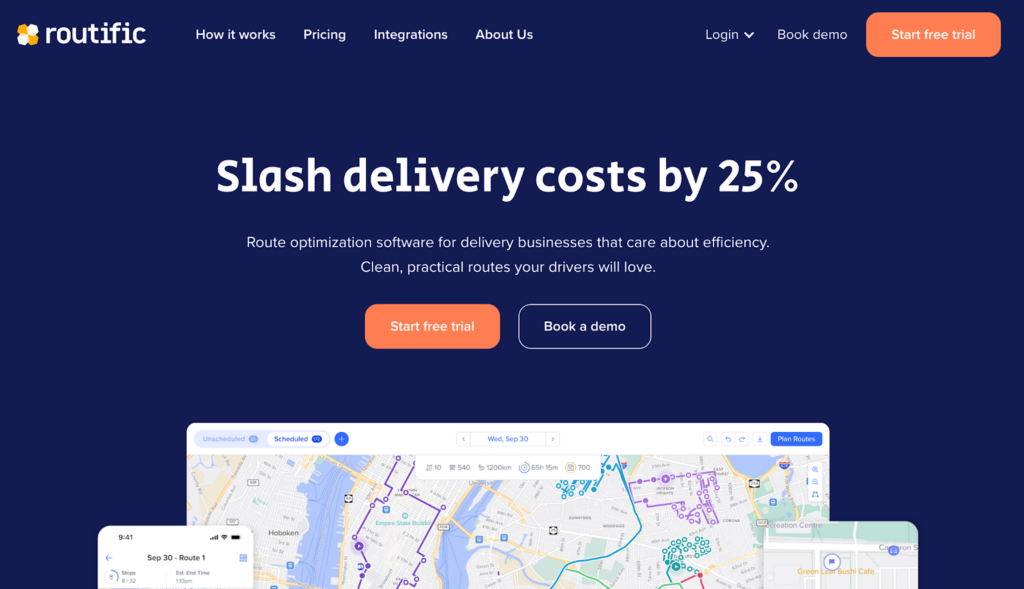
Routific is commonly evaluated by teams looking for a simple, cost-effective route optimization tool. It’s often considered by SMBs that want to reduce manual planning time without adding operational complexity.
Where Routific Fits Well
Routific is typically shortlisted by teams that:
- Need fast, affordable route optimization: It helps reduce planning time by generating optimized routes quickly, especially for predictable, repeatable delivery schedules.
- Operate with relatively stable daily plans: Works best when routes are planned once and followed with minimal mid-day changes.
- Run small to mid-sized delivery operations: Routific performs well for teams managing limited fleets and localized delivery areas.
- Want a low learning curve: The interface is straightforward, making it easy for teams to adopt without extensive training.
Considerations
Routific is primarily a planning-focused tool. It offers limited support for real-time execution control, exception handling, or complex multi-region coordination. Teams managing frequent mid-day changes or high delivery density may outgrow it as complexity increases.
Routific Is Ideal For
Routific is best suited for:
- Small and mid-sized retailers
- Food and beverage delivery businesses
- Subscription and local delivery models
- Teams focused on planning efficiency rather than live orchestration
Routific Pricing
Routific offers tiered pricing based on the number of routes planned per month. Entry plans are budget-friendly, making it accessible for SMBs, while higher tiers unlock additional routing capacity and features. Pricing scales primarily with route volume rather than operational complexity.
4. ServiceTitan
ServiceTitan is commonly evaluated by service-based organizations where routing is one part of a broader field operations workflow. Rather than focusing purely on delivery optimization, ServiceTitan supports end-to-end service management, including scheduling, dispatch, billing, and customer communication.
Where ServiceTitan Fits Well
ServiceTitan is typically shortlisted by teams that:
- Run technician-led service operations: Businesses that manage installations, maintenance, repairs, or inspections benefit from routing that integrates directly with job scheduling and workforce management.
- Need routing tied to service workflows: Routing decisions should be closely linked to technician availability, job duration, skills, and customer appointments, rather than to high-volume delivery density.
- Manage customer communication and billing in one system: ServiceTitan integrates dispatch with invoicing, payments, and CRM, reducing the need for multiple tools.
- Operate with structured, appointment-based schedules: It works best when jobs are planned in advance with defined time windows and limited midday volatility.
Considerations
ServiceTitan is not designed for high-density delivery routing or logistics-heavy use cases. Teams focused on same-day fulfillment, multi-drop routes, or real-time delivery orchestration may find their routing capabilities are limited compared to those of delivery-first platforms.
ServiceTitan Is Ideal For
ServiceTitan is best suited for:
- Home services and field service businesses
- HVAC, plumbing, electrical, and maintenance providers
- Inspection and technician-based service teams
- Organizations where routing supports service delivery, not logistics execution
ServiceTitan Pricing
ServiceTitan follows a custom, enterprise-style pricing model based on company size, feature modules, and service complexity. Pricing is typically higher than standalone routing tools, reflecting its broader field service management scope rather than routing alone.
5. Elogii
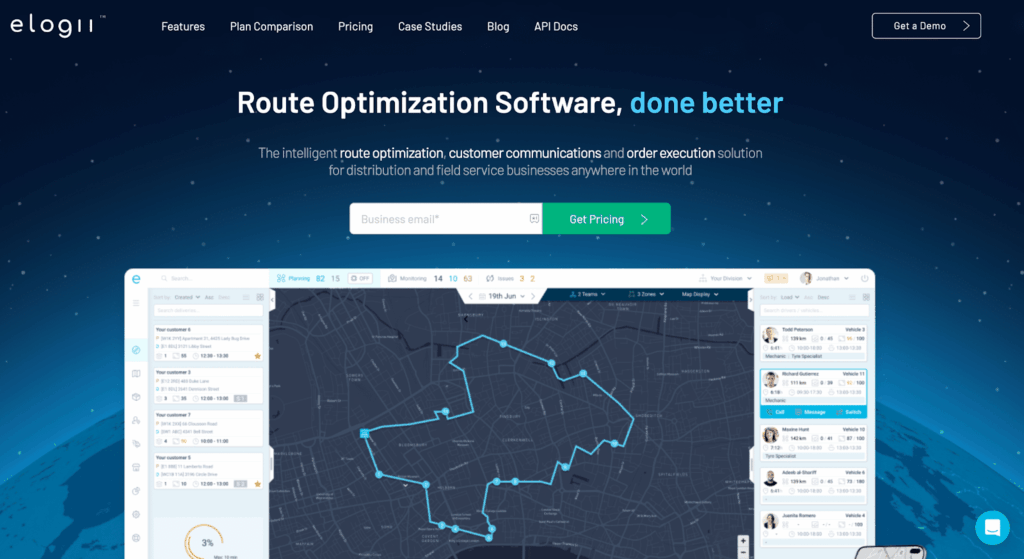
Elogii is often evaluated by teams that want routing combined with basic execution and driver communication, without moving to a full enterprise orchestration platform. It sits between pure planning tools and heavier delivery management systems.
Where Elogii Fits Well
Elogii is commonly shortlisted by teams that:
- Need routing with built-in execution support: It supports route planning along with task assignment, driver updates, and delivery status tracking in one system.
- Operate structured delivery schedules with some flexibility: Works well when most routes are planned upfront, with occasional mid-day edits or reassignments.
- Run small to mid-sized fleets: Elogii fits teams managing moderate delivery volumes without complex multi-hub or multi-region coordination.
- Want visibility without heavy orchestration: Provides basic tracking and reporting without the operational depth of enterprise platforms.
Considerations
Elogii is less suited for high-density, highly dynamic operations where routes change continuously throughout the day. Teams with complex constraints, multiple fleet types, or tight SLA-driven execution may find its flexibility limited as scale increases.
Elogii Is Ideal For
Elogii is best suited for:
- Local and regional delivery businesses
- Retailers and distributors with predictable delivery patterns
- Service and installation teams with route-based schedules
- Teams needing more than planning, but less than full orchestration
Elogii Pricing
Elogii offers subscription-based pricing typically linked to the number of drivers and enabled features. Pricing is generally mid-range, making it accessible for growing teams while scaling with fleet size and usage.
6. Route4Me
Route4Me is commonly evaluated by teams that need flexible route planning and territory management across sales, field service, and delivery operations. It is often chosen for its configurability and broad set of routing features rather than deep execution orchestration.
Where Route4Me Fits Well
Route4Me is typically shortlisted by teams that:
- Need flexible route planning and territory design: It supports territory-based routing, recurring routes, and varied planning scenarios across different teams or use cases.
- Operate sales, service, or mixed-use fleets: Works well for organizations where routing supports sales visits, inspections, or service calls alongside deliveries.
- Plan routes in advance with moderate adjustments: Best suited for operations where most routing decisions are made before dispatch, with limited live intervention.
- Value customization over automation: Offers a wide range of configuration options for routing logic and planning preferences.
Considerations
Route4Me is primarily planning-centric. While it supports dispatch and tracking, it is less focused on real-time execution control, exception-led workflows, or dense, high-frequency delivery environments. Teams with rapidly changing routes or peak-period volatility may require more execution-first platforms.
Route4Me Is Ideal For
Route4Me is best suited for:
- Field sales and field service organizations
- Inspection, maintenance, and territory-based operations
- Delivery teams with recurring routes and stable schedules
- Businesses needing flexible planning across multiple use cases
Route4Me Pricing
Route4Me offers tiered, subscription-based pricing based on the number of users, routes, and advanced features such as territory management and API access. Pricing scales with functionality and team size, making it suitable for both SMBs and mid-market organizations.
7. Samsara

Samsara is commonly evaluated by teams that need deep fleet visibility, telematics, and compliance, with routing as a supporting capability rather than the core function. It is often adopted by transport-heavy operations where asset monitoring and driver behavior are critical.
Where Samsara Fits Well
Samsara is typically shortlisted by teams that:
- Prioritize fleet visibility and telematics: Real-time GPS tracking, vehicle diagnostics, and driver behavior monitoring provide strong operational oversight.
- Operate large vehicle fleets: Works well for organizations managing hundreds or thousands of vehicles where uptime, fuel efficiency, and maintenance matter most.
- Need compliance and safety management: Features like ELD compliance, dash cams, and safety reporting support regulated industries.
- Use routing as a secondary layer: Routing supports fleet operations but is not the primary optimization engine.
Considerations
Samsara is not built for dense, high-frequency delivery routing or real-time dispatch orchestration. Teams focused on multi-drop delivery efficiency or live route re-optimization often pair it with a dedicated routing or execution platform.
Samsara Is Ideal For
Samsara is best suited for:
- Transportation and logistics companies with owned fleets
- Enterprises focused on fleet health, safety, and compliance
- Long-haul, mid-mile, and asset-heavy operations
- Organizations where telematics outweigh routing complexity
Samsara Pricing
Samsara follows a subscription-based pricing model tied to hardware, vehicles, and enabled software modules. Pricing varies by fleet size and selected features, with costs typically higher due to bundled hardware and compliance capabilities.
8. Trackobit
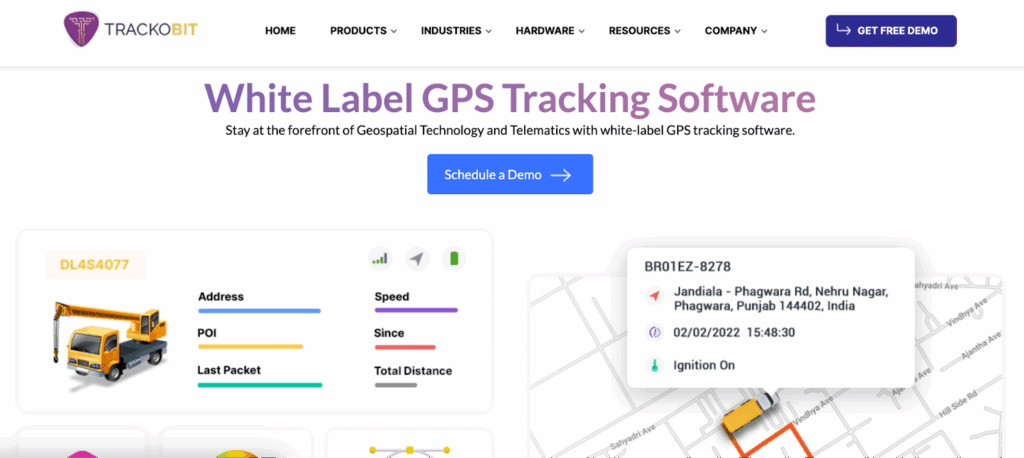
Trackobit is commonly evaluated by teams that need real-time vehicle tracking and fleet visibility, rather than advanced route optimization or delivery orchestration. It is often used as a foundational tracking layer for transport and logistics operations.
Where Trackobit Fits Well
Trackobit is typically shortlisted by teams that:
- Need reliable GPS tracking and fleet visibility: Provides live location tracking, trip history, and vehicle performance monitoring across fleets.
- Operate transport-heavy or asset-focused operations: Works well for organizations managing trucks, vans, or large vehicle fleets where tracking accuracy is critical.
- Focus on monitoring rather than optimization: Supports oversight and reporting without adding complex routing or dispatch logic.
- Use routing tools alongside tracking software: Often paired with separate route planning or delivery platforms.
Considerations
Trackobit is not designed for route optimization, dispatch automation, or live execution control. Teams managing dense delivery routes or frequent mid-day changes typically require an additional delivery management or routing platform.
Trackobit Is Ideal For
Trackobit is best suited for:
- Fleet owners and transport operators
- Logistics companies focused on vehicle monitoring
- Mid-mile and long-haul operations
- Businesses needing telematics without delivery orchestration
Trackobit Pricing
Trackobit offers subscription-based pricing typically linked to the number of vehicles tracked and enabled telematics features. Pricing varies based on hardware requirements, reporting depth, and analytics modules.
9. Shipday
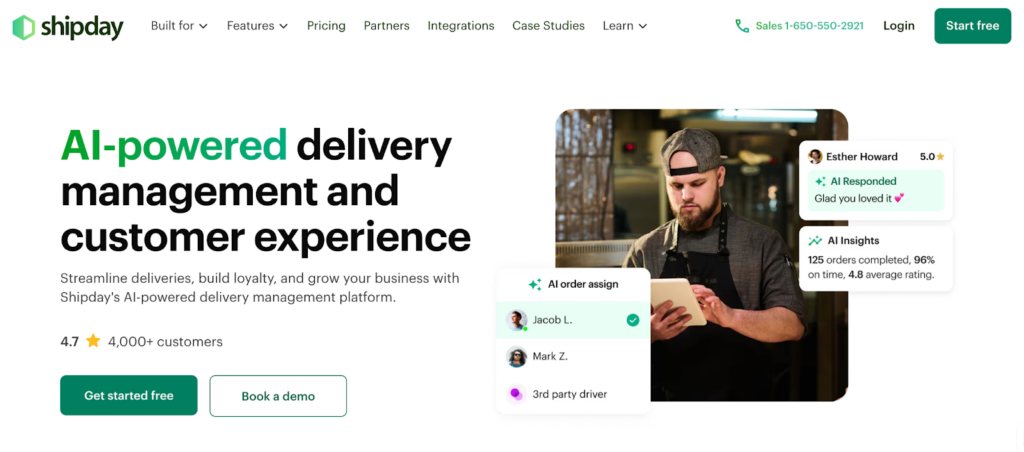
Shipday is commonly evaluated by teams looking for a simple, order-to-delivery tracking and dispatch tool, especially in local and on-demand delivery environments. It is often used where ease of setup and basic execution matter more than advanced optimization.
Where Shipday Fits Well
Shipday is typically shortlisted by teams that:
- Run local or hyperlocal delivery operations: It works well for short-distance, same-day deliveries where routing complexity is limited.
- Need fast setup with minimal configuration: Teams can start dispatching quickly without heavy onboarding or technical effort.
- Manage orders from multiple channels: Supports integrations with POS systems and online ordering platforms, reducing manual order handling.
- Focus on basic dispatch and tracking: Provides live order status and driver visibility without advanced routing logic.
Considerations
Shipday is not designed for complex routing, high-density delivery planning, or multi-region operations. Teams with growing fleets, tighter SLAs, or frequent mid-day changes may outgrow its capabilities.
Shipday Is Ideal For
Shipday is best suited for:
- Restaurants and food delivery businesses
- Local retailers offering same-day delivery
- Small courier and on-demand delivery services
- Teams prioritizing simplicity and speed over optimization depth
Shipday Pricing
Shipday offers tiered subscription pricing, typically based on order volume and feature access. Entry-level plans are budget-friendly, while higher tiers unlock advanced integrations, branding, and analytics features.
10. Track-POD
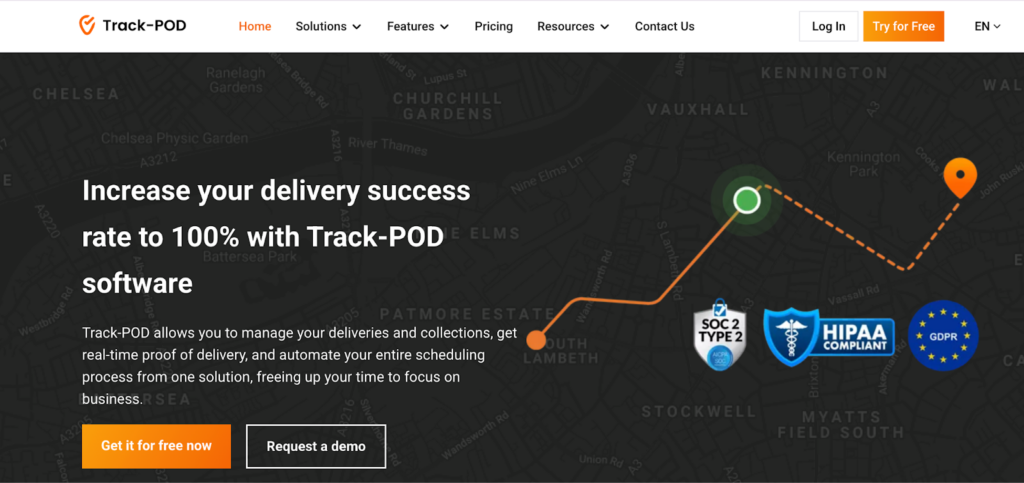
Track-POD is commonly evaluated by teams looking for a budget-friendly delivery management and tracking solution. It focuses on basic routing, dispatch, and proof-of-delivery capabilities for small to mid-sized delivery operations.
Where Track-POD Fits Well
Track-POD is typically shortlisted by teams that:
- Need simple delivery tracking and dispatch: It supports basic route planning, task assignment, and real-time driver tracking without heavy configuration.
- Operate smaller fleets with predictable routes: Works well for teams managing limited daily volumes and relatively stable delivery schedules.
- Want an affordable alternative to complex platforms: Track-POD appeals to teams that need core delivery visibility without enterprise-level orchestration.
- Rely on proof of delivery workflows: Features like signatures, photos, and delivery notes support basic compliance and record-keeping.
Considerations
Track-POD is not built for high-density routing, frequent mid-day re-optimization, or multi-region coordination. Teams scaling rapidly or operating complex delivery networks may find its capabilities limiting over time.
Track-POD Is Ideal For
Track-POD is best suited for:
- Small delivery and courier businesses
- Local distributors and wholesalers
- Service teams managing scheduled deliveries
- Organizations prioritizing cost efficiency over advanced optimization
Track-POD Pricing
Track-POD offers subscription-based pricing typically based on the number of drivers and delivery volume. Plans are generally affordable for small teams, with higher tiers unlocking additional features such as advanced analytics and integrations.
From Route Planning to Execution Control With Locus
Optimoroute works well for teams that need dependable route planning and predictable daily execution. But as delivery networks grow denser, more dynamic, and more interconnected, routing alone is rarely enough to sustain performance. What starts as small manual workarounds often turns into recurring operational friction during peak periods.
Locus is built for teams that have reached this inflection point. By connecting routing, dispatch, and execution in a single operational layer, Locus helps logistics leaders move faster, respond to change in real time, and scale without adding complexity. For organizations where delivery performance directly impacts customer experience and SLAs, execution-first orchestration becomes a strategic advantage.
Schedule a demo and request a route simulation (based on your fleets and constraints) with Locus today to see how real-time control and orchestration can support your next stage of growth.
Frequently Asked Questions (FAQs)
1. When should teams start looking for Optimoroute alternatives?
Teams typically begin evaluating alternatives when delivery volumes increase, routes change frequently after dispatch, or manual rework becomes a regular part of daily operations. These signals suggest routing alone is no longer enough to support execution needs.
2. Is Optimoroute suitable for large or enterprise-scale operations?
Optimoroute can support growing teams, but enterprises with multi-region operations, mixed fleets, or tight SLAs often need deeper execution control and orchestration to manage complexity at scale.
3. Can teams transition from Optimoroute without disrupting live deliveries?
Yes. Most organizations follow a phased rollout, running platforms in parallel while syncing orders, fleets, and rules to ensure continuity during the transition.
4. How do routing-first tools differ from execution-first platforms?
Routing-first tools focus on planning efficient routes upfront. Execution-first platforms connect planning with live dispatch, tracking, and exception handling so teams can respond to changes during the delivery day.
5. Which Optimoroute alternative works best for scaling operations?
The right alternative depends on operational maturity. Teams scaling across regions or handling dynamic delivery conditions often shortlist platforms like Locus that tightly link routing with real-time execution and orchestration.


General
10 Best Transportation Dispatch Software for Fleet Operations in 2026

Feb 6, 2026
Compare the 15 best transportation dispatch software tools in 2026. Discover solutions that improve route planning, automation, and delivery visibility.
Read more
General
10 Best AI Dispatch Software to Manage Planning and Execution in 2026
Feb 10, 2026
Discover the 10 best AI dispatch software platforms in 2026. Compare features, automation capabilities, and tools to optimize logistics operations.
Read moreInsights Worth Your Time




















Top Optimoroute Competitors to Consider in 2026