


General
MODEX 2026 Preview: The Supply Chain Technologies That Will Define the Next Decade

Key Takeaways
- MODEX 2026 opens April 13 in Atlanta with 1,000+ exhibitors and 50,000+ supply chain professionals — and this year’s technology landscape looks meaningfully different from two years ago.
- AI has moved from the “interesting pilot” category to the centre of vendor positioning. But the gap between demo-ready AI and production-ready AI remains wide.
- The 2026 MHI Annual Industry Report, previewed on April 15, is expected to show continued investment growth and a sharpening focus on agentic AI and end-to-end orchestration.
- This preview covers five technology categories worth your attention, what’s genuinely ready for enterprise deployment, and what questions to ask before signing anything.
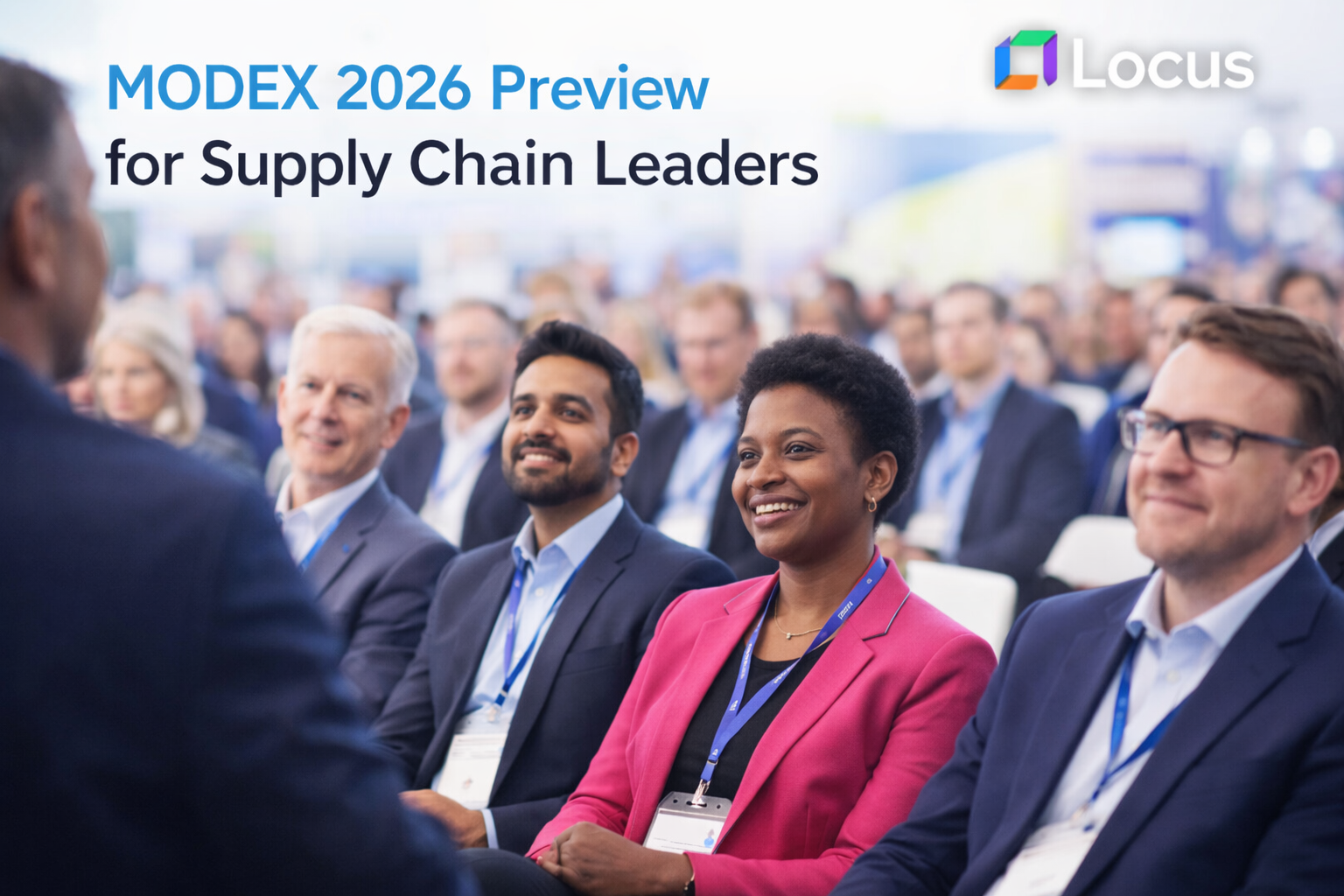
Next week, 50,000 supply chain professionals will converge on 630,000 square feet of exhibition space at the Georgia World Congress Center in Atlanta. They’ll walk past robotic arms sorting parcels at speed, watch autonomous mobile robots navigate simulated warehouse floors, and sit through at least three keynotes where someone says the phrase “AI-powered” with full conviction.
MODEX is the largest supply chain and manufacturing technology event of the year, and 2026’s edition arrives at an interesting inflection point. Supply chain technology spending has normalised — the MHI/Deloitte 2025 Annual Industry Report found that average annual investment dropped from $26 million in 2023 to $13 million in 2024, returning to pre-pandemic levels after years of crisis-driven over-investment. But 55% of supply chain leaders are still increasing their technology budgets, and 19% plan to spend over $10 million. The money hasn’t disappeared. It’s become more deliberate.
The logistics and supply chain landscape of 2026 is undergoing a fundamental shift from traditional automation to autonomous, agentic orchestration. As organizations move beyond the initial hype of generative AI, software systems are no longer merely suggesting actions — they’re executing complex workflows across the global supply chain. This preview covers the five technology categories most worth your attention at MODEX, what’s genuinely ready for enterprise deployment, and what questions to ask before signing anything.
1. Agentic AI and Autonomous Decision-Making
If there’s one theme that will dominate MODEX 2026, it’s this. Agentic AI — systems that don’t just analyse data and recommend actions but actually execute decisions autonomously within defined boundaries — has moved from academic concept to vendor positioning virtually overnight.
The data supports the momentum. Gartner forecasts that enterprise spend on supply chain management software featuring agentic AI capabilities will reach $53 billion by 2030, up from less than $2 billion in 2025. By 2030, 60% of enterprises using SCM software are expected to have adopted agentic AI features, compared to just 5% in 2025. BCG’s numbers tell a complementary story: agentic systems accounted for 17% of total AI value in 2025 and are projected to reach 29% by 2028.
What makes this different from the generative AI wave of 2024–25 is the shift from “copilot” to “operator.” Earlier tools helped planners summarise data or draft communications. Agentic systems query ERP, WMS, and transportation management systems to trigger real-world actions — evaluating alternative carriers, checking warehouse capacity, recalculating cost-to-serve, and re-booking shipments without dispatcher intervention. In a last-mile delivery context, a routing agent might collaborate with a capacity agent and a driver communication agent to re-balance a city-wide fleet after an unexpected road closure, all in milliseconds.
Underpinning this shift are two technical breakthroughs worth understanding: Domain-Specific Language Models (DSLMs) fine-tuned on logistics data like carrier performance histories and regional lane regulations, and Graph RAG architectures that let agents understand how a delay at one node cascades through a multi-tier network. Gartner predicts that by 2028, over 50% of enterprise GenAI models will be domain-specific.
2. Hyper-Visibility: LEO Satellites, Ambient Sensors, and Spatial Computing
Real-time tracking has been a MODEX category for years. What’s changed is what “visibility” means. In 2026, it has evolved from knowing where the truck is to knowing where the item is, what its temperature is, and what condition it’s in — continuously, from manufacture to last mile delivery.
Three converging technologies are driving this. First, ambient invisible intelligence: ultra-low-cost smart tags and sensors that enable item-level tracking without manual scanning, providing continuous updates on location, temperature, humidity, and tilt for perishable or high-value goods. Second, LEO satellite constellations — Amazon Leo launched its first 27 production satellites in April 2025, with a planned constellation of 3,236 providing high-speed, low-latency connectivity to virtually any location on Earth. Direct-to-device collaborations between satellite providers and telcos are bringing this connectivity to standard smartphones and IoT devices, eliminating the “dead zones” that have plagued fleet management in remote corridors. By 2026, satellite IoT connections are projected to reach 11 million globally.
Third, spatial computing has arrived on the warehouse floor. With the release of visionOS 26, workers can receive AR overlays showing picking routes and item locations — reducing errors and onboarding time by 30–40% — while managers walk through digital twin environments visualising live resource allocation and bottlenecks.
3. Sustainability: From Compliance Checkbox to Delivery Optimisation Lever
Sustainability at MODEX has evolved from a dedicated booth in a quiet corner to a feature embedded across virtually every category. The reason is regulatory: the EU’s Corporate Sustainability Reporting Directive (CSRD) now mandates detailed ESG disclosures across the entire value chain, making companies legally responsible for the emissions of suppliers and third-party logistics partners. The Carbon Border Adjustment Mechanism (CBAM) requires leaders to treat embedded carbon intensity as a financial cost, with penalties starting in 2027 for those without verifiable data.
But the enterprises achieving the most measurable emissions reductions aren’t buying carbon offsets — they’re running better logistics. AI-driven route planning and load optimisation deliver sustainability as a by-product of operational efficiency: up to 30% reduction in empty miles, 10–30% lower fuel consumption through intelligent routing, and 20–25% carbon footprint reduction through modal shift and load density improvements. The algorithmic layer that handles delivery optimisation and route planning is, increasingly, also the sustainability engine.
The harder problem is measurement. Standardised, auditable, shipment-level emissions data remains a challenge. The methodologies (ISO 14083, GLEC Framework) are converging, but vendor implementations vary. If your supply chain feeds into Europe, the question isn’t whether you track emissions — it’s whether your data survives an external audit.
4. Digital Twins and Supply Chain Resilience: Rehearsing Before the Disruption Hits
In 2026, resilience means the ability to bounce forward from disruption rather than just bouncing back. The most advanced organisations are using Agentic Supply Chain Digital Twins (A-SCDT) — virtual replicas of the entire supply chain, from raw material suppliers to final customers, synchronised with reality in real time.
These twins enable stress testing at scale: running thousands of Monte Carlo simulations to answer questions like “If our primary supplier in Taiwan halts production for 30 days due to a typhoon, what is the cost of activating a secondary supplier in Mexico?” When a real disruption occurs, the twin suggests — or an agentic system executes — the optimal mitigation strategy based on pre-rehearsed scenarios.
Complementing this is the surge in localised micro-fulfillment centres (MFCs) — small-scale, highly automated facilities in urban centres that spread inventory across a multi-node network, reducing the impact of single-facility failures. AI-driven demand prediction pre-positions inventory in these nodes before orders are placed, compressing last mile delivery times and enabling the same-day fulfilment that customers increasingly expect from a modern customer experience platform.
5. Warehouse Robotics: Humanoids, Swarms, and the Labour Equation
MODEX has always been robotics territory, but the 2026 conversation has shifted. The headline: humanoid robots have reached commercial pricing. Tesla’s Gen 3 Optimus is targeting unit costs below $20,000, while Chinese manufacturers like Unitree and UBTech have introduced entry-level humanoids priced as low as $6,000 — low enough to compete with human labour costs in warehouse settings. The primary driver is the ongoing labour shortage, exacerbated by the retirement cliff of Baby Boomers, which has made human labour both scarce and expensive.
Beyond humanoids, this is a breakout year for polyfunctional robots — machines that adapt to multiple roles, from sorting and packaging to inventory counting — coordinated through swarm intelligence that allows decentralised movement without a central controller. AMRs and goods-to-person systems continue to mature, with 45% of supply chain leaders planning automation equipment purchases in the next three years.
Equally significant is the progress in automated truck unloading. Companies like Boston Dynamics (Stretch), Contoro Robotics, and Slip Robotics are demonstrating solutions for loose-loaded containers — a task traditionally performed by manual labour in difficult conditions — using advanced computer vision and grasping technology. The question is no longer whether these systems work, but whether they scale and integrate with downstream sortation.
How to Get the Most Out of MODEX 2026
Go with specific questions, not general curiosity. The show floor is overwhelming. The teams that extract real value arrive with 3–5 specific operational pain points and evaluate vendors against those.
Bring the right people. The best MODEX teams are cross-functional: an operations leader who understands the day-to-day, an IT lead who can assess integration reality and API integrations, and a finance lead who can evaluate total cost of ownership.
Ask for production references, not demo environments. Every vendor demo will look impressive. The differentiator is what happens at scale, in production, with real data.
Attend the MHI Annual Industry Report keynote on April 15. It’s the most data-rich session of the event and provides the industry-level context that makes individual vendor conversations more productive.
MODEX 2026 arrives at a moment when supply chain technology investment is becoming more deliberate, AI is moving from pilot to production, and the definition of what a logistics platform should do is expanding from point solution to end-to-end orchestration. The technologies worth paying attention to — agentic AI, advanced robotics, hyper-visibility infrastructure, embedded sustainability, and digital twins — are not equally mature. Some are ready for enterprise deployment today. Others need another cycle.
The skill of the supply chain leader attending MODEX is knowing which is which — and having the right questions to find out. The show floor will be impressive. The demos will be compelling. The real value is in the conversations that happen after the demo, where you ask “show me this in production” and the vendor either can or can’t.
Frequently Asked Questions (FAQs)
Is MODEX worth attending if I’m not in the market for warehouse automation?
Yes. MODEX has expanded well beyond its warehouse automation roots. The 2026 edition covers supply chain software, AI and analytics, last-mile logistics, sustainability technology, and transportation management alongside traditional material handling. The new Supply Chain Resiliency Theater is also worth visiting.
What’s genuinely new at MODEX 2026 vs. 2024?
The biggest shifts: agentic AI has moved from conceptual to vendor-ready (with appropriate caveats about maturity), humanoid robots have hit commercial price points, LEO satellite networks are eliminating visibility dead zones, and sustainability has moved from standalone niche to embedded requirement driven by CSRD and CBAM regulations.
Should I time my TMS evaluation around MODEX?
Good timing. MODEX lets you see multiple platforms on the same floor. But don’t make a decision at the show. Use MODEX for discovery and shortlisting, then run a structured RFP with scored demos, reference checks, and a proof of concept on your own data.


General
The Hidden Cost of Failed Deliveries: How AI Route Optimization Cuts WISMO Tickets by 40%

Apr 8, 2026
Discover the true cost of failed deliveries and how AI route optimization reduces WISMO tickets, improves delivery success, and cuts logistics costs.
Read more
General
Real-Time Delivery Tracking: What Customers Expect and How to Deliver It
Apr 8, 2026
Learn how real-time delivery tracking improves customer experience, reduces WISMO tickets, and boosts delivery success with live visibility and dynamic ETAs.
Read moreInsights Worth Your Time




















MODEX 2026 Preview: The Supply Chain Technologies That Will Define the Next Decade