


General
FMCG Logistics Trends: Operational Challenges and How Modern Orchestration Is Changing Execution
Key Takeaways
- Locus is an AI-powered logistics platform supporting order-to-delivery excellence across the supply chain
- The platform integrates planning, execution, and analytics in one system with API-first architecture
- Global footprint with 350+ deployments and over 1.5B deliveries optimized
- Customers see measurable results in cost reduction, SLAs, customer experience, and sustainability
- Locus’s logistics tech supports retail, FMCG/CPG, e-commerce, carriers, and 3PLs

Locus is a global logistics technology platform designed to solve real-world fulfillment and delivery challenges with data and automation at scale. The company’s AI-powered solution unifies order capture, dispatch planning, capacity orchestration, and delivery execution into one connected system to eliminate operational silos and reduce manual work . Locus supports enterprises deploying captive, hybrid, or outsourced fleets and works with legacy systems like TMS, OMS, and WMS through API-first integration .
Across 30+ countries and 350+ enterprise deployments, Locus has optimized more than 1.5 billion deliveries, driven $320M+ in logistics cost savings, and reduced over 17M kilograms of greenhouse gas emissions.
This article covers the five operational trends making FMCG logistics harder to execute in 2026 and beyond, explains where legacy systems break down, and shows how modern orchestration platforms are changing day-to-day delivery performance.
Why FMCG Logistics Execution Is Harder Than Ever
The fast-moving consumer goods logistics market was valued at USD 1.22 trillion in 2024 and is forecast to reach USD 1.87 trillion by 2033, growing at a CAGR of 4.86% during 2025–2033. Mordor Intelligence projects the market at USD 1.37 trillion in 2025, expanding to USD 1.75 trillion by 2030 at a CAGR of over 5%. Global FMCG players faced a 20% rise in logistics and input costs in 2024 due to supply chain bottlenecks and commodity price swings, even as market volume continued to grow.
The numbers tell one story. The execution reality tells another.
Behind that growth sits a set of structural forces compressing the time available to make good logistics decisions. E-commerce penetration in FMCG markets has pushed consumers to expect doorstep delivery for products that historically moved through organized retail. Asia-Pacific commands over 48.9% of global FMCG logistics market share and is adding demand faster than many supply chain organizations can build execution capability. North America accounts for the largest market share in FMCG logistics in 2025, with consumers expecting same-day or next-day delivery across a sprawling geography with real-time visibility at every step.
Promotions-Driven Volatility and Planning Reality
Seasonality has always been part of FMCG. What has changed is the structural volatility created by frequent, high-intensity promotions layered onto already complex distribution networks. Enterprise FMCG operators are no longer managing predictable peak seasons.
They are managing rolling promotional waves that distort demand signals across geographies, channels, and distributor tiers. The section below examines why promotions now create disproportionate operational strain and what modern orchestration-driven planning does differently.
Why Promotions Break Static Planning Models
FMCG logistics has always had seasonality. What has changed is the frequency and geographic unevenness of promotional demand spikes.
A large grocery FMCG brand running national promotions might see volume increase by 40–80% in high-performing zones while other zones move at normal rates. The promotional lift is rarely uniform across distribution networks. Regional price sensitivity, local competitive dynamics, and outlet-level stocking behavior all create a situation where the same SKU, on the same promotional mechanic, generates wildly different volume signals depending on where you look.
The Bullwhip Effect and Its Impact on FMCG Supply Chains
The supply chain mechanism that turns this into an operational crisis is the bullwhip effect, first documented by Procter and Gamble researchers in the early 1990s when they noticed that small fluctuations in consumer-level demand for Pampers diapers were amplified into massive swings by the time they reached upstream suppliers.
When demand variability is transmitted upstream without accurate real-time signal sharing, each tier of the supply chain overcompensates, creating excess inventory in some places and stockouts in others. A 2024 McKinsey survey found that 90% of supply chain leaders faced resilience challenges that year, with demand volatility cited consistently as a top contributor.
Why Legacy Planning Tools Cannot Keep Up
The root cause in FMCG is not the promotion itself. It is the combination of static planning cycles and execution infrastructure that cannot respond when the demand signal changes in real time.
Most legacy planning tools generate a weekly or monthly forecast and build a transportation plan around that forecast. When a promotional spike arrives mid-cycle, the plan has no mechanism to flex. Dispatch teams manage the gap through manual overrides, carrier calls, and informal agreements with distributors. The coordination cost is high, and the execution is inconsistent.
How Modern Orchestration Closes the Planning Gap
What modern demand planning and orchestration approaches do differently is close the loop between the demand signal and the execution layer. When point-of-sale data, distributor order patterns, and real-time stock levels feed into a single system, route plans and capacity allocations can adjust within hours rather than days. Promotional volume becomes an execution opportunity rather than an operational emergency.
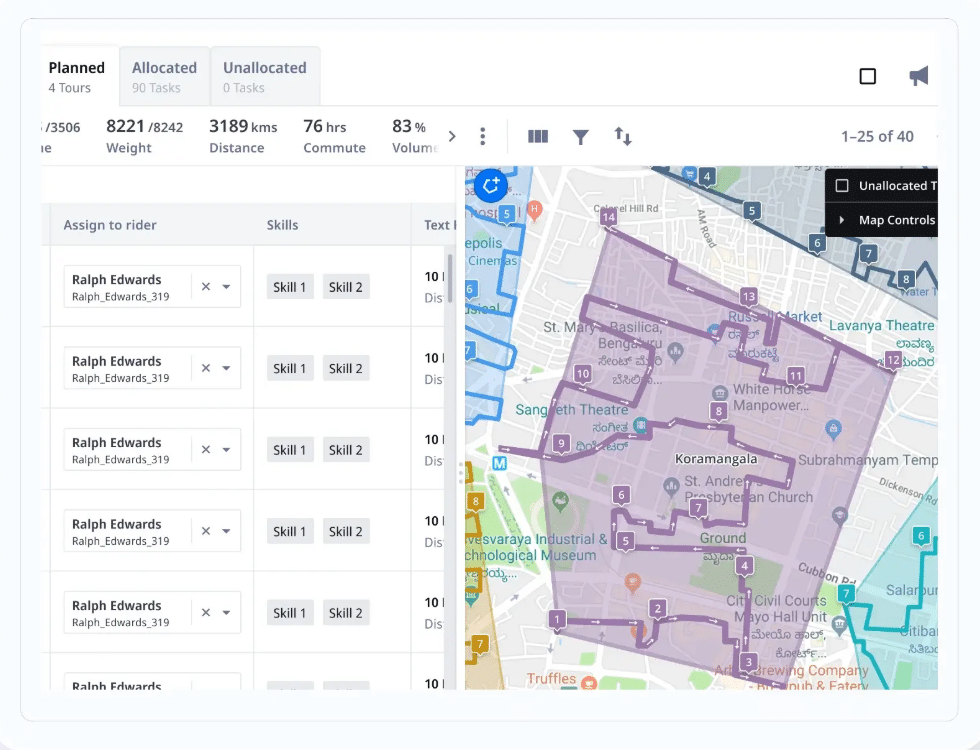
Locus’s platform, for example, connects demand signals with dynamic routing and carrier orchestration, so when a promotional wave hits a specific geography, the dispatch plan adapts to it rather than running on last week’s assumptions.
Teams at Locus-enabled FMCG operations have reported up to 25% reduction in transportation costs alongside 95% SLA adherence even during high-volume promotional periods.
At the same time, product portfolios have expanded. Ambient, chilled, and frozen SKUs now sit within the same network. Promotional calendars have become more aggressive.
Direct-to-consumer channels have created parallel fulfillment requirements that were never anticipated in the original network design. And distributor relationships, which were once characterized by a weekly phone call and a monthly report, now need to perform integrated logistics operations.
For logistics teams inside large FMCG brands, this means five operational themes create most of the day-to-day pressure. Understanding each one, and the specific way it breaks planning and execution, is the starting point for knowing what kind of platform investment actually moves the needle.
D2C Fulfillment Complexity
Direct-to-consumer fulfillment is not simply a new sales channel for FMCG brands. It represents a fundamental redesign of distribution logic. What was once a pallet-based B2B supply chain is now expected to behave like a consumer-facing, real-time delivery engine. The following section outlines where this shift creates operational friction.
The Rise of D2C in FMCG Distribution
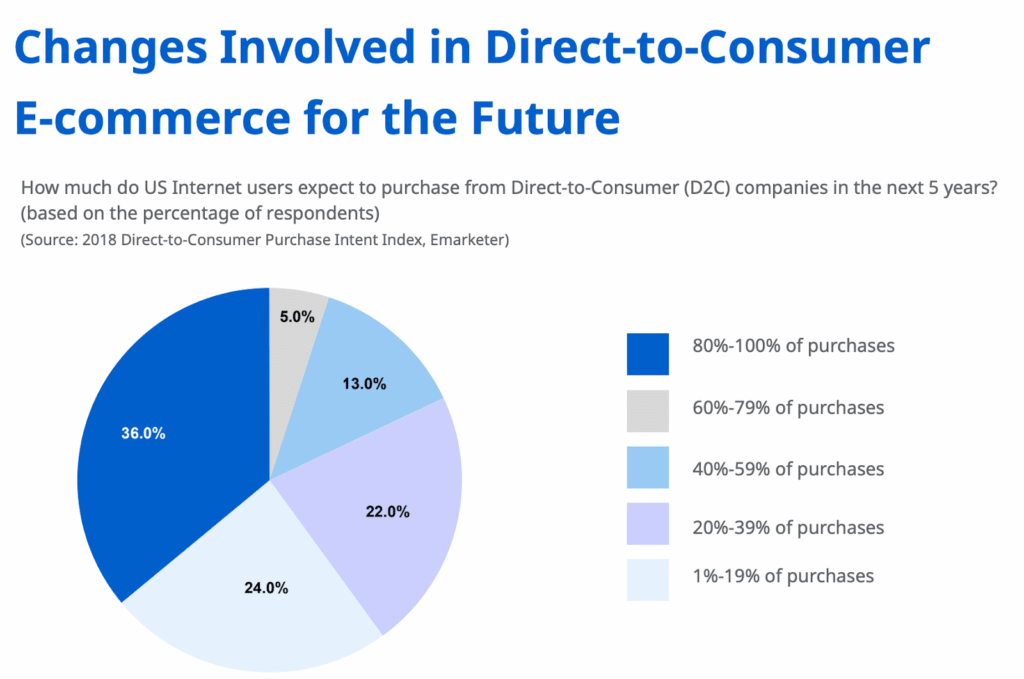
The shift to direct-to-consumer (D2C) channels has been one of the more significant structural changes in FMCG logistics over the past five years. By 2024, over 30% of FMCG transactions in North America and Europe were occurring online, according to market research on the FMCG sector. FMCG companies are increasingly adopting D2C models specifically to reduce dependency on intermediaries and gain more direct control over the customer experience.
How D2C Fulfillment Differs from Traditional Distribution
The operational challenge is that D2C fulfillment follows completely different rules from traditional distribution.
Traditional FMCG distribution involves moving large consignments from factory to distributor to organized retail. Delivery windows are measured in days. The customer is a wholesale buyer or a retailer, not an individual consumer. Returns are infrequent, and the relationship is transactional rather than experiential.
D2C turns every one of those assumptions on its head. Shipments are small and individual. Delivery windows are measured in hours or the next morning. The customer expects branded packaging, real-time tracking updates, and a seamless returns experience if something goes wrong. The global last-mile delivery market was valued at USD 161.2 billion in 2024 and is growing at a CAGR of 9.8% through 2033, driven almost entirely by these consumer expectations around speed, visibility, and convenience.
The Cost of Running Two Parallel Logistics Operations
The deeper problem is not any single one of these requirements in isolation. The problem is that most large FMCG brands built their logistics infrastructure for traditional distribution. When D2C was added as a channel, it was typically layered on top of the existing network as a separate operation, with its own carrier relationships, its own tracking system, and its own fulfillment processes. The result is two parallel logistics operations that share few resources and create duplicate overhead.
Same-Day Delivery Expectations and the Legacy System Gap
Same-day delivery expectations compound this. The US same-day delivery market reached USD 9.25 billion in 2024 and is projected to grow to USD 13.15 billion by 2030. Fifty-one percent of retail shoppers now prefer same-day delivery over longer shipping options. For FMCG brands managing D2C alongside traditional retail replenishment, this creates a slot management and network design challenge that rigid legacy systems cannot resolve.
How Modern Orchestration Unifies D2C and B2B Fulfillment
A modern orchestration platform unifies D2C and traditional distribution within a single execution environment. Instead of operating two parallel systems, logistics teams see all orders, all capacity, and all delivery commitments in one view. Dynamic slot management, carrier selection, and route optimization apply equally to a 500-case retail delivery and a 5-item D2C order. The customer-facing experience improves, and the cost structure of running two disconnected systems disappears.
Read more: Last-mile fulfillment | Last-mile delivery | Retail logistics
Multi-Temperature Routing and Cold Chain Execution
As FMCG portfolios expand into fresh, frozen, ready-to-eat, and health-sensitive categories, logistics complexity increases exponentially. Temperature control is no longer a specialized capability reserved for niche product lines. It is a core operational requirement embedded in everyday distribution.
The challenge for enterprise FMCG operators is not simply maintaining a cold chain. It is orchestrating multi-temperature distribution at scale without compromising cost efficiency or compliance.
Cold Chain Growth and Structural Complexity
FMCG product portfolios have become more complex. A single delivery run for a national grocery brand might carry ambient household goods, chilled dairy, and frozen ready meals, each requiring a different temperature environment and each subject to different compliance obligations.
The cold chain logistics market was valued at USD 292.06 billion in 2025 and is projected to reach USD 932.70 billion by 2034, growing at a CAGR of 12.31%. Food and beverage accounts for 75% of cold chain logistics volume, with the FMCG sector representing the dominant demand driver. Refrigerated transportation is growing at a 7.1% CAGR, faster than refrigerated storage, which reflects the shift toward more frequent, direct deliveries rather than large consolidated shipments from static warehouses.
Read how Locus optimized Indonesia’s Growing Coldchain Business
Multi-Temperature Routing as an Operational Constraint
The operational challenge for FMCG logistics teams is multi-temperature routing: planning a single vehicle that can carry ambient, chilled, and frozen cargo simultaneously, maintain integrity across all three temperature ranges, and deliver to multiple stops on an efficient route.
The technical requirements are significant. Multi-temperature vehicles need separate compartments with independent temperature controls. Route sequencing needs to account for dwell time at stops, because longer stops mean longer exposure to ambient temperatures at loading bays.
Compliance documentation for chilled and frozen goods must be accurate for every delivery and accessible for audit. A 2024 industry survey by the Global Cold Chain Alliance found that over 60% of logistics providers cited regulatory inconsistency as a top barrier to cross-border cold chain efficiency.
Why Manual Planning Fails at Scale
Manual planning approaches cannot manage this at scale. A dispatcher building multi-temperature routes by hand is optimizing for one dimension at a time, typically either vehicle utilization or route length, but rarely both simultaneously while also respecting temperature integrity requirements. The result is either inefficient vehicle utilization, with partially loaded reefer trucks running unprofitable routes, or compliance risk, with temperature integrity not properly monitored during delivery.
Modern orchestration changes this by treating temperature requirements as a constraint that is natively built into the routing algorithm. Locus’s platform, for instance, handles multi-temperature load planning alongside route optimization, so vehicle capacity is maximized across all temperature zones without sacrificing integrity.
Cold chain visibility continues through delivery, with real-time monitoring feeding back into the control tower so exceptions are flagged before they become compliance failures.
Read more: Cold chain logistics | Order fulfillment
Distributor Visibility Gaps
In most FMCG networks, distribution complexity does not end at the warehouse gate. The greatest operational blind spot often begins at the distributor handoff. While brands have invested heavily in factory-level automation and primary transportation tracking, secondary distribution through regional and local distributors remains fragmented, opaque, and difficult to control at scale.
Where Visibility Breaks Down
For most large FMCG brands, the primary distribution route does not go from factory directly to retail shelf. It goes from factory to regional distributor, and from distributor to retail outlet. The distributor leg is where visibility most commonly breaks down.
McKinsey research has found that 45% of companies can see no further than their first-tier suppliers, and only 6% of businesses have full end-to-end supply chain visibility. In FMCG distribution, this blind spot typically begins at the distributor handoff.
The brand knows what left the factory. It does not know, in real time, whether the distributor has delivered to the correct outlets, whether stock is sitting unsold, or whether on-time delivery performance is meeting the standards that matter for shelf availability.
The Operational and Financial Impact
The cost of these gaps is concrete. Stockouts at retail level are the most visible symptom, but they are not the only one. Distributor inefficiency and poor routing means that some outlets receive deliveries outside their preferred windows, damaging the relationship between the brand and the retailer.
Excess inventory builds up at distributors who are over-ordered against cautious forecasts, tying up working capital and increasing the risk of spoilage for perishable lines. When a brand’s logistics team needs to understand a distribution failure, they are often reconstructing events through phone calls and spreadsheets rather than pulling from a live system.
The 52% of FMCG companies that cited enhancing supply chain visibility as a 2024 priority are responding to exactly this problem. The challenge is that visibility tools have often been implemented at the level of the brand’s own fleet or contracted carriers without extending into distributor networks, which frequently involve smaller operators with less technology infrastructure.
Extending Visibility Beyond the Primary Fleet
Closing the distributor gap requires more than tracking trucks. It requires extending a unified execution layer across third-party networks.
Modern orchestration platforms address this by providing a connected visibility layer that extends beyond the brand’s primary fleet. When distributors operate within a platform that shares delivery confirmation, time-stamped proof of delivery, and route adherence data back to the brand, the blind spot at the distributor handoff is replaced with a live view. Exception management becomes proactive rather than reactive. Stockouts can be anticipated rather than discovered after the fact.
Locus’s Control Tower, for example, provides real-time monitoring of active shipments across both captive fleets and third-party distributor networks. Dynamic alerts flag deviations from planned routes, missed delivery windows, and SLA breaches before they compound into downstream problems.
Read more: Wholesale distribution supply chain | Retail supply chain management | Last-mile delivery
Limitations of Legacy TMS in FMCG
The gap between legacy transportation systems and modern FMCG execution requirements is not incremental. It is architectural. The following breakdown explains where traditional TMS platforms struggle to support today’s volatility, channel complexity, and compliance demands.
A traditional transportation management system was designed to solve a specific problem: how to plan and execute freight movements across predictable lanes, manage carrier relationships, and produce compliant documentation. For the era in which most legacy TMS platforms were built, that was sufficient.
FMCG logistics in 2026 is a different problem entirely.
Why Legacy TMS Architectures Struggle in Modern FMCG
The five operational themes described above, promotions volatility, D2C complexity, multi-temperature routing, distributor visibility gaps, and the need for real-time decisioning, are not bolt-on capabilities. They require a platform architecture built around dynamic execution rather than static planning. Legacy TMS platforms typically have rigid planning cycles, limited integration with real-time demand signals, and carrier orchestration capabilities that work well for long-haul freight but poorly for last-mile and secondary distribution.
The structural gaps in legacy TMS for FMCG include:
Promotions and demand volatility: Most legacy TMS platforms ingest a plan and execute against it. They do not have the architecture to respond when the plan is invalidated by a demand spike. Dispatchers manually override plans, which takes time and introduces inconsistency.
D2C execution: Legacy TMS platforms were not designed to manage high volumes of individual consumer orders alongside B2B distribution from the same interface. Running them as separate systems is common, but it creates the cost and coordination overhead described above.
Multi-temperature and cold chain: Very few legacy TMS platforms have native multi-temperature load planning. Compliance documentation for cold chain often requires separate systems or manual records, creating audit exposure.
Distributor and secondary distribution visibility: Legacy TMS coverage typically ends at the brand’s own operations. Extending it into distributor networks requires integrations that most legacy platforms were not architected to support.
Real-time decisioning: When an exception occurs during delivery, legacy TMS platforms typically require manual escalation. Modern execution requires automated exception handling, dynamic resequencing, and instant reassignment, capabilities that legacy platforms rarely offer natively.
This is why FMCG logistics industry trends are pushing operations teams away from patching legacy TMS with point solutions and toward platforms that orchestrate across planning, execution, and visibility simultaneously.
Read more: Retail logistics | FMCG and CPG logistics
How Modern Orchestration Platforms Are Changing FMCG Logistics Execution
Orchestration is not a synonym for a better TMS. In FMCG logistics, it is a platform that connects demand signals, planning, execution, and visibility into a single decision layer that adjusts in real time rather than running off a static plan. The difference matters because the five operational challenges described above cannot be solved by improving any one part of the stack in isolation.
Managing Promotions Volatility Without Manual Workarounds
When a promotional spike hits, an orchestration platform pulls in POS data, distributor order patterns, and field sales inputs to adjust route plans and capacity allocations on the fly. The execution layer absorbs the volume change rather than forcing dispatch teams into a round of carrier calls and manual overrides.
Running D2C and B2B Distribution from One Interface
Orchestration brings D2C orders and traditional B2B distribution into a single view. Carrier selection, slot management, and route optimization work across both channels from the same interface. The tracking experience a consumer sees on their phone is generated from the same underlying data as the delivery confirmation sent to a retail partner.
Treating Temperature as a Planning Constraint, Not an Afterthought
Rather than handling cold chains as a separate process, orchestration platforms build temperature requirements directly into the routing algorithm. Multi-temperature load plans account for all temperature zones at once, and cold chain visibility carries through from dispatch to final delivery without requiring a separate monitoring system.
Extending Visibility Into Distributor Networks
Coverage does not stop at the brand’s own fleet. Through API integrations and mobile applications for field delivery agents, orchestration platforms pull distributor networks into the same Control Tower view. Exceptions at the distributor level are visible in real time rather than surfacing through a phone call after the fact.
Replacing the Legacy TMS Patchwork
An orchestration platform consolidates legacy TMS tools, standalone routing software, and manual spreadsheets into one system. Connections to existing ERP, WMS, and OMS infrastructure mean the orchestration layer works within the current enterprise data environment rather than requiring a full technology replacement.
How Locus Delivers This in Practice
Locus is built on this architecture. The platform covers AI-based routing and dispatching, a real-time Control Tower, rider reassignment for failed deliveries, returns handling, and carbon tracking for ESG reporting. It integrates with SAP, Oracle, and other enterprise systems, so implementation does not mean starting from scratch.
For FMCG brands weighing whether to keep investing in legacy TMS or shift to an orchestration-led model, the practical question is whether the current system can respond to a promotional demand spike in real time, handle D2C and B2B from one interface, plan multi-temperature loads natively, and show live visibility across distributor networks. If the answer is no on any of those counts, the problem is not a configuration fix. It is a fundamental gap in how the system was built.
Read more: Last-mile fulfillment | Hub and spoke distribution
Other Trends Shaping FMCG Logistics
Beyond the five structural execution challenges, several macro trends are accelerating change across FMCG logistics networks. These shifts influence investment decisions, sustainability strategy, and platform selection.
Sustainability and green logistics
Approximately 52% of FMCG logistics operations now incorporate green practices, including LNG-powered trucks, electric last-mile fleets, and renewable-powered distribution centers. The European Union’s food safety regulations and emissions standards are increasingly demanding that FMCG logistics providers demonstrate measurable carbon performance, not just intent.
Orchestration platforms support sustainability by optimizing route plans that minimize total miles driven, consolidating loads to reduce the number of vehicles deployed, and providing per-route CO2 tracking data for ESG reporting.
Locus includes carbon tracking and emissions reporting natively, giving logistics teams the data they need to demonstrate progress against sustainability targets without requiring a separate analytics implementation.
Read more: Green logistics and sustainability
AI adoption and automation in FMCG logistics
AI adoption can cut logistics costs by 15% and boost service efficiency by 65%, according to supply chain research data. McKinsey has found that companies using data-driven decision-making reduce supply chain operational costs by up to 30%.
In FMCG logistics specifically, AI applications include demand forecasting that accounts for promotional patterns, route optimization that adjusts in real time to traffic and delivery exceptions, and warehouse automation that improves throughput ahead of outbound distribution.
The practical question for FMCG operations is not whether to adopt AI, but where in the execution stack it delivers the fastest measurable return. Route optimization and dispatch planning have consistently shown the clearest ROI because every improvement in route efficiency directly reduces transport cost per delivery.
Locus’s AI-based dispatching, for instance, has delivered up to 25% transportation cost reduction for FMCG and retail clients by optimizing routes across captive and contracted fleets simultaneously.
Read more: Demand planning | Last-mile delivery
Hyperlocal delivery and speed expectations
The US same-day delivery market is valued at USD 9.25 billion and growing. Consumer expectations established by food delivery platforms and e-commerce giants have migrated into FMCG purchasing behavior, with consumers in urban markets expecting chilled and ambient grocery products within 30-minute to two-hour windows.
For FMCG brands, this creates a hyperlocal delivery infrastructure challenge. Fulfilling sub-two-hour delivery promises requires either micro-fulfillment capabilities close to the consumer or a highly dynamic routing and dispatch system that can sequence orders from existing distribution points in real time.
Orchestration platforms help by automating slot management, prioritizing orders by delivery window, and reassigning delivery agents dynamically when earlier stops change.
Frequently Asked Questions (FAQs)
What are the biggest operational challenges in FMCG logistics today?
The five most significant challenges are promotions-driven demand volatility, D2C fulfillment complexity, multi-temperature routing, distributor visibility gaps, and the limitations of legacy TMS platforms in supporting real-time execution decisions.
How do promotions and demand volatility affect FMCG logistics execution?
Promotional demand spikes create the bullwhip effect: order variability amplifies as it moves upstream through the supply chain, resulting in stockouts in high-demand zones and excess inventory elsewhere.
Static planning systems cannot absorb intra-cycle demand changes, which forces dispatchers to manage the gap manually through carrier calls and informal route adjustments. An orchestration platform closes the loop between demand signal and execution, allowing routes and capacity to adjust dynamically when promotional volume shifts.
What is D2C fulfillment complexity in FMCG and how do companies handle it?
D2C fulfillment requires individual-order management, branded delivery experiences, real-time tracking, and fast returns processing, all capabilities that are fundamentally different from traditional B2B distribution.
Most FMCG brands initially run D2C as a separate operation from their traditional distribution network, creating duplicate overhead. A modern orchestration platform unifies both channels within a single execution system, applying the same route optimization, carrier selection, and visibility tools to D2C orders and B2B replenishments simultaneously.
Why is multi-temperature routing important in FMCG logistics?
FMCG product portfolios increasingly include ambient, chilled, and frozen SKUs that must be delivered together. Multi-temperature routing allows a single vehicle to carry all three temperature zones efficiently while maintaining compliance with food safety regulations. Without native multi-temperature planning, teams either underutilize specialized vehicles or violate cold chain integrity requirements. Orchestration platforms treat temperature constraints as a built-in planning variable, not a manual workaround.
What are distributor visibility gaps and how can they be reduced?
Distributor visibility gaps occur when a brand’s real-time operational view ends at the point where stock is handed to a distributor. The brand knows what left its facility but has no live data on distributor delivery performance, outlet-level stock levels, or secondary distribution timeliness.
These gaps lead to stockouts, excess inventory, and reactive problem-solving. Connected orchestration platforms extend visibility into distributor networks through API integrations and field agent applications, turning the distributor handoff from a blind spot into a monitored step in the distribution chain.
Why do legacy TMS systems fall short for FMCG logistics?
Legacy TMS platforms were designed for predictable freight lanes and static planning cycles. They lack the real-time demand integration, multi-temperature planning, D2C order management, and distributor network visibility that modern FMCG execution requires.
Adding point solutions on top of a legacy TMS creates integration complexity without solving the core architectural limitation: the system was not designed to respond dynamically when conditions change mid-execution.
How are modern orchestration platforms changing FMCG logistics execution?
Modern orchestration platforms unify demand signals, route planning, carrier and courier management, real-time visibility, and exception handling in a single system. For FMCG logistics, this means promotional demand spikes are absorbed by dynamic execution rather than manual override, D2C and traditional distribution are managed from the same interface, multi-temperature loads are planned natively, and distributor networks are visible in real time. The result is lower transport cost per delivery, higher SLA adherence, and a planning environment that responds to conditions as they change rather than after the fact.
What are the main FMCG logistics trends for execution and distribution?
The key trends are the shift from static to dynamic execution systems, D2C channel integration with traditional distribution, multi-temperature cold chain expansion, distributor network visibility requirements, AI-powered route optimization, sustainability and carbon reporting integration, and the growth of same-day and hyperlocal delivery services in urban FMCG markets.
Turning FMCG Complexity into Competitive Advantage with Locus
The FMCG logistics market is growing, but the operational complexity inside that market is growing faster. Five challenges, promotions-driven volatility, D2C fulfillment complexity, multi-temperature routing, distributor visibility gaps, and the limits of legacy TMS, define where execution breaks down for most large FMCG brands today.
Each of these challenges has a common root: they require systems that respond to real-time conditions rather than executing against a static plan. Legacy TMS platforms were not designed for this. The FMCG logistics industry is moving toward orchestration-led approaches precisely because orchestration is how you close the gap between a plan built on yesterday’s data and execution that needs to perform today.
Locus’s AI-powered orchestration platform connects demand signals, route planning, carrier management, multi-temperature compliance, distributor visibility, and sustainability reporting in a single system. For FMCG brands managing complex distribution networks, this is not a technology upgrade. It is a change in how execution works.
If you are evaluating how your current logistics infrastructure performs against these operational trends, explore how Locus delivers results for FMCG and CPG operations.


General
FMCG Logistics for Enterprise: Network Strategies, Market Trends, and Execution

Mar 4, 2026
Enterprise FMCG logistics market insights, growth outlook 2026 to 2034, trends, cost pressures, and strategies to optimize fast-moving consumer goods logistics and distribution
Read more
General
7 Best Large Bulky Item Courier Delivery Software of 2026
Mar 5, 2026
Compare bulky delivery software for furniture, appliances, and B2B freight. See features, best-fit use cases, and pricing models
Read moreInsights Worth Your Time




















FMCG Logistics Trends: Operational Challenges and How Modern Orchestration Is Changing Execution