


Fleet Optimization
Top 10 Fleet Management Companies in USA for 2026


Key Takeaways
- Fleet management software varies widely in scope, from basic tracking tools to platforms that actively manage planning, dispatch, and live execution across daily operations.
- Visibility alone does not improve performance. Execution control determines how well fleets respond to delays, demand shifts, and service disruptions during delivery.
- As fleets scale across regions and partners, consistent planning and execution logic becomes more important than standalone features or reports.
- Buyers should evaluate platforms based on operational depth, scalability, and how effectively they reduce manual coordination during dispatch and delivery.
- Locus is built for enterprise fleets that need structured planning, live execution control, and predictable performance across complex delivery networks.
Fleet management software supports planning, dispatch, visibility, and day-to-day execution. As fleets scale in 2026, relying on disconnected tools for routing, tracking, maintenance, and reporting creates blind spots that affect cost control, service reliability, and operational oversight.
Modern fleet operations need systems that support accurate route planning, consistent dispatch, and the ability to respond as conditions change during execution. When these functions live in separate tools, teams spend more time coordinating manually and reacting to issues after they occur.
Today’s fleet management platforms bring planning and execution into a single operational layer. This reduces manual intervention, improves delivery performance, and provides clearer insight into how fleets operate across regions, partners, and fulfillment models. Over time, this results in lower operating costs and more predictable service outcomes.
This guide reviews 10 fleet management software platforms used by U.S. enterprises and explains where each fits operationally. It also highlights how platforms like Locus connect planning and execution to support fleet operations at scale.
Key Features to Look for in Fleet Management Software
Fleet management software is evaluated by how consistently it supports planning, dispatch, visibility, and execution across daily operations. Each capability below addresses a specific operational requirement that directly affects cost control, service reliability, and execution discipline as fleets scale in 2026.
Dispatch And Route Planning
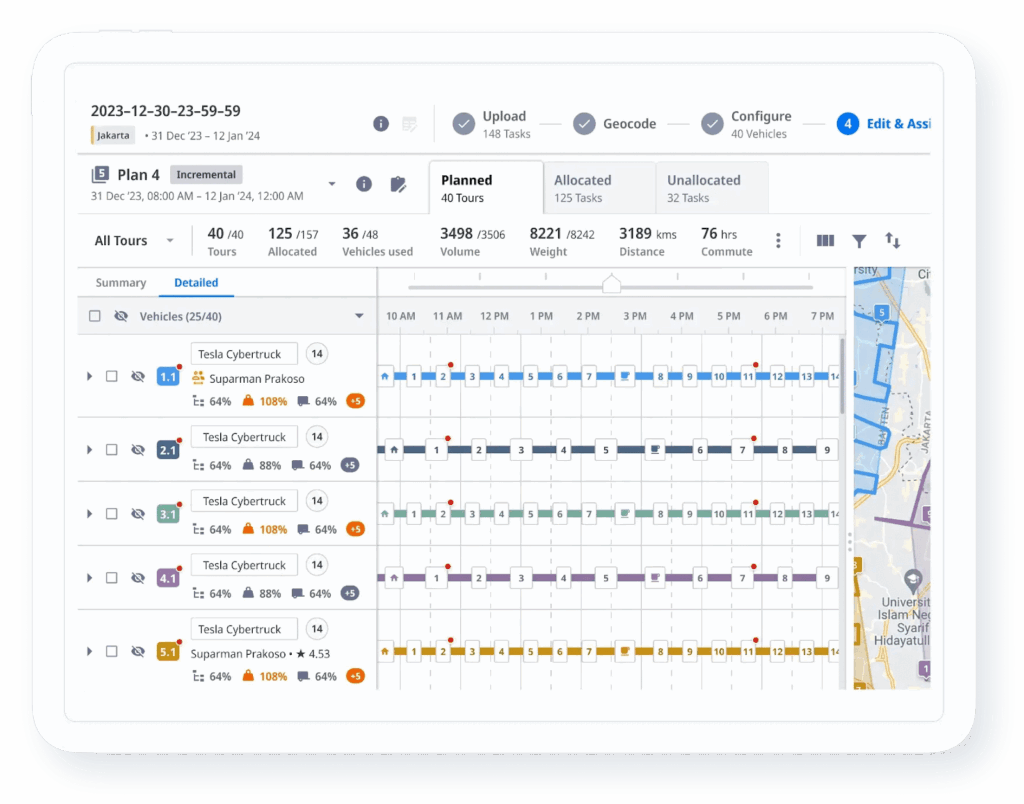
Route planning determines how efficiently work is assigned and completed. At scale, systems must reflect real-world constraints and allow changes without forcing full plan rebuilds.
- Automated route planning based on capacity, time windows, vehicle types, and service priorities
- Support for mid-day route adjustments without manual rework or disruption to active deliveries
Real-Time Visibility And Control
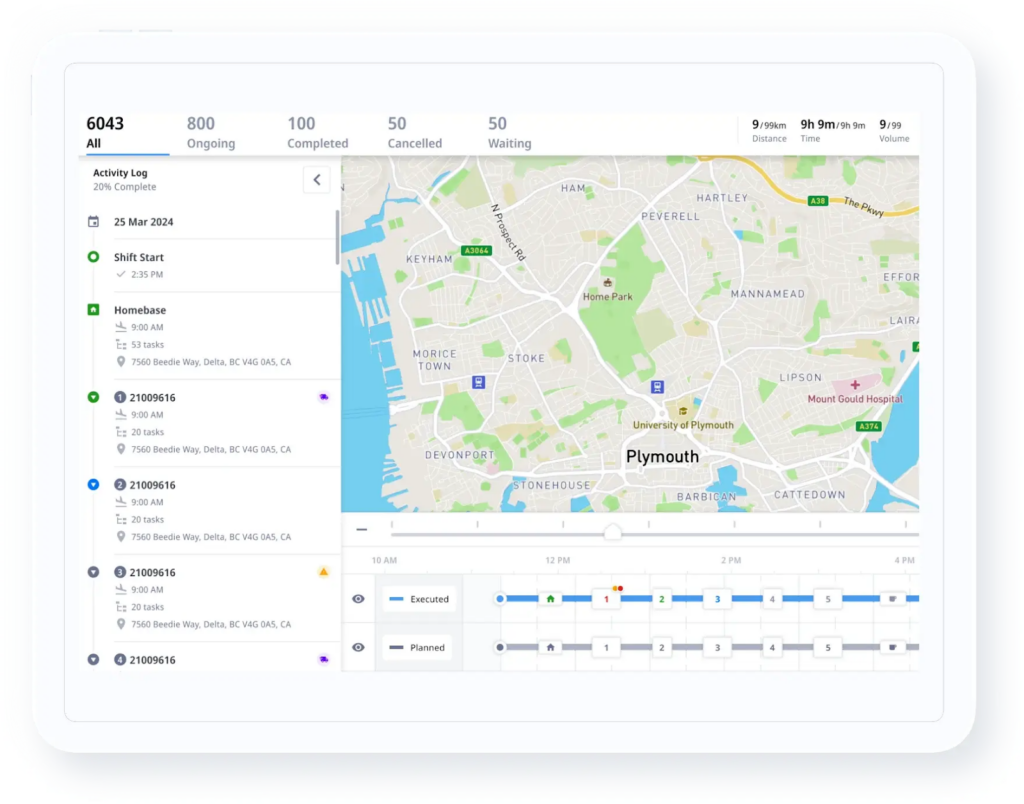
Visibility only matters when it enables action. Dispatch teams need live insight into execution and the ability to intervene when conditions shift.
- Live vehicle, route, and stop-level visibility
- Dispatcher control during execution to manage delays, exceptions, and reassignment in real time
- Geofence-based alerts for depot, customer, and zone boundaries to flag deviations automatically
- Route replay for reviewing completed deliveries, resolving disputes, and auditing service exceptions
Scalability Across Fleet Networks
As fleets expand across regions, partners, and fulfillment models, consistency becomes harder to maintain. Software must apply the same planning and execution logic across the network.
- Support for high route volumes across multiple depots and geographies
- Stable performance during seasonal peaks and demand spikes
Analytics And Operational KPIs
Analytics should guide operational improvement, not just retrospective reporting. The focus should remain on metrics that influence daily decisions.
- Route efficiency, on-time performance, cost per delivery, and asset utilization
- Data that supports operational reviews and planning refinement
Integration And Automation Readiness
Disconnected systems slow execution and introduce inconsistency. Integration and automation reduce manual coordination and standardize decisions.
- Integration with OMS, WMS, TMS, and ERP platforms
- Automated dispatch logic to reduce manual intervention during execution
- Telematics integrations that feed GPS, ELD, and vehicle diagnostics data directly into route and dispatch workflows, rather than sitting in a separate reporting layer
How We Evaluated These Platforms
The ten platforms in this guide are compared against seven criteria that reflect real operating conditions for U.S. enterprise fleets, not feature counts alone:
- Route optimization depth — how routes are generated, sequenced, and adjusted against real-world constraints such as time windows and vehicle capacity
- Dispatch automation — how much of the assignment and reassignment process happens without manual intervention
- Real-time visibility — the granularity of live vehicle, route, and stop-level tracking available to dispatchers
- Scalability — performance across multi-depot, multi-region, and high-route-volume networks
- Integration readiness — native or API-based connections to OMS, WMS, TMS, and ERP systems
- Implementation support — the resources available to get a fleet live and productive
- Customer-validated outcomes — evidence of measurable results such as improved SLA adherence or reduced delivery cost
Platforms that combine several of these dimensions into a single operational layer are better suited to dispatch-heavy, multi-region operations. Single-function tools — telematics-only or maintenance-only platforms — are noted below as strong fits for narrower needs.
Top 10 Fleet Management Software in 2026 – Overview Table
This section provides a high-level comparison of how leading fleet management software platforms differ in operational focus. While all ten tools offer some level of fleet visibility, they vary significantly in how well they support route planning, dispatch execution, real-time control, and scalability across large networks.
| Software | Primary Focus | Best Suited For |
|---|---|---|
| Locus | Planning, dispatch, and execution orchestration | Enterprise retail, FMCG, and 3PL networks |
| Motive | Telematics and driver safety | Fleets prioritizing compliance and safety |
| Samsara | Connected fleet and IoT visibility | Large fleets with hardware-first needs |
| Verizon Connect | GPS tracking and reporting | Fleets focused on visibility and compliance |
| Fleetio | Asset and maintenance management | Teams managing vehicle health and upkeep |
| Geotab | Telematics data and integrations | Data-driven fleet operations |
| Lytx | Driver behavior and safety | Risk- and compliance-led fleets |
| Azuga | GPS tracking and driver scoring | Small to mid-sized fleets |
| Omnitracs | Routing and regulatory compliance | Large, regulated fleet operations |
| Teletrac Navman | Tracking and reporting | Mid-market fleet operations |
This overview highlights a clear separation between tracking-centric tools and platforms designed to manage planning and execution together, which becomes increasingly important as fleet operations scale in complexity.
Locus vs. Samsara
Samsara is built around connected hardware and IoT visibility: dashcams, sensors, and telematics data feeding a central dashboard. It gives fleets a strong picture of where vehicles are and how they’re being driven.
Locus is built around what happens after that visibility: planning, dispatch, and execution orchestration. Where Samsara tells you a delivery is delayed, Locus re-sequences the route and reassigns the job automatically.
Best fit for Samsara: fleets whose primary need is hardware-based tracking, driver safety scoring, and compliance reporting.
Best fit for Locus: enterprise retail, FMCG, and 3PL networks that need planning and live execution decisions made automatically, not just reported.
Locus vs. Geotab
Geotab’s strength is telematics data and its open integration ecosystem, feeding GPS, diagnostics, and driver behavior data into a wide partner marketplace.
Locus takes a different starting point: it uses that same class of real-time data (including Geotab-style telematics feeds) to drive dispatch and route decisions directly, rather than surfacing it as a report for a human to act on.
Best fit for Geotab: data-driven fleets that want flexible integrations and a large ecosystem of add-on apps.
Best fit for Locus: fleets that want the dispatch and routing decision made and executed, not just the underlying data delivered.
Locus vs. Motive
Motive centers on telematics and driver safety: ELD compliance, dashcams, and safety scoring for regulated fleets.
Locus centers on planning, dispatch, and execution orchestration across multi-depot, multi-region delivery networks.
Best fit for Motive: fleets prioritizing driver safety, compliance, and regulatory reporting.
Best fit for Locus: fleets prioritizing route efficiency, dispatch automation, and execution control at scale.
Locus vs. Verizon Connect
Verizon Connect focuses on GPS tracking and reporting: where vehicles are and how they’ve performed historically.
Locus focuses on what to do next: automated route planning, mid-day re-optimization, and dispatcher tools to intervene during active execution.
Best fit for Verizon Connect: fleets whose core need is visibility and compliance reporting.
Best fit for Locus: fleets that need the system to actively plan, adjust, and execute, not just report.
Locus by the Numbers
- Using Locus enterprise fleets have reduced logistics costs by 16.7% (~$1.2M) during a nationwide rollout completed in six months
- SLA adherence held at 97%+ across six markets after replacing manual route and dispatch planning with Locus’s execution layer
- Locus runs 12M+ automated decisions per day across 360+ enterprises in 30+ countries, with the Fireworks routing engine optimizing 100,000+ routes simultaneously.
- Dispatch planning fell from two hours to under 30 minutes per store (~87.5%), with planners moving from executing every dispatch to reviewing only exceptions, rolled out to 150 stores in three months
- A single deployment spans 130+ facilities and 300+ carrier partners across a 120-country network
What to Confirm Before You Buy
Several pricing and support details for these platforms are not published openly, since most fleet management vendors quote based on fleet size and configuration. Before shortlisting a tool, get clear answers on:
- Pricing model — per-vehicle, per-route, or scope-based, and whether costs increase as volume grows
- Demo or proof-of-concept availability — whether you can test the platform against your own routes before committing
- Support availability — live support hours, dedicated account management, and response-time commitments
- Contract structure — minimum term, cancellation terms, and whether pricing is locked for the contract length
- Onboarding and implementation — typical time to go live, data migration support, and training included
- Integration scope — confirmed, tested connections to your existing OMS, WMS, TMS, or ERP systems, not just “API available”
These questions matter more at enterprise scale, where a mismatch in support model or contract structure is harder to unwind after rollout.
Top Fleet Management Software in 2026 – Detailed Comparison
1. Locus
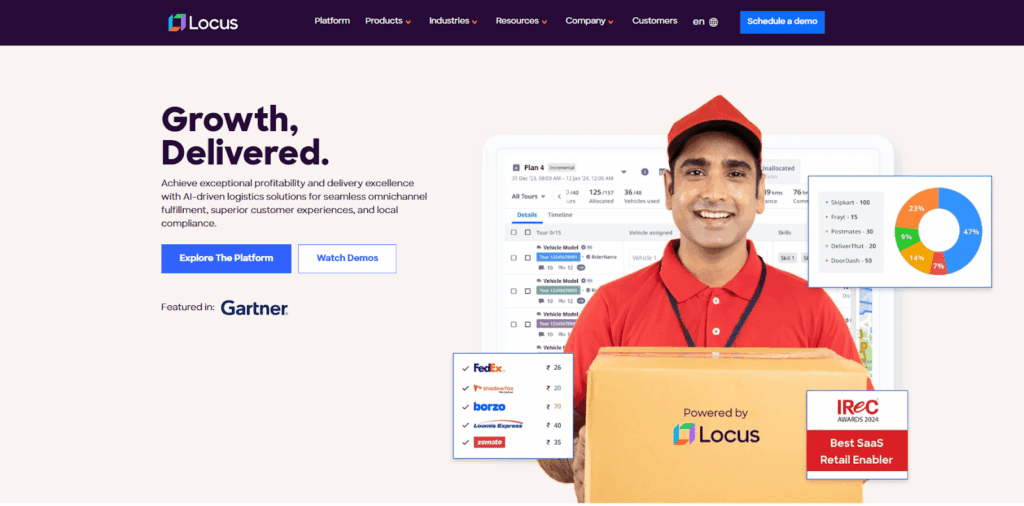
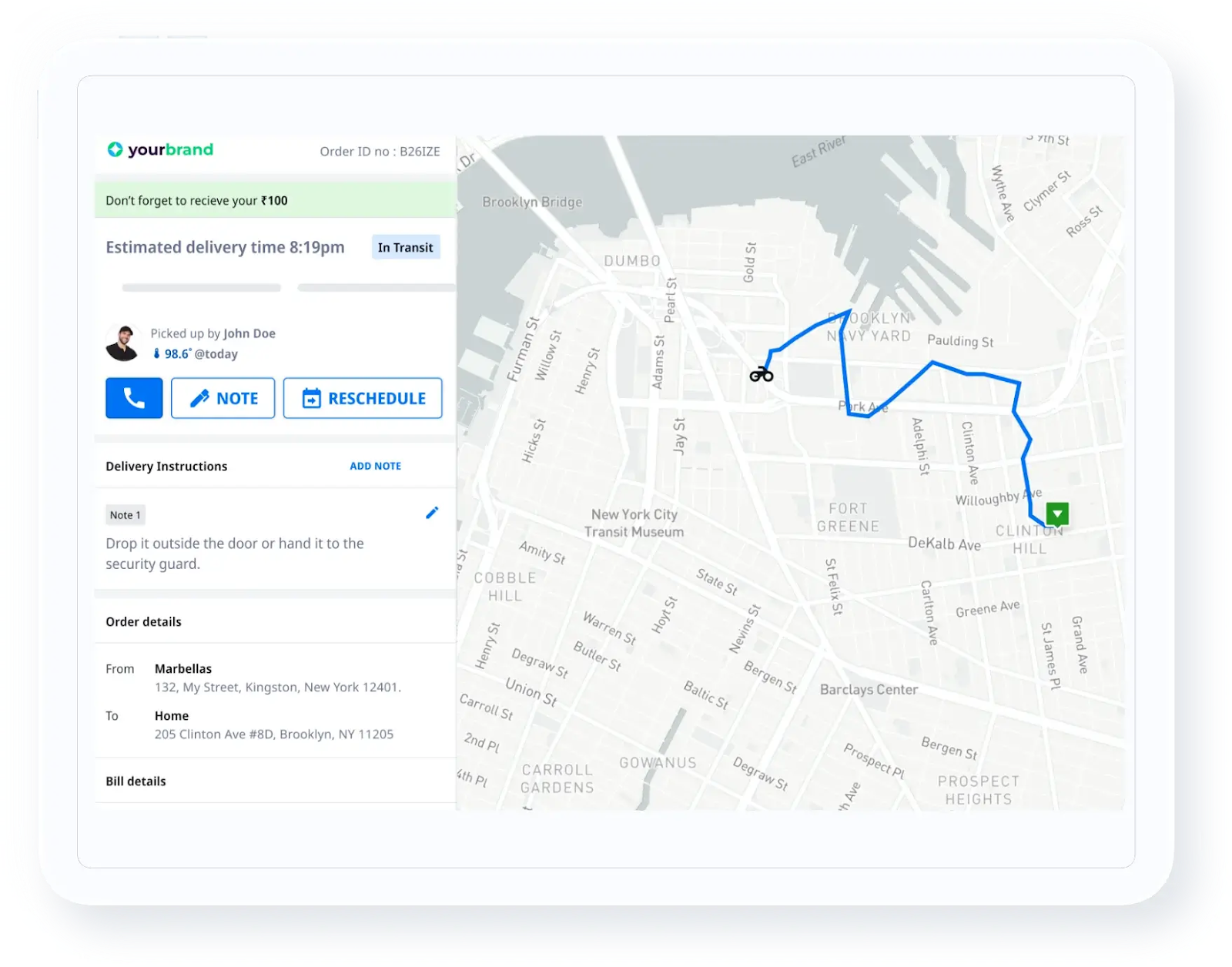
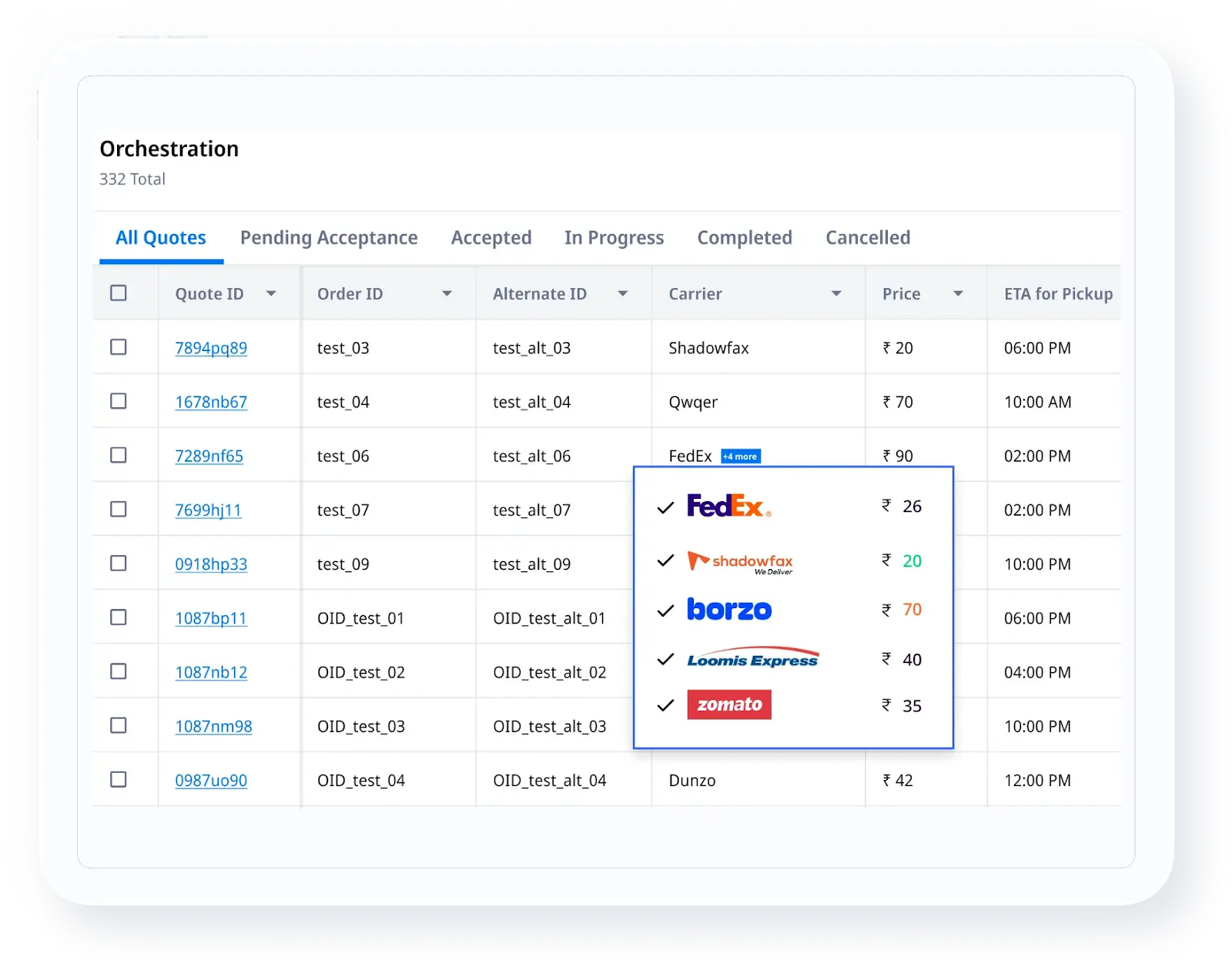
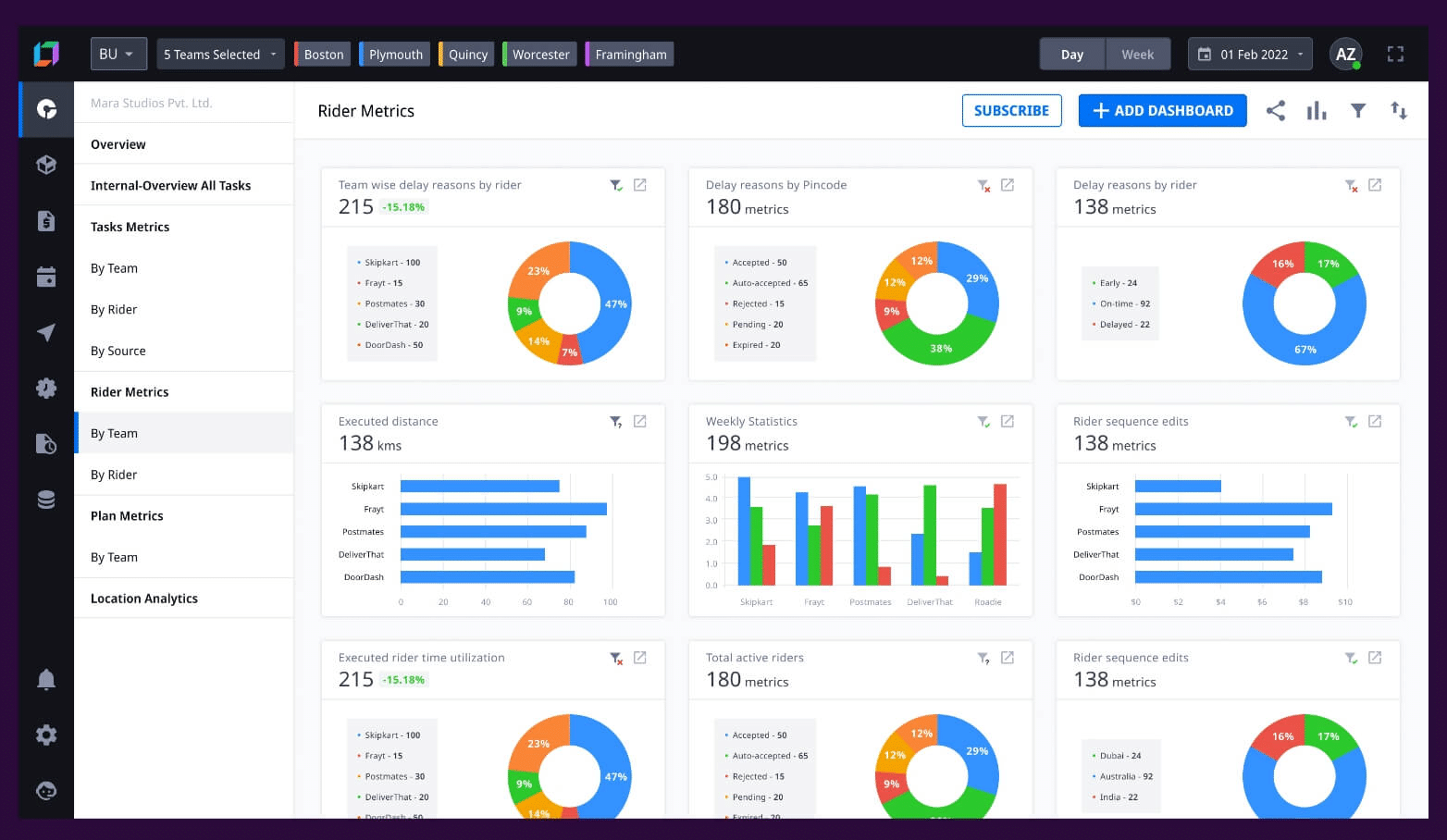
Locus is built for organizations that need fleet management to work across planning, dispatch, and execution, not as separate steps. Instead of focusing only on vehicle tracking or hardware-led telematics, Locus acts as an operational layer that helps teams plan routes, manage dispatch decisions, and maintain control as deliveries are executed across regions and partners.
Locus’s Key Features:
- AI-Driven automation: Locus automates key logistics tasks, including inspection, packaging, returns authorization, and restocking. By reducing manual intervention, businesses can process logistics faster and more accurately.

- Complete visibility: The platform offers full transparency into every step of the logistics process, from initiation to product delivery. This visibility helps companies make more informed decisions and identify areas for improvement.
- Scalability: Designed to scale with growing business needs, Locus handles increasing volumes without increasing operational costs. This makes it an ideal solution for companies aiming to grow their logistics operations.
- Real-Time decision-making: Locus provides real-time insights that enable businesses to make data-driven decisions on delivery management, such as optimizing routes and minimizing delays. This accelerates turnaround times and improves customer satisfaction.

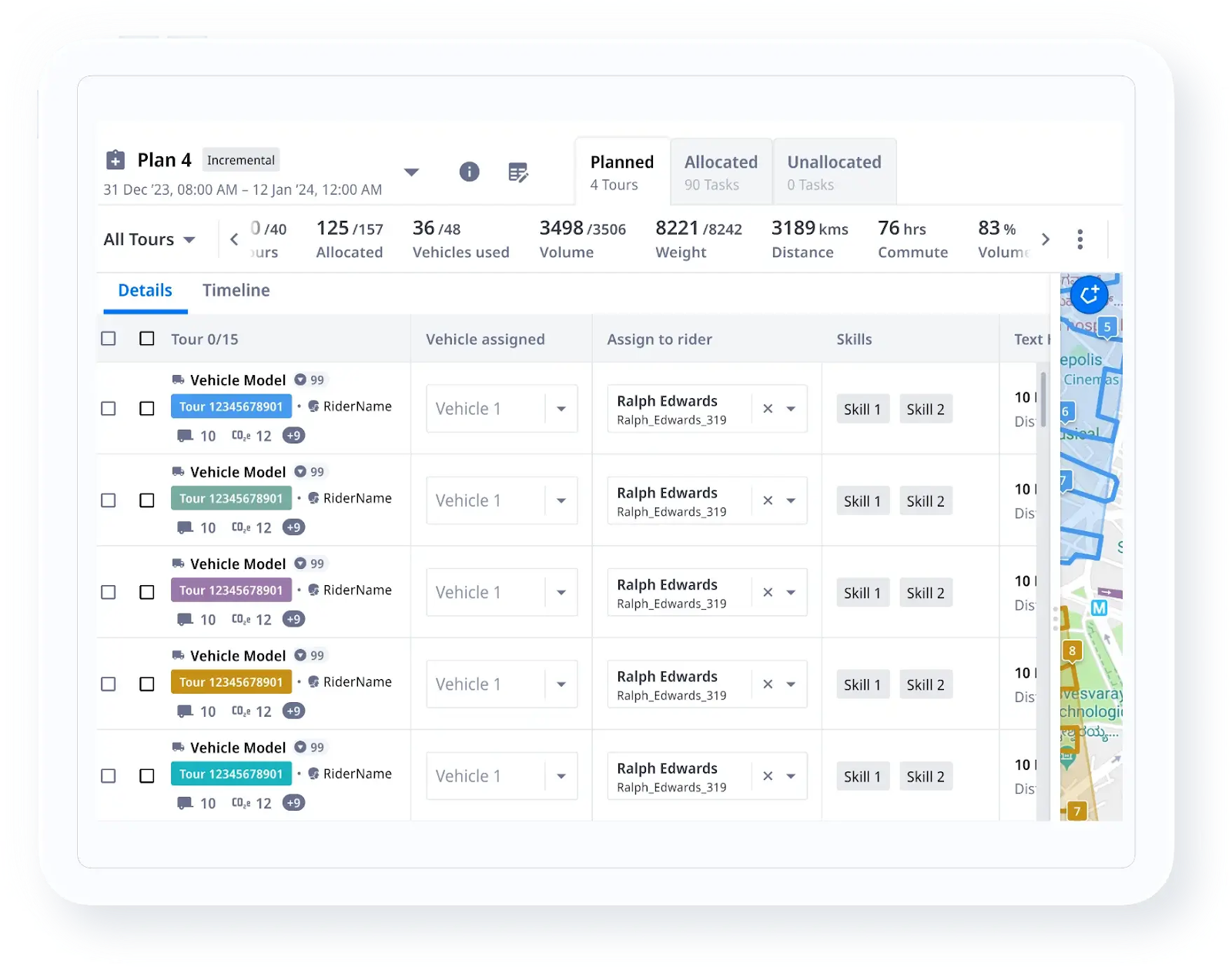
Locus Is Ideal for
- Enterprise retail, FMCG, and e-commerce delivery networks
- 3PLs managing multi-client, multi-region fleet operations
- Teams where dispatch coordination and execution control are critical
Locus’s Pricing:
Locus follows an enterprise pricing model based on operational scale and required modules. Pricing is structured to support growth without tying costs directly to per-route or per-stop usage, which helps large networks maintain predictability as volumes increase.
Locus — Trade-offs to Consider
Locus is built for execution-heavy, multi-region operations, so teams with a single depot and low daily route volume may not need its full orchestration layer. Pricing is enterprise-scoped rather than published, which suits large networks but requires a sales conversation to size correctly.
2. Motive
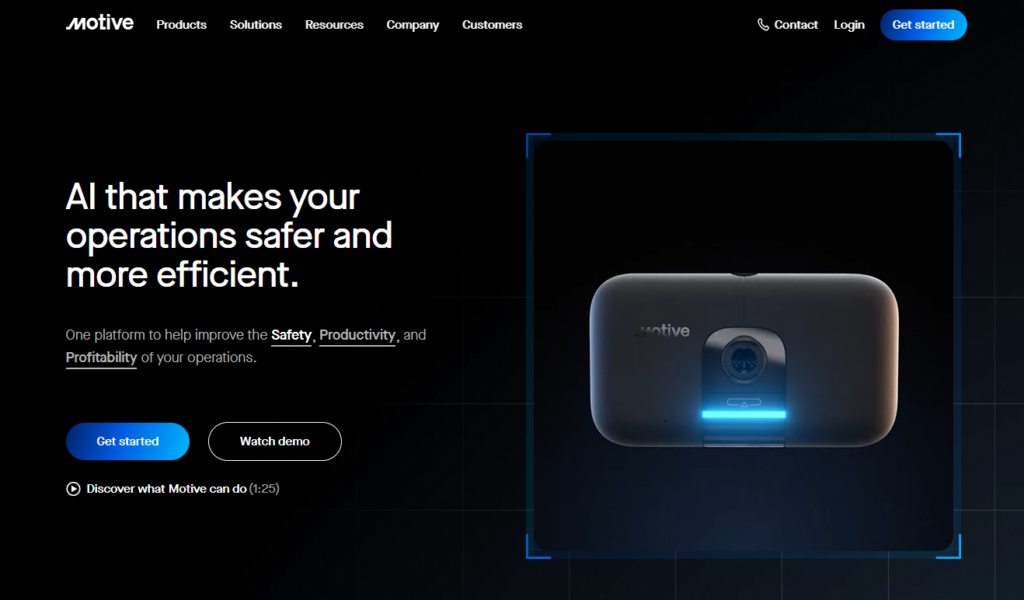
Motive is a fleet and operations management software company founded in 2013 and headquartered in San Francisco, California. The platform combines driver safety, fleet management, asset monitoring, spend controls, and workforce management in a single AI-powered suite. Motive is built to help fleets reduce accidents, improve compliance, and optimize operational efficiency while offering integrated hardware such as AI dashcams and telematics devices.
Motive’s Key Features:
- Driver Safety: AI dashcams, 360° risk detection, automated driver coaching, and accident management
- Fleet Management: GPS fleet tracking, vehicle diagnostics, maintenance scheduling, and fleet telematics
- Equipment & Asset Monitoring: Trailer tracking, reefer monitoring, and theft prevention tools
- Spend Management: AI-powered Motive Card with fraud detection, spend analytics, and savings insights
- Workforce Management: Employee qualifications, time tracking, training, and coaching modules
Motive Is Ideal for:
Trucking and logistics companies, public sector fleets, utilities, construction, agriculture, and delivery operators seeking a consolidated platform for safety, compliance, and asset visibility with hardware-backed AI solutions.
Motive’s Pricing:
Not publicly disclosed. Pricing is custom and based on fleet size, hardware, and service scope.
Motive — Trade-offs to Consider
Motive’s hardware-backed AI dashcams and safety suite are strongest for compliance- and safety-led fleets. Teams whose primary need is dispatch and route optimization, rather than driver safety and asset monitoring, may find its execution and routing depth lighter than dedicated planning platforms.
3. Samsara

Samsara is a connected operations platform company founded in 2015 and headquartered in San Francisco, California. The company provides AI-powered fleet management, equipment tracking, safety, and site visibility solutions.
Samsara’s Key Features:
- Cameras & Video: AI dashcams, driver coaching, in-cab alerts, and safety reporting tools
- Fleet Telematics: Real-time GPS tracking, routing, fuel management, electrification insights, and maintenance monitoring
- Equipment Tracking: Location monitoring, utilization reporting, theft prevention, and diagnostics
- Site Security: Remote visibility, proactive alerts, and access from mobile devices
- Samsara Apps: Connected workflows for compliance, training, and mobile fleet operations
- Integrations: OEM integrations, App Marketplace, and developer APIs for custom workflows
Samsara Is Ideal for:
Enterprises and government organizations across transportation, construction, field services, food and beverage, logistics, manufacturing, utilities, and public sector looking for a scalable platform that unifies safety, compliance, and operational efficiency.
Samsara’s Pricing:
Custom pricing based on fleet size, hardware, and solutions required. Self-guided online pricing estimator available.
Samsara — Trade-offs to Consider
Samsara’s strength is connected hardware and IoT visibility across vehicles, equipment, and sites. Fleets that don’t need hardware-first monitoring may pay for capability they won’t use, and its routing and dispatch tools are less developed than platforms built around planning and execution.
4. Verizon Connect
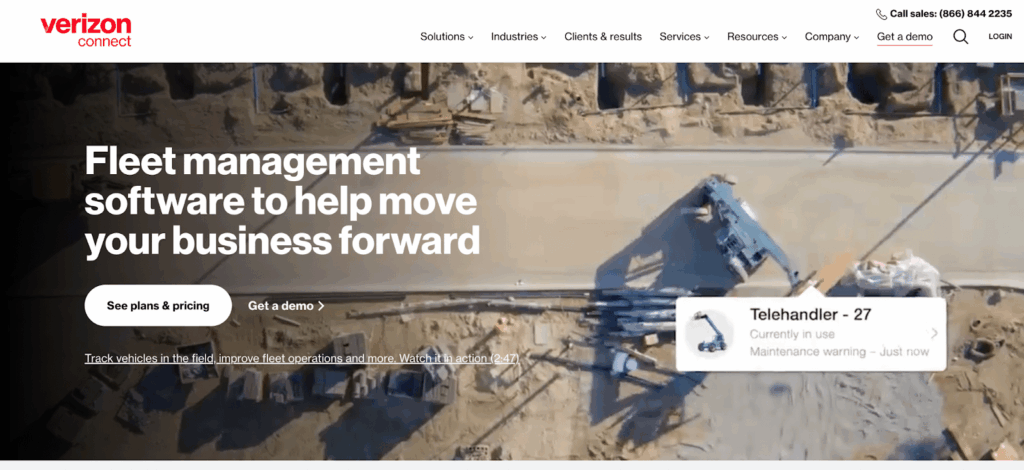
Verizon Connect helps you manage drivers, vehicles, and routes from one dashboard. It uses GPS tracking, AI route planning, and telematics to cut idle time, boost on-time performance, and keep deliveries running smoothly.
Verizon Connect’s Key Features
- Smart Route Optimization: Uses live traffic data, driver locations, and delivery priorities to plan efficient routes and cut fuel waste.
- Real-Time Visibility: Delivers live GPS tracking and updates so dispatchers can adjust instantly to delays or route changes.
- Driver Safety Monitoring: AI dashcams and behavior analytics identify risky driving and support proactive coaching.
- Compliance & Maintenance: Automates inspections, compliance checks, and maintenance scheduling to keep fleets audit-ready.
- Asset Tracking: Monitors vehicles, trailers, and equipment to prevent theft and improve utilization.
Verizon Connect Is Ideal for
Large and mid-sized fleets in distribution, food and beverage, retail, utilities, construction, and government sectors that require centralized dispatch management, driver safety oversight, and compliance tracking across multiple locations.
Verizon Connect’s Pricing
Pricing is customized based on the number of vehicles, hardware requirements, and service modules selected. Interested businesses can request a quote or schedule a demo through Verizon Connect’s website.
Verizon Connect — Trade-offs to Consider
Verizon Connect covers route optimization, tracking, and compliance in one dashboard, which suits fleets that want consolidated visibility. It is less oriented toward multi-region orchestration or dynamic, execution-heavy dispatch than platforms built specifically for that use case.
5. Fleetio
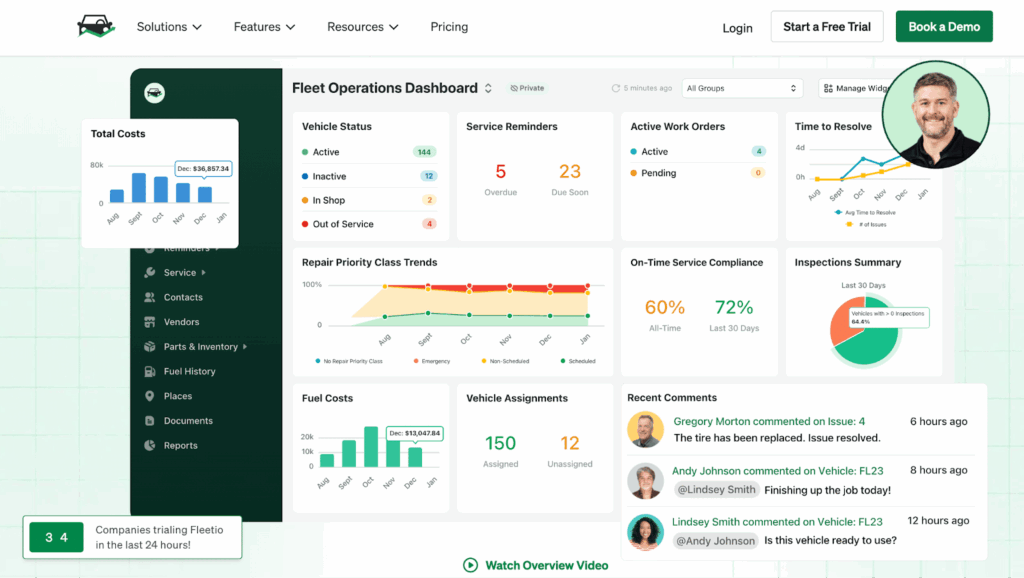
Fleetio focuses on fleet maintenance and asset management, helping teams track vehicle health, inspections, repairs, fuel usage, and total cost of ownership from a single system.
Fleetio is designed to reduce breakdowns, improve compliance, and give operations teams better control over maintenance workflows and asset lifecycle decisions.
Fleetio’s Key Features
- Preventive Maintenance And Work Orders: Automates maintenance schedules, service reminders, and digital work orders to reduce unexpected breakdowns and keep vehicles road-ready.
- Vehicle Inspections And Compliance: Supports mobile inspections, defect reporting, and compliance documentation to help teams stay audit-ready and identify issues early.
- Fuel and Cost Management: Captures fuel transactions and maintenance costs to provide visibility into spend and identify inefficiencies across the fleet.
- Asset and Parts Tracking: Tracks vehicles, equipment, parts inventory, and service history to support better lifecycle and replacement planning.
- Reporting and Fleet Analytics: Provides reports on utilization, downtime, and total cost of ownership to support maintenance and budget decisions.
Fleetio Is Ideal for
Small to mid-sized fleets in construction, service providers, transportation, government, and utilities that need strong maintenance oversight, inspection management, and cost tracking rather than dispatch-led execution control.
Fleetio’s Pricing
Fleetio offers transparent, per-vehicle pricing with tiered plans starting at approximately $4 per vehicle per month, scaling based on feature access, fleet size, and contract terms. A free trial and demos are available.
Fleetio — Trade-offs to Consider
Fleetio is transparent on pricing and strong on maintenance and asset lifecycle management, but it is not built for dispatch-led execution control. Teams evaluating it for routing or live delivery coordination should pair it with a dedicated planning tool.
6. Geotab
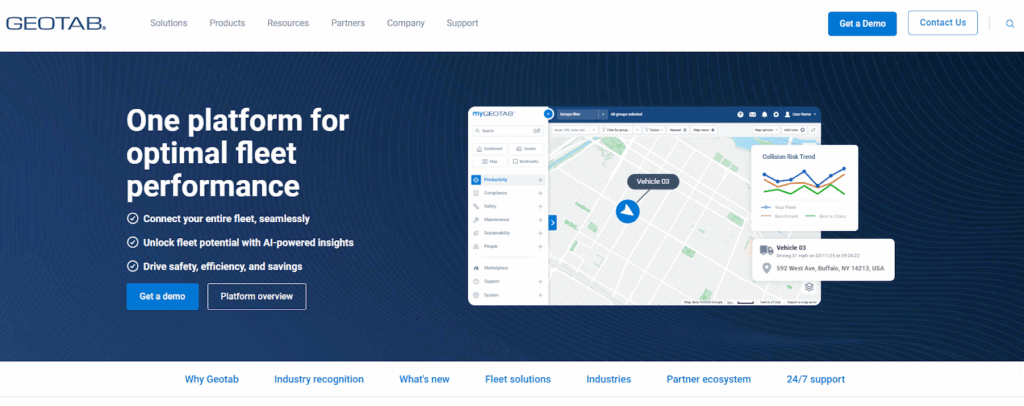
Geotab is a telematics-first fleet platform that unifies vehicle tracking, driver safety, maintenance, and routing/dispatching, supported by a large partner marketplace and OEM integrations.
Features of Geotab
- Vehicle Telematics & Safety: GO devices, AI-enabled dashcams, driver coaching, and compliance tools.
- Routing & Dispatching: Route planning with live visibility and basic dispatch workflows.
- Analytics & Integrations: Open API/SDK, Data Connector for BI tools, and a broad partner marketplace.
- Sustainability & EV: Carbon/EV analytics and planning to support corporate sustainability goals.
Geotab Is Ideal for
Enterprises prioritizing telematics, safety, and compliance across mixed fleets, with routing as part of a wider fleet management stack.
Geotab Pricing
Pricing is subscription-based and typically quote-only, varying by hardware (GO devices/cameras), feature bundles, and fleet size. Plans are procured through Geotab and partners.
Geotab — Trade-offs to Consider
Geotab’s open API and large partner marketplace make it flexible for data-driven fleets willing to build or buy additional routing and dispatch capability. Out of the box, its routing and dispatching functionality is more basic than platforms purpose-built for execution.
7. Lytx
Lytx is a video telematics and fleet safety platform built to help organizations reduce risk, improve driver behavior, and protect people, equipment, and brand reputation. Lytx centers on in-cab video, AI-based risk detection, and structured coaching workflows to prevent accidents and lower claims costs.
Lytx’s Key Features
- Video Telematics And Driver Safety: Uses road-facing and driver-facing cameras with AI-based event detection to identify distracted driving, harsh braking, and risky behavior.
- Real-Time Alerts And Coaching Workflows: Delivers in-cab alerts and post-event insights that support structured driver coaching and safety improvement programs.
- Incident Evidence And Claims Protection: Provides searchable video evidence to help exonerate drivers, resolve disputes faster, and reduce insurance and claims exposure.
- Fleet Tracking And Asset Visibility: Supports GPS tracking and asset visibility to help teams understand vehicle movement alongside safety context.
Lytx Is Ideal For
Mid-to-large fleets in trucking, distribution, construction, field services, transit, utilities, and government that prioritize driver safety, compliance, and risk reduction over dispatch optimization or route planning depth.
Lytx’s Pricing
Lytx pricing is customized based on hardware configuration, fleet size, video features, and service levels. Organizations can request pricing or book a demo directly through Lytx.
Lytx — Trade-offs to Consider
Lytx is centered on video-based safety and coaching, which makes it a strong fit for risk and compliance priorities. It is not designed as a route planning or dispatch platform, so fleets need a separate system for those functions.
8. Azuga
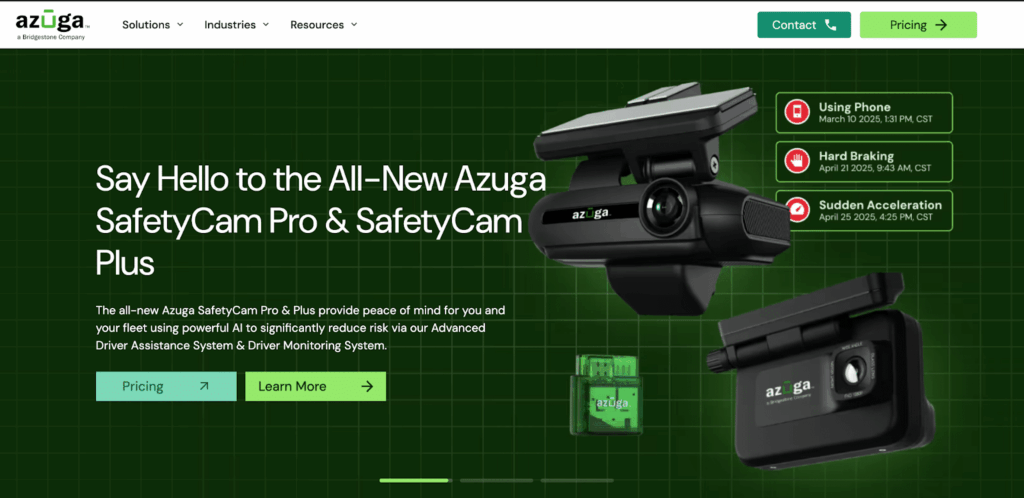
Azuga is a safety-focused fleet management platform built around GPS tracking, driver behavior monitoring, and gamified safety programs. Its approach centers on improving driving habits through real-time insights, in-cab alerts, and reward-based driver engagement.
Azuga’s Key Features
- GPS Fleet Tracking And Telematics: Provides real-time vehicle location, trip history, idling data, and diagnostics to support day-to-day fleet monitoring.
- Driver Safety Scores And Rewards: Uses driver scoring, leaderboards, and rewards to encourage safer driving behavior and improve driver retention.
- Dual-Facing AI Dashcams: Captures road-facing and in-cab video with AI-based detection to support incident review and driver accountability.
- Compliance And ELD Support: Supports FMCSA-compliant ELDs, HOS tracking, DVIRs, and audit-ready reporting for regulated fleets.
Azuga Is Ideal for
Small to mid-sized fleets in field services, HVAC, utilities, pest control, construction, and local delivery that prioritize driver safety, ease of use, and fast deployment over advanced dispatch optimization or multi-region execution control.
Azuga’s Pricing
Azuga offers tiered pricing based on fleet size, hardware selection, and feature bundles. Plans typically start with per-vehicle monthly pricing, with add-ons for dashcams, ELDs, and asset tracking. Quotes and demos are available on request.
Azuga — Trade-offs to Consider
Azuga’s driver scoring and rewards model works well for small to mid-sized fleets focused on safety culture and fast deployment. Its dispatch and route optimization depth is lighter than enterprise platforms managing multi-region, high-volume networks.
9. Omnitracs

Omnitracs is a dispatch and route optimization platform for enterprise fleets that need real-time visibility, predictive analytics, and smart delivery coordination. Based in Dallas, Texas, it combines AI and machine learning to improve driver safety, fleet productivity, and on-time performance across every delivery stage.
Omnitracs’s Key Features
- Route Optimization: Uses AI and predictive data to plan efficient routes, reduce miles, and balance workloads.
- Real-Time Visibility: Tracks vehicles, routes, and delivery status continuously to prevent delays.
- Driver Safety: Offers video-based programs, in-cab alerts, and behavior analytics to reduce risks.
- Compliance Management: Simplifies ELD mandates, driver inspections, and audit documentation.
Omnitracs Is Ideal for
Large fleets in logistics, transportation, construction, food and beverage, and retail delivery that need AI-driven routing, compliance, and real-time dispatch visibility.
Omnitracs’s Pricing
Omnitracs’ pricing is customized based on fleet size, compliance needs, and selected software modules. You can request a quote or demo through its website
Omnitracs — Trade-offs to Consider
Omnitracs combines route optimization with compliance management, which suits large, regulated fleets. Teams should confirm how its dispatch automation handles live exceptions, since public materials focus more on planning and compliance than real-time reassignment.
10. Teletrac Navman
Teletrac Navman helps fleets manage vehicles, drivers, and equipment from a single platform. It focuses on real-time visibility, routing and dispatch, compliance, and asset tracking to support safer operations, lower costs, and more reliable daily execution across mixed fleets.
Teletrac Navman’s Key Features
- Real-Time Fleet Visibility: Provides live vehicle and asset tracking with geofencing, location monitoring, and activity alerts, giving dispatchers a clear view of fleet movement and job progress.
- Routing and Dispatch: Supports digital job allocation and dispatch workflows, helping teams assign tasks, track completion, and improve route adherence with real-time updates.
- Video Telematics: Combines GPS data with video footage to support risk management, incident review, and driver performance monitoring.
- Compliance Management: Covers ELD, DVIR, IFTA, and regulatory reporting to help fleets meet local, state, and federal compliance requirements.
Teletrac Navman Is Ideal for
Mid-sized and enterprise fleets in transportation, construction, field services, public sector, utilities, and distribution that need strong visibility, compliance oversight, and equipment tracking across vehicles, trailers, and job-site assets.
Teletrac Navman’s Pricing
Pricing is customized based on fleet size, asset types, hardware requirements, and selected modules. Businesses can request pricing or build a tailored package through Teletrac Navman’s interactive product builder.
Teletrac Navman — Trade-offs to Consider
Teletrac Navman covers visibility, dispatch, and compliance for mixed fleets, and its interactive product builder helps with pricing transparency. Fleets with complex, multi-region execution needs should confirm how its dispatch tools handle high exception volumes compared to platforms built specifically for that scale.
Why Locus Is Best for Fleet Execution
Fleet operations require control across routing, dispatch, and live execution. Planning alone falls short when routes change mid-day, volumes fluctuate, and service commitments tighten.
Most fleet platforms focus on individual functions such as tracking, safety, or compliance. Locus is built for execution. It connects route planning, dispatch decisions, real-time visibility, and performance tracking within a single operational layer.
This enables teams to manage dense routes, multi-region delivery networks, and frequent exceptions without adding manual coordination.
Quick Use-Case Match
- Best for enterprise last-mile orchestration — retail, FMCG, and e-commerce networks coordinating high delivery volumes across regions
- Best for multi-client dispatch — 3PLs managing multiple customers and service levels from one platform
- Best for execution control — operations teams that need to intervene in real time as routes and exceptions change during the day
- Best for scaling delivery networks — fleets adding depots, partners, or geographies without rebuilding planning logic each time
Locus fits organizations that need consistency across every delivery shift. Dispatchers maintain live control during execution. Operations leaders gain clear visibility into performance and risks. Teams avoid fragmented systems and reactive decision-making.
If your operation depends on reliable daily execution rather than static reports or tracking data, Locus is designed for that requirement.
Schedule a demo to review how Locus supports structured planning, live execution control, and scalable fleet operations across complex delivery networks.
Frequently Asked Questions (FAQs)
1. What is the difference between fleet tracking software and fleet execution platforms?
Fleet tracking tools focus on visibility and reporting. Execution platforms connect planning, dispatch, and live control — allowing teams to adjust routes, capacity, and assignments as conditions change during the day. At enterprise scale, the gap between tracking and execution determines whether disruptions get resolved in minutes or hours. Execution platforms that automate reassignment, route recalculation, and transporter handoffs — rather than just surfacing the problem — are what separate real-time responsiveness from real-time awareness.
2. Can fleet management software handle mid-day route changes and exceptions?
Not all platforms can. Execution-focused systems support live adjustments during dispatch and delivery, while planning-only tools often require manual rework or route rebuilds when conditions shift. Execution-focused systems like Locus automate this — when a route exception occurs, the platform flags it, triggers auto-reassignment logic, and notifies the dispatcher for approval rather than requiring the dispatcher to identify, diagnose, and manually rebuild the route.
3. How scalable is fleet management software for multi-region operations?
Scalability depends on whether the platform applies consistent planning and execution logic across depots, regions, and partners without performance degradation during peak demand periods. Enterprise-grade platforms maintain consistent constraint-based planning logic — the same 250+ variables — across every depot, region, and carrier in the network, regardless of daily volume. This is what prevents regional operations from developing routing inconsistencies or SLA gaps as the network grows.
4. What types of businesses benefit most from execution-first fleet software?
Large retail, FMCG, 3PL, and CEP operations benefit most — typically those handling hundreds to thousands of daily deliveries across multi-depot networks with strict SLA commitments, dense routes, high daily volumes, and frequent service-level exceptions across regions.
5. What makes Locus different from other fleet management platforms?
Locus is a Decision-Intelligent TMS — it doesn’t just plan routes or display fleet positions; it continuously optimizes across 250+ real-world constraints and re-plans as conditions change during execution. Enterprises using Locus have reduced logistics costs by up to 20%, improved fleet utilization by 90%, and cut route planning cycle time by 66%, while maintaining 99.5% on-time SLA performance. Unlike point solutions that handle planning or tracking separately, Locus manages the full decision chain — from order allocation and route optimization to carrier tendering, dispatch, and post-delivery settlement — with human governance built into every automated decision.
6. How does Locus support real-time fleet execution?
Locus automates fleet execution decisions during delivery — when a delay occurs, a route becomes unserviceable, or a vehicle exceeds capacity, the platform automatically flags the exception, calculates reassignment options, and prompts dispatcher approval rather than requiring manual intervention from scratch. Stop-level, route-level, and vehicle-level visibility give dispatchers full context to approve, override, or audit every automated decision.
7. What key features should I look for in fleet management software?
Look for constraint-based route and load optimization that models real-world fleet and delivery variables, automated route planning, real-time visibility and control, scalability across fleet networks, carrier rate management and multi-carrier tendering, operational analytics and KPIs, human-in-the-loop governance — the ability to override, audit, and configure automated decisions without re-engineering workflows — and integration with OMS, WMS, TMS, and ERP platforms.
8. How difficult is it to migrate from an existing fleet management system?
Migration typically involves data mapping, integrations, and operational alignment. Locus is built for enterprise deployment — pre-integrated with OMS, WMS, ERP, and 1,000+ carriers, with a configurable workflow engine that allows operations teams to model their existing processes without custom development. Phased rollout by depot, region, or fleet type allows live operations to continue uninterrupted while the platform is validated at scale.


General
Delivery Date Accuracy is an Execution Property, Not a Just a Checkout Feature

Sep 10, 2026
A checkout widget displays a date. It cannot make the date true. Where slot promising accuracy is actually produced, and the capacity math behind it.
Read more
CEP and 3PL
How Route Optimization Helps Third-party Logistics Operators in 2026?

Sep 11, 2026
How route optimization for third-party logistics operators help in countering the on-demand deliveries surge? Read More!
Read moreInsights Worth Your Time



















Top 10 Fleet Management Companies in USA for 2026