


General
Last Mile Reverse Logistics Services: The Definitive Guide to Optimizing Returns


Key Takeaways
- The reverse logistics market is growing at 17.65% CAGR, making structured returns management a board-level priority for enterprises handling high-volume last mile operations.
- Adding return stops to planned delivery routes eliminates deadhead miles, increases drop density, and removes incremental logistics costs—without requiring additional fleet capacity.
- Technology integration (IoT, automation, real-time tracking) reduces return processing time by up to 34% and is no longer optional for competitive reverse logistics operations.
- Data analytics from fleet tracking systems enable pattern identification, seasonal forecasting, and cost-per-mile optimization—transforming reactive returns into predictable, manageable workflows.
- Locus’s dispatch management platform generates optimal reverse logistics plans using 250+ real-world constraints, intelligent carrier recommendations, and proof-of-pickup checklists to close the returns loop efficiently.
The global reverse logistics market is projected to reach USD 1,156.09 billion by 2026, growing at a 17.65% CAGR—a clear signal that returns management is no longer a back-office afterthought. For enterprise logistics leaders, retail operations directors, and 3PL providers managing high-volume return flows, last mile reverse logistics services have become the single most consequential factor in post-purchase customer experience and bottom-line profitability.
Consider the scale: U.S. retail returns hit $761 billion in lost sales in 2021—a 178% surge from the previous year—and the trajectory has only steepened with e-commerce growth. The last-mile delivery market alone is expected to exceed USD 207.10 billion by 2026, with the B2C segment commanding 66.8% market share. For businesses that treat reverse logistics as a strategic lever rather than a cost center, the opportunity is enormous: documented case studies show a 34% reduction in return processing time and a 31% increase in customer satisfaction when structured programs are in place.
This article provides a comprehensive, data-backed framework for mastering last mile reverse logistics services—from route-level optimizations to technology-driven automation—so your operation can convert returns from a margin drain into a competitive advantage.
What is last-mile reverse logistics?
Last mile reverse logistics is the process of moving goods from the final destination (customers) back to their origin—whether that is a fulfillment center, warehouse, sorting hub, or recycling facility. It encompasses the planning, scheduling, and execution of order returns within defined time windows, closing the supply chain loop that begins with forward delivery.
Unlike forward logistics, which follows a relatively predictable warehouse-to-customer path, reverse logistics operates against the natural flow of the supply chain. It involves return initiation, product inspection, disposition decisions (restock, refurbish, recycle, or dispose), and final processing—each stage introducing complexity that forward logistics does not face.
What is last-mile reverse logistics?
| Dimension | Forward Logistics | Reverse Logistics |
|---|---|---|
| Direction | Warehouse ? Customer | Customer ? Warehouse or Hub |
| Volume predictability | High and demand-driven | Low and exception-driven |
| Product condition | New and packaged | Variable — damaged, opened, or used |
| Scheduling complexity | Batch-optimized routes | Ad-hoc pickup windows |
| Disposition | Single outcome (delivery) | Multiple outcomes including restock, refurbish, recycle, or disposal |
| Cost visibility | Well-documented and measurable | Often hidden or treated as operational overhead |
Understanding these structural differences is essential for enterprise logistics leaders because it explains why reverse logistics requires dedicated processes, technology, and strategy—not simply running forward logistics in reverse.
How To Ace Last Mile Reverse Logistics: Five Strategic Approaches
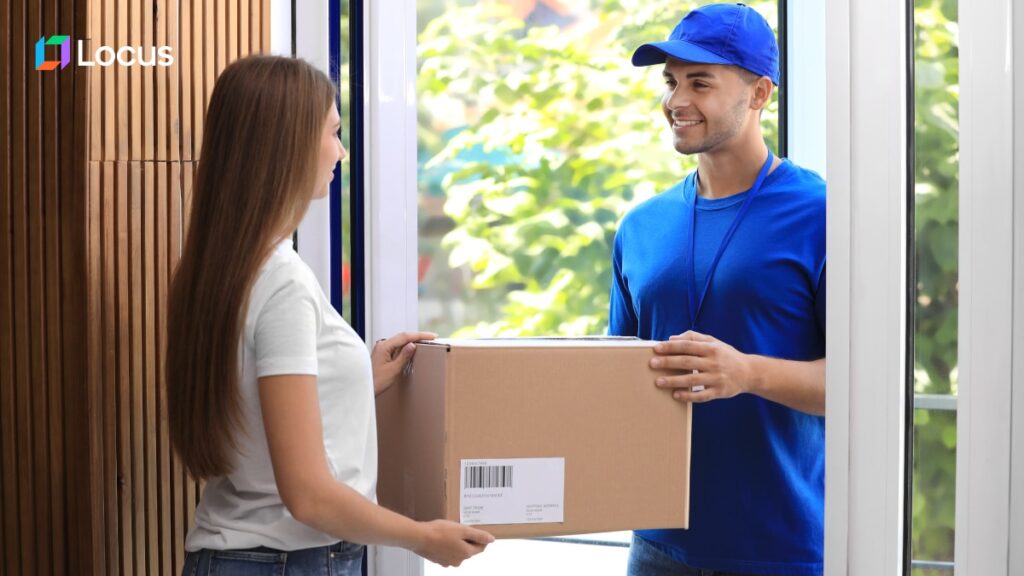
The need for seamless reverse logistics processes is growing at pace with e-commerce itself. With the reverse logistics market valued at USD 872.6 billion in 2025 and projected to reach USD 936 billion in 2026, businesses are recognizing that the customer’s doorstep is not the product’s final destination—it is often just a waypoint. Last mile reverse logistics determines post-purchase customer experience and brand loyalty. The five strategies below provide a structured framework for enterprise operations.
1. Add Return Stops to Planned Delivery Routes
Imagine you oversee logistics for a national retail chain, managing thousands of daily deliveries from distribution centers to customer doorsteps. When vehicles return to the hub with empty cargo bays, those are deadhead miles—distance traveled that generates zero revenue. Industry data indicates that of total distance traveled by U.S. carriers, 20.6 miles per trip were deadhead miles.
The solution is integrating return pickups into existing forward delivery routes. By adding return stops to planned routes on a single tour, operations gain:
- Increased drop density — More stops per route without additional vehicle deployment
- Higher route efficiency — Minimized total distance and fuel consumption
- Eliminated incremental costs — Returns reach the warehouse without separate logistics expenditure
- Simplified driver workflows — Return exception tasks are built into existing dispatch plans
For enterprise retailers and 3PL providers handling thousands of SKUs, this approach is foundational. It converts reverse logistics from a standalone cost item into an embedded, optimized function within existing delivery operations. Learn more about Route Optimization Benefits to see how integrated route planning amplifies these gains.
2. Monitor and Act on Failed Delivery Attempts
A failed delivery attempt is the most critical metric driving the reverse logistics workflow. When a delivery attempt fails, the order immediately enters the returns pipeline—and the speed and accuracy of what happens next determines both cost and customer perception.
A driver companion app enables field agents to upload failed delivery details in real time—including photographic proof, reason codes, and customer availability notes. This data feeds directly into dispatch systems to enable:
- Immediate re-routing: Clubbing the return order into the driver’s current tour if capacity allows
- Optimized reattempt scheduling: Assigning a second delivery window based on customer availability and zone density
- Faster reverse processing: Ensuring failed orders are flagged, tracked, and returned to the sorting center with full chain-of-custody documentation
For operations managing high daily order volumes, the difference between a manual failed-delivery process and a digitized one can mean hours of lag per order—compounding across thousands of daily exceptions into significant cost exposure.
3. Leverage Data Analytics for Predictive Returns Management
Reverse logistics in the last mile is an expensive and complex process that requires data-driven decisions. Enterprise logistics teams must continuously answer critical operational questions:
- What is the cost-per-mile to pick up customer orders and return them to the sorting center?
- Which delivery zones generate the highest return volumes, and what are the root causes?
- Are failed delivery and missed delivery rates trending upward?
- What are the products or categories with the highest return rates?
- How do seasonal patterns (e.g., holiday surges) affect fleet requirements for reverse logistics?
With advanced analytical insights from fleet tracking software, operations teams can identify the patterns and trends driving returns and address root causes proactively. For example, by analyzing reattempt delivery data from previous holiday seasons, logistics leaders can forecast fleet requirements for upcoming peak periods and pre-position capacity accordingly.
Data transforms reverse logistics from a reactive, firefighting exercise into a predictable, manageable workflow. It enables you to determine whether current Reverse Logistics Strategy investments are producing returns—and to build flexible, cost-efficient plans for future delivery cycles.coming deliveries.
4. Optimize Vehicle Capacity Usage and Cross-Fleet Utilization
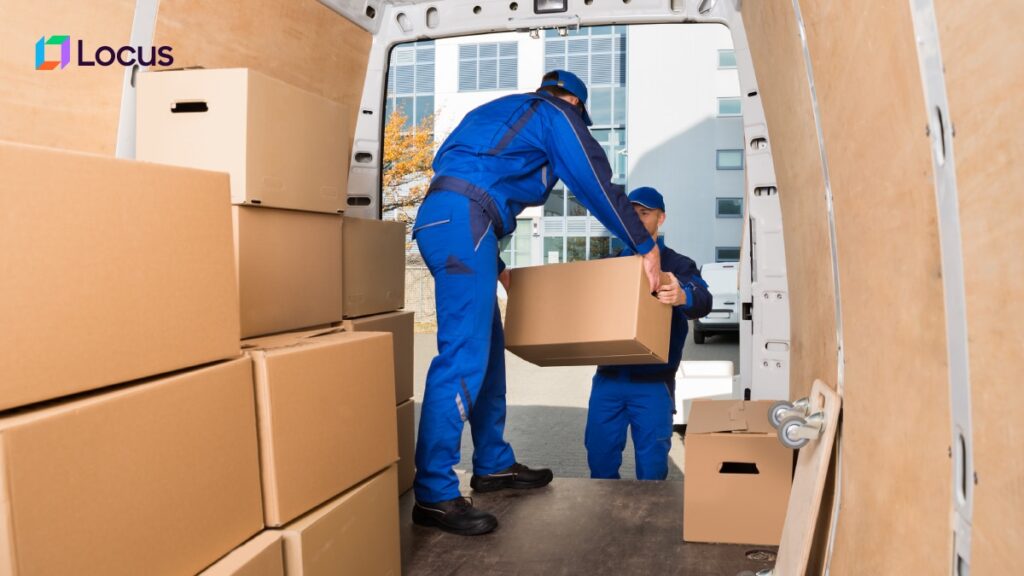
Optimal use of vehicle space is one of the most technically demanding aspects of reverse logistics. At its core, this is a Capacitated Vehicle Routing Problem with Time Windows (CVRPTW)—a combinatorial optimization challenge that intensifies when dealing with thousands of daily return pickups.
The solution requires factoring the size and weight of products being picked up and matching them against individual vehicle capacities. As vehicle capacity usage improves, you reduce the number of trips drivers make, cutting fuel costs and increasing throughput per shift.
Cross-fleet utilization adds another strategic layer. Consider a business operating two hundred vehicles—one hundred serving grocery deliveries and one hundred serving pharmacy deliveries. On days when grocery returns spike above pharmaceutical returns, rigid fleet assignment creates a capacity bottleneck.
Cross-fleet utilization resolves this by combining fleet pools. By dynamically reallocating vehicles across service categories based on real-time demand, operations gain:
- Additional capacity without fleet expansion
- More stops per driver shift
- Improved fleet utilization rates across the entire operation
- Reduced capital expenditure on standby vehicles
For enterprises managing multiple fleet capabilities across categories, dynamic cross-fleet allocation is a significant competitive differentiator in reverse logistics cost management.
5. Invest in Automation and Digitization of Returns Processes
Traditional logistics workflows cannot handle the massive, unpredictable volumes that modern return rates generate. Automation and IoT devices are game-changers in reverse logistics—automated systems sort and process returned items faster than manual methods, while IoT tracking enables real-time monitoring of returned goods throughout the reverse pipeline.
Digitized reverse logistics enables businesses to:
- Assign driver pickups intelligently — Based on skill sets, proximity, availability, and vehicle capacity rather than manual dispatcher judgment
- Automate disposition decisions — Route returned items to restock, refurbishment, recycling, or disposal based on predefined rules and inspection data
- Resolve conflicts in real time — Handle exceptions in returns processing and refunds through workflow automation instead of escalation chains
- Track every item end-to-end — Maintain chain-of-custody visibility from customer doorstep to final disposition
The technology investment case is quantifiable: organizations that digitize reverse logistics processes report 34% reductions in processing time and meaningful decreases in per-return handling costs. For enterprises scaling returns operations, automation is the threshold capability that separates cost-effective programs from margin-eroding ones.
Benefits of Structured Last Mile Reverse Logistics Services
Implementing a comprehensive reverse logistics strategy delivers measurable outcomes across multiple business dimensions:
Cost Reduction and Value Recovery
Efficient reverse logistics programs reclaim value from returned inventory through restocking, refurbishment, and material reclamation. Streamlined return routes eliminate deadhead miles. Automated processing reduces labor costs per return. Combined, these efficiencies convert what was historically a pure cost line into a partially self-funding operation.
Customer Satisfaction and Brand Loyalty
A smooth, fast return process directly restores consumer trust. Documented outcomes include a 31% increase in customer satisfaction when structured programs replace ad-hoc returns handling. In a market where return policies influence purchase decisions, this is a direct revenue driver.
Operational Visibility and Control
Data-driven reverse logistics replaces guesswork with dashboards. Fleet utilization rates, cost-per-return, zone-level return frequencies, and processing cycle times become visible and actionable—enabling continuous improvement rather than periodic crisis response.
Environmental Sustainability
Optimized return routes reduce fuel consumption and emissions. Structured disposition processes ensure products are refurbished or recycled rather than landfilled. For organizations with Green Logistics commitments, reverse logistics optimization is a direct contributor to ESG targets. The growing adoption of EV in Last-Mile Logistics further amplifies sustainability gains in reverse operations.
Competitive Differentiation
As the Last-Mile Delivery Landscape continues evolving, enterprises with mature reverse logistics capabilities can offer superior return experiences—creating a moat that competitors with manual or fragmented processes cannot easily replicate.
Key Features To Evaluate in Last Mile Reverse Logistics Solutions
When selecting technology or a service partner for reverse logistics, enterprise logistics leaders should evaluate the following capabilities:
| Feature | Why It Matters |
|---|---|
| Real-time route optimization | Dynamically integrates return pickups into forward delivery routes using live operational constraints |
| Driver companion app | Enables proof-of-pickup, field exception capture, and live delivery status updates |
| CVRPTW solver | Optimizes vehicle loading and route sequencing for return pickups with delivery time windows |
| Cross-fleet allocation | Dynamically reallocates vehicles across service categories based on real-time demand conditions |
| Predictive analytics | Forecasts return demand, identifies seasonal patterns, and detects operational anomalies early |
| Automated disposition workflows | Automatically routes returned goods toward restocking, refurbishment, recycling, or disposal paths |
| Carrier recommendation engine | Selects optimal return carriers based on geography, speed, and transportation cost |
| End-to-end visibility | Tracks returned products from customer pickup through final disposition status |
| Exception management | Automates issue handling for damaged goods, missing items, and refund-related triggers |
| Integration capability | Connects with WMS, OMS, and ERP systems to maintain unified operational data flow |
These features collectively address the core challenges of reverse logistics: unpredictable volumes, variable product conditions, multi-outcome disposition, and the need for real-time coordination across drivers, warehouses, and customer service teams.
Why Choose Locus for Last Mile Reverse Logistics
Reverse logistics is a critical component of last-mile delivery that directly determines on-ground workforce efficiency. While it is inherently complex and expensive, the right technology platform transforms it from a liability into a strategic asset.
Locus’s dispatch management platform is purpose-built for this challenge:
- 250+ real-world constraints: Route optimization accounts for time windows, vehicle capacity, driver skills, traffic patterns, customer availability, and product-specific handling requirements—simultaneously
- AI-driven dispatch: Machine learning algorithms generate optimal daily pickup and drop schedules, balancing forward and reverse logistics within unified route plans
- Intelligent carrier recommendation: Assigns customized fleets for pickups based on cost, proximity, and service-level requirements
- Proof-of-pickup checklists: Digitized verification workflows ensure chain-of-custody integrity and resolve conflicts in returns processing
- Trusted by 360+ global enterprises: Organizations including Nestlé, Unilever, and Bluedart rely on Locus for logistics optimization at scale
For enterprise logistics leaders evaluating reverse logistics solutions, Locus combines the algorithmic sophistication required for CVRPTW optimization with the operational flexibility that high-volume, multi-category returns demand.
? AI in Supply Chain
Explore the potential of AI to transform your supply chain operations.
Frequently Asked Questions
What exactly is last mile reverse logistics?
Last mile reverse logistics is the process of moving goods from the customer back to the warehouse, sorting hub, or transportation center—closing the supply chain loop. It encompasses returns management, product inspection, refurbishment, recycling, and restocking, with the primary objective of maximizing value recovery and customer satisfaction.
How much can reverse logistics services reduce operational costs?
Effective reverse logistics programs can significantly decrease return processing costs through streamlined procedures and material reclamation. Documented case studies show a 34% reduction in return processing time and substantial savings from reclaimed materials. Exact figures vary by industry, volume, and implementation maturity.
What role does technology play in modern reverse logistics?
Automation and IoT devices are transformative in reverse logistics. Automated systems sort and process returned items faster than manual methods, while IoT tracking enables real-time monitoring of returned goods—improving inventory accuracy and reducing processing delays. AI-powered route optimization further reduces per-return transportation costs.
Which industries benefit most from last mile reverse logistics services?
Retail, fashion, electronics, and e-commerce industries face particularly high return volumes and benefit most from structured reverse logistics. E-commerce retailers especially gain competitive advantage through efficient return processes, as return policies directly influence online purchase decisions.
Should companies manage reverse logistics in-house or outsource to a 3PL?
The decision depends on volume, complexity, and internal capability. Many businesses outsource to third-party logistics partners for cost control, technology access, and geographic coverage. Enterprises with sufficient volume and strategic priority may benefit from a hybrid model—owning the technology layer (e.g., Locus dispatch management) while leveraging 3PL networks for physical execution.
How does reverse logistics impact customer satisfaction?
A smooth, fast return process directly restores consumer trust in a brand. Documented outcomes include a 31% increase in customer satisfaction when structured programs are implemented. Conversely, slow or confusing returns erode brand loyalty and reduce repeat purchase rates.
What is the difference between reverse logistics and returns management?
Returns management is one component of reverse logistics. Reverse logistics encompasses the entire post-delivery flow—including returns, product inspection, disposition (restock, refurbish, recycle, dispose), warranty processing, and haul-away services. Returns management specifically addresses the customer-facing return initiation and pickup process.
How large is the reverse logistics market?
The global reverse logistics market was valued at USD 982.65 billion in 2025 and is projected to reach USD 1,156.09 billion by 2026, growing at a 17.65% CAGR. North America holds 37.7% market share in the broader last-mile delivery market, underscoring the region’s concentrated demand for reverse logistics capabilities.


Sustainability
Why Sustainable Last-Mile Delivery Matters for Businesses

Oct 12, 2022
Adopting logistic solutions can bring sustainable last-mile into your businesses and can encourage those on the ground to carry out sustainable practices.
Read more
Retail & CPG
Revenge Festivities: How To Power Up Your Retail Last-Mile Fulfillment To Meet Soaring Demand
Oct 21, 2022
Optimizing last-mile operations builds a resilient supply chain for your retail business and can deliver exceptional customer experiences during festive season.
Read moreInsights Worth Your Time




















Last Mile Reverse Logistics Services: The Definitive Guide to Optimizing Returns