


TMS Software
Enterprise TMS: The Capabilities That Matter at Scale
Key Takeaways
- Every TMS vendor claims enterprise-grade capabilities. The distinction that matters is architectural: does the platform execute transport instructions or orchestrate intelligent decisions across loads, carriers, routes, and SLAs simultaneously
- Traditional TMS platforms were built for a simpler era: fewer carriers, fewer channels, and far less SLA pressure. Their rule-based routing and siloed module architecture cannot adapt to enterprise complexity in 2026
- Enterprise TMS ROI spans three dimensions: direct cost reduction (15 to 25% in freight spend), operational efficiency gains (faster planning cycles, automated settlement), and strategic value (on-time delivery improvement feeding customer retention)
- Locus is an AI-powered logistics orchestration platform trusted by enterprises across retail, FMCG, e-commerce, 3PL, and CPG, operating across North America, Europe, Southeast Asia, India, and MEA
Enterprises evaluating TMS platforms in 2026 face a specific paradox: every vendor claims enterprise-grade capabilities, yet most platforms were architected for a simpler era. Fewer carriers, fewer channels, fewer SLA permutations, and far less pressure to deliver profitably at speed.
The gap between what a vendor’s feature list promises and what their architecture can deliver under real enterprise load is where TMS selection decisions go wrong.
Logistics leaders at $150M+ enterprises are orchestrating complex, multi-vertical, multi-geography networks where a single dispatch decision cascades across cost, SLA compliance, and customer experience simultaneously.
This article breaks down what an enterprise TMS must do at scale, where traditional platforms fail, and how AI-driven logistics orchestration is redefining the category. Locus, an Agentic TMS, has pioneered this approach across retail, FMCG, e-commerce, 3PL, and CPG operations globally, and the observations here are grounded in that deployment reality.
What Makes a TMS Enterprise-Grade and Why the Label Matters
The term “enterprise TMS” is applied so broadly that it has nearly lost its meaning. A platform supporting 50 carriers and 2,000 daily shipments describes itself with the same label as one orchestrating multi-modal freight across 30 geographies and 100,000 daily orders. The distinction matters because the architectural decisions made to serve one scale cannot be retrofitted to serve the other.
Three thresholds define whether an operation genuinely needs enterprise-grade TMS capabilities:
- Network complexity: Multi-depot distribution, mixed fleet types (owned plus contracted plus gig), multi-carrier orchestration across regional and national partners, and multi-channel order intake (D2C, marketplace, B2B) from shared inventory pools
- SLA heterogeneity: Retail store replenishment, FMCG territory routes, e-commerce same-day windows, and 3PL client commitments each carry different time constraints, penalty structures, and customer communication requirements running simultaneously
- Integration depth: Real-time connectivity with ERP, WMS, and OMS systems is not optional at enterprise scale. Dispatch decisions made without current inventory availability or order status produce plans that are wrong before the first vehicle leaves the depot
Operations that do not meet all three thresholds may be over-buying if they purchase a full enterprise orchestration platform. Operations that meet them and try to manage with mid-market tools will hit ceilings that become increasingly expensive as volume grows.
The Core Capability Stack Every Enterprise TMS Must Have
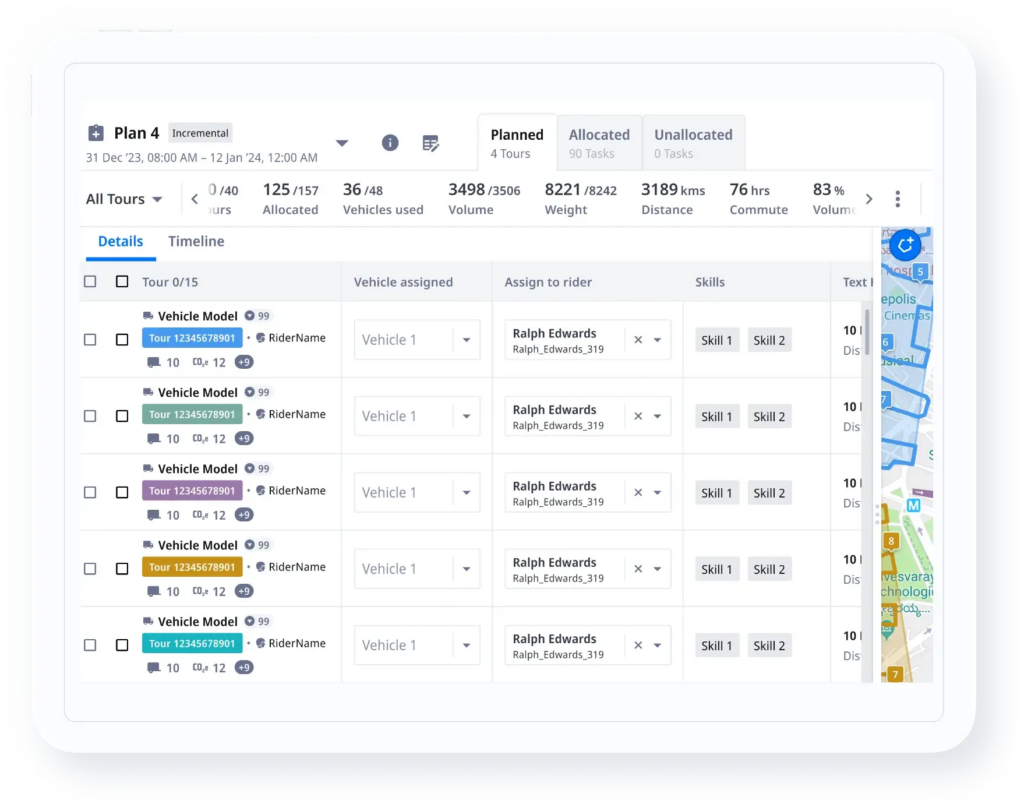
Enterprise transport management system capabilities are only as valuable as their interconnection.
A route optimization engine that does not have access to live carrier performance data produces routes assigned to the wrong partners. A visibility layer that is not connected to automated exception handling generates noise rather than operational intelligence.
The capability stack below is structured as interconnected pillars.
| Capability pillar | What it must do at enterprise scale | What breaks without it |
|---|---|---|
| Real-time shipment visibility | Unified tracking across all carriers, channels, and geographies from a single control layer. Predictive ETAs updated continuously, not at dispatch time. | Operations discovers delivery failures when customers call. Exception management is reactive and expensive. |
| AI route optimization | Continuous re-optimization against live traffic, weather, vehicle capacity, driver hours, and SLA windows. Not a one-time calculation at dispatch. See AI route optimization. | Static routes built at 6 AM degrade throughout the day. Dispatchers manually handle exceptions that the platform should resolve autonomously. |
| Carrier management | Performance benchmarking by carrier, lane, and shipment type. Automated tendering and acceptance. Real-time capacity availability integrated into dispatch logic. | Carrier selection defaults to rate or preference rather than current SLA performance. Penalty exposure builds invisibly across carrier relationships. |
| Load planning and fleet utilization | Intelligent load consolidation that maximizes trailer fill rates. Vehicle type matching against cargo requirements at the order level. | Trailers run at 60-70% fill capacity. Each underutilized run represents direct margin loss that compounds at fleet scale. |
| Freight billing and settlement | Automated invoice reconciliation against contracted rates and actual delivery performance. Digital audit trail for every settlement event. | Manual billing reconciliation consumes coordinator time and produces disputes that delay payment cycles. |
| Order management integration | Real-time connectivity with OMS, WMS, and ERP for order status, inventory availability, and financial settlement. API-first with prebuilt connectors. | Dispatch plans are built on yesterday’s order data. Cancelled orders stay in routes. New orders after cutoff do not appear. |
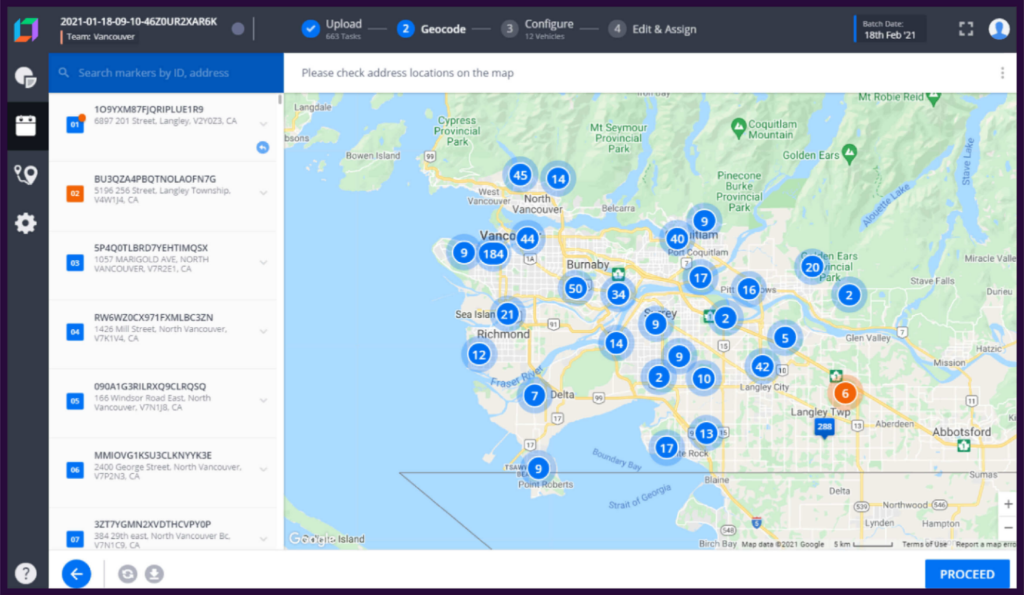
How Enterprise TMS Decisions Flow: The Seven-Phase Order Lifecycle
Legacy TMS platforms execute transport instructions. Agentic platforms orchestrate decisions continuously across every phase of the order lifecycle. The seven phases below map the operational difference at each stage.
Phase 1: Order capture
Legacy approach: Orders ingested manually or via scheduled batch sync from OMS. New orders after cutoff missed until the next cycle.
Agentic approach: Real-time order ingestion via API. New orders flow into active plans continuously without a manual trigger or cutoff dependency.
Phase 2: Plan and consolidate
Legacy approach: Planners group orders by geography and vehicle type using rules configured at implementation.
Agentic approach: AI consolidation engine groups orders by optimizing across vehicle capacity, delivery windows, carrier SLA fit, and territory structure simultaneously.
Phase 3: Source and tender
Legacy approach: Carrier selection defaults to rate or preference. Tendering is manual or rules-based. Capacity availability is assumed, not verified.
Agentic approach: Automated tendering uses real-time rate data, current carrier capacity, and historical SLA performance to assign each shipment to the optimal carrier relationship at the moment of dispatch.
Phase 4: Execution and tracking
Legacy approach: Route plan generated at dispatch. Exceptions surface after SLA windows close. Dispatchers intervene manually on disruptions.
Agentic approach: Continuous route re-optimization throughout execution. Predictive exception management surfaces SLA-risk deliveries with enough lead time for autonomous resolution within governance boundaries.
Phase 5: Payment and reconciliation
Legacy approach: Manual invoice reconciliation against contracted rates. Disputes delay settlement cycles. Coordinator time consumed per carrier per period.
Agentic approach: Automated invoice validation against contracted rates and actual delivery performance. Exceptions flagged before settlement. Reconciliation time reduced by 60 to 80%.
Phase 6: Operational analysis
Legacy approach: Retrospective reporting. Patterns visible in weekly or monthly reviews. Actionable data arrives after the window for intervention has closed.
Agentic approach: Real-time analytics surfaced in the same operational shift. Carrier underperformance on a specific lane visible the same day it occurs.
Phase 7: Strategic analysis
Legacy approach: Network design, depot placement, and territory structure decisions made from aggregated historical data in periodic planning cycles.
Agentic approach: Route-level and carrier-level performance data feeds directly into network design models. Depot placement and carrier mix decisions become data-driven outputs of the live operational system.
Where Traditional TMS Platforms Hit a Ceiling
The ceiling that legacy TMS platforms hit is an architectural one.
First-generation cloud TMS platforms were built around the assumption that transport execution is a sequential process: receive an order, plan a route, assign a carrier, track a shipment, generate an invoice. Each step runs in a module. The modules share data through scheduled sync jobs. When one module needs real-time input from another, the architecture cannot provide it.
The operational consequences of this architecture show up in three specific failure modes at enterprise scale:
| Failure mode | How it shows up operationally |
|---|---|
| Reactive rule-based routing | Routes are generated once at dispatch using preset rules. When traffic conditions change, a vehicle breaks down, or a priority order arrives mid-shift, the plan does not recalculate. A dispatcher intervenes manually. |
| Siloed visibility | Owned fleet tracking and 3PL carrier tracking run in separate systems. Operations reconciles status updates manually, often discovering exceptions after they have already caused a missed delivery window. |
| No predictive exception management | The platform surfaces exceptions after they occur, not before. An SLA breach triggers an alert. It does not trigger a prevention. |
Locus’s orchestration-first approach has received external analyst recognition across the logistics technology category.
The company was recognized in Gartner® Market Guides for Last-Mile Delivery Technology and Multi-Carrier Parcel Management Solutions, reflecting the broader industry shift away from static transport execution systems toward AI-native logistics orchestration platforms.
AI-Powered Logistics Orchestration: The Enterprise TMS Evolution
The limitations above are not gaps to be patched with bolt-on AI modules. They are architectural constraints that require a different design premise: a platform where dispatch, routing, visibility, and analytics share the same live data model and make decisions in a continuous loop.
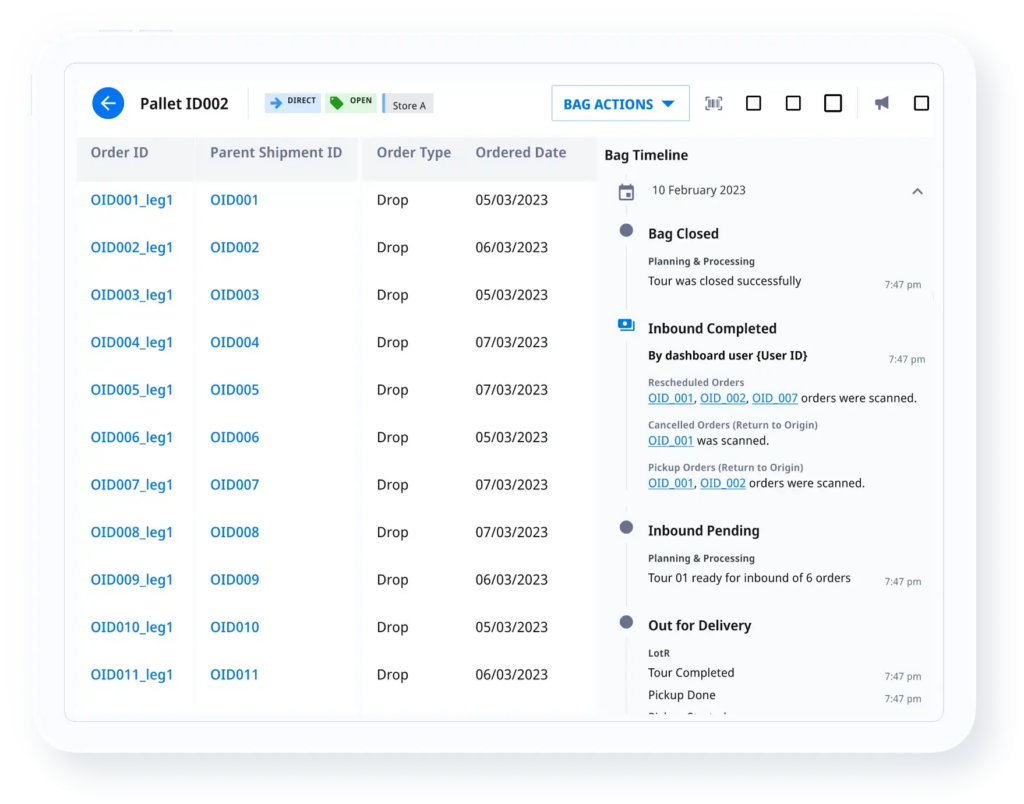
Locus’s approach to enterprise TMS is built on this premise. The AI dispatch engine (DispatchIQ) matches orders to the optimal carrier or fleet asset in real time, using cost, SLA fit, current capacity, and proximity as simultaneous inputs.
At enterprise scale, Locus processes more than 12 million automated decisions per day across dispatch, routing, carrier allocation, and exception management, which is the operational proof point that distinguishes an agentic TMS from a platform with AI features bolted onto a legacy architecture.
Automated route planning recalculates continuously against live traffic, weather, and demand signals. Predictive delay alerts surface exceptions before they cascade, with enough lead time for the system to resolve them autonomously within configured governance boundaries.
The operational difference is in where decisions happen:
- In a traditional TMS, the platform surfaces information and a dispatcher makes the call
- In a logistics orchestration platform, the platform makes the call within policy bounds and surfaces the outcome for review
When a vehicle goes offline at 10 AM, the orchestration layer has already identified available capacity, recalculated affected loads, reassigned to the nearest eligible vehicle, updated carrier commitments, and pushed revised ETAs to customers. The dispatcher only sees the resolution.
See how Locus’s DispatchIQ orchestrates enterprise logistics at scale. Schedule a demo to run a live scenario against your network complexity, carrier mix, and SLA requirements.
Agentic Governance: How Enterprise AI Decision Authority Should Be Structured
AI orchestration in enterprise TMS is only as credible as the governance layer that controls it. For procurement teams evaluating agentic platforms, governance is the question behind the question: not whether the platform claims AI-powered decisions, but whether your team can configure, audit, and override those decisions at every level.
Six pillars define how AI agents should operate within enterprise policy.
- Explainability: Every decision the AI makes produces a legible rationale, including which constraints drove a carrier assignment and which confidence threshold triggered an autonomous action
- Traceability: An immutable audit trail links every automated decision to its outcome, giving compliance and legal teams the validation layer they require
- Evaluation: Continuous A/B testing across decision models and drift detection that surfaces when a model’s performance has degraded from its baseline
- Autonomy Levels (L1, L2, L3): L1 means the agent prepares a decision for human approval. L2 means the agent auto-acts within preset guardrails. L3 means the agent operates autonomously based on confidence thresholds. The procurement question is whether the platform lets your team configure this gradient by domain
- Execution Sandbox: New decision models and rule changes are testable in a simulation environment before deployment, with staged rollout and rollback capability
- Human Review: Five collaboration patterns govern how humans and AI agents work together, from AI as decision support only through to fully autonomous within policy bounds, with configuration available to the operations team without vendor involvement
Vertical Realities: How Enterprise TMS Requirements Differ by Industry
Enterprise TMS evaluations that treat all verticals as equivalent produce platforms optimized for nobody. The dispatch logic, constraint model, and SLA structure that works for a 3PL managing multi-client fleet operations is architecturally different from what an e-commerce operation needs for same-day fulfillment.
Retail and omnichannel
Store replenishment requires precise delivery windows tied to receiving dock schedules, driver unload sequencing, and inventory integration with the POS system.
Omnichannel fulfillment adds returns routing and ship-from-store flows into the same dispatch model. The TMS has to hold both the forward and reverse logistics logic in unified orchestration rather than splitting them across separate systems.
FMCG and CPG
High-frequency territory routes with 30 to 50 stops per vehicle per day, distributor network orchestration, and beat optimization across dense urban and rural geographies define the FMCG TMS requirement. The planning model has to understand territory structure as a constraint, not just geography.
Supply chain network design decisions for FMCG brands flow directly from the route and territory data that a well-configured TMS surfaces. Depot placement and distributor allocation decisions become data-driven when the platform connects route-level performance to network-level cost analysis.
E-commerce
Same-day and next-day SLA pressure, demand elasticity during promotional events (3x to 10x daily volume spikes), and returns logistics that need to integrate into the forward dispatch model are the defining requirements.
A TMS that handles average daily volume but degrades under peak load is not enterprise-grade for e-commerce. The dispatch engine has to absorb new orders continuously throughout the shift, and the returns routing logic has to treat reverse flows as a first-class planning input.
3PL
Multi-client fleet optimization with client-level visibility separation, white-label tracking portals that preserve each shipper’s brand relationship, and SLA monitoring that distinguishes between client commitments.
A platform designed for single-operator logistics will require significant customization to meet these requirements, and that customization creates an ongoing maintenance dependency that compounds with every new client onboarded.
Measuring Enterprise TMS ROI Beyond Cost Reduction
Every platform claims cost reduction. Almost none specify the mechanism, the timeframe, or the baseline measurement approach. Here is a closer look.
Direct cost savings
Transportation spend reduction of 15-25% is an industry-accepted benchmark for enterprises deploying AI-powered TMS platforms, sourced from Gartner and ARC Advisory Group research.
The mechanism is specific: route optimization that reduces driven miles by 12 to 18%, load consolidation that improves trailer fill rates above 85%, and automated carrier selection that assigns shipments to optimal partners rather than defaulting to preferred relationships regardless of current performance.
Routing efficiency improvements account for the largest share of direct cost savings in the first 90 days of deployment.
Operational efficiency gains
Planning cycle compression is the most immediate efficiency gain: dispatch planning that takes three hours manually completes in under five minutes with AI orchestration.
That shift enables earlier vehicle departures, tighter fulfillment windows, and higher daily delivery throughput without additional fleet or headcount. Automated freight billing and settlement reduces invoice reconciliation time by 60-80% for enterprises managing 50+ carrier relationships, where manual reconciliation against contracted rates is a meaningful recurring cost.
Strategic value and implementation timeline
Enterprise TMS deployments with Locus typically run 8 to 12 weeks from integration to go-live, compared to 6 to 12 months for legacy platform implementations.
This timeline is supported by Locus’s Forward Deployed Engineer (FDE) model: Months 1 to 2 cover platform stand-up and integration, Months 3 to 6 cover tuning and capability graduation with FDE support, and from Month 6 onward the customer operations team owns day-to-day configuration without ongoing vendor dependency.
On-time delivery improvement of 5 to 15% translates directly to customer retention in verticals where delivery experience determines repeat purchase behavior. Carbon footprint reduction from optimized routing produces auditable Scope 3 emissions data that satisfies ESG reporting requirements without a separate integration layer.
What to Prioritize When Evaluating an Enterprise TMS
Six questions separate an enterprise TMS evaluation from a feature comparison:
- Does the platform orchestrate or just execute? Ask for a live demonstration of how the system responds to a mid-shift vehicle breakdown. The answer reveals whether decision logic is embedded in the platform or in your dispatchers
- Does it adapt to your vertical’s specific constraints? A platform that requires configuration work to handle FMCG territory routes or 3PL multi-client visibility was not designed for your operational model. Vertical-specific constraint templates should be a standard capability, not a professional services project
- How does it handle exceptions proactively? Reactive exception alerting is table stakes. Ask specifically whether the platform predicts, prevents, or resolves exceptions autonomously. Those are three different capability levels
- What does time-to-value look like realistically? An 8 to 12 week deployment timeline with a reference customer who can validate it is credible. A 6 to 12 month implementation with no named reference at your scale is a risk, not a timeline
- Is sustainability tracking built in? Carbon-per-route and emissions data should come from the optimization engine natively. If it requires a third-party integration, it will not be accurate and will not satisfy Scope 3 audit requirements
- Does the platform meet enterprise reliability requirements? A platform managing millions of daily automated decisions requires documented uptime guarantees. Locus maintains 99.97% uptime across enterprise deployments, which is the reliability threshold that procurement teams should treat as a minimum for production-grade TMS infrastructure
For enterprises currently evaluating their options, choosing enterprise logistics solutions requires answering these questions against your specific network, carrier mix, and vertical requirements.
Locus has deployed across every major enterprise vertical and geography covered in this article, with documented outcomes that can be validated against the criteria above.
Recognized across three independent analyst benchmarks: G2 #1 in Route Planning (2026 Best Software Awards), Gartner Market Guide for Last-Mile Delivery Technology for 5 consecutive years, and SPARK Matrix TMS 2025 Leader.
In 2025, Ingka Group, the largest IKEA retailer, acquired Locus through Ingka Investments to strengthen IKEA’s global home delivery and logistics capabilities.
Schedule a demo to see how AI logistics orchestration performs at your scale.
Frequently Asked Questions (FAQs)
1. How does an enterprise TMS differ from a standard transportation management system in terms of architecture and scalability?
A standard TMS handles transport execution for operations with relatively predictable volume, single-geography deployment, and limited carrier complexity. An enterprise TMS is built for multi-geography, multi-carrier, multi-modal networks where dispatch decisions have to process hundreds of constraints simultaneously in real time. The architectural difference is whether the platform shares live data across dispatch, routing, visibility, and analytics modules or syncs them through scheduled batch processes. At enterprise volume, the latency of batch sync is operationally unacceptable.
2. What role does AI play in modern enterprise TMS platforms, and how does it improve dispatch and routing decisions?
AI in enterprise TMS operates across three distinct functions. For dispatch, it assigns orders to carriers and fleet assets by processing cost, SLA fit, current capacity, and proximity simultaneously rather than applying preset rules sequentially. For routing, it recalculates stop sequences continuously during execution as traffic, order changes, and vehicle conditions evolve. For exception management, it predicts delivery risks before SLA windows close and resolves them autonomously within configured governance boundaries.
3. How long does a typical enterprise TMS implementation take, and what factors influence time-to-value?
Enterprise TMS deployments with AI-native platforms like Locus typically complete in 8 to 12 weeks. The primary factors that extend timelines are integration complexity (number of carrier EDI connections, OMS and WMS systems requiring prebuilt connectors), depot count across geographies, and data quality of historical shipment records that seed the AI model. Legacy TMS implementations that require custom middleware for each integration can run 6 to 12 months.
4. What ROI benchmarks should enterprises expect from deploying an AI-powered TMS or logistics orchestration platform?
Enterprise deployments of AI-powered TMS platforms consistently deliver transportation spend reduction of 15 to 25%, driven by route optimization reducing driven miles by 12 to 18%, load consolidation improving trailer fill rates, and automated carrier selection optimizing against current performance rather than rate cards. Operational efficiency gains include 60 to 80% reduction in freight billing reconciliation time and planning cycle compression from hours to minutes. On-time delivery improvement of 5 to 15% is the strategic ROI dimension that connects TMS deployment to customer retention in verticals where delivery experience drives repeat purchase.
5. How does Locus use AI orchestration differently from traditional enterprise TMS platforms?
Traditional enterprise TMS platforms typically execute predefined workflows and rely on dispatchers to intervene when conditions change. Locus uses AI-driven logistics orchestration to continuously optimize decisions across dispatch, routing, carrier allocation, SLA management, and shipment visibility in real time. Instead of reacting after disruptions occur, the platform predicts delays, dynamically reallocates capacity, recalculates routes against live constraints, and updates ETAs automatically across the delivery network.


General
The ETA-to-Trust Chain: How ETA Accuracy ML Architecture Converts Delivery Predictions into Customer Loyalty

May 15, 2026
ETA accuracy isn't the goal — customer trust is. How ML architecture converts delivery predictions into measurable customer loyalty for US supply chain operations.
Read more
Last Mile Delivery
Last Mile Delivery Optimization: How Enterprises Cut Costs and Scale Fulfillment

May 18, 2026
Learn how enterprise logistics teams use AI-powered routing, automated dispatch, and real-time visibility to cut last mile costs by up to 41%. Proven strategies inside.
Read moreInsights Worth Your Time



















Enterprise TMS: The Capabilities That Matter at Scale