


General
How Much Does DispatchTrack Cost? Pricing Breakdown for 2026
Key Takeaways
- Pricing model: Contract-based, custom-quoted. No public tiers or self-serve plans.
- Starting reference: ~$75/month cited on third-party aggregators — actual costs vary significantly by fleet size and scope.
- Cost drivers: Delivery volume, fleet size, routing complexity, integrations, and configuration depth.
- Hidden costs: Implementation ($100/vehicle setup), training ($250 onboarding), ERP integrations, and add-on modules.
- Best for: Execution-focused enterprises with scheduled deliveries and ERP-led workflows.
- Planning-led alternative: Teams needing deeper analytics, workflow flexibility, and scalable orchestration often evaluate Locus.
Who is this guide for? Enterprise logistics leaders, operations managers, and IT decision-makers in retail, CPG, and 3PL sectors evaluating delivery management platforms. If you manage multi-hub fleets, complex routing, or ERP-integrated delivery workflows and need clear cost benchmarks before engaging vendors, this analysis is built for you.
Introduction
Teams evaluating DispatchTrack often need clear pricing information to assess budget fit and long-term cost. The challenge: DispatchTrack uses a contract-based pricing model where costs vary by deployment size and operational requirements, rather than fixed public tiers.
Third-party aggregators like TrustRadius and Software Advice cite a starting price of approximately $75, but this figure is a reference signal — not a ceiling. Actual pricing depends on delivery volume, fleet size, routing complexity, integrations, and the level of configuration required.
This article explains what is publicly available about DispatchTrack pricing, how its pricing model is structured, and which factors have the biggest impact on cost. It also covers additional expenses teams should account for and how to evaluate pricing fit as operations scale — including when teams begin comparing DispatchTrack with planning-led platforms like Locus.
Why teams also evaluate Locus:
- Real-time analytics with OTIF tracking, exception dashboards, and scheduled reports
- Flexible workflows that adapt during active delivery runs without vendor support
- Enterprise-grade system stability under high-volume operations
- Seamless ERP, SAP, WMS, and TMS integrations
- Planning-led orchestration that scales with growing delivery complexity
For teams choosing the right route planning software, understanding total cost of ownership across platforms is essential before committing to an annual contract.
Editorial Methodology
This pricing analysis is based on publicly available data from DispatchTrack’s website, third-party aggregator platforms (TrustRadius, G2, Capterra, Software Advice), verified user reviews, and DispatchTrack’s own fleet management cost guidance. Where pricing data conflicts across sources (e.g., $75/month vs. $75/year), this article notes the discrepancy and provides context. No pricing figures are fabricated. Locus is presented as one alternative for teams whose requirements extend beyond execution-focused delivery management.
DispatchTrack Pricing: What’s Publicly Disclosed
DispatchTrack does not publish detailed pricing tiers on its website. The company positions its pricing around annual contracts, with costs scoped based on operational requirements rather than fixed plans.
From DispatchTrack’s own site and third-party aggregators, the following points are clear:
- Pricing is contract-based, not self-serve
- A minimum annual commitment is required
- The platform is sold as an enterprise delivery management solution, not a per-user SaaS product
- TrustRadius and Software Advice list a starting price of approximately $75, though it is unclear whether this is monthly or annual
- A reseller document references one-time fees: ~$100 per vehicle for initial configuration and setup, plus ~$250 for training and onboarding
- G2 lists DispatchTrack alternatives such as Onfleet starting at $500/month, providing useful pricing context for comparison
DispatchTrack’s pricing discussions are typically handled through custom quotes, where costs are determined after reviewing factors such as delivery volume, routing complexity, integrations, and configuration needs. This approach is common among enterprise logistics platforms that support multiple industries and delivery models.
What This Means for Buyers
- Any visible price references should be treated as starting signals, not as final costs
- There are no fixed tiers for small, mid-market, or enterprise teams
- Final pricing depends on deployment scope, not feature access alone
- Third-party aggregators may conflict on whether $75 is monthly or annual — reconcile this during vendor discussions
The next sections explain how this pricing model works in practice, which variables have the largest impact on cost, and where additional expenses typically appear.
How DispatchTrack Pricing Works
DispatchTrack follows an enterprise, scope-based pricing model. Pricing is finalized only after the vendor reviews how the platform will be deployed in your operations.
In practice, pricing discussions usually start after initial discovery and not before. Here are some key characteristics of how DispatchTrack pricing works:
- Custom scoping comes first: Pricing is determined after evaluating operational inputs, including delivery volume, routing complexity, the number of hubs, and industry-specific workflows.
- Annual contracts are standard: DispatchTrack typically requires a minimum annual commitment, which aligns with longer implementation and onboarding cycles common in enterprise delivery platforms.
- Pricing is tied to deployment size, not users: Costs are influenced more by the scale of delivery operations than by the number of logins or seats. This differs from per-user SaaS models common among smaller delivery platforms.
- Configuration and integration affect cost: Integrations with ERP systems, SAP environments, or other logistics tools can materially change the final quote, as can the level of workflow customization required.
- Add-on modules are priced separately: According to TrustRadius, DispatchTrack charges additional fees for Customer Engagement, Telematics, and Billing & Settlement Support — these are not included in the base contract.
- Industry benchmark context: DispatchTrack’s own blog notes that fleet management software generally costs $15–$100 per truck, depending on the vendor and feature set. DispatchTrack positions itself in the enterprise tier of this range.
This pricing approach works best for teams that already understand their delivery requirements and are comfortable engaging in a scoped sales process. For buyers seeking quick, self-serve pricing comparisons, this model can make early cost estimation more difficult.Understanding what is route optimization and how it affects your cost structure can help you evaluate whether a platform’s pricing aligns with the operational complexity it needs to solve.
Capabilities Typically Available With DispatchTrack
DispatchTrack provides a set of delivery management capabilities that support planning, execution, and visibility across last-mile operations. The core features of DispatchTrack include:
- Route planning and scheduling: Tools to create delivery routes based on constraints such as time windows, vehicle capacity, service requirements, and delivery priorities.
- Dispatch and execution management: Workflows for assigning routes, managing daily delivery execution, and monitoring progress across drivers and vehicles.
- Driver mobile applications: Mobile tools that allow drivers to receive routes, update delivery status, capture proof of delivery, and follow execution instructions in the field.
- Real-time delivery visibility: Operational dashboards that provide live insight into route status, driver location, and delivery progress during active runs.
- Proof of delivery and chain of custody: Digital capture of signatures, photos, timestamps, and delivery confirmations to support auditing and customer records.
- Standard operational reporting: Access to baseline reports covering completed deliveries, exceptions, delays, and execution outcomes.
These capabilities form the functional foundation of DispatchTrack deployments. The depth, configuration, and level of automation within each area can vary based on industry requirements, delivery complexity, and integration needs.
Next, we’ll look at the specific factors that have the biggest impact on DispatchTrack pricing, so you can better predict where costs may increase or stay controlled.
Key Factors That Influence DispatchTrack Pricing
DispatchTrack pricing varies based on how the platform is deployed and the scale of operations it supports. The following factors have the most direct impact on overall cost.
| Pricing Factor | Why It Affects Cost |
| Delivery volume and frequency | Higher delivery counts and tighter schedules increase planning and execution scope |
| Fleet size and vehicle mix | Larger or mixed fleets require more configuration and operational coordination |
| Routing complexity | Dense routes, time windows, and frequent changes increase optimization requirements |
| Number of hubs or regions | Multi-hub or multi-region deployments add coordination and visibility overhead |
| Industry-specific workflows | Specialized delivery rules and validations expand deployment scope |
| Integration requirements | ERP, SAP, WMS, or TMS integrations add implementation and maintenance effort |
| Reporting and visibility needs | Custom dashboards or advanced analytics require additional configuration |
| Add-on modules | Customer Engagement, Telematics, and Billing & Settlement are priced separately |
DispatchTrack Pricing Estimation Framework
While exact pricing requires a custom quote, teams can use these benchmarks to set budget expectations:
| Scenario | Estimated Range | Notes |
| Small fleet (10–25 vehicles) | $75–$150/vehicle/month | Base routing + dispatch; limited integrations |
| Mid-market fleet (25–100 vehicles) | Custom quote required | ERP integrations, multi-hub, add-on modules increase scope |
| Enterprise fleet (100+ vehicles) | Custom quote required | Full platform deployment, multi-region, telematics, billing modules |
| One-time setup fees | ~$100/vehicle + ~$250 training | Referenced in reseller documentation |
Note: These ranges are derived from third-party aggregator data and reseller documentation. Actual costs should be confirmed directly with DispatchTrack.
Additional Costs to Consider in DispatchTrack Pricing
In addition to the base contract, DispatchTrack pricing can include other costs depending on how the platform is deployed and used.
- Implementation and setup: Initial configuration for routes, workflows, users, and regions can require additional effort for complex operations. Reseller documentation references ~$100 per vehicle for initial configuration.
- Training and onboarding: The same documentation cites ~$250 as an onboarding fee, separate from recurring platform costs.
- Integrations: Connecting DispatchTrack with ERP, SAP, OMS, or WMS systems is often scoped separately.
- Add-on modules: TrustRadius notes that Customer Engagement, Telematics, and Billing & Settlement Support carry additional costs beyond the base license.
- Custom configuration: Changes to workflows, rules, or notifications may add ongoing setup or support costs.
- Scaling operations: Pricing can change as delivery volumes, fleets, or regions increase.
- Support and reporting needs: Advanced support options or custom reports may incur additional fees.
These costs usually appear as operations grow or requirements change. Accounting for them early helps set more accurate expectations.
Total Cost of Ownership: What You Know vs. What You Don’t
| Known Costs | Costs Requiring Vendor Confirmation |
| ~$75 starting price (aggregator reference) | Exact per-vehicle or per-delivery recurring rate |
| ~$100/vehicle setup fee | Multi-region deployment surcharges |
| ~$250 training/onboarding fee | Advanced analytics or BI module pricing |
| Add-on modules priced separately | Long-term contract escalation terms |
| Annual contract commitment required | SLA-based support tier pricing |
Accounting for these costs early helps set more accurate expectations and avoids budget surprises after contract signing.
Delivery Environments DispatchTrack Is Designed For
DispatchTrack is typically used in delivery operations where execution control, visibility, and customer communication are core requirements.
It is most commonly adopted in the following environments:
- Scheduled, appointment-based deliveries: Operations with defined delivery windows and service commitments, such as furniture, appliances, and building materials.
- Multi-stop route distribution: Planned routes with multiple deliveries per vehicle across daily or weekly schedules.
- Proof-of-delivery-driven workflows: Environments requiring signatures, photos, timestamps, or chain-of-custody records.
- ERP-led operational setups: Organizations running SAP or other ERP systems that require delivery execution to integrate with core workflows.
- Customer experience focused delivery models: Delivery models where tracking, notifications, and service transparency affect service outcomes.
For teams whose operations extend beyond execution into dynamic planning, real-time re-optimization, and multi-constraint orchestration, understanding why your business needs route optimization can help clarify which platform category better fits your trajectory.
When Teams Begin Evaluating DispatchTrack Alternatives
lternatives
DispatchTrack is widely recognized for routing automation, real-time visibility, and day-to-day delivery coordination. As operations scale, however, feedback on Capterra, G2, and similar platforms points to several areas where teams expect greater depth.Some users note limitations in analytics and reporting. Reviews mention the absence of trend-based metrics, automated reports, and commonly tracked KPIs such as OTIF, which makes ongoing performance analysis more manual than expected.

Other reviews describe workflow configuration as restrictive. Teams that need frequent adjustments or more granular control over routing and delivery rules report friction when adapting the platform to evolving processes.

Multi-user access is another recurring theme. Organizations using shared devices or overlapping roles report challenges with concurrent access, which can slow driver handoffs or field operations.

Some teams also mention intermittent mobile app or web portal disruptions. While not constant, these interruptions can delay status updates or coordination during high-volume delivery windows.

When these issues compound, teams often begin evaluating alternatives that offer deeper analytics, greater workflow flexibility, and smoother scaling as delivery complexity increases.
Locus as a DispatchTrack Alternative
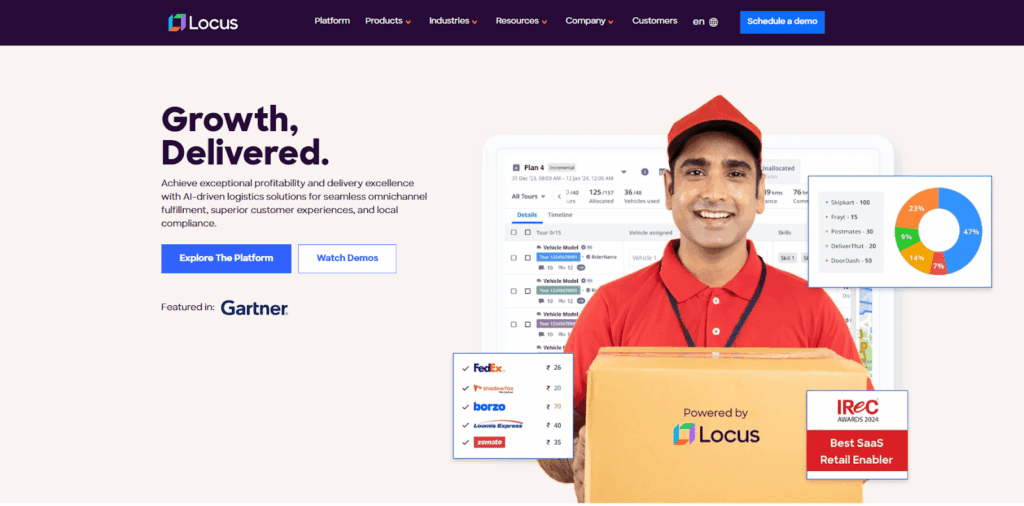
Locus is an enterprise logistics automation platform that combines route planning, dispatch, and last-mile execution within a single system.
Teams evaluating DispatchTrack alternatives often shortlist Locus when delivery operations require stronger planning depth, steadier system performance, and greater flexibility as scale increases.
Locus vs. DispatchTrack: Side-by-Side Comparison
| Capability | Locus | DispatchTrack |
| Real-time analytics & OTIF tracking | ?? Built-in dashboards, exception tracking, RCA views | Limited — users cite manual reporting |
| Workflow flexibility | ?? Edit routes, reassign tasks, modify constraints during active runs | Restricted — configuration friction reported |
| System stability at scale | ?? Consistently cited for stable performance | Occasional interface slowdowns during peak activity |
| Multi-user & shared-device support | ?? Multiple roles, concurrent access supported | Challenges with shared-device workflows |
| Enterprise integrations (ERP/SAP/WMS) | ?? Seamless integration layer | ?? Supported, scoped separately |
| Planning-led orchestration | ?? AI-powered route optimization + dispatch | Execution-focused with scheduling emphasis |
| Pricing model | Custom — request a demo | Custom — contract-based, ~$75 starting reference |
Common Challenges Locus Resolves
System Stability During High-Volume Operations
Some DispatchTrack reviews reference occasional interface slowdowns or data refresh delays during peak activity. Locus is frequently cited for maintaining stable performance, accurate location updates, and consistent execution even in complex or highly configured workflows.
Reporting Depth and Operational Analytics
Where DispatchTrack users note limitations in trend-based reporting and KPI visibility, Locus provides broader operational metrics such as OTIF-style indicators, exception tracking, RCA views, and scheduled reports. This allows teams to review performance patterns and identify issues without relying on manual analysis.

Responsiveness During Routing and Dispatch Tasks
Some teams report delays in route updates or dashboard refreshes in execution-focused tools during busy periods. Locus emphasizes near-real-time optimization and responsive planning views, supporting faster dispatch decisions in dense delivery environments.
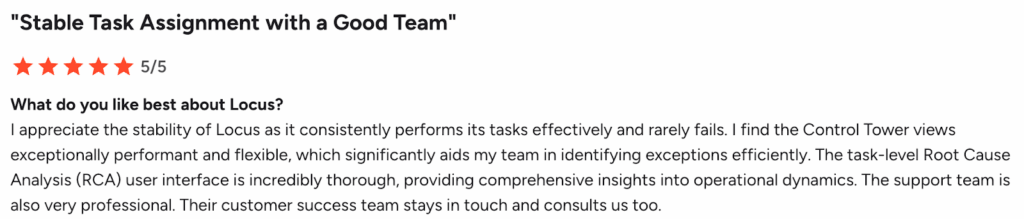
Workflow Flexibility and Real-World Editing
Locus supports adjustments across planning, routing, and on-road execution without locking workflows. Teams can reorder stops, reassign tasks, or modify constraints during active runs. Support for multiple user roles and shared-device scenarios also helps reduce friction during driver handoffs.The Locus Dispatcher solution is purpose-built to address route optimization challenges that compound as fleet complexity grows.

Benefits of Evaluating Pricing Against Operational Requirements
Comparing DispatchTrack pricing against actual operational needs — rather than feature lists alone — provides several concrete advantages:
- Accurate budgeting: Understanding total cost of ownership (base contract + setup + training + add-ons + scaling) prevents budget overruns after year one.
- Right-sized platform selection: Execution-focused operations may find DispatchTrack sufficient; planning-heavy operations benefit from platforms with deeper optimization and analytics layers.
- Reduced vendor lock-in risk: Evaluating contract terms, escalation clauses, and add-on pricing upfront ensures long-term flexibility.
- Faster ROI realization: Teams that align platform capabilities with operational complexity — rather than defaulting to the lowest starting price — typically see faster returns through reduced manual work, fewer exceptions, and better fleet utilization.
- Scalability confidence: Knowing how pricing changes as vehicles, regions, and integrations increase allows leadership to forecast logistics technology costs alongside business growth.
Understanding route optimization benefits across different business segments helps teams quantify the value a platform should deliver relative to its cost.
Why Operations Leaders Choose Locus Over Execution-Only Platforms
DispatchTrack pricing works best for execution-focused delivery operations. However, teams facing growing routing complexity, multi-region expansion, or planning-heavy demands often find that execution-only platforms create operational ceilings.
Locus is designed for organizations that need delivery software to function as a planning and orchestration layer — not just a dispatch tool:
- AI-powered route optimization that adapts to real-world constraints, traffic patterns, and delivery priorities in near-real-time
- Actionable analytics with OTIF tracking, exception dashboards, root-cause analysis, and automated reporting — eliminating manual spreadsheet work
- Enterprise-grade stability trusted by 360+ enterprises worldwide, even during peak-volume operations
- Flexible workflow engine that allows mid-run changes — stop reordering, task reassignment, constraint modifications — without vendor intervention
- Seamless integration architecture for ERP, SAP, WMS, TMS, and OMS systems, reducing integration scoping complexity
- Scalable pricing model designed to grow with your operations without unpredictable add-on surcharges
The right choice depends on whether delivery software is expected to primarily support execution or to act as a planning and orchestration layer as complexity increases.
DispatchTrack Pricing in Practice: A Closing Perspective
DispatchTrack pricing follows a scoped, contract-based model shaped by delivery volume, routing complexity, regions, integrations, and configuration needs. Third-party aggregators reference a ~$75 starting point, but actual enterprise costs — including implementation, training, add-on modules, and scaling fees — can be significantly higher.
As delivery operations scale through 2026 and beyond, teams increasingly reassess how pricing evolves alongside analytics depth, workflow flexibility, and planning responsiveness. In these cases, organizations compare DispatchTrack with platforms like Locus to evaluate how pricing aligns with planning automation and long-term operational control.
Key closing principles:
- $75 is a starting signal, not a ceiling. Budget $15–$100 per truck as an industry benchmark, then add implementation and add-on costs.
- Hidden costs are transparent if you ask. Setup ($100/vehicle), training ($250), telematics, and billing modules should be factored into total cost of ownership calculations upfront.
- Enterprise models require sales engagement. Unlike transparent SaaS competitors, DispatchTrack’s contract-based approach is intentional for enterprise buyers prioritizing customization over self-service speed.
- Total cost of ownership matters more than the monthly rate. For large fleets, custom scoping may deliver better ROI — but only if the platform’s capabilities match your operational trajectory.
For teams evaluating pricing in parallel with planning depth and cost predictability at scale, book a demo to see how Locus approaches pricing and planning for complex delivery networks.
Frequently Asked Questions (FAQs)
What is DispatchTrack’s starting price?
DispatchTrack’s starting price is approximately $75, as listed on TrustRadius and Software Advice. However, this is a reference point rather than a fixed tier. Actual costs depend on deployment size, delivery volume, and routing complexity, as DispatchTrack operates on a contract-based, custom-quoted model. To get an accurate quote, contact DispatchTrack’s sales team for a personalized assessment.
Is DispatchTrack pricing suitable for small or early-stage delivery teams?
DispatchTrack is generally positioned for structured delivery operations with defined workflows and consistent volumes. Smaller teams with simpler delivery needs may find scoped, contract-based pricing less aligned with their requirements. For comparison, alternatives like Onfleet offer transparent self-serve pricing starting at $500/month.
What are the hidden costs with DispatchTrack?
Beyond the base contract, DispatchTrack charges additional fees for modules including Customer Engagement, Telematics, and Billing & Settlement Support (TrustRadius). Implementation fees typically include ~$100 for initial per-vehicle configuration and ~$250 for training and onboarding. Enterprise integrations with ERP, SAP, or WMS systems are usually scoped and priced separately. These costs aren’t “hidden” per se — they’re disclosed during scoping — but they should be factored into TCO calculations from the start.
Is DispatchTrack pricing per user or per vehicle?
DispatchTrack pricing is not per-user. It is scoped by deployment size and operational requirements. Costs are influenced more by fleet scale, delivery volume, and routing complexity than by the number of logins or seats. This enterprise model differs from per-user SaaS pricing and aligns with longer implementation cycles typical of large logistics platforms.
How does DispatchTrack compare to Onfleet in pricing?
Onfleet starts at $500 per month with transparent, published pricing tiers (G2), while DispatchTrack starts at ~$75 but requires custom quotes and annual commitments. Onfleet targets small to mid-market teams with self-serve access, whereas DispatchTrack is an enterprise platform requiring sales engagement. For small fleets, Onfleet is more immediately accessible; for large enterprises, DispatchTrack’s custom scoping may offer better value at scale.
How long does it usually take to get a DispatchTrack pricing quote?
Pricing timelines depend on the complexity of the delivery operation. Quotes are typically provided after assessing delivery volume, regions, integrations, and workflow requirements rather than through instant estimates. Enterprise evaluations often span multiple discovery calls before final pricing is confirmed.
Why do some teams compare DispatchTrack pricing with Locus?
Some organizations compare DispatchTrack pricing with platforms like Locus when planning depth, routing adaptability, real-time analytics, and long-term cost control become priorities as delivery complexity increases. DispatchTrack excels in execution-focused environments, while Locus is designed as a planning-led orchestration platform that scales with operational complexity. Teams in retail, CPG, and 3PL sectors frequently evaluate both when outgrowing execution-only tools.


General
10 Samsara Competitors Teams Consider When Delivery Complexity Grows

Jan 9, 2026
A practical review of Samsara for delivery operations, with a side-by-side look at delivery-first platforms teams evaluate as they scale.
Read more
Fleet Optimization
Fleet Management Best Practices for 2026
Jan 16, 2026
Learn the 5 best practices of fleet management to reduce costs, improve safety, and maintain control at scale. Start your free trial today.
Read moreInsights Worth Your Time




















How Much Does DispatchTrack Cost? Pricing Breakdown for 2026