


General
10 Best Delivery Scheduling Software for Enterprises
Key Takeaways
- Delivery scheduling software helps enterprises coordinate delivery time slots, fleet capacity, and driver assignments so delivery operations remain reliable even as order volumes and service areas expand.
- Leading platforms such as Locus, FarEye, LogiNext, DispatchTrack, Verizon Connect, Wise Systems, Route4Me, Shipday, Routific, and OptimoRoute offer different capabilities across scheduling, routing, and delivery execution.
- Enterprise logistics teams should evaluate how well scheduling systems align with routing and dispatch operations, ensuring delivery plans remain feasible during real-world execution.
- A well-designed delivery scheduling system helps organizations maintain consistent delivery commitments, manage growing delivery volumes, and coordinate operations across fleets, depots, and delivery partners.
- Locus brings delivery scheduling, routing, and dispatch orchestration together in one enterprise platform, helping organizations manage complex delivery networks while maintaining visibility, scalability, and operational control.
How do you ensure deliveries are scheduled in a way that keeps operations efficient while still meeting customer time windows? Delivery scheduling is central to making that possible, because assigning the right orders to the right vehicles and routes determines whether your deliveries run smoothly or constantly face delays.
But as order volumes grow and constraints such as driver availability, vehicle capacity, and delivery windows start overlapping, managing schedules manually becomes impractical. That is why many organizations rely on delivery scheduling software to plan deliveries automatically and keep operations manageable as complexity increases.
In this guide, we explain how delivery scheduling software works and compare leading platforms such as Locus, FarEye, LogiNext, DispatchTrack, Verizon Connect, Wise Systems, Route4Me, Shipday, Routific, and OptimoRoute to help enterprises evaluate the right solution for their delivery operations.
What Is Delivery Scheduling Software?
Delivery scheduling software helps businesses plan delivery time slots, assign drivers and vehicles, and coordinate deliveries based on fleet capacity and delivery windows.
In practice, it helps logistics teams manage delivery windows and appointment slots while keeping schedules aligned with available drivers, vehicles, and routes. This makes it easier for you to avoid overbooking delivery slots and coordinate deliveries across the delivery network.
As delivery scheduling software often integrates with systems such as delivery management software, order management software, and dispatch management software, you can automatically convert incoming orders into delivery slots, align schedules with route plans, and send confirmed deliveries directly to dispatch for driver assignment.
5 Factors to Consider When Choosing a Delivery Scheduling Software
When choosing a delivery platform, make sure the platform supports large delivery volumes, coordinates resources across locations, and works smoothly with the systems that manage orders and dispatch.
Here are some key factors enterprises should evaluate when selecting delivery scheduling software.
Multi-Depot Scheduling
Enterprises often operate multiple warehouses or fulfillment hubs across regions. Delivery scheduling software should support scheduling deliveries across these depots while balancing fleet utilization and regional delivery demand.
For example, a retailer operating fulfillment hubs in Chicago and Dallas may need to route Midwest orders from Chicago while allocating southern deliveries to Dallas.
This allows logistics teams to assign orders to the right depot and schedule deliveries without overloading specific locations.
Carrier Capacity Integration
Many enterprise delivery networks rely on a mix of internal fleets and third-party carriers. Scheduling systems should integrate carrier capacity so orders can be allocated across available carriers while maintaining delivery commitments.
For example, if an internal fleet reaches capacity during peak demand, the system can automatically allocate additional orders to an external carrier without delaying deliveries.
This helps logistics teams plan deliveries based on real fleet availability rather than fixed assumptions.
Plan-vs-Actual Analytics
Plan-vs-actual analytics allow operations teams to compare planned delivery schedules with actual delivery performance.
For example, if a route was scheduled to complete deliveries within four hours but consistently takes five, teams can adjust delivery windows or route plans to reflect real operating conditions.
By tracking delays, missed delivery windows, and route deviations, businesses can identify where scheduling assumptions are breaking down and improve future delivery planning.
Reverse Logistics Scheduling
Handling returned orders and pickup requests is now a routine part of enterprise delivery operations. For example, a delivery vehicle dropping off orders in a neighborhood may also collect return packages from nearby customers during the same route.
Delivery scheduling software should support scheduling pickup requests alongside forward deliveries so return operations can be coordinated within existing delivery routes.
This helps businesses manage reverse logistics without creating separate operational workflows.
10 Best Delivery Scheduling Software for Enterprises
The following table compares leading delivery scheduling software platforms based on key capabilities that enterprises typically evaluate.
| Platform | Multi-Depot Scheduling | Carrier Integration | Route Optimization | Dispatch Management |
|---|---|---|---|---|
| Locus | Yes | Yes | Yes | Yes |
| FarEye | Yes | Yes | Yes | Yes |
| LogiNext | Yes | Yes | Yes | Yes |
| DispatchTrack | Partial | Partial | Yes | Yes |
| Verizon Connect | Partial | No | Partial | Yes |
| Wise Systems | Partial | No | Yes | Partial |
| Route4Me | No | No | Yes | Partial |
| Shipday | No | No | Partial | Yes |
| Routific | No | No | Yes | Partial |
| OptimoRoute | Partial | No | Yes | Partial |
1. Locus
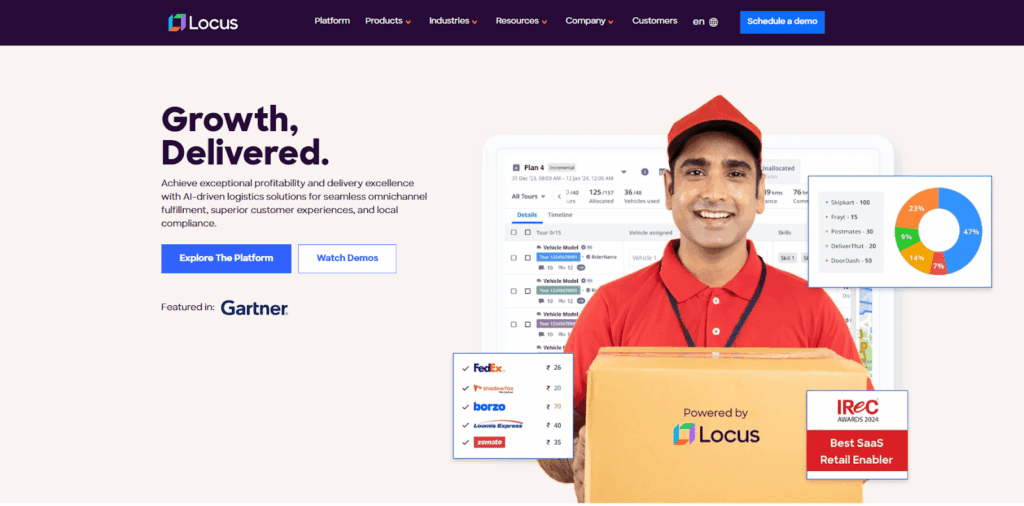
If your delivery operations involve multiple depots, fleets, and delivery partners, coordinating schedules through separate tools can quickly become difficult. With Locus, you can bring delivery scheduling, route planning, and dispatch decisions into a single platform so logistics teams can manage delivery time slots, fleet capacity, and execution together.
Locus provides intelligent delivery scheduling through its logistics orchestration platform, which you can use to assign delivery windows, allocate drivers and vehicles, and align schedules with route feasibility and operational issues.
In Locus, you can connect scheduling with route optimization, dispatch management, and real-time delivery visibility. You can create delivery schedules that remain operationally feasible as orders, fleet capacity, and delivery windows change throughout the day.
If you manage large delivery networks, your scheduling system needs to support complex operations across multiple depots and fleets. With Locus, you can coordinate high delivery volumes while maintaining delivery accuracy and improving fleet utilization. Retailers, CPG brands, distributors, and 3PL providers use the platform to manage enterprise-scale delivery operations.
Key Features of Locus
- Intelligent delivery scheduling: Locus automatically assigns delivery time slots based on fleet availability, route feasibility, and operational constraints. This helps you create delivery schedules that align with your actual delivery capacity.
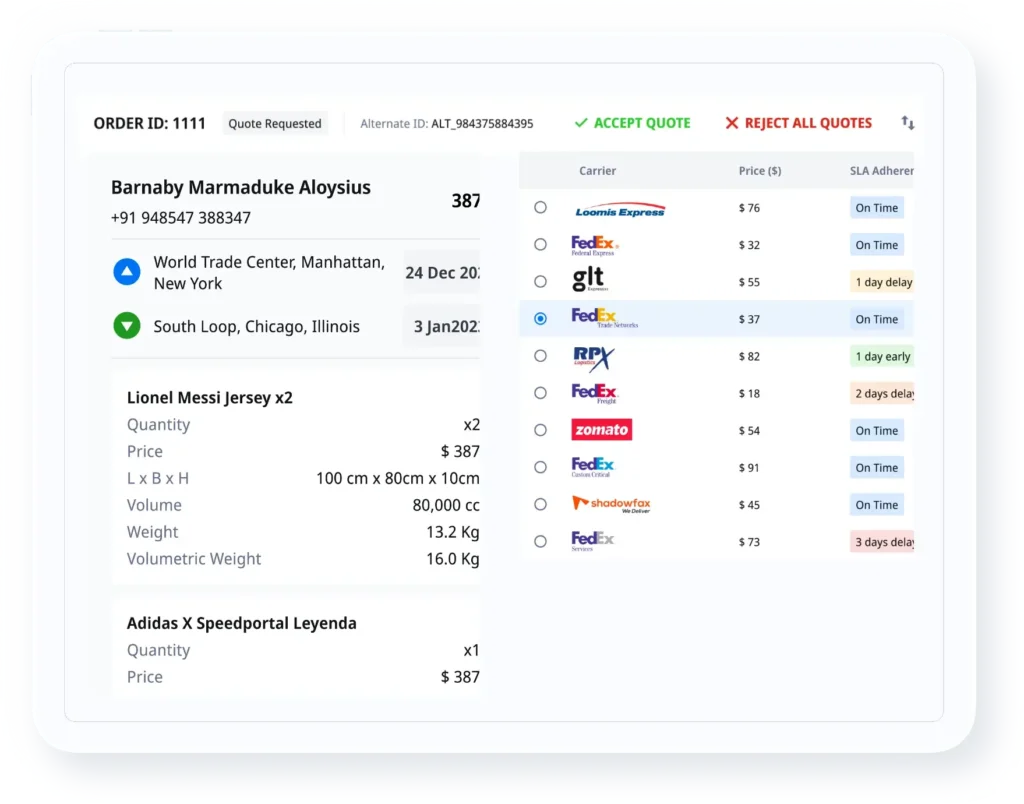
- Multi-depot scheduling: If you operate multiple warehouses or distribution hubs, Locus allows you to schedule deliveries across these depots while balancing fleet capacity and delivery demand across regions.
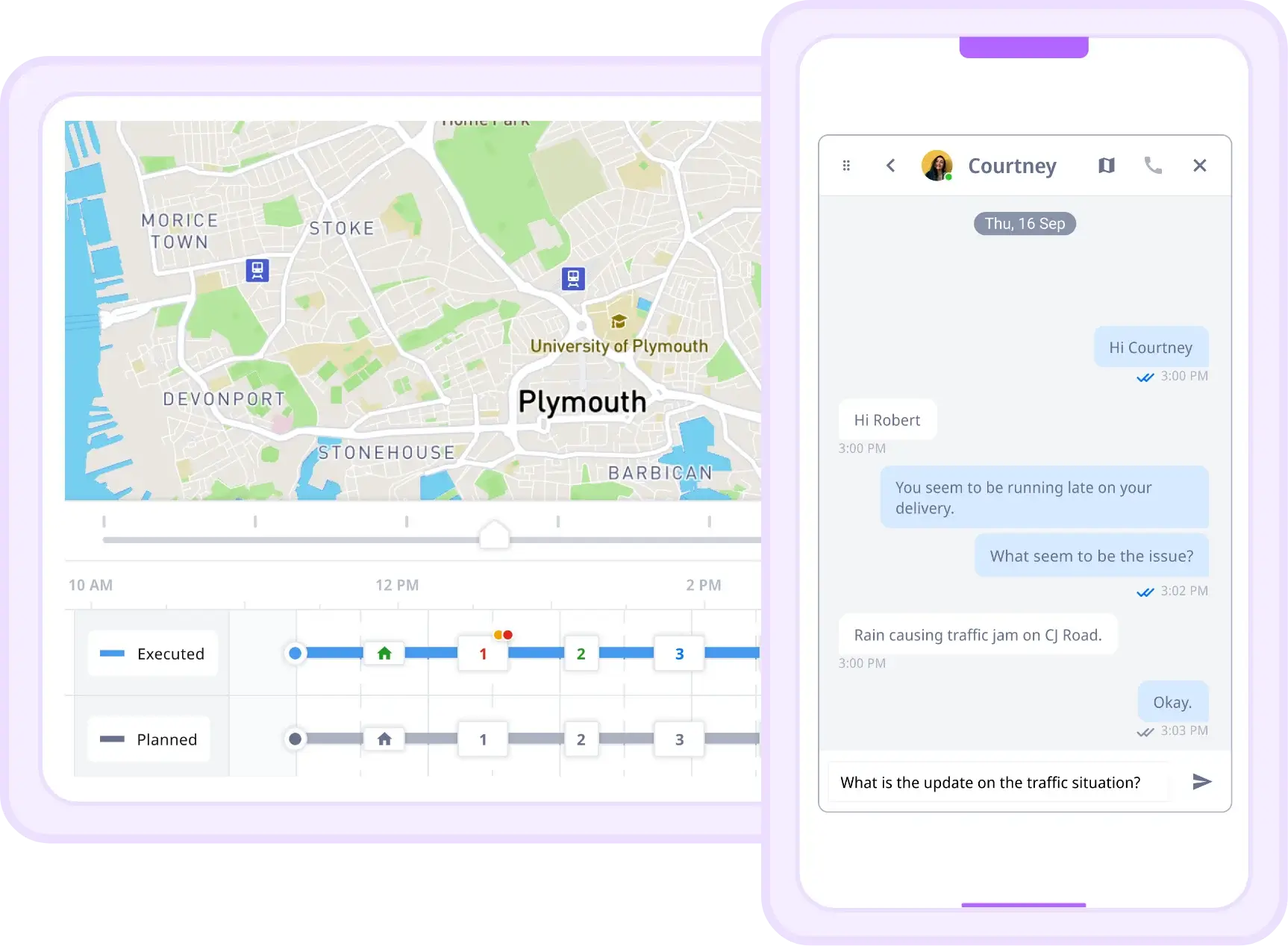
- Route planning and dispatch management: Delivery schedules work best when they align with route plans and driver assignments. Locus integrates route optimization and dispatch management so you can schedule, route, and execute deliveries within the same platform.
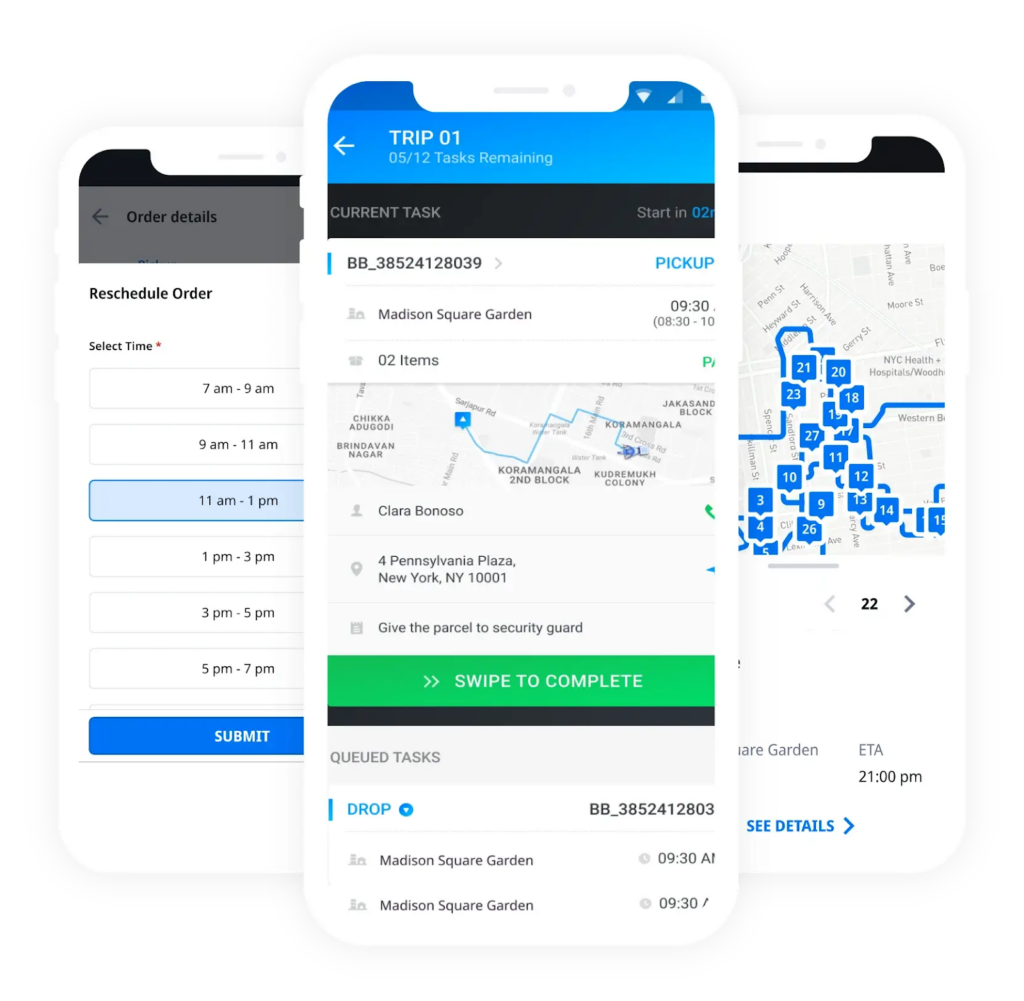
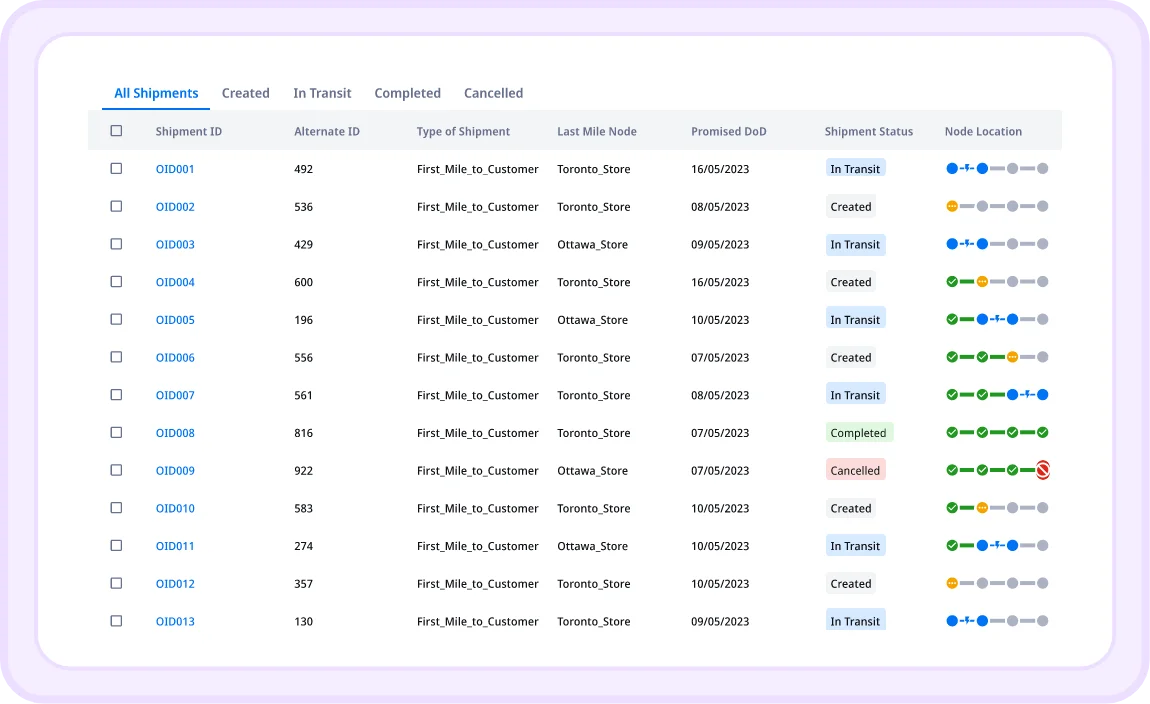
- Real-time shipment visibility: Locus provides end-to-end visibility across delivery operations through a centralized control tower dashboard. This allows you to monitor delivery progress, track driver activity, and identify scheduling deviations in real time.
What Locus Does Well
- Helps you manage complex enterprise delivery networks with intelligent scheduling across multiple depots and fleets
- Allows you to connect delivery scheduling, route optimization, and dispatch management within one platform
- Gives you centralized visibility across deliveries, drivers, and logistics operations
What Customers Appreciate About Locus
Customers often highlight how Locus helps you coordinate complex delivery networks while maintaining operational visibility.
If you manage large delivery volumes, having scheduling, routing, and dispatch decisions connected within one platform helps you avoid working across multiple tools.
Locus Cons
Locus is built primarily for enterprise logistics operations, which means it may include more capabilities than smaller delivery teams typically require.
Locus Pricing
Locus offers enterprise pricing based on factors such as delivery volumes, number of depots, fleet size, and system integrations. Because deployments vary depending on logistics network complexity, pricing is typically customized after a consultation with the Locus team.
You can request a demo to evaluate the platform and receive a tailored pricing estimate based on your logistics network and operational requirements.
Locus Is Best for
Locus is best suited if you are a retailer, CPG company, distributor, or 3PL provider managing large delivery volumes across multiple depots and fleets.
2. FarEye
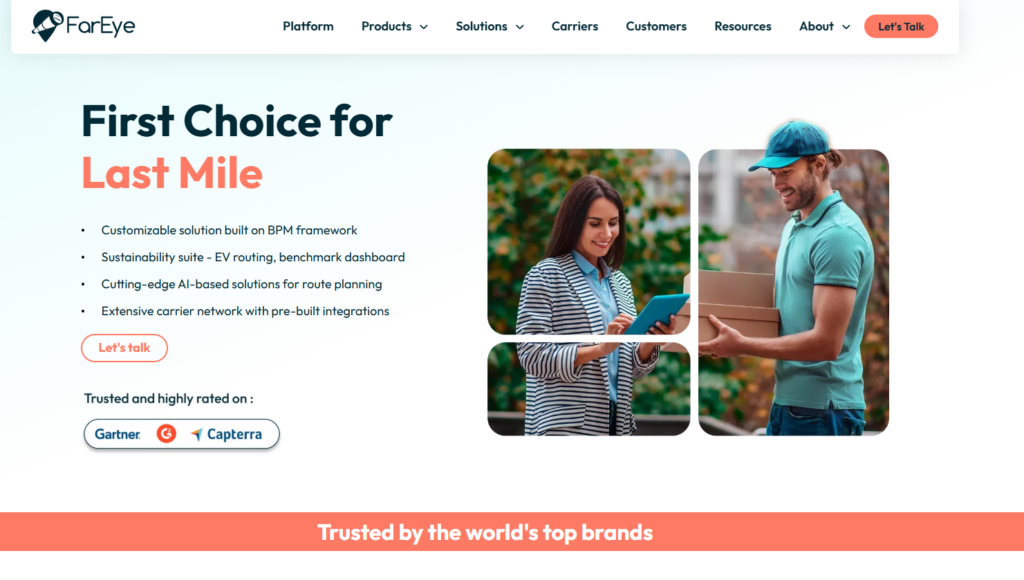
FarEye is a last-mile delivery management platform designed to help enterprises coordinate delivery scheduling, routing, and delivery execution across fleets and carrier networks. The platform enables you to manage delivery windows, assign deliveries to drivers, and monitor delivery performance from a centralized system.
With FarEye, you can coordinate deliveries across internal fleets and third-party carriers while maintaining visibility into delivery progress. Its scheduling capabilities allow you to define delivery time windows and allocate deliveries based on operational constraints.
FarEye also supports dynamic delivery updates, allowing you to adjust delivery schedules and communicate changes to customers when disruptions occur.
Key Features of FarEye
- Delivery Window Scheduling: FarEye allows logistics teams to define delivery time windows and assign deliveries based on route feasibility and fleet availability.
- Route Optimization: The platform generates optimized routes that help drivers complete deliveries efficiently while meeting delivery commitments.
- Real-Time Delivery Visibility: Operations teams can track deliveries, driver progress, and delivery completion through a centralized tracking dashboard.
- Customer Communication: FarEye enables automated delivery notifications and updates so customers remain informed about delivery status.
What FarEye Does Well
- Helps you manage enterprise delivery scheduling and last-mile execution
- Gives you strong delivery visibility and tracking capabilities
- Provides tools to communicate delivery updates to your customers
FarEye Cons
- Implementation and workflow configuration can take time if your delivery network is complex.
- The platform’s broad feature set may require dedicated onboarding for your logistics teams.
- Some advanced capabilities depend on integrations with your existing enterprise systems.
- Pricing and deployment scope are typically customized, which may require consultation during your evaluation process.
FarEye Pricing
FarEye typically offers enterprise pricing based on delivery volume, number of users, and platform deployment scope. Pricing is generally customized depending on your logistics network complexity.
FarEye Is Best For
Retailers, e-commerce companies, and logistics providers that want delivery scheduling combined with customer delivery visibility.
3. LogiNext
LogiNext is a logistics automation platform that helps enterprises coordinate delivery scheduling, route planning, and fleet operations across large delivery networks. The platform focuses on improving delivery efficiency by combining scheduling capabilities with route optimization and real-time fleet tracking.
LogiNext allows you to assign delivery time slots, allocate drivers and vehicles, and generate delivery routes that align with operational constraints. By connecting delivery scheduling with route planning, the platform helps you plan deliveries that remain feasible during execution.
If you manage large delivery volumes, LogiNext allows you to monitor fleet activity and delivery performance through centralized dashboards and analytics tools.
Key Features of LogiNext
- Delivery scheduling: Assign delivery time slots and allocate deliveries based on fleet capacity, route feasibility, and operational constraints.
- Route optimization: Generate optimized delivery routes that help drivers complete deliveries efficiently while meeting delivery commitments.
- Fleet tracking: Monitor driver activity and delivery progress through real-time fleet visibility dashboards.
- Delivery analytics: Analyze delivery performance, route efficiency, and operational metrics through centralized reporting tools.
What LogiNext Does Well
- Helps you manage enterprise-scale delivery scheduling and route planning
- Gives you real-time fleet visibility across delivery operations
- Provides analytics tools to evaluate delivery performance and operational efficiency
LogiNext Cons
- Implementation and workflow configuration may take time if your logistics environment is complex.
- Some advanced capabilities rely on integrations with your enterprise systems.
- Pricing is customized based on delivery volume and deployment scope.
- The platform may include more functionality than smaller delivery teams typically require.
LogiNext Pricing
LogiNext typically offers enterprise pricing based on factors such as delivery volumes, fleet size, number of users, and system integrations. Pricing is usually customized after consultation based on your operational requirements.
LogiNext Is Best For
Retailers, logistics providers, and enterprises managing large delivery volumes that require delivery scheduling combined with route optimization and fleet visibility.
4. DispatchTrack
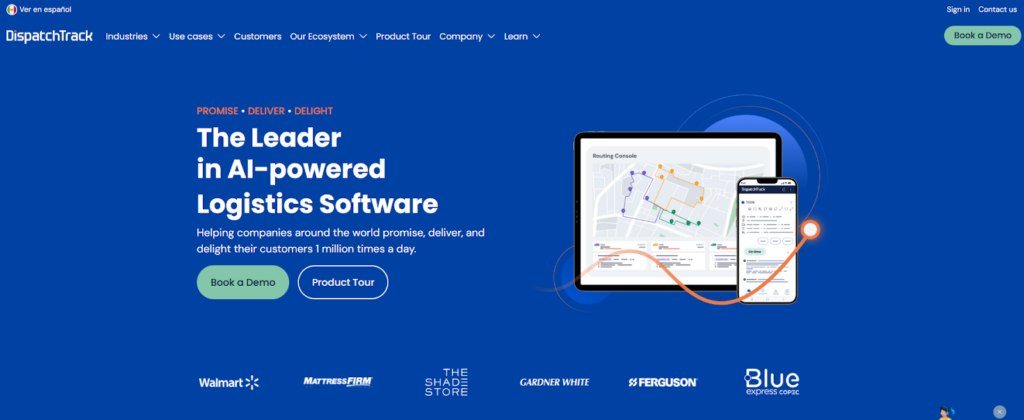
DispatchTrack is a last-mile delivery management platform that helps businesses coordinate delivery scheduling, route planning, and delivery execution. The platform focuses on improving delivery visibility and operational coordination between dispatch teams and drivers.
With DispatchTrack, you can schedule deliveries, assign drivers, and monitor deliveries through real-time tracking dashboards. By connecting scheduling with dispatch operations, the platform helps you coordinate delivery tasks while maintaining delivery accuracy and customer communication.
If you manage delivery schedules across drivers and dispatch teams, DispatchTrack helps you keep drivers, dispatchers, and customers informed about delivery progress.
Key Features of DispatchTrack
- Delivery scheduling: Schedule deliveries and assign drivers based on delivery windows, route plans, and operational capacity.
- Route planning: Generate optimized delivery routes that help drivers complete deliveries efficiently.
- Driver management: Coordinate driver assignments, delivery tasks, and dispatch operations through centralized dashboards.
- Delivery tracking: Monitor delivery progress and driver activity in real time.
- Customer notifications: Send automated delivery updates and notifications to customers.
What DispatchTrack Does Well
- Helps you coordinate delivery scheduling with dispatch operations
- Gives you real-time delivery tracking and customer notification tools
- Provides visibility across drivers and dispatch teams
DispatchTrack Cons
- Advanced route optimization capabilities may be more limited compared to specialized optimization platforms.
- Some enterprise integrations may require configuration during your implementation process.
- Pricing typically depends on your deployment size and delivery volumes.
- Feature depth may vary depending on your implementation scope.
DispatchTrack Pricing
DispatchTrack offers pricing based on deployment size, number of drivers, and delivery volume. Pricing is usually provided after consultation based on your operational requirements.
DispatchTrack Is Best For
Retailers, distributors, and logistics teams that want delivery scheduling combined with dispatch coordination and delivery tracking.
5. Verizon Connect
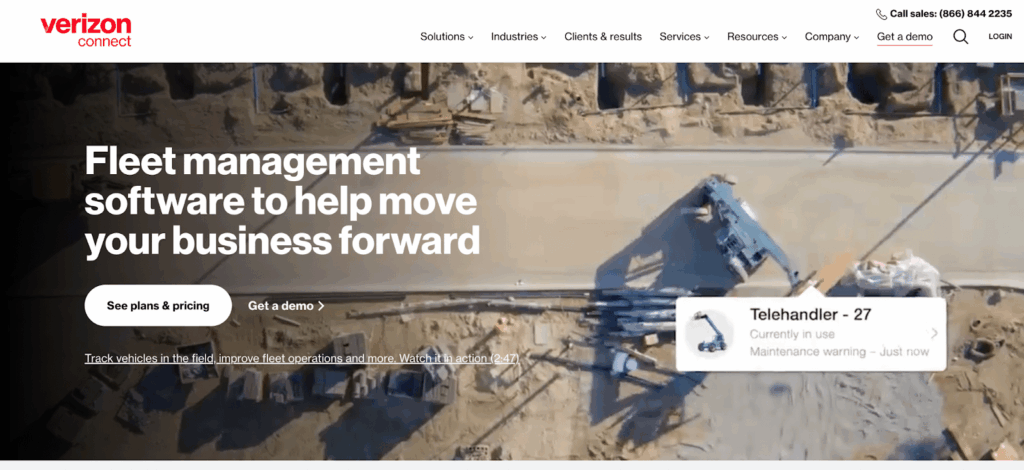
Verizon Connect is a fleet management platform that helps businesses coordinate driver schedules, vehicle tracking, and delivery operations through telematics and fleet visibility tools. The platform focuses on improving fleet utilization and operational oversight across delivery fleets.
Verizon Connect allows logistics teams to schedule deliveries, assign drivers, and monitor vehicles through GPS-based tracking systems. By combining fleet tracking with scheduling and dispatch tools, the platform helps businesses manage delivery operations while maintaining visibility into driver activity and vehicle performance.
Enterprises often use Verizon Connect to manage fleet-heavy delivery operations where vehicle tracking and driver oversight are important parts of delivery execution.
Key Features of Verizon Connect
- Delivery scheduling: Assign deliveries and driver schedules while aligning tasks with fleet availability.
- Fleet tracking: Monitor vehicles and driver activity through GPS-based tracking and telematics systems.
- Driver management: Track driver behavior, working hours, and delivery performance across fleets.
- Dispatch coordination: Assign delivery tasks and manage dispatch workflows from a centralized dashboard.
- Fleet analytics: Analyze fleet utilization, driver activity, and operational performance.
What Verizon Connect Does Well
- Strong fleet tracking and telematics capabilities
- Provides visibility into vehicle and driver activity across fleets
- Helps enterprises monitor fleet utilization and driver performance
Verizon Connect Cons
- Scheduling capabilities are more limited compared to dedicated logistics orchestration platforms
- Platform focus is primarily on fleet management rather than end-to-end delivery orchestration
- Advanced logistics integrations may require configuration
- Enterprise deployments may involve onboarding for fleet management teams
Verizon Connect Pricing
Verizon Connect pricing generally depends on fleet size, number of vehicles, and telematics services required. Pricing is typically provided after consultation based on deployment needs.
Verizon Connect Is Best For
Organizations that manage large delivery fleets and want delivery scheduling combined with fleet tracking and telematics capabilities.
6. Wise Systems
Wise Systems is a logistics optimization platform that uses machine learning to improve delivery routing, scheduling, and fleet efficiency. The platform focuses on helping you adapt delivery plans continuously as conditions change throughout the day.
Wise Systems allows you to generate delivery schedules and route plans based on order demand, driver availability, and operational constraints. Its machine learning models analyze historical and real-time delivery data to refine routing and scheduling decisions over time.
If you manage delivery operations that require frequent adjustments due to changing delivery volumes or traffic conditions, Wise Systems can help you adapt delivery plans dynamically.
Key Features of Wise Systems
- Delivery scheduling: Assign delivery tasks and time windows based on fleet capacity and operational constraints.
- Dynamic route optimization: Continuously adjust delivery routes as new orders or disruptions occur.
- Machine learning optimization: Improve routing and scheduling decisions over time using historical delivery data.
- Operational visibility: Monitor delivery progress, driver activity, and route performance through centralized dashboards.
What Wise Systems Does Well
- Uses machine learning to continuously improve delivery routing and scheduling
- Helps you adapt delivery plans dynamically during operations
- Supports large-scale delivery operations with optimization capabilities
Wise Systems Cons
- Stronger focus on route optimization than full logistics orchestration.
- Some enterprise integrations may require configuration during deployment.
- Pricing typically depends on deployment scope and operational complexity.
- Advanced capabilities may require onboarding for operations teams.
Wise Systems Pricing
Wise Systems typically offers enterprise pricing based on delivery volumes, fleet size, and deployment scope. Pricing is usually determined after consultation based on your logistics network requirements.
Wise Systems Is Best For
Enterprises and logistics providers that want machine learning-driven route optimization combined with delivery scheduling capabilities.
7. Route4Me
Route4Me is a route planning and delivery optimization platform that helps you plan delivery routes, assign drivers, and schedule deliveries across your fleet. The platform focuses on improving delivery efficiency by generating optimized routes based on delivery locations and operational constraints.
Route4Me allows you to upload delivery orders, assign routes to drivers, and generate delivery schedules that align with your available fleet capacity. By combining route planning with delivery scheduling, the platform helps you coordinate deliveries while reducing travel time and fuel usage.
If you manage delivery routes for multiple drivers, Route4Me allows you to maintain visibility into delivery tasks and route performance.
Key Features of Route4Me
- Delivery scheduling: Assign delivery time slots and schedule deliveries based on route plans and driver availability.
- Route optimization: Generate optimized delivery routes that reduce travel time and improve delivery efficiency.
- Driver route management: Assign routes to drivers and manage delivery tasks across fleets.
- Route analytics: Monitor route performance, delivery completion rates, and operational efficiency.
What Route4Me Does Well
- Provides strong route optimization capabilities for delivery operations
- Helps you improve route efficiency and reduce travel time
- Gives you route analytics to evaluate delivery performance
Route4Me Cons
- Primarily focused on route planning rather than full delivery orchestration.
- Enterprise logistics workflows may require integrations with other systems.
- Some advanced logistics features depend on additional configuration.
- Pricing can vary depending on team size and feature requirements.
Route4Me Pricing
Route4Me offers pricing based on number of users, routes, and features required. Plans typically scale depending on your operational needs and delivery volumes.
Route4Me Is Best For
Delivery teams and logistics providers that want route optimization combined with delivery scheduling and driver route management.
8. Shipday
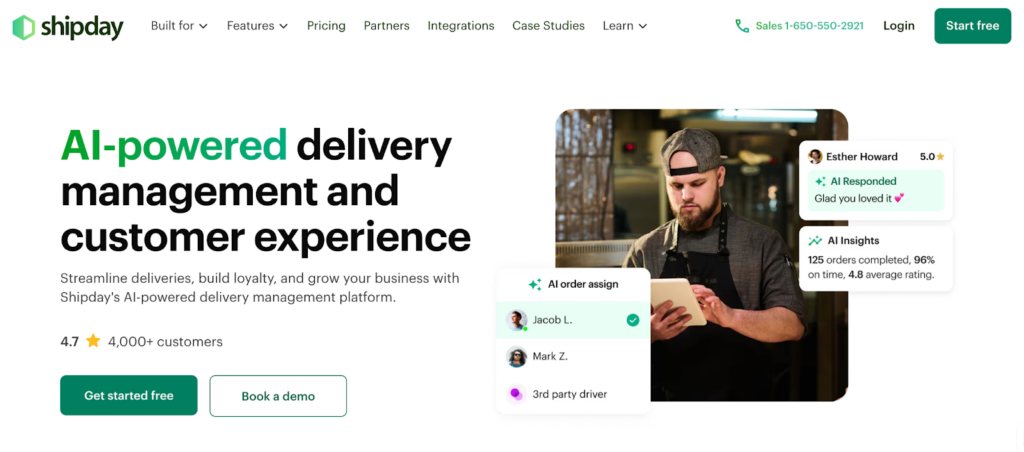
Shipday is a delivery management platform designed to help you coordinate delivery scheduling, dispatch operations, and driver tracking. The platform is commonly used by local delivery businesses that need simple tools to manage delivery assignments and monitor driver activity.
Shipday allows you to schedule deliveries, assign drivers, and track delivery progress through a centralized dashboard. The platform also supports customer notifications and order tracking so you can keep your customers informed about delivery status.
Businesses use Shipday to manage delivery workflows while maintaining visibility into driver assignments and delivery completion.
Key Features of Shipday
- Delivery scheduling: Schedule deliveries and assign drivers based on delivery windows and driver availability.
- Dispatch management: Coordinate delivery assignments and manage dispatch operations from a centralized dashboard.
- Driver tracking: Monitor driver locations and delivery progress through real-time tracking.
- Customer notifications: Send delivery updates and order tracking information to customers.
What Shipday Does Well
- Provides simple tools for delivery scheduling and driver management
- Gives you real-time driver tracking and delivery visibility
- Provides customer notification features for delivery updates
Shipday Cons
- Primarily designed for small to mid-sized delivery operations.
- Advanced enterprise logistics capabilities may be limited.
- Some integrations may require additional configuration.
- Feature depth may not match larger logistics orchestration platforms.
Shipday Pricing
Shipday offers subscription-based pricing that varies based on number of drivers, orders, and platform features. Pricing plans are generally designed to support growing delivery teams.
Shipday Is Best For
Local delivery businesses and growing delivery teams that want straightforward delivery scheduling and dispatch tools.
9. Routific
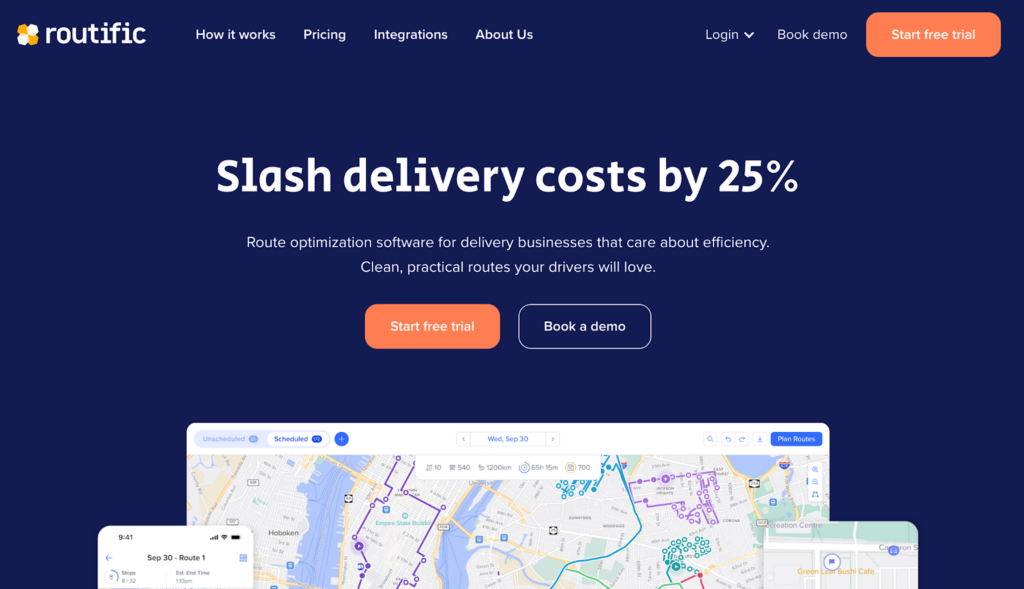
Routific allows you to upload delivery orders, generate optimized routes, and assign deliveries to drivers through a centralized dashboard. The platform also supports delivery tracking and route updates, allowing you to monitor delivery progress during operations.
If you want to simplify delivery planning and coordinate driver schedules while maintaining visibility into delivery performance, Routific provides a straightforward platform to manage these workflows.
Key Features of Routific
- Delivery scheduling: Assign delivery time windows and schedule deliveries based on route plans and driver availability.
- Route optimization: Generate optimized delivery routes that reduce travel time and improve delivery efficiency.
- Driver route management: Assign delivery routes to drivers and manage delivery tasks across teams.
- Delivery tracking: Monitor delivery progress and driver activity throughout the delivery process.
What Routific Does Well
- Provides simple route planning and delivery scheduling tools
- Helps you organize delivery routes efficiently
- Gives you delivery tracking and route visibility
Routific Cons
- Primarily designed for small to mid-sized delivery teams.
- Enterprise logistics orchestration capabilities may be limited.
- Some advanced integrations may require additional configuration.
- Feature scope is narrower compared to larger logistics platforms.
Routific Pricing
Routific offers subscription-based pricing based on the number of drivers, routes, and platform features. Pricing typically scales depending on your operational needs.
Routific Is Best For
Small and mid-sized delivery operations that want route planning combined with delivery scheduling and driver management.
10. OptimoRoute
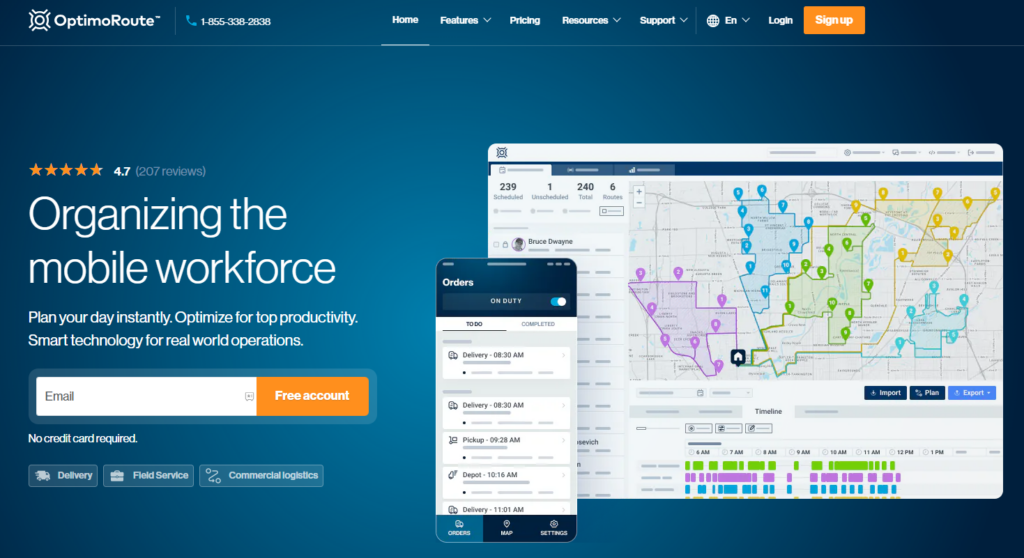
OptimoRoute is a route planning and delivery scheduling platform designed to help you organize delivery routes, assign drivers, and manage delivery operations efficiently. The platform focuses on helping logistics teams plan delivery schedules that align with route constraints, driver availability, and delivery windows.
OptimoRoute allows you to upload delivery orders, generate optimized delivery routes, and assign delivery tasks to drivers through a centralized system. The platform also supports delivery tracking and route adjustments during operations, helping you manage deliveries as conditions change.
If you need to coordinate delivery schedules and route planning while maintaining visibility into driver activity and delivery progress, OptimoRoute provides tools to manage these workflows.
Key Features of OptimoRoute
- Delivery scheduling: Assign delivery time slots and schedule deliveries based on driver availability and route plans.
- Route optimization: Generate optimized delivery routes that reduce travel distance and improve delivery efficiency.
- Driver assignment: Allocate delivery tasks to drivers while balancing workloads across delivery teams.
- Delivery tracking: Monitor delivery progress and driver activity throughout the delivery process.
What OptimoRoute Does Well
- Provides route optimization combined with delivery scheduling capabilities
- Helps you organize driver assignments and delivery routes efficiently
- Gives you delivery tracking and operational visibility
OptimoRoute Cons
- Primarily focused on route planning rather than full logistics orchestration.
- Enterprise-scale logistics integrations may require additional configuration.
- Some advanced logistics features depend on the implementation scope.
- Feature depth may be limited for highly complex enterprise delivery networks.
OptimoRoute Pricing
OptimoRoute offers subscription-based pricing based on the number of drivers, delivery volume, and platform features. Pricing plans typically scale depending on your operational requirements.
OptimoRoute Is Best For
Delivery teams and logistics providers that want route planning combined with delivery scheduling and driver assignment tools.
Delivery Scheduling Software vs Route Optimization vs Dispatch Systems
Delivery scheduling, route optimization, and dispatch are often discussed together in logistics operations. While they are closely related, each system supports a different part of the delivery process.
| System | What It Focuses On | What It Determines | Common Use |
|---|---|---|---|
| Delivery Scheduling Software | When deliveries should happen | Delivery time slots, appointment windows, and capacity allocation | Planning delivery schedules across fleets and depots |
| Route Optimization Software | How deliveries should be completed | Route sequence and delivery paths | Creating efficient routes for drivers |
| Dispatch Management Systems | How deliveries are executed | Driver assignments and delivery task coordination | Managing deliveries during execution |
Benefits of Delivery Scheduling Software
- Delivery scheduling software supports enterprise logistics operations in several important ways:
- Better customer delivery experience: Your customers can select delivery time slots that align with actual fleet capacity, helping you reduce missed deliveries and unexpected rescheduling.
- Scalable delivery operations: As order volumes grow, scheduling software helps you handle larger delivery volumes without manually adjusting schedules across depots and fleets.
- Improved coordination between planning and execution: Scheduling decisions stay aligned with route planning and dispatch operations, helping you keep delivery plans consistent during execution.
- Support for complex delivery networks: If you operate across multiple depots, fleets, or delivery partners, scheduling software helps you manage delivery schedules from a centralized system.
- Data-driven delivery planning: Delivery performance data helps you refine scheduling rules, adjust delivery windows, and improve operational planning over time.
Delivery Scheduling Software Evaluation Checklist
Use this checklist as a quick reference when comparing delivery scheduling software platforms:
- Can the platform support the scale of your delivery operations?
Consider whether the system can handle your delivery volumes, number of drivers, and service regions. - How easily can delivery schedules be created and updated?
Operations teams should be able to generate schedules and adjust them quickly as orders or delivery conditions change. - Do drivers receive schedules and updates through a mobile interface?
Driver applications help ensure that delivery tasks, route instructions, and updates are communicated clearly. - Can operations teams monitor delivery schedules during execution?
Real-time visibility allows logistics teams to track delivery progress and respond to disruptions. - Does the platform integrate with your existing logistics systems?
Scheduling software should connect with systems used for order management, routing, and dispatch. - Does the system provide insights into delivery performance?
Reporting tools should help teams evaluate delivery outcomes and refine scheduling strategies.
Why Enterprises Choose Locus for Delivery Scheduling
Delivery scheduling software helps you coordinate delivery time slots, fleet capacity, and driver assignments across complex delivery networks. As delivery volumes grow and delivery promises become more precise, your scheduling systems must work closely with routing and dispatch operations to keep delivery plans consistent during execution.
Built for real-world logistics and backed by Ingka Group, Locus provides enterprise-grade delivery orchestration that connects scheduling, routing, dispatch, and operational visibility within a single platform. Its modular, API-first architecture allows you to evolve delivery workflows across fulfillment, carrier management, and analytics without rebuilding core systems.
With six consecutive years of recognition from Gartner, adoption by 360+ brands across 30+ countries, and $320M+ in cost savings delivered, Locus combines operational maturity with scalable logistics technology.
Schedule a demo with Locus to see how intelligent delivery scheduling supports reliable, enterprise-scale delivery operations.
Frequently Asked Questions (FAQs)
1. How do delivery time slots improve delivery efficiency?
Delivery time slots help distribute orders across available fleet capacity. This prevents route overload, keeps delivery plans balanced, and helps logistics teams maintain reliable delivery windows during high order volumes.
2. Can delivery scheduling software support same-day deliveries?
Yes. Many delivery scheduling systems support same-day deliveries by dynamically allocating delivery slots based on driver availability, route feasibility, and order priority.
3. How does delivery scheduling software help manage peak delivery demand?
Scheduling platforms help operations teams allocate delivery slots and balance delivery volumes across fleets during peak periods, helping maintain service levels without manually adjusting delivery plans.
4. What industries benefit most from delivery scheduling software?
Retailers, e-commerce companies, distributors, CPG brands, and 3PL providers commonly use delivery scheduling software to manage high delivery volumes and coordinate complex delivery networks.
5. Can delivery scheduling software work with broader logistics platforms?
Yes. Some platforms, including Locus, combine delivery scheduling with routing, dispatch management, and operational visibility, helping enterprises manage delivery planning and execution through a single logistics system.


General
Why Delivery Scheduling Is Essential for Supply Chain Success and Efficiency

Mar 12, 2026
Delivery scheduling improves fleet utilization. Learn how scheduling works and how logistics teams optimize delivery operations.
Read more
General
Top Logistics Automation Software Platforms in 2026 for Smarter Operations
Mar 12, 2026
Compare the top logistics automation software platforms of 2026. Find the right execution-led dispatch tool, TMS suite, or specialized freight system based on your operational model.
Read moreInsights Worth Your Time




















10 Best Delivery Scheduling Software for Enterprises