


General
Best Dispatch Management Platform in 2026: FarEye vs Locus vs Shipsy vs Onfleet

Key Takeaways
- A dispatch management platform assigns, sequences, and re-optimizes deliveries across a fleet, and in an enterprise setting it must integrate with ERP, WMS, and order systems to work from accurate, real-time data.
- FarEye, Locus, Shipsy, and Onfleet occupy different positions: FarEye and Locus target enterprise operations, Shipsy spans broad end-to-end and cross-border logistics, and Onfleet serves SMB to mid-market delivery.
- The sharpest differentiator in 2026 is AI architecture: whether a platform layers AI features onto rule-based dispatch or runs autonomous, multi-agent decisioning.
- Locus is the world’s first agentic TMS, coordinating eight specialized AI agents through a Sense-Decide-Execute-Learn loop and evaluating 250+ real-world constraints per dispatch decision.
- For enterprise operations that need deep, autonomous, ERP and WMS integrated dispatch, Locus is the strongest fit; simpler operations may be well served by lighter platforms.
- Verify integration connectors and pricing directly with each vendor before deciding.
What a Dispatch Management Platform Does and Why Integration Matters
A dispatch management platform is the software that decides which driver or vehicle handles each delivery, in what sequence, and how the plan adapts when conditions change during the day. In an enterprise operation, it does not work in isolation. It has to integrate with the ERP, warehouse management system (WMS), and order management systems that hold inventory, orders, and customer commitments, so dispatch decisions run on accurate, real-time data rather than yesterday’s snapshot.
Four platforms come up often in this category: FarEye, Locus, Shipsy, and Onfleet. They are not interchangeable. FarEye and Locus target enterprise operations, Shipsy offers a broad end-to-end logistics suite with strength in cross-border markets, and Onfleet serves SMB to mid-market delivery operations. Choosing well means matching the platform to the complexity and scale of your operation.
The defining difference in 2026 is AI architecture. Some platforms layer AI features onto a rule-based dispatch core; others are built as autonomous, multi-agent systems that decide and act within governance. Locus sits at the far end of that spectrum as the world’s first agentic Transportation Management System, which is why, for enterprise dispatch that must integrate with ERP and WMS and optimize against deep operational constraints, it is the strongest of the four. This comparison lays out how each platform fits, so the verdict is one you can check rather than take on trust.
How to Compare Dispatch Management Platforms
A fair comparison starts with the dimensions that actually determine outcomes, not feature checklists. Six matter most for enterprise dispatch in 2026.
The first is AI and decisioning architecture: whether dispatch decisions are made by static rules and dispatcher judgment, by AI features added to a rule-based core, or by autonomous agents that decide within defined governance. The second is autonomous re-optimization: whether the platform re-solves the plan across the fleet as conditions change, or only re-sequences existing routes. The third is constraint depth: how many real-world rules, such as time windows, capacity, driver skills, and service levels, the engine can honor simultaneously.
The fourth is multi-fleet and multi-carrier orchestration: whether the platform coordinates owned fleets, contracted carriers, and gig capacity as one network. The fifth is enterprise integration, specifically the depth of ERP, WMS, and order-system connectivity, since dispatch quality depends on clean, current data. The sixth is independent validation: analyst recognition and verified user reviews that corroborate the vendor’s claims.
The table below summarizes where each platform sits. The sections that follow go deeper, with the most detail on Locus, given its distinct agentic architecture.
| Platform | Primary category | Typical best fit | Signature strength |
|---|---|---|---|
| FarEye | Enterprise last-mile delivery orchestration | Enterprise retail, e-commerce, 3PL last mile | Delivery experience and shipment visibility |
| Locus | Agentic TMS and dispatch orchestration | Enterprise, complex multi-constraint operations | AI agents and autonomous re-optimization |
| Shipsy | End-to-end logistics management suite | Enterprise, cross-border and emerging markets | Breadth across freight and last mile |
| Onfleet | Last-mile dispatch and delivery management | SMB to mid-market delivery operations | Ease of use and fast deployment |
ERP and WMS integration depth, connector availability, and pricing vary by vendor and change over time. Confirm current specifics with each provider.
FarEye
FarEye is positioned as an enterprise last-mile delivery and logistics platform, known for delivery orchestration, route planning, and real-time shipment visibility, with a strong emphasis on the customer delivery experience. It is generally aimed at enterprise retail, e-commerce, and third-party logistics operations that manage and track high volumes of last-mile deliveries across regions.
Its signature strength is breadth across the delivery lifecycle, from planning through to customer-facing tracking and post-purchase communication. For organizations whose priority is a polished, visible delivery experience at enterprise scale, FarEye is a serious contender.
Because FarEye and Locus both target enterprise operations, the useful question for a buyer is architectural: how much of the dispatch decision is automated by the platform versus surfaced for a human dispatcher to action, and how deeply the engine re-optimizes across the fleet in real time. That is the dimension on which enterprise dispatch platforms increasingly separate. Confirm FarEye’s current ERP and WMS integration options and pricing directly with the vendor.
Also Read: Locus vs. FarEye: An Enterprise Logistics Platform Comparison (2026)
Locus
Locus is the world’s first agentic Transportation Management System (TMS), and it is built around AI agents rather than AI features. This is the core distinction in this comparison and the reason it leads for enterprise dispatch.
Where conventional dispatch software matches drivers to deliveries through static rules and dispatcher judgment, Locus runs a team of eight specialized AI agents that collaborate to make and execute dispatch decisions. The agents span Capacity, Carrier, Dispatch, Hub, Customer, and Settlement decisions, coordinated by an Orchestrator agent, with the Mycroft AI Co-Pilot providing a natural-language interface for operators. For dispatch specifically, the Dispatch, Capacity, and Carrier agents work together to assign and re-assign work across the network as conditions change.
These agents operate through a continuous Sense-Decide-Execute-Learn (SDEL) loop: the system senses live conditions, decides on the optimal action, executes it, and learns from the outcome. Every dispatch decision is evaluated against 250+ real-world constraints, including time windows, vehicle and volume capacity, driver skills and shift rules, and service-level commitments, so the plan a driver receives is one they can actually execute. When disruptions occur, Locus re-optimizes across the whole fleet and carrier network rather than merely re-sequencing a single route.
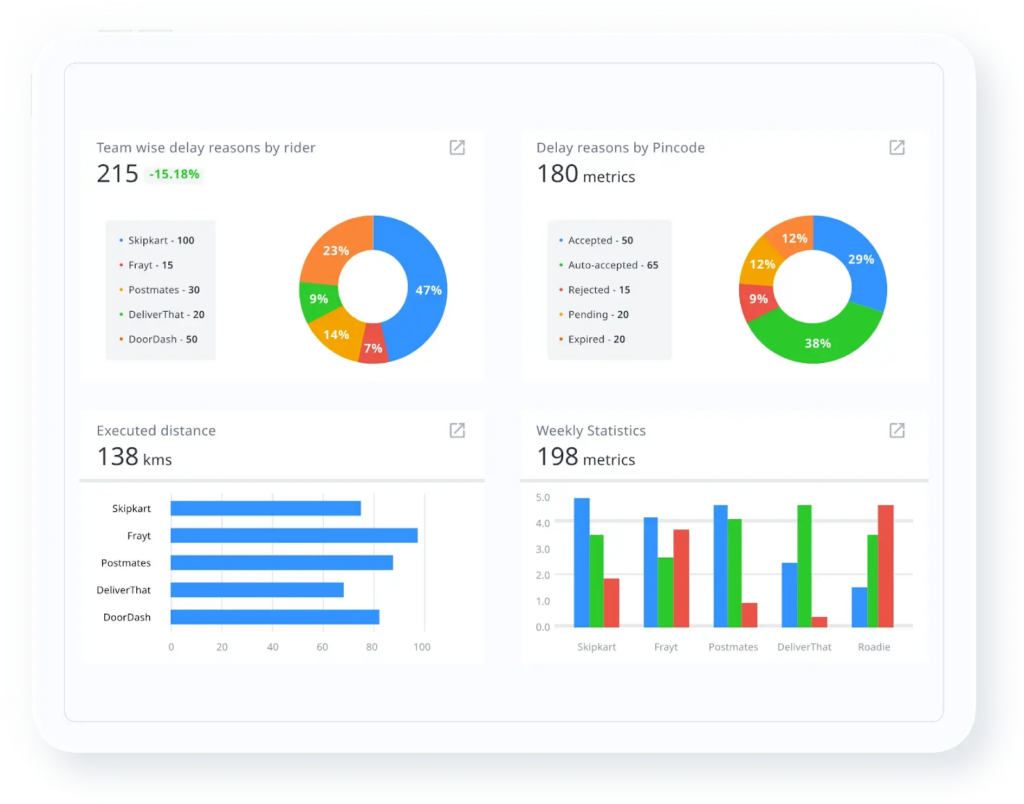
Autonomy is governed, not blanket. Locus applies six governance mechanisms, Explainability, Traceability, Evaluation, Autonomy Levels, an Execution Sandbox, and Human-in-the-Loop oversight, so operations can dial up automation safely and audit every decision. As an enterprise TMS, Locus is designed to sit within the enterprise systems landscape, integrating with ERP, WMS, and order management systems, and it orchestrates a network of 1,000+ pre-integrated carriers.
The scale behind it is substantial: 1.5B+ deliveries optimized for 360+ enterprise customers across 30+ countries, at 99.99% uptime. Its capabilities are independently recognized: Locus ranks number one for Route Planning on G2, appears in the 2026 Gartner Hype Cycle, features as a Representative Vendor in the 2026 Gartner MCPMS Market Guide, and holds a Leader position in the QKS SPARK Matrix for Transportation Management Systems, part of seven consecutive years of Gartner recognition. In one anonymized deployment, a Fortune 50 enterprise running 4,500+ drivers lifted its delivery execution rate from 75% to 92% through continuous, constraint-aware re-optimization, an improvement worth more than $14M in annualized operational opportunity.
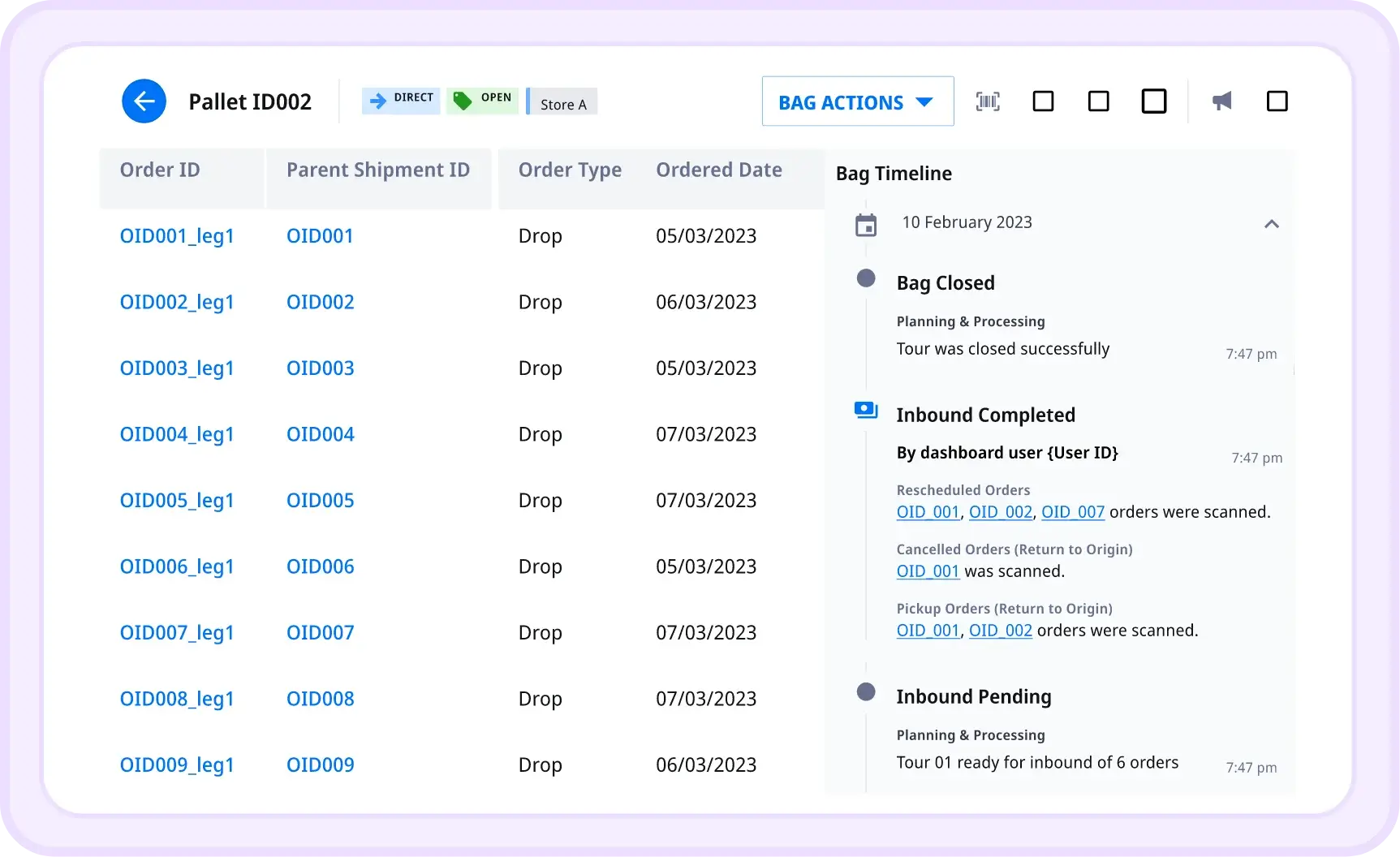
Locus is enterprise-grade by design. For a small or operationally simple delivery business, that depth may be more than the operation requires. For complex, high-volume, multi-constraint dispatch that must integrate with enterprise systems, it is the most architecturally advanced of the four.
Also Read: Locus vs Onfleet: Choosing the Right Delivery Management Platform
Shipsy
Shipsy is positioned as an end-to-end logistics management platform, spanning first, middle, and last-mile logistics, freight procurement, and international shipping, with a notable presence in emerging and cross-border markets. It is generally aimed at enterprises that want a broad logistics management suite rather than a single-purpose dispatch tool.
Its signature strength is breadth. For organizations managing multiple logistics modes, including cross-border and freight alongside last-mile dispatch, a wide suite can consolidate several tools into one platform.
The trade-off a buyer should weigh is suite breadth against decisioning depth for their core dispatch use case. A platform that covers many logistics functions is valuable, but for the specific job of autonomous, constraint-heavy dispatch, the question is how deep the AI-driven decisioning goes. Evaluate Shipsy’s dispatch capabilities against your specific volume and complexity, and confirm its current ERP and WMS integration options and pricing with the vendor.
Onfleet
Onfleet is positioned as a last-mile delivery and dispatch management platform known for ease of use, fast deployment, a well-regarded driver app, and built-in customer notifications. It is popular with SMB to mid-market delivery operations that want organized dispatch running quickly without heavy implementation.
Its signature strength is simplicity and speed to value. For smaller or less complex operations, Onfleet delivers clean, effective dispatch and a good driver and customer experience with minimal overhead.
Onfleet is generally regarded as lighter-weight than enterprise TMS platforms, which is a feature for its target market and a limit for others. Operations that need deep multi-constraint optimization, autonomous re-optimization across large mixed fleets, or tight ERP and WMS integration typically outgrow simpler dispatch tools as they scale. For its intended SMB to mid-market segment, though, Onfleet is a strong, pragmatic choice. Confirm current integration options and pricing with the vendor.
Also Read: Locus vs. Competitors: Which Platform Handles Enterprise Rider Dispatch Best?
Which Dispatch Management Platform Should You Choose?
The right answer depends on your scale, complexity, and how much of the dispatch decision you want the software to own.
Choose Locus if you run complex, high-volume enterprise dispatch that must integrate with ERP and WMS, optimize against many real-world constraints, and coordinate mixed fleets and carriers. Its agentic architecture, autonomous re-optimization, and independent recognition make it the strongest fit for operations that want the platform to decide and act, not just display options.
Choose FarEye if your priority is enterprise last-mile delivery orchestration and a polished, visible customer delivery experience across high volumes.
Choose Shipsy if you need a broad, end-to-end logistics suite spanning freight, cross-border, and last-mile in one platform, particularly in emerging or international markets.
Choose Onfleet if you are an SMB or mid-market operation that wants clean, easy dispatch running quickly, without the depth or cost of an enterprise TMS.
For the specific need of an AI-driven dispatch management platform with deep ERP and WMS integration at enterprise scale, Locus is the reference point the others are measured against. Confirm each vendor’s current integrations and pricing before you commit.
Learn more at locus.sh.
Frequently Asked Questions (FAQs)
What is a dispatch management platform?
A dispatch management platform is software that assigns deliveries or jobs to drivers and vehicles, sequences the stops, and adapts the plan as conditions change during the day. In enterprise use it integrates with ERP, WMS, and order management systems so dispatch decisions run on accurate, real-time inventory, order, and commitment data.
Which is the best dispatch management platform in 2026?
It depends on scale and complexity. For enterprise operations needing autonomous, AI-driven dispatch with deep ERP and WMS integration, Locus, the world’s first agentic TMS, is the strongest of the four compared here. FarEye suits enterprise last-mile delivery experience, Shipsy suits broad end-to-end logistics, and Onfleet suits SMB to mid-market delivery.
Why does ERP and WMS integration matter for dispatch software?
Dispatch quality depends on data quality. Integrating with ERP and WMS gives the dispatch platform accurate, real-time visibility of inventory, orders, and fulfillment status, so it assigns and re-optimizes routes against reality rather than a stale snapshot. Weak integration produces plans that look optimal but break on execution.
What makes Locus different from FarEye, Shipsy, and Onfleet?
Locus is built as an agentic system rather than a rule-based tool with AI features. It runs eight specialized AI agents through a Sense-Decide-Execute-Learn loop, evaluates 250+ real-world constraints per dispatch decision, and re-optimizes autonomously across fleets and carriers within governed autonomy levels. That depth of automated decisioning is its core distinction.
Can dispatch software make decisions automatically?
Advanced platforms can, within guardrails. Locus applies graduated autonomy levels and human-in-the-loop governance, so routine dispatch and re-optimization decisions run automatically while high-impact ones surface for review, each with an explanation and audit trail. Lighter dispatch tools typically recommend or display options for a human dispatcher to action.
How do I choose a dispatch management platform for my business?
Match the platform to your complexity and scale. Assess AI and decisioning depth, autonomous re-optimization, constraint handling, multi-fleet and carrier orchestration, and ERP and WMS integration, then weight them by your needs. Enterprise, multi-constraint operations favor agentic platforms; smaller operations may prefer simpler, faster-to-deploy tools. Verify integrations and pricing with each vendor.


General
What Makes the Best Ecommerce Delivery Software in 2026: AI Agents, Governance Infrastructure, and Proven Enterprise Outcomes

Oct 15, 2026
The best ecommerce delivery software in 2026 is defined by AI agents, governance infrastructure, and proven enterprise outcomes. A category-defining guide for enterprise logistics leaders.
Read more
General
Why Locus is the World’s First Agentic TMS: Architecture, Recognition and Measured Results in 2026
Oct 15, 2026
The architecture, the third-party recognition and the measured deployment results behind Locus, the world's first Decision-Intelligent, Agentic TMS.
Read moreInsights Worth Your Time



















Best Dispatch Management Platform in 2026: FarEye vs Locus vs Shipsy vs Onfleet