


General
Top 12 Route Planning Software for Enterprise Teams (2026)
Key Takeaways
- Route planning software varies by capability, from basic stop sequencing tools to enterprise platforms that connect routing decisions with execution workflows across delivery operations.
- As delivery networks scale, route planning expands to include allocation across vehicles, coordination across depots, and alignment with delivery commitments and operational constraints.
- Many tools focus on specific layers such as navigation, route creation, or tracking, requiring additional systems to manage dispatch, carrier coordination, and execution workflows.
- Enterprise logistics operations benefit from platforms where route planning remains connected with dispatch, visibility, and execution, supporting consistency across planning and delivery.
- Locus connects route planning with dispatch and execution in a single system, enabling coordinated delivery operations with real-time visibility and scalable optimization.
At 8 AM, a fleet handling 2,000 daily deliveries encounters a road closure across a key delivery corridor. Routes were generated the previous night, drivers are already on the road, and the system continues to follow the original plan without adjusting to the new conditions.
As delays build, delivery windows begin to shift, driver schedules fall out of sync, and dispatch teams step in to realign routes and communicate updates. What starts as a single disruption quickly spreads across the day’s operations because route planning was completed before execution began, without a mechanism to adapt as conditions changed.
This is a common pattern in large delivery networks where route planning operates as a one-time step instead of an ongoing decision layer that evolves with live inputs.
Software for route planning today reflects this divide. Some platforms generate routes based on predefined inputs and hand them off for execution. Others extend into scheduling, tracking, and execution visibility while continuing to operate within a fixed planning cycle. A smaller group connects route planning with dispatch decisions and real-time updates, allowing routes to adjust as operational conditions change.
This list evaluates 12 route planning platforms across that spectrum, using strategic route planning as the lens to assess how each system performs under real operational conditions.
Top 12 Software for Route Planning – Compared
Routing software for deliveries in 2026 supports different levels of operational complexity. Some platforms are built for multi-depot delivery planning, carrier allocation, and real-time route adjustments, while others focus on route creation, scheduling, and driver-level execution.
Each platform fits a specific delivery setup, which makes it important to evaluate how routing decisions are handled across planning, dispatch, and execution before selecting a tool.
1. Locus
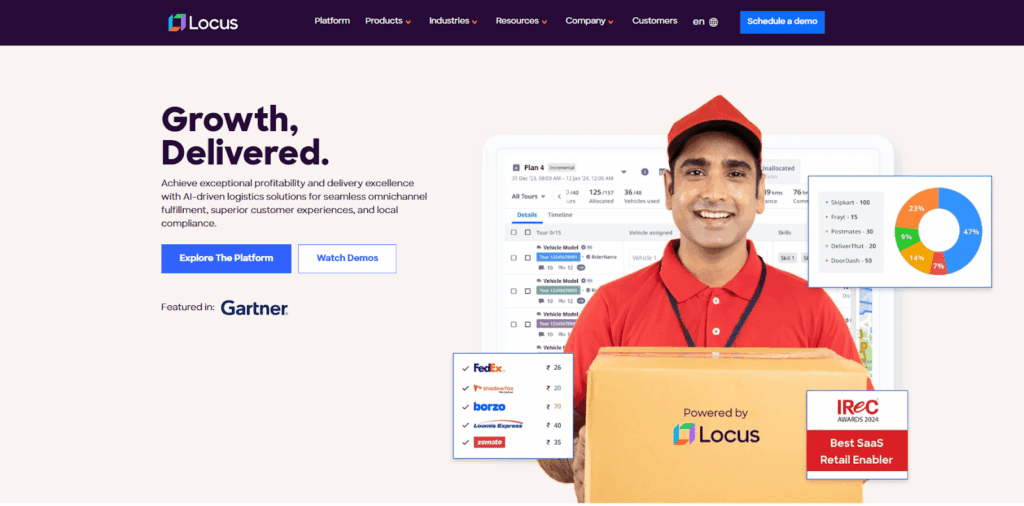
Locus is a route planning and logistics orchestration platform where route optimization operates as part of a larger system connecting planning, dispatch, and execution.
Its Fireworks routing engine plans against 250+ real-world constraints, including delivery time windows, vehicle capacity, driver shifts, hub throughput, road restrictions, and live traffic conditions, ensuring route plans reflect actual operating conditions.
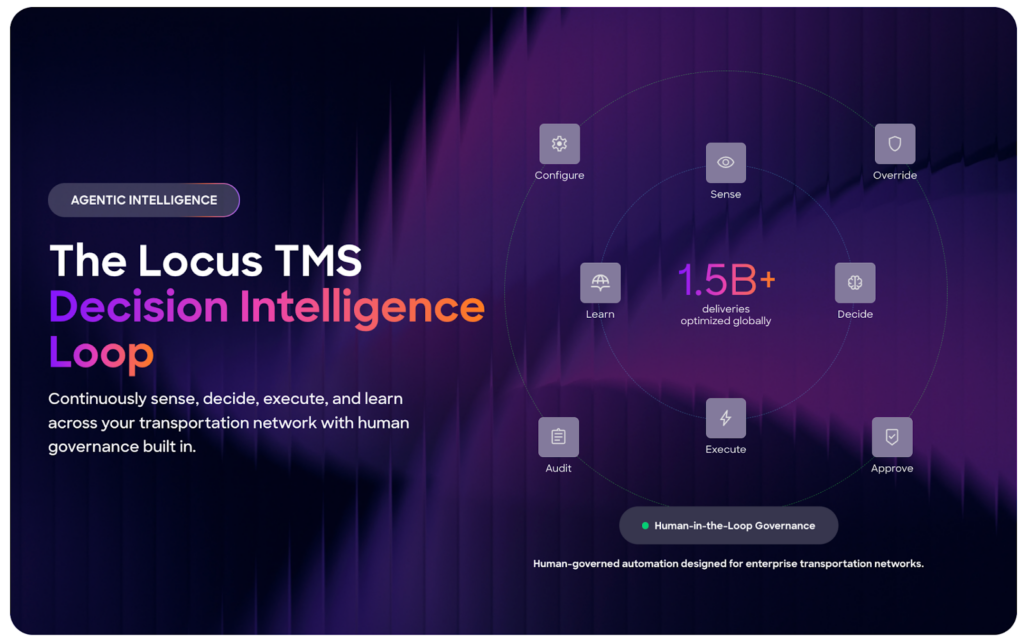
The platform applies a decision intelligence loop that evaluates route plans using live operational inputs, updates assignments during execution, and provides visibility into every routing and dispatch decision along with override controls.
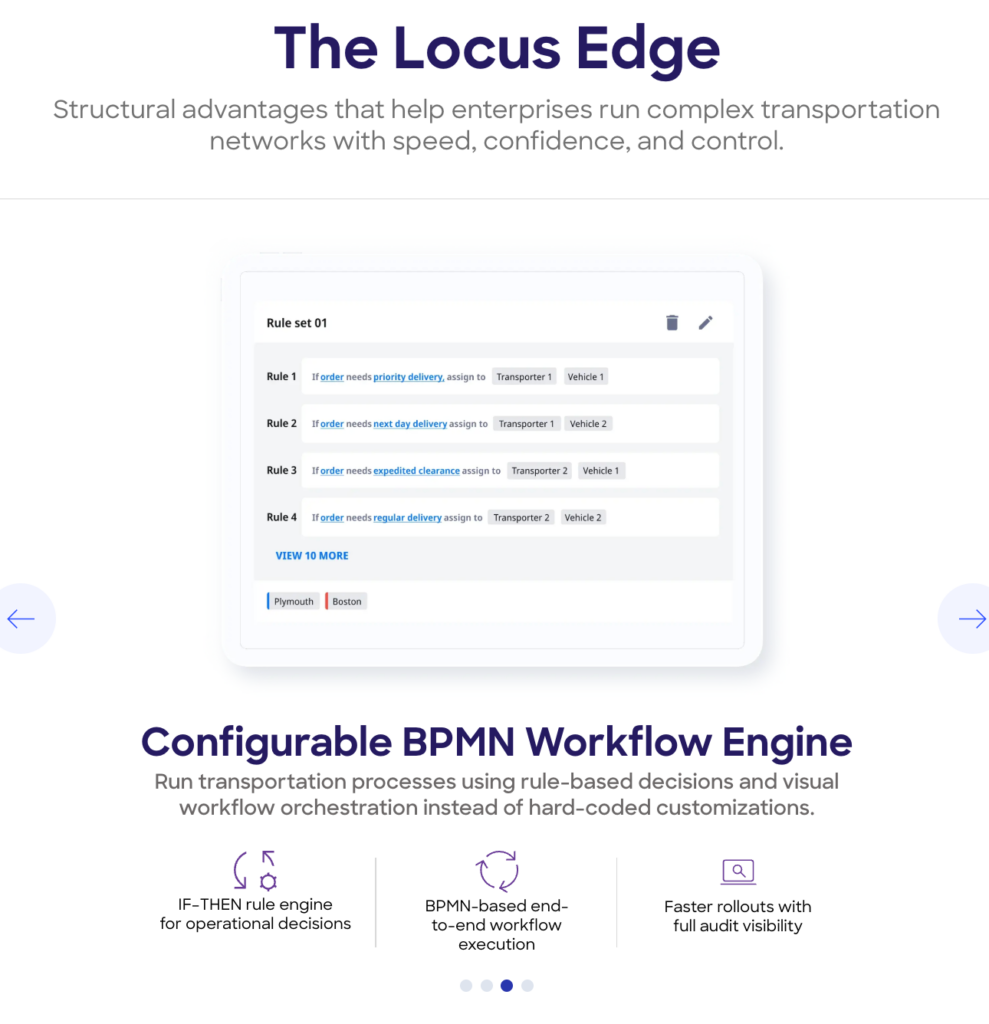
Alongside this, Locus includes a configurable BPMN workflow engine that allows operations teams to define routing rules, dispatch logic, and allocation workflows directly within the platform. This enables routing decisions to align with business priorities without requiring engineering changes.
Route planning decisions extend directly into carrier allocation. Locus integrates carrier selection within the routing workflow, assigning deliveries based on cost, service commitments, and capacity across a network of 1,000+ pre-integrated carriers. This ensures that route plans translate into executable assignments without manual coordination.
The platform has optimized over 1.5 billion deliveries across 30+ countries for more than 350 enterprise customers, delivering measurable improvements in cost efficiency, planning speed, and on-time performance across large-scale delivery operations.
Unilever achieved 99.5% on-time deliveries across Southeast Asia, Floranow improved on-time delivery from 70% to 99%, and BigBasket achieved 99.5% SLA adherence alongside a 34% reduction in distance traveled.
Locus also addresses address accuracy through its proprietary geocoding engine, converting incomplete or ambiguous addresses into precise coordinates. This improves route planning accuracy and reduces delivery failures, especially in regions where standardized addressing is limited
Key Features of Locus
- Fireworks Routing Engine With 250+ Constraints: Plans routes using delivery windows, vehicle capacity, driver shifts, hub throughput, and live traffic so routes remain practical during execution.
- Decision Intelligence Loop With Continuous Optimization: Evaluates and updates route plans using live operational inputs, ensuring routing decisions evolve during execution instead of remaining static.
- Configurable BPMN Workflow Engine: Allows teams to define routing and dispatch rules directly, aligning route planning decisions with business priorities without engineering dependencies.
- Automated Carrier Selection and Allocation: Assigns deliveries across fleets and 1,000+ carriers based on cost, capacity, and service requirements within the same routing workflow.
- Proprietary Geocoding Engine for Address Accuracy: Converts incomplete addresses into precise coordinates, improving route planning reliability and reducing failed deliveries in complex markets.
- Real-Time Control Tower Visibility: Provides live tracking, exception management, and routing visibility across operations, allowing teams to monitor and adjust execution as needed.
- AI Co-Pilot for Dispatch Decisions: Recommends next-best actions across routing and dispatch workflows, supporting faster and more informed operational decisions.
Locus Is Best For
Enterprises managing multi-depot, multi-fleet delivery operations where route planning decisions need to stay connected with dispatch, allocation, and execution.
Locus’s Pros
- Enables deep constraint-based route optimization, supporting complex delivery scenarios across multiple depots, fleets, and operational conditions
- Automates dispatch and order allocation, allowing routing decisions to flow directly into execution without manual intervention
- Provides real-time visibility and dynamic re-optimization, helping teams adjust plans continuously as conditions change
- Supports multi-depot and multi-carrier orchestration, enabling coordinated planning and execution across distributed delivery networks
- Integrates seamlessly with ERP, WMS, OMS, and TMS systems, ensuring routing decisions stay aligned across the entire logistics ecosystem
Locus’s Pricing
Locus follows a custom pricing model based on order volumes, operational complexity, and required modules. Pricing is scoped based on business requirements, and estimates are provided through direct consultation.
2. Route4Me
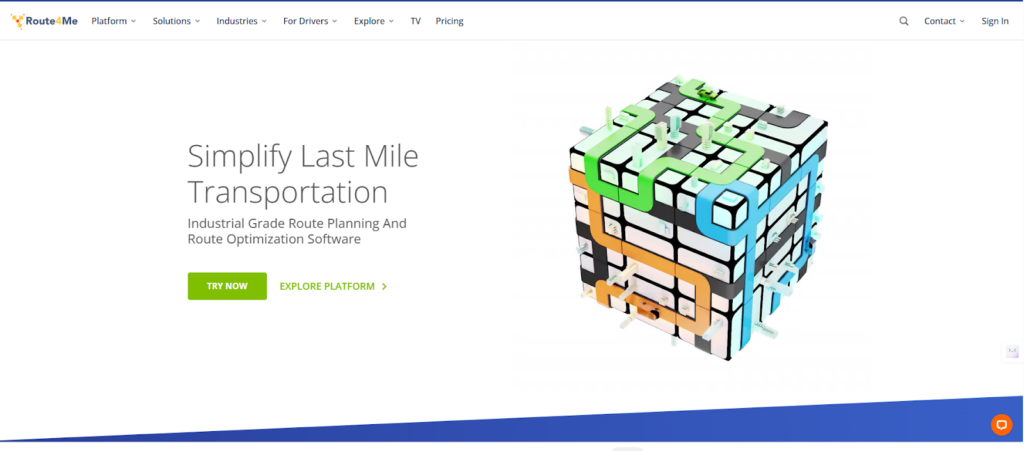
Route4Me is a widely used platform in route planning software, with adoption across small and mid-sized delivery operations. The platform has processed over 30 million optimized routes and analyzed more than 3 billion miles of delivery data, with reported cost reductions in the range of 20 to 30 percent based on published benchmarks.
Its core strength lies in multi-stop route planning where the primary requirement is efficient stop sequencing. Routes can be generated quickly, shared with drivers through the mobile application, and executed with tracking and proof of delivery. For teams operating from a single depot or within a defined service area, this workflow is simple to deploy and manage.
As operations grow, route planning begins to include decisions around how orders are distributed across vehicles, how capacity is utilized, and how delivery commitments are maintained. Route4Me focuses on route generation and execution, while allocation and dispatch workflows are typically handled alongside it.
Integration becomes relevant as routing decisions need to align with order systems, inventory flows, and execution platforms. Route4Me provides API access, allowing teams to connect it with existing systems and extend its use within broader delivery operations.
Route4Me fits route planning use cases where the priority is building and executing routes efficiently, particularly in operations that run within a single location or a limited delivery network.
Key Features of Route4Me
- Multi-Stop Route Planning and Optimization: Generates efficient delivery routes across multiple stops, helping teams sequence deliveries in a way that reduces travel time and improves route efficiency.
- Mobile Driver App With Turn-By-Turn Navigation: Provides drivers with route guidance, stop details, and navigation support, enabling smooth execution of planned routes in the field.
- GPS Tracking and Real-Time Visibility: Offers live driver location tracking, allowing teams to monitor route progress and stay informed about delivery status during execution.
- Proof of Delivery and Customer Notifications: Captures delivery confirmation through photos or signatures while keeping customers updated through notifications.
- Route History and Delivery Analytics: Maintains historical route data and performance insights, helping teams review delivery patterns and improve planning over time.
Route4Me Is Best For
Small-to-mid-sized delivery operations where routing primarily involves stop sequencing, driver navigation, and basic delivery tracking within a single depot or limited service area.
Route4Me’s Pros
- Enables fast multi-stop route planning, allowing teams to generate and execute routes quickly for daily delivery operations
- Provides a driver-friendly mobile app with navigation and proof of delivery, supporting smooth execution on the ground
- Offers real-time tracking and route visibility, helping teams monitor deliveries as they progress
- Supports quick setup and ease of use, making it accessible for teams managing routes without complex onboarding
Route4Me’s Cons
- Routing does not include automated order allocation across vehicles or depots
- Limited support for multi-depot or multi-carrier delivery networks
- Requires additional integration effort for enterprise system alignment
- Routing decisions remain separated from dispatch workflows
Route4Me’s Pricing
Route4Me offers subscription-based pricing starting from approximately $60 per vehicle per month. Enterprise pricing is available on request, and a free trial is offered for evaluation.
3. OptimoRoute
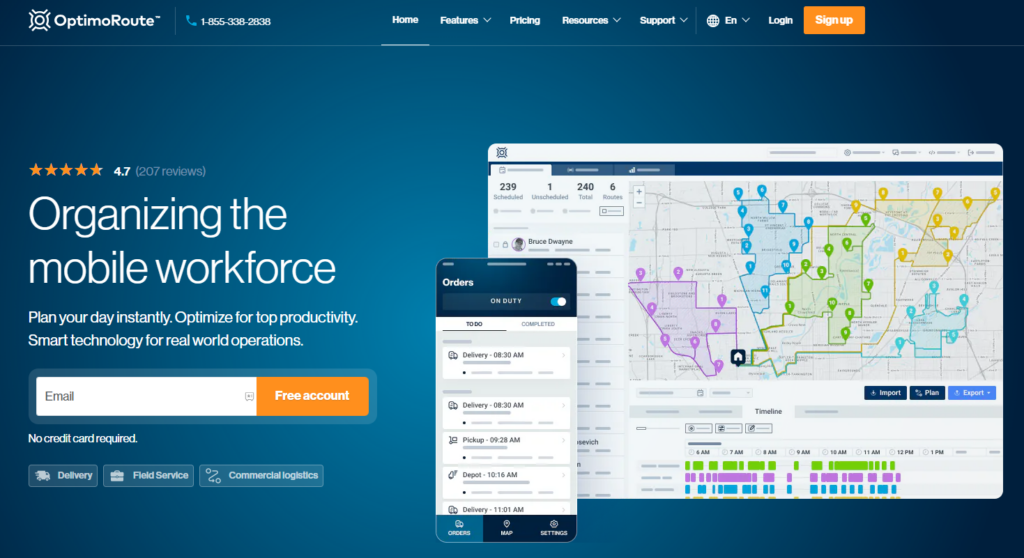
OptimoRoute is a route planning and scheduling platform designed for delivery operations that require structured multi-stop planning. It is widely used in the mid-market for building well-sequenced routes and managing delivery schedules across multiple days.
The platform brings route creation, driver assignment, and schedule planning into a single interface. It is particularly useful for operations that need to plan deliveries or service visits over multiple days, balance workload across drivers, and manage recurring schedules. Routes can be generated quickly, shared with drivers, and executed with tracking and proof of delivery.
As route planning requirements expand, decisions begin to include how orders are distributed across vehicles, how capacity is utilized across locations, and how plans adapt during execution. OptimoRoute supports route creation and scheduling, while allocation and coordination decisions are typically managed alongside it.
Real-time tracking is available, allowing teams to monitor delivery progress. Route updates during execution can be handled within the system, with adjustments made based on operational changes such as new orders or delays.
OptimoRoute fits route planning use cases where scheduling, workload balancing, and multi-day planning are key priorities. For operations that require routing decisions to connect with allocation, multi-depot coordination, and execution workflows, additional systems are often used alongside it.
Key Features of OptimoRoute
- Multi-Stop Route Optimization and Scheduling: Builds efficient delivery routes across multiple stops while integrating scheduling, allowing teams to plan and execute routes within a single workflow.
- Multi-Day Planning and Workload Balancing: Distributes jobs across multiple days and drivers, helping maintain balanced workloads and consistent service levels over time.
- Real-Time Driver Tracking And Order Visibility: Provides live tracking of drivers and deliveries, allowing teams to monitor execution and stay updated on route progress.
- Proof of Delivery with Photo and Signature Capture: Enables confirmation of completed deliveries, improving visibility and accountability across delivery operations.
OptimoRoute Is Best For
Mid-sized delivery and field service companies that need reliable multi-stop route optimization, multi-day scheduling, and workload balancing without the complexity requirements of enterprise dispatch orchestration or carrier management.
OptimoRoute’s Pros
- Supports route creation along with scheduling, allowing teams to plan deliveries across days while maintaining organized execution workflows.
- Distributes deliveries across drivers to maintain balanced workloads, improving route consistency and operational predictability.
- Offers a straightforward interface that enables teams to generate routes and start operations without extensive onboarding or configuration.
- Allows planning across multiple days, making it suitable for operations managing recurring deliveries or scheduled service visits.
OptimoRoute’s Cons
- Does not support automated dispatch orchestration, requiring manual order assignment across vehicles and routes
- Does not include AI-driven carrier assignment, limiting how routing decisions extend into execution
- Requires manual intervention for real-time rerouting, increasing coordination effort during live operations
- Lacks supply chain visibility and enterprise-grade integration depth, making it less suitable for high-volume, multi-depot logistics networks
OptimoRoute’s Pricing
OptimoRoute offers subscription-based pricing starting from approximately $35 per user per month, with higher tiers based on feature access. A free trial is available for evaluation.
4. FarEye
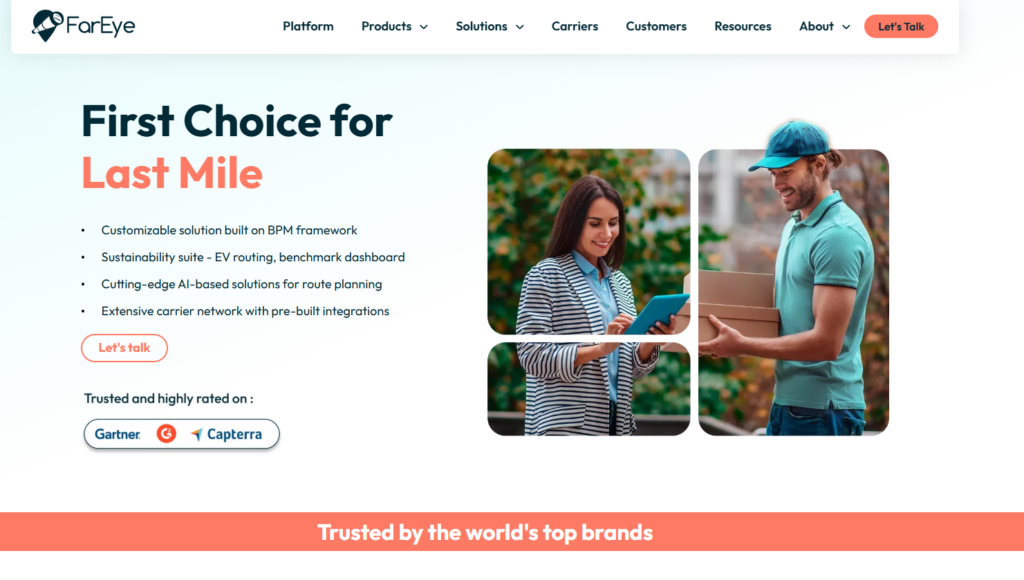
FarEye is a route planning and delivery management platform used by retail and e-commerce enterprises that prioritize delivery visibility and customer communication. It combines route planning with tracking, notifications, and execution visibility within a unified workflow.
The platform supports route creation along with real-time tracking and delivery updates. Routes can be planned and assigned to drivers, while customers receive branded tracking pages and notifications. This makes it particularly useful for operations where delivery experience and visibility are closely tied to route execution.
In route planning workflows, decisions often extend into how deliveries are grouped and executed across the day. FarEye includes planning capabilities alongside execution visibility, allowing teams to monitor delivery progress and manage updates as operations evolve.
Routing decisions in FarEye operate alongside customer communication and delivery tracking workflows. This keeps route plans connected with execution visibility, especially in operations handling large volumes of customer-facing deliveries.
FarEye fits route planning use cases where visibility, tracking, and customer communication are integrated with route execution, particularly in retail and e-commerce environments.
Key Features of FarEye
- Route Planning With Delivery Visibility: Supports route creation alongside real-time tracking, allowing teams to plan and monitor delivery execution within the same system.
- Branded Customer Tracking And Notifications: Provides customer-facing tracking pages and notifications, ensuring delivery updates remain consistent and visible throughout execution.
- Proof of Delivery and Driver App: Enables drivers to capture delivery confirmation and manage tasks through a mobile application designed for execution workflows.
- Delivery Experience Management: Connects route execution with customer communication, supporting operations that prioritize visibility and delivery experience.
FarEye Is Best For
Mid-to-large retail and e-commerce brands where the customer delivery experience is the primary focus and post-dispatch communication, visibility, and branded tracking are the core requirements.
FarEye’s Pros
- Provides strong delivery visibility with real-time tracking and branded notifications, helping teams keep customers informed throughout the delivery lifecycle
- Connects routing with execution visibility, allowing teams to monitor how planned routes perform during actual delivery operations
- Supports retail and e-commerce workflows where delivery experience and customer communication are closely tied to routing
- Offers a centralized control tower view that enables teams to track deliveries and manage operations across shipments
FarEye’s Cons
- Lacks deep constraint-based optimization required for complex, large-scale delivery planning
- Requires manual intervention in dispatch workflows, limiting automation in order assignment
- Does not fully support pre-dispatch intelligence, affecting planning quality before execution
- Does not provide complete carrier orchestration capabilities, requiring additional systems for full logistics coordination
FarEye’s Pricing
FarEye operates on a custom pricing model based on operational scope and requirements. Contact FarEye directly for a detailed quote.
5. LogiNext

LogiNext is a route planning and logistics platform that combines routing, fleet tracking, and delivery management across multiple operational modules. It is used by enterprises that want route planning to function alongside broader logistics workflows.
The platform supports route creation with real-time tracking and execution visibility. Routes can be generated based on operational inputs, assigned to drivers, and monitored through a centralized dashboard that provides visibility across delivery movements.
Route planning in LogiNext is part of a multi-stage logistics process. Along with routing, the platform includes modules for reverse logistics, delivery tracking, and operational analytics, allowing teams to manage different stages of delivery within a single system.
As routing requirements expand, decisions may include allocation across depots, alignment with inventory systems, and adjustments during execution. These workflows are managed within the broader system depending on how routing is configured and integrated.
LogiNext fits route planning use cases where routing is combined with tracking and multi-leg logistics visibility, particularly in operations spanning first mile, mid mile, and last mile.
Key Features of LogiNext
- Route Optimization Across Multiple Delivery Stages: Supports route planning across first mile, mid mile, and last mile operations, enabling visibility across different delivery stages.
- Real-Time Fleet Tracking and Visibility: Provides centralized tracking of vehicles and deliveries, helping teams monitor execution and stay updated on route progress.
- Reverse Logistics and Returns Management: Includes modules for managing returns and reverse flows, extending route planning into post-delivery workflows.
- Driver Application With Proof Of Delivery: Enables drivers to execute routes, capture delivery confirmation, and stay aligned with assigned delivery tasks.
LogiNext Is Best For
Enterprises looking for routing combined with tracking and multi-leg delivery visibility within a single platform, especially across first mile, mid mile, and last mile operations.
LogiNext’s Pros
- Supports route planning across multiple delivery stages, helping teams manage first mile, mid mile, and last mile operations within a single system
- Provides real-time fleet tracking and visibility, allowing teams to monitor delivery execution and stay updated on route progress
- Connects routing with broader logistics workflows, enabling coordination across delivery tracking, reverse logistics, and operational processes
- Offers integration capabilities that allow routing workflows to align with existing enterprise systems and logistics operations
LogiNext’s Cons
- Presents integration challenges within complex enterprise technology stacks, requiring additional effort to align systems
- Introduces UX complexity at scale, which can slow down dispatcher workflows during daily operations
- Provides route optimization with limited constraint depth compared to specialized optimization platforms
- Offers limited carrier orchestration capabilities, requiring additional systems for end-to-end logistics coordination
LogiNext’s Pricing
LogiNext operates on a custom pricing model based on operational scope and requirements. Contact LogiNext directly for a detailed quote.
6. Shipsy
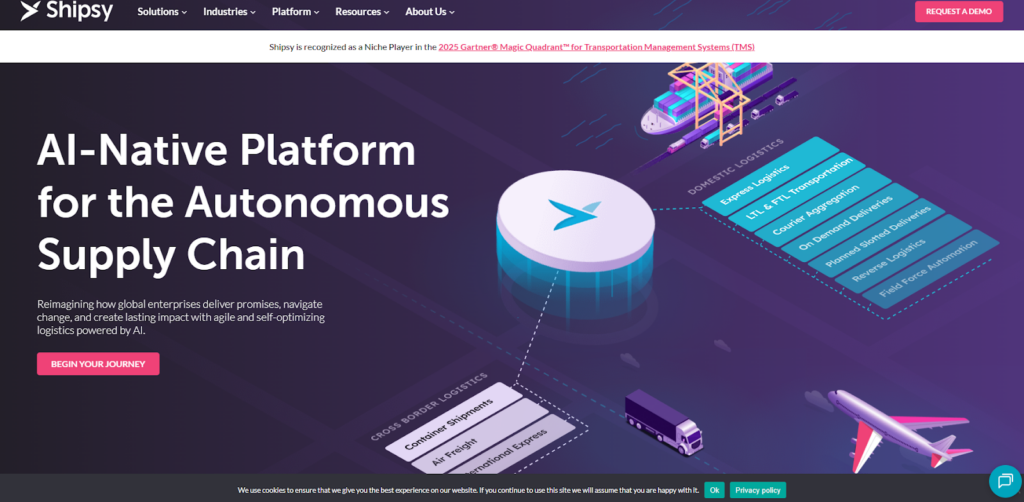
Shipsy is a route planning and logistics platform that combines routing with carrier management and freight visibility. It is commonly used in operations where route planning decisions are connected with carrier selection and shipment movement across regions.
The platform supports route creation along with shipment tracking and carrier coordination. Routes can be planned for deliveries while carrier selection and tracking provide visibility into how shipments move across different transport stages.
Route planning in Shipsy is closely tied to carrier workflows. Delivery assignments are aligned with carrier availability, performance, and shipment requirements, making routing part of a broader logistics process that includes freight movement and documentation.
As delivery operations scale, routing may include multi-depot planning, capacity balancing, and adjustments during execution. These workflows depend on how routing is configured within the platform and how it integrates with delivery systems.
Shipsy fits route planning use cases where routing is integrated with carrier management and freight workflows, especially in operations involving cross-border logistics.
Key Features of Shipsy
- Route Planning With Carrier Management Integration: Connects routing decisions with carrier selection, allowing deliveries to be aligned with carrier capacity and service requirements.
- Cross-Border Freight Visibility and Documentation: Supports international shipments with visibility into freight movement and documentation workflows.
- Carrier Performance Tracking and Selection: Provides insights into carrier performance, enabling better routing decisions across transport partners.
- Real-Time Shipment Tracking Across Operations: Tracks shipments across delivery stages, offering visibility into both domestic and international movement.
Shipsy Is Best For
Enterprises with significant cross-border freight and international shipping needs where carrier management across borders, customs documentation, and freight visibility are the primary operational challenges.
Shipsy’s Pros
- Connects route planning with carrier management, allowing teams to align delivery assignments with carrier availability and service requirements
- Supports cross-border logistics workflows, enabling visibility into shipment movement across regions and transport stages
- Provides carrier performance insights, helping teams make informed routing and allocation decisions across partners
- Tracks shipments in real time across delivery operations, offering visibility into both domestic and international movements
Shipsy’s Cons
- Offers last-mile capabilities that are less established for high-volume enterprise delivery operations
- Provides limited constraint-based route optimization for complex multi-depot and multi-carrier planning
- Does not deliver automated dispatch at the depth required for large-scale last-mile execution
- Fits cross-border logistics well, but requires stronger capabilities for domestic last-mile orchestration at enterprise scale
Shipsy’s Pricing
Shipsy operates on a custom pricing model based on shipment volume and operational scope. Contact Shipsy directly for a detailed quote.
7. Sygic
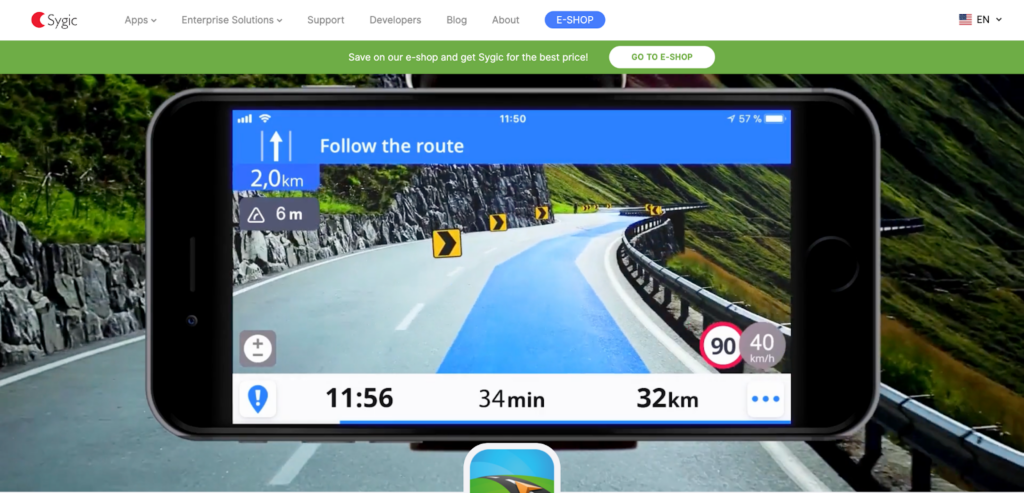
Sygic is a fleet navigation and routing tool used by more than 3,000 fleets and 4 million drivers globally. Its core strength lies in truck-legal turn-by-turn navigation, making it a reliable choice for commercial vehicle operators managing compliance across different road networks.
The platform generates navigation routes that account for vehicle dimensions, weight restrictions, bridge heights, and road access limitations. This ensures drivers follow routes that are aligned with regulatory requirements and vehicle constraints, which is critical for trucking and heavy vehicle operations.
Sygic also supports offline navigation, allowing drivers to operate in areas with limited or unreliable connectivity. Real-time traffic updates and route recalculations further help drivers adjust navigation as conditions change on the road.
Within route planning workflows, Sygic operates as the execution layer used by drivers to follow routes that have already been created. It complements route planning systems by ensuring that navigation aligns with vehicle restrictions and road conditions.
Sygic fits use cases where accurate, compliant navigation is essential, particularly for fleets operating across regions with varying road regulations and infrastructure conditions.
Key Features of Sygic
- Truck-Legal Turn-By-Turn Navigation: Generates navigation routes based on vehicle dimensions, weight restrictions, and road limitations, ensuring compliance with regional regulations.
- Offline Navigation Support: Allows drivers to access routes and navigation without internet connectivity, supporting operations in remote or low-signal areas.
- Real-Time Traffic Updates And Route Recalculation: Adjusts navigation routes based on live traffic conditions, helping drivers stay aligned with current road situations.
- Compliance Tools for Fleet Operations: Supports adherence to regional road rules and vehicle restrictions, reducing risk for commercial vehicle operations.
- Driver-Focused Mobile Application: Provides an intuitive interface for drivers, enabling easy navigation and quick adoption across fleet teams.
Sygic Is Best For
Fleets that need reliable truck-legal navigation with compliance tools and offline capability, particularly where driver-facing navigation accuracy and road restriction adherence are the primary requirements.
Sygic’s Pros
- Provides truck-legal navigation using vehicle dimensions, weight limits, and road restrictions, helping drivers follow compliant routes
- Supports offline navigation, allowing uninterrupted routing in areas with limited connectivity
- Delivers real-time traffic updates and route recalculations, helping drivers adapt during execution
- Offers a driver-focused mobile interface, enabling quick adoption and consistent navigation across fleets
- Integrates with fleet systems for navigation support, helping extend routing plans into on-road execution
Sygic’s Cons
- Does not support route optimization, focusing only on navigation after routes are already planned
- Does not handle order assignment or dispatch workflows within delivery operations
- Does not include carrier management capabilities for multi-carrier logistics networks
- Lacks operational visibility across the delivery network beyond driver navigation
- Cannot replace planning or orchestration systems required for enterprise logistics execution
Sygic’s Pricing
Sygic offers fleet pricing on a quote basis. Contact Sygic directly for pricing based on your fleet size and navigation requirements.
8. Routific
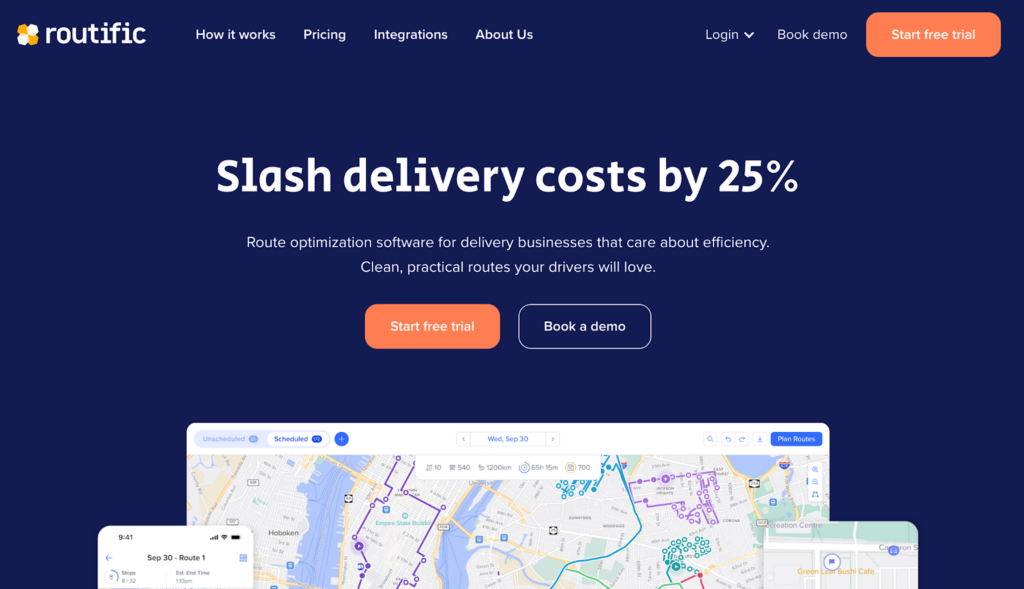
Routific is a route planning tool designed for small delivery operations that need simple multi-stop planning with minimal setup. Its drag-and-drop interface and quick onboarding make it accessible for teams managing local deliveries within a limited service area.
The platform supports route creation, stop sequencing, and driver scheduling within a clean interface. Routes can be generated quickly, shared with drivers, and executed with basic tracking and customer notifications. For teams new to route planning software, this simplicity allows for fast adoption.
Routific focuses on building and executing daily delivery routes. As routing requirements expand to include allocation across fleets, coordination across locations, or adjustments during execution, these workflows are typically managed alongside the platform.
Delivery tracking and notifications provide visibility into route execution, helping teams monitor progress and communicate with customers. For operations with straightforward delivery needs, this creates a simple and effective routing workflow.
Routific fits route planning use cases where ease of use, quick setup, and driver-friendly execution are the primary priorities, especially for smaller delivery teams.
Key Features of Routific
- Drag-And-Drop Route Planning and Stop Sequencing: Allows teams to quickly create delivery routes by organizing stops visually, making route planning simple and intuitive.
- Driver Scheduling and Shift Management: Supports assigning routes and managing driver schedules, helping teams coordinate daily delivery operations.
- Customer Notifications and Delivery Updates: Provides SMS updates and estimated arrival times, improving communication with customers during deliveries.
- Mobile Driver Application With Route Guidance: Enables drivers to follow assigned routes with navigation support and delivery details.
- Delivery Tracking and Basic Reporting: Offers visibility into delivery progress and performance, helping teams review operations and improve planning.
Routific Is Best For
Small local delivery operations with basic multi-stop planning needs, where simplicity of setup and ease of use matter more than optimization depth, dispatch automation, or enterprise integration capability.
Routific’s Pros
- Enables quick route creation through a drag-and-drop interface, making route planning simple and easy to adopt for small teams
- Supports driver scheduling and daily route execution, helping teams organize delivery operations with minimal setup
- Provides customer notifications with estimated arrival times, improving communication during deliveries
- Offers a lightweight mobile app for drivers, allowing them to follow routes and manage deliveries efficiently
Routific’s Cons
- Does not include automated dispatch or carrier management capabilities within the routing workflow
- Lacks integration depth with enterprise ERP, WMS, and TMS systems, requiring additional effort for system alignment
- Shows limited evidence of performance at higher delivery volumes, making scalability beyond smaller operations uncertain
- Reaches operational limits quickly as delivery volumes and network complexity increase
Routific’s Pricing
Routific offers subscription-based pricing with plans listed on their website. Contact Routific directly for details on enterprise pricing if applicable to your requirements.
9. RouteXL
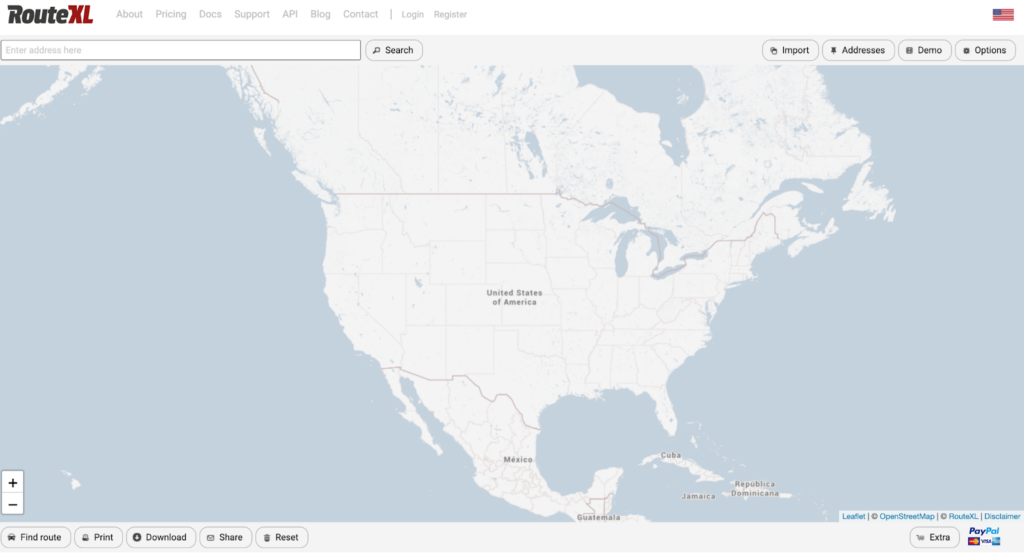
RouteXL is a web-based route planning tool designed for simple multi-stop route optimization. It is commonly used by individuals and small delivery operations that need a quick way to sequence stops without setting up a full routing system.
The platform allows users to input addresses and generate an optimized route based on distance and travel time. Its free tier supports up to 20 stops, making it accessible for small-scale use cases such as local deliveries or personal route planning.
RouteXL focuses on single-route optimization without additional layers such as driver assignment, tracking, or execution workflows. Routes are created and exported, with execution handled outside the platform.
RouteXL fits route planning use cases where the requirement is to generate a single optimized route quickly, without the need for fleet coordination or delivery management features.
Key Features of RouteXL
- Multi-Stop Route Optimization (Up To 20 Stops Free Tier): Allows users to generate optimized routes for multiple stops, making it suitable for small delivery runs or individual use.
- Web-Based Interface With No Setup Required: Provides immediate access through a browser, enabling quick route creation without onboarding or installation.
- Route Export and Sharing Capabilities: Enables users to export routes or share them with drivers for execution outside the platform.
- Simple and Lightweight Planning Workflow: Focuses on basic route sequencing, making it easy to use for non-technical users or small teams.
RouteXL Is Best For
Freelance couriers, micro-businesses, and individuals who need quick multi-stop route planning without fleet-level coordination.
RouteXL’s Pros
- Enables quick multi-stop route generation, allowing users to plan routes instantly without setup or configuration
- Provides a simple web-based interface, making it easy to use for individuals and small teams with minimal technical effort
- Supports basic route optimization for small delivery runs, helping improve efficiency for limited stop counts
- Allows route export and sharing, enabling users to pass routes to drivers for execution through external tools
RouteXL’s Cons
- Route planning is limited to single-route optimization
- No support for driver assignment or dispatch workflows
- Real-time updates and tracking are not part of the platform
- Integration with logistics systems is not supported
RouteXL’s Pricing
RouteXL offers a free tier for up to 20 stops. Paid plans are available for higher stop limits and extended usage.
10. Google Maps
Google Maps is one of the most widely used navigation tools, offering basic multi-stop route planning alongside real-time traffic data. It is commonly used for personal trips and small delivery runs where ease of access and familiarity are key.
The platform allows users to add multiple stops and generate a route with real-time traffic considerations. Its global coverage and continuously updated map data make it reliable for navigation across different regions.
Route planning in Google Maps is manual in nature, with users arranging stops and adjusting routes based on their requirements. It does not include delivery-specific constraints such as capacity, time windows, or fleet coordination.
Google Maps fits route planning use cases where navigation and quick route setup are the primary needs, especially for individuals or small teams managing a limited number of stops.
Key Features of Google Maps
- Multi-Stop Route Planning (Up To 10 Stops): Allows users to create routes with multiple stops, suitable for small delivery runs or personal trip planning.
- Real-Time Traffic Data and Route Adjustments: Provides live traffic updates and alternate routes, helping users adapt to changing road conditions.
- Global Map Coverage and Navigation Accuracy: Offers reliable navigation across regions with continuously updated map data.
- Free and Widely Accessible Platform: Requires no setup or subscription, making it easily accessible for all users.
Google Maps Is Best For
Individuals and small delivery operations managing fewer than 10 stops, where navigation and ease of use are the primary priorities.
Google Maps’ Pros
- Provides real-time traffic data and navigation, helping drivers adjust routes based on live road conditions
- Supports multi-stop route planning for small trips, allowing users to map simple delivery or travel sequences easily
- Offers widespread accessibility across devices, enabling drivers to use navigation without additional setup
- Delivers familiar and intuitive navigation experience, allowing quick adoption with minimal training
Google Maps’ Cons
- Route sequencing requires manual arrangement
- Delivery constraints such as capacity or time windows are not supported
- No fleet management or dispatch capabilities
- No delivery analytics or operational visibility
Google Maps’ Pricing
Google Maps is free to use for navigation and route planning. Pricing applies only to API usage for developers.
11. MyRouteOnline
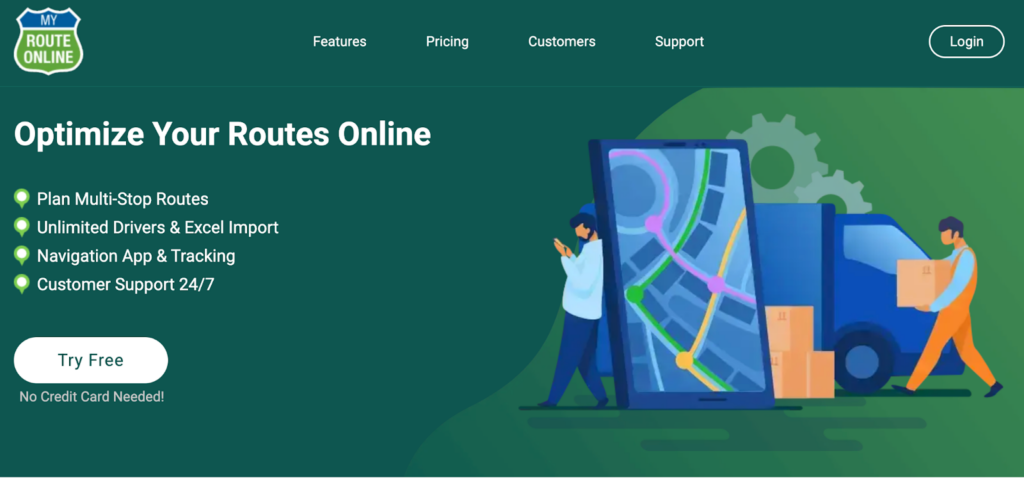
MyRoute is a route planning tool designed for delivery teams that need to generate routes with a high number of stops. It supports batch uploads and route creation for up to 350 stops, making it suitable for operations handling dense delivery schedules.
The platform allows users to upload delivery data, generate optimized routes, and export them to GPS devices or navigation tools. This makes it useful for teams that rely on external navigation systems for execution.
Route planning in MyRouteOnline focuses on generating static routes based on input data. Routes are created and distributed, with execution managed outside the platform.
MyRoute fits route planning use cases where high stop-count route generation is required, particularly for teams managing large daily delivery volumes within a defined area.
Key Features of MyRouteOnline
- High Stop-Count Route Planning (Up To 350 Stops): Supports large delivery batches, enabling route creation for dense delivery operations.
- Batch Upload And Data Import: Allows users to upload delivery data in bulk, simplifying route generation for large datasets.
- Export To GPS And Navigation Tools: Enables routes to be shared with drivers through external navigation systems.
- Simple Interface For Route Creation: Provides a straightforward workflow for generating and distributing routes.
MyRouteOnline Is Best For
Delivery teams that need high stop-count route generation with simple workflows and external navigation support.
MyRouteOnline’s Pros
- Supports high stop-count route planning, allowing teams to generate routes with large delivery volumes in a single run
- Enables batch upload of orders, helping teams quickly convert delivery lists into executable routes
- Provides route export to GPS devices and navigation apps, allowing drivers to follow planned routes easily
- Offers a straightforward interface for route generation, making it usable for teams managing daily delivery planning
MyRouteOnline’s Cons
- Route plans are static and require manual updates
- Real-time tracking and rerouting are not part of the platform
- Dispatch and allocation workflows are handled externally
- Integration with enterprise systems is limited
MyRouteOnline’s Pricing
MyRouteOnline offers subscription-based pricing with plans based on usage and route volume. Contact MyRouteOnline for detailed pricing.
12. NextBillion.ai
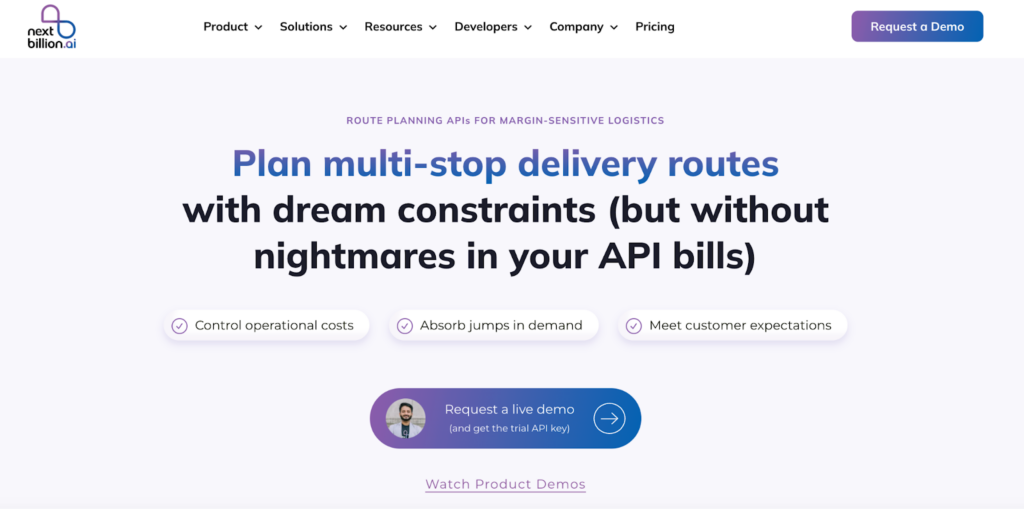
NextBillion.ai is a developer-focused route planning platform that provides APIs and SDKs for building custom routing and mapping solutions. It is used by technology teams that want to embed route optimization capabilities directly into their own logistics systems.
The platform supports route optimization with more than 50 configurable constraints, allowing teams to define routing logic based on delivery requirements, vehicle characteristics, and operational rules. It also offers custom map data capabilities, which can be useful for businesses operating in regions where standard mapping solutions may not provide sufficient coverage or accuracy.
Route planning in NextBillion.ai is designed to be integrated into existing systems rather than used as a standalone tool. Teams can build routing workflows that align with their internal processes, combining optimization logic with proprietary data and business rules.
Since the platform operates as an API layer, route planning workflows depend on how it is implemented. Execution, dispatch, and visibility layers are typically built or managed separately, allowing teams to design systems that fit their operational requirements.
NextBillion.ai fits route planning use cases where flexibility and customization are priorities, particularly for organizations building their own logistics platforms or extending existing systems with routing capabilities.
Key Features of NextBillion.ai
- Route Optimization APIs With Configurable Constraints: Supports 50+ dynamic constraints, allowing teams to define routing logic based on delivery requirements and operational rules.
- Custom Map Data and Geospatial Capabilities: Enables the use of proprietary or enhanced map data, improving routing accuracy in specific regions or use cases.
- Developer SDKs and Integration Flexibility: Provides tools for integrating routing capabilities into existing systems, supporting custom workflows and applications.
- Scalable Infrastructure for High-Volume Routing: Designed to handle large-scale routing requests, making it suitable for enterprise-grade implementations.
NextBillion.ai Is Best For
Tech-forward enterprises that want to build custom route planning capabilities into their own logistics systems using APIs and developer tools.
NextBillion.ai’s Pros
- Provides a flexible route optimization API, allowing teams to build custom routing logic directly into their logistics systems
- Supports dynamic constraint configuration, enabling developers to define routing rules based on specific operational requirements
- Offers custom map data and geospatial capabilities, helping teams tailor routing to unique regions or use cases
- Enables scalable integration within existing tech stacks, allowing engineering teams to extend routing capabilities across applications
NextBillion.ai’s Cons
- Requires engineering resources to design and implement routing workflows
- Dispatch, visibility, and execution layers are managed separately
- Not a ready-to-use platform for operations teams
- Workflow setup depends on internal system architecture
NextBillion.ai’s Pricing
NextBillion.ai offers usage-based pricing depending on API calls and implementation scope. Contact NextBillion.ai for detailed pricing based on requirements.
Route Planning Software Comparison by Capability Tier
Choosing the right fleet routing software comes down to understanding which category of platform your operation actually needs. The tools in this list fall into three distinct tiers based on their capability depth, the complexity they were built to handle, and the scale at which they perform reliably.
Use the breakdowns below to identify where each platform fits before committing to a shortlist or a demo.
Enterprise / Platform Layer
| Tool | Best For | Constraint Depth | Dispatch Management | Real-Time Visibility | Multi-Depot / Multi-Fleet | Enterprise Scalability |
|---|---|---|---|---|---|---|
| Locus | Large-scale retail, FMCG, 3PL, e-commerce operations | Advanced (250+ constraints) | Yes | Yes | Yes | High |
| FarEye | Retail and e-commerce delivery experience management | Moderate | Partial | Yes | Partial | Medium |
| LogiNext | Multi-stage logistics and fleet tracking | Moderate | Partial | Yes | Yes | Medium |
| Shipsy | Cross-border logistics and carrier workflows | Moderate | Partial | Yes | Partial | Medium |
Mid-Market Routing
| Tool | Best For | Constraint Depth | Dispatch Management | Real-Time Visibility | Multi-Depot Support | Scalability |
|---|---|---|---|---|---|---|
| Route4Me | Multi-stop route planning for delivery teams | Limited | No | Yes | No | Low |
| OptimoRoute | Multi-day scheduling and workload balancing | Limited | No | Yes | Partial | Low |
| Routific | Simple route planning for local deliveries | Limited | No | Basic | No | Low |
SMB / Tools / Utilities
| Tool | Best For | Constraint Depth | Dispatch Management | Real-Time Visibility | Multi-Depot Support | Scalability |
|---|---|---|---|---|---|---|
| RouteXL | Basic multi-stop route generation | Basic | No | No | No | Low |
| Google Maps | Personal routing and navigation | Manual | No | Yes | No | Low |
| MyRouteOnline | High stop-count route planning | Basic | No | No | No | Low |
Specialized / Dev Layer
| Tool | Best For | Constraint Depth | Dispatch Management | Real-Time Visibility | Multi-Depot Support | Scalability |
|---|---|---|---|---|---|---|
| NextBillion.ai | Custom routing systems built via APIs | High (configurable) | External | External | Configurable | High |
Niche
| Tool | Best For | Constraint Depth | Dispatch Management | Real-Time Visibility | Multi-Depot Support | Scalability |
|---|---|---|---|---|---|---|
| Sygic | Truck-legal navigation and compliance routing | Navigation-focused | No | Yes | No | Medium |
Each category serves a different operational need. Enterprise platforms connect planning with execution, mid-market tools focus on route creation, and utility tools support basic routing or navigation workflows.
From Route Planning to Coordinated Execution
Built for real-world logistics and backed by Ingka Group, Locus brings long-term stability to enterprise route planning and execution. Its modular, API-first platform allows organizations to evolve workflows across planning, dispatch, carrier management, and analytics without reworking core systems, supporting continuous optimization as delivery networks expand.
With six consecutive years of recognition from Gartner, adoption by 360+ brands across 30+ countries, and measurable impact on cost savings, sustainability, and delivery scale, Locus combines operational maturity with enterprise-grade reliability. This allows logistics teams to standardize route planning and execution across business units while adapting to new service models, partners, and regional requirements.
For organizations that view route planning as a core operational capability, Locus provides the depth and system continuity needed to support growth at scale.
Schedule a demo with Locus to see how route planning connects with execution in a unified platform.
Frequently Asked Questions (FAQs)
1. How is route planning software different from navigation tools?
Route planning software builds optimized delivery plans across multiple stops, vehicles, and constraints. Navigation tools focus on guiding drivers along a predefined route rather than creating or optimizing that plan.
2. Can route planning software handle multi-depot operations?
Some platforms support multi-depot planning by assigning orders based on capacity, proximity, and operational constraints. This allows delivery networks to coordinate planning across locations instead of treating each depot separately.
3. What role does real-time data play in route planning?
Real-time data allows routes to adjust based on traffic, order changes, and driver availability. This helps keep delivery plans aligned with actual conditions during execution rather than relying only on static plans.
4. Does route planning software replace dispatch systems?
In some platforms, routing and dispatch operate together within a single workflow. In others, routing outputs are passed into separate dispatch systems, depending on how the logistics stack is structured.
5. How do enterprises scale route planning across regions?
Enterprises scale by standardizing planning logic while adapting for regional constraints. Platforms like Locus support this by combining routing, dispatch, and execution within a connected system for consistent global operations.


General
Routing Software for Deliveries: Enterprise Buyer’s Guide (2026)

Mar 31, 2026
Routing software for deliveries: A comparison of 9 platforms across enterprise, mid-market, and SMBs. Explore features, scalability, and best-fit use cases.
Read more
General
10 Best Route Tracking Software for Enterprise Logistics Teams in 2026
Mar 31, 2026
Compare 10 route tracking software for enterprise logistics. Feature breakdowns, pricing, ratings, and use-case fit for retail, 3PL, and FMCG fleets.
Read moreInsights Worth Your Time




















Top 12 Route Planning Software for Enterprise Teams (2026)