


CEP and 3PL
What is Omnichannel 3PL? Benefits & Key Aspects Explained
Key Takeaways
- Omnichannel third-party logistics unifies inventory, fulfillment, and last-mile delivery to reduce costs and improve customer experience.
- Outsourced 3PLs provide scalability, flexible fulfillment options, and analytics that help enterprises handle seasonal spikes and complex networks.
- Strong omnichannel strategies improve customer retention, with nearly 90% of shoppers staying loyal to retailers offering multiple fulfillment choices.
- AI-driven logistics platforms like Locus add automation, visibility, and smarter routing to help 3PLs scale efficiently and meet service goals.
When retailers miss promised delivery windows, customer confidence erodes quickly, often leading to lost sales and churn. Disconnected inventory systems across warehouses, dark stores, and storefronts cause inaccurate stock visibility, making it difficult for sales channels to stay aligned. At the same time, customer expectations for flexible fulfillment—such as buy online, pick up in-store (BOPIS), same-day delivery, or seamless returns—leave little margin for operational errors.
Omnichannel third-party logistics (3PL) addresses these challenges by consolidating inventory into a single view, reducing wasted transportation miles, and sustaining fulfillment speed during seasonal surges. By integrating logistics with customer experience priorities, it transforms supply chains from a cost burden into a lever for competitive differentiation and growth.
Here’s what this article will cover:
- Why omnichannel logistics is becoming non-negotiable for retailers and brands
- How 3PL partners enable unified fulfillment across online and offline channels
- The business benefits enterprises achieve with outsourced omnichannel models
- Where AI-driven platforms like Locus fit into the future of omnichannel 3PL
What Is Omnichannel Logistics?
Omnichannel logistics is the framework that connects every stage of fulfillment, including inventory planning, warehousing, transportation, and last-mile delivery, across all sales channels.
The objective is to operate these channels not as separate silos but as one integrated system that supports customer choice at scale.
The main distinction between omnichannel logistics and traditional supply chains lies in two critical areas:
- Unified inventory management: Products are tracked and allocated across stores, warehouses, and online platforms in real time, so stock can be routed to the best location for fulfillment.
- Flexible fulfillment models: Customers can choose how they want to receive or return their orders, whether through home delivery, curbside pickup, or BOPIS.
Enterprises that adopt omnichannel logistics can expect benefits such as:
- Reduced risk of stockouts and overstocks through unified inventory visibility
- Optimized transportation supported by smarter routing decisions
- Stronger service-level agreements (SLAs) achieved through faster delivery commitments
- Higher customer satisfaction driven by consistent experiences across every channel
Walmart shows how omnichannel logistics drives measurable growth. Its e-commerce sales rose 22% globally in Q1 of fiscal 2026, supported by store-fulfilled deliveries and digital expansion. Walmart now reaches 95% of U.S. consumers with delivery in under three hours, a density that helped make its online business profitable for the first time.
For a deeper dive into the retail perspective, read What is omnichannel retailing?
What Is Omnichannel Third-Party Logistics?
Omnichannel third-party logistics (3PL) is the outsourcing of supply chain operations to a partner that can manage multiple sales channels through one connected network. Instead of treating each sales channel separately, omnichannel 3PL aligns warehousing, inventory, and distribution into one network that directs every order through the most efficient route.
An omnichannel 3PL typically covers:
- Warehousing and fulfillment that serve both direct-to-consumer and retail distribution from the same stock pool
- Technology integration across Enterprise Resource Planning (ERP), Order Management System (OMS), Warehouse Management System (WMS), and Transportation Management System (TMS) platforms to provide a single view of orders
- Delivery orchestration that adapts to different customer choices, from doorstep delivery to store pickup
- Reverse logistics that allow returns through any channel without disrupting operations
What separates omnichannel 3PL from traditional providers is the degree of integration.
| Aspect | Traditional 3PL | Omnichannel 3PL |
|---|---|---|
| Integration | Functions such as warehousing and transportation are managed separately | All supply chain functions are consolidated under one connected framework |
| Inventory Management | Stock often handled per channel or location | Unified visibility and allocation across online and offline channels |
| Fulfillment Options | Limited to standard delivery and store replenishment | Supports flexible models like buy online, pick up in-store (BOPIS) and curbside |
| Returns Handling | Returns managed within the original purchase channel | Cross-channel returns integrated seamlessly across all sales channels |
This model is particularly important for enterprises that sell across multiple touchpoints. For instance, a retailer managing its own site alongside marketplace listings can work with an omnichannel 3PL to synchronize stock, allocate orders to the most efficient node, and provide consistent delivery timelines. Industries such as retail, FMCG, and home services already rely on third-party logistics partners to expand reach without building new infrastructure.
What Are the Key Aspects of a Successful Omnichannel Strategy Supported by 3PLs?
Among the many factors that shape omnichannel logistics, five stand out as most critical for 3PL success. These are centralized inventory visibility, seamless technology integration, flexible fulfillment, reverse logistics, and last-mile orchestration. Together, they allow 3PL partners to reduce complexity while helping enterprises deliver consistent experiences at scale.
• Centralized Inventory Visibility
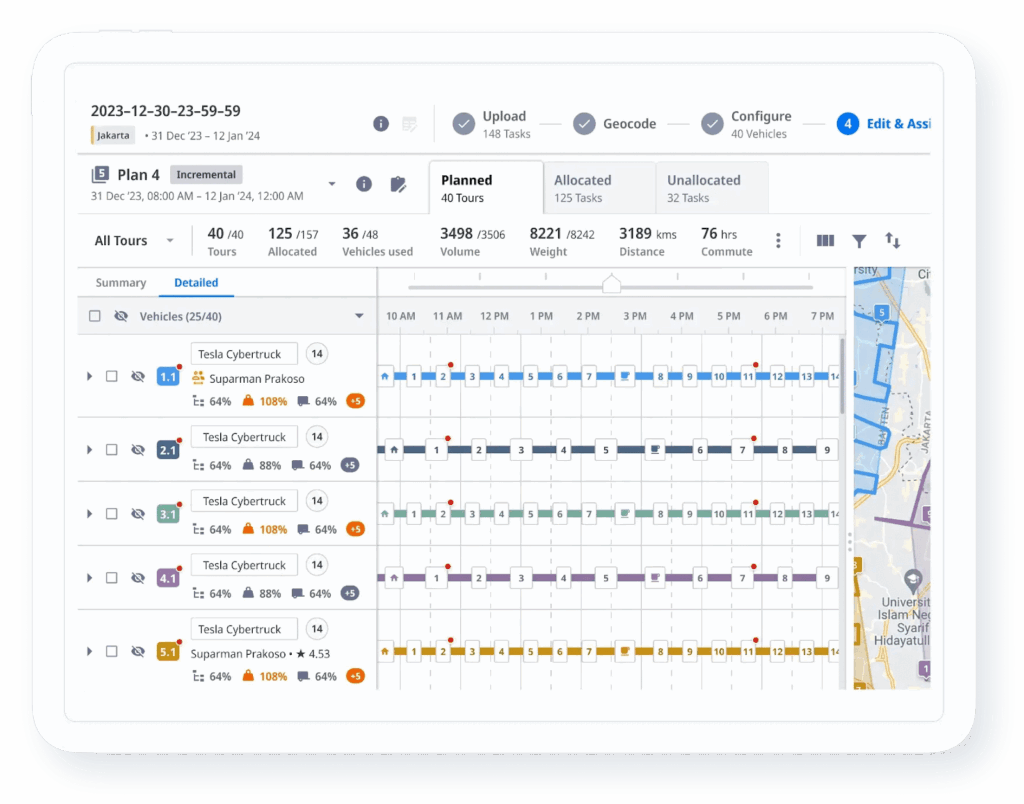
Enterprises must know where stock is located in warehouses, retail stores, and regional hubs. For example, if a shopper in Chicago places an online order, centralized visibility can route the item from the nearest store instead of a distant warehouse. This reduces both delivery time and cost.
• Seamless Technology Integration
Platforms like Enterprise Resource Planning (ERP), Warehouse Management System (WMS), Order Management System (OMS), and Transportation Management System (TMS) need to work together as one ecosystem. When these systems are integrated, enterprises can balance supply and demand in real time while keeping fulfillment aligned with customer expectations. This level of coordination also supports stronger capacity planning for omnichannel operations, helping retailers avoid stockouts during seasonal peaks as inventory shifts automatically between online and offline channels.
• Flexible Fulfillment Models
Customers expect options such as BOPIS and curbside delivery. A 3PL that supports these models ensures consistency. During the holiday rush, online orders can be directed to local stores for pickup, which eases the strain on central warehouses.
Read more about how to balance supply chain during festive rush
• Reverse Logistics Capabilities
Returns are a constant part of retail. A structured reverse logistics process allows items bought on a marketplace to be returned at a store, inspected, and restocked quickly. This lowers losses and improves customer trust.
• Last-Mile and Carrier Orchestration
The last mile is often the most complex and costly part of logistics. A 3PL that connects with multiple carriers can select the fastest and most cost-effective option. For example, a fashion brand can use different delivery partners for urban and rural regions while still providing real-time tracking to customers.
When these five elements are aligned, enterprises gain speed, visibility, and reliability across every channel they serve.
What Are the Benefits of Outsourced Omnichannel 3PL?
Outsourced omnichannel 3PL allows enterprises to unify logistics across sales channels, cut costs, and expand fulfillment capacity without heavy capital investment. By combining scale with technology-driven execution, it delivers measurable improvements across efficiency and customer experience.
1. Lower Logistics Costs Through Shared Networks and Smarter Routing
Outsourcing avoids the high fixed cost of building new warehouses and fleets. At the same time, AI-enabled routing reduces unnecessary travel and fuel waste. McKinsey estimates advanced optimization can lower transportation spend by 10–15%.
- Shared infrastructure reduces capital expenditure on facilities and vehicles
- Routing algorithms cut empty miles and fuel consumption across deliveries
2. Faster Growth With Elastic Capacity Across Regions
Omnichannel 3PLs help you add capacity where demand spikes without building new facilities. You can light up additional nodes, rebalance inventory, and diversify carriers quickly so seasonal peaks or promotions don’t slow fulfillment.
- Spin up additional fulfillment nodes or cross-dock capacity during peaks
- Rebalance inventory across store, DC, and marketplace channels based on live demand
- Use multi-carrier orchestration to route by SLA, zone, and cost
- Add surge labor and pickup options like BOPIS or curbside without long lead times
- Stronger Customer Loyalty Through Flexible Fulfillment
Customers expect multiple fulfillment choices such as doorstep delivery, BOPIS, and curbside pickup. Retailers with robust omnichannel strategies retain close to 90% of customers, compared to about one-third for those without. Outsourced 3PLs make these models viable across regions.
3. More Focus on Core Business Priorities
By outsourcing logistics complexity, enterprises free up internal teams to concentrate on product innovation, marketing, and customer engagement. 3PLs also bring proven operating models that reduce trial-and-error in new channels.
4. Smarter Decisions With Integrated Technology and Analytics
Omnichannel 3PLs integrate ERP, WMS, OMS, and TMS platforms to provide a real-time view of inventory and demand. Gartner notes that companies using advanced analytics in logistics see SLA compliance improve by 15–20% through better forecasting and allocation.
How Locus Streamlines 3PL Omnichannel Logistics
Omnichannel logistics requires orchestration across orders, inventory, and transportation. Locus supports 3PLs with AI-driven tools that simplify planning, improve visibility, and keep fulfillment consistent across channels.
1. Smarter Dispatch Allocation Across All Channels
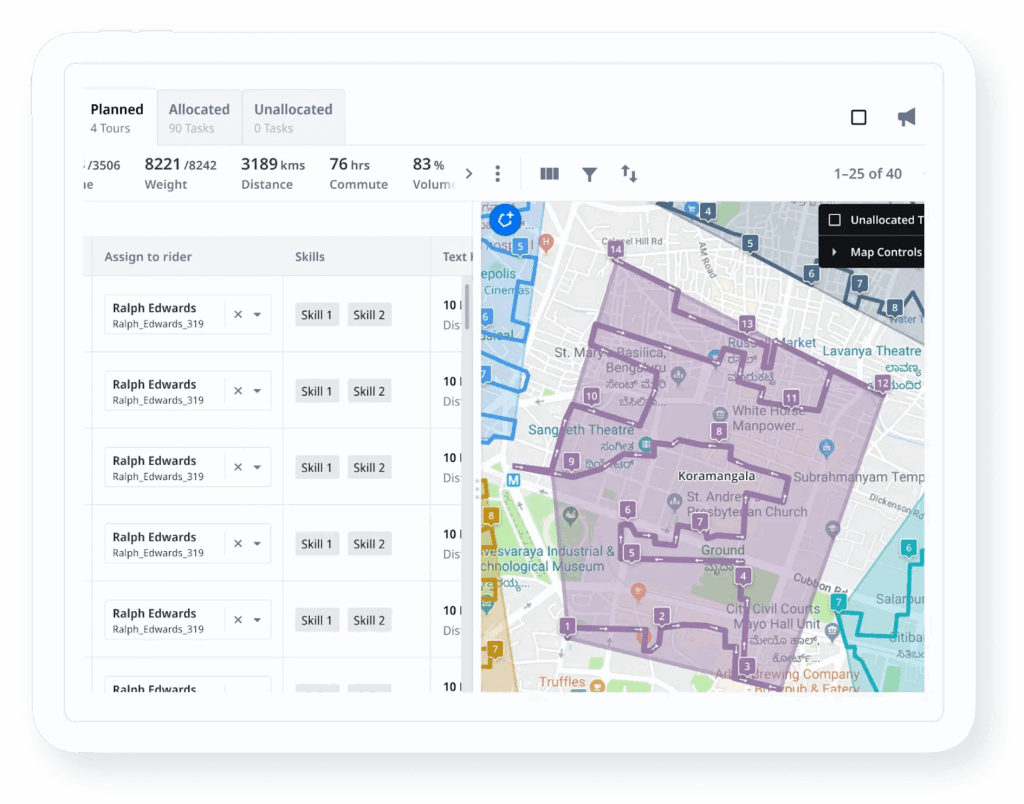
Instead of relying on manual scheduling, a dispatch management software automatically matches each order to the right vehicle and driver. Delivery windows, traffic conditions, and vehicle capacity are all factored in, so dispatchers spend less time planning and customers receive their orders on time.
- Orders are assigned to the best-fit driver automatically
- Real-time re-routing helps fleets adapt when conditions change
To understand how automated allocation works in practice, explore our Dispatch Management Software.
2. Real-Time Control for Dispatchers and Managers
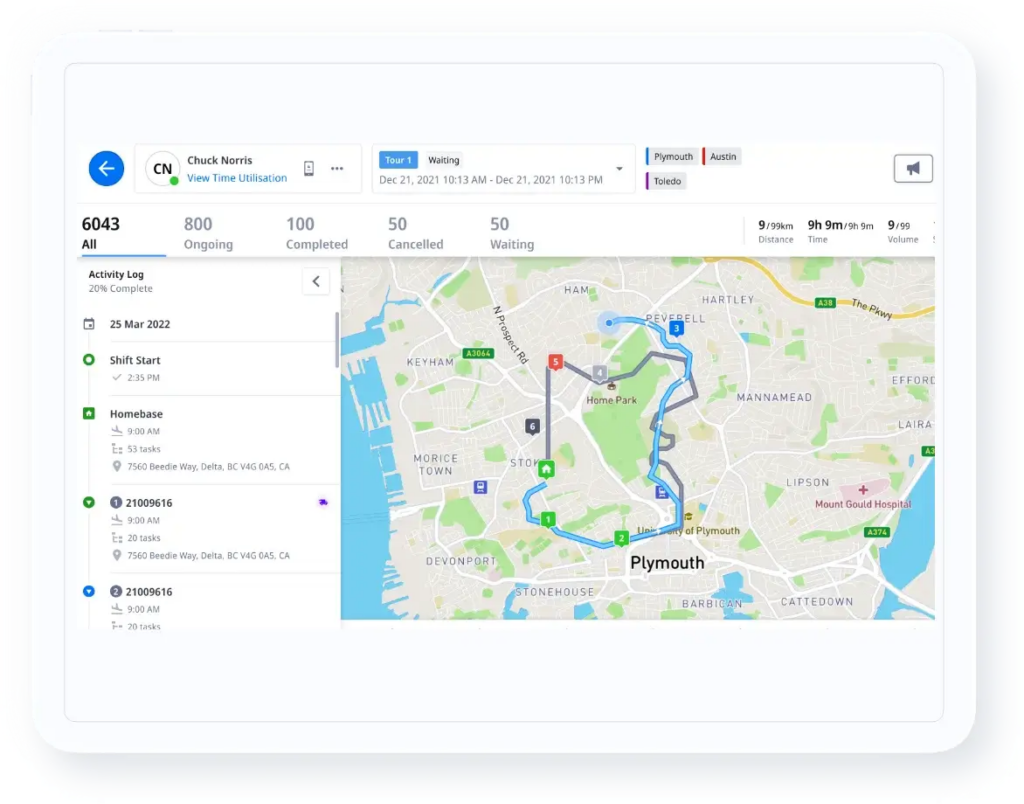
With the Locus Control Tower, 3PLs get an on-ground view of fleets across regions. Exceptions such as missed pickups or vehicle breakdowns are flagged early, enabling proactive intervention.
- Single interface to monitor multiple carriers and hubs
- Predictive alerts reduce SLA breaches and improve customer satisfaction
3. Route Optimization for Higher Efficiency
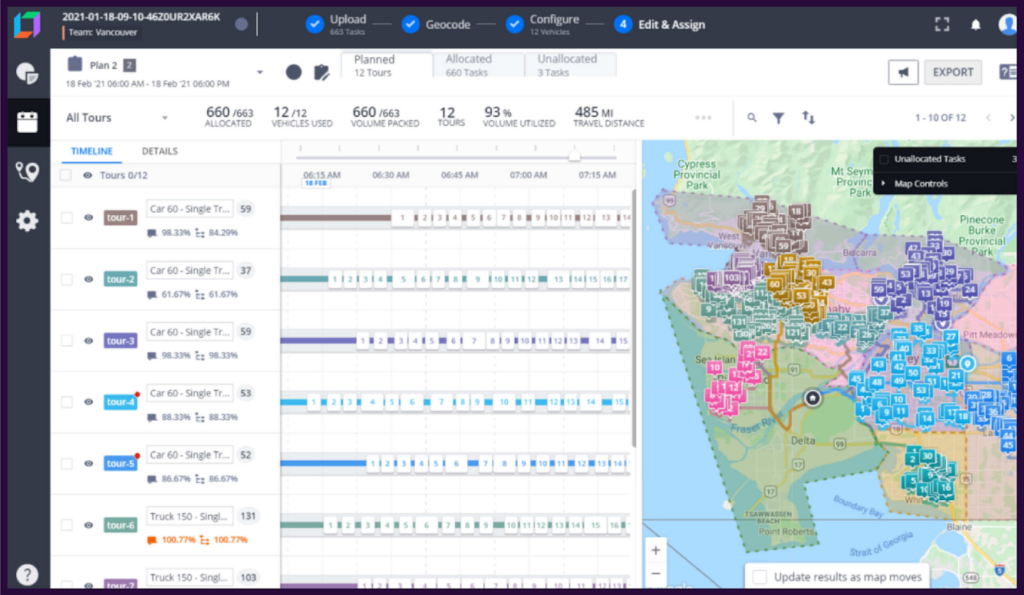
A route planning software combines live traffic, demand forecasts, and vehicle constraints to create efficient delivery paths. This translates into shorter delivery times and reduced fuel costs.
- Route efficiency improves by cutting empty miles
- Strategic route planning balances service-level promises with cost control
4. Simplified Reverse Logistics
Returns are an unavoidable part of omnichannel retail. Locus enables 3PLs to handle returns seamlessly, whether initiated online or in-store, without disrupting overall operations.
- Integrated workflows manage inspection, restocking, or redistribution
- Faster return-to-stock reduces lost sales opportunities
Turning Omnichannel Logistics Into a Growth Driver
Omnichannel third-party logistics has shifted from being a support layer to a core growth enabler. By outsourcing to 3PLs that unify inventory, fulfillment, and last-mile operations, enterprises reduce costs, improve delivery speed, and provide consistent experiences across every channel.
AI-driven platforms like Locus elevate this model by combining automated dispatch, real-time visibility, and advanced route planning. Enterprises gain a supply chain that adapts to demand, keeps delivery promises, and scales without added complexity.
Take the next step toward building a resilient and profitable omnichannel network. Talk to our experts and see how Locus can help you achieve it.
Frequently Asked Questions (FAQs)
1. What industries benefit most from omnichannel 3PL?
Retail, FMCG, e-commerce, and consumer goods enterprises benefit most, as they need flexible fulfillment, unified inventory visibility, and reliable last-mile delivery across multiple channels.
2. How does omnichannel 3PL support peak season demand?
3PLs provide elastic capacity through shared networks, extra labor, and carrier diversification, allowing enterprises to manage seasonal surges without investing in new infrastructure.
3. Is omnichannel 3PL suitable for mid-sized companies?
Yes. Mid-sized enterprises can access advanced logistics technology and wider networks through 3PLs, helping them stay competitive without the overhead of building their own systems.
4. What role does technology play in omnichannel 3PL?
Integrated platforms connect ERP, WMS, OMS, and TMS systems, enabling real-time decisions, accurate inventory tracking, and smarter routing across sales channels.
5. How can Locus strengthen an existing 3PL strategy?
Locus adds AI-driven dispatch, real-time visibility, and route optimization to 3PL operations, helping enterprises cut costs while improving fulfillment speed and reliability.


Sustainability
What is 3PL Sustainability? Benefits & Key Strategies for 2025

Oct 16, 2025
Discover how 3PL sustainability transforms logistics operations. Learn key benefits, implementation strategies, and why sustainable logistics matter in 2025.
Read more
General
What is 3PL Logistics? Third-Party Logistics Definition, Process, and Resources
Oct 22, 2025
Learn what 3PL logistics is, how third-party logistics providers work, key benefits, challenges, and selection criteria to optimize your supply chain operations in 2025
Read moreInsights Worth Your Time




















What is Omnichannel 3PL? Benefits & Key Aspects Explained