


General
Last-Mile Delivery Efficiency: Cost Reduction Guide 2026

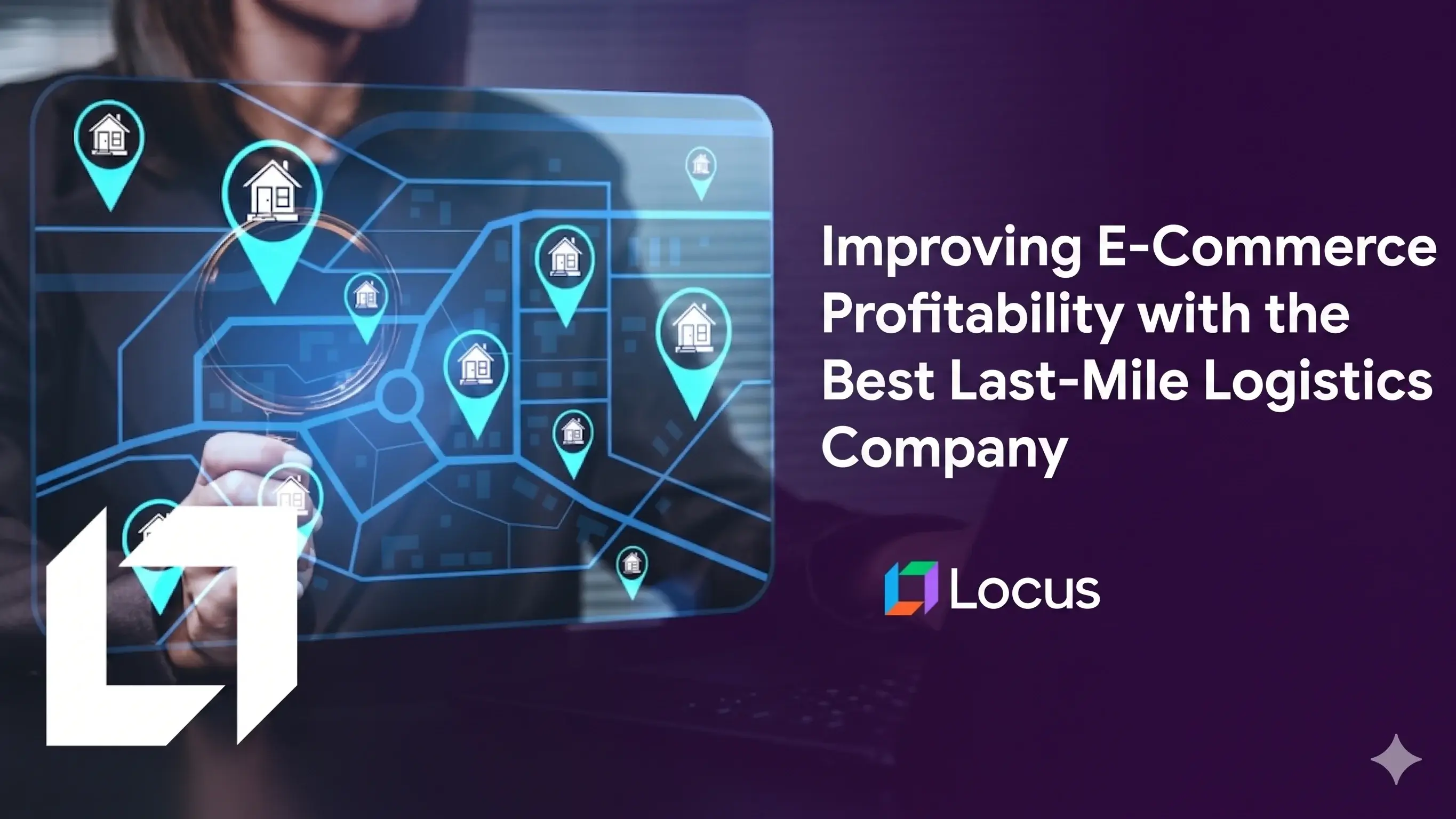
The final stretch of a delivery, the last mile, has become one of the most critical profit levers in modern e-commerce. Once seen purely as a cost center, last-mile logistics now distinguishes brands on customer experience and margin performance. This stage, where goods move from a warehouse to the customer’s doorstep, has grown from representing roughly 41% of total shipping costs in 2018 to as much as 53% today, according to Capgemini Research Institute tracking — a trajectory McKinsey & Company research corroborates as the most expensive leg of fulfillment. Efficiency at this stage directly increases profitability and customer loyalty.
For organizations aiming to scale intelligently, partnering with an advanced last-mile logistics company powered by AI route optimization and orchestration delivers measurable improvements in both cost and customer experience. Platforms like Locus are built specifically for this challenge — delivering route efficiency, dispatch automation, and operational intelligence trusted by retailers, distributors, and 3PLs operating across complex urban and last-mile environments.
Why Last-Mile Delivery Is Critical for E-Commerce Profitability
Last-mile delivery covers the movement of goods from the final distribution hub to the customer. It’s the most expensive and operationally complex step in the supply chain — yet also the most visible to consumers. Every doorstep moment is a customer experience moment.
Global e-commerce logistics continues to grow at substantial double-digit annual rates, with materially expanding parcel volumes across mature and emerging markets. As customers demand transparency, real-time delivery updates, and reliable promise execution, a brand’s ability to provide predictable last-mile service becomes a direct driver of repeat purchases and profitability. Last-mile excellence is now a business necessity — not just a logistical edge.

Turn Your Most Expensive Logistics Leg Into a Profit Lever
See how Locus’s orchestration platform brings route optimization, dispatch automation, and returns integration together to cut last-mile cost.
Key Challenges in Last-Mile Logistics for Retailers
Retailers face several persistent challenges that often erode delivery margins and customer satisfaction:
| Challenge | Impact |
|---|---|
| High operational costs | Up to 53% of total shipping budgets are consumed by the last mile |
| Urban congestion | Causes delays, unpredictable ETAs, and increased fuel consumption |
| Parking and access friction | Reduce daily delivery capacity and productivity |
| Rising return rates | Add reverse logistics complexity and cost (US retail returns hit $849.9 billion in 2025 per NRF/Happy Returns) |
| WISMO (“Where Is My Order?”) inquiries | Inflate support costs and damage customer trust |
| Dispatcher cognitive load | Manual exception handling caps last-mile scaling per Gartner research on operational ceilings |
Balancing speed and reliability remains difficult. Capgemini’s Last-Mile Delivery research has consistently shown that consumers increasingly prioritize predictable, reliable delivery over pure speed. Add in urban emissions, failed delivery attempts, and rising returns volume, and it’s clear why many brands are redesigning their fulfillment strategies.
Also Read: Last Mile Delivery Management: Importance & Best Practices
Emerging Trends Transforming Last-Mile Delivery
Evolving technology and customer expectations are rapidly reshaping last-mile logistics. Key trends include:
- AI-powered route optimization to minimize drive time, fuel usage, and idle time
- Real-time visibility with GPS and IoT sensors for proactive delivery updates
- Continuous re-optimization that adapts routes mid-day to customer reschedules, in-flight returns, and urban access friction
- Electrification of delivery fleets to reduce fuel spend and emissions
- Micro-fulfillment centers positioned closer to consumers for same-day capabilities
- Automated notifications that minimize WISMO tickets and build customer trust
- Returns integration that absorbs in-flight returns into active delivery routes rather than generating separate trips
While drones and autonomous vehicles attract headlines, immediate efficiency gains come from software-led automation and data-driven fleet management. Even with upfront costs for sustainable approaches like electrification and route optimization continuing higher than legacy operations, the financial case has strengthened materially as fuel volatility and emissions regulation accelerate.
How AI and Technology Drive Last-Mile Efficiency
Artificial intelligence transforms route planning from guesswork into precision. AI route optimization analyzes traffic, order density, vehicle capacity, customer time windows, and delivery constraints in real time — creating routes that minimize distance while improving on-time rates.
Real-time GPS and IoT tracking extend visibility for both shippers and customers. Together, these technologies reduce delays and unnecessary support interactions, generating measurable operational improvements.
| Metric | Traditional Routing | AI-Optimized Routing |
|---|---|---|
| Cost per stop | Higher due to wasted mileage and idle time | Materially lower through continuous optimization |
| On-time delivery | Variable, dependent on dispatcher firefighting | Consistent, with proactive exception management |
| Support tickets | Frequent WISMO and ETA-related calls | Substantially reduced through proactive notifications |
| Dispatcher productivity | Caps at manual exception handling capacity | Scales through algorithmic decision-making |
| Returns flow | Often handled as separate trips | Integrated into active delivery routes |
Automation across dispatch, predictive ETAs, returns-aware routing, and data-driven capacity planning enables teams to shift from reactive responses to proactive execution — boosting first-attempt success while capturing productivity dimensions that don’t show up in simple delivery success metrics. Locus delivers this through its unified orchestration platform built for accuracy, scalability, and end-to-end visibility across the integrated forward and reverse delivery flow.
Replace Dispatcher Firefighting With Algorithmic Decisions
See how Locus’s Dispatch Planning scales beyond the manual exception-handling ceiling that caps traditional routing.
Choosing the Best Last-Mile Logistics Partner for Your Business
Selecting the right partner requires balancing scalability with intelligence. Retailers should evaluate logistics providers and platforms on these criteria:
- Accuracy and adaptability of route optimization — including continuous re-optimization that adapts to mid-day disruption, not just morning planning
- Consistency of ETAs and first-attempt success with cascade resilience to absorb single ETA shifts without operational compounding
- Strength of carrier network and geographic coverage for multi-carrier orchestration
- Returns management capabilities that integrate reverse logistics into active delivery flow
- Sustainability commitments and fleet mix with emissions tracking and reporting capabilities
- Architectural depth — is the platform built natively for continuous optimization, or is it morning batch optimization with mid-day exceptions handled manually?
A clear comparison across these areas ensures stronger ROI from logistics investments. Many enterprises rely on third-party logistics providers for end-to-end capabilities — from packaging to last-mile execution — to scale flexibly without excessive fixed costs.
Also Read: 8 Latest Trends in Last-Mile Delivery Technology (2026)
Choosing a unified orchestration platform such as Locus brings these capabilities together: AI route optimization, dynamic resequencing for mid-day disruption, integrated returns flow, multi-carrier orchestration, and emissions tracking — transforming reliable delivery into long-term repeat business while reducing customer support overhead.
Practical Strategies to Reduce Costs and Improve Delivery Performance
Retailers can take immediate steps to strengthen operations and raise delivery productivity:
- Adopt delivery-experience software to reduce WISMO inquiries and build customer trust through proactive notifications
- Use AI routing and telematics to cut drive distances, fuel costs, and idle time
- Deploy continuous re-optimization that adapts routes mid-day to customer reschedules, in-flight returns, and urban access friction
- Integrate forward delivery with returns flow to capture round-trip optimization — one of the primary cost-reduction levers given the $849.9 billion US returns volume per NRF/Happy Returns 2025
- Deploy micro-fulfillment or hybrid 3PL models for cost-efficient, same-day service
- Pursue electrification and carbon tracking for resilient operations and audit-ready emissions reporting
Critical metrics include cost per delivery, on-time rate, first-attempt success, stops per route, returns-only trip count, and dispatcher exception handling volume. Each reflects operational maturity and can be improved through intelligent automation and visibility — areas where Locus consistently drives measurable gains across customer deployments.
The Role of Sustainability in Last-Mile Logistics
Sustainable last-mile logistics centers on reducing environmental impact while maintaining high performance. With urban congestion and emissions climbing, it’s now both an ethical and financial priority.
Core strategies include adopting electric vehicles for last-mile routes, sustainable packaging, and smart routing that cuts idle time and CO2 output. Carbon analytics tools help companies track emissions at the shipment level — turning sustainability into operational intelligence rather than ESG reporting overhead. For European operations, this is increasingly tied to CSRD audit-ready Scope 3 transportation reporting; for US operations, state-level emissions reporting and customer-driven sustainability commitments are creating similar reporting requirements.
Organizations adopting carbon-aware delivery models with operationalized emissions tracking are already seeing stronger customer perception and compliance readiness — advantages that will shape long-term competitiveness as regulatory and customer pressure continue rising.
Also Read: Last-Mile Logistics is a Decision Problem, Not a Delivery Problem
Find Out What a Unified Orchestration Platform Saves You
Get a tailored route simulation showing route optimization, dispatch automation, and emissions tracking across your network.
Frequently Asked Questions About Last-Mile Logistics for E-Commerce Profitability
How much does last-mile delivery cost?
Last-mile delivery’s share of total shipping cost has risen materially over the past several years — from roughly 41% in 2018 to as much as 53% today, according to Capgemini Research Institute tracking corroborated by McKinsey research. It’s the most expensive leg of fulfillment. The exact percentage varies by category (grocery, retail, big-and-bulky, e-commerce), geographic density, and operational maturity. For most e-commerce operations, last-mile cost is a first-order P&L item rather than marginal operational cost.
How can I reduce last-mile delivery costs without sacrificing service?
Using AI-based route optimization and orchestration platforms like Locus can lower costs while maintaining accuracy and visibility. The primary cost-reduction levers include continuous re-optimization (adapting routes mid-day rather than relying on morning batch plans), returns integration (absorbing in-flight returns into active routes), multi-carrier orchestration (allocating volume dynamically across owned fleet, 3PL, and gig couriers), and dispatcher automation (algorithmic exception handling rather than manual firefighting).
How does last-mile delivery impact my bottom line?
Reliable last-mile execution increases customer satisfaction and repeat orders, directly boosting profitability. According to NRF/Happy Returns 2025 data, 71% of consumers are less likely to shop with a retailer again after a poor returns experience (up from 67% in 2024) — meaning last-mile experience drives both customer acquisition cost and customer lifetime value.
What are the main challenges in last-mile delivery?
High operational costs, urban congestion, parking and building access friction, inaccurate ETAs, rising return rates, and WISMO inquiries are the most common issues. For US retailers in 2026, first-attempt delivery success is largely solved at mature operations, but productivity loss between the morning route plan and end-of-day operational reality is where last-mile cost concentrates.
What metrics should I track for last-mile performance?
Track cost per delivery, on-time percentage, first-attempt success, stops per route, returns-only trip count, dispatcher exception handling volume, idle time at gates and dock doors, and customer service inquiry volume per delivery event. The traditional core metrics are operationally useful but incomplete — the productivity dimensions where US last-mile cost concentrates in 2026 don’t show up in either.
How can I improve first-attempt delivery success?
Offer flexible delivery slots, proactive notifications, accurate predictive ETAs, and local pickup or smart-locker options. The first-attempt success challenge has largely been solved in mature US operations; the more current question is what happens to productivity when the morning route plan encounters mid-day reality.
Where should I position my inventory for faster delivery?
Locating inventory in micro-fulfillment centers near key demand hubs reduces both transit time and cost per shipment. The trade-off worth evaluating: regional dark store networks reduce per-delivery cost but increase inventory carrying cost; centralized fulfillment reduces inventory but increases delivery cost.
What’s the best technology investment for last-mile optimization?
AI-powered route optimization and orchestration platforms deliver the strongest impact on performance and cost efficiency. The architectural distinction matters: native AI orchestration platforms built around continuous re-optimization, returns integration, and dispatcher automation produce materially different operational outcomes than legacy TMS with AI features added on top.
How do I choose the right last-mile delivery partner?
Analyze technology capabilities, reliability, scalability, customer experience integration, returns handling, and sustainability commitments. Locus provides all of these within a single, AI-driven orchestration platform built for end-to-end last-mile efficiency across the integrated forward and reverse delivery flow.


General
Explainable AI Logistics: Building ML Models That European Logistics Teams Actually Trust

May 11, 2026
European logistics CTOs face converging pressures making ML explainability primary architectural requirement: EU AI Act, GDPR, and operational trust gap.
Read more
General
US Restaurant Delivery AI Routing: 5 Operational Realities

May 11, 2026
US restaurant delivery operates with structurally different dynamics than grocery quick commerce. A 2026 framework for Heads of Logistics on prep time, batching, courier matching.
Read moreInsights Worth Your Time


















Last-Mile Delivery Efficiency: Cost Reduction Guide 2026