


General
Ghibli Gone Wrong? Here’s Why

Key Takeaways
- AI image generation models trained on stylized content like Studio Ghibli films tend to reproduce exaggerated features and unexpected patterns, rather than true errors in output.
- The widespread use of copyrighted artistic content to train AI models without creator consent or compensation raises serious ethical concerns about fair use and creative ownership.
- Enterprise AI applications must prioritize data privacy, security, and ethical usage to maintain trust, especially when handling sensitive customer information.
- Locus’s AI-powered logistics solutions incorporate strict data protection protocols and SOC 2 compliance to ensure responsible handling of client information while optimizing supply chain operations.
If you’ve played around with the Ghibli trend lately, chances are you’ve seen something that made you pause, and burst out laughing.
It started as a cute trend: upload a picture and let ChatGPT transform it into something straight out of a Studio Ghibli movie. Soft pastels, dreamy lighting, a sprinkle of magical realism – what could go wrong?
Turns out, a lot.
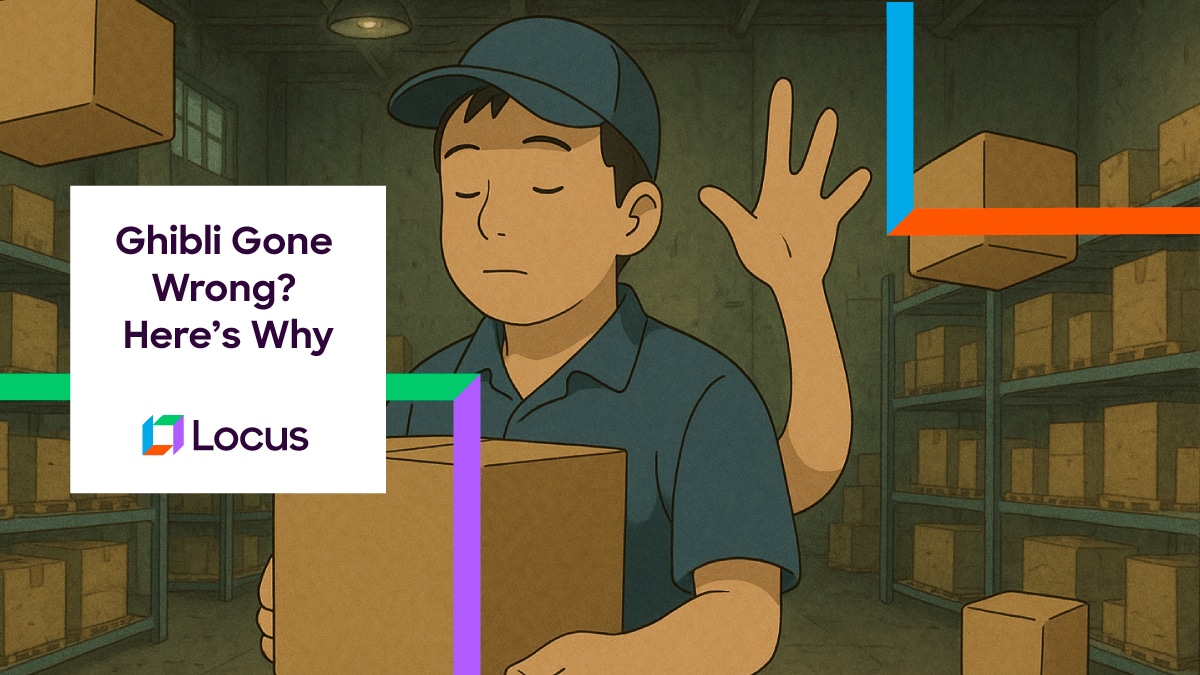
Within days of going viral, the Ghibli trend took a curious turn with duplicate heads, vanishing faces, and other bizarre outputs. But look closer, and underneath the laughs lie a cautionary tale.
So what’s actually going on with Ghibli?
While the initial assumption was that viral overload and system throttling caused these wonky outputs, a deeper look suggests something else.
Ghibli-style image generations are drawn from a niche set of stylized images. In Studio Ghibli films, magical realism is the norm! Think flying cats, two-headed wolves, strange spirits and whatnot. When an AI model is trained on such material even lightly, it starts to associate this style with such exaggerated features.
The strange outputs in Ghibli-style AI image results therefore, aren’t actually errors. They’re patterns, just not the ones we expected.
But here’s the deeper issue…
Most generative AI models are trained on data scraped from across the internet like memes, blog posts, Pinterest boards, fan art, copyrighted art, and other intellectual property — usually without the consent of the creators. And this is where the issue becomes more complicated..
Hayao Miyazaki, the legendary filmmaker behind Studio Ghibli’s timeless classics like Spirited Away and My Neighbor Totoro, has been openly critical of AI-generated art, even describing it as “an insult to life itself”.
Miyazaki’s films are not only celebrated for their artistry but for their deeply human themes, making his criticisms of AI-generated art particularly significant.
AI models are using decades of someone else’s creative labor and turning it into a purchasable product, without credit, consent, or compensation.
The ethics of AI: Where do we draw the line?
AI builders often defend themselves by comparing the training approach to how humans learn – we observe, absorb, and remix. However, there’s a critical difference in scale and monetization.
A human Ghibli artist creates one piece at a time, maybe even gives inspiration credits. An AI model can churn out millions of Ghibli-style images, monetize them, and do so at scale without ever crediting or compensating the original creators.
That’s not taking inspiration – it is appropriation.
At its core, it’s about fair use, respect for creativity and ethical ownership in a rapidly evolving digital world.
Innovation and integrity aren’t mutually exclusive. If artists and creators are under-credited or replaced by the very systems meant to empower them, we risk a future stripped of original human creativity.
What this means for enterprise AI
The Ghibli trend might be lighthearted fun, but at the same time reveals something fundamental about how AI learns, how it scales, and where it stumbles. It reminds us that every model, no matter how advanced, is only as good as the data and intention behind it.
At Locus we may not dabble in art, but we do work with personal data of our clients and their customers. While AI art glitches might be funny, the misuse of sensitive information is anything but. That’s why data privacy and security aren’t just checkboxes for us at Locus, they are our core commitments.
Unlike the Ghibli instance, where the work of creators became unconsented training fodder, our systems are designed to actively prevent misuse and ensure that what’s entrusted to us stays protected.
From how we source and store data to the safeguards we’ve built into our systems, trust is engineered into every layer of our ethos. Our recent SOC 2 attestation is just one reflection of that promise.
In the end, building AI isn’t just about what it can do.
It is also about what it stands for.


Dispatch Management
No More Dispatch Drama: Dispatch and Reconciliations Management for Real-Time Accuracy

Apr 25, 2025
Discover how TDMS from Locus provides real-time visibility and seamless dispatch coordination, empowering businesses to handle logistics with precision, efficiency, and confidence.
Read more
Logistics Software
Legacy Out, Intelligence In: The Great Realignment of Supply Chain Tech

May 23, 2025
B2B logistics is being rebuilt for speed, scale, and AI. Discover why consultants and CXOs are ditching legacy systems for intelligent, modular platforms.
Read moreInsights Worth Your Time


















Ghibli Gone Wrong? Here’s Why