

AI-Powered Rider and Driver Management Software
Locus is enterprise rider and driver management software for logistics operations running 500+ daily deliveries across owned, contracted, and outsourced fleets.
Locus manages the entire driver execution layer, from onboarding and shift scheduling through dispatch, route execution, proof of delivery, and performance analytics. The same decision layer that allocates orders drives what the driver sees and what the customer is told, which keeps driver management inside the operation instead of in a separate app beside a dispatch spreadsheet.
Onboard, schedule, and auto-assign drivers and riders in one platform. Equip every driver with the Locus Driver Companion App. Track every delivery in real time across all fleet types.
The Category
What is Rider and Driver Management Software?
Rider and driver management software helps delivery businesses onboard and schedule drivers, assign orders to the right delivery resources, dispatch optimized routes, track drivers and riders in real time, manage delivery tasks, capture proof of delivery, communicate updates to customers, and analyze performance. It is the operational layer between a delivery plan and its execution in the field.
The category covers two functions that sit before dispatch and often run as separate systems. Driver onboarding covers profile creation, credential and certification verification, skills mapping, service area assignment, and qualification tracking. Driver scheduling covers availability management, roster planning, shift assignment, and capacity confirmation before routes get built. Locus connects both to dispatch and route optimization inside one workflow, so the roster the platform plans against is the roster that shows up.
Most tools in this category run driver management as a standalone mobile app attached to a spreadsheet. Locus brings driver operations into the same decision layer that allocates orders and optimizes routes. That decisioning also determines what the driver sees, what the dispatcher monitors, what the customer is told, and what the analytics measure. One decision layer and one source of truth, from onboarding through delivery confirmation.
Onboard and Schedule Drivers Before Routes Are Planned
Dispatch quality is capped by roster quality. A plan built against an assumed roster breaks the moment a driver turns out to be unqualified for the load, unavailable for the shift, or outside the service area.
Driver and rider onboarding
New drivers and riders are provisioned directly in the platform: profile creation, credential and document upload, skills and certification records, service area and territory assignment, vehicle pairing, and capacity configuration. Certifications carry expiry tracking. A driver who is no longer qualified for cold chain, hazmat, or high-value loads stops being allocated those orders automatically, which moves the catch from audit to allocation.
Shift scheduling and roster planning
Availability, shift patterns, and roster plans are managed in the same platform that dispatches the work. Planned driver and rider availability feeds allocation directly, so dispatch decisions reflect confirmed capacity. Scheduling and dispatch reading from one record closes the mid-morning gap between the plan and the people.
Guided first-route ramp
The Driver Companion App walks first-time drivers through a structured onboarding flow before their first dispatch: profile confirmation, workflow walkthrough, and practice on task and proof-of-delivery capture. The map-centric interface is built to reduce cognitive load, which shortens the ramp for new and high-turnover driver pools.
Connect Auto-Assignment and Dispatching to Route Optimization
Locus connects auto-assignment and dispatching with AI-powered route optimization.
real-world operational constraints evaluated per dispatch plan
fuel savings from AI route optimization across Locus deployments
re-optimization triggered as field conditions change
Automatically assign orders to the right delivery resources
Locus allocates orders across drivers, riders, vehicles, hubs, carriers, and delivery partners in one decision. Allocation accounts for real-world constraints including vehicle capacity, driver skills and certifications, service areas and territories, customer time windows, SLA requirements, vehicle type suitability, and route efficiency.
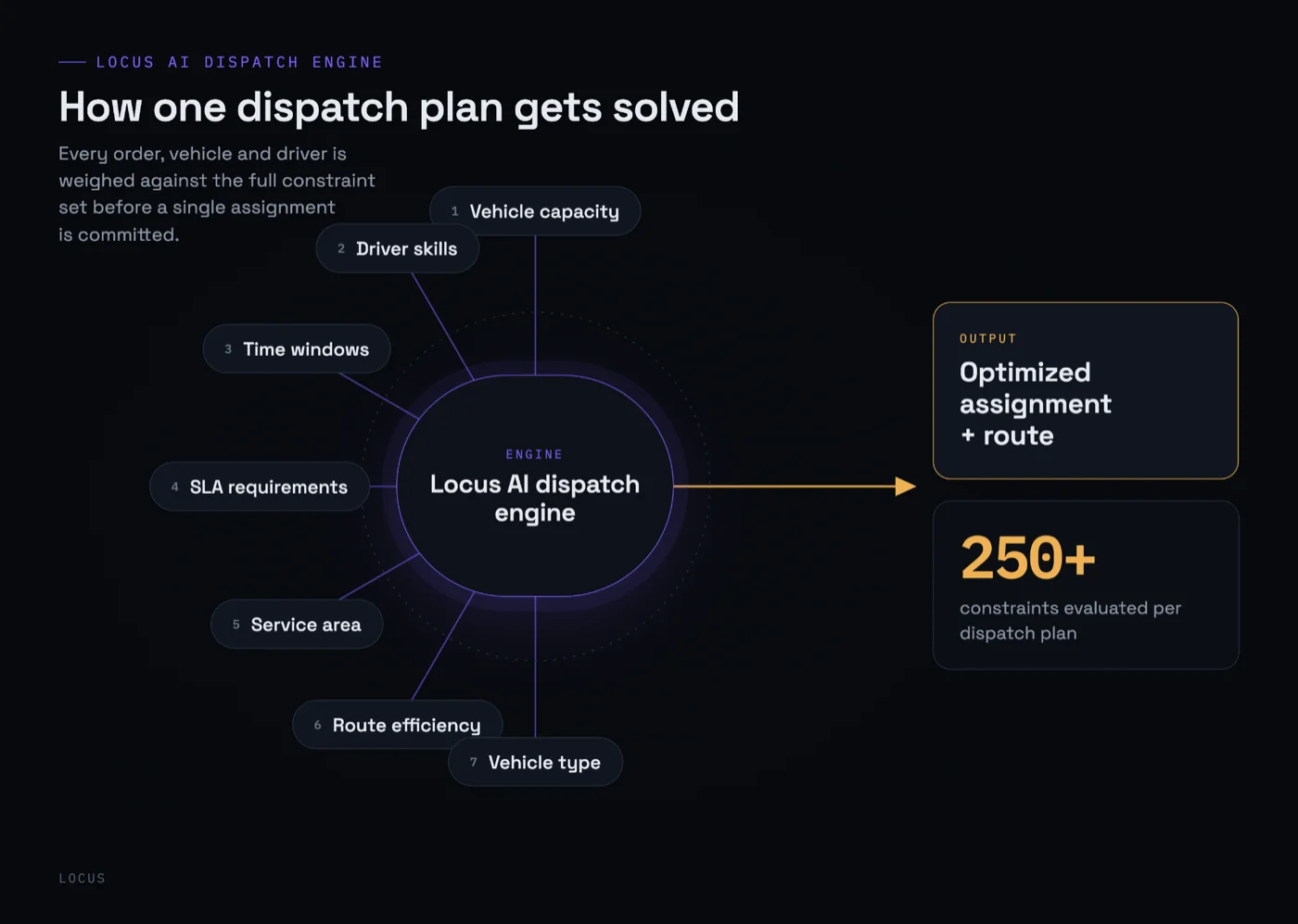
Optimize assignment and routing in one decision
Assignment and route sequencing are evaluated together, not sequentially. This matters because the best driver for an order depends on the route that driver will run, and the best route depends on which orders are assigned to it. The engine batches deliveries to cut empty miles and improve fuel consumption. Manual dispatching, spreadsheets, fixed territories, and proximity rules resolve that circularity by ignoring it, which is why their plans need dispatcher repair by mid-morning.
Adapt dispatch plans to real-world changes
New orders, cancellations, returns, priority changes, driver availability shifts, delays, and delivery exceptions all trigger re-optimization of what remains recoverable, using real-time data from the field. AI-driven analytics predict delays before they affect customers, enabling earlier plan recovery. Updated plans flow directly to the driver app, so a mid-shift change does not depend on a dispatcher reaching a driver by phone.
The Agents Behind Dispatch and Driver Allocation
Locus runs eight specialist agents coordinated by DiSCO, the Digital Supply Chain Officer. Three of them sit directly behind driver management.
Confirms what the roster can carry. It reads demand spikes, weather and campaign signals to project volume 72 hours out, and tracks slot fill by zone and tier before the plan gets built.
Plans against 250+ operational constraints, monitors live traffic and telematics feeds, and reassigns at-risk stops before they breach. Autonomous moves carry an undo window; larger moves route to a dispatcher for approval.
Scores every carrier on on-time performance, cost, damage and capacity, allocates within your rate-card tolerance, and proposes a pre-emptive switch when it predicts a load will fail.
Autonomy is set by your team through six governance mechanisms: explainability, traceability, evaluation, autonomy levels, execution sandbox, and human-in-the-loop. Dispatchers see the reasoning behind every automated reassignment and keep override authority at every stage.
The Locus Driver Companion App
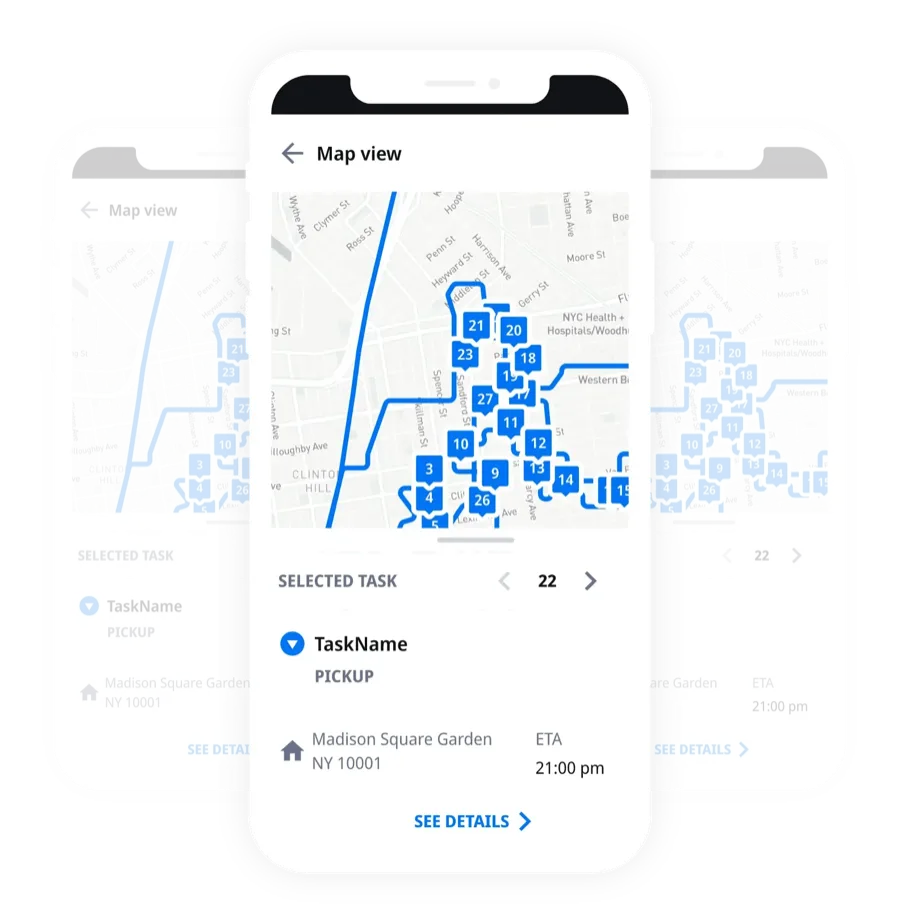
The Locus Driver Companion App is the white-labeled mobile app drivers and riders use to run their day: sequenced tasks, turn-by-turn navigation, live plan updates, guided delivery workflows, proof of delivery, customer contact, and their own performance numbers. It is not a separate product bolted onto dispatch. It is the field-facing surface of the same decision layer that built the plan.
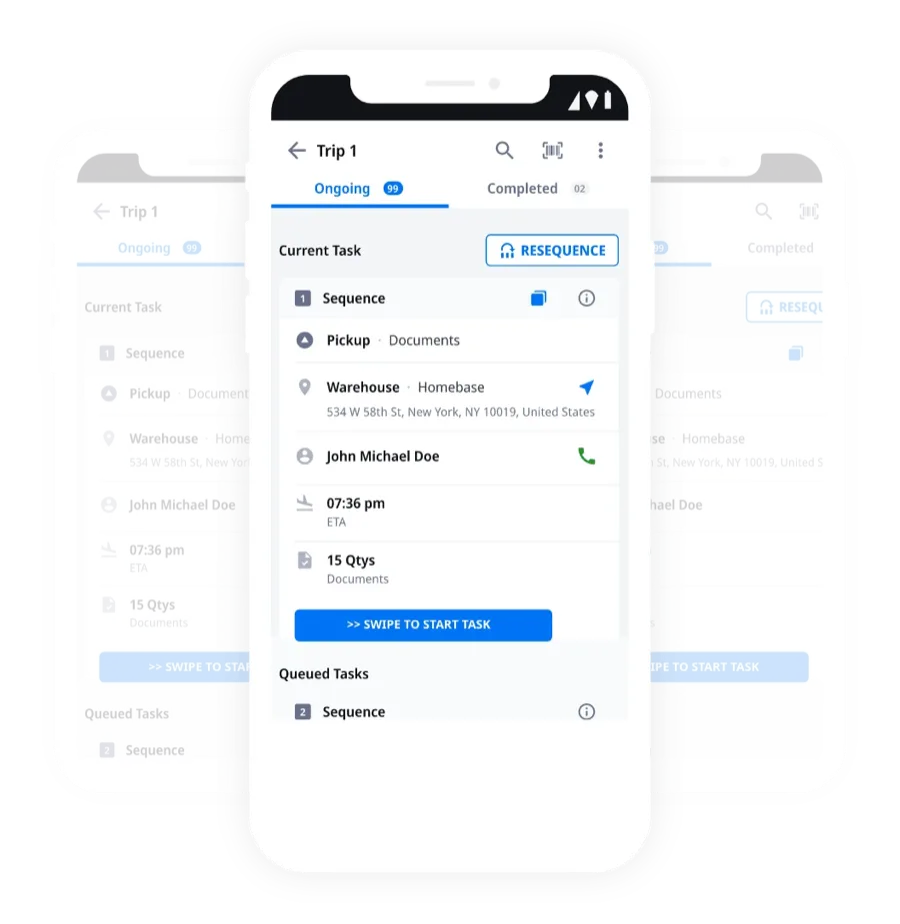
Navigate drivers at every turn
Push daily dispatch plans and street-level routing instructions to drivers on a white-labeled companion app for a cohesive driver and customer experience.
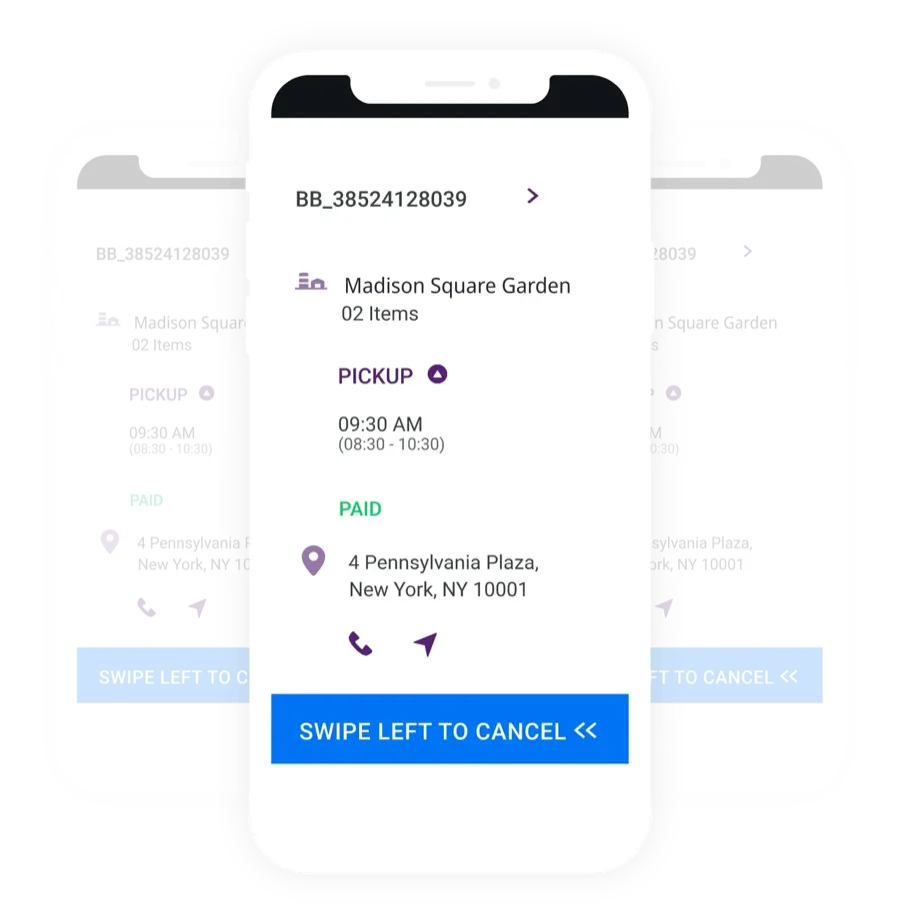
Bring on-road readiness
An interactive app that keeps daily decision-making and task handling fast in the field.
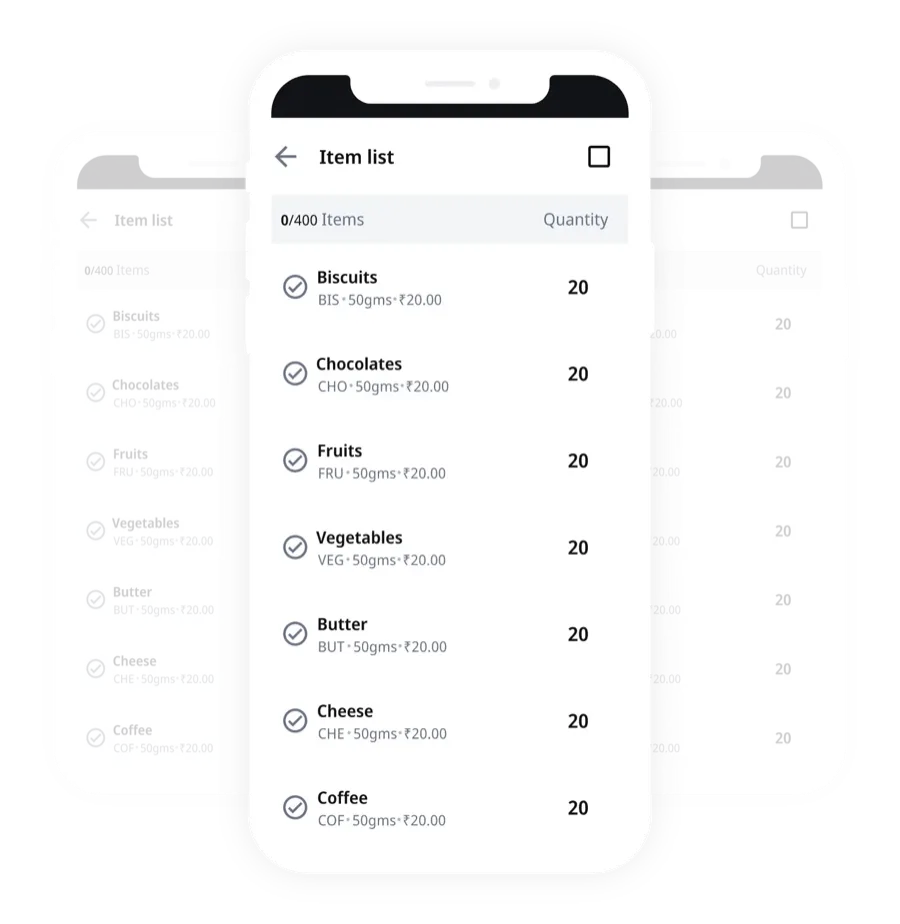
Create custom delivery workflows
Build proof-of-task-completion forms and checklists that match your business and your industry.
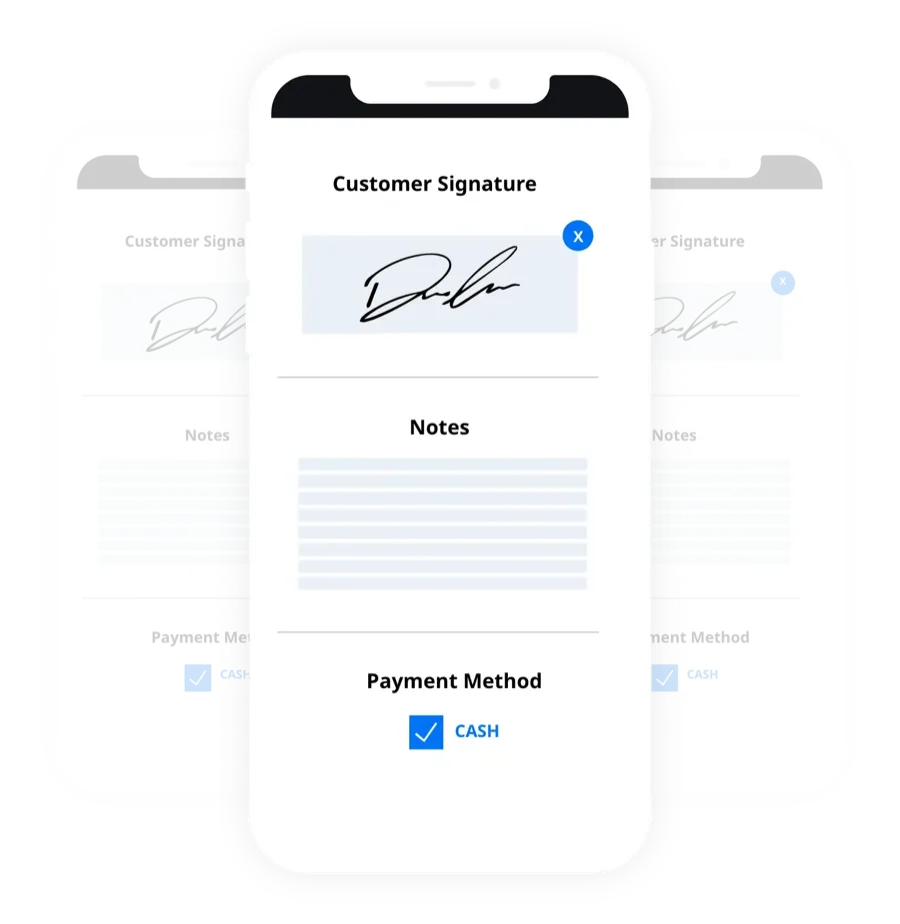
Capture multi-format proof of delivery
Detailed records of shipment status, chain of custody, item-level scanning, customer signature and confirmations cut post-delivery escalations.
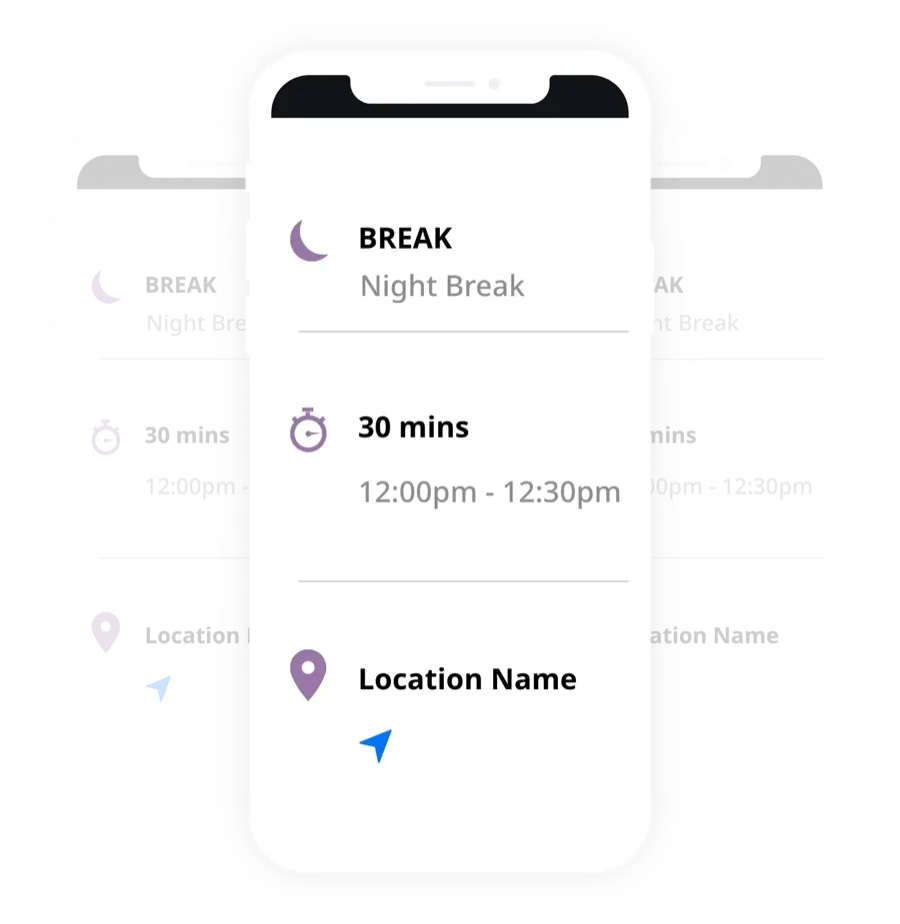
Make roads safer for drivers
Stops, layovers and scheduled breaks are built into daily task plans, holding hours-of-service compliance and reducing driver fatigue.
Manage exceptions seamlessly
Failed attempts, access problems, customer-unavailable events and partial deliveries are captured as structured outcomes with the reason attached, then routed to the dispatcher and reflected in the remaining plan.
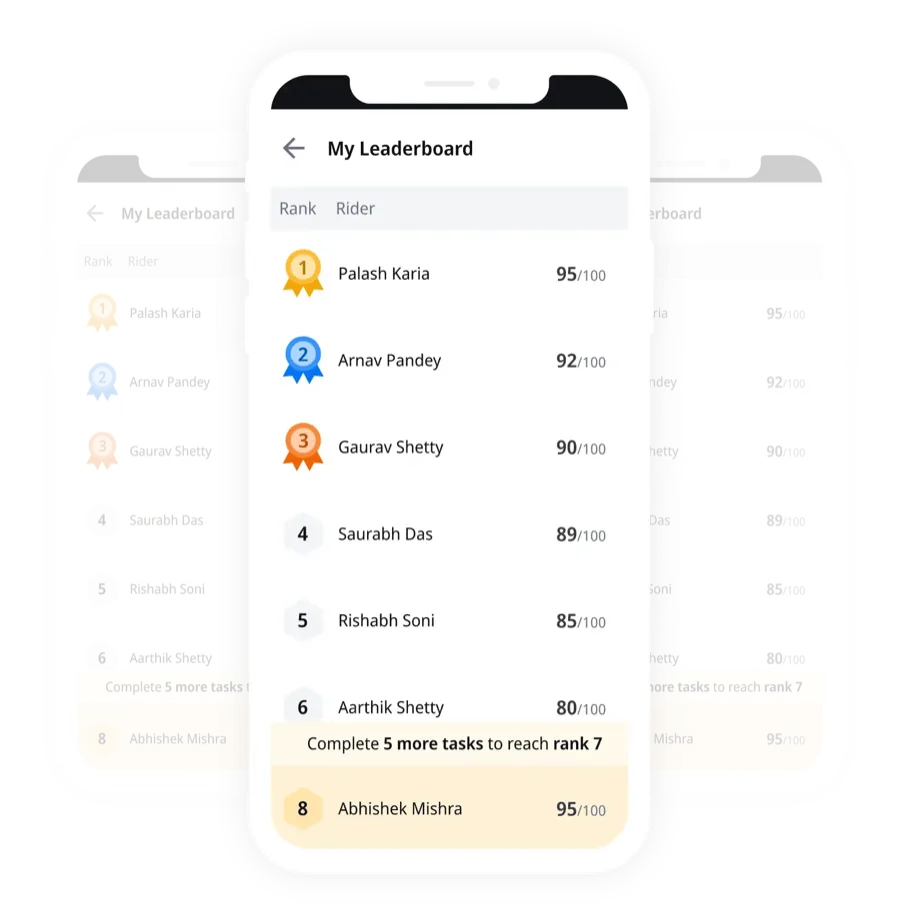
Gamify driver performance
An in-app performance dashboard gives drivers their own task completion, on-time and time-per-task numbers across today, seven-day and thirty-day windows.
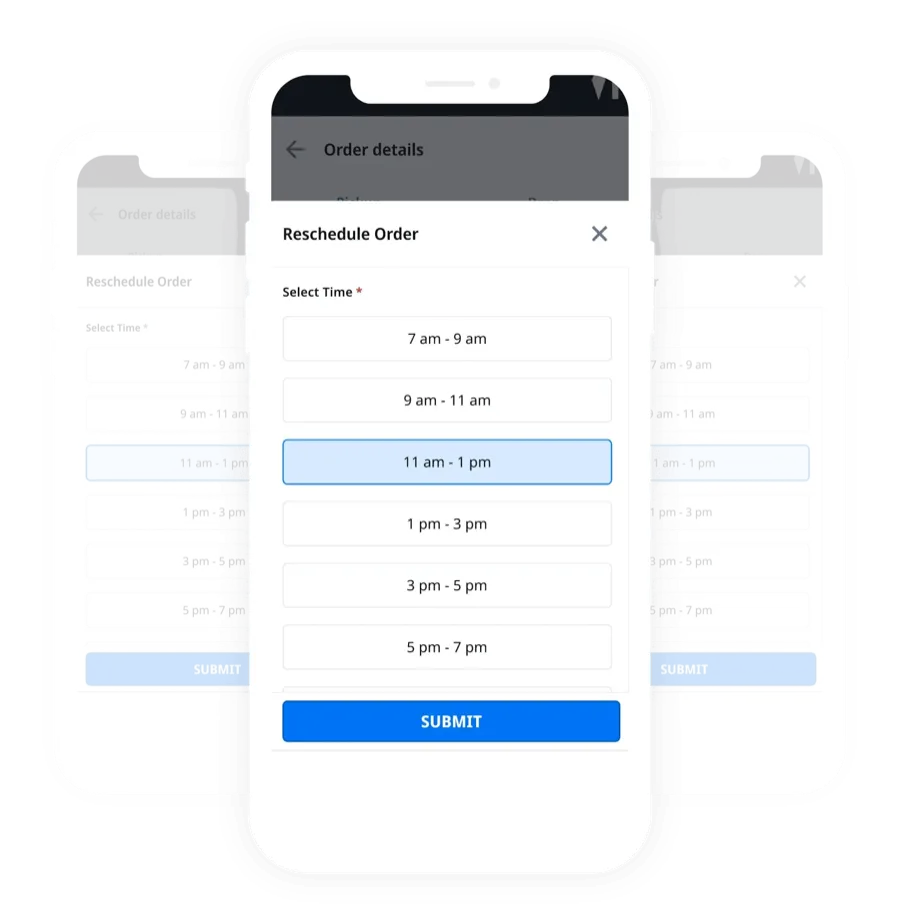
Fit deliveries to customers' schedules
Order rescheduling after dispatch and personalized delivery instructions cut delivery failures.
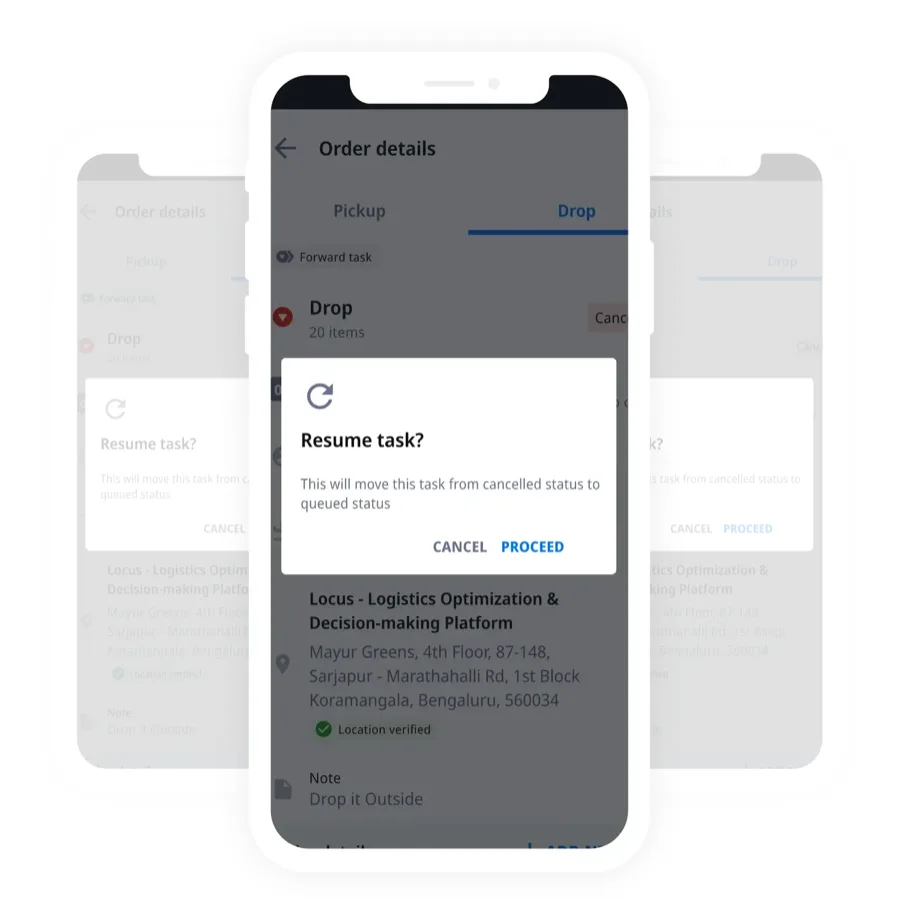
Make cancellations simpler to execute
Item-level checklists handle partial cancellations, and return-to-origin workflows run automatically.
Track Drivers, Riders, and Deliveries in Real Time
Unlike telematics platforms that track the vehicle, Locus tracks the delivery: order progress, route adherence, SLA performance, and exception status, from dispatch to doorstep.
Real-time GPS tracking from a unified control tower
Dispatchers monitor active drivers and riders, vehicles, routes, orders, and delivery progress from one control tower, across regions, across multiple locations, and across fleet types. Owned drivers, contracted carriers, and outsourced partners appear in the same operating picture rather than in separate systems.
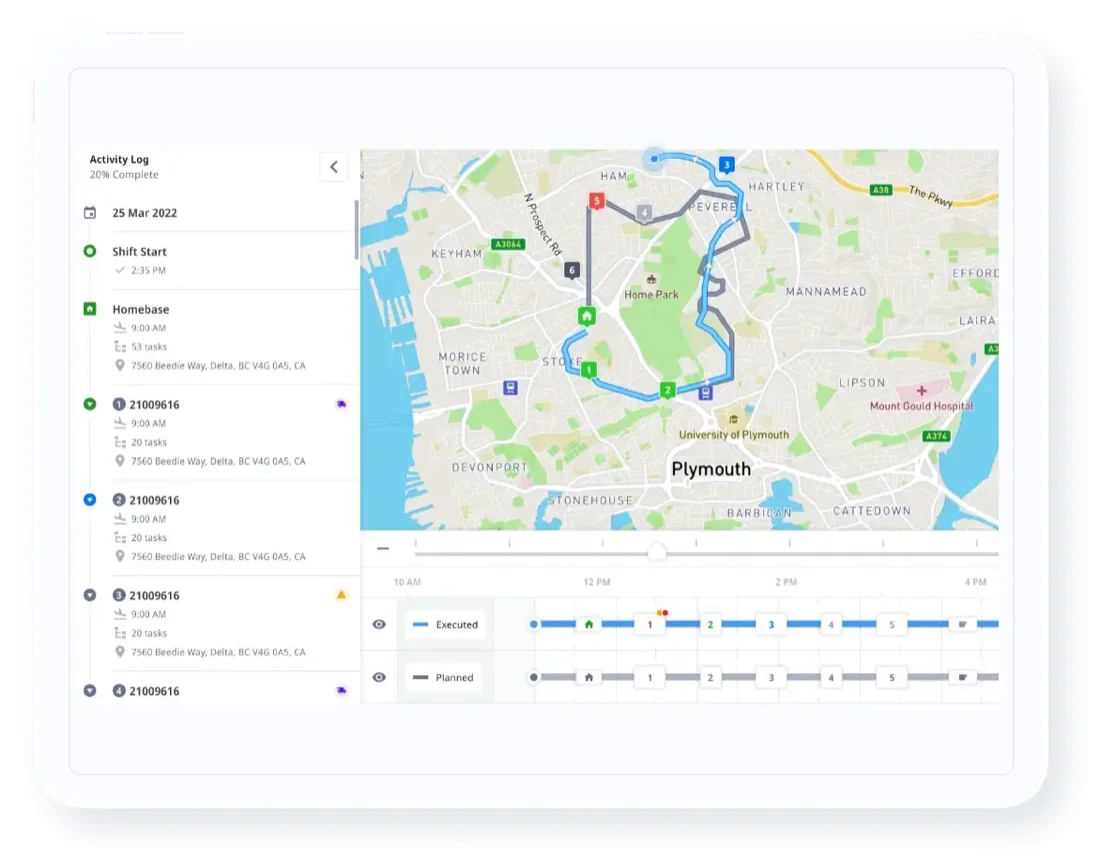
Detect delays and route deviations early
Planned-versus-actual visibility surfaces drift as it develops: geofence alerts, idle and stoppage time, ETA risk, emerging SLA breaches, and delivery exceptions. The value is intervention time. A route running behind at stop nine is recoverable; the same route discovered at stop forty is not. Predictive ETAs improve arrival accuracy and reduce customer wait times.
Manage by exception instead of calling drivers
Live operational visibility lets dispatchers work the deliveries genuinely at risk.
Capture Secure, Multi-Format Proof of Delivery
Complete proof of delivery in the driver app
Electronic proof of delivery is captured at the doorstep through photos, electronic signatures, PINs or OTPs, item-level scans, timestamps, configurable fields, and delivery notes. Evidence requirements can differ by order type, so high-value, restricted, and doorstep deliveries each capture what they actually need.
Meet compliance and chain-of-custody requirements
For regulated deliveries, captured evidence supports chain-of-custody and compliance requirements across pharmacy, healthcare, and high-value goods, with tamper-evident, timestamped records available for audit.
Synchronize delivery records with operations
Proof-of-delivery data and status changes sync to the central platform as they are captured. Customer service teams, dispute resolution workflows, chain-of-custody visibility, compliance review, and operational reporting all read from the same record rather than requesting screenshots from the field.
Support returns, partial deliveries, and failed attempts
Cancellation reasons, partial delivery records, failed-delivery workflows, reattempt handling, and return-to-origin processes are captured as structured outcomes, not free-text notes. This is what makes failed attempts analyzable rather than merely expensive.
Improve Driver-Customer Communication
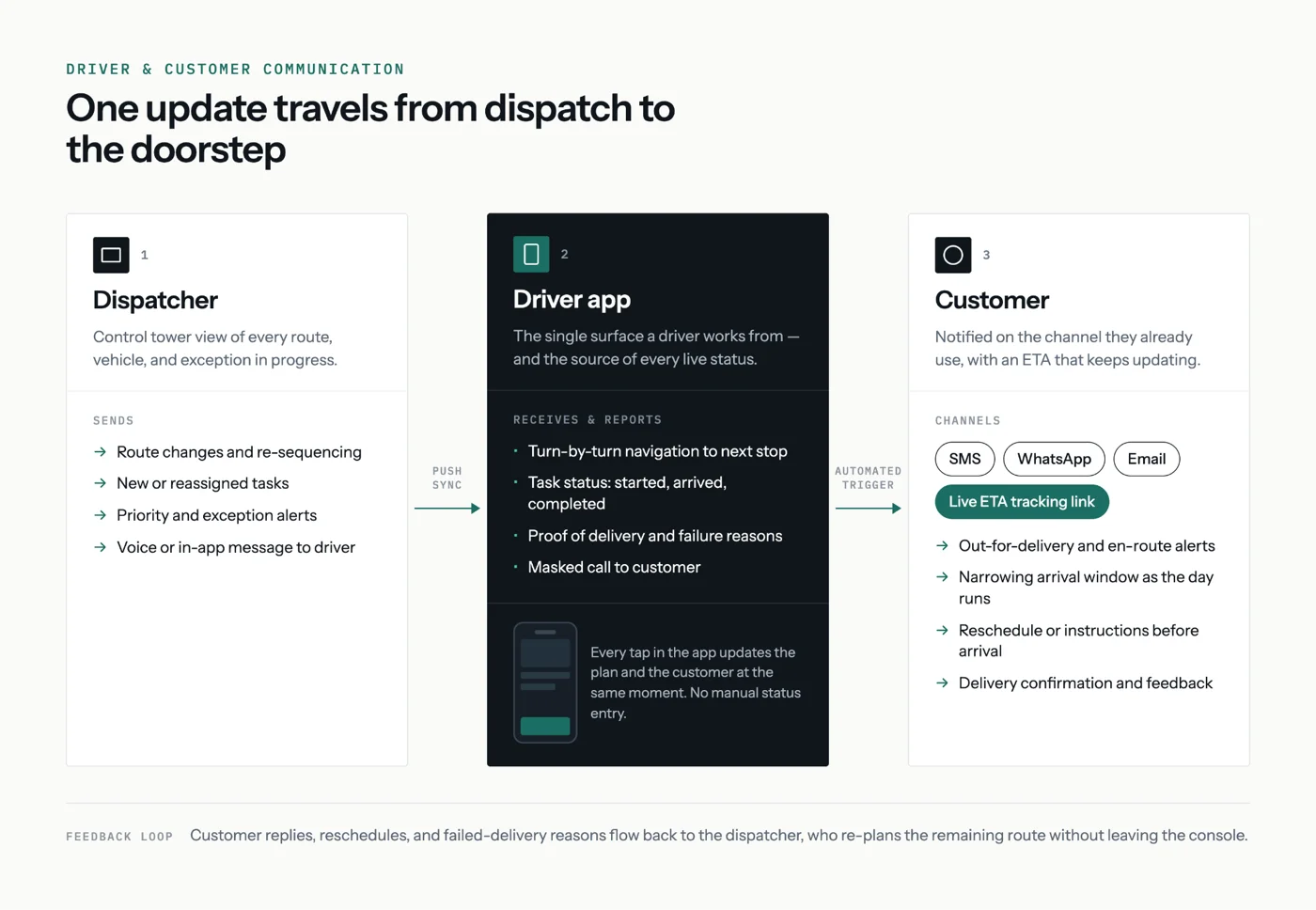
- Masked driver-customer contact: drivers reach customers through the app without either party's personal number being exposed, protecting both sides while still enabling the doorstep conversation that saves a failed attempt.
- In-app dispatcher-to-driver messaging: updated instructions, route changes, and exception alerts reach drivers as in-app messages, with history attached to the relevant task rather than lost in a chat thread.
- Customer context at the stop: drivers see personalized delivery instructions, customer availability, access notes, and rescheduling requests before they arrive.
- WhatsApp, SMS, and email notifications: branded tracking links, live ETAs, delivery status updates, exception alerts, and delivery confirmation reach customers on the channel they actually use. WhatsApp coverage matters in markets across Southeast Asia, India, Latin America, and the Middle East where SMS and email are not the primary channel.
- Branded, self-serve tracking: customers who can see their delivery stop calling to ask about it, which is where most WISMO contact volume comes from.
Turn Driver Activity into Performance Analytics
Performance measured against route difficulty, not a flat target
Because Locus planned the route, performance is measured against each route's expected difficulty rather than a flat target that penalizes drivers for their territories. A driver working dense urban stops and a driver working a rural spread are assessed against what their route was actually supposed to deliver. This is the distinction between delivery performance analytics and telematics scoring.
Execution data becomes measurable performance: task completion, on-time delivery, time per task, distance covered, idle and stoppage time, route adherence, SLA performance, and proof-of-delivery completion.
Scheduling and capacity analytics
Scheduling analytics show planned versus actual driver availability, flag underutilized shifts, trend time-per-task by driver and route type, and surface capacity the operation is not deploying.
Give drivers visibility into their own performance
An integrated driver performance dashboard with gamified KPI tracking gives drivers their own numbers rather than reserving them for review meetings.
Improve future dispatch and route decisions
Execution data feeds operational reporting, plan-versus-actual analysis, resource allocation, and continuous route improvement. The same analytics support demand-surge forecasting from historical trends and live signals. This is the loop that compounds: every completed route makes the next plan more accurate.
Manage Captive, Contracted, Outsourced, and Hybrid Fleets
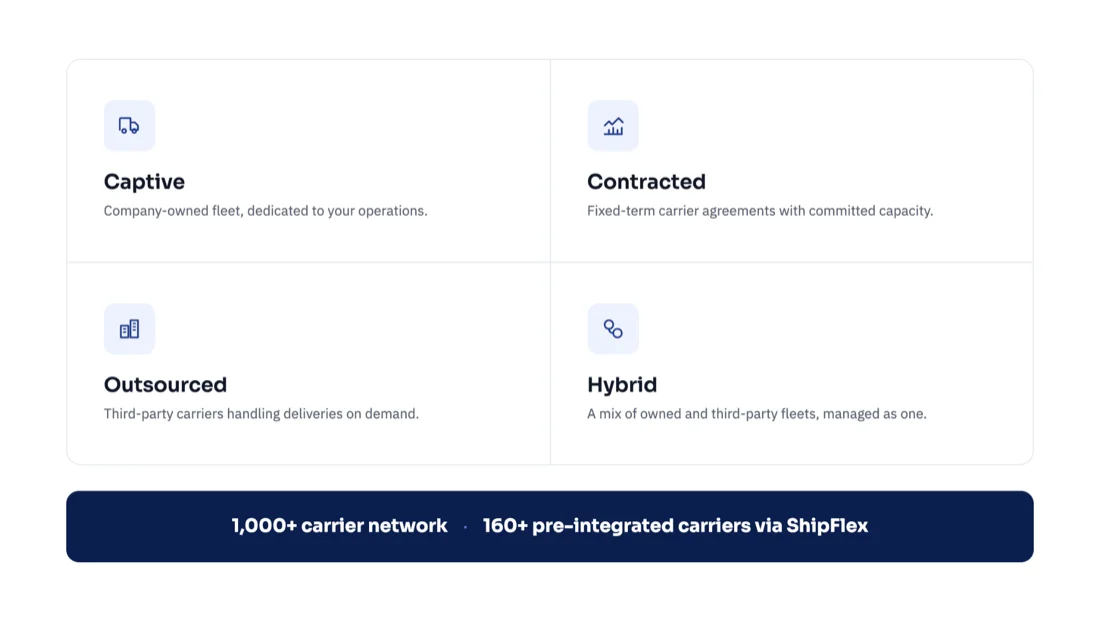
Locus coordinates owned drivers, contracted carriers, outsourced fleets, and delivery partners within one operation. Capacity and driver availability feed dispatch planning directly, so allocation reflects what is genuinely available across every fleet model rather than assuming a fixed roster.
Carrier and partner reach through ShipFlex
ShipFlex is the multi-carrier orchestration layer inside Locus, connecting a network of 1,000+ pre-integrated carriers alongside your own. For enterprises expanding into new regions or absorbing peak volume, that means adding capacity without opening a new integration project or negotiating from zero. Carrier selection runs on rate, service level, and observed performance rather than a static preference list, and carrier-executed deliveries appear in the same control tower as owned drivers.
ShipFlex is named a Representative Vendor in the Gartner® Market Guide for Multicarrier Parcel Management Solutions.
For enterprises running mixed fleet models across multiple regions, this is the difference between a multi-fleet strategy and a multi-system workaround.
Applied To
Rider and Driver Management for Every Last-Mile Use Case
Retail delivery driver management
Omnichannel and store-based fulfillment across multiple locations, scheduled delivery windows, big-and-bulky deliveries with assembly workflows, curbside and out-of-home fulfillment, and returns and failed-delivery handling across owned and outsourced fleets.
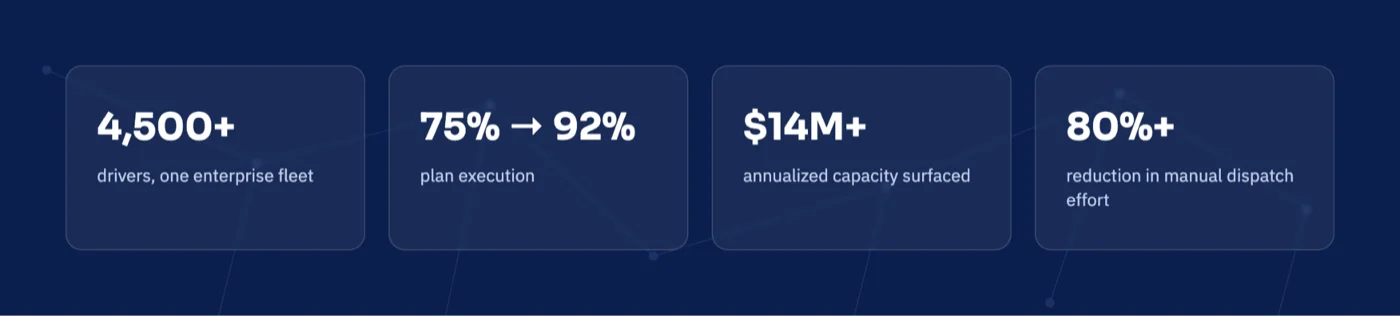
A retail enterprise consolidating six legacy systems onto Locus cut manual dispatch effort by more than 80% while sustaining 99%+ on-time delivery. Read the case study →
Pharmacy delivery driver management
Time-sensitive order sequencing, traceable handoffs with chain-of-custody records, tamper-evident electronic proof of delivery, certification-gated driver assignment for cold chain and controlled items, real-time delivery status, and exception management.
Food delivery rider management
High-volume, time-sensitive dispatching, dynamic rider assignment and routing, peak-demand capacity management, real-time rider visibility, live customer updates and on-time delivery monitoring.
On Locus, CP AXTRA lifted orders per rider per day 50%, from 10 to 15 up to 18 to 20, across a high-density store network. Read the case study →
Courier and parcel driver management
Dense multi-stop pickup and delivery routes, parcel-level task management, captive and partner-fleet visibility, proof of delivery with reattempt workflows, and driver productivity and SLA analytics.
A Fortune 50 parcel provider running 4,500+ drivers lifted plan execution from 75% to 92% on Locus. Read the case study →
Related: fleet management software and route optimization software.
Why Locus
Why Enterprises Choose Locus for Driver Management
AI-powered decisions, not disconnected driver tools
Onboarding, scheduling, driver management, dispatching, and route optimization run on one decision layer, so what the driver does reflects what the optimizer decided and what the customer was told.
Built for complex, high-volume delivery networks
Multi-region deployments, mixed fleet models, localized constraints, and enterprise order volumes, with 1.5B+ deliveries orchestrated for 360+ enterprise customers across 30+ countries at 99.99% platform uptime.
API-first integration
REST APIs and webhook event streams connect Locus to TMS, OMS, WMS, ERP, CRM, payment gateways, and other logistics systems, so driver execution data flows into the systems of record rather than sitting in a separate app.
One source of truth from onboarding to delivery
Roster planning, dispatch, driver execution, real-time visibility, customer communication, electronic proof of delivery, and analytics read and write to the same operational record.
Independently validated
Ranked #1 in Enterprise Route Planning on G2. Recognized by Gartner for seven consecutive years. Named a Leader in the QKS Group SPARK Matrix for Transportation Management Systems. See the full analyst recognition →
Proven Results from Real-World Delivery Operations
Reported outcomes from Locus deployments. Results vary by delivery network, configuration, and operating model.
| Operation | Fleet size and scale | Reported outcome |
|---|---|---|
| Fortune 50 parcel provider | 4,500+ drivers, multi-region parcel network | Plan execution lifted from 75% to 92%, surfacing $14M+ in annualized capacity |
| Retail enterprise | Multi-location retail network, six legacy systems consolidated | Manual dispatch effort reduced by 80%+, 99%+ on-time delivery sustained, break-even inside year one |
| CP AXTRA | High-density rider operations across store network | Route planning time reduced 75%, orders per rider per day increased 50% |
Platform scale: 1.5B+ deliveries optimized · 360+ enterprise customers · 30+ countries · 250+ operational constraints modeled · 800M+ miles eliminated · 17M+ kg CO2 avoided
Questions
Frequently Asked Questions
Software that helps delivery businesses onboard and schedule drivers and riders, assign orders, dispatch optimized routes, track execution in real time, manage delivery tasks, capture proof of delivery, communicate with customers, and analyze performance. Locus is rider and driver management software for enterprise delivery operations, connecting these functions to AI-powered dispatching and route optimization.
Drivers and riders are provisioned directly in the platform: profile creation, credential and document upload, skills and certification records with expiry tracking, service area and territory assignment, vehicle pairing, and capacity configuration. Because onboarding data feeds allocation, a driver is only assigned work they are qualified, equipped, and permitted to perform. The Driver Companion App then guides first-time users through a structured onboarding flow before their first dispatch.
Availability, shift patterns, and roster plans are managed in the same platform that dispatches the work, so planned capacity feeds allocation directly rather than being maintained in a separate scheduling tool. Scheduling analytics show planned versus actual availability, flag underutilized shifts, and surface capacity the operation already owns but is not deploying.
Onfleet is optimized for SMB and mid-market last-mile courier operations, with strong app usability and fast deployment. Locus is built for enterprise logistics teams that need AI-driven dispatch, coordination across captive, contracted, and outsourced fleets, ERP and WMS integration, and performance analytics at network scale. For operations running 500+ daily deliveries across mixed fleet types, Locus provides optimization and integration depth that a single-fleet execution tool is not architected for.
Yes. The Locus Driver Companion App is a white-labeled app for tasks, navigation, delivery updates, and proof of delivery, with sequenced task lists, turn-by-turn navigation, real-time route updates, configurable delivery workflows, masked customer contact, in-app messaging, and a personal performance dashboard.
Auto-assignment is part of Locus's AI-driven dispatch and route optimization rather than nearest-driver matching. Orders are allocated across drivers, vehicles, hubs, carriers, and partners by evaluating assignment and route sequencing together against constraints including capacity, driver skills and certifications, service areas, customer time windows, SLA requirements, and vehicle type.
Yes. Real-time GPS tracking gives dispatchers visibility into driver, vehicle, route, and order progress from a unified control tower, with planned-versus-actual comparison, geofence alerts, idle and stoppage time, ETA risk, and exception detection across captive, contracted, and outsourced fleets.
Photos, electronic signatures, PINs or OTPs, item-level scans, timestamps, configurable fields, and delivery notes. Evidence requirements can be configured per order type, and captured records sync to the central platform for customer service, dispute resolution, chain-of-custody, and compliance workflows.
Task completion, on-time delivery, time per task, distance covered, idle and stoppage time, route adherence, SLA performance, and proof-of-delivery completion, measured against each route's expected difficulty rather than a flat target. Drivers also get an in-app performance dashboard with gamified KPI tracking.
Yes. Locus coordinates captive fleets, contracted carriers, outsourced fleets, and delivery partners within one operation, with capacity and driver availability feeding dispatch planning and all fleet types visible in the same control tower. Carrier reach comes through ShipFlex, connecting a 1,000+ carrier network with 160+ carriers pre-integrated.
Yes. New orders, cancellations, returns, priority changes, driver availability changes, delays, and exceptions trigger re-optimization of the remaining plan, and updated sequences flow directly to the driver app without requiring dispatcher phone calls.
No, and it is not intended to. Telematics and ELD platforms measure the vehicle and the driving: location hardware, engine data, hours-of-service logging, and safety events. Locus measures the delivery: dispatching, routing, execution, visibility, and delivery performance. The two are complementary, and telematics feeds can integrate as sensing inputs into Locus decisioning.