

AI-Powered Delivery Dispatch Software
for Enterprise Logistics
A national e-commerce retailer dispatches 6,000 orders daily from eight fulfilment hubs. During a festive sale, order volume triples overnight. The four-person dispatch team spends three hours manually re-allocating routes while the SLA breach rate climbs past 22%. By the time new plans are ready, 40% of delivery windows have already closed.
That scenario plays out every peak season across retail, FMCG, and 3PL operations worldwide.
The root cause is architectural: manual dispatch processes were never built for the volume, variability, and velocity that enterprise logistics demands.
Locus is the AI-powered delivery dispatch software built for enterprises running hundreds of vehicles and thousands of daily deliveries across owned fleets, 3PL partners, and on-demand carriers. Its DispatchIQ engine automates order-to-driver allocation, optimizes routes across 250+ real-world constraints, and re-optimizes continuously as conditions change throughout the day.
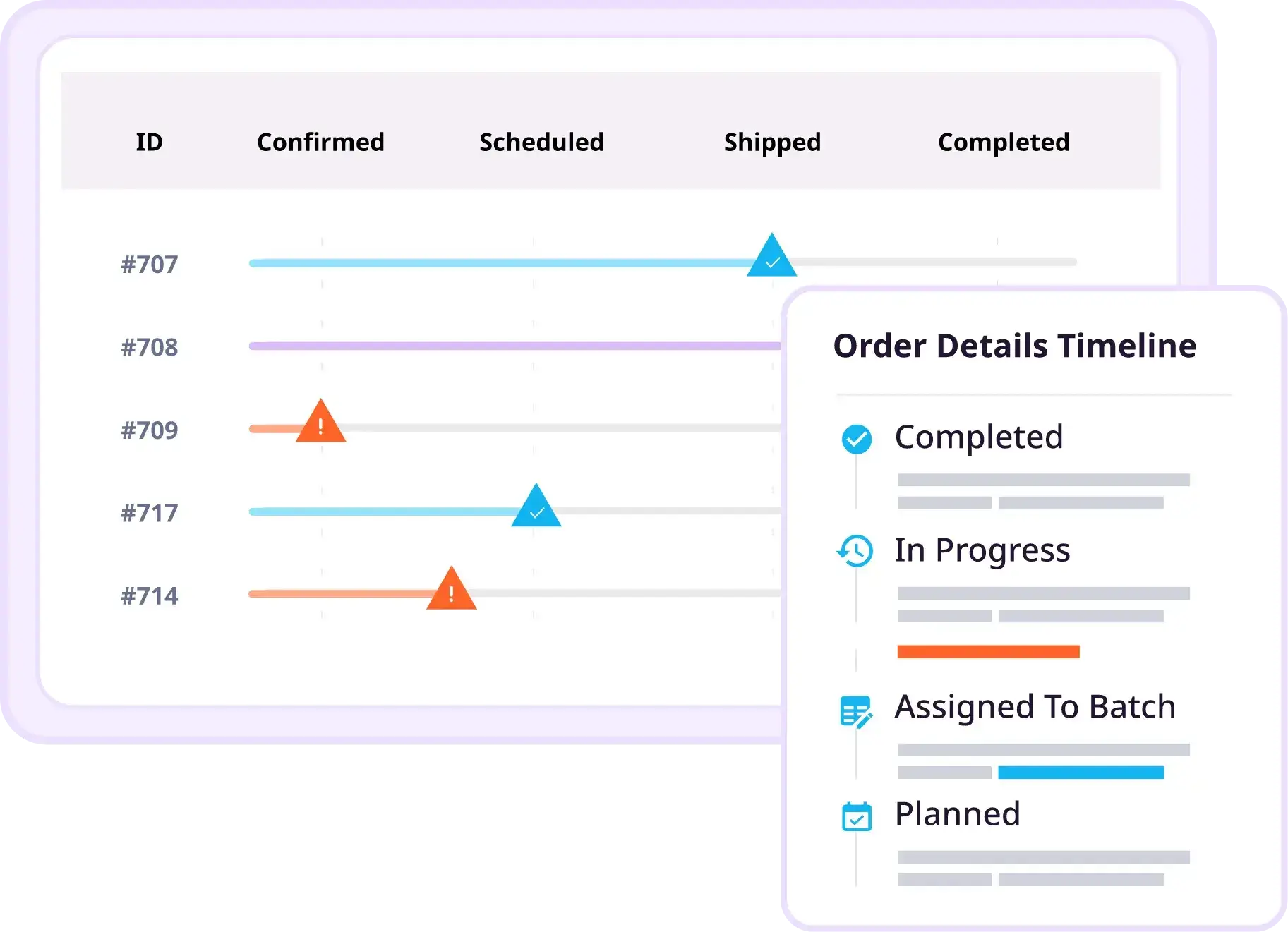
Why Legacy Dispatch Processes Break at Enterprise Scale
Most enterprise logistics teams started with spreadsheets, phone calls, and basic routing tools. Those processes worked at 200 daily deliveries. At 2,000 or 20,000, they become the single largest bottleneck in the fulfilment chain.
Manual allocation bottlenecks that compound daily
During a promotional campaign or holiday surge, order volumes spike 2-3x. The dispatch team’s response is manual re-allocation: phone calls to drivers, spreadsheet adjustments, route re-sequencing one vehicle at a time.
The cost is measurable. SLA breach rates climb, while fleet capacity goes underutilized because assignments are based on who is closest, not who has remaining capacity within their time window. Dispatcher burnout rises during the exact periods when precision matters most.
Fragmented visibility across mixed fleets
Enterprises running owned vehicles alongside contracted 3PL partners and gig drivers face a structural visibility problem. Each carrier type operates on a different tracking system with inconsistent ETA data. There is no single source of truth for the operations team, the warehouse, or the customer service desk.
The downstream impact is direct: “where is my order?” (WISMO) call volumes rise, customer experience scores drop, and the operations team cannot intervene on at-risk deliveries because they cannot see them in real time. If reducing WISMO calls is a board-level priority, this visibility gap translates directly into cost.
Rigid, rule-based routing that collapses under variability
Traditional dispatch systems optimize on distance or time alone. They do not account for vehicle capacity, driver skill sets, customer time-window preferences, traffic patterns, priority tiers, or the 200+ additional constraints that define enterprise logistics.
The moment real-world variability enters, like a new order at 11 AM or a vehicle breakdown, the plan is obsolete. The shift from manual to automated route planning is where that architectural gap closes. Locus built DispatchIQ to eliminate these failure modes entirely.
What Enterprise-Grade Delivery Dispatch Software Actually Delivers
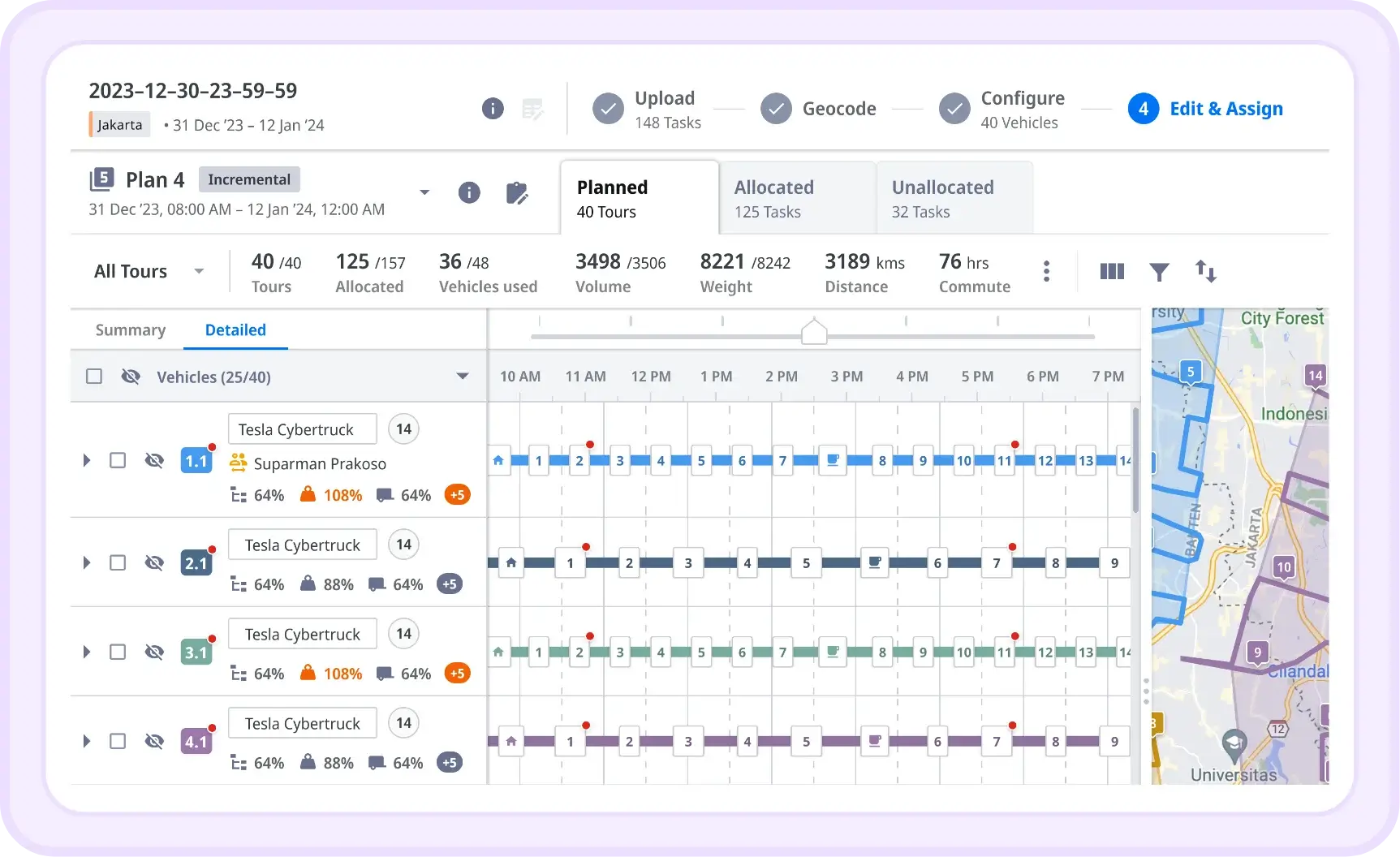
Instant, AI-driven order allocation
Where a manual dispatcher assigns orders one at a time, DispatchIQ allocates an entire fleet’s workload in seconds. The AI engine factors in delivery priority, driver location, vehicle capacity, skill requirements, SLA windows, and real-time traffic data simultaneously.
DispatchIQ operates in a continuous Sense-Decide-Execute-Learn cycle: it absorbs real-time data, makes constraint-aware decisions, executes dispatch plans, and learns from outcomes to improve the next planning cycle.
When peak-volume surges hit during holiday campaigns, flash sales, and promotional events, the system handles 10x order spikes without manual dispatcher intervention. The architecture scales with your operation, not against it.
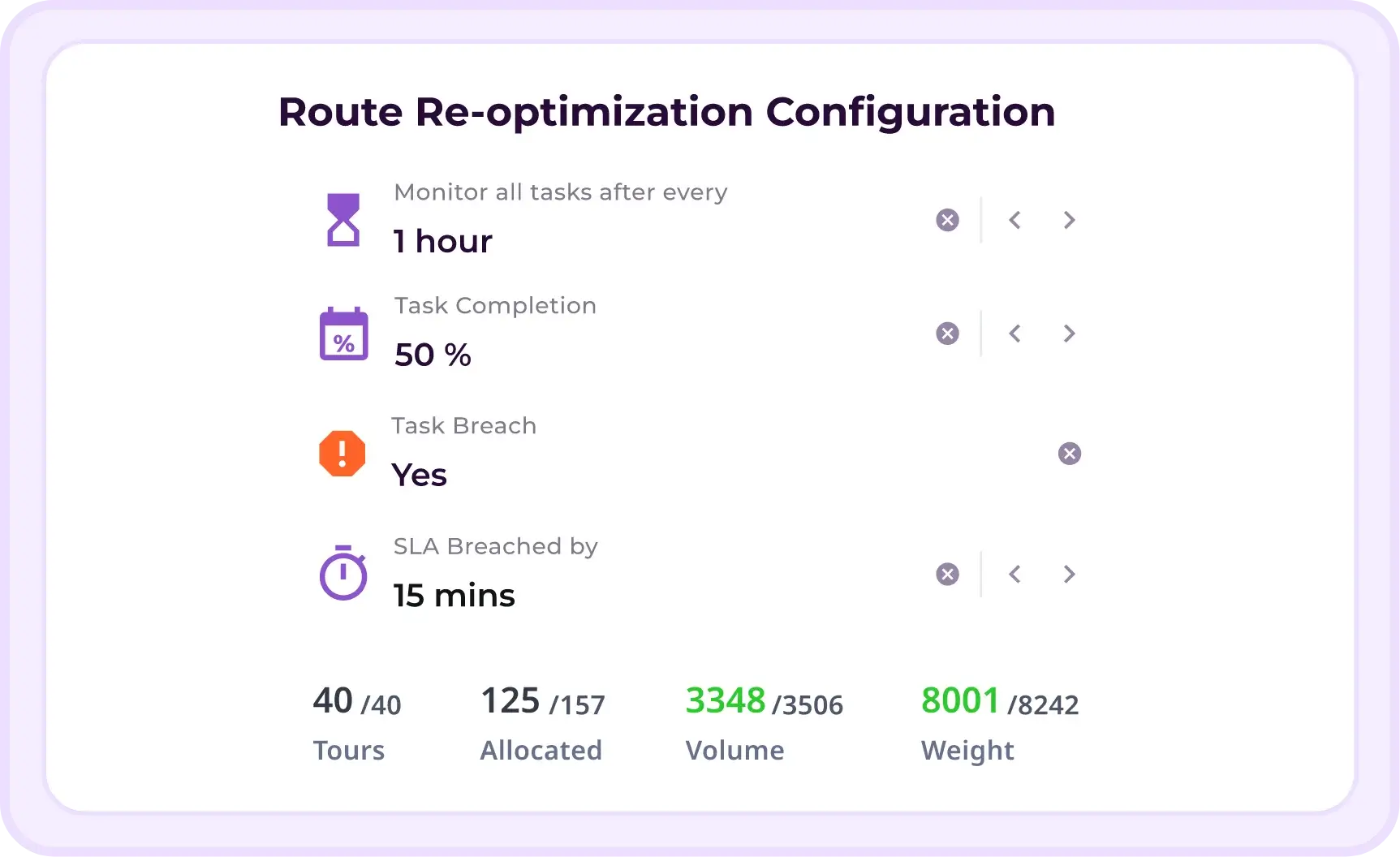
Dynamic route optimization that adapts in real time
Locus's Route Planning module operates as the Transportation Planning and Optimization layer within its Decision-Intelligent TMS, handling capacity-led routing across first-mile, mid-mile, and all-mile networks.
It re-optimizes routes in real time as an automated, continuous process. The platform recalculates the optimal allocation of stops, vehicles, and sequences in real time across 250+ constraints, ensuring that every disruption is absorbed without cascading into missed SLAs.
When mid-route disruptions become the norm rather than the exception, your ability to manage delivery exceptions in real time determines whether you hit your delivery SLAs or spend the next morning dealing with customer escalations. This capability is the single largest driver of routing efficiency gains at scale.
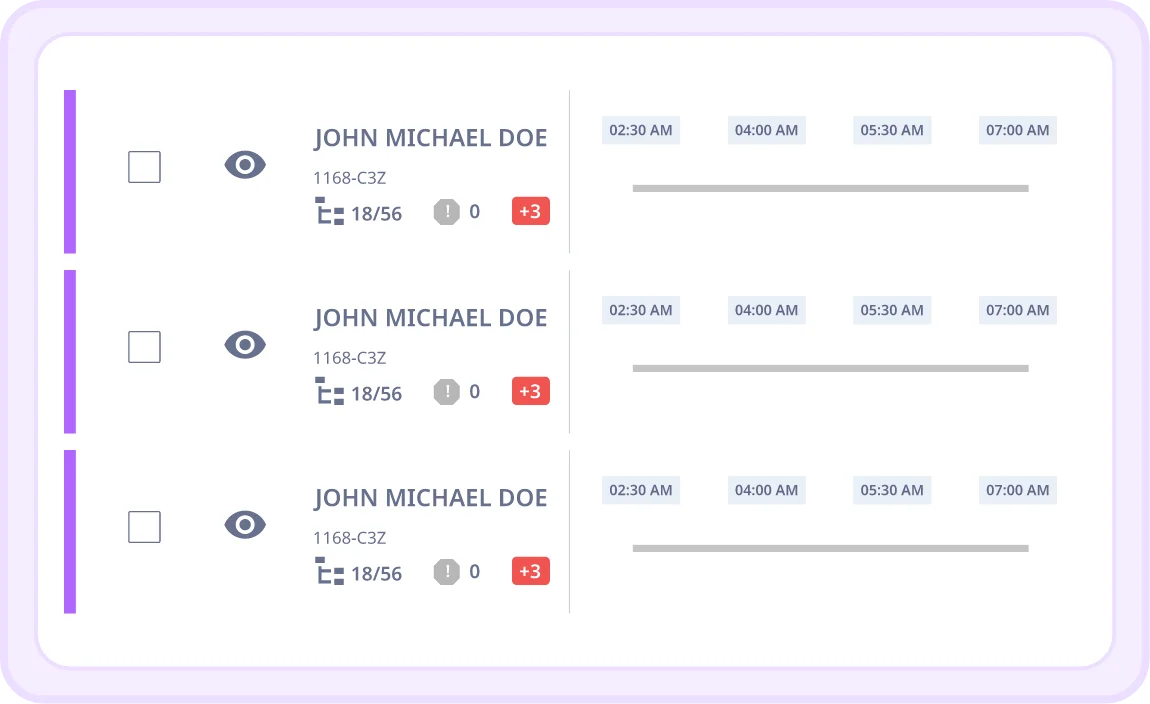
Unified visibility across every fleet type
Dispatch planning as part of a connected logistics operation is where most platforms fall short. Locus connects delivery dispatch to the broader supply chain: real-time tracking of every vehicle, every order, every ETA, unified on a single platform.
Dispatch managers, warehouse teams, and customer service all operate from a single source of truth. The Control Tower identifies at-risk deliveries and triggers automated interventions, such as rerouting, driver reassignment, or customer notification, before exceptions become failures.
Automated SMS, email, and WhatsApp notifications powered by real-time data keep customers informed without dispatcher effort. For retail, FMCG, and 3PL operations where SLA adherence defines customer retention, this visibility is infrastructure for last-mile excellence.
End-to-end proof of delivery and compliance
Enterprise logistics requires verifiable delivery records for dispute resolution, regulatory compliance, and financial settlement.
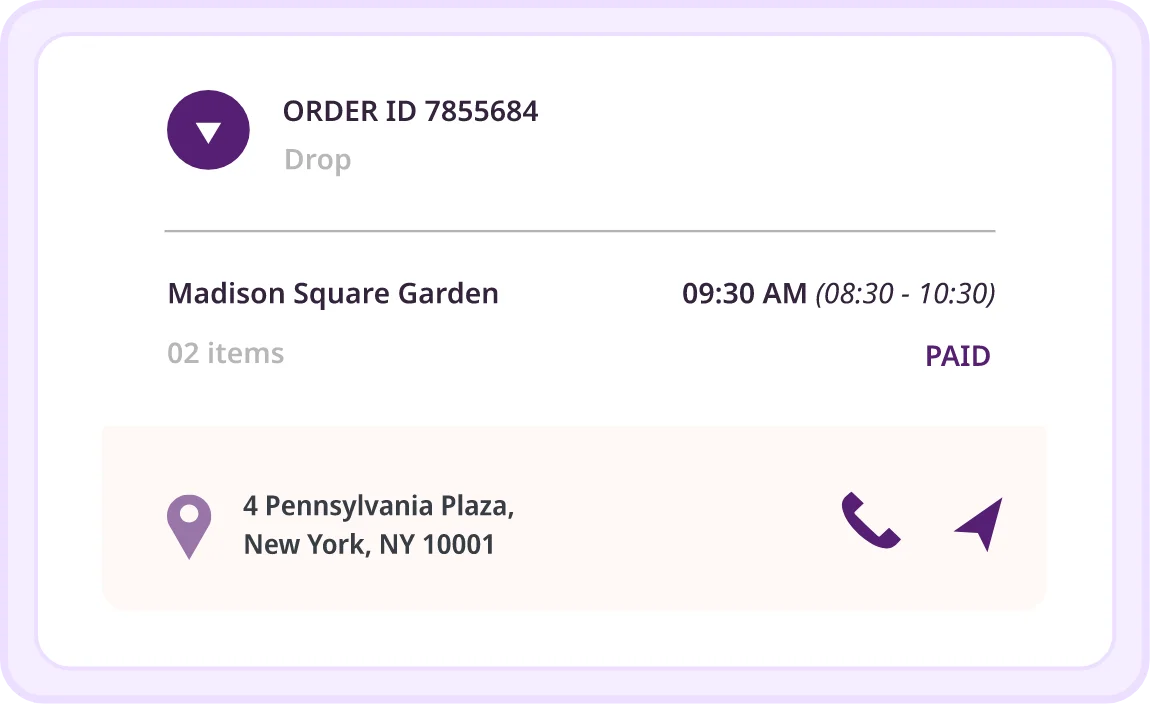
Locus captures electronic proof of delivery (ePOD) through photo capture, e-signatures, barcode scanning, and timestamped geo-tagged confirmations via the Driver Companion App.
ePOD data integrates directly into invoicing workflows, performance dashboards, and audit trails.
Locus maintains enterprise-grade security and compliance standards including SOC 2, SOC 3, ISO-aligned controls, GDPR, HIPAA, role-based access control, SSO/SAML, and full audit logs.
See DispatchIQ in action
Schedule a DemoBuilt for Complexity, Designed for Control
| Feature | What It Does | Business Outcome |
|---|---|---|
| DispatchIQ Auto-Allocation Engine | AI assigns orders to optimal resources using multi-constraint logic across delivery priority, driver availability, vehicle capacity, and SLA windows | Zero manual dispatch overhead at peak volumes |
| Transportation Planning and Optimization | The Route Planning module within Locus's Decision-Intelligent TMS handles capacity-led routing across first-mile, mid-mile, and all-mile legs | Lower cost-per-delivery, higher on-time rates |
| Live Tracking and ETA Engine | GPS-powered tracking with ML-based ETA predictions shared with operations teams and end customers in real time | Reduced WISMO calls, improved customer experience scores |
| Automated Customer Notifications | Configurable SMS, email, and WhatsApp alerts triggered by delivery milestones from dispatch to doorstep | Proactive communication without dispatcher effort |
| Electronic Proof of Delivery (ePOD) | Photo, signature, barcode, and geo-tagged delivery confirmation with AI validation | Faster dispute resolution, audit-ready records |
| Multi-Fleet Orchestration | Unified management of owned, 3PL, and on-demand fleets under one SLA framework with 1,000+ pre-integrated carriers | Carrier-agnostic visibility and control |
| Hub Operations (IntelliSort) | Automated parcel sorting with geocoding and route-based allocation, with integrated driver/vehicle assignment, address mapping, and label printing at the hub level | Reduced misroutes, faster shipment processing speeds, and lower hub operating costs |
| Capacity Management | Shift planning, roster management, sick-day and holiday handling, and dynamic carrier engagement for surge capacity | Predictable capacity planning before peak seasons and promotional events |
| Analytics and Performance Dashboards | Real-time and historical reporting on delivery KPIs, driver utilization, cost metrics, and SLA compliance | Data-driven operations decisions, not gut calls |
| Enterprise Integrations | API-first connectors for ERP, OMS, TMS, CRM, and WMS platforms with configurable BPMN workflow engine | Fits into existing tech stack; no rip-and-replace required |
Key features of Locus delivery dispatch software, each connecting platform capability to measurable enterprise outcomes.
Dispatch Intelligence for Every Delivery Model
Retail and e-commerce
High-volume, multi-hub dispatch with same-day and next-day SLAs. DispatchIQ optimizes customer cluster allocation for urban delivery density and coordinates fulfilment across store, warehouse, and dark store origins.
For enterprises managing omnichannel retail logistics, Locus connects dispatch decisions to broader fulfilment strategy.
Learn moreFMCG and CPG
Recurring route optimization for store replenishment cycles, capacity-aware load planning, and time-window compliance across distribution networks.
DispatchIQ handles multi-day route planning for field distribution teams managing hundreds of recurring delivery points.
Learn more3PL and courier
Multi-client dispatch with carrier allocation logic, white-label tracking, and per-client SLA management.
ShipFlex enables automated carrier selection across 1,000+ pre-integrated logistics partners based on cost, service level, and delivery requirements.
Learn moreD2C and quick commerce
Hyperlocal dispatch with sub-60-minute delivery windows, real-time order batching, and demand-surge handling.
DispatchIQ processes new orders mid-route and re-optimizes the entire fleet in seconds.
Learn moreTrusted by Enterprises Moving Millions of Deliveries
Lenskart
Lenskart, one of Asia’s largest eyewear retailers, needed dispatch planning infrastructure that could keep pace with high-volume daily deliveries across India.
After deploying Locus, Lenskart achieved a 20% increase in tasks completed per delivery agent and 80% of orders delivered within SLA windows.
Read the case study“Locus provides a powerful routing solution that handles all our real-life situations. They are invaluable to our daily operations and have helped us increase the tasks per agent by 20% with 80% of the orders completed within SLAs.”
Landmark Retail
Landmark Group, a major Middle Eastern retail conglomerate, required automated dispatch planning across its home delivery operations. With Locus, the logistics team moved from manual planning to automated route generation within minutes.
Read the case studyIf your logistics operations involve multiple carriers, fulfilment locations, and delivery partners, Locus provides delivery dispatch software as part of an end-to-end logistics orchestration platform.
With DispatchIQ handling AI-driven allocation, dynamic re-optimization, and centralised visibility across your entire fleet, enterprises can scale dispatch operations without adding manual overhead.
Frequently Asked Questions
Start dispatching intelligently with Locus.
See how DispatchIQ automates allocation, optimizes every route, and gives you real-time control across every fleet in a 30-minute demo tailored to your operations.