

General
Top 10 Best Truck Dispatch Software Providers in 2025


Key Takeaways
- We analyzed 10 leading truck dispatch software providers using enterprise customer feedback, implementation success rates, and measurable ROI data
- Fleet size determines optimal platform choice – Different solutions excel for small operations (5-20 trucks), mid-market fleets (20-100 vehicles), and large enterprises (100+ trucks)
- Truck-specific constraints separate professional platforms from basic routing tools – Height restrictions, weight limits, and HOS compliance are non-negotiable features
- AI-powered truck dispatch software delivers superior results through continuous learning from driver behavior and route performance
- Integration capabilities directly impact ROI – Platforms connecting with existing TMS/ERP systems eliminate data silos and maximize operational efficiency
- Most enterprises achieve full ROI within 12-18 months when selecting the right platform for their operational complexity
Customers today expect instant or near instant deliveries. But this becomes a challenge for fleet managers and logistics professionals. Achieving on-time delivery rates while balancing increasing costs with revenue growth is not easy. The trucking industry’s average cost per mile reached $2.26 in 2024, with non-fuel operating expenses hitting $1.779 per mile. These economic pressures make selecting the best truck dispatching software key for sustainable operations.
The truck dispatch software market is projected to grow to $3.8 billion by 2032, at a CAGR of 10.5%. Clearly, businesses know now that well begun is half done when it comes to truck dispatch. Their bottom line feels the impact of their trucking dispatch software?, good or bad. Yet many fleet operators still use fragmented systems that fail to address truck-specific constraints and real-time operational challenges.
In this guide, we evaluate truck dispatch software providers based on real-world enterprise testing. We also look at customer feedback and documented ROI delivery. We’ll help you identify which platform delivers measurable value for your specific fleet size and operational complexity.
Essential Features Your Truck Dispatch Software Must Have
So, how do you know which is the best truck dispatching software for you? Choosing the right truck dispatch software solution requires understanding which features directly impact your operational efficiency and cost management. These capabilities separate professional-grade platforms from basic routing tools. Let’s look at them in detail:
AI-Powered Route Optimization
Route optimization is now a given in most truck dispatch software solutions. But Intelligent route optimization for trucking takes this a step further. It utilizes machine learning (ML) algorithms to process hundreds of variables at once. These AI systems consider many factors to create optimal routes, including:
- real-time traffic conditions,
- historical delivery patterns,
- weather forecasts,
- and driver preferences
Advanced smart logistics orchestration platforms learn from actual driver behavior and route performance over time. For example, they identify which suggested routes drivers consistently follow versus routes that get modified or ignored. This feedback loop continuously improves future recommendations and increases driver acceptance rates.
The outcome is a significant fuel cost reduction. Users also see improved on-time delivery performance. Without AI optimization, dispatchers rely on static algorithms that can’t adapt to changing conditions or learn from experience.
Ability to Solve Truck-Specific Routing Constraints
Generic truck dispatch software treats commercial trucks like passenger cars, which creates costly problems. But the best trucking dispatch software ensures that vehicle-specific needs are accounted for. For example, professional trucking dispatch software must account for factors like:
- vehicle dimensions,
- weight limits,
- bridge restrictions,
- and hazmat regulations.
Height clearances, too, vary significantly by route. Some roads prohibit commercial vehicles during specific hours.
Hours of Service (HOS) compliance adds another critical layer. Drivers can operate for specific periods before mandatory rest breaks. The best truck dispatch software solution automatically builds these requirements into route calculations to prevent violations and associated penalties.
Without proper constraint handling, dispatchers waste time manually checking routes. As a ripple effect, drivers face delays, fines, or safety violations that could shut down operations.
Real-Time Fleet Visibility and Control
To stay competitive and gain an edge, it’s important to know where your vehicles are at all times. The best truck dispatch software today helps you gain this visibility. An automated dispatch management system provides
- live location tracking,
- ETA updates,
- and exception management capabilities.
This real-time visibility enables proactive issue resolution and enhances customer communication 41% of GPS tracking users report positive ROI within one year, for example.
The control tower functionality allows dispatchers to monitor all active routes from a single dashboard, identify delays, communicate with drivers, and make route adjustments instantly. This becomes particularly valuable when managing 50 or more vehicles across multiple territories.
Advanced Analytics and Cost Management
The most valuable truck dispatch software solution provides detailed cost analysis beyond basic fuel savings. Professional platforms track
- driver overtime,
- vehicle utilization rates,
- customer service metrics,
- and maintenance scheduling based on route difficulty.
Strategic route planning capabilities help fleet managers forecast maintenance needs and optimize capacity utilization. Managers can also identify additional cost reduction opportunities. These insights prove essential for justifying software investments and demonstrating value to senior leadership.
Top 10 Truck Dispatching Software Providers – Quick Overview
We evaluated truck dispatch software providers based on enterprise customer feedback, implementation success rates, and measurable ROI delivery across different fleet sizes and operational complexities.
| Software | Best For | Key Features | Starting Price | Free Trial | Truck Features |
|---|---|---|---|---|---|
| Locus | Enterprise retailers, 3PLs, CPG distributors | AI dispatch optimization, Control tower, End-to-end visibility | Custom pricing | Yes | Full truck constraints, HOS compliance |
| McLeod Software | Large trucking operations, freight brokers | Load planning, Driver management, Financial integration | Contact for pricing | Demo available | Comprehensive trucking features |
| TMW Suite (Trimble) | Large for-hire carriers, complex operations | 30+ modules, 100+ integrations, Fuel management | Contact for pricing | Demo available | Full truck capabilities |
| TruckBase | Growing mid-market fleets (10-100 trucks) | AI load importer, Driver-friendly dispatch, EDI integrations | Custom pricing | Demo available | Standard truck constraints |
| Samsara | Safety-focused fleets, compliance-heavy industries | AI dash cams, Real-time tracking, Safety reporting | Contact for pricing | 30 days | Limited routing optimization |
| Motive | Compliance-focused operations, public sector | ELD integration, HOS tracking, Safety monitoring | Contact for pricing | Demo available | Fleet tracking focused |
| ProTransport | Freight brokers, truckload/LTL carriers | All-in-one platform, Accounting integration, Fuel card support | Contact for pricing | Demo available | Basic truck routing |
| TruckingOffice | Small carriers (1-5 trucks), owner-operators | Record keeping, Basic dispatch, Cost tracking | $29.95/month | 30 days | Limited truck features |
| Upper | Growing delivery businesses (10-50 vehicles) | Route optimization, Proof of delivery, Transparent pricing | $40/user/month | 7 days | Standard truck constraints |
| ITS Dispatch | Small operators, brokerage operations | Load board integration, Brokerage module, Basic tracking | $30/month | Demo available | Basic vehicle types |
Top 10 Truck Dispatching Software Providers – Detailed Analysis
If you are looking for the best truck dispatching software, here are the top 10 names in our list. Starting with Locus, McLeod’s LoadMaster, and TMW Suite, we look at truck dispatch software solutions that serve fleets of all shapes and sizes in detail:
1. Locus
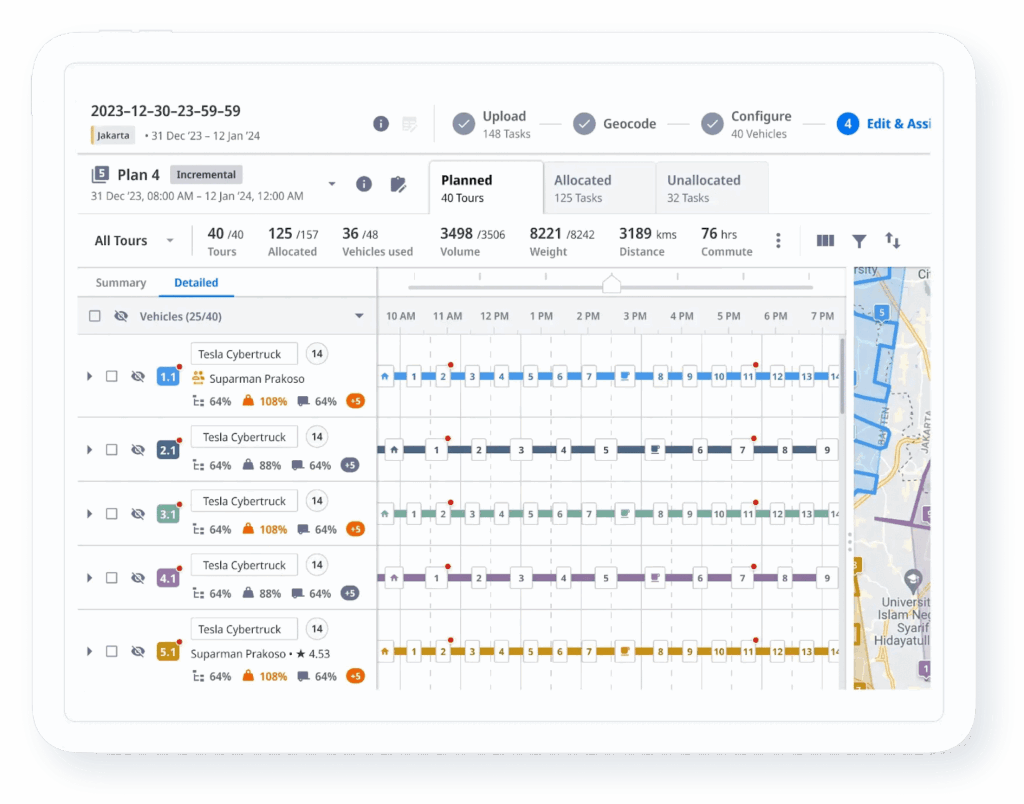
When enterprise logistics teams need to reduce operational costs while improving delivery performance, Locus delivers AI-powered truck dispatch software that handles the complexity of modern supply chains. The platform combines dispatch optimization with complete operational visibility, managing hundreds of vehicles across multiple territories from a single dashboard.
Locus is For
- Enterprise retailers and FMCG companies with revenue over $150M
- E-commerce platforms requiring scalable last-mile delivery solutions
- 3PLs managing complex multi-client operations across global markets
- Operations spanning North America, Europe, Southeast Asia, India, and the Middle East & Africa
Locus – Key Features
- Locus’s intelligent route optimization for trucking processes over 200 variables, including traffic patterns, vehicle constraints, driver preferences, and customer requirements. The AI dispatch engine continuously learns from route performance and driver behavior to improve future recommendations.
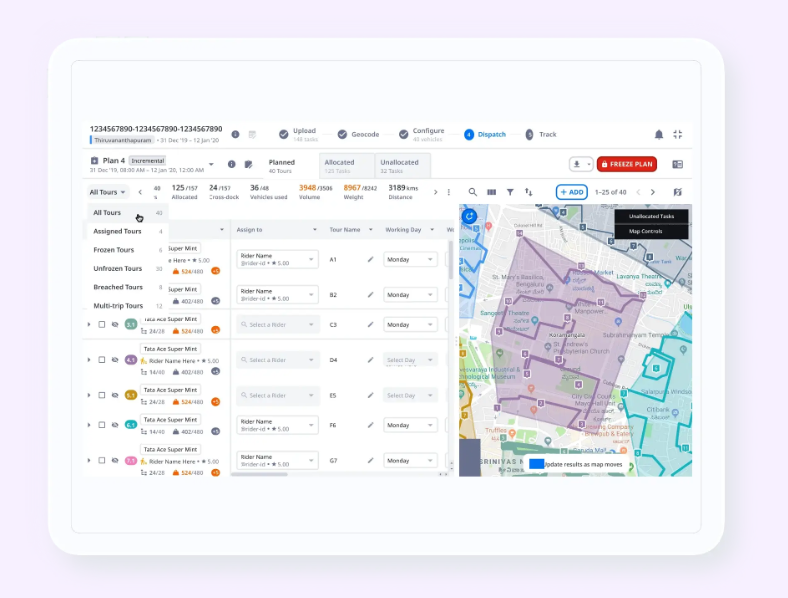
- The Control Tower provides end-to-end visibility across multi-location operations with real-time updates, allowing dispatchers to monitor active routes, identify delays, and communicate with drivers from a centralized dashboard. This becomes essential when coordinating complex operations across different time zones and regulatory environments.
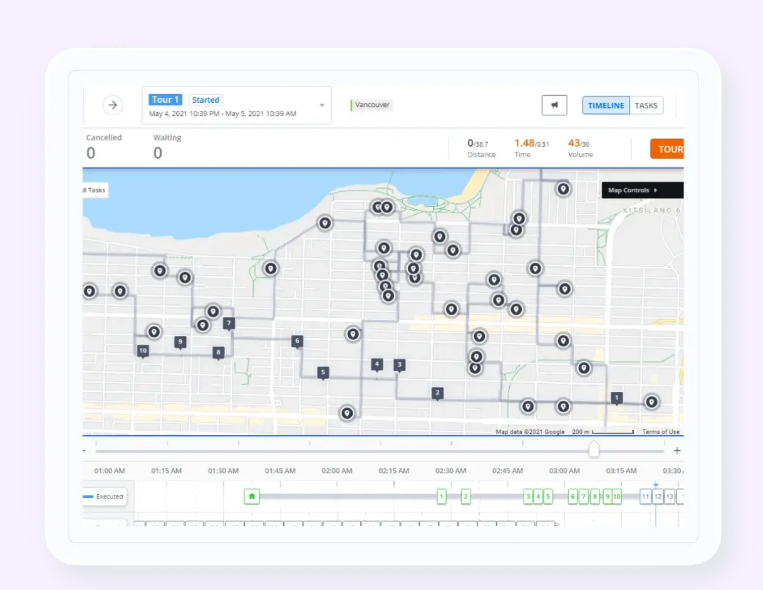
- Automated logistics optimization eliminates manual coordination between systems and departments. The platform automatically assigns loads based on vehicle capacity, driver skills, HOS compliance, and delivery windows while respecting truck-specific constraints like weight limits and height restrictions.
- The driver companion mobile app provides turn-by-turn navigation with electronic proof of delivery capabilities. Drivers receive optimized routes with clear instructions, which reduces confusion and improves compliance rates. Route management features help maintain consistent service quality across different driver teams.
- Sustainability tracking capabilities can reduce fleet emissions by up to 30% through intelligent route scheduling and vehicle utilization optimization. This helps enterprises meet environmental goals while reducing fuel costs.
Locus – Pros
- Comprehensive machine learning algorithms that improve performance over time
- Strong integration capabilities with major ERP and TMS platforms
- Measurable ROI delivery with detailed cost reduction analytics
- Dedicated implementation support for complex enterprise deployments
- Full truck routing constraint handling, including HOS compliance
Locus – Pricing
Custom enterprise pricing based on fleet size, operational complexity, and required integrations. Contact Locus for detailed ROI analysis and implementation planning.
2. McLeod’s LoadMaster
Fleet managers often deal with complex truckload operations. They struggle to find trucking dispatch software that handles both the operational intricacies and financial complexity of their business. McLeod’s LoadMaster addresses this challenge through 35 years of specialized focus on trucking operations. It serves large carriers and freight brokers who need more than basic dispatch functionality.
McLeod’s LoadMaster – Key Features
- Advanced load planning with capacity optimization and driver matching algorithms
- Integrated driver communication platform with document management capabilities
- Comprehensive financial reporting suite with accounting system integration
- Fleet maintenance scheduling with compliance tracking and alert systems
McLeod’s LoadMaster – Pros
- Deep trucking industry expertise developed through decades of carrier partnerships
- Extensive customization options accommodating unique operational workflows
- Robust financial management tools designed specifically for trucking operations
- Comprehensive feature set covering dispatch, accounting, and fleet management
McLeod’s LoadMaster – Cons
- Implementation complexity requiring 3-6 months for full deployment
- Higher costs targeting the enterprise market segment exclusively
- Steep learning curve, demanding significant training investment
McLeod’s LoadMaster – Pricing
Contact McLeod for enterprise pricing based on fleet size and customization requirements.
3. TMW Suite (Trimble)
When trucking operations scale beyond 500 vehicles, standard dispatch systems often buckle down. The complexity of multi-terminal coordination and specialized hauling requirements can be a challenge for a basic truck dispatch software solution. TMW Suite was designed specifically for these massive operations. It offers over 30 functional modules that integrate with more than 100 existing business systems.
This is one of the best truck dispatching software platforms for specialized verticals like fuel hauling, where tank monitoring and rack pricing integration become mission-critical capabilities. The system’s dispatch dashboards provide comprehensive visibility into available loads and driver assignments across multiple terminals.
TMW Suite – Key Features
- Specialized fuel dispatching module with real-time tank level monitoring
- Multi-terminal dispatch coordination with load optimization algorithms
- Advanced integration framework supporting 100+ business system connections
- Customizable workflow engines adapting to unique operational requirements
TMW Suite – Pros
- Proven scalability supporting fleets with thousands of vehicles
- Industry-specific modules addressing specialized hauling requirements
- Extensive API framework enabling custom business system integrations
- Strong track record with Fortune 500 logistics operations
TMW Suite – Cons
- Implementation timelines often extend 6-12 months for full deployment
- Total cost of ownership, including customization, frequently exceeds $500K annually
- Feature complexity potentially overwhelming for straightforward dispatch operations
TMW Suite – Pricing
Contact Trimble for custom enterprise pricing reflecting operational scope and required modules.
4. TruckBase
Mid-market carriers face a unique challenge: they’ve outgrown basic truck dispatch software tools but don’t need the complexity of enterprise platforms. TruckBase fills this gap. Designed from the ground up for asset-based carriers managing 10-100 trucks, this is a truck dispatch software solution for those who need professional capabilities without overwhelming complexity.
The platform’s AI-powered load importer dramatically reduces manual data entry. It’s EDI connections help carriers meet broker requirements for dedicated lanes. This intelligent route optimization for trucking focuses on creating driver-friendly routes that improve compliance and reduce turnover.
TruckBase – Key Features
- AI-enhanced load importing eliminates 80% of manual data entry tasks
- Driver-optimized dispatch interface with mobile-first design principles
- EDI and ELD integrations supporting broker and shipper requirements
- Truck-level profitability analysis with customizable driver compensation structures
TruckBase – Pros
- Intuitive design requiring minimal training for dispatchers and drivers
- Modern cloud architecture with industry-leading uptime performance
- Professional feature set suitable for securing dedicated customer contracts
- Responsive customer support from a rapidly growing technology team
TruckBase – Cons
- Enterprise features are limited compared to platforms targeting larger fleets
- Growth scalability questions for operations planning expansion beyond 100 trucks
- Customization options are fewer than highly configurable enterprise solutions
TruckBase – Pricing
Transparent custom pricing for mid-market operations with clear feature inclusions.
5. Samsara
Insurance costs plague trucking operations, with safety incidents driving premiums higher each year. Samsara recognizes that the best trucking dispatch software must integrate safety monitoring with operational efficiency. Their platform combines AI-powered dash cameras with dispatch functionality, helping fleets reduce accidents while optimizing routes.
The system’s 99% collision detection accuracy provides immediate alerts to safety managers, while comprehensive driver coaching tools help improve long-term safety performance. This automated trucking dispatch software solution’s management system particularly appeals to fleets where insurance considerations significantly impact operational decisions.
Samsara – Key Features
- AI-powered dash cameras detecting unsafe driving behaviors with 99% accuracy
- Real-time GPS tracking integrated with customizable safety alerts
- Comprehensive safety reporting dashboards with driver coaching recommendations
- HOS compliance automation with electronic logging device integration
Samsara – Pros
- Industry-leading safety technology is helping reduce insurance premiums significantly
- Comprehensive compliance tools simplifying DOT audit preparation
- Strong fleet tracking capabilities providing complete operational visibility
- Proven ROI through accident reduction and improved driver behavior
Samsara – Cons
- Route optimization capabilities are limited to 20 stops per dispatch
- Higher emphasis on monitoring rather than advanced load optimization
- Implementation requires significant change management for safety culture adoption
Samsara – Pricing
Contact Samsara for custom pricing reflecting fleet size and safety feature requirements.
6. Motive (formerly KeepTruckin’)
Regulatory compliance creates constant challenges for fleet managers. This is especially true in industries like construction and waste management, where DOT scrutiny runs high. Motive built its reputation solving ELD compliance challenges. The platform then expanded into a comprehensive truck dispatch software solution with capabilities for operations where regulatory adherence matters as much as operational efficiency.
The platform’s electronic logging (ELD) integration ensures automatic HOS tracking. Compliance reporting tools simplify DOT inspection preparation. This truck dispatch software allows real-time fleet tracking. It particularly benefits public sector fleets and heavily regulated industries requiring detailed documentation.
Motive – Key Features
- Seamless electronic logging device integration with automated HOS documentation
- Real-time GPS tracking featuring geofence alerts and comprehensive reporting
- Automated compliance reporting for DOT inspections and regulatory audits
- Driver safety scoring based on acceleration, braking, and speed metrics
Motive – Pros
- Comprehensive compliance features reduce administrative overhead significantly
- Detailed tracking capabilities providing visibility into driver performance metrics
- Strong public sector focus with features designed for government fleet requirements
- Proven track record of helping fleets maintain regulatory compliance
Motive – Cons
- Operational optimization takes secondary priority to tracking and compliance
- Pricing structure complexity with multiple feature tiers complicates budgeting
- Learning curve steep for advanced features beyond basic fleet tracking
Motive – Pricing
Contact Motive for pricing based on specific compliance requirements and fleet size.
7. ProTransport
Freight brokers often need trucking dispatching software that handles both their own assets and customer freight. This creates unique operational requirements. Since 2005, ProTransport has focused on this dual challenge. This is one of the best truck dispatch software solutions that provides integrated platforms that manage trucking operations while supporting brokerage activities.
The system’s accounting integration capabilities stand out, connecting seamlessly with popular financial systems and fuel card programs. This smart logistics orchestration platform works particularly well for operations requiring detailed cost tracking and profitability analysis across different business segments.
ProTransport – Key Features
- Unified dispatching platform supporting both asset-based and brokerage operations
- Deep accounting system integration with fuel card and expense management
- Driver communication tools with integrated document management capabilities
- Financial reporting suite with profitability analysis across different service lines
ProTransport – Pros
- Comprehensive platform eliminating need for separate trucking and brokerage systems
- Strong financial management tools designed for complex operational structures
- Established track record with mixed-model transportation companies
- Good value proposition for operations requiring multiple functional capabilities
ProTransport – Cons
- User interface design showing age compared to modern cloud-based alternatives
- Mobile optimization is limited, potentially impacting field operation efficiency
- Customization options may be restricted compared to newer platforms
ProTransport – Pricing
Contact ProTransport for pricing based on operational complexity and feature requirements.
8. TruckingOffice
Owner-operators and small carriers often get overwhelmed by expensive, feature-heavy truck dispatch software systems designed for large fleets. TruckingOffice takes the opposite approach. It focuses exclusively on essential back-office functions that small operations actually need: record keeping, invoicing, and basic load tracking.
This is one of the best truck dispatch software solutions for small operations. It excels at detailed cost analysis and reporting, helping owner-operators understand their true profitability per load. The platform works best for single-user operations where one person handles both dispatching and administrative responsibilities.
TruckingOffice – Key Features
- Essential dispatching functions with straightforward load tracking capabilities
- Comprehensive record-keeping system with invoicing automation
- Detailed cost tracking with profitability analysis per load or route
- IFTA and tax reporting tools designed for owner-operator requirements
TruckingOffice – Pros
- Affordable pricing structure suitable for tight small business budgets
- Excellent record-keeping capabilities with detailed financial analysis
- Simple interface requiring minimal training for non-technical users
- Good fit for operations with limited administrative complexity
TruckingOffice – Cons
- Dispatch functionality lacks driver mobile applications and real-time features
- The platform is designed for single-user operations with limited collaboration tools
- Missing advanced routing optimization and load board integration capabilities
- Scalability concerns for operations planning to grow beyond 5 trucks
TruckingOffice – Pricing
Plans start at $29.95 monthly for basic features supporting multiple vehicles.
9. Upper
Last-mile delivery businesses face unique challenges that traditional truck dispatch software doesn’t address well. Upper recognizes that delivery operations need route optimization that considers customer time windows, driver break requirements, and proof of delivery documentation rather than just distance minimization.
The platform’s route optimization engine creates logical stop sequences that drivers actually follow, reducing the compliance issues common with overly aggressive routing algorithms. This trucking dispatch software solution particularly appeals to growing businesses that need professional capabilities without enterprise complexity.
Upper – Key Features
- Route optimization algorithms create driver-friendly stop sequences
- Integrated proof of delivery system with photo capture and electronic signatures
- Real-time tracking capabilities with automated customer notification systems
- E-commerce platform integration supporting popular order management systems
Upper – Pros
- Route optimization focused on driver acceptance rather than pure distance minimization
- Transparent pricing model with all features clearly defined and no hidden costs
- Responsive customer support team providing implementation guidance and ongoing assistance
- Professional capabilities suitable for winning contracts with larger customers
Upper – Cons
- Enterprise-level features are limited to multi-location or complex operational requirements
- Truck routing constraints are basic compared to platforms designed for commercial vehicles
- Growth scalability questions for operations planning significant expansion
Upper – Pricing
$40 per user monthly with transparent feature inclusions and no setup fees.
10. ITS Dispatch
Small trucking operations often wear multiple hats, handling both their own freight and brokering loads for other carriers. ITS Dispatch addresses this dual need by providing basic truck dispatch software functionality alongside brokerage management tools. This makes it one of the best truck dispatching software for operators who need both capabilities in one affordable platform.
The system includes load board integration, helping small carriers find freight while managing their existing customer relationships. This automated dispatch management system works best for operators managing 1-5 trucks who need simple tools rather than comprehensive enterprise features.
ITS Dispatch – Key Features
- Basic dispatching capabilities with essential load tracking functionality
- Integrated brokerage module supporting freight broker operations
- Load board integration is helping carriers source additional freight opportunities
- Simple reporting tools with basic compliance and financial tracking
ITS Dispatch – Pros
- Dual functionality supporting both carrier and brokerage business models
- Affordable pricing makes professional dispatch tools accessible to small operators
- Load board connectivity is helping carriers find additional revenue opportunities
- Straightforward interface requiring minimal technical expertise
ITS Dispatch – Cons
- Advanced optimization features are limited compared to specialized dispatch platforms
- Truck routing capabilities are basic without comprehensive commercial vehicle constraints
- Mobile optimization is minimal, potentially limiting field operation efficiency
ITS Dispatch – Pricing
Basic plans start around $30 monthly for essential dispatch and brokerage features.
Key Considerations When Selecting Truck Dispatch Software
Selecting the best truck dispatch software depends on matching platform capabilities to your operational requirements, growth plans, and budget constraints.
Fleet Size and Operational Complexity
The trucking dispatch software you should use depends on how large your fleet is to begin with. It’s not a one-size-fits-all approach when it comes to truck dispatch software.
- Small fleets (5-20 vehicles) need simple implementation and transparent pricing.
- Basic dispatch functionality with driver communication usually suffices.
- Medium operations (20-100 vehicles) require advanced constraint handling, detailed reporting, and integration capabilities.
- Large enterprises (100+ vehicles) must have comprehensive analytics, complex integration support, and multi-location management capabilities.
The technology gap between large and small fleets continues widening. This disparity can impact competitive positioning over time.
Integration Requirements and ROI Expectations
Assess integration capabilities between each truck dispatch software solution and your existing TMS, ERP, and fleet management systems. Poor integration creates data silos that limit optimization effectiveness. Calculate potential savings from reduced fuel costs, improved driver productivity, and better customer service when evaluating ROI timelines.
Compliance and Safety Requirements
Ensure your chosen platform handles essential compliance requirements like
Modern truck dispatch software solutions should automatically handle regulatory compliance rather than requiring manual oversight. This becomes particularly important as regulations continue evolving across different markets and jurisdictions.
Making the Right Choice for Your Fleet Operations
The best truck dispatching software balances optimization capabilities with practical implementation requirements tailored to your specific operation. Locus stands out among the top truck dispatch software providers for enterprise operations requiring comprehensive optimization and integration capabilities. The platform’s AI-powered approach delivers measurable ROI while handling the complex requirements of modern logistics operations.
The control tower functionality and end-to-end visibility give fleet managers the tools needed to optimize operations and demonstrate value to senior leadership. For growing enterprises seeking smart logistics orchestration platforms that scale with their operations, Locus provides the advanced capabilities and integration support necessary for long-term success.
Discover how AI-powered truck dispatch software can improve your operations. Schedule a demo with Locus to explore how intelligent route optimization systems reduce costs and enhance customer satisfaction.
Frequently Asked Questions (FAQs)
What’s the typical ROI timeline for truck dispatch software implementation?
Most enterprises see initial cost savings within 60-90 days of implementation, with full ROI achieved within 12-18 months. Fuel cost reductions and improved driver productivity provide immediate benefits, while customer satisfaction improvements deliver long-term value through increased retention and referrals.
How do I ensure driver adoption of new routing technology?
Focus on platforms that create driver-friendly routes with logical stop sequences and minimal backtracking. Provide adequate training and emphasize how better routes reduce driving time and stress. Driver-centric features like payout visibility can significantly improve adoption rates.
What integration challenges should I expect with existing fleet management systems?
Most integration challenges involve data format compatibility and real-time synchronization between systems. Choose truck dispatching software providers with proven integration experience and dedicated implementation support. Plan for 4-8 weeks of integration work depending on system complexity.
How does AI-powered routing differ from traditional route optimization?
AI-powered systems continuously improve based on real-world performance data, while traditional systems use static algorithms. AI platforms analyze driver behavior, customer preferences, and historical patterns to create routes that drivers actually follow and customers prefer.
What truck-specific routing constraints should the software handle?
Essential constraints include vehicle weight and dimension limits, bridge weight restrictions, height clearances, hazmat routing requirements, and Hours of Service compliance. The best truck dispatch software should also handle truck-restricted roads and time-based delivery windows.
How can I measure the success of my routing software investment?
Track fuel cost reductions, driver overtime hours, customer service improvements, and on-time delivery rates. The best platforms provide detailed analytics showing ROI across multiple metrics, making it easy to justify continued investment and expansion.

General
10 Best routing and dispatching software solutions in 2025
Oct 23, 2025
Discover the best courier software providers in 2025. Compare top 10 solutions and see why Locus is the best choice for enterprises.
Read more
Dispatch Management
What is Dispatch Management? Key Components, Best Practices, Challenges
Oct 27, 2025
What is dispatch management? Discover components, benefits, and challenges with examples, plus how Locus streamlines it.
Read moreInsights Worth Your Time

















Top 10 Best Truck Dispatch Software Providers in 2025