

General
What is 3PL Logistics? Third-Party Logistics Definition, Process, and Resources


If you have to fulfill orders across multiple channels and ensure on-time delivery, you understand the daily struggles that logistics managers face. Even as customers expect instant deliveries, logistics costs continue to rise, making it a challenge to balance spending and profits.
Should you invest in 3PL logistics? Or should you rely on fragmented logistics solutions? That is the question. However, managing multiple variables, such as warehouses, transportation, and inventory, internally requires a massive capital investment. You also need specialized expertise that your team probably doesn’t have.
These challenges explain why the global 3PL market reached $1.5 trillion in 2024 and continues growing at 10.1% annually. Companies across industries are realizing that outsourcing logistics operations to specialized providers is a better bet. This way, you get the benefit of both cost savings and operational improvements that your business can’t achieve as a standalone.
So in this guide, we explain what 3PL logistics is all about. We examine how these 3PL logistics partnerships operate in practice. We also deep-dive into whether outsourcing makes sense for your business. We’ll cover the core functions and 3PL logistics benefits. You’ll also find potential challenges and selection criteria that determine success or failure in 3PL logistics relationships.
What Is 3PL? Third-Party Logistics Definition and Overview
Third-party logistics (3PL) refers to outsourcing logistics and supply chain operations to specialized service providers. The “third-party” or 3P concept comes from the relationship structure:
Your company (first party) sells to customers (second party) while the 3PL provider (third party) handles the logistics operations between you.
What does 3PL mean in logistics exactly?
A 3PL provider takes over some or all of your supply chain functions. These include:
- warehousing,
- transportation,
- inventory management,
- order fulfillment,
- and distribution.
Instead of building internal logistics capabilities, you pay for services as needed.
The 3PL industry emerged thanks to the transportation deregulation in the 1980s. But today, it has expanded far beyond simple trucking. 3PL logistics today operate sophisticated distribution networks with advanced technology platforms. The Asia Pacific leads global 3PL growth with 41.3% market share. This is mostly driven by manufacturing expansion and cross-border e-commerce.
The logistics landscape has shifted dramatically. E-commerce sales continue climbing while customers expect faster, cheaper delivery. Companies need flexible fulfillment networks that scale up during peak seasons. These networks must adapt and contract during slower periods. Building this capability in-house requires a giant upfront investment with uncertain returns.
3PL logistics providers spread infrastructure costs across multiple clients. This way, they achieve economies of scale impossible for individual companies. They can invest heavily in warehouse management systems (WMS), transportation management platforms (TMS), and automation technologies that would strain most corporate budgets.
The Major Functions of 3rd Party Logistics Companies
So how does 3PL logistics work? What core services do these providers offer? Most 3PLs structure operations around six primary functions that address different supply chain challenges.
- Transportation Management forms the backbone of most 3PL logistics relationships. Providers handle carrier selection, route optimization, freight auditing, and shipment tracking. They leverage volume discounts across their entire client base. They can often secure better rates than companies can negotiate independently. Advanced 3PL logistics providers use machine learning algorithms to optimize routes dynamically based on traffic, weather, and delivery windows.
- Warehousing and Distribution operations include receiving, storage, picking, packing, and shipping. 3PL logistics players operate strategically located distribution centers. These can help reduce shipping distances to major population centers. They provide shared warehouse space, so companies have access to premium locations. No struggles with long-term lease commitments. Cross-docking capabilities enable direct shipment transfers without storage. Clients can reduce handling costs and delivery times.
- Inventory Management includes demand forecasting, stock level optimization, cycle counting, and replenishment planning. 3PL logistics providers use sophisticated algorithms to balance carrying costs against stockout risks. They provide real-time inventory visibility across multiple locations. Companies can optimize working capital while maintaining service levels with 3PLs.
- Value-Added Services extend beyond basic logistics. They may include packaging, labeling, kitting, light manufacturing, and returns processing. These services allow companies to postpone final product configuration until orders arrive. They reduce inventory complexity. Some 3PL logistics providers even offer specialized services like gift wrapping, custom packaging, or product testing.
- Technology Integration connects 3PL logistics operations with client systems through APIs, EDI, or direct database connections. Leading providers offer real-time visibility dashboards, automated reporting, and predictive analytics. They maintain integration expertise that reduces IT burden on client companies. Additionally, data flows smoothly across systems for better operations.
- Customer Service includes order management, customer communications, and issue resolution. 3PLs handle order inquiries, shipping updates, and returns processing on behalf of their clients. This service proves particularly valuable for companies expanding into new markets where they lack local customer service capabilities.
Core vs. Value-Added Services Breakdown
| Service Category | Basic 3PL Logistics Functions | Advanced Value-Added Services |
|---|---|---|
| Warehousing | Storage, receiving, shipping | Cross-docking, consolidation, kitting |
| Transportation | Carrier selection, routing | Real-time optimization, multi-modal coordination |
| Inventory | Stock tracking, cycle counts | Demand forecasting, postponement strategies |
| Technology | Basic WMS, reporting | AI-powered analytics, predictive insights |
| Customer Service | Order status, returns | Proactive communication, escalation management |
Benefits of Using Third-Party Logistics
The advantages of 3PL logistics extend far beyond reducing costs. Companies that choose the right 3PL logistics partners often achieve competitive advantages that would be impossible to build internally.
Cost Savings
This represents one of the most immediate 3PL logistics benefits for most companies. You are likely to see logistics cost reduction through 3PL partnerships. These savings come from multiple sources, like:
- shared infrastructure costs,
- volume discounts on transportation,
- reduced labor expenses,
- and eliminated capital investments in warehouses and equipment.
When outsourcing to 3PL logistics, your cost structure shifts from fixed to variable. This way, you have flexibility during demand fluctuations. Instead of paying for warehouse capacity year-round, companies pay only for space and services they actually use. This structure particularly benefits seasonal businesses that experience dramatic volume swings.
Scalability
Most businesses are looking to scale and grow. But logistics becomes a big hurdle that they must overcome during growth phases. For instance, adding warehouse capacity internally requires months. Companies need to focus on site selection, construction, and staffing.
3PL logistics providers offer immediate access to additional capacity across their existing network. Companies can expand into new geographic markets without upfront infrastructure investments.
Peak season capacity presents another scalability challenge. Retailers might need 300% normal capacity for two months, but struggle to find temporary workers and space. 3PLs maintain relationships with temporary staffing agencies. They can flex capacity across their client base to handle seasonal surges.
Expertise Access
When it comes to shipping goods that require specific handling or custom transportation, companies often struggle. Most companies can’t afford to develop such specialized knowledge internally. 3PL providers employ people who understand industry best practices, like:
- logistics engineers,
- supply chain analysts,
- and technology specialists
They stay current with regulations, carrier requirements, and emerging technologies.
International shipping expertise proves particularly valuable. 3PLs understand customs requirements, duty calculations, and documentation needs for different countries. They maintain relationships with international carriers. They can easily navigate complex trade regulations that trip up companies expanding globally.
Focus on Core Business
Outsourcing to a 3PL logistics partner allows companies to redirect management attention and capital toward revenue-generating activities. Teams do not have to focus on managing warehouse operations, transportation networks, and logistics technology. Instead, leadership can focus on
- product development,
- marketing,
- and customer acquisition.
The opportunity cost of internal logistics management is often underestimated. Senior executives spend time on tasks that could be directed toward strategic initiatives, like:
- warehouse lease negotiations,
- carrier contract reviews,
- and operational troubleshooting.
Technology Benefits
One of the advantages of 3PL logistics includes access to enterprise-grade systems without direct investment. Leading 3PL logistics players spend millions annually on
- warehouse management systems,
- transportation optimization software,
- and integration platforms.
They provide clients with advanced analytics, real-time visibility, and automation capabilities that would cost far more to develop internally.
API integrations connect 3PL systems with client e-commerce platforms, ERPs, and accounting systems. This connectivity ensures data accuracy while reducing manual work. Advanced 3PL logistics providers offer machine learning algorithms that optimize operations automatically.
Risk Mitigation
Another one of the 3PL logistics benefits is how working with these partners spreads operational and financial risks across the 3PL’s broader client base. When operations are distributed across multiple facilities and providers, risk factors have a less severe impact on individual companies. These factors may include:
- Warehouse damage,
- labor disputes,
- or equipment failures
Compliance expertise reduces regulatory risks, particularly for companies in heavily regulated industries. 3PL logistics players maintain certifications, undergo regular audits, and stay current with changing requirements that could result in fines or business disruptions.
Challenges of Using 3PL Logistics
Despite significant benefits, 3PL logistics relationships present certain challenges that require careful management. Understanding potential problems helps companies make realistic decisions and structure partnerships for success.
- Loss of Direct Control concerns most executives considering 3PL logistics outsourcing. You can’t walk through your warehouse or directly manage staff handling customer orders. Performance depends on the 3PL’s priorities, systems, and capabilities rather than your direct oversight. Communication becomes critical when you don’t control operations directly. Issues that might be resolved in minutes with internal staff can take hours or days to address through 3PL logistics channels. Emergencies require clear escalation procedures and dedicated contacts who understand your business priorities.
- Communication Complexity increases when operations span multiple locations and organizations. Order changes, inventory adjustments, and customer service issues require coordination across different systems and teams. Miscommunication can result in shipping delays, inventory discrepancies, or customer service problems. Regular communication cadence helps manage this complexity. Successful partnerships include daily operational calls, weekly performance reviews, and monthly business reviews that identify and address issues before they impact customers.
- Integration Difficulties arise when connecting 3PL systems with existing business applications. Data flows between warehouse management systems, e-commerce platforms, accounting software, and inventory management tools must work seamlessly. Integration failures can cause overselling, inventory discrepancies, or billing problems. Technical expertise requirements often exceed internal capabilities. Companies need IT resources who understand EDI protocols, API development, and data mapping. Some organizations hire specialized consultants for initial integrations and ongoing maintenance.
- Hidden Costs can erode the financial benefits that motivated 3PL selection initially. Storage fees might escalate during peak seasons. Special handling charges apply to oversized products. Returns processing includes multiple fees for receiving, inspection, and disposition. Fuel surcharges, dimensional weight pricing, and accessorial charges add costs that weren’t apparent in initial proposals. Successful partnerships require detailed cost visibility and regular reviews to identify unexpected expense increases.
- Quality Concerns become more difficult to manage when operations are outsourced. Product damage, picking errors, and shipping mistakes reflect on your brand regardless of who caused them. Customers don’t distinguish between your company and your 3PL provider when problems occur. Quality standards need explicit definition and measurement. Service level agreements should specify acceptable error rates, damage thresholds, and performance metrics. Regular quality audits help identify problems before they affect customer satisfaction significantly.
- Confidentiality Risks increase when sharing sensitive business data with external organizations. 3PLs access customer information, sales data, inventory levels, and business strategies. They work with competitors who might benefit from this information. Non-disclosure agreements provide legal protection, but can’t prevent all information leakage. Employee turnover at 3PL facilities creates ongoing security risks. Companies handling particularly sensitive information should evaluate 3PL security procedures carefully.
How Locus Streamlines 3PL Operations in 2025
Advanced logistics optimization platforms address the operational challenges 3PL providers face while delivering superior service to their clients. Locus provides AI-powered solutions that improve 3PL operational efficiency and customer satisfaction simultaneously.
AI-Powered Route Optimization
This reduces transportation costs while improving delivery performance. Machine learning algorithms consider traffic patterns, delivery windows, vehicle capacities, and driver schedules to generate optimal routes automatically. 3PL logistics using advanced route optimization typically achieve 20-30% reduction in transportation costs while improving on-time delivery rates.
Dynamic routing adjusts plans throughout the day as new orders arrive or delivery conditions change. This flexibility proves crucial for 3PLs managing multiple client requirements with varying priorities. Real-time optimization ensures resources are used efficiently while maintaining service commitments.
Real-Time Visibility
You get end-to-end supply chain transparency that both 3PLs and their clients demand. Track shipments from origin to final delivery with automated status updates and exception alerts. Proactive communication reduces customer service inquiries while improving satisfaction scores.
Integration capabilities connect with existing 3PL systems, including warehouse management, transportation management, and customer service platforms. Data flows seamlessly between systems, eliminating manual processes and reducing error rates.
Intelligent Dispatch Management
Automated resource allocation decisions based on real-time demand patterns, capacity availability, and performance objectives. The system considers multiple constraints simultaneously. For example, it looks at driver qualifications, vehicle specifications, and client preferences to optimize assignments.
Automated decision-making reduces the time 3PL logistics dispatchers spend on routine assignments while improving consistency. Exception handling allows human oversight for complex situations that require judgment calls.
Predictive Analytics
3PL logistics anticipate demand patterns, capacity requirements, and potential service disruptions. Machine learning models analyze historical patterns, seasonal trends, and external factors to generate accurate forecasts.
Capacity planning becomes more accurate when 3PLs can predict volume fluctuations weeks in advance. Staff scheduling, equipment allocation, and facility planning improve when based on data-driven forecasts rather than intuition.
Multi-Modal Transportation
Optimises shipments across truck, rail, air, and ocean transport modes. The platform evaluates cost, transit time, and service requirements to select optimal transportation combinations.
Complex supply chains often require multiple transportation modes to balance cost and speed requirements. Automated mode selection and carrier assignment reduce the complexity 3PL operations teams face while ensuring optimal outcomes.
Customer Experience Enhancement
You get real-time tracking, proactive notifications, and delivery preference management. End customers receive updates throughout the shipping process without requiring 3PL customer service intervention.
Delivery experience directly impacts 3PL client satisfaction and renewal rates. Superior tracking and communication capabilities help 3PLs differentiate their services while reducing operational overhead.
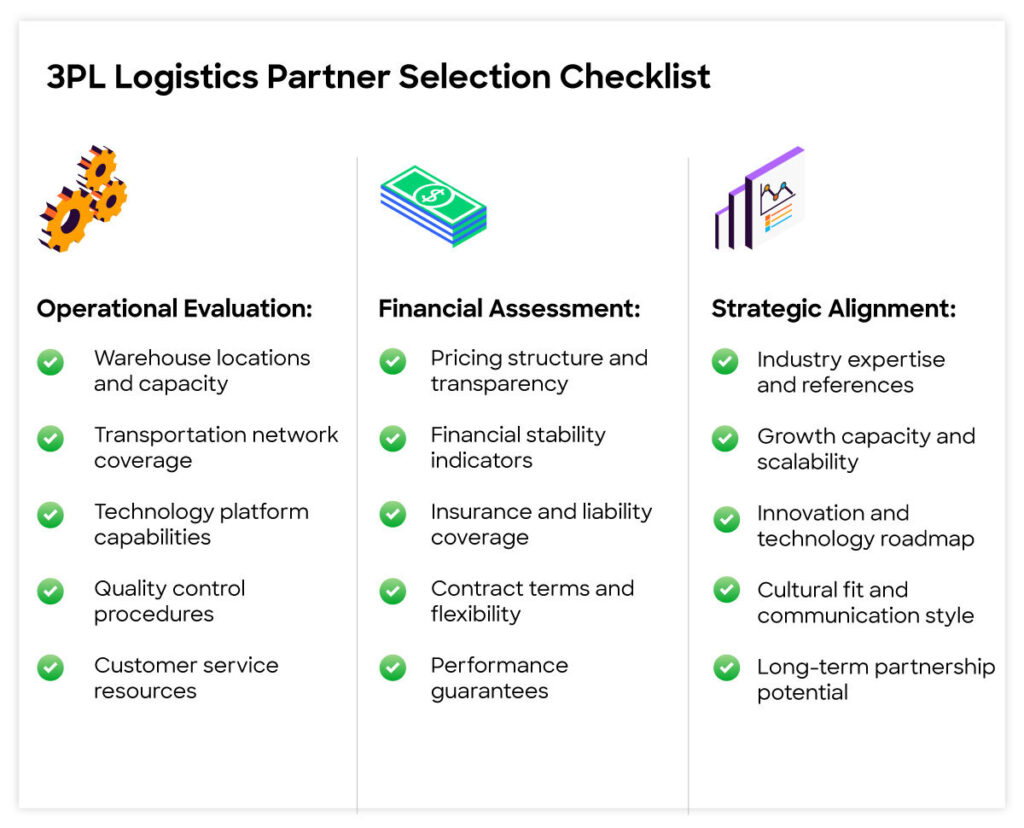
Success depends on selecting the right partner and managing the relationship effectively. Companies should evaluate 3PL capabilities against specific business requirements while considering long-term strategic goals. Clear communication, defined performance metrics, and regular relationship reviews ensure partnerships deliver expected benefits.
The industry continues evolving as technology advances and customer expectations increase. Companies that choose adaptable 3PL partners positioned for future growth will maintain competitive advantages while focusing internal resources on core business strengths.
Ready to optimize your logistics operations with AI-powered solutions? Schedule a demo with Locus to discover how intelligent dispatch management and route optimization can improve your 3PL partnership results.
Frequently Asked Questions (FAQs)
What’s the difference between 3PL and 4PL?
3PL providers handle specific logistics functions like warehousing, transportation, or fulfillment. 4PL providers manage entire supply chain operations, coordinating multiple 3PLs and service providers while providing strategic consulting. Think of 3PLs as service providers and 4PLs as supply chain orchestrators.
How much do 3PL services typically cost?
Pricing varies significantly based on services, volume, and complexity. Warehousing typically costs $4-8 per square foot monthly, plus handling fees of $1-3 per order. Transportation costs depend on distance, weight, and service level. Most companies see 15-25% total logistics cost reduction compared to internal operations.
What should I look for in a 3PL contract?
Focus on service level agreements with specific performance metrics, penalty clauses, and termination provisions. Ensure pricing transparency with detailed fee schedules. Include data security requirements, liability coverage, and integration support commitments. Contract flexibility should accommodate business growth and changing requirements.
How long does it take to implement a 3PL partnership?
Implementation timelines range from 60-120 days depending on complexity. Simple fulfillment operations might launch in 6-8 weeks while complex integrations require 3-4 months. Factors include system integrations, staff training, inventory transfers, and testing requirements. Rushing implementation often creates operational problems later.
Can small businesses benefit from 3PL services?
Yes, 3PL services often provide greater benefits for smaller companies that lack internal logistics expertise and infrastructure. Shared costs make advanced technology and specialized services affordable. However, minimum volume requirements and setup costs might make some 3PLs unsuitable for very small businesses.
What happens if my 3PL provider fails to meet SLAs?
Well-structured contracts include penalty clauses, service credits, and escalation procedures for SLA failures. Document all performance issues and follow contract procedures for notifications and remedies. Persistent failures might justify contract termination, but switching 3PLs creates significant disruption and costs.

General
What is 3PL Fulfillment? Definition, Key Steps & Benefits
Oct 21, 2025
Learn what 3PL fulfillment is, its key process, and benefits in 2025. See how third-party fulfillment streamlines operations and enhances customer experience.
Read more
General
10 Best routing and dispatching software solutions in 2025
Oct 23, 2025
Discover the best courier software providers in 2025. Compare top 10 solutions and see why Locus is the best choice for enterprises.
Read moreInsights Worth Your Time















What is 3PL Logistics? Third-Party Logistics Definition, Process, and Resources