

General
What is 3PL Fulfillment? Definition, Key Steps & Benefits


Key Takeaways
- Adopt third-party fulfillment to outsource warehousing, inventory, and shipping, enabling enterprises to lower fixed logistics costs by nearly 30% while maintaining operational flexibility.
- Use automated route planning and scheduling to reduce last-mile inefficiencies, helping retailers and e-commerce businesses cut fuel consumption and improve routing efficiency across markets.
- Track shipments in real time with advanced visibility platforms, reducing delivery exceptions, improving SLA adherence, and enhancing customer satisfaction with accurate order tracking and predictive ETAs.
- Integrate sustainability practices within fulfillment operations to consolidate shipments, reduce empty miles, and achieve a 17–26% reduction in overall emissions by 2025.
- Strengthen 3PL fulfillment with Locus, combining AI-driven dispatch management, Control Tower visibility, and predictive analytics to improve delivery reliability, scalability, and long-term cost efficiency.
Fulfillment is now a defining measure of supply chain performance. Retailers, e-commerce platforms, and FMCG enterprises face mounting challenges: stockouts that erode revenue, warehouse congestion that delays orders, and unpredictable last-mile costs that strain margins. Managing these functions internally often creates inefficiencies, tying up capital in infrastructure and staff while limiting responsiveness to market shifts.
Partnering with a third-party logistics (3PL) provider changes the equation. A 3PL manages storage, inventory, and delivery through purpose-built facilities and carrier networks, reducing fixed costs and improving service consistency. By treating fulfillment as a scalable operation rather than a stopgap, enterprises build resilience and agility into their supply chains.
This article explores what 3PL fulfillment entails, outlines its process step by step, and highlights the measurable benefits in 2025, including how Locus strengthens each stage with automation and intelligence.
What Is Third Party Fulfillment?
Third-party fulfillment (3PL fulfillment) refers to outsourcing logistics processes such as warehousing, inventory management, picking, packing, shipping, and returns to an external provider.
In simple terms, a 3PL company handles the movement of goods from the manufacturer to the customer, while the business focuses on sales and growth. For enterprises, this arrangement saves the expense of running in-house warehouses, hiring staff, and negotiating directly with carriers. 3PL companies also operate fulfillment centers near key markets, which reduces shipping times and costs.
This model is widely used across e-commerce, retail, and home services, where third-party logistics providers play a critical role in meeting customer expectations.
Types of Businesses That Benefit
- E-commerce brands managing rapid increases in order volumes
- Subscription box companies that need accurate kitting and packaging
- Global retailers requiring faster, multi-location distribution
- Startups and SMEs avoiding upfront warehouse and staffing costs
Third-party fulfillment gained momentum in the late 1970s and 1980s, when globalization and transportation deregulation opened the door for specialized logistics providers. Since then, 3PL has evolved into a core strategy for enterprises managing growth and customer service in competitive industries.
What Are the Key Aspects of 3PL Fulfillment?
Third-party fulfillment covers several core services that together define the efficiency and reliability of the process. The main aspects include:
1. Warehousing
3PL providers operate dedicated warehouses and fulfillment centers where goods are stored safely and organized for quick access. Their network of facilities often places inventory closer to key markets, reducing shipping costs and delivery times.
Example: An apparel brand distributing to both coasts can use a 3PL with facilities in New York and Los Angeles. Orders from East Coast customers ship from New York, while West Coast orders ship from Los Angeles. Instead of sending all packages cross-country, delivery zones shrink, cutting shipping time from five days to two and lowering freight costs. (3PLogistics).
2. Inventory Management
Accurate inventory control prevents losses from overstocking or stockouts. Fulfillment centers use advanced systems to track stock levels in real time, synchronize data with sales platforms, and provide enterprises with full visibility into their supply chain.
Example: A toy retailer running holiday promotions can sync its online store with a 3PL’s inventory system. When sales spike, stock levels update instantly. This visibility prevents overselling, triggers automatic replenishment requests, and ensures popular items stay available during peak shopping weeks.
3. Order Processing
Once an order is placed, fulfillment staff (or automated systems) pick, pack, and label products for shipping. This stage directly affects delivery speed and customer satisfaction. Tools such as barcode scanning and workflow automation reduce errors and shorten processing time.
Example: A cosmetics brand outsourcing fulfillment sees orders routed directly from its e-commerce platform to the 3PL’s system. Warehouse staff scan items as they pick, and automated packing slips are generated. This cuts manual data entry, reduces picking errors, and gets shipments ready within hours.
4. Shipping and Delivery
3PL providers oversee carrier selection, shipment consolidation, and delivery scheduling. Many enterprises strengthen this process by using third-party carrier evaluation tools to identify the most reliable and cost-effective delivery partners.
Example: A furniture seller working with a 3PL ships large items like sofas. Instead of sending individual shipments through parcel carriers, the 3PL consolidates multiple orders into one truckload for regional delivery. This reduces damage risk, secures bulk freight discounts, and ensures customers get scheduled delivery slots
5. Returns Management
Returns are a critical part of customer experience. 3PL providers handle product pick-up, inspection, and restocking where possible, while coordinating refunds or replacements. Efficient returns reduce waste, cut unnecessary transport costs, and support broader sustainability goals in fulfillment.
Example: An electronics retailer uses a 3PL to manage returns of defective headphones. Returned items are collected, tested, and either refurbished or restocked. Customers get quick replacements, while the retailer saves costs by re-using functional products instead of writing them off entirely.
How Third-Party Fulfillment Works – Step-by-Step
The 3PL fulfillment process is built around a series of connected steps that move products from suppliers to customers. Each stage must be executed with precision to maintain efficiency and customer trust.
Step 1. Receiving Inventory and Preparing Products for Storage
- Products arrive at the 3PL provider from the manufacturer or supplier.
- Items are inspected for quality, counted, and entered into the system.
Accurate receiving prevents stock discrepancies and lays the foundation for smooth order fulfillment.
Step 2. Organising Storage to Improve Picking Speed
- Products are placed in warehouses or fulfilment centres with layouts designed for easy access.
- Organised storage reduces picking time and lowers handling errors.
By locating inventory close to demand hubs, 3PL providers also help reduce shipping time and cost.
Step 3. Processing Orders Through Picking, Packing, and Labelling
- Once an order is placed, items are picked, packed, and labelled.
- Barcode scanning and automated workflows minimise mistakes and shorten turnaround.
This stage directly influences delivery speed and customer satisfaction.
Step 4. Shipping and Delivering Orders Through Optimised Routes
- Carriers are chosen, shipments consolidated, and delivery schedules finalised.
- Many enterprises improve this step with logistics route planning and route optimisation to cut distance and time.
Planning delivery slots is strengthened by route scheduling. Selecting the right carrier is supported by third-party carrier evaluation.
Step 5. Managing Returns to Protect Customer Trust and Reduce Waste
- Returned products are picked up, inspected, and either restocked or discarded.
- Well-managed returns reduce losses and protect customer loyalty.
Sustainable approaches such as carbon neutral shipping also minimise environmental impact during reverse logistics.
What Are the Benefits of 3PL Fulfillment?
Adopting 3PL fulfillment offers enterprises more than operational relief. It provides financial, operational, and customer-facing advantages that make logistics a strategic driver of growth.
? Cost Reduction Through Shared Resources
Instead of building warehouses or hiring large fulfillment teams, businesses share infrastructure with a 3PL provider. This lowers fixed costs and allows access to negotiated carrier rates, making shipping more economical.
? Scalability to Handle Market Shifts
Seasonal peaks and sudden demand surges can be managed without disrupting service.
- Flexible operations allow enterprises to expand or contract fulfillment capacity as required.
- Tools like automated route planning improve scalability without adding workforce pressure.
? Higher Efficiency Across Fulfillment Operations
3PL fulfillment integrates warehousing, inventory, and order management into a seamless flow. Automation in picking, packing, and dispatch reduces cycle time, while route optimisation shortens delivery distances and improves predictability.
? Better Customer Experience From Start to Finish
Customers expect accurate orders and reliable deliveries. 3PL providers support this by:
- Ensuring faster order turnaround.
- Offering transparent returns that are easy to track.
- Using route optimisation for third-party logistics operators to keep delivery promises consistent.
? Building Sustainability Into Fulfillment
With logistics responsible for nearly 11% of global CO? emissions, enterprises now prioritize sustainability as a core part of fulfillment. By consolidating shipments, reducing empty miles, and adopting supply chain sustainability practices, 3PLs lower emissions and costs simultaneously. Sustainable last-mile logistics further aligns fulfillment with enterprise ESG goals.
Challenges and Risks in 3PL Fulfilment
While 3PL fulfillment streamlines operations, businesses must carefully evaluate the challenges and risks of 3PL fulfillment before outsourcing. Key concerns include loss of control, branding limitations, high costs for smaller businesses, and dependence on providers.
- Loss of Control: Outsourcing often limits visibility into warehouse operations and delivery handling. A 2023 McKinsey survey found that 65% of logistics leaders cite visibility gaps as their biggest challenge in outsourced fulfillment.
- Branding Limitations: Some 3PLs restrict custom packaging or branded unboxing. Online shoppers are more likely to repurchase when deliveries arrive in branded packaging. This is a major drawback.
- Costs for Small Businesses: While large enterprises benefit from economies of scale, SMEs may face higher costs when order volumes are low. Small e-commerce businesses manage fulfillment in-house to avoid fixed 3PL fees.
- Dependence on Provider: Service disruptions such as carrier delays or system outages directly impact delivery timelines.
How Locus Streamlines 3PL Fulfillment in 2025
While 3PL fulfillment solves many operational challenges, enterprises often face new hurdles around visibility, real-time decision-making, and scaling across regions. This is where software like Locus strengthens the process by combining AI-powered orchestration with automation.
1. Automating Dispatch and Route Planning
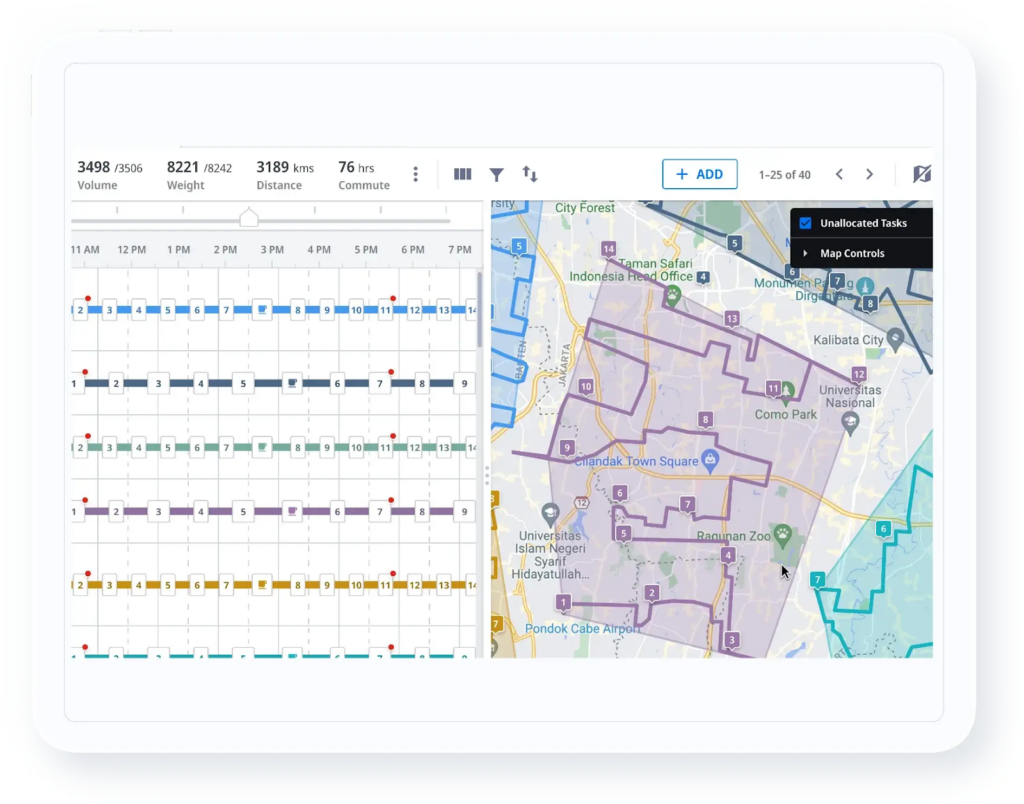
Manual dispatch often slows down fulfillment during high-volume periods. Locus addresses this with automated dispatch optimization software, which allocates deliveries based on business rules, fleet availability, and capacity. This reduces dependency on manual intervention and improves routing efficiency.
2. Providing Real-Time Visibility Through a Control Tower
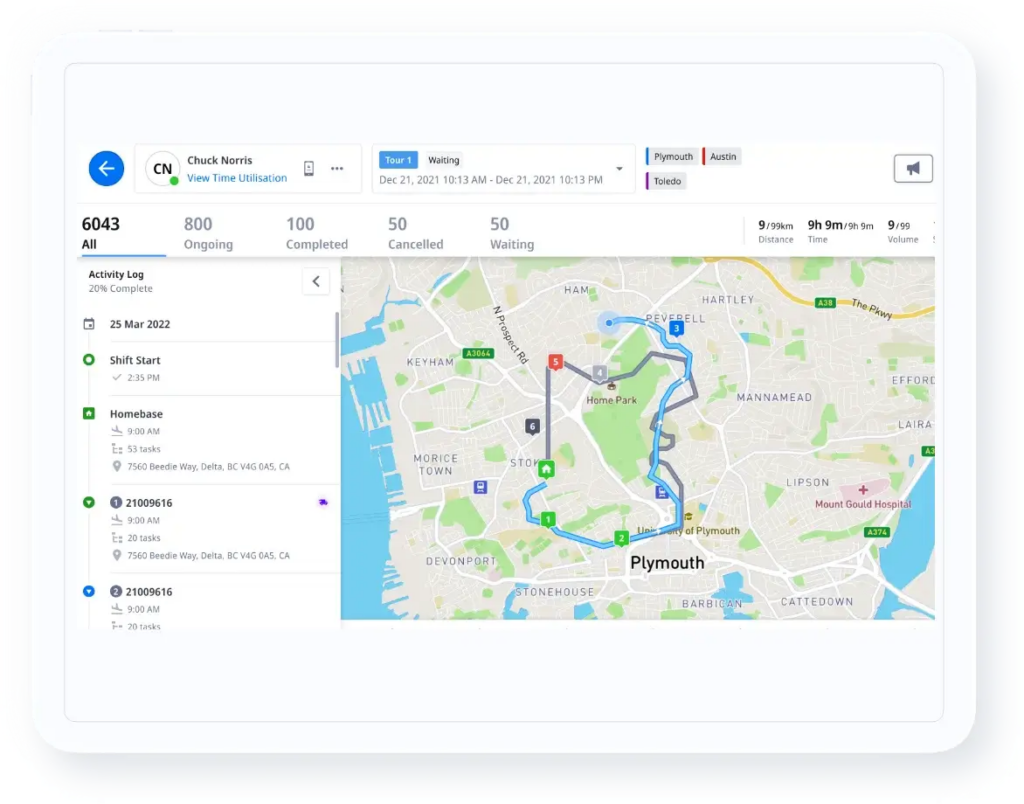
Uncertainty in last-mile delivery is a major concern for enterprises. With Locus’ Control Tower, businesses gain end-to-end visibility of shipments, exception alerts, and predictive ETAs. This enables proactive responses to disruptions and aligns with strategic route planning practices.
3. Driving Data-Backed Fulfillment Decisions
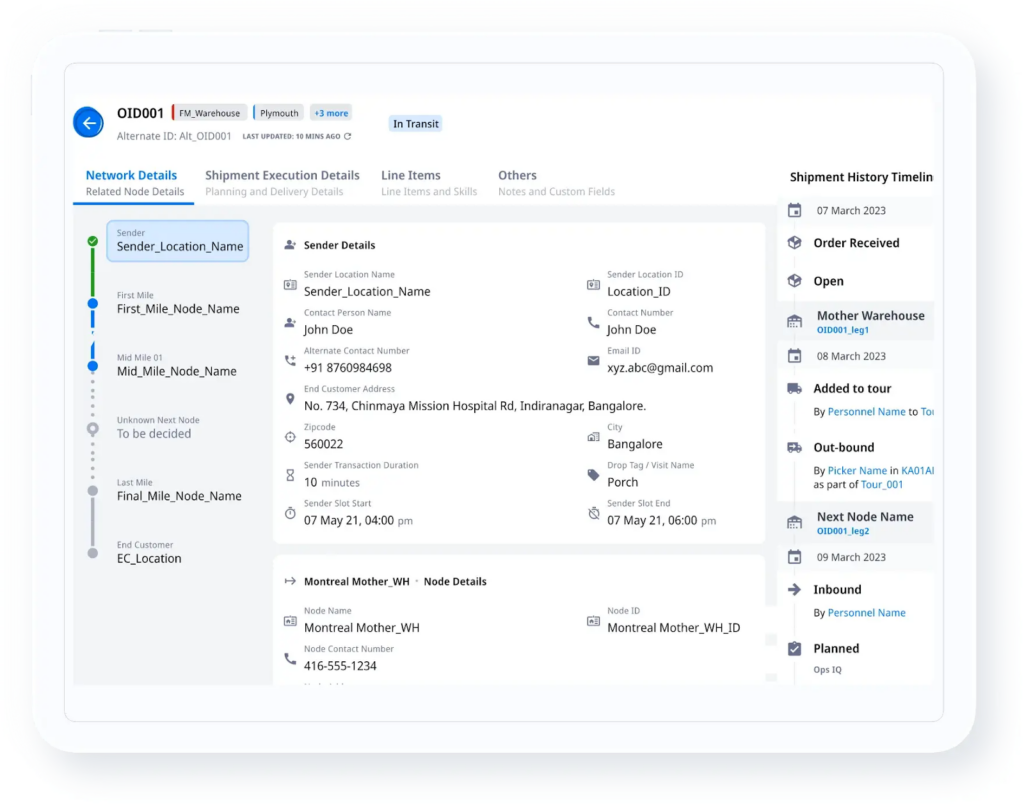
Fulfillment generates a vast amount of operational data that often goes unused. Locus transforms this data into predictive insights, helping enterprises forecast demand spikes, allocate resources, and balance costs across multiple fulfillment centers. By shifting from reactive problem-solving to proactive planning, logistics leaders can scale more confidently.
A good example is the rise of micro-fulfillment centers (MFCs). With urban populations growing and same-day delivery demand surging, MFCs are becoming a critical part of e-commerce logistics.
Research shows that by 2025, retail-based MFC installations worldwide are expected to exceed 900 facilities. These centers not only reduce delivery times but can also cut all-mile emissions by 17%–26%.
4. Enhancing Sustainability in Logistics
Sustainability is tightly linked with efficiency in logistics. Locus enables greener fulfillment by designing optimized routes that cut empty miles, fuel usage, and emissions. Enterprises can also align operations with ESG goals by integrating sustainability practices from raw material sourcing to the last mile.
By embedding automation, visibility, and intelligence into 3PL fulfillment, Locus turns logistics into a strategic advantage rather than a recurring challenge. For enterprises managing complex supply chains across retail, e-commerce, FMCG, and 3PL sectors, it ensures fulfillment is both efficient and future-ready.
Elevating 3PL Fulfillment With the Right Technology
3PL fulfillment has shifted from a support function to a core part of supply chain operations. Enterprises depend on it to expand capacity, handle variable order volumes, and maintain dependable delivery performance. The main challenge lies in coordinating multiple external providers and facilities with the accuracy needed to meet service expectations.
Locus strengthens this coordination by embedding intelligence into fulfillment workflows. Its platform automates dispatch allocation, provides real-time shipment visibility, and generates predictive insights that guide resource planning. These capabilities reduce delays, cut waste, and help enterprises align logistics with long-term growth and sustainability targets.
Schedule a demo with Locus to see how software can make 3PL fulfillment faster, more predictable, and more efficient.
Frequently Asked Questions (FAQs)
1. How do 3PLs handle seasonal spikes in demand?
3PLs expand capacity by reallocating warehouse space, scaling labor, and adjusting carrier contracts, ensuring order fulfillment stays consistent during peak seasons.
2. Can 3PL fulfillment support international shipping?
Yes. Many providers manage customs documentation, tariffs, and multi-carrier delivery, simplifying global fulfillment for enterprises expanding into new markets.
3. What industries benefit most from 3PL fulfillment?
Retail, e-commerce, FMCG, healthcare, and 3PL operators themselves gain from outsourcing due to high order volumes, strict delivery timelines, and the need for scalable fulfillment.
4. How do 3PLs maintain order accuracy?
They use barcode scanning, inventory management systems, and automated order processing to reduce human errors and ensure faster, more accurate order completion.
5. Why choose software like Locus with 3PL fulfillment?
Platforms such as Locus enhance 3PL efficiency by automating dispatch, optimising routes, and providing real-time visibility, making outsourced fulfillment more reliable and cost-efficient.

General
10 Best 3PL Software Solutions in 2025
Oct 20, 2025
Discover the best 3PL software solutions in 2025. Compare top providers and see why Locus is the leading choice for enterprise logistics.
Read more
General
What is 3PL Logistics? Third-Party Logistics Definition, Process, and Resources
Oct 22, 2025
Learn what 3PL logistics is, how third-party logistics providers work, key benefits, challenges, and selection criteria to optimize your supply chain operations in 2025
Read moreInsights Worth Your Time














What is 3PL Fulfillment? Definition, Key Steps & Benefits