

Last Mile Delivery Optimization
Emerging Trends Around Last-Mile Delivery Fulfillment Models 2022

Key Takeaways
- The rise in digital buying has pushed retailers to adopt decentralized fulfillment models, with U.S. online shoppers projected to reach 291.2 million by 2025.
- Alternative delivery models like crowdsourced delivery, curbside pickup, dark stores, and BOPIS help retailers reduce shipping costs while meeting customer demands for faster delivery.
- Dark store fulfillment enables faster shipping at minimal cost by using strategically-placed storage spaces exclusively for online orders, improving inventory management and delivery efficiency.
- Locus’s dispatch management platform optimizes last-mile delivery fulfillment through machine learning algorithms that reduce transit times and help businesses select optimal carriers for their needs.
“When Henry Ford made cheap, reliable cars, people said ‘nah, what’s wrong with the horse?’ That was a huge bet he made, and it worked.” – Elon Musk, CEO of Tesla, SpaceX and the Boring Company.
Elon Musk, the man known for his crazy, game-changing tech ideas, is right. Even the most promising business ideas involve risks. Some work and many don’t. Similarly, today’s emerging last-mile delivery fulfillment models seemed like a gamble for businesses when it started a decade back but are essential for a profitable business plan today.
Elon Musk shared an important statement about supply chains in an interview: “The supply chain stuff is really tricky.”Managing last-mile delivery is often a tricky and expensive task. If you are someone who is looking to gain majorly from the ongoing last-mile revolution, it is essential that you know about emerging last-mile delivery fulfillment models.
What is last-mile delivery fulfillment?
Last-mile delivery fulfillment is the stage in final-mile logistics where orders are processed and prepared for shipment. It involves handling and executing customer orders in a fulfillment center after a business receives it. This process goes on until the customer receives her order and the delivery receipt is confirmed.
Why is last-mile delivery fulfillment crucial?
Some 54 percent of respondents answered the question “Which of these do you consider good reasons to buy an item online?” with “Direct delivery to my home.” – Drivers of online purchases in the U.S. 2022, Statista.
A large number of consumers in the US use e-commerce for direct delivery to their homes. As part of modern consumers’ high online shopping expectations, the demand for quick-delivery options is also increasing. The fast-changing customer expectations have turned last-mile delivery into a pivotal component for business growth.
It is not easy to deliver goods to homes, offices or other collection points in congested urban areas, especially as order volumes scale up. Being a retailer, the ultimate question on your mind would be, “How to deliver goods quickly and seamlessly while minimizing costs?”.
The answer depends on the last-mile delivery fulfillment model you adapt. Optimal final-mile delivery fulfillment is crucial for business. It involves.
- Managing delays and delivery exceptions successfully
- Minimizing risks in shipping and saving money on every delivery
- Reducing operational shipping expenses and maintaining high profits
- Maintaining consistency in delivering products on time
- Cutting down extra costs incurred due to high volume of returns
Some emerging trends around last-mile delivery fulfillment models
In 2020, there were a total of 256 million digital buyers in the United States. This figure is projected to increase to 291.2 million online buyers in 2025. – Number of digital buyers in the United States 2017-2025, Statista
The rapid increase in digital buying has urged brands to move closer to customers. This sudden rise in online buying has led them to develop new last-mile delivery fulfillment models. Besides reducing the distance to deliver packages, alternative delivery fulfillment models have saved on logistics costs and simplified last-mile logistics management for the modern retail business.
All these emerging delivery fulfillment models are forms of decentralized fulfillment as opposed to centralized ones. Let’s explore the four emerging trends around last-mile delivery fulfillment models that have gained traction among modern business enterprises.
1. Crowdsourcing delivery fulfillment model
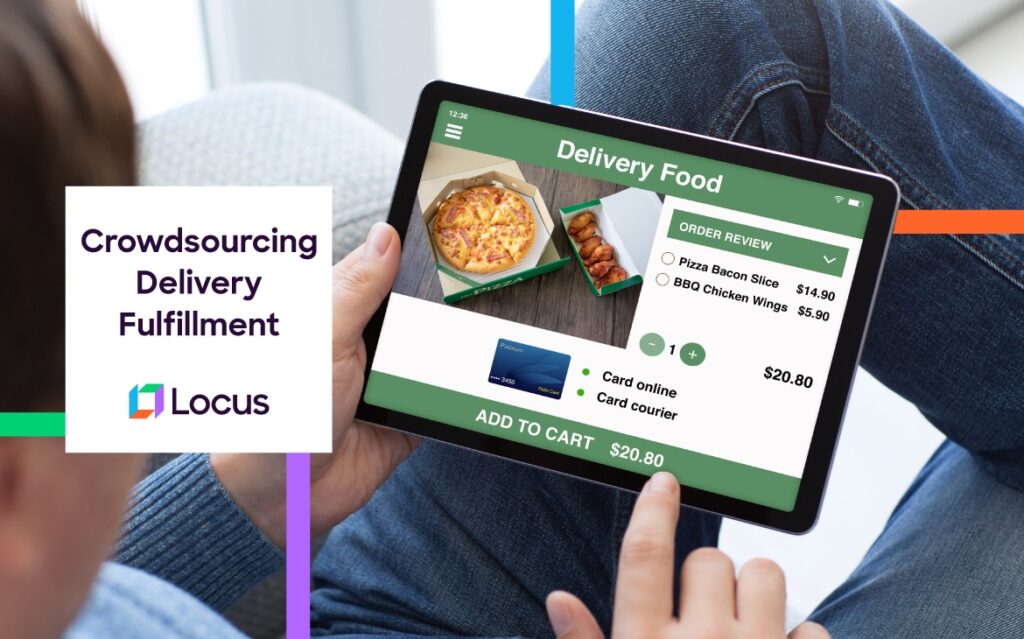
Instacart, Doordash or UberEats have become household names for the modern US consumer for crowdsourced fulfillment. The model uses independent couriers to deliver packages to customers. What began as ride-sharing for taxis evolved into a go-to-fulfillment model for food and grocery deliveries.
From traditional retailers to restaurants and groceries, many are using this model to cut down on their delivery times and costs. Modern enterprises use this model for its quick and convenient order fulfillment of same day deliveries. Another major reason businesses use this model is to handle overflowing capacity of orders during peak retail season.
2. Curbside pickups
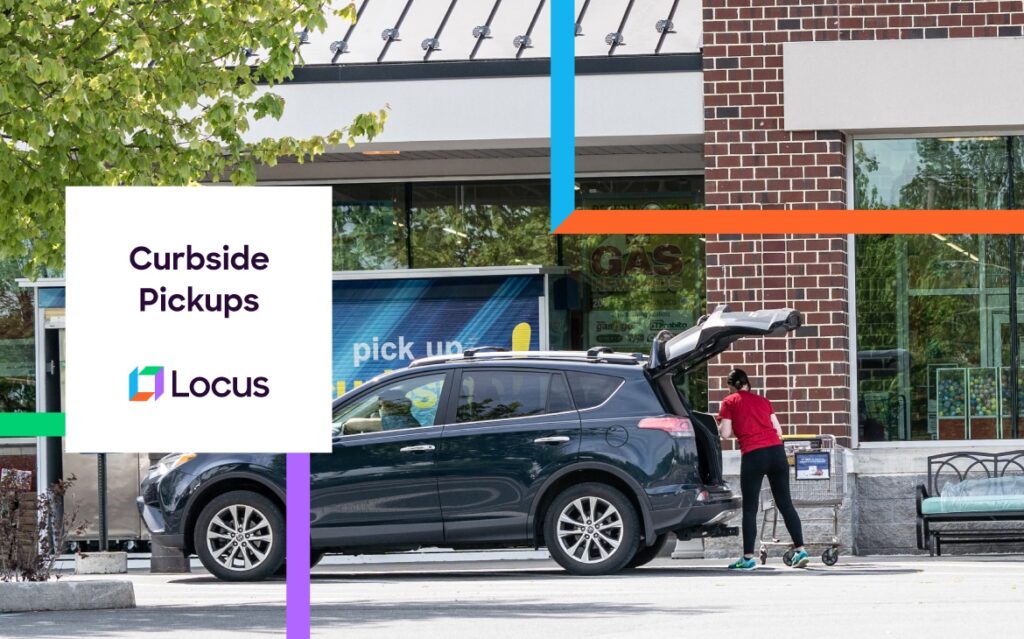
Drive-in dining is at the heart of American culture and it has inspired songs, movies, and tourist attractions. When a chain of restaurants in Texas called Pig Stand popularized drive-in diners during 1921, they did not know that it would evolve into a popular fulfillment model. In a similar vein, plenty of retail brands like Barnes & Noble, Walmart, Kroger have rolled out curbside pickup over the past decade.
Curbside pickup was the silver lining for store owners exploring new ways to keep their businesses running during the pandemic. It involves picking up products from a convenient location like a curb outside the store instead of shipping it home.
Benefits of curbside pickups
- Collecting orders on a timescale lets consumers avoid missed deliveries
- Makes the customer experience less stressful as customers need not stand in line for long
- Eliminates potential breakages and damages made in transit of goods from warehouse to customer locations
- Saves shipping and packaging costs
3. Dark Stores
By 2023, online grocery sales will make up 11.2% of the total grocery sales in the US. – US Grocery E-commerce Sales 2019-2024, March 2021.
While looking to capitalize on the increasing online grocery sales in the shortest time frames, retailers are adopting the dark store fulfillment model, which uses strategically-placed storage spaces to exclusively fulfill online orders.
Retail businesses use the dark store model to ship their products faster at a minimal cost. Giving a better view of stock levels allows them to make profitable inventory decisions. Besides, it enables retail outlets to improve their in-store shopping experience. Using dark store fulfillment, businesses can effectively dispatch orders to varied truck capacities and ensure optimal deliveries per vehicle.
4. Buy Online and Pickup In Store (BOPIS)
27% of customers are opting for hybrid shopping where they create their own shopping journeys mixing physical and digital channels. – Consumers want it all, National Retail Federation, 2022
The attempt to bridge the gap between online and offline shopping has led to the creation of the BOPIS fulfillment model. They have become so popular that big brand retailers like Walmart, Target, Kohl’s and Dollar General are actively developing their BOPIS fulfillment capabilities.
The BOPIS model has allowed customers to shop online and collect their orders from a brick-and-mortar store. It has turned out to be the best option for retailers who love the convenience of an e-commerce experience and bypass shipping costs by picking up their orders in person. Also, it is one of the most popular omnichannel retail fulfillment models that is attracting multiple customer segments.
Benefits of BOPIS model for retailers
- Consumers picking up goods from store saves last-mile shipping costs
- Obtain granular insights on products available in real-time
- Enables speedy fulfillment saving time spent waiting for one or two hour deliveries
- Facilitates easy and seamless returns
- Increases the in-store traffic and sales
Last-mile delivery fulfillment: Engine for the future business growth
The Statista Digital Market Outlook forecasts that by 2025, online shopping revenue in the U.S. will exceed 1.3 trillion dollars. – United States: retail e-commerce revenue 2017-2025, Statista
As revenues from online shopping are set to make more than a trillion dollars by 2025, focusing on last-mile delivery fulfillment has become critical. Though delivery fulfillment models are becoming more decentralized, the complexity of managing them is increasing every day. You need a tech tool like a dispatch management platform to manage these last-mile complexities in delivery fulfillment and make it a revenue-generating center.
Whether you are dealing with scheduled or on-demand orders, the Locus dispatch management platform smartly assists in your last-mile delivery fulfillment efforts. By decreasing transit time and overlaps of routes, its advanced machine learning algorithms empower workers to make more deliveries in the same amount of time. Beyond helping you manage and optimize various stages of the order lifecycle, it enables you to select carriers that meet your last-mile delivery needs at the right price, time, and experience.
With its enhanced visibility and real-time tracking, Locus’ dispatch management software ensures seamless communication with your fleet drivers. This uninterrupted communication helps you manage any delivery exceptions that arise. Also, its timely alerts for customers improve the transparency of your delivery fulfillment and elevate customer satisfaction.
Looking to make the most out of your last-mile delivery fulfillment? Schedule a demo with Locus!

Last Mile Delivery Optimization
Delivery in Japan: Beating a Culture of Overwork with Last-Mile Excellence

Jul 13, 2022
Locus’ Dispatch Management Platform helps Japan’s delivery agents to get more deliveries made in a standard working shift by automating their operations.
Read more
Gartner
Locus Listed as a Sample Vendor for Last-Mile Delivery Solutions In 2 Gartner® Hype CycleTM Reports

Aug 3, 2022
Locus has been listed as a Sample Vendor for last-mile delivery solutions in the Gartner® Hype Cycle for Supply Chain Execution Technologies, 2022.
Read moreInsights Worth Your Time
















Emerging Trends Around Last-Mile Delivery Fulfillment Models 2022