

Accounting for Real-World Route Restrictions in Delivery Planning
- Applicable Segment(s)
- Retail & eCommerce, Grocery & Quick Commerce, Big & Bulky, Omnichannel Retail
- Impacted Function(s)
- Last-Mile Operations, Dispatch & Fleet Management, Customer Experience
- Solution
- Locus Foreshadow
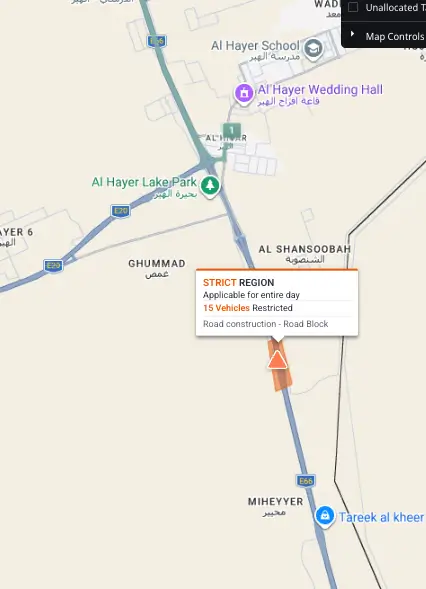
Delivery planning is built on a set of assumptions about road access, travel time, and driver availability. Those assumptions are frequently wrong. Roads close for repairs, events draw large crowds into urban corridors, and traffic patterns shift in ways that static maps cannot anticipate. When dispatch plans are built without accounting for these realities, drivers encounter conditions their routes were not designed for, schedules fall apart, and customers bear the consequences.
The Challenge: Static Route Planning in a Dynamic Road Environment
Retail delivery networks operate across dense urban areas where road conditions change frequently and unpredictably. The planning assumptions that hold at 7 AM on a Tuesday may not hold at 10 AM on a Saturday, and that gap can define whether a day's deliveries succeed or fail.

Unplanned Events Affecting Urban Delivery Corridors
In apparel and fashion retail, where high volumes of daily deliveries are concentrated in city centers, a large-scale event such as a sporting fixture, a street rally, or an outdoor concert can close or severely restrict access to entire zones. Drivers attempting to follow pre-planned routes encounter diversions they were not prepared for, adding time to every stop downstream.

Construction and Infrastructure Disruptions
In furniture and big and bulky retail, deliveries involve heavy vehicles that are more constrained by road access than standard courier vans. Ongoing roadworks, weight restrictions, or lane closures on specific arterials can make a planned route physically unexecutable. When these restrictions are not embedded in the planning layer, drivers either attempt unsuitable roads or spend time identifying alternatives on their own.

Recurring Congestion Patterns That Go Uncorrected
In electronics retail, where timed delivery slots are frequently offered to customers purchasing high-value goods, recurring congestion patterns around commercial districts, shopping centers, or transit hubs regularly inflate transit times beyond what historical map data predicts. If those patterns are not learned and incorporated into future planning, the same delays recur without correction.

Unpredictable Last-Mile Access in Grocery and Quick Commerce
In grocery delivery, where windows are tight and customer expectations around punctuality are high, even short delays caused by restricted access to residential zones, market days, or pedestrian events in high-density areas can cascade across an entire route. Drivers in these networks have limited time to self-navigate around unexpected restrictions.
The Business Impact: How Route Restrictions Translate Into Operational Costs
When routing plans do not account for live and recurring restrictions, the effects are visible across delivery performance, cost, and customer satisfaction.
- Degraded On-Time Delivery Rates:
- Drivers working from routes that do not reflect current road conditions consistently fall behind schedule. In categories like grocery and electronics, where customers have accepted specific delivery windows, missed windows generate direct dissatisfaction and support contacts.
- Increased Fuel and Fleet Costs:
- Unplanned diversions add distance and time to routes that were optimized for neither. Across a large fleet, these incremental costs accumulate into a meaningful drag on cost-per-delivery metrics.
- Higher Driver Cognitive Load and Attrition:
- Drivers who regularly encounter conditions their routes did not anticipate must make real-time navigation decisions under time pressure. This increases stress and reduces productivity, which, over time, contributes to operational fatigue that drives turnover in field teams.
- Erosion of Customer Trust in Timed Deliveries:
- Retailers who offer precise delivery windows, which is increasingly standard across furniture, electronics, and grocery categories, absorb reputational risk when those windows are missed for preventable reasons. Customers who experience repeated timing failures are less likely to trust promised windows on future orders.
The Solution: Locus Foreshadow
Locus Foreshadow is a predictive planning layer built into the Locus platform that continuously scans the real world for conditions likely to affect delivery routes before a dispatch plan is ever created. Rather than relying on generic map data or expecting dispatchers to manually monitor for disruptions, Foreshadow brings external intelligence and learned operational patterns into the planning process automatically.
The result is a dispatch plan that reflects the road environment drivers will actually encounter, not a static snapshot of what roads look like under normal conditions.
Live Event and Disruption Intelligence
Foreshadow maintains a proprietary map layer that crawls publicly available sources to identify events and conditions likely to affect road access. This includes scheduled events such as concerts, sporting fixtures, parades, and public gatherings, as well as infrastructure disruptions from construction permits, road repair notices, and utility work. When a disruption is identified, Foreshadow applies time-specific restrictions to the affected road segments during dispatch plan creation, so that routes generated for a given day reflect actual access conditions for the hours that matter.
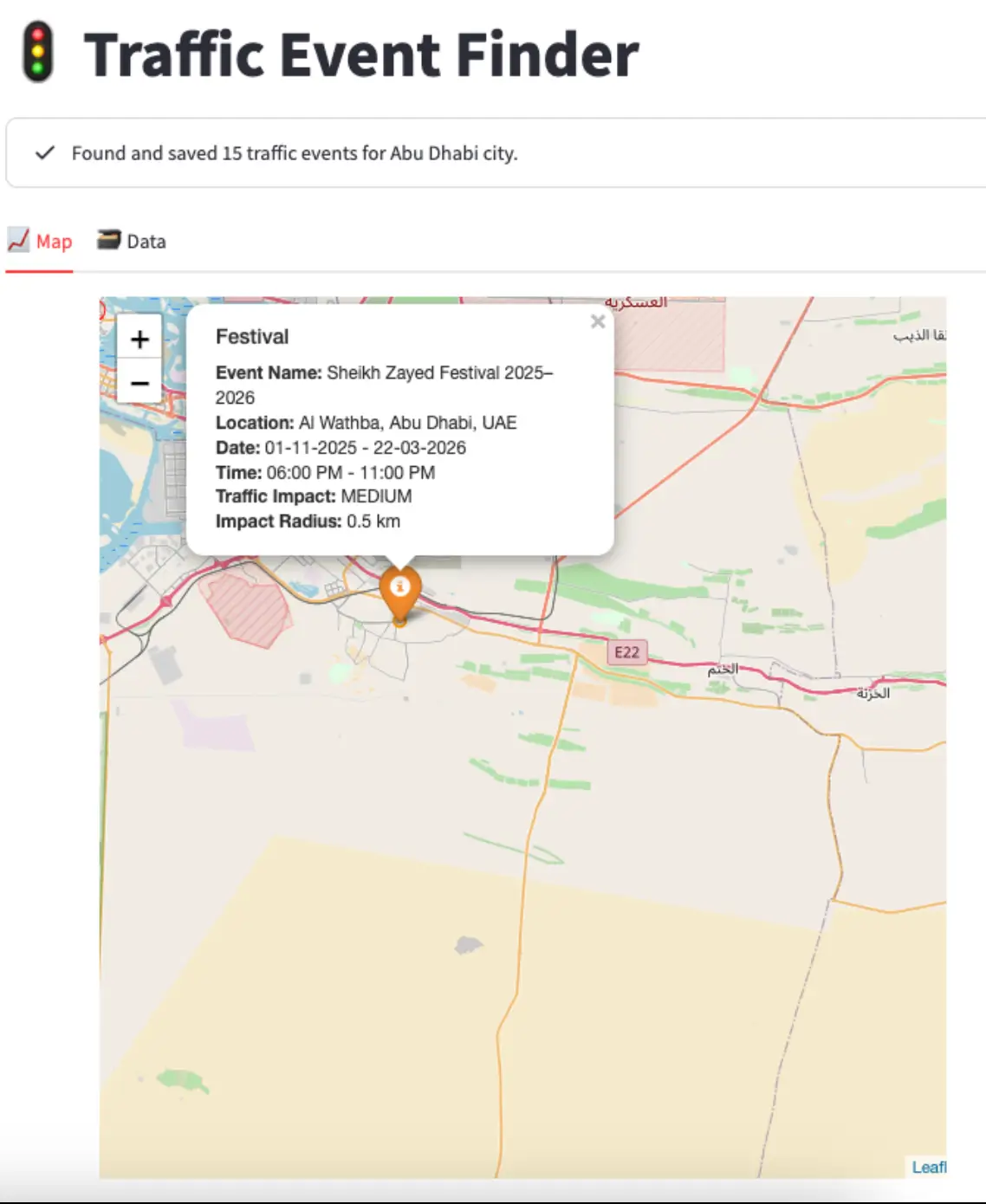
For a furniture retailer scheduling bulk deliveries across a metro area on a match day weekend, this means that delivery zones near a stadium are automatically routed around affected corridors during the hours when restrictions apply, without requiring a dispatcher to identify and adjust for the event manually. For a grocery fleet operating in an area with a Saturday street market, route plans for that morning account for the pedestrian closures and access limitations the market creates before a single driver leaves the depot.
AI-Driven Learning from Driver Behavior and Historical Performance
Foreshadow also learns from within. The platform analyzes each retailer's own operational history to identify where planned travel times consistently diverge from actual times, where transaction times at specific stop types run longer than estimated, and where experienced drivers routinely deviate from planned routes for reasons that do not appear in standard map data.
These learned patterns are incorporated into future planning automatically. For an apparel retailer managing high-volume urban deliveries, if drivers on a particular corridor consistently take longer than planned on Friday afternoons, Foreshadow adjusts its time estimates for that corridor and day pattern going forward. For an electronics retailer where doorstep handoffs for high-value items take longer than standard due to OTP verification and customer inspection, the system corrects transaction time estimates based on observed actuals rather than continuing to plan against an inaccurate baseline. Over time, Foreshadow's planning accuracy compounds as more operational data accumulates, making it increasingly precise for each retailer's specific network and delivery context.
Constraint-Aware Plan Generation
Route plans generated through Foreshadow incorporate vehicle type restrictions, weight limits, time-of-day access rules, and zone-specific constraints alongside event and disruption data. For grocery fleets using smaller vehicles optimized for residential access, plans respect those vehicles' access limitations. For furniture and big and bulky fleets using larger vehicles, road and bridge weight restrictions are factored in at the planning stage rather than discovered by drivers in the field.
Dispatcher Visibility into Restriction-Driven Adjustments
When Foreshadow adjusts a route plan due to a detected restriction or a learned pattern, dispatchers can see which segments have been flagged and the reason for the adjustment. This transparency allows operations teams to review or override decisions when local knowledge warrants it, while still benefiting from the system's continuous monitoring for the majority of cases.
The Locus Foreshadow Advantage
Planning That Reflects Today, Not a Historical Average
Most routing tools rely on map data updated on a fixed schedule that does not reflect conditions on any given day. Foreshadow updates continuously, which means the dispatch plan created each morning reflects the road environment drivers will actually encounter rather than a generalized historical snapshot.
Compounding Accuracy Over Time
Because Foreshadow learns from each retailer's specific operational history, its planning accuracy improves as more data accumulates. A grocery fleet operating in the same city for 12 months benefits from a model that has observed hundreds of route cycles and incorporated the patterns that recur in that specific network.
Reduced Dispatcher Intervention
When restrictions and learned corrections are embedded in the planning layer by Foreshadow, dispatchers spend less time manually adjusting routes for known issues and more time managing genuine exceptions. This is particularly valuable for operations teams running large fleets across multiple zones simultaneously.
Reliable Delivery Windows for Time-Sensitive Categories
For retailers who offer customers specific delivery slots, the ability to plan against accurate travel and transaction times directly supports delivery promise reliability. Furniture, electronics, and grocery categories all carry strong customer expectations around precise timing, and those expectations are more consistently met when planning inputs reflect operational reality rather than assumptions.
Impact in Action: Mixed Retail Fleet in a Dense Metro Area
A large furniture retailer managing scheduled home deliveries and assembly services across UAE was experiencing consistent schedule slippage on weekends. Planned routes were not accounting for recurring events near city-center zones, and estimated transaction times did not reflect the actual time required for furniture assembly, installation checks, and customer sign-offs at the door.
After deploying Locus Foreshadow, dispatch plans began incorporating live event data and time-specific road restrictions from the outset of planning. For weekend delivery runs near stadium corridors and event venues, routes were automatically adjusted before drivers left the depot. The platform's AI layer simultaneously corrected transaction time estimates based on observed assembly and handoff durations across different stop types, building a more accurate baseline over the first several weeks of operation. Within two months, weekend on-time rates had improved by 9%, dispatcher intervention for route adjustments had declined, and drivers reported fewer situations where their planned route required real-time improvisation.
Performance Gains at a Glance
| Metric | Before Locus Foreshadow | With Locus Foreshadow |
|---|---|---|
| Route Accuracy | Plans built on static road data with no event awareness | Plans incorporate live disruptions and time-specific restrictions |
| Transit Time Estimation | Generic map-based estimates that did not match field reality | AI-corrected estimates based on observed driver behavior |
| Transaction Time Estimation | Fixed assumptions across all stop types | Learned per-stop-type actuals adjusted over time |
| Dispatcher Workload | Frequent manual intervention to address predictable issues | Reduced to managing genuine exceptions |
| On-Time Delivery Rate | Consistent slippage on high-congestion days and windows | 9% improvement in weekend on-time delivery rate |