

Handling Returns and Reverse Logistics: From Customers to Warehouse
- Applicable Segment(s)
- Retail & eCommerce, FMCG/CPG, Fashion & Marketplace Platforms, 3PLs handling high-volume post-purchase logistics
- Impacted Function(s)
- Supply Chain & Transportation, Customer Experience, Warehouse Operations
- Solution
- Locus Transportation Management Platform
The Challenge: The Complexity of the ‘Return Mile’
While forward supply chains have been optimized over decades, the reverse flow of goods remains one of retail's most expensive and least understood problems. Returns are growing faster than sales, yet most retailers lack the infrastructure to manage them efficiently.

Logistical Asymmetry
Forward logistics is optimized for bulk, predictable shipments. Returns flow in the opposite direction — sporadic, unplanned, and highly variable in volume and condition.

Operational Invisibility
Most supply chain systems treat returns as an afterthought. Without real-time visibility, returned inventory sits in limbo — unprocessed, unresold, and depreciating.

Cost Sensitivity
Industry research suggests that processing can erode up to half of a product's original value, driven by failed pickups, empty truck miles, and manual coordination.
The Business Impact: Erosion of Margins and Loyalty
The inefficiencies of reverse logistics don't just create operational headaches — they directly erode profitability and damage the customer relationships that retailers depend on for long-term growth.
- Financial Leakage
- High transportation costs and manual labor for individual pickups directly eat into bottom-line margins.
- Inventory Stagnation
- Slow return-to-shelf cycles tie up working capital in 'in-transit' stock, preventing resale and leading to eventual markdowns.
- Customer Friction
- A 2023 study shows that more than 90% of customers will buy again if the return process is easy. A lack of transparency or slow collection leads to high customer churn.
The Solution: Intelligent Reverse Logistics with Locus
Locus addresses the reverse logistics challenge with a purpose-built platform that transforms returns from a cost center into a streamlined, data-driven operation.
Dynamic Routing
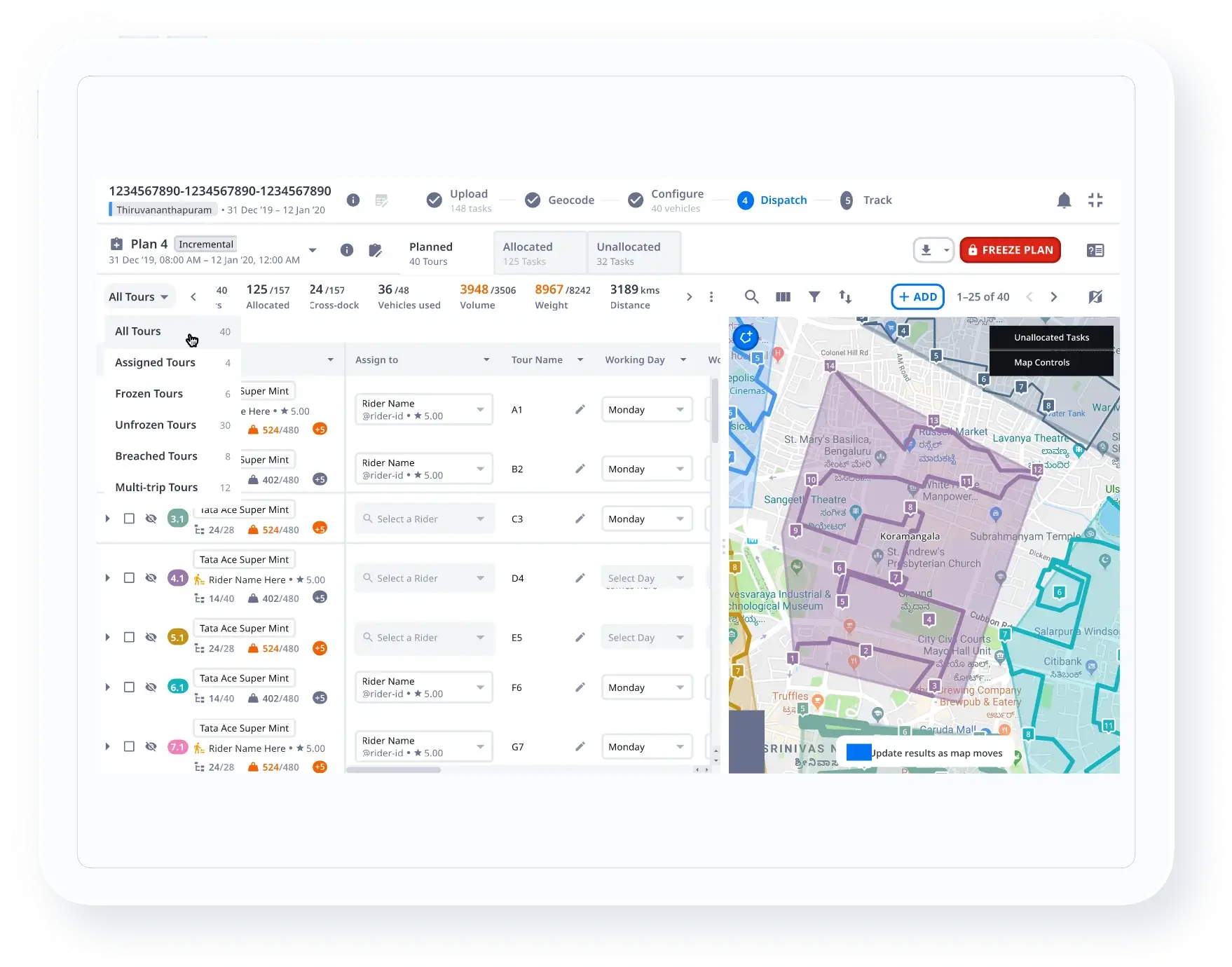
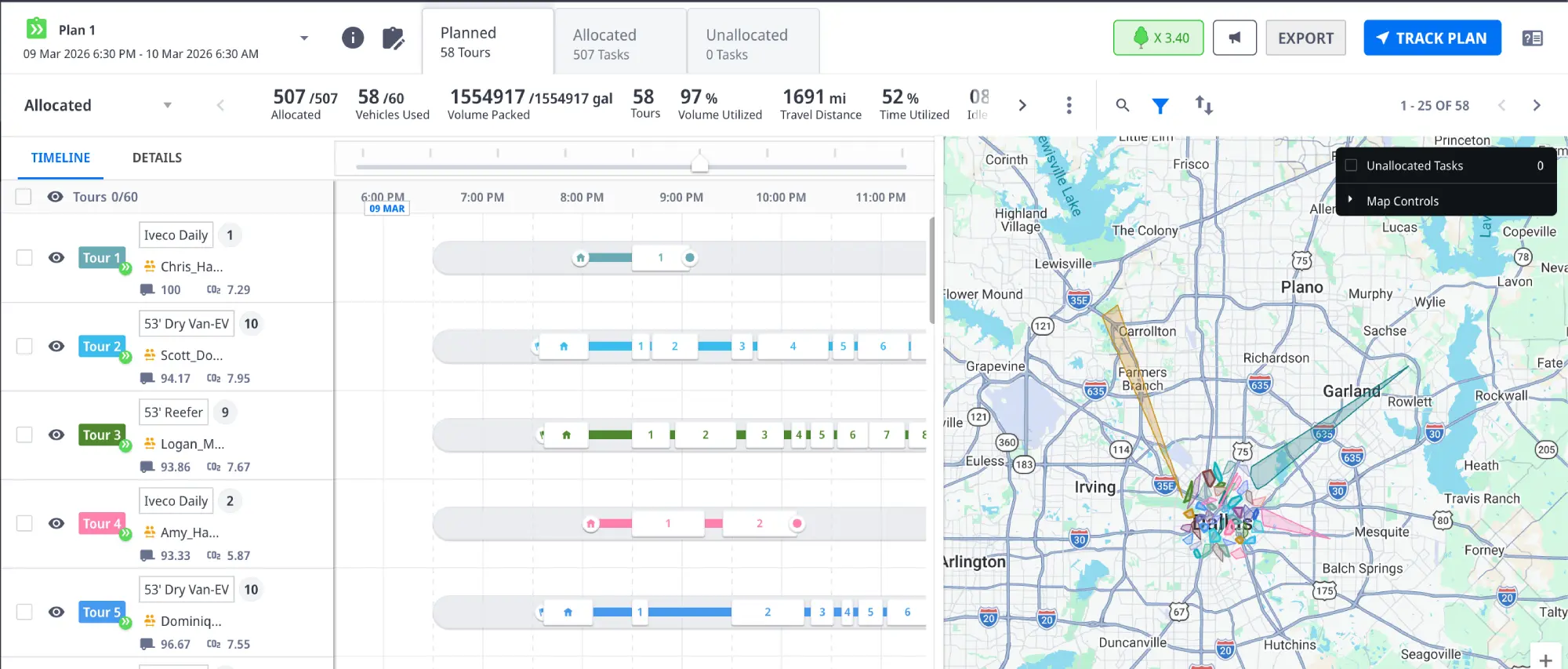
Locus’s Dispatch Management Platform automatically integrates return pickups into existing delivery routes. By "co-mingling" forward and reverse logistics, the engine ensures that a driver delivering a package also picks up a return in the same neighborhood, maximizing asset utilization and reducing the cost-per-mile.
Geocoding for "First-Attempt" Success
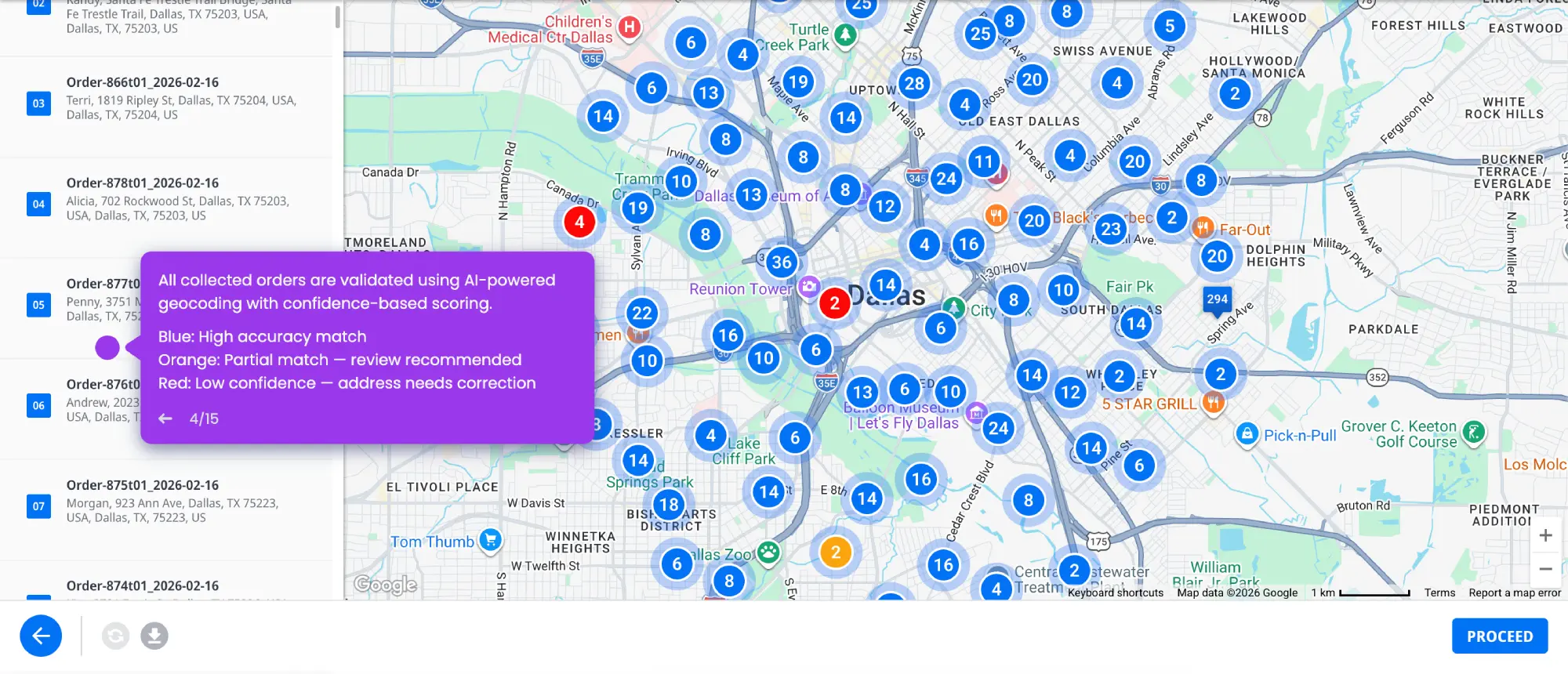
Using proprietary geocoding technology, Locus converts ambiguous customer addresses into precise coordinates. This eliminates the "driver wandering" phase, ensuring high first-attempt pickup rates and reducing fuel consumption.
Real-Time Visibility and Automated Communication
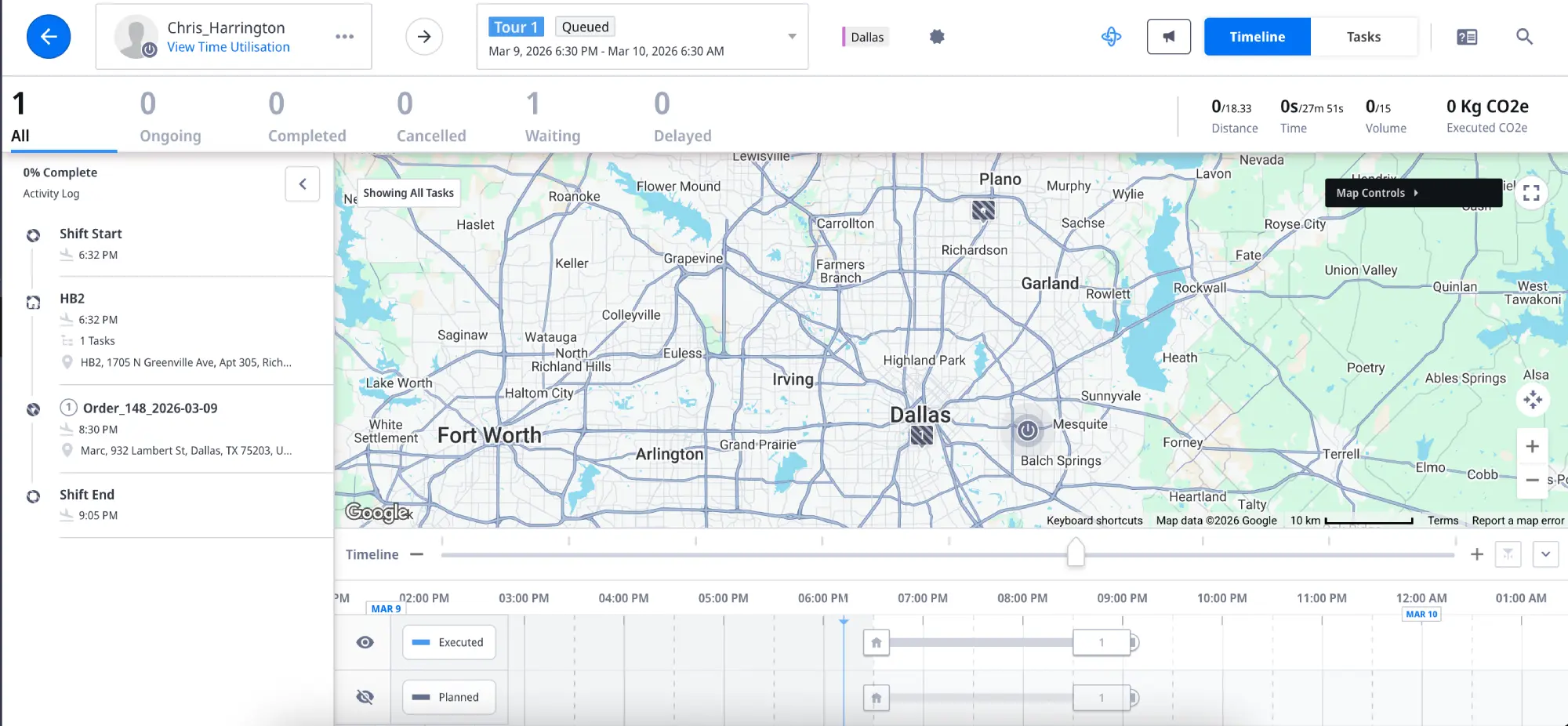
The platform provides a unified “Control Tower” view. Customers receive automated SMS/Email alerts with precise pickup windows and real-time tracking links, while the organization gains instant visibility into the condition and location of returning inventory.
The Locus Advantage: Why It Works
Sophisticated Constraint Management
Locus considers 250+ real-world variables including vehicle capacity, driver shifts, store receiving hours, and traffic patterns to create executable, not just theoretical, plans.
Digital Proof of Collection (e-POC)
Drivers capture photos and digital signatures at the doorstep, providing immediate data to the warehouse team to prepare for incoming stock.
Proof of Collection Affirmation
Locus uses AI-based image recognition to validate the item being returned matches the product image, empowering ground personnel to avoid instances of fraud and malpractice.
Scalability
From daily operations to "Peak Season" surges (like post-holiday returns), the platform scales instantly to handle thousands of requests without manual intervention.
Real-world example
When a leading social commerce platform serving Tier 2 and Tier 3 cities integrated Locus to manage their high-volume returns, they faced a complex environment of 125,000 daily return requests (25% of their 500,000+ total orders) and significant "wrong-item" fraud.
By deploying Locus’s AI-driven geocoding and validation tools, they achieved a paradigm shift in their operational efficiency:
Technical Pillars of the Solution
- Locus Geocoding Engine
- In regions where standardized addressing is absent, Locus converted descriptive, "fuzzy" addresses into precise geographical coordinates. This ensured drivers spent less time searching and more time executing pickups.
- AI-Based Proof of Collection (e-POC) Affirmation
- To eliminate fraud and malpractice, Locus utilized AI image recognition at the doorstep. Ground personnel used the driver app to scan returned items; the AI validated these against the original product images in real-time, empowering drivers to reject mismatches immediately.
Key Performance Indicators (KPIs) & Results
The transition from manual processes to an AI-validated system resulted in measurable improvements across the reverse supply chain:
| Metric | Pre-Locus Challenges | Post-Locus Outcome |
|---|---|---|
| Return Integrity | High instances of "wrong-item" fraud and counterfeit swaps. | 60% reduction in wrong-item returns through AI validation. |
| Pickup Success | Frequent failures in Tier 2/3 cities due to poor navigation. | >85% first-time success rate achieved for all return requests. |
| Operational Scale | Manual routing unable to keep up with 125,000 daily returns. | Fully automated dispatching capable of handling 500,000+ total orders daily. |
| Asset Utilization | High "deadhead" miles and empty return trips. | Integrated Forward-Reverse routing significantly lowering the cost-per-mile. |