

Resequencing Active Routes When Customer Availability Changes
- Applicable Segment(s)
- Retail & eCommerce, Quick Commerce, FMCG/CPG, 3PLs managing high-frequency last-mile delivery networks
- Impacted Function(s)
- Last-Mile Operations, Dispatch & Fleet Management, Reverse Logistics & Returns
- Solution
- Locus Transportation Planning & Optimization
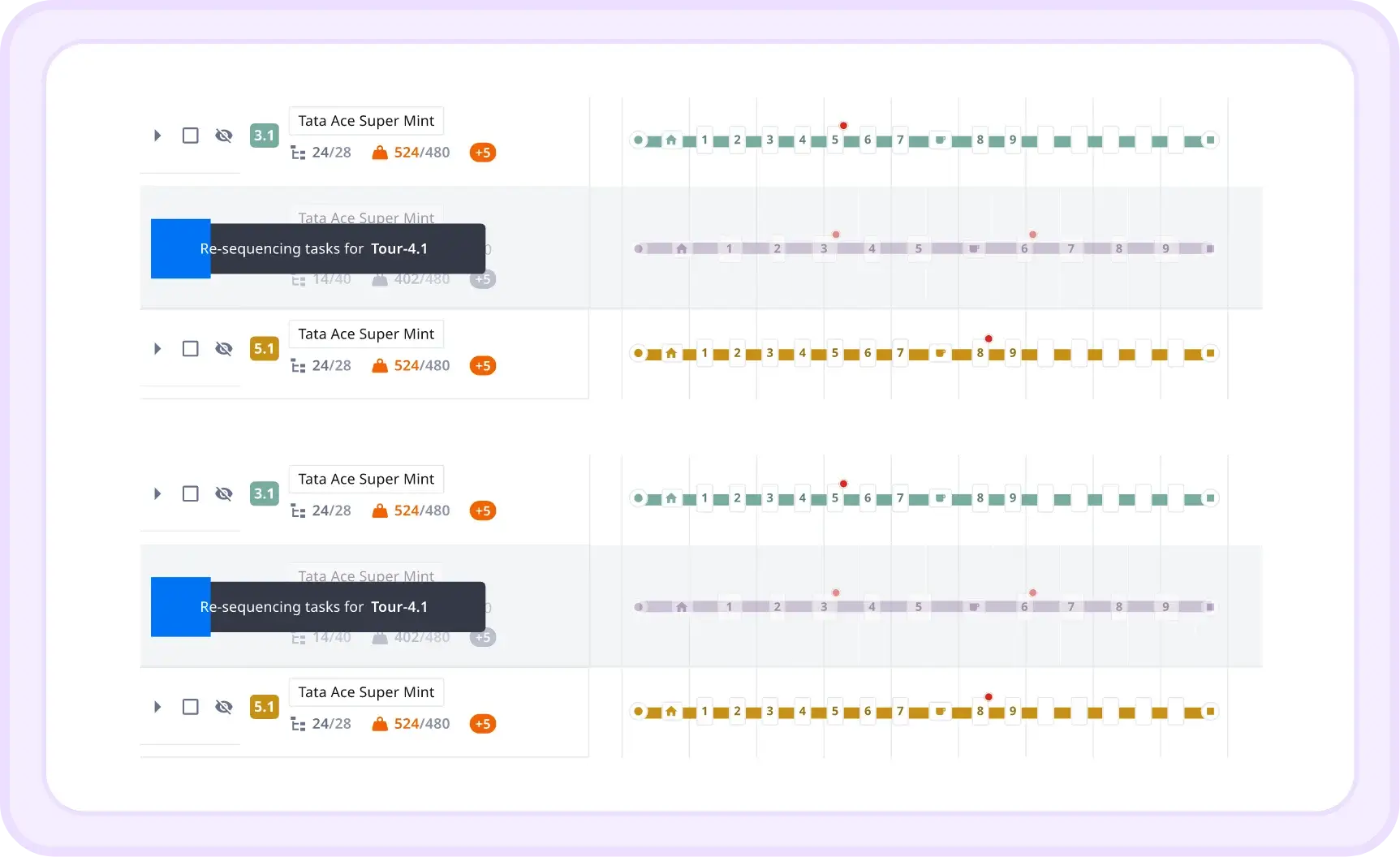
In the world of modern retail, a route plan created at 8:00 AM is often a relic by 11:00 AM.
Customers reschedule deliveries, initiate returns, or miss their windows entirely. New orders flood the system mid-day, traffic patterns shift, and drivers get stuck at security gates. The reality of B2C logistics is a living, breathing environment that refuses to stay still. Yet, most delivery networks still cling to static plans that assume the day will unfold exactly as scripted.
This gap between expectation and reality creates a domino effect of waste. Drivers idle outside empty homes, dispatchers burn hours on "firefighting" phone calls, and return pickups are pushed to the next day because the original route lacks the flexibility to absorb them.
For retail CXOs, dynamic resequencing is no longer a luxury but the foundational capability required to protect margins and customer loyalty.
The Challenge: Retail Logistics is Fundamentally Unpredictable
Retail delivery is naturally more complex than standard courier work. Drivers manage multi-item shipments, complex installations, and strict windows within dense urban environments where "last-yard" friction is constant.
Today’s consumer expects total flexibility. They want a precise delivery window, but also the freedom to change their mind or start a return with a single tap on an app. This creates several structural hurdles for logistics teams.

Fluid Customer Availability
Retail success depends on the customer being there. When they aren't, or when they request a last-minute change, drivers are forced into inefficient waiting or skipping stops, which throws the entire sequence out of alignment.

The Rise of "In-Flight" Returns
In a true omnichannel world, returns happen instantly. If these pickups aren't integrated into existing routes as they happen, they require separate vehicles and extra miles, eroding the profitability of the original sale.

Urban Access Friction
Apartment complexes and gated communities are notorious for delays. A ten-minute wait for a security pass might seem small, but across thirty stops, it destroys a pre-planned schedule.

Operational Burnout
Without automation, dispatchers become air traffic controllers. They manually reshuffle stops and chase drivers via phone. This reactive model isn't just inefficient; it leads to massive operational fatigue and turnover.
The Business Impact: When the Plan Breaks, Costs Rise
When logistics cannot adapt, the financial consequences ripple through the entire organization.
- Eroding Productivity
- Drivers spend more time navigating outdated sequences than making deliveries.
- Spiking Transportation Costs
- If returns cannot be merged into active routes, fuel consumption and fleet utilization costs climb.
- Failed First-Attempt Rates
- Every missed delivery or pickup necessitates a second visit, doubling the operational cost of that single order.
- Driver and Dispatcher Attrition
- Constant chaos and manual intervention increase cognitive load and stress. Gartner warns that organizations relying on manual exception management face a "scalability ceiling" because human intervention becomes the ultimate bottleneck.
The Solution: Continuous Optimization with Locus
Locus views route planning as a living problem rather than a morning chore. Instead of assuming a plan will hold, our platform continuously listens to operational signals and adjusts task sequences in real time. This ensures that every driver is always following the most efficient path possible at that exact moment.
Real-Time Route Adaptation
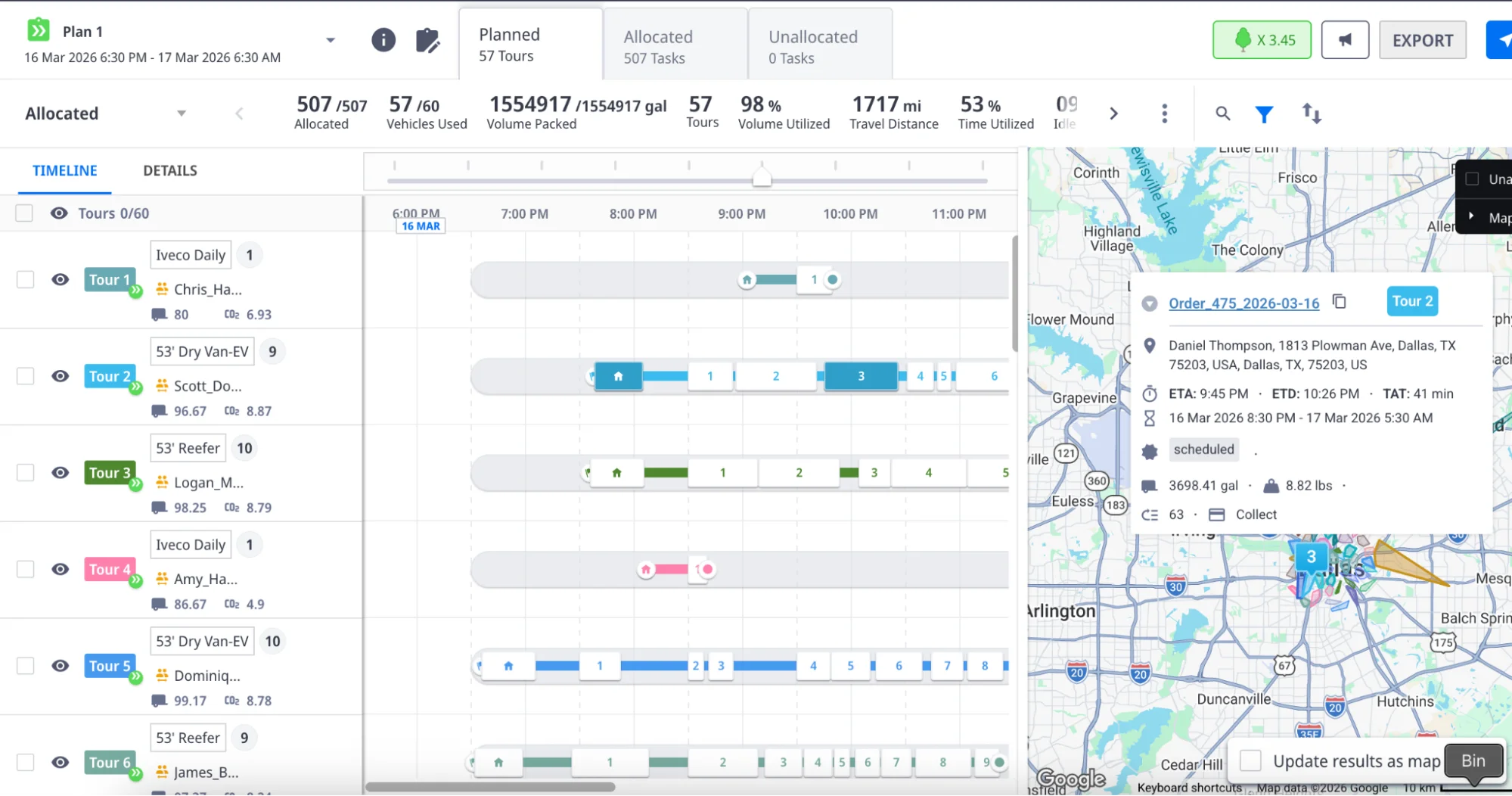
When the day changes, Locus changes with it. The system automatically recalculates the optimal sequence when new orders enter the system mid-day, customers request a new time window, a return pickup is initiated nearby, or traffic or gate delays occur.
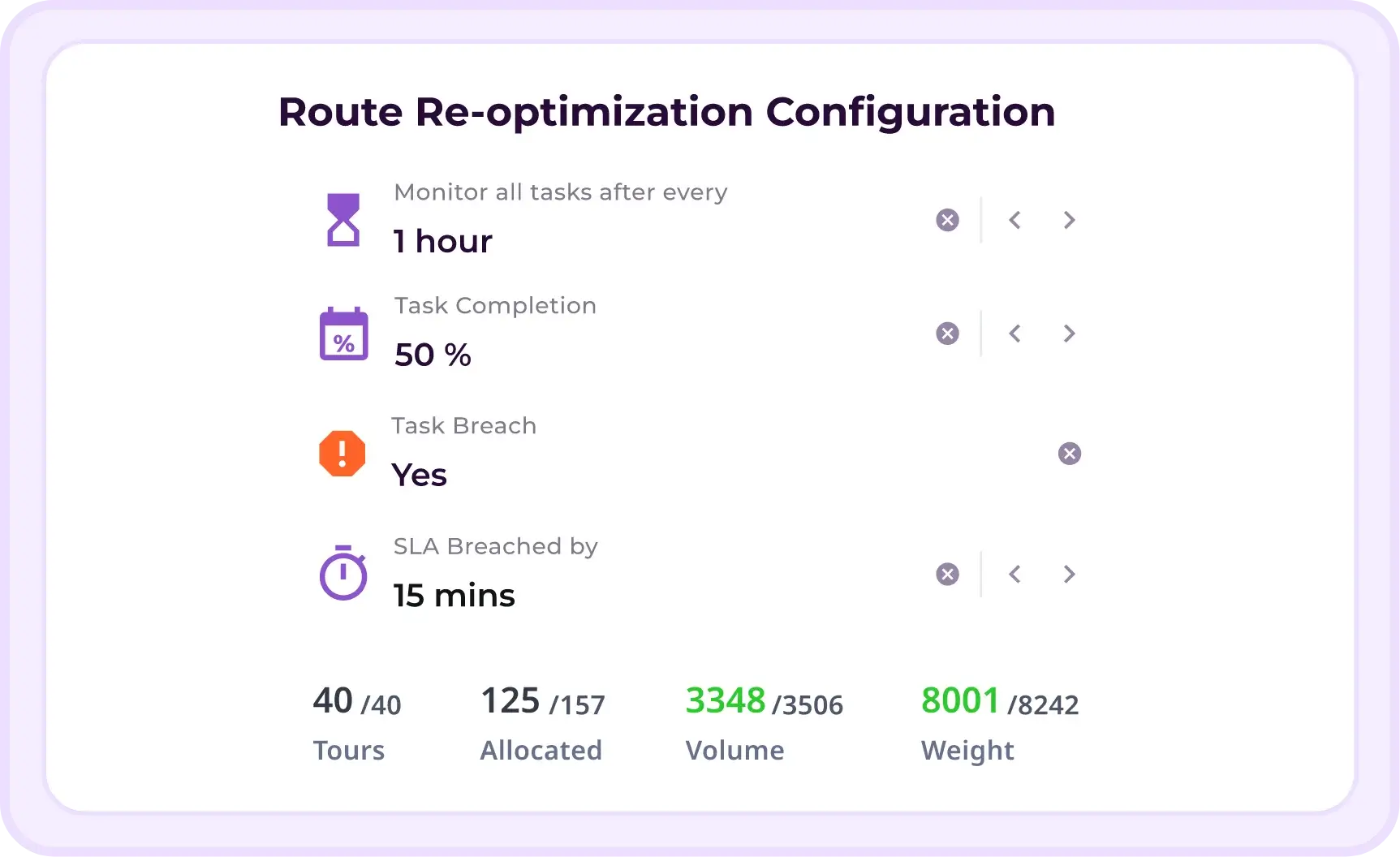
Seamless Integration of Deliveries and Returns
Dynamic resequencing turns reverse logistics into a competitive advantage. If a driver has the capacity and is in the neighborhood, the system intelligently inserts a return pickup into their active route. This eliminates the need for "returns-only" trips.
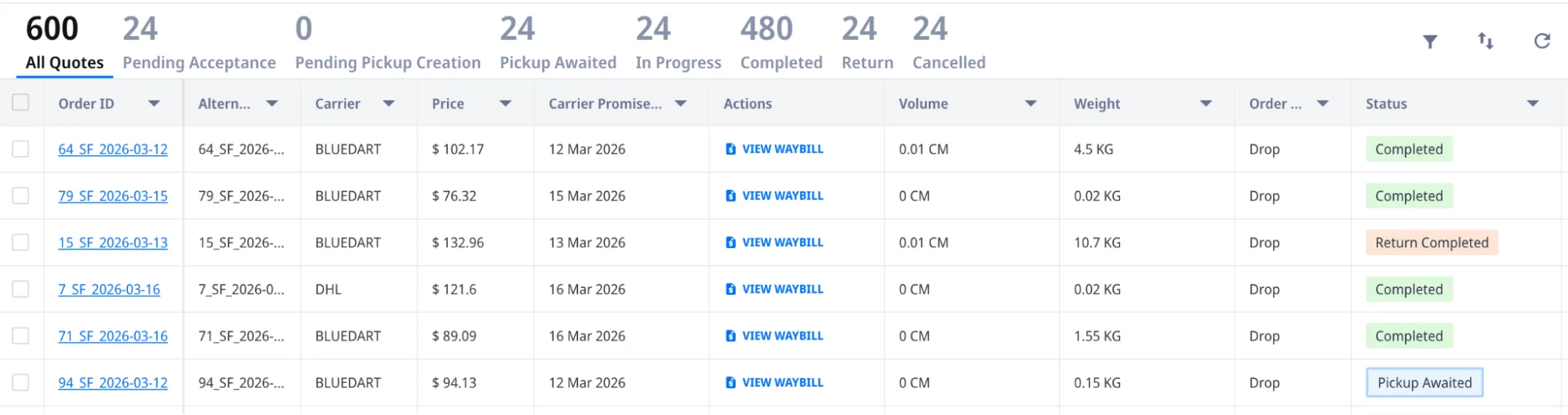
Intelligent Rescheduling
Rather than forcing a dispatcher to manually rebuild a route, Locus moves the affected stop to the best possible future slot while protecting the delivery promises made to every other customer on that route.
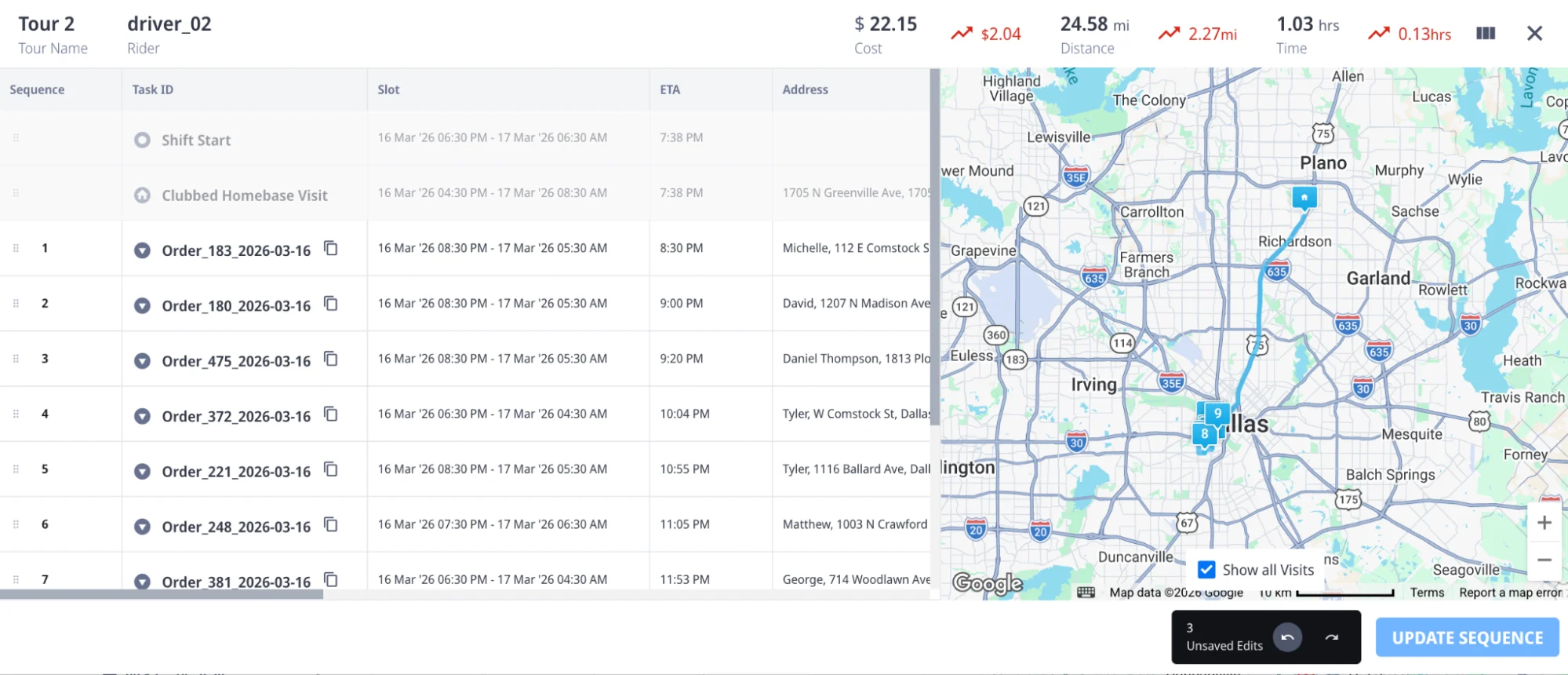
Constraint-Aware Intelligence
Optimization only works if it's realistic. The Locus engine respects vehicle capacities, driver shift limits, and specific time windows, ensuring that updated routes are actually executable on the ground.
The Locus Advantage: A More Resilient Network
By treating disruptions as data points rather than disasters, retail leaders can build a logistics network that is both leaner and more agile.
Autonomous Dispatch
Most disruptions are solved by the algorithm, freeing your team to focus on high-level strategy.
High Asset Utilization
Every mile counts. Integrating returns and deliveries on the fly means fewer empty miles and better use of your fleet.
Improved Driver Retention
When drivers have a clear, reliable, and optimized sequence on their screens, their jobs become simpler and more productive.
Impact in Action: Solving Large-Scale Complexity
A major retail platform operating in dense metro areas recently faced severe route instability. Between apartment access delays and a constant stream of return requests, their morning plans were effectively useless by noon.
By implementing Locus, the organization moved to real-time adaptation. Returns were automatically assigned to the nearest capable driver, and customer reschedules were handled without manual intervention. The result was a resilient network that absorbed the natural chaos of the city without increasing the burden on the dispatch team.
Performance Gains at a Glance
| Metric | Before Locus | With Locus Dynamic Resequencing |
|---|---|---|
| Route Stability | Constant manual overrides required | Routes adapt autonomously in real time |
| Productivity | Time lost to outdated sequences | Significant increase in stops per hour |
| Return Strategy | Managed via separate, costly trips | Integrated into delivery flows |
| Dispatcher Role | Reactive firefighting | Proactive network management |
| Customer Experience | Frequent delays and missed windows | Reliable, flexible service |