

State of Delivery Performance 2026: U.S. Consumer Benchmarks
What 1,000+ U.S. consumers expect from delivery in 2026, and what it means for enterprise retail and logistics operations.
Read the Report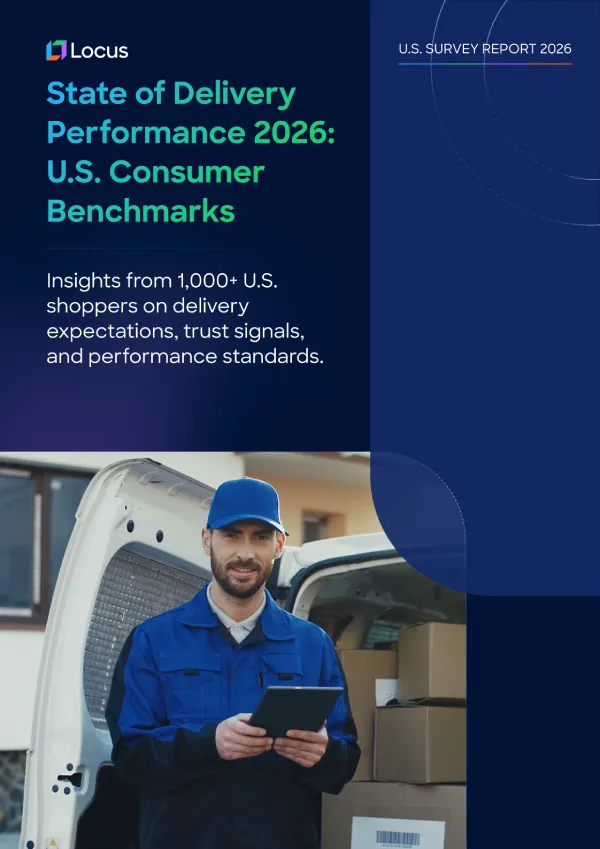
active U.S. online shoppers surveyed
expect delivery within 2-3 days
say proactive updates offset delay frustration
In 2026, U.S. consumers evaluate brands through delivery execution. Expectations have stabilized around defined timelines, accurate tracking, and seamless returns. When these fail, brand trust declines immediately. This report draws on responses from 1,000+ active U.S. online shoppers to establish the performance benchmarks shaping retail and logistics strategy today, and the operational priorities required to meet them at scale.
Key Takeaways from the Report
The 2-3 Day Window is Now the Baseline
53% of U.S. consumers expect delivery within two to three days. For enterprise retailers, this is the baseline. Inventory placement, carrier allocation, and routing logic must be built around this standard consistently.
The Gap Between Promise and Reality
Only 9% of U.S. consumers believe brands always meet their fast or guaranteed delivery commitments. At scale, inaccurate promises increase support costs, drive reattempts, and erode repeat purchase intent. Promise accuracy is a supply chain orchestration problem, not a marketing one.
What Proactive Communication Looks Like
93% of consumers say proactive updates at least partially offset frustration during delays. Customers tolerate delays; they do not tolerate silence. Real-time status synchronization across WMS, TMS, and carrier systems is now an operational SLA, not a CX add-on.
Returns as a Logistics Workflow
25% of U.S. consumers cite return shipping fees as their biggest post-purchase friction point. At scale, returns are a network problem involving carrier allocation, inventory recovery, and refund processing. Reverse logistics belongs in transportation planning alongside outbound delivery.
Read the Full Report
Download nowWant to See What the Data Means for Your Operations?
Our team can walk you through the findings and what they mean for your business.