

State of Delivery Performance 2026: U.K. Consumer Benchmarks
What 2,000+ U.K. consumers expect from delivery in 2026, and what it means for enterprise retail and logistics operations.
Read the Report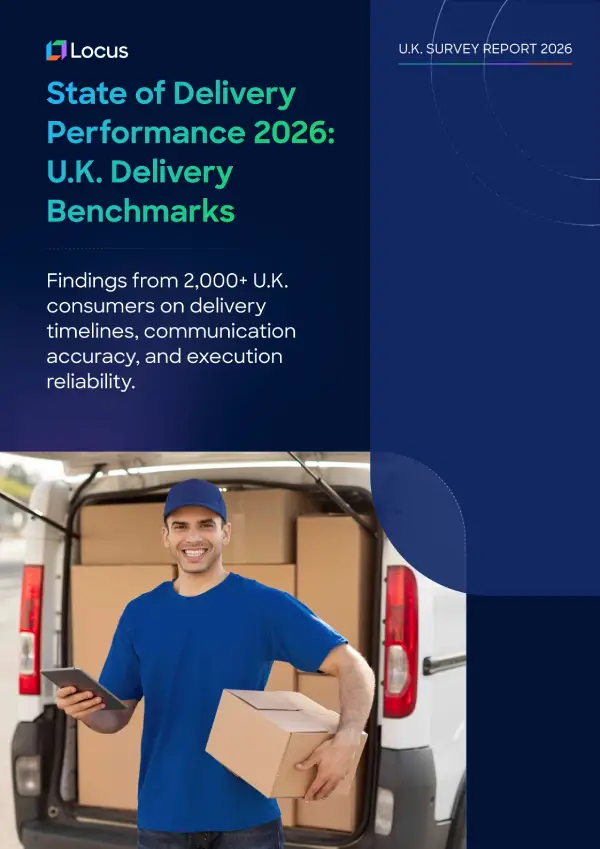
U.K. online shoppers surveyed
expect delivery within 1-4 days
say inaccurate "delivered" notifications are a major frustration
U.K. consumers evaluate delivery performance on confirmation accuracy and promise reliability, not speed alone. The benchmarks are clearly defined: a structured 1-4 day window, accurate status updates, and consistent execution from dispatch to doorstep. When any of these fail, brand trust erodes fast. This report outlines what U.K. consumers expect in 2026 and where most operations fall short.
Key Takeaways from the Report
The 1-4 Day Window Is the U.K. Baseline
82% of U.K. consumers expect delivery within one to four days. This is not a speed race. It is a reliability standard. Network architecture, carrier mix, and routing logic must all support consistent execution within this window.
The Gap Between Promise and Reality
Only 7% of U.K. consumers believe retailers always keep fast or guaranteed delivery promises. 41% say commitments are met only sometimes. Delivery credibility is an operational discipline, not a marketing claim. Promised timelines should reflect actual network capacity instead of promotional targets.
Confirmation Accuracy is the New Trust Signal
94% of U.K. consumers cite packages marked as delivered when they have not arrived as a major irritation. Status updates must be powered by synchronized execution data, not downstream approximations. Confirmation accuracy is a last-mile control problem.
Returns are a Logistics Workflow
25% of U.K. consumers identify return shipping fees as the most difficult part of the returns process. Refund timing and drop-off complexity follow close behind. Reverse logistics must be treated as part of the same transportation architecture as forward delivery.
Read the Full Report
Download nowWant to See What the Data Means for Your Operations?
Our team can walk you through the findings and what they mean for your business.