

Your systems, connected as they are.
The Locus Integration Composer builds the integration into the ERP, OMS, and WMS you already own, as a reviewable flow governed the same way our agents are. Above them, the Locus Agentic TMS runs as your system of execution.
Recognized by leading industry analysts and customers









TRUSTED BY
360+ Enterprises
to run complex transportation networks






Here's what actually happens when your systems talk to ours.
Orders and master data come in, and status flows back out as it changes. Nobody re-keys anything between the two. The shape holds for every client, though which systems sit on the other end differs. Usually order management, capacity, route, and freight.
How your integration stops being a black box.
All of that normally lives in code only engineers read. Requirements go unchecked until testing, failures need the person who wrote them, and every change waits in a queue. Composer answers all three.
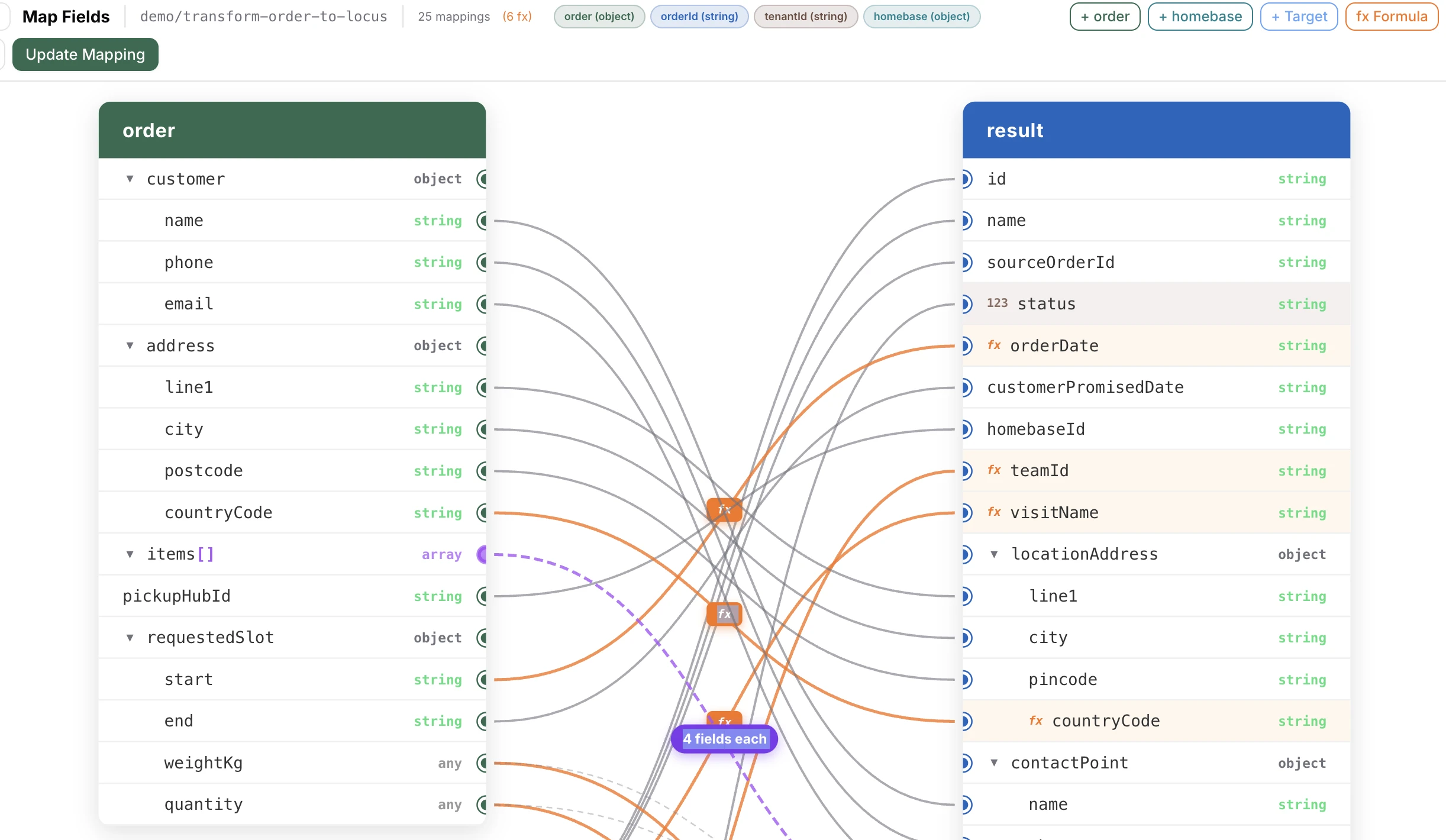
Read it before it runs
The integration is authored in Composer as a visual flow. Field mappings, branching conditions, and every call into your systems are on screen. Your team reviews the implementation against the requirement at design time.
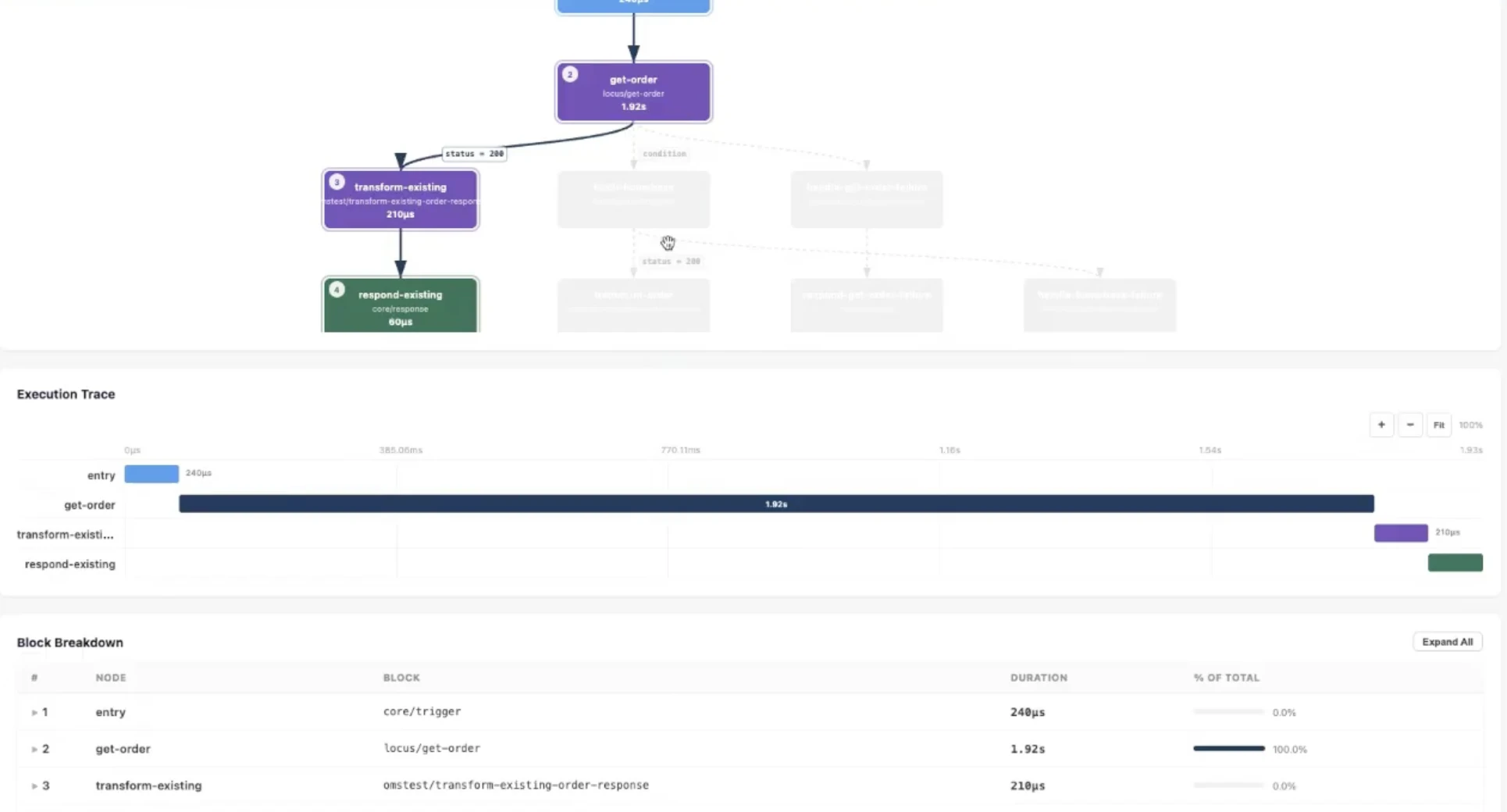
Trace it when it breaks
Every execution keeps a step-by-step record: which step failed, the reason it failed, how long each step took, and which branch the logic followed. Auth headers are redacted in the trace. The first question stops being a request for logs.
Change it on your schedule
A field addition or a mapping change goes through authoring, test, and approval. It ships on your account's own release schedule, set around your code freezes and peak seasons.
Nothing here gets written from scratch.
Locus solutions engineers author these integrations alongside your team through the deployment, assembling them from components that already exist. Nothing is locked to the person who wrote it. Every change becomes a pull request that engineering has to approve, and the gate is built into how changes ship rather than added as a policy someone can waive.
The integration gets checked the same way the agents do.
The Locus Agentic TMS decides and dispatches on the data your systems send it. You already hold those agents to a standard: explainable, traceable, sandboxed, approved by a human. In Composer, the integration feeding them checks every call in and out against a declared contract.
Enterprise-grade by default.
Scale
360+ enterprise clients across 30+ countries. 1.5B+ deliveries optimized.
Security
SOC 2 Type II, SOC 3, ISO 27001:2022, and ISO 27701:2019. GDPR and HIPAA compliant. SAML and ADFS single sign-on, role-based access, AES 256 at rest, TLS 1.2 in transit.
Read our trust pageReliability
99.97% uptime, high-availability deployments, geographically redundant backups. Each account is isolated: a change made for another customer cannot reach your integration.