The final mile is where all your competition lies

In a world of online browsing, shopping apps, and instant digital payments, the all-mile is the most crucial element in your delivery business as it is the only touchpoint between you and your customer.

It is also the trickiest part of a supply chain

Dynamic customer demands

Multiple on-ground restrictions

Cut-throat market competition

Are you facing these all-mile delivery challenges? You’re not alone.

Biggest challenges faced by logistics providers in all-mile delivery

Increasing delivery costs

54%

Increasing delivery costs

Reliable order fulfillment

35%

Reliable order fulfillment

Lack of warehouse resources

25%

Lack of warehouse resources

Not enough workers

23%

Not enough workers

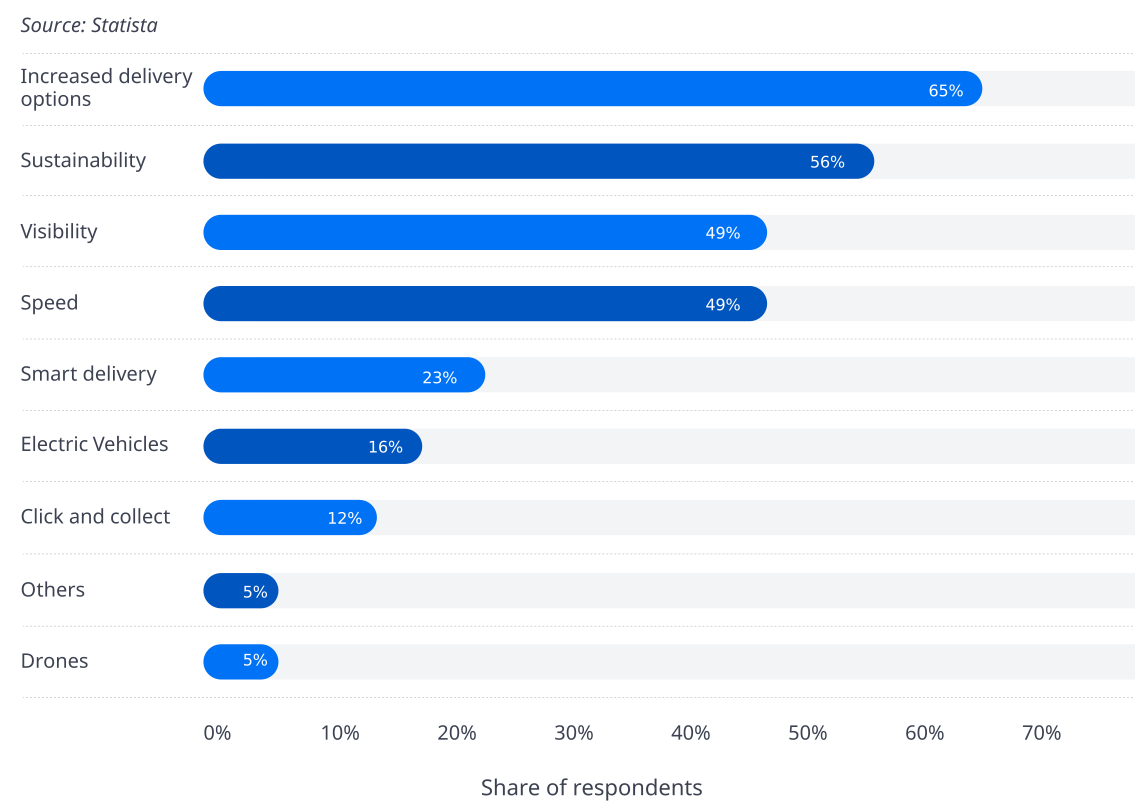
Here’s what global all-mile brands are focusing on in the years to come

Top focus areas for all-mile businesses in the next three years

Top focus areas for all-mile businesses

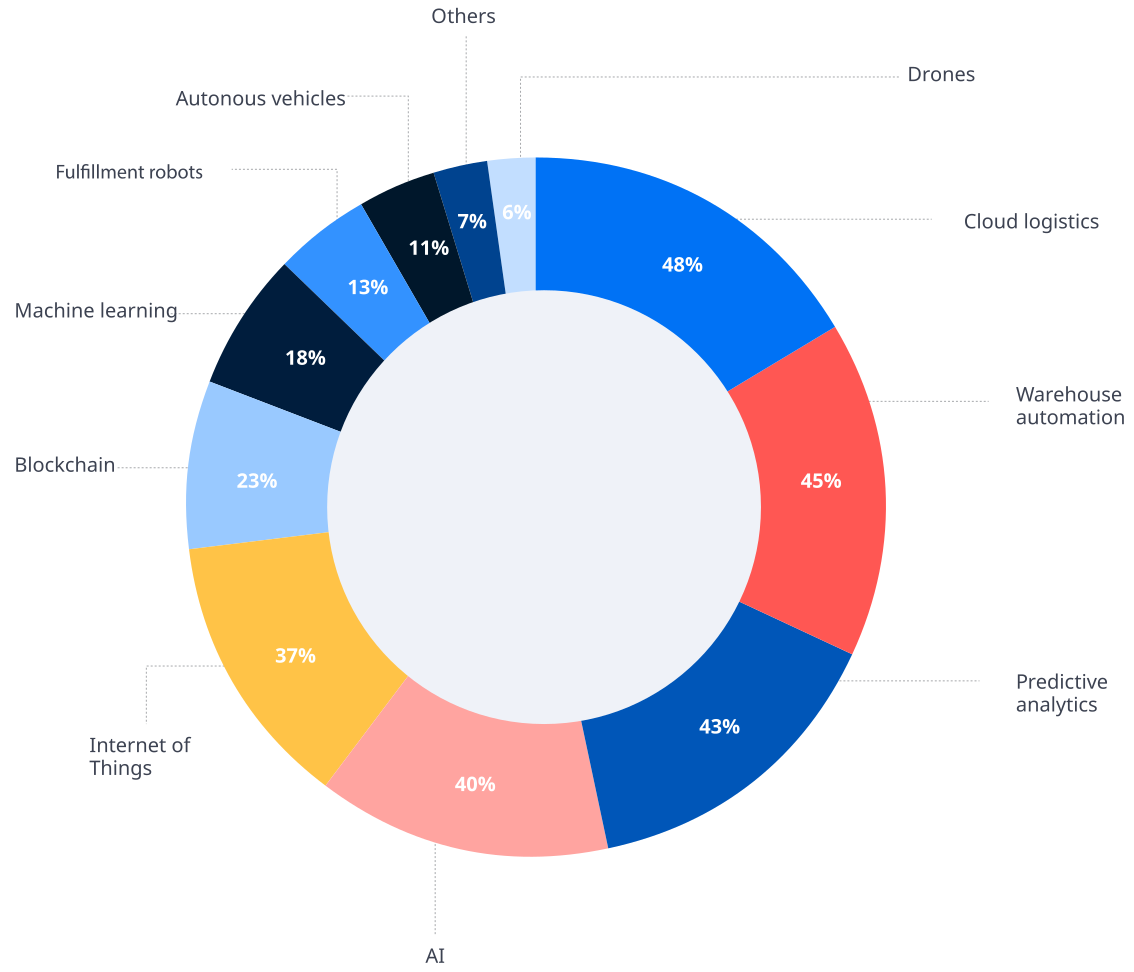
Technology is transforming the all-mile delivery game

What technologies are your competitors currently investing in?

Source: Statista

transforming the all-mile delivery

Order Management System (OMS): One solution for all your all-mile woes

The journey of a product or service begins the moment an order is placed online. All-Mile fulfillment is not just about fast delivery anymore. It includes:

Accurate order scheduling

Accurate order scheduling

Fleet and rider allocation

Fleet and rider allocation

On-demand request management

On-demand request management

Real-time tracking

Real-time tracking

Proof of delivery

Proof of delivery

What is an Order Management System (OMS)?

An Order Management System in logistics is a software that powers the end-to-end all-mile journey of a product, right from the time an order is placed till its delivery to the customer. This includes order scheduling, on-demand routing, inventory management, and real-time order updates.

Top 10 features to look for when selecting an OMS for your delivery business

  1. Delivery and service scheduling
  2. Enabling time-slot bookings
  3. Inventory availability updates
  4. Assigning duties to delivery or service executives and accurate fleet allocation
  5. Cost-effective and optimal delivery route planning
  1. Order shipping and in-transit visibility for supervisors
  2. Real-time order updates, ETAs, and alerts for customers
  3. On-ground analytics and insights for decision-making
  4. Cloud-based infrastructure and integrations with other technologies
  5. Electronic proof of delivery (ePOD)

Share this infographic by using this embed code: